How wood selection shapes durability in Finnish cottages
TL;DR:
- Finnish timber, especially slow-grown pine and spruce, ensures durability, thermal efficiency, and environmental benefits.
- Proper selection, drying, and installation of certified logs are crucial for long-lasting, stable cottages.
- Enduring Finnish log cottages result from a complete system of materials, craftsmanship, and ongoing maintenance.
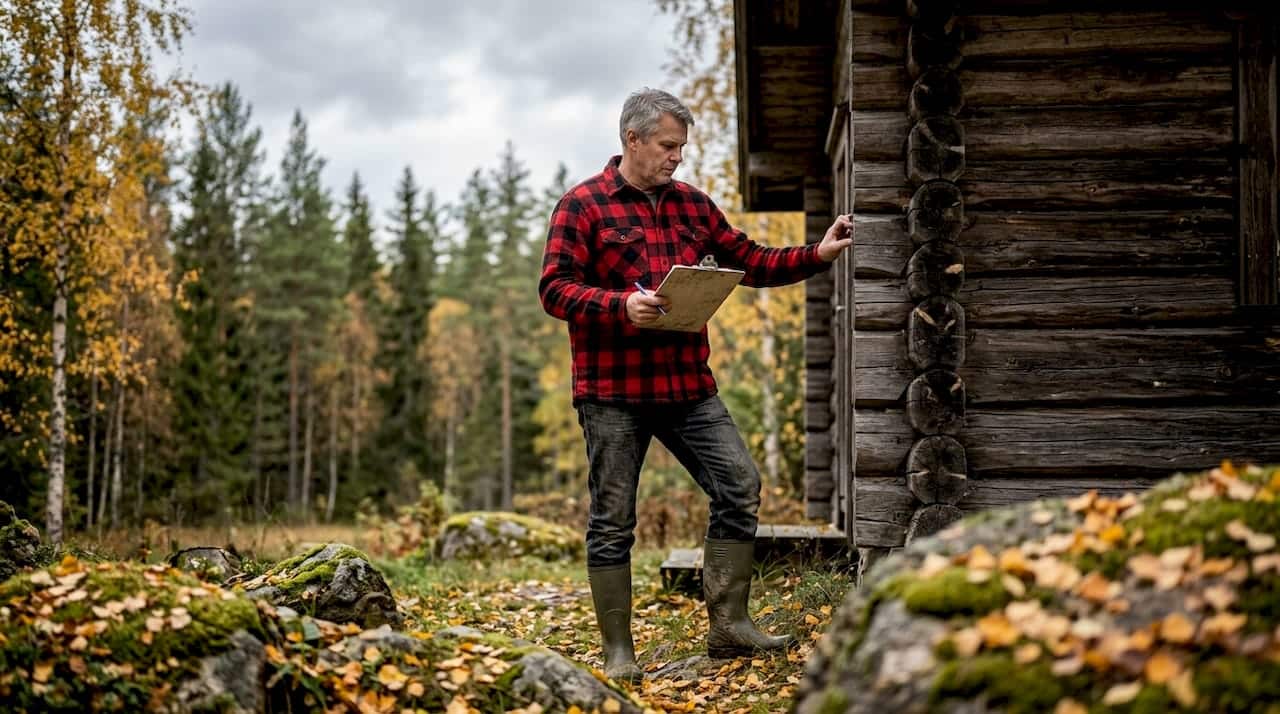
Some Finnish log cottages built in the 1700s are still standing today, structurally sound and fully livable. That fact alone challenges the widespread assumption that wood buildings are fragile or temporary. The truth is that longevity in a timber cottage has almost nothing to do with luck and everything to do with deliberate choices made before the first log is laid. The species you select, how it was dried, how thick the walls are, and where the timber was grown all determine whether your cottage lasts 30 years or 300. This guide walks you through every major decision point so you can build with confidence.
Table of Contents
- Why wood selection is critical for Finnish cottages
- Key Finnish wood types for cottages: Pine vs. spruce
- Moisture content and seasoning: How to ensure lasting performance
- From logs to living: Wall types, insulation, and environmental impacts
- A fresh perspective: Beyond wood type—what makes a cottage endure for generations?
- Plan your dream cottage with Finnish expertise
- Frequently asked questions
Key Takeaways
| Point | Details |
|---|---|
| Wood choice defines longevity | Slow-grown pine and spruce from Finland make cottages last for generations. |
| Drying and moisture control | Logs must be dried and installed at 12-20% moisture to avoid decay and movement. |
| Wall design impacts comfort | Thick, squared logs offer superior insulation and steady indoor climate. |
| Environmental benefits | Proper wood cottages shrink CO2 emissions by up to 70% compared to concrete homes. |
| Check certifications | Always choose timber with proven, certified sustainability and structural ratings. |
Why wood selection is critical for Finnish cottages
Wood is not a single material. It is a spectrum of densities, fiber structures, moisture behaviors, and thermal properties. Choosing the wrong type for your Finnish cottage is not just an aesthetic mistake. It is a structural and financial one that compounds over decades.
Finnish forests grow slowly because of the cold climate. That slow growth is actually a feature, not a limitation. Slow-grown northern Finnish pine and spruce produce dense fibers that resist moisture, hold thermal mass, and support durability well beyond 100 years when treated correctly. The tight annual rings you see in cross-sections of northern timber are a direct indicator of that density. A log from a fast-grown southern forest simply cannot match it.
The structural and ecological advantages of proper wood selection stack up quickly:
- Thermal performance: Dense logs store and release heat slowly, reducing heating costs in cold Finnish winters.
- Moisture resistance: Tight fibers limit water absorption, which is the primary driver of rot and decay.
- Structural stability: Properly dried, dense wood moves less over time, keeping joints tight and walls plumb.
- Environmental impact: Log walls 20 to 25 cm thick provide natural insulation through air pockets and thermal mass, cutting CO2 emissions up to 70% compared to concrete or steel construction.
“Wood is the only major building material that actively sequesters carbon during its growth phase, making a well-built log cottage one of the most climate-responsible structures you can own.”
That last point deserves emphasis. Many buyers focus on upfront cost comparisons between wood and concrete. But when you factor in lifetime energy use and carbon footprint, the natural log benefits of Finnish timber are hard to argue against.
The primary performance factors to evaluate before purchasing any timber are: species, density, seasoning method, fiber structure, and origin. Each one influences the others. A dense pine log that was poorly dried will still crack and settle. A well-dried spruce log from a certified Finnish forest will outperform a dense but improperly handled alternative every time. Understanding how these factors interact is what separates a cottage that endures from one that needs constant repair.
The log house advantages of Finnish timber are not marketing language. They are measurable, documented, and visible in structures that have survived centuries of freeze-thaw cycles, heavy snow loads, and humid summers.
Key Finnish wood types for cottages: Pine vs. spruce
Knowing why wood matters, it is time to compare the two Finnish favorites directly. Both pine and spruce are native to Finland, both are used extensively in log construction, and both have loyal advocates. The right choice depends on your priorities.
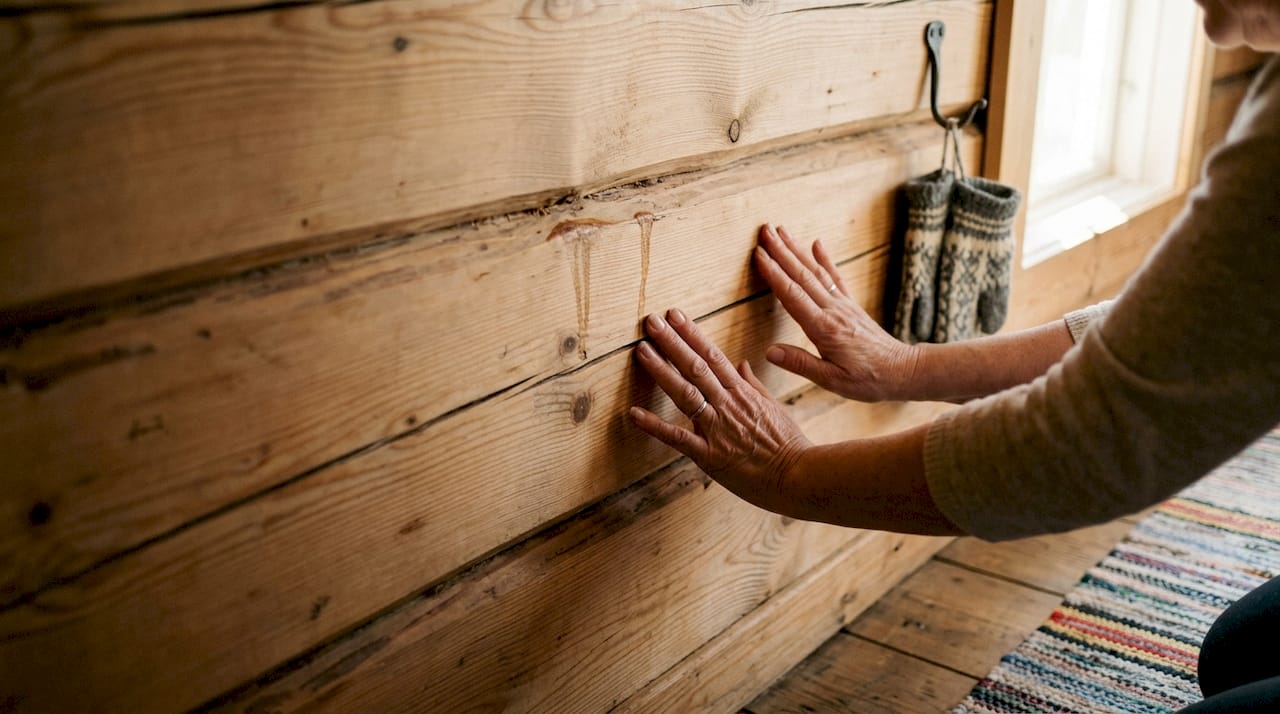
Finnish pine is the traditional choice for load-bearing log walls. It is denser, harder, and more resinous than spruce, which makes it naturally resistant to insects and surface moisture. Pine is the go-to species when structural strength is the top priority. Its warm, amber tones also deepen beautifully with age.
Finnish spruce is lighter, easier to machine, and tends to have a cleaner, more uniform appearance. It suits modern cottage aesthetics and is often preferred for interior finishing work. Spruce is slightly less dense than pine, but when properly dried and certified, it performs very well in log construction.
| Feature | Finnish pine | Finnish spruce |
|---|---|---|
| Density | Higher | Moderate |
| Moisture resistance | Excellent | Good |
| Load-bearing strength | Very strong | Strong |
| Aesthetic tone | Warm amber | Light, neutral |
| Ease of machining | Moderate | High |
| Best use | Structural walls, exterior | Interior, modern designs |
One important caution: avoid using pine sapwood (the outer, lighter-colored layer) in sauna environments. The resin in pine sapwood can ooze when heated, which is uncomfortable and messy. Heartwood pine or spruce are both better choices for sauna interiors.
The longevity argument for Finnish timber is not theoretical. Traditional solid pine and laminated spruce have both proven themselves over centuries, with Finnish wooden churches from the 1780s still structurally sound today. That is an empirical benchmark that no synthetic material can yet match.
Pro Tip: Always check for CE marking or equivalent structural certification when sourcing logs. Certified timber has been tested for load capacity, moisture content, and dimensional accuracy. It removes guesswork and protects your investment.
When reviewing Finnish wood examples for vacation homes, you will notice that the most durable projects consistently use timber from sustainable forestry operations. Certified sourcing is not just an environmental checkbox. It is a quality indicator.
Moisture content and seasoning: How to ensure lasting performance
Selecting the right species is just the beginning. Handling and moisture are equally pivotal to long-term performance. This is the area where most costly mistakes happen, and it is almost entirely preventable with the right information.
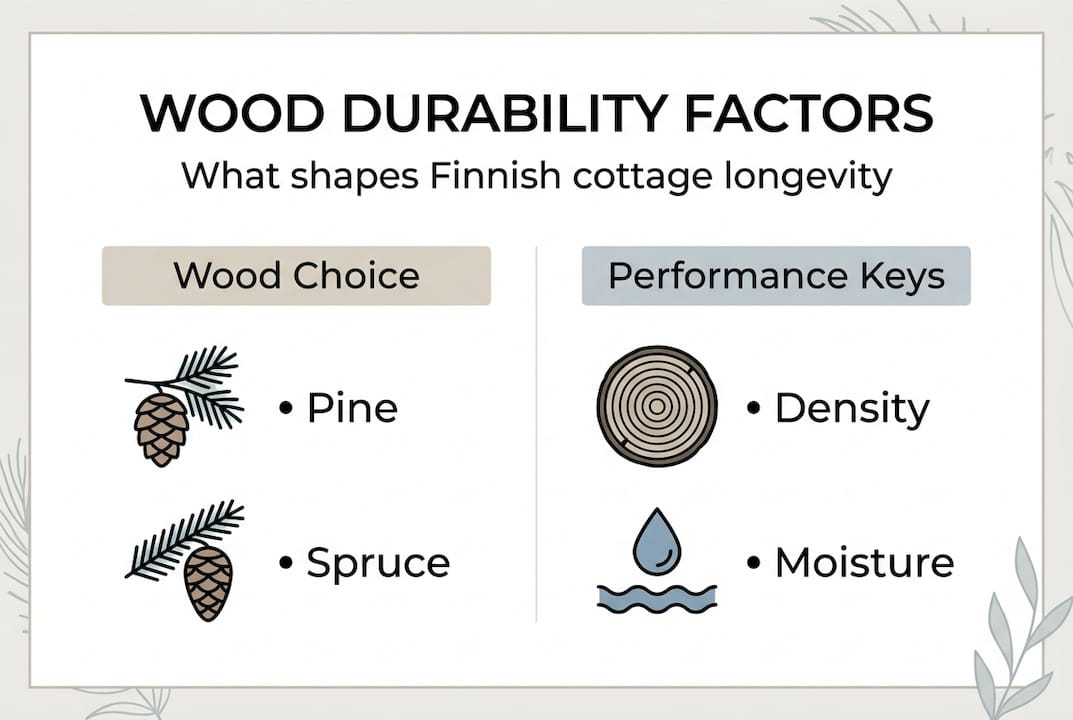
Wood is hygroscopic, meaning it absorbs and releases moisture from the surrounding air. When logs are installed too wet, they shrink, crack, and settle unevenly as they dry in place. When they are installed too dry in a humid environment, they can swell and warp. The target window for installation is a moisture content of 12 to 20%, which is critical to prevent cracking and settlement after construction.
Here is a step-by-step approach to verifying moisture before you buy:
- Ask your supplier for a moisture certificate or technical data sheet for the specific batch of logs.
- Use a calibrated pin-type moisture meter to spot-check logs on delivery.
- Confirm the drying method: air-drying takes 1 to 2 years minimum for full logs, while kiln drying is faster but must be done correctly to avoid surface hardening.
- Check storage conditions. Logs stored outdoors without cover can re-absorb moisture quickly.
- Review the supplier’s track record and ask for references from completed projects.
The decay risk becomes significant when wood moisture content exceeds 25 to 30%, especially when combined with sustained relative humidity above 95%. That combination creates ideal conditions for decay fungi. In a Finnish climate with long wet seasons, this is a real concern for improperly dried or stored timber.
Pro Tip: Always request technical moisture data and drying certificates from your log supplier before signing any purchase agreement. A reputable supplier will have this documentation ready. If they hesitate, that is a warning sign.
Kiln drying is faster and more controlled than air drying, but it is not automatically superior. Logs dried too quickly in a kiln can develop surface case hardening, where the outer layer dries faster than the core, creating internal stress. For large-diameter logs used in Finnish cottages, slow air drying followed by a short kiln finish is often the best approach.
Familiarizing yourself with timber regulations in Finland and reviewing a solid building log houses guide will help you ask the right questions at every stage of procurement.
From logs to living: Wall types, insulation, and environmental impacts
With handling understood, the next step is seeing how your structural choices affect daily comfort and the environment over the full life of the cottage.
Wall thickness is not just a construction detail. It is a comfort and energy decision. Authentic Finnish log cottages use walls that are 20 to 25 cm thick, and that dimension is not arbitrary. At that thickness, logs provide both insulation and thermal mass, meaning they slow down heat transfer and store warmth to release it gradually. Thinner walls simply cannot replicate that behavior.
Squared logs outperform round logs in insulation efficiency and long-term dimensional stability. Round logs have air gaps at the contact points that require careful chinking (filling gaps between logs) to maintain thermal performance. Squared logs fit more tightly, reducing air infiltration and improving energy efficiency.
Here is a practical checklist to review with your architect or builder before finalizing wall specifications:
- Confirm wall log diameter or thickness is at least 20 cm for Finnish climate performance.
- Specify whether round or squared logs are used and understand the sealing requirements for each.
- Ask how corner joints are designed, since this is a primary point of air leakage in log structures.
- Verify that the thermal mass calculation accounts for your region’s heating degree days.
- Confirm that the wall system meets current Finnish building energy codes.
The environmental case for wood is compelling. A well-built log cottage stores carbon in its walls for the entire life of the structure. Combined with the log building process using locally sourced Finnish timber, the transportation and manufacturing footprint is a fraction of what concrete construction requires.
“Every cubic meter of wood used in construction stores approximately one tonne of CO2, making your cottage wall a long-term carbon bank.”
Understanding log terminology before your first contractor meeting will also help you communicate clearly and avoid misunderstandings that can lead to specification errors.
A fresh perspective: Beyond wood type—what makes a cottage endure for generations?
We have covered the technical angles. Here is what most guides skip entirely.
After more than 65 years of manufacturing timber frames and log structures, we have seen a consistent pattern: the cottages that last are never the result of a single great material choice. They are the product of a complete system working together. The right species, dried correctly, installed at the right moisture level, with certified joints, by builders who understand log behavior, maintained by owners who treat the structure as a living thing.
Focusing only on pine versus spruce is like choosing a car based solely on tire brand. It matters, but it is one part of a much larger picture. Custom log construction that endures for generations requires supplier traceability, periodic re-sealing of joints, proper roof overhang design to protect walls, and a foundation that accounts for frost depth.
Century-old Finnish structures are not magical. They are the result of tradition combined with modern precision. Insist on full documentation from your supplier. Schedule maintenance checks every five to ten years. Treat your cottage as an investment in craftsmanship, not just a building.
Endurance is a process, not a one-time purchase decision.
Plan your dream cottage with Finnish expertise
You now have a solid foundation for making informed wood selection decisions. Turning that knowledge into a real project is the next step, and that is where having the right partner makes all the difference.
At Huvila Seppälä, we have spent over 65 years helping homeowners and vacation property buyers navigate exactly these decisions. Our Finnish wood guide covers species selection, certification requirements, and sourcing in detail. If you want to understand why Finnish pine is the backbone of so many lasting structures, or if you are ready to start planning with our custom cottage guide, we are here to help you move forward with clarity and confidence.
Frequently asked questions
What’s the best wood type for Finnish cottages?
Slow-grown pine is the traditional preference for structural walls due to its density and durability and thermal properties, but spruce is an excellent choice for modern designs and interior applications.
How dry should wood be when building a log cottage?
Logs should have a moisture content of 12 to 20% at installation to prevent cracking, uneven settlement, and fungal decay over time.
Why do Finnish log cottages last so long?
The combination of dense, slow-grown fibers, correct drying practices, thick walls, and regular maintenance allows Finnish log cottages to remain sound for well over 100 years.
Are there environmental benefits to choosing Finnish wood?
Yes. Wood cottages with 20 to 25 cm log walls can reduce CO2 emissions up to 70% compared to concrete or steel construction, while also storing carbon throughout the building’s life.
What supplier credentials should I look for?
Always confirm CE marking or equivalent certification for structural timber, and request moisture content documentation and drying method records before purchasing logs.
Recommended
- Guide to choosing Finnish wood for sustainable homes 2026 – Hirsitalot, pihasaunat ja piharakennukset kotimaisesta hirrestä
- Why Use Finnish Pine: Durability and Eco Benefits – Hirsitalot, pihasaunat ja piharakennukset kotimaisesta hirrestä
- Why Use Finnish Wood for Lasting Timber Homes – Hirsitalot, pihasaunat ja piharakennukset kotimaisesta hirrestä
- Why use Finnish timber for sustainable custom homes – Hirsitalot, pihasaunat ja piharakennukset kotimaisesta hirrestä