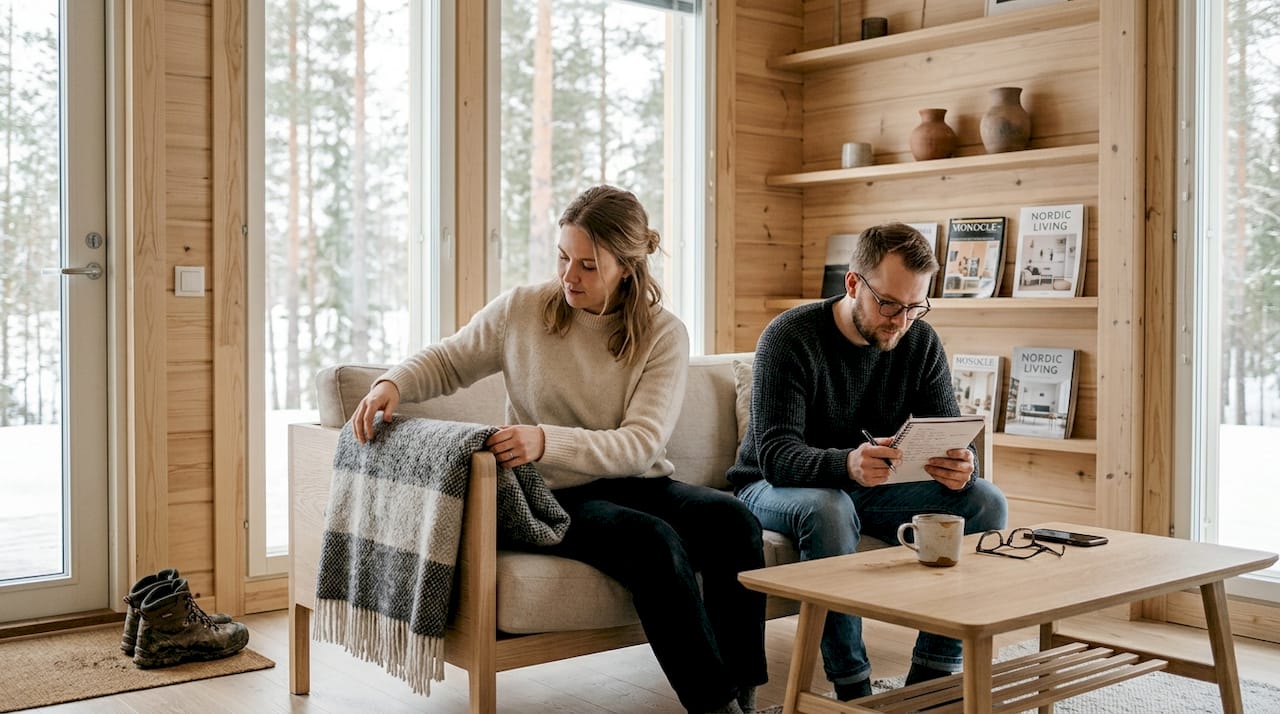
Why use Finnish timber for sustainable custom homes
Not all wood is created equal. If you’re planning a custom cabin, sauna, or villa, the timber you choose determines more than aesthetics. Finnish timber stands apart due to its unique growing conditions, thermal modification processes, and sustainable forestry practices that deliver superior durability, insulation, and environmental benefits. This article explores why Finnish timber, particularly ThermoWood treated softwoods like Scots pine and Norway spruce, offers unmatched performance for builders and homeowners seeking long-lasting, energy-efficient, and eco-friendly custom structures in challenging climates.
Table of Contents
- Key takeaways
- Thermal performance and natural insulation of Finnish timber
- Durability and moisture resistance through thermal modification (ThermoWood)
- Sustainability and environmental impact of Finnish timber
- Practical benefits and applications of Finnish timber in custom cabins, saunas, and villas
- Why choose Huvilaseppala for your Finnish timber home
- Frequently asked questions
Key Takeaways
| Point | Details |
|---|---|
| ThermoWood durability boost | ThermoWood treatment increases dimensional stability and biological durability without chemicals, extending service life in demanding environments. |
| Superior thermal insulation | Finnish timber’s dense wood from slow growth forests provides enhanced thermal mass that keeps interiors comfortable and reduces heating and cooling needs. |
| Sustainable carbon benefits | Finnish forestry practices and ThermoWood processing emphasize sustainability and strong carbon sequestration compared with many conventional building materials. |
| Chemical free builds | The ThermoWood process is chemical free, making it suitable for moist climates such as saunas and indoor applications. |
Thermal performance and natural insulation of Finnish timber
Finnish timber excels in thermal performance due to its physical structure and the slow growth conditions of Nordic forests. Log thickness between 6 and 12 inches provides excellent thermal performance that reduces energy consumption significantly. Thick log walls, typically ranging from 152 to 305 millimeters, create natural insulation that outperforms many conventional building materials.
The primary species used are Scots pine and Norway spruce, both dense softwoods with tight growth rings formed during long, cold winters. This density contributes to thermal mass, the ability of a material to absorb, store, and gradually release heat. In practice, this means your cabin or villa maintains stable indoor temperatures throughout seasonal extremes, reducing heating demands in winter and keeping interiors cooler during summer months.
Energy efficiency translates directly into long-term cost savings. Homeowners report lower heating bills and reduced reliance on mechanical climate control systems. The breathability of properly stacked logs also prevents moisture buildup, maintaining healthy indoor air quality while preserving structural integrity.
Pro Tip: Ensure logs are stacked with appropriate air gaps and sealants to maximize breathability and moisture control. Proper installation prevents thermal bridging and maintains the insulation value over decades.
Here’s how Finnish timber compares thermally to other common building materials:
| Material | Thermal Conductivity (W/mK) | Insulation Rating | Thermal Mass |
|---|---|---|---|
| Finnish pine/spruce logs | 0.12-0.14 | Excellent | High |
| Standard softwood framing | 0.13-0.18 | Good | Medium |
| Concrete | 1.4-1.7 | Poor | Very High |
| Brick | 0.6-1.0 | Moderate | High |
For builders considering Finnish pine durability and timber cabin benefits, understanding these thermal properties is essential. The combination of insulation and thermal mass makes Finnish timber particularly effective in cold climates where temperature swings are dramatic. You can explore examples of Finnish wood structures to see these principles applied in real vacation homes and permanent residences.
Durability and moisture resistance through thermal modification (ThermoWood)
ThermoWood represents a breakthrough in timber treatment that enhances Finnish softwoods without chemicals. The process heats wood to temperatures between 185 and 230 degrees Celsius in a controlled, oxygen-free environment. This thermal modification fundamentally alters the wood’s cellular structure, improving dimensional stability and biological resistance.
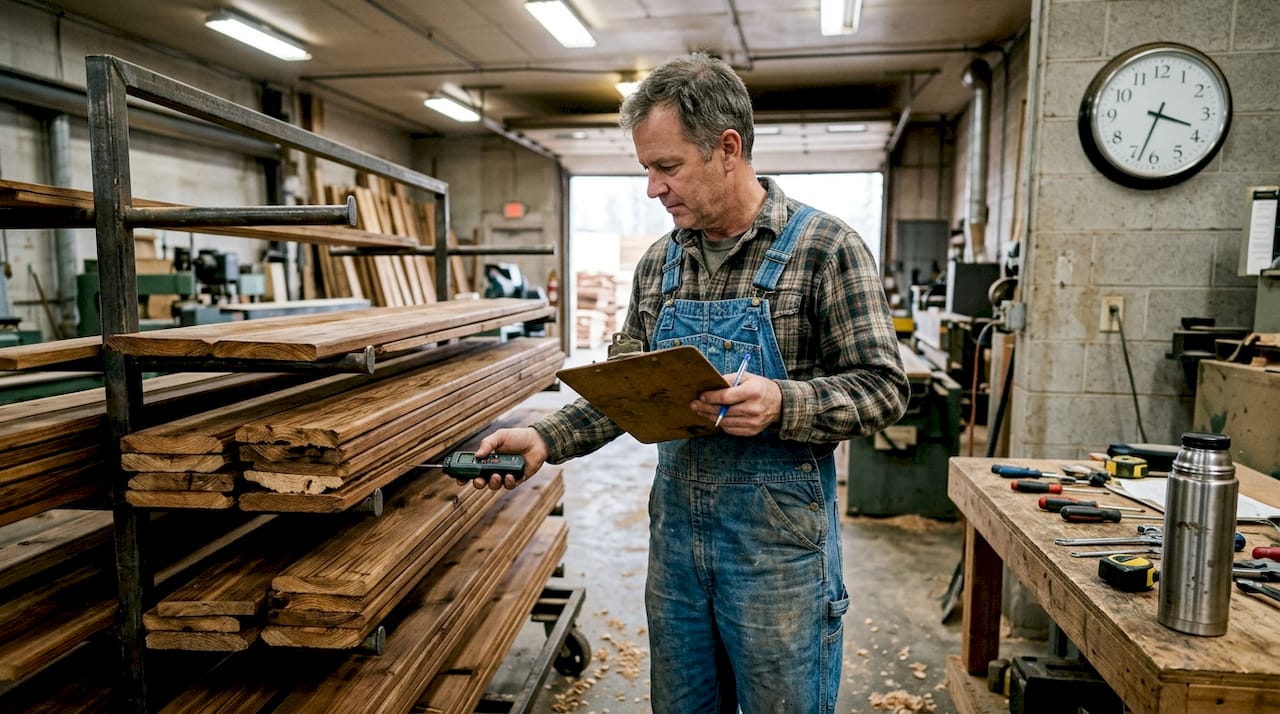
ThermoWood enhances dimensional stability and reduces moisture absorption by up to 50% while increasing biological durability without any chemical treatments. Moisture movement in untreated Finnish softwoods typically ranges from 8 to 10 percent. After thermal modification, this drops to approximately 4 to 5 percent, dramatically reducing warping, cupping, and splitting over time.
Durability classification improves significantly. Untreated pine or spruce falls into durability class 4, with an expected lifespan of 5 to 10 years in ground contact or high-moisture environments. ThermoWood achieves a ‘durable’ classification, extending service life substantially even in challenging applications like sauna interiors or exterior cladding.
Here are five key benefits of ThermoWood treatment:
- Chemical-free process: No toxic preservatives, making it safe for saunas, children’s play structures, and indoor applications
- Enhanced dimensional stability: Minimal swelling or shrinkage across seasons maintains tight joints and structural integrity
- Improved decay resistance: Natural sugars that feed fungi are eliminated during heating, preventing rot and insect damage
- Reduced maintenance: Surfaces require less frequent treatment and resist weathering better than untreated wood
- Aesthetic consistency: Uniform color throughout the wood depth means scratches and cuts don’t reveal untreated material
ThermoWood’s chemical-free durability makes it the premier choice for sauna construction, where high heat and humidity would rapidly degrade untreated timber or leach chemicals from pressure-treated alternatives.
For those exploring the role of wood in sauna building or considering Finnish forestry for log homes, ThermoWood offers a compelling solution. The material excels in humid and variable climate applications, from coastal cottages to mountain cabins. Learn more about ThermoWood benefits and how thermal modification transforms ordinary softwoods into premium building materials.
Sustainability and environmental impact of Finnish timber
Finnish timber stands out for its sustainability credentials, backed by rigorous certification programs and responsible forestry practices. ThermoWood absorbs five times more CO2 than is produced during manufacturing, and forests are certified by PEFC and FSC sustainable forestry programs. These certifications ensure that harvesting practices maintain biodiversity, protect water resources, and support forest regeneration.
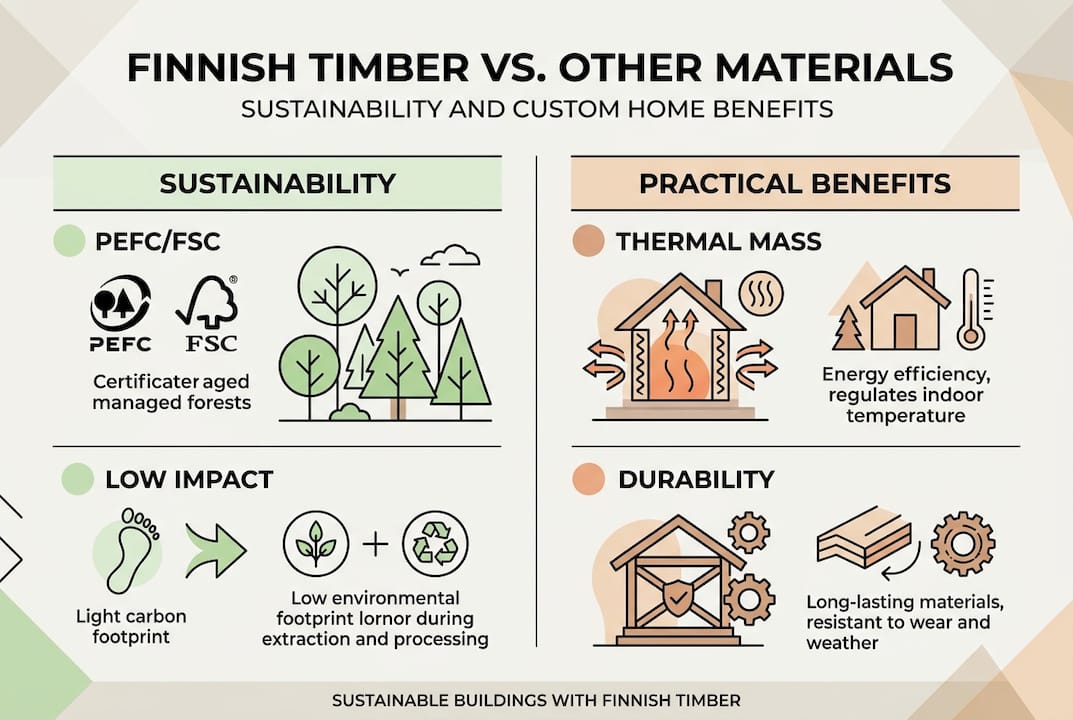
Finnish forests are managed for long-term carbon storage and ecosystem health. Selective harvesting allows continuous growth while maintaining habitat for wildlife. Young trees absorb CO2 rapidly as they grow, and the carbon remains sequestered in timber structures for decades or centuries. This creates a net carbon positive cycle where the wood in your cabin actively contributes to climate mitigation.
However, sustainability is nuanced. Recent research highlights biodiversity challenges from timber harvesting, particularly when old-growth forests are converted to managed plantations. Responsible builders should prioritize timber from certified managed forests that balance production with ecological preservation.
Here’s how Finnish timber compares to tropical hardwoods:
| Factor | Finnish Timber | Tropical Hardwood |
|---|---|---|
| Durability (untreated) | 5-10 years (class 4) | 15-25+ years (class 1-2) |
| Durability (treated) | 25+ years (ThermoWood) | 15-25+ years (varies) |
| Sustainability | PEFC/FSC certified, rapid regrowth | Often uncertified, slow regrowth |
| Carbon footprint | Low (local sourcing, net positive) | High (transport, deforestation risk) |
| Cost | Moderate | High |
| Treatment options | Chemical-free thermal modification | Often chemical preservatives |
Pro Tip: Always verify PEFC or FSC certification when purchasing Finnish timber. These labels guarantee that your wood comes from responsibly managed forests with transparent supply chains and environmental oversight.
For homeowners interested in wood construction sustainability and choosing Finnish wood sustainably, understanding these certifications and carbon impacts is crucial. Finnish timber offers a practical path to low-carbon custom homes without compromising on performance or longevity.
Practical benefits and applications of Finnish timber in custom cabins, saunas, and villas
Finnish timber delivers tangible advantages in real-world construction projects. For cabins and saunas, ThermoWood pine and spruce offer chemical-free durability with excellent breathability and insulation. These properties translate into faster build times, lower maintenance requirements, and superior comfort across diverse applications.
Chemical-free durability makes Finnish timber ideal for saunas and outdoor spaces where occupants are exposed to wood surfaces at high temperatures. Unlike pressure-treated lumber, which can release volatile organic compounds when heated, ThermoWood remains inert and safe. This same quality benefits indoor living spaces, particularly for families with children or individuals with chemical sensitivities.
Build times are often shorter compared to masonry or steel-frame construction. Prefabricated log kits arrive ready for assembly, and experienced crews can erect the structural shell of a cabin in days rather than weeks. The dimensional stability of ThermoWood means fewer callbacks for adjustments as the structure settles and acclimates to its environment.
Breathable log stacking methods enhance comfort by allowing moisture vapor to pass through walls while blocking liquid water. This natural moisture management prevents mold growth and maintains healthy indoor air quality without mechanical ventilation systems. The result is a living space that feels fresh and comfortable year-round.
Aesthetic warmth and natural beauty are intrinsic to Finnish softwoods. The visible grain patterns, warm honey tones of pine, and lighter hues of spruce create inviting interiors that age gracefully. Unlike synthetic materials that degrade visually over time, wood develops a patina that many homeowners find increasingly attractive.
Applicability ranges from small weekend cabins to large family villas. Finnish timber construction scales effectively, with the same principles of thermal performance, durability, and sustainability applying whether you’re building a 400-square-foot sauna or a 3,000-square-foot residence.
Top six practical benefits for builders and homeowners:
- Fast assembly: Prefabricated log kits reduce on-site construction time and labor costs
- Low maintenance: ThermoWood resists decay and weathering, requiring minimal treatment over decades
- Energy efficiency: Natural insulation lowers heating and cooling costs throughout the building’s lifespan
- Health and safety: Chemical-free materials eliminate off-gassing and toxicity concerns
- Design flexibility: Custom milling accommodates unique architectural visions and site-specific requirements
- Resale value: Timber structures are increasingly valued for their sustainability and craftsmanship
For those planning projects, understanding the log cabin building process, exploring custom wooden villas, or following a cottage building guide provides actionable insights into how Finnish timber performs from foundation to finish.
Why choose Huvilaseppala for your Finnish timber home
When you’re ready to move from research to reality, partnering with experienced craftsmen makes all the difference. Huvilaseppala brings over 65 years of expertise in manufacturing timber frames and log structures, specializing in custom cabins, saunas, and villas built from premium Finnish wood. Every project is tailored to your drawings and specifications, with transparent quotations and no hidden costs.
Our commitment to sustainable practices includes using certified Finnish timber and offering ThermoWood options for enhanced durability and moisture resistance. We handle projects from initial design consultation through delivery, ensuring your vision becomes a reality with the quality and craftsmanship that Finnish timber construction demands.
Benefits of working with Huvilaseppala:
- Custom design based on your architectural drawings and site requirements
- Fast delivery times with efficient manufacturing and logistics
- Transparent pricing with detailed quotations upfront
- Over six decades of experience in Finnish log and timber construction
- Sustainable materials sourced from certified Finnish forests
Explore why build with timber to understand the fundamental advantages, review custom wooden villas to see design possibilities, or follow our cottage building guide to learn about the construction process from start to finish.
Frequently asked questions
What is Finnish ThermoWood and why is it preferred?
ThermoWood is heat-treated Finnish pine or spruce that undergoes thermal modification at 185 to 230 degrees Celsius in an oxygen-free environment. This process enhances durability, reduces moisture absorption by up to 50 percent, and improves dimensional stability without any chemical treatments. It’s preferred for saunas, cabins, and outdoor structures because it resists decay and warping while remaining completely safe for high-heat and high-humidity applications.
How does Finnish timber contribute to sustainability?
Finnish timber is harvested from PEFC and FSC certified forests managed for regeneration and biodiversity. The wood absorbs five times more carbon dioxide during growth than is emitted during production and processing, creating a net carbon positive building material. Choosing certified Finnish timber supports responsible forestry practices and helps reduce the carbon footprint of custom homes, cabins, and villas.
Is Finnish timber suitable for all climate types?
Finnish timber excels in cold and humid climates where its thermal mass and insulation properties deliver maximum benefit. Thick log walls regulate indoor temperatures effectively, reducing heating demands in winter and maintaining comfort during summer. ThermoWood treatment further improves moisture stability, making it suitable for coastal and high-humidity environments. However, in extremely dry or hot climates, other materials might offer advantages.
What types of structures can be built using Finnish timber?
Finnish timber is versatile and commonly used for custom cabins, saunas, cottages, and villas ranging from small weekend retreats to large family residences. The material works equally well for outdoor structures like garden sheds and gazebos. Both ThermoWood and untreated Finnish softwoods can be milled to custom specifications, accommodating diverse architectural styles and functional requirements from traditional log cabins to contemporary timber-frame homes.
Recommended
- Why Use Finnish Forestry for Log Homes – Hirsitalot, pihasaunat ja piharakennukset kotimaisesta hirrestä
- Why Use Finnish Wood for Lasting Timber Homes – Hirsitalot, pihasaunat ja piharakennukset kotimaisesta hirrestä
- Why Choose Finnish Wood: Benefits for Central Europe – Hirsitalot, pihasaunat ja piharakennukset kotimaisesta hirrestä
- Guide to choosing Finnish wood for sustainable homes 2026 – Hirsitalot, pihasaunat ja piharakennukset kotimaisesta hirrestä