Log house building process: step-by-step guide 2026
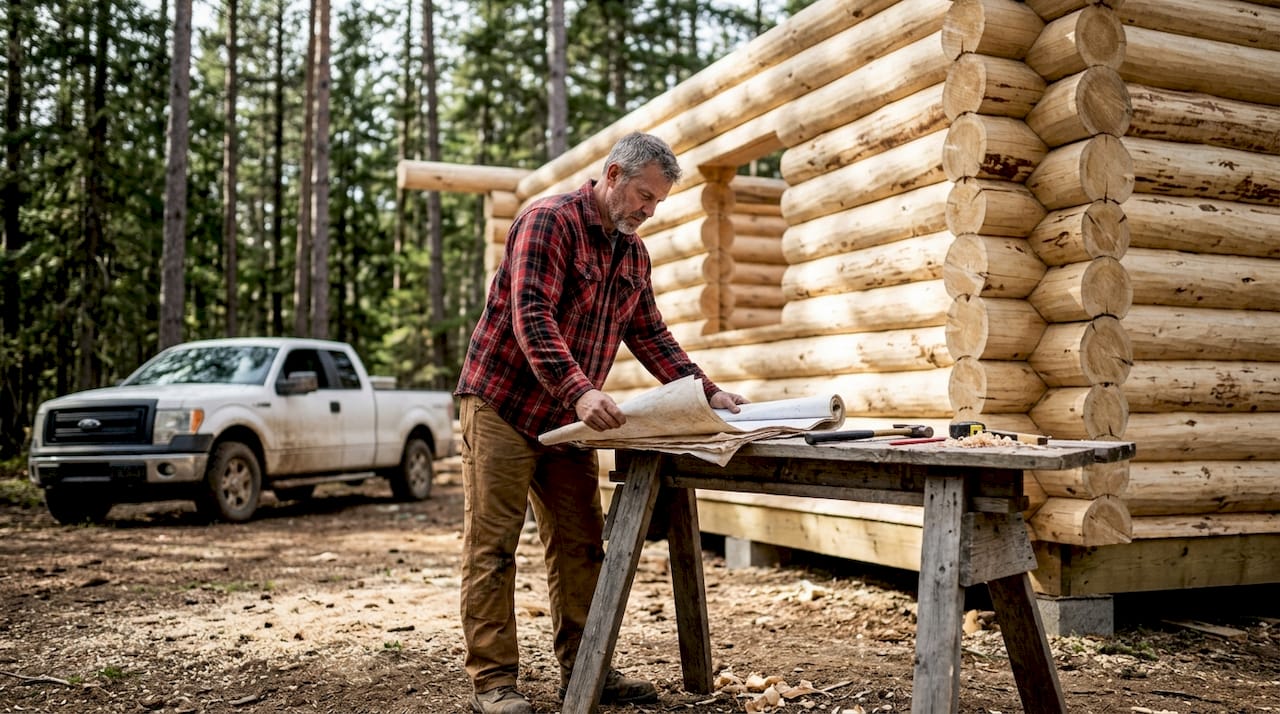
Most people picture building a log house as a straightforward process: pick some timber, stack it up, and move in. The reality in Finland is far more precise. Finnish log construction follows a regulated, technical sequence that blends centuries of craftsmanship with modern engineering standards. This guide walks you through every stage, from site selection and permits to timber preparation, assembly, and long-term care. Whether you’re planning a full family home, a lakeside cottage, or an outdoor sauna, understanding the log home construction explained process will help you avoid costly mistakes and build something that truly lasts.
Table of Contents
- Understanding the Finnish log house tradition
- Planning and permits: The foundation for success
- From forest to frame: Timber selection and preparation
- Modern construction methods: Handcrafted, milled, modular, and hybrid
- Step-by-step assembly: From foundation to finished home
- Settling, maintenance, and long-term care
- Bring your log house vision to life with expert help
- Frequently asked questions
Key Takeaways
| Point | Details |
|---|---|
| Precision is key | Finnish log house building requires careful planning, expert timber selection, and stepwise assembly. |
| Choose the right method | Handcrafted, milled, modular, and hybrid approaches suit different needs for homes, saunas, and budgets. |
| Permits and prep | Start with site selection, custom design, and follow Finland’s permitting process for a smooth build. |
| Maintenance ensures longevity | Modern non-settling systems and proper upkeep can make a log home last over a century. |
Understanding the Finnish log house tradition
Finnish log building has roots stretching back over a thousand years, but the methods used today look very different from what your ancestors practiced. Traditional notch-and-stack techniques have evolved into precision-engineered systems with computer-aided cutting, certified materials, and energy performance standards that rival modern frame construction.
“Finnish log homes are not relics of the past. They are engineered structures built to perform for generations.”
One of the most compelling reasons to build with logs in Finland is longevity. With proper maintenance, structures last 100+ years, which is something few other building materials can match. That kind of durability changes how you think about upfront investment.
Local spruce and pine are the dominant choices for Finnish log homes, and for good reason. Both species grow slowly in the Nordic climate, producing dense, resin-rich wood that resists moisture, insects, and decay far better than timber from warmer regions. The benefits of log homes built from Finnish timber include natural thermal mass, excellent air quality, and a carbon-storing structure that supports sustainability goals.
Modern Finnish builders also pursue eco-certifications and use low-emission treatments, making today’s log homes greener than ever. Key advantages of building with Finnish timber include:
- Natural insulation from dense Nordic wood grain
- Low embodied carbon compared to concrete or steel
- Breathable walls that regulate indoor humidity naturally
- Compatibility with modern heating systems including geothermal and heat pumps
- Aesthetic warmth that no synthetic material replicates
Familiarizing yourself with Finnish log house terms early in the process will also help you communicate clearly with architects, builders, and permit authorities.
Planning and permits: The foundation for success
With tradition in mind, the next critical step is laying a solid foundation, legally and structurally. Many first-time builders underestimate how much work happens before a single log is placed. In Finland, log house building starts with securing permits and architectural design, and skipping or rushing these steps creates expensive problems later.
Here is the typical planning sequence you should follow:
- Assess your building site. Check soil type, slope, drainage, and access. A geotechnical survey is often required and always worth doing.
- Commission architectural drawings. Your design must reflect both your wishes and the site’s physical constraints. Custom drawings tailored to your plot are the starting point for every permit application.
- Check zoning and local regulations. Finland’s municipalities each have their own detailed plans (asemakaava or yleiskaava) that govern what you can build, how large, and how close to boundaries.
- Apply for a building permit. Submit your drawings, site plan, and supporting documents to the local building authority. Review the full permit requirements before you apply to avoid delays.
- Plan your budget with contingency. Material costs, labor, permits, and site preparation all add up. Build in a 15 to 20 percent buffer for unexpected expenses.
Understanding the permits process in detail before you start saves weeks of back-and-forth with authorities.
Pro Tip: Request a pre-application meeting with your local building authority before submitting formal plans. Many municipalities offer this service free of charge, and it can reveal zoning issues or design requirements that would otherwise delay your permit by months.
From forest to frame: Timber selection and preparation
Once the legal groundwork is set, the spotlight shifts to the wood itself, the backbone of your log house. This is where quality decisions made early pay dividends for decades.
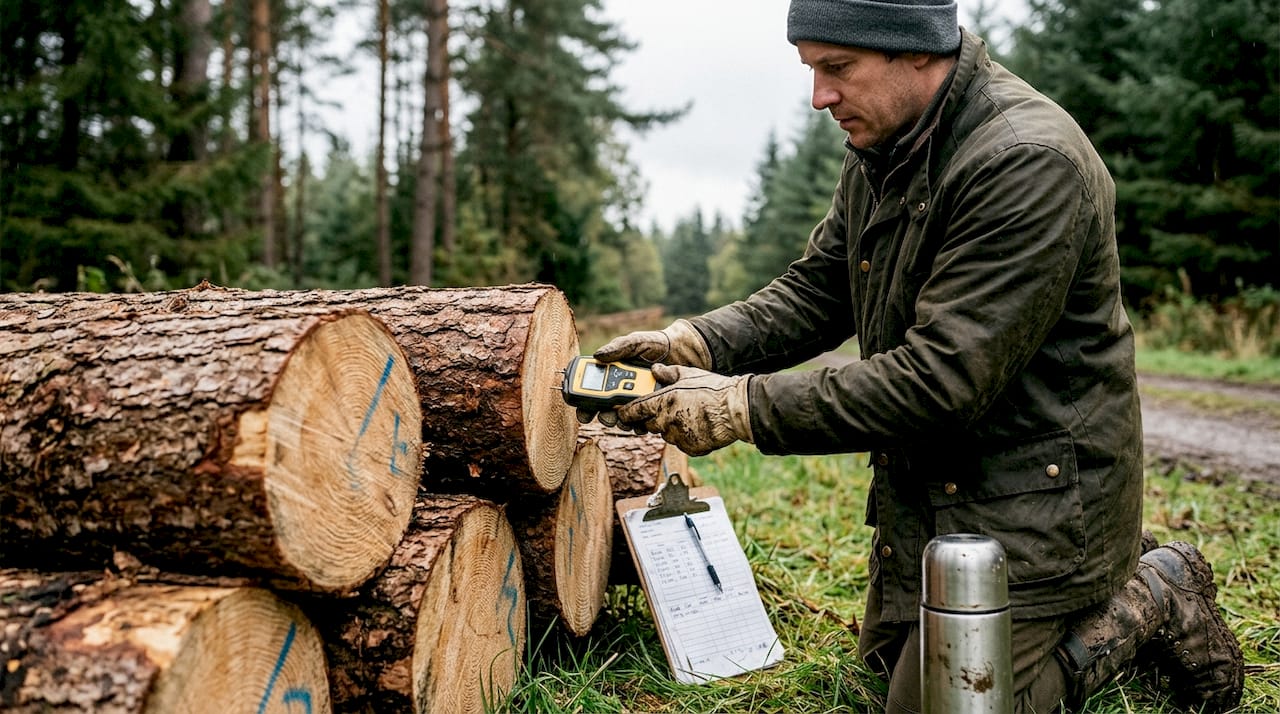
Certified spruce and pine with proper drying are essential for durability. Timber that hasn’t been adequately seasoned will shrink, crack, and warp after assembly, causing gaps in walls, sticking doors, and structural stress. Here’s how responsible Finnish builders handle the timber preparation process:
| Stage | What happens | Why it matters |
|---|---|---|
| Harvesting | Logs selected from certified, sustainably managed forests | Ensures consistent density and grain quality |
| Debarking | Bark removed immediately after felling | Prevents insect infestation and speeds drying |
| Drying (seasoning) | Air-dried or kiln-dried to target moisture content | Reduces post-assembly shrinkage and cracking |
| Anti-splitting treatment | End-grain sealed with protective coating | Prevents radial cracks from forming during drying |
| Grading | Logs sorted by diameter, straightness, and knot density | Ensures structural consistency across the build |
| Precision cutting | CNC or hand-cut notches and profiles | Guarantees tight fits and proper load transfer |
Timber grading is a step that many homeowners never see but absolutely feel in the finished building. Poorly graded logs introduce weak points that compromise the entire wall system. Top Finnish manufacturers use technology-assisted cutting to achieve tolerances that were impossible with hand tools alone. Explore the full Finnish wood selection process to understand what to ask your supplier.
Pro Tip: Always ask your timber supplier for the moisture content certificate for your logs. Target moisture content at delivery should be below 19 percent for structural stability. Anything higher increases your settling risk significantly.
Modern construction methods: Handcrafted, milled, modular, and hybrid
The chosen building method determines not just appearance, but long-term comfort and maintenance. Finland’s log building industry offers four main approaches, and each suits different projects and budgets.
| Method | Appearance | Insulation | Build speed | Best for |
|---|---|---|---|---|
| Handcrafted | Rustic, organic, unique | Variable, depends on fit | Slowest | Heritage homes, prestige builds |
| Milled | Uniform, clean lines | Tight, consistent | Moderate | Family homes, energy efficiency |
| Modular | Modern, precise | Excellent | Fastest | Saunas, cabins, quick builds |
| Hybrid | Flexible | High | Moderate to fast | Custom homes, mixed-use projects |
Handcrafted log homes are shaped by skilled craftspeople who fit each log individually to the one below it. The result is a structure with enormous character, but it requires more maintenance over time because the fit is never perfectly uniform. Milled logs, by contrast, are machine-profiled to exact dimensions, creating tighter seals and more predictable thermal performance.
Modern builds increasingly use non-settling technologies such as doweling systems and sliding frames, which minimize seasonal movement issues that have historically been a challenge in log construction. This is a genuine game-changer for door and window installation. Browse the full range of log cabin options and learn more about handcrafted log homes to compare what fits your project.
Key insight: Modular and hybrid systems are now the most popular choice for custom sauna and cottage projects in Finland because they combine speed, precision, and design flexibility without sacrificing the warmth of real wood.
Step-by-step assembly: From foundation to finished home
Once the method is chosen and timber prepared, the real transformation starts. Assembly is where months of planning become a physical structure, and the sequence matters enormously.
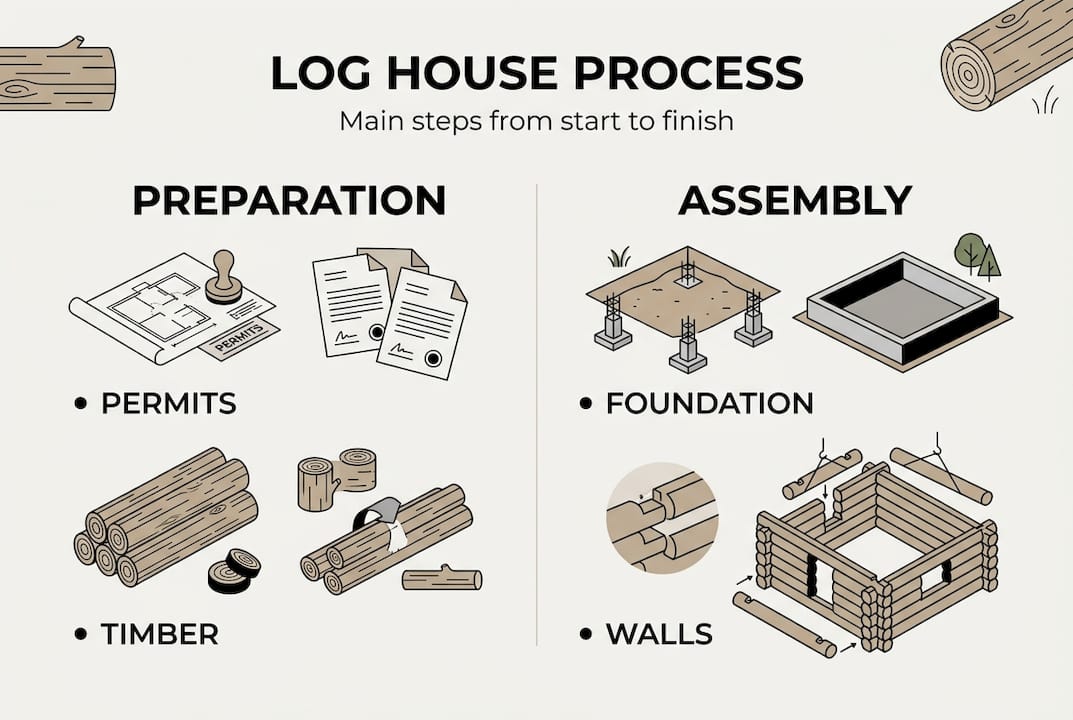
The stages of log home assembly include prefabrication, transport, foundation setup, log erection, sealing, and finishing. Each phase must be completed correctly before the next begins.
- Prefabrication. Logs are numbered and pre-cut at the factory. This is where precision cutting happens in a controlled environment, not on a muddy site.
- Foundation preparation. A concrete slab, strip foundation, or screw pile system is installed and allowed to cure fully before logs arrive.
- Log delivery and site setup. Numbered logs are delivered and organized on site. A crane or lifting equipment is typically needed.
- Log erection. Walls rise course by course, with each log fitted to the one below using notches, dowels, or tongue-and-groove profiles.
- Weather sealing. Chinking material or pre-compressed foam tape is installed between courses to block air and moisture infiltration.
- Roof structure and weatherproofing. The roof is installed as soon as walls reach full height to protect the structure from rain.
- Interior and exterior finishing. Windows, doors, insulation, flooring, and surface treatments complete the build.
“The numbering system used during prefabrication is what makes on-site assembly fast and accurate. Every log has exactly one correct position.”
For timing, full homes of 200 to 300m² typically take 6 to 12 months to complete, while saunas and small cabins can be finished much faster. Budget benchmarks vary widely, but sauna frames start from approximately €7,250. Use the step-by-step log cabin guide and the detailed building process pages to map out your own timeline.
Settling, maintenance, and long-term care
Even after move-in, knowing how to handle settling and upkeep ensures your investment thrives. Log homes are living structures. Wood moves with temperature and humidity changes, and your building will shift slightly during its first few years.
Modern non-settling systems use doweling or sliding frames to accommodate this movement without damaging windows, doors, or interior finishes. Traditional builds require settling gaps above door and window frames, which must be monitored and adjusted over time.
Key maintenance practices for a long-lasting log home:
- Inspect and re-treat exterior surfaces every 3 to 5 years. UV exposure and moisture are the primary enemies of log walls.
- Check chinking and sealing annually. Small gaps let in moisture and cold air, and they grow if ignored.
- Keep gutters and drainage clear. Water pooling near the foundation is the fastest way to damage a log structure.
- Monitor for insect activity. Finnish pine and spruce are naturally resistant, but no wood is completely immune.
- Ventilate crawl spaces and roof structures. Trapped moisture causes rot from the inside out.
For reclaimed log projects, the rules are slightly different. Older logs may have hidden decay, inconsistent moisture content, or incompatible profiles. Always have reclaimed timber assessed by a structural specialist before incorporating it into a new build. The modern log house care guide covers both new and reclaimed scenarios in practical detail.
Pro Tip: Apply a breathable, UV-resistant wood oil or stain to exterior log walls within the first year of construction. This single step dramatically extends the time between major maintenance cycles and protects your investment from the start.
Bring your log house vision to life with expert help
If reading this guide has made you more confident about what building a log house actually involves, that’s exactly the point. Knowledge is your best tool before any project begins.
At Huvila Seppälä, we’ve spent over 65 years manufacturing custom timber frames and log structures for Finnish homeowners, and we build every project to your drawings with no hidden costs. Whether you’re ready to review a cottage building guide, understand the full log cabin turnkey process, or simply browse examples of Finnish timber structures for inspiration, we have the resources to support your next step. Contact us for a transparent, personalized quote and let our team help you turn your plans into a structure built to last a century.
Frequently asked questions
How long does it take to build a log house in Finland?
A typical custom log home of 200 to 300m² takes 6 to 12 months to complete, depending on design complexity, permit timelines, and seasonal weather conditions.
Can I build a log house in Finland as a DIY project?
DIY is realistic for small outdoor buildings or saunas, but professionals are recommended for full homes to ensure code compliance, structural integrity, and energy performance standards are met.
What permits are needed for a log house in Finland?
You need a building permit and must follow local zoning, site, and design regulations. Log house building starts with securing these permits and approved architectural drawings before any construction begins.
What’s the difference between handcrafted and milled log houses?
Handcrafted homes have a rustic, organic character shaped by skilled craftspeople, while milled log styles offer tighter seals, more consistent insulation, and faster assembly timelines.
How much does a log house or sauna cost?
Sauna frames start from approximately €7,250, while full home budgets vary widely. Always add a 15 to 20 percent contingency to your estimate to cover site-specific and unforeseen costs.
Recommended
- How to build a log house in Finland: expert guide 2026 – Hirsitalot, pihasaunat ja piharakennukset kotimaisesta hirrestä
- Log Home Construction Explained: Finnish Precision for Custom Living – Hirsitalot, pihasaunat ja piharakennukset kotimaisesta hirrestä
- Log House Design Basics: Building Timeless Comfort – Hirsitalot, pihasaunat ja piharakennukset kotimaisesta hirrestä
- Log House Project Checklist: Step-by-Step Guide for Success – Hirsitalot, pihasaunat ja piharakennukset kotimaisesta hirrestä