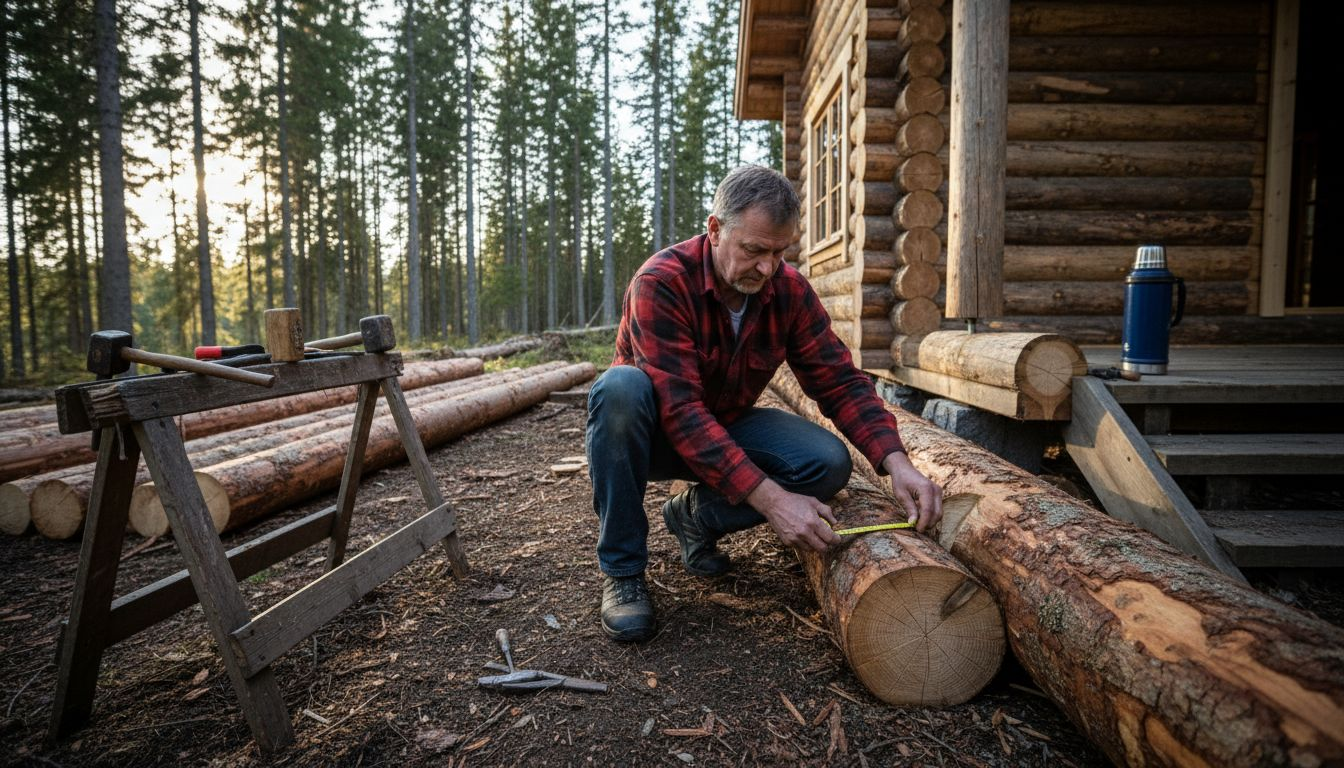
Why Use Finnish Wood for Lasting Timber Homes
Finding construction materials that combine lasting quality with true sustainability often feels challenging for Central European homeowners seeking to build custom cottages or saunas. Finnish wood stands out for its remarkable durability, thanks to pine and spruce grown in the boreal forests of Finland, where slow growth results in exceptional strength and density. By choosing boreal timber from Finland, you invest in reliable performance, innovative craftsmanship, and a commitment to ecological responsibility, making it an ideal solution for resilient and beautiful builds.
Table of Contents
- Finnish Wood: Definition And Unique Qualities
- Types Of Finnish Timber For Construction
- Durability, Energy Efficiency, And Indoor Health
- Sustainability And Ecological Impact
- Comparing Finnish Wood With Other Options
- Financial Aspects And Common Pitfalls
Key Takeaways
| Point | Details |
|---|---|
| Unique Qualities of Finnish Wood | Finnish wood is known for its high density, durability, and superior resistance to temperature fluctuations, making it ideal for construction in cold climates. |
| Sustainable Forestry Practices | Finland employs sustainable resource management, ensuring more wood grows than is harvested, contributing to environmental conservation and quality timber production. |
| Financial Considerations | While upfront costs for Finnish timber may be higher, lower maintenance and superior long-term value offset these initial investments. |
| Health and Energy Efficiency | Finnish timber homes offer exceptional energy efficiency and indoor air quality, promoting respiratory health through natural humidity regulation. |
Finnish Wood: Definition and Unique Qualities
Finnish wood represents a remarkable natural resource with extraordinary characteristics deeply rooted in Northern European forestry traditions. Boreal timber from Finland consists primarily of pine and spruce trees grown in harsh, cold climates that produce uniquely resilient wood specimens. These trees develop dense, strong wood fibers through slow growth cycles influenced by challenging environmental conditions.
The defining qualities of Finnish wood stem from its exceptional growth environment, which creates lumber with remarkable structural integrity. Key characteristics include:
- Extremely high density compared to timber from warmer regions
- Superior resistance to temperature fluctuations
- Natural durability against moisture and environmental stress
- Tight, compact wood grain patterns
- Low resin content that reduces potential warping
Historically, Finnish wood has been central to architectural heritage in Nordic construction, with log-building techniques dating back over a thousand years. Traditional methods involved horizontal log placement and precise corner notching, techniques that demonstrated remarkable engineering sophistication long before modern construction technologies emerged.
The wood’s unique properties make it particularly suited for timber homes in cold climates. Pine and spruce from Finnish forests grow slowly, creating tight, compact wood grains that provide exceptional insulation and structural strength. This natural adaptation allows Finnish timber to withstand extreme temperature variations while maintaining dimensional stability.
Pro tip: When selecting Finnish wood for construction, request documentation about the specific forest region and tree age to ensure maximum quality and performance.
Types of Finnish Timber for Construction
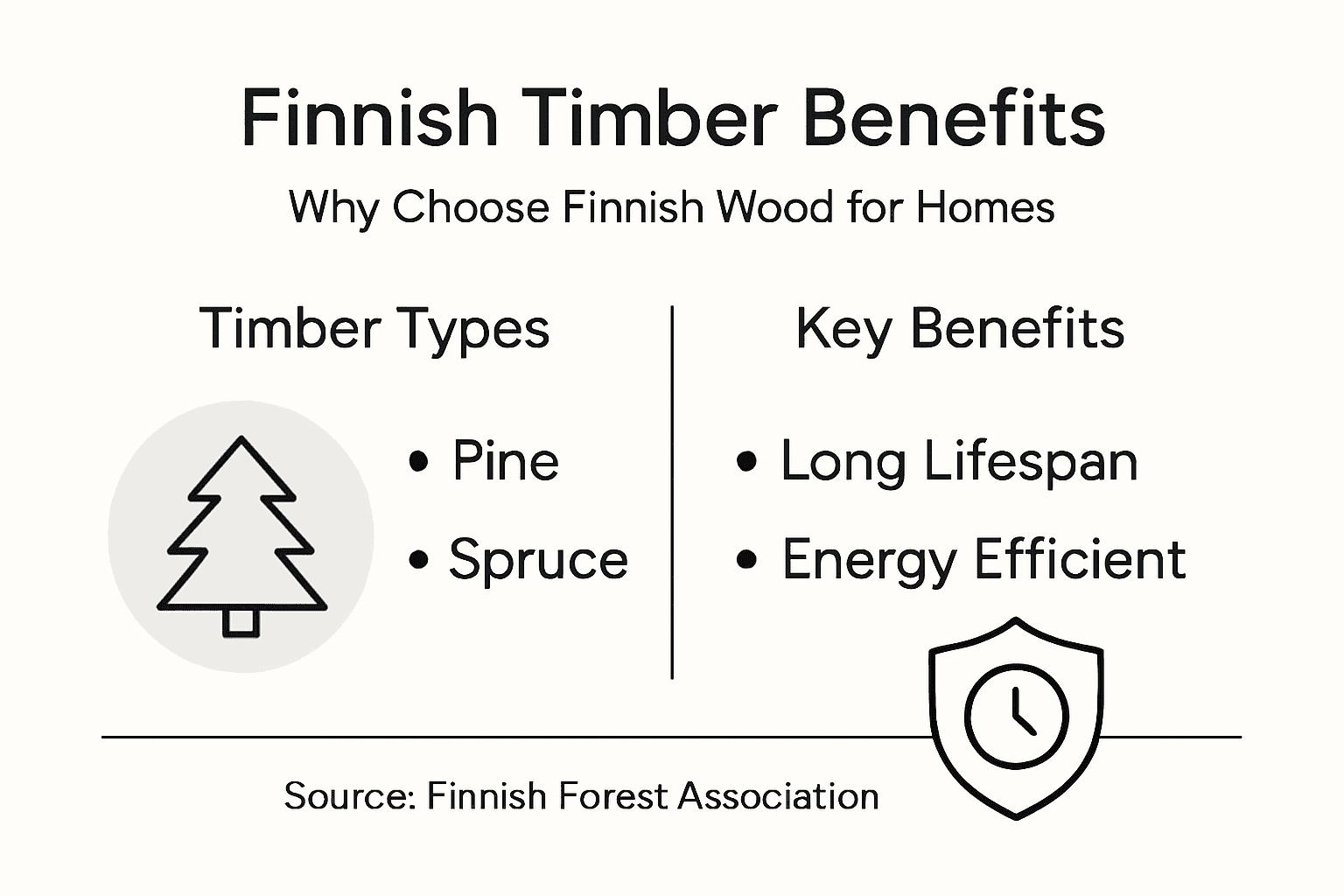
Finnish timber construction relies primarily on two exceptional softwood species: pine and spruce. These trees grow in the unique boreal forests of Northern Finland, developing remarkable characteristics that make them ideal for building high-quality timber structures. The slow growth cycles in cold climates produce wood with exceptional density, strength, and durability.
The primary timber types used in Finnish construction include:
- Pine Timber: Reddish-brown wood with excellent weather resistance
- Spruce Timber: Light-colored wood with superior structural strength
- Glued Laminated Timber (Glulam): Engineered wood product for complex architectural designs
- Finger-Jointed Timber: Enhanced stability for precision construction
- Thermally Modified Timber: Treated wood with increased resistance to decay
Finnish sawmills have perfected wood processing techniques for construction that transform these raw materials into premium building components. Each timber type undergoes careful selection and processing to meet stringent quality standards, ensuring optimal performance in various building applications.
The sustainable forest management in Finland allows for timber harvesting cycles ranging from 50 to 120 years, which contributes to the wood’s exceptional quality. This extended growth period creates tight wood grains with superior mechanical properties, making Finnish timber particularly suitable for residential and commercial construction projects that demand long-lasting, structurally sound materials.
Pro tip: Always request detailed grade certification when selecting Finnish timber to ensure you receive the highest quality wood for your specific construction needs.
Here’s a concise comparison of Finnish timber species and engineered wood products for construction:
| Timber/Product Type | Key Structural Advantage | Typical Use Case | Longevity/Performance |
|---|---|---|---|
| Pine Timber | Excellent weather resistance | Exterior walls, framing | Highly durable in harsh climates |
| Spruce Timber | Superior load-bearing strength | Roof trusses, floors | Maintains shape over decades |
| Glued Laminated Timber | Flexible for complex designs | Beams, arches | Stable over long spans |
| Thermally Modified Timber | Enhanced decay resistance | Decks, siding | Extended resistance to moisture |
| Finger-Jointed Timber | Precision and stability | Windows, doors | Reliable in variable conditions |
Durability, Energy Efficiency, and Indoor Health
Finnish wooden homes represent a pinnacle of sustainable construction, offering exceptional durability that extends far beyond traditional building materials. The unique characteristics of Finnish timber create structures that withstand extreme environmental conditions while maintaining structural integrity for generations. Careful engineering and advanced moisture management techniques ensure these homes remain stable and resilient in challenging climates.
Key performance attributes of Finnish timber homes include:
- Superior thermal insulation properties
- Natural humidity regulation
- Exceptional structural stability
- Reduced environmental impact
- Long-term resistance to structural degradation
Moisture management plays a critical role in maintaining energy efficiency in log houses, directly impacting both building longevity and indoor air quality. Finnish construction professionals have developed sophisticated techniques to prevent moisture infiltration, including advanced sealing methods and precise timber treatment processes that protect against potential structural damage.
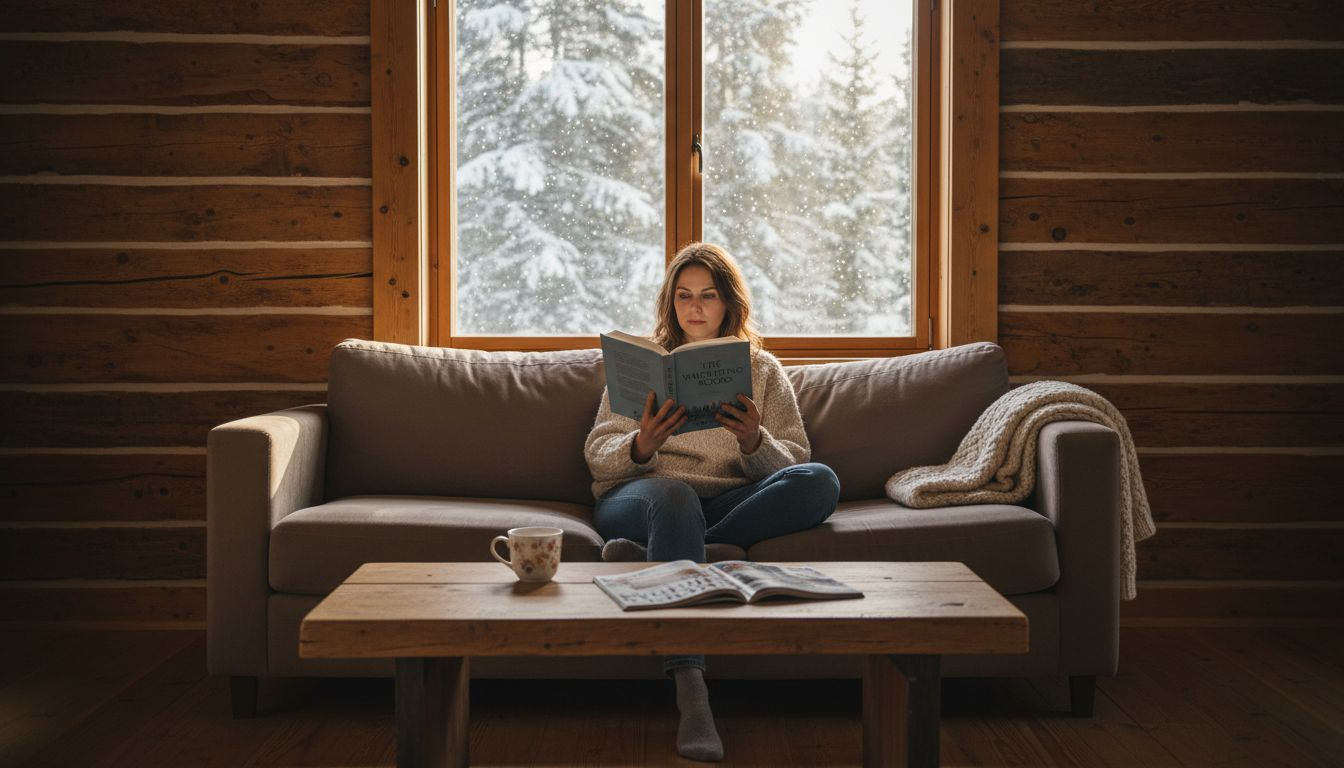
The indoor health benefits of wooden structures are particularly remarkable. Unlike synthetic building materials, Finnish timber naturally regulates humidity, creates a balanced indoor environment, and helps maintain consistent temperatures. These properties contribute to improved respiratory health and overall well-being for inhabitants, making wooden homes not just a structural choice but a holistic health investment.
Pro tip: Schedule professional moisture inspections every three to five years to ensure your Finnish timber home maintains its optimal structural performance and indoor air quality.
Sustainability and Ecological Impact
Finnish forestry represents a global gold standard in sustainable resource management, demonstrating an extraordinary approach to environmental conservation and timber production. Unlike many global timber industries, Finnish forests are meticulously managed to ensure ongoing ecological balance, with carefully controlled harvesting practices that prioritize forest regeneration and biodiversity preservation.
Key sustainability characteristics of Finnish forestry include:
- More wood grows annually than is harvested
- Stringent forest certification processes
- Active biodiversity protection strategies
- Transparent carbon footprint tracking
- Renewable resource management principles
Sustainable timber production methods have transformed Finland’s approach to ecological resource management. The country’s forestry practices integrate advanced scientific monitoring, ensuring that each harvested tree contributes to a larger environmental strategy rather than depleting natural resources. Finnish forests actively sequester carbon, with wood products continuing to store carbon throughout their lifecycle.
Carbon accounting in Finnish timber production reveals remarkable environmental advantages. Compared to concrete and steel construction materials, wooden structures dramatically reduce greenhouse gas emissions, creating a net positive environmental impact. The entire timber production cycle – from forest management to final construction – represents a model of ecological responsibility that significantly mitigates climate change risks.
Pro tip: Request forest certification documentation when purchasing Finnish timber to ensure you are supporting verified sustainable forestry practices.
Comparing Finnish Wood With Other Options
The exceptional qualities of Finnish timber set it apart from wood sourced in other global regions, creating a benchmark for construction-grade materials that few alternatives can match. Unlike timber from warmer climates, Finnish wood develops unique characteristics through slow growth cycles in extreme northern environments, resulting in exceptionally dense, stable, and resilient building materials.
Key comparative advantages of Finnish wood include:
- Denser wood grain structure
- Superior mechanical strength
- Enhanced dimensional stability
- Lower moisture absorption rates
- More consistent visual and structural quality
When comparing wood structure options for construction, Finnish pine and spruce demonstrate remarkable superiority over alternative timber sources. The boreal climate forces these trees to grow slowly, creating incredibly tight wood grains that provide unparalleled structural integrity. This contrasts sharply with rapidly grown timber from tropical or temperate regions, which often lacks the same density and long-term performance characteristics.
Materials like concrete, steel, and wood from other regions simply cannot compete with Finnish timber’s comprehensive performance profile. Where alternative construction materials degrade more quickly and require frequent maintenance, Finnish wood maintains its structural qualities, thermal efficiency, and aesthetic appeal for decades. The combination of scientific forest management, strict quality control, and natural growth conditions makes Finnish timber a premium choice for discerning builders and homeowners.
Pro tip: Request wood grain density measurements and growth region documentation when comparing timber options to ensure you select the highest quality construction materials.
Financial Aspects and Common Pitfalls
Building with Finnish timber represents a significant investment that requires careful financial planning and strategic decision-making. While the initial costs might appear higher compared to conventional construction materials, the long-term economic benefits create a compelling financial argument for choosing high-quality Finnish wood. Understanding the nuanced financial landscape helps homeowners make informed decisions that balance upfront expenses with long-term value.
Key financial considerations for Finnish timber construction include:
- Higher initial material procurement costs
- Lower long-term maintenance expenses
- Superior property value appreciation
- Reduced energy consumption
- Potential tax incentives for sustainable building
Analyzing cost structures for timber homes reveals complex economic dynamics beyond simple material pricing. Finnish timber’s exceptional durability means reduced replacement and repair costs, effectively offsetting higher initial investments. Homeowners can expect significant savings through improved thermal efficiency, reduced maintenance requirements, and enhanced structural longevity.
Common financial pitfalls in timber construction often stem from inadequate planning and unrealistic expectations. Potential challenges include underestimating initial design costs, failing to account for specialized construction techniques, and not fully understanding the unique maintenance requirements of high-quality wooden structures. Successful projects require comprehensive budgeting that considers not just material costs, but also professional design, specialized labor, and long-term performance metrics.
Pro tip: Consult multiple financial advisors specializing in sustainable construction to develop a comprehensive budget that accounts for both immediate and future economic implications of your Finnish timber home.
To summarize, here’s how Finnish timber construction benefits homeowners compared to conventional materials:
| Financial Factor | Finnish Timber Homes | Conventional Homes | Long-Term Impact |
|---|---|---|---|
| Upfront Cost | Higher investment | Usually lower | Offset by reduced maintenance |
| Energy Efficiency | Superior insulation | Varied performance | Savings on heating/cooling bills |
| Maintenance Expenses | Minimal over time | Often significant | Fewer repairs needed |
| Property Value | Strong appreciation | Slower growth | Increased resale potential |
| Sustainability | Verified eco-friendly | Varies, often less | Potential for tax incentives |
Discover the Power of Finnish Wood with Huvila Seppälä
Choosing Finnish wood for your timber home means embracing unmatched durability, superb energy efficiency, and authentic craftsmanship. The article highlights the challenges of finding wood that offers exceptional density, natural moisture resistance, and long-lasting structural stability to withstand harsh climates. If your goal is a timber structure that maintains its beauty and performance for decades with minimal maintenance, Finnish timber delivered by experienced professionals like Huvila Seppälä is the answer.
Turn your vision into reality by exploring our wide selection of custom log houses and villas. With over 65 years of expertise, we specialize in tailored wooden frames crafted from premium Finnish pine and spruce. Benefit from transparent quotations, fast delivery, and a collaborative design process that respects your unique plans. Visit Huvila Seppälä today to request a personalized offer and take the first step toward your lasting timber home built with genuine Finnish timber.
Frequently Asked Questions
What are the unique qualities of Finnish wood?
Finnish wood is known for its high density, superior resistance to temperature fluctuations, natural durability against moisture, tight wood grain patterns, and low resin content, making it exceptionally resilient for timber homes.
How does Finnish wood contribute to energy efficiency in homes?
Finnish timber provides superior thermal insulation and natural humidity regulation, helping maintain consistent indoor temperatures and reducing energy consumption for heating and cooling.
What are the main types of Finnish wood used in construction?
The primary types of Finnish wood include pine and spruce, with engineered options like glued laminated timber (glulam) and finger-jointed timber, each offering unique structural advantages for different build needs.
Why is Finnish wood considered a sustainable choice for timber construction?
Finnish forestry practices ensure more wood grows annually than is harvested, combined with stringent certifications and biodiversity protection strategies, making Finnish wood a renewable resource with a low environmental impact.
Recommended
- Why Use Finnish Forestry for Log Homes – Hirsitalot, pihasaunat ja piharakennukset kotimaisesta hirrestä
- Finnish Craftsmanship in Timber: Lasting Quality and Design – Huvila Seppälä
- Building a Finnish Villa Tutorial: Step-by-Step Guide to Success – Huvila Seppälä
- Advantages of Finnish Log Houses for Central Europe – Huvila Seppälä