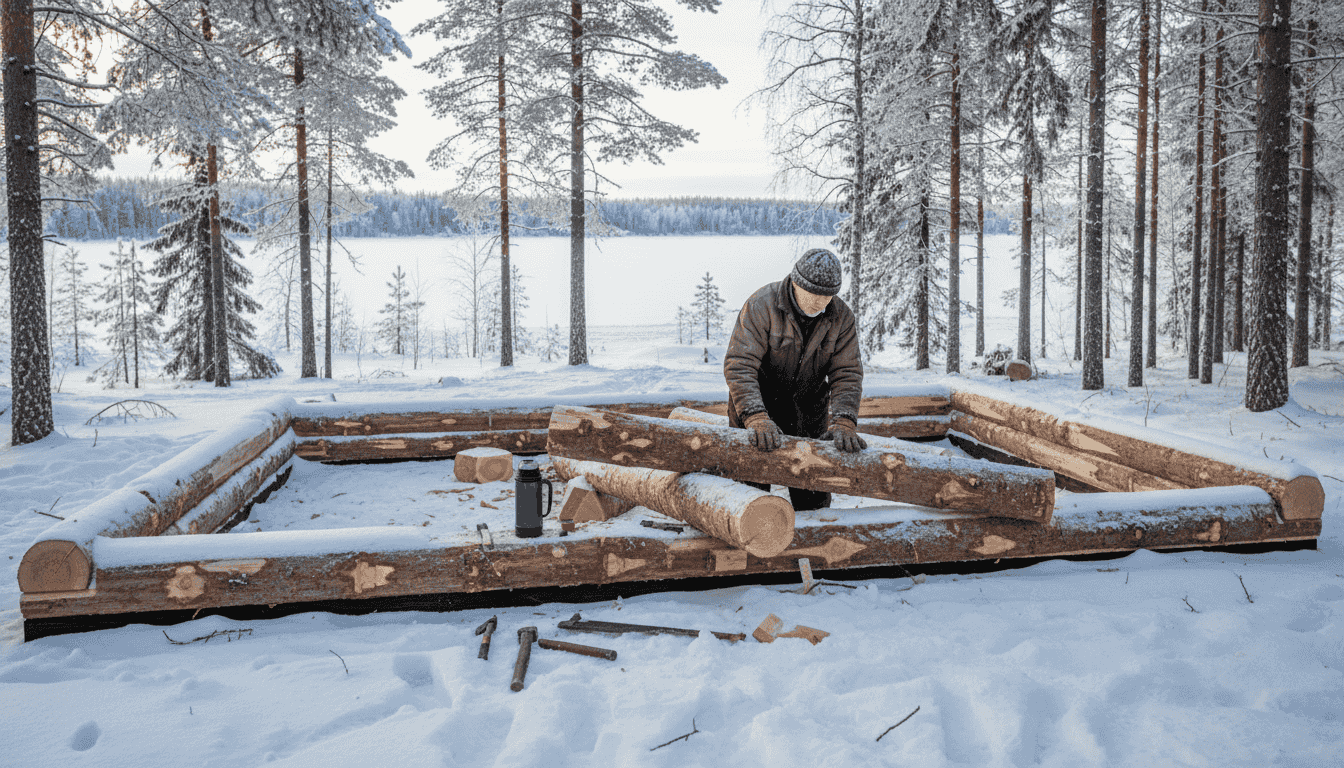
Log house terminology: your Finnish custom timber guide
Building a Finnish log home shouldn’t feel like decoding a foreign language. Many homeowners stumble over traditional construction terms, making it harder to communicate with builders or understand project specifications. This guide translates essential log house vocabulary into clear, practical knowledge you can use when planning your custom timber home, whether you’re building from scratch or evaluating existing properties.
Table of Contents
- Understanding Your Logs: Types, Materials, And Traditional Choices
- Key Construction Terms: Notching Methods, Log Stacking, And Interlocking Joints
- Insulation And Finishing Terms: Chinking, Caulking, And Architectural Features
- Design And Health Benefits: Layout, Air Quality, And Living Comfort In Log Houses
- Explore Finnish Custom Timber Homes With Huvilaseppala
Key takeaways
| Point | Details |
|---|---|
| Traditional materials matter | Finnish log homes use slow-grown pine and spruce for superior insulation and longevity. |
| Construction techniques define quality | Horizontal stacking with precise corner notching creates interlocking joints that strengthen naturally over time. |
| Sealing methods impact performance | Traditional chinking uses breathable natural materials, while modern caulking offers synthetic alternatives. |
| Health advantages are measurable | Log house residents report four times better air quality satisfaction than wooden house occupants. |
Understanding your logs: types, materials, and traditional choices
The foundation of any log house starts with understanding the wood itself. Authentic Finnish log cabins use pine and spruce selected specifically for their dense fibers and natural insulation properties. These aren’t just any trees. Slow-grown timber from Finland’s northern forests develops tighter growth rings, creating logs that resist moisture and temperature fluctuations far better than fast-grown alternatives.
Pine dominates Finnish log construction because of its workability and natural resistance to decay. The heartwood contains resins that protect against rot, making it ideal for exterior walls exposed to harsh weather. Spruce, lighter in color and weight, often appears in interior structures where its subtle grain patterns create warm, inviting spaces. Both species come from sustainably managed Finnish forests that ensure consistent quality across harvests.
Log selection goes beyond species. Builders examine each log for straightness, minimal knots, and uniform diameter. These factors determine how well logs stack and how much settling occurs after construction. Traditional builders reject logs with excessive taper or spiral grain because they create gaps that compromise insulation.
Pro Tip: Ask your builder about the moisture content of logs before construction. Properly dried logs (typically 18-20% moisture) settle predictably, while green logs can shrink unpredictably and create maintenance headaches.
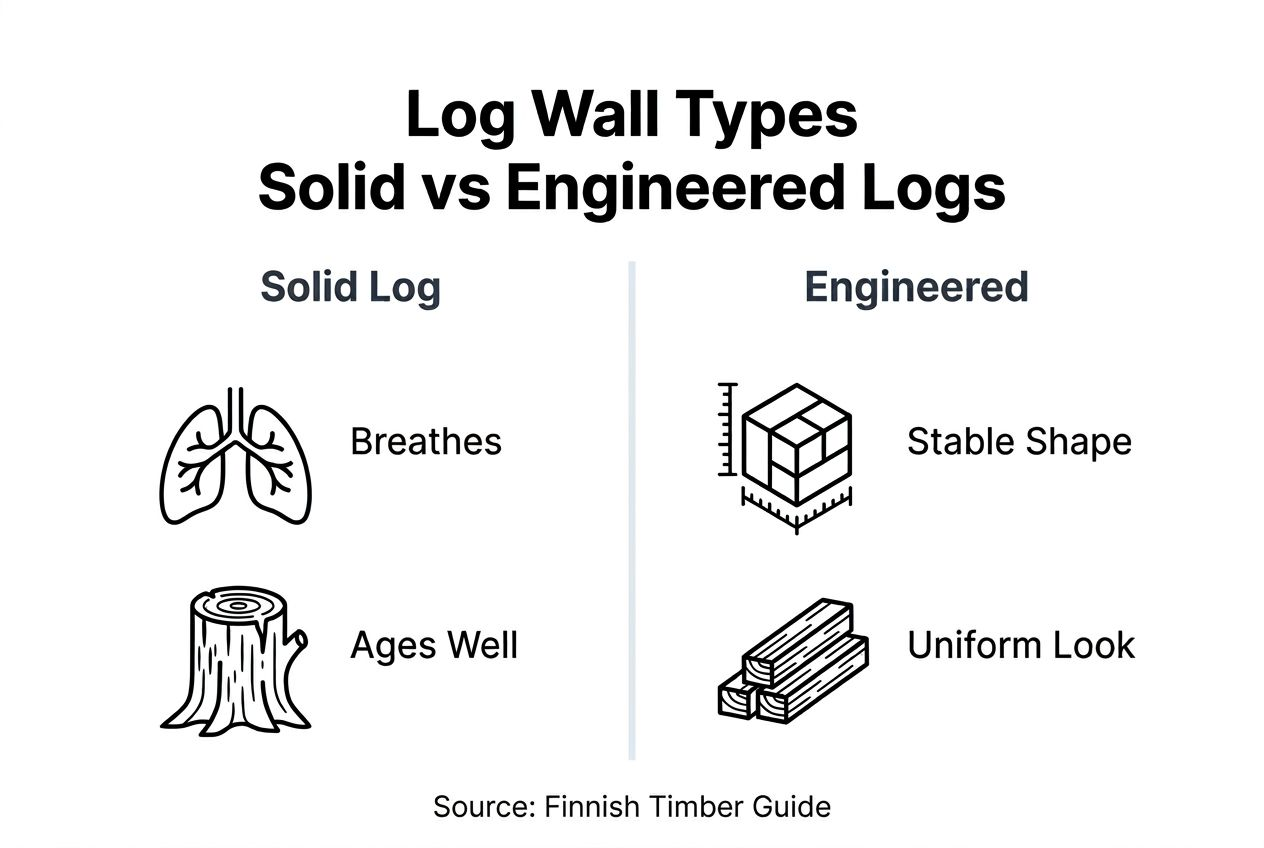
The difference between solid logs and engineered timber products matters tremendously. Solid logs breathe naturally, regulating indoor humidity without mechanical systems. Glued laminated timber (glulam) and cross-laminated timber (CLT) offer dimensional stability but sacrifice the breathing properties that make log homes unique. When evaluating materials, understand that traditional solid logs require different maintenance than processed alternatives but deliver unmatched authenticity.
Key construction terms: notching methods, log stacking, and interlocking joints
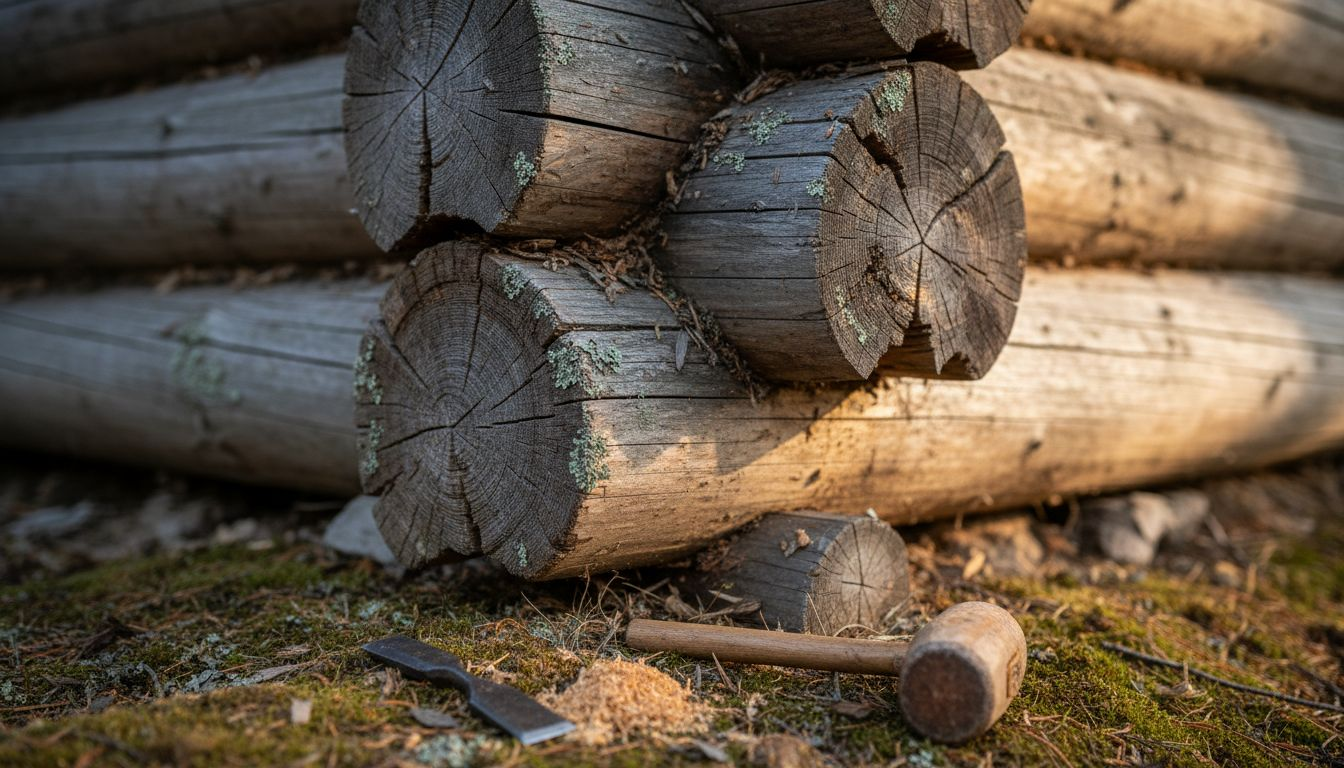
Once you understand the logs, the next step is learning how builders transform them into weathertight walls. Horizontal log stacking with precise corner notching represents the hallmark of Finnish construction. Unlike vertical post-and-beam framing, horizontal stacking distributes weight evenly and creates the distinctive layered appearance that defines log architecture.
Corner notching deserves special attention because it determines structural integrity and thermal performance. The saddle notch, or round notch, cups the bottom of each log to cradle the log below, creating a tight mechanical lock. This joint actually improves as logs settle, pulling tighter rather than separating. V-notching uses angular cuts that interlock like puzzle pieces, offering excellent wind resistance for exposed locations. Square notching simplifies construction but requires careful execution to prevent gaps.
| Notch Type | Structural Strength | Weather Resistance | Complexity | Best Application |
|---|---|---|---|---|
| Saddle notch | Excellent | Superior | High | Primary residences, harsh climates |
| V-notch | Very good | Excellent | Medium | Exposed locations, windy sites |
| Square notch | Good | Good | Low | Secondary buildings, mild climates |
| Dovetail | Excellent | Very good | Very high | Premium custom homes |
Interlocking joints extend beyond corners. Tongue-and-groove profiles cut along log lengths create vertical seals that block drafts while allowing the natural expansion and contraction wood experiences with seasonal humidity changes. These joints let logs move independently without creating gaps or structural stress.
Pro Tip: Visit completed log homes during different seasons to observe how quality joinery performs. Well-executed notches show minimal gaps even after years of settling, while poor workmanship reveals itself through visible light between logs or uneven settling patterns.
Traditional craftsmen understand that log construction improves with age when executed properly. The weight of the roof and upper logs compresses lower courses, tightening joints naturally. Modern construction often fights this settling with rigid fasteners, while traditional methods embrace it through thoughtful joint design and allowances for movement in door and window frames.
Insulation and finishing terms: chinking, caulking, and architectural features
Sealing log walls requires specialized techniques that balance weatherproofing with the breathing properties that make log homes healthy. Traditional chinking fills gaps with natural materials like moss, clay, or wood chips mixed with lime mortar. These materials allow moisture vapor to pass through while blocking air infiltration, preventing the mold growth that occurs when synthetic sealants trap moisture inside walls.
Modern synthetic caulking offers convenience and longevity but changes the equation. Acrylic and polyurethane caulks seal permanently and stretch with log movement, eliminating the periodic maintenance traditional chinking requires. However, they create vapor barriers that can trap moisture if not applied correctly. The choice between traditional and modern sealing methods depends on your priorities: authentic breathability versus low-maintenance durability.
Architectural features in Finnish log homes serve practical purposes beyond aesthetics. Low-pitched roofs shed snow efficiently while minimizing structural stress on log walls. Wide eaves extend beyond walls to protect logs from rain and snow splash, the primary cause of rot in lower courses. These overhangs also shade windows during summer, reducing cooling needs naturally.
Small window openings appear in traditional designs for thermal efficiency. Glass loses heat far faster than insulated log walls, so Finnish builders historically minimized window area while positioning openings strategically for light and views. Modern triple-pane windows change this calculation, allowing larger openings without sacrificing energy performance, but the principle of thoughtful window placement remains relevant.
Understanding log house design basics helps you appreciate how every architectural choice connects to performance. The thickness of logs, the pitch of the roof, the depth of eaves, even the orientation of the building on its site, all these decisions interact to create homes that perform well in Finland’s demanding climate without relying on complex mechanical systems.
Design and health benefits: layout, air quality, and living comfort in log houses
Finnish log house layouts prioritize heat distribution through simple, efficient floor plans. Central fireplaces or wood stoves radiate warmth throughout open living areas, eliminating the cold spots common in homes with isolated heating zones. This functional approach strips away unnecessary ornamentation in favor of clean lines and practical spaces that work with, rather than against, the natural properties of wood construction.
The health advantages of log homes extend beyond comfort into measurable wellness outcomes. Research demonstrates that log house inhabitants report four times better air quality satisfaction than people living in conventional wooden houses. Even more dramatically, satisfaction jumps to six times better when compared to stone houses. These aren’t subjective preferences. The same studies found that residents experience fewer respiratory symptoms and general health complaints in log homes.
| Housing Type | Air Quality Satisfaction | Respiratory Symptoms | General Health Complaints |
|---|---|---|---|
| Log houses | Baseline (highest) | Fewest reported | Significantly reduced |
| Wooden houses | 4x lower than log | More frequent | Moderately higher |
| Stone houses | 6x lower than log | Most frequent | Highest incidence |
Natural wood regulates humidity passively, absorbing excess moisture when indoor air becomes damp and releasing it during dry periods. This buffering effect maintains humidity levels in the ideal 40-60% range without mechanical humidifiers or dehumidifiers. Stable humidity prevents mold growth, reduces static electricity, and keeps respiratory passages comfortable year-round.
The absence of synthetic materials in traditional log construction eliminates many common indoor air pollutants. Formaldehyde off-gassing from pressed wood products, volatile organic compounds from paints and adhesives, and chemical fire retardants present in modern building materials simply don’t exist in authentic log homes. You breathe cleaner air because the building envelope consists entirely of natural materials that don’t emit harmful compounds.
“Living in a log house fundamentally changes your relationship with indoor air quality. The wood itself acts as a natural air purifier, regulating moisture and filtering pollutants in ways synthetic materials simply cannot replicate.”
Understanding these advantages of Finnish log houses helps frame construction decisions around long-term wellness rather than just initial costs. The premium you pay for quality log construction returns value through reduced healthcare expenses, better sleep quality, and the simple pleasure of breathing truly fresh indoor air every day.
Explore Finnish custom timber homes with Huvilaseppala
Now that you understand the terminology and principles behind authentic Finnish log construction, you’re ready to explore how these concepts translate into real custom timber homes. Huvilaseppala brings over 65 years of experience to every project, combining traditional Finnish craftsmanship with modern precision.
Whether you’re planning a vacation cottage or a permanent residence, our step by step cottage building guide walks you through the entire process from initial design to final finishing. Learn exactly how log home construction works in practical terms, or discover why timber remains the superior building material for Finnish climate conditions. We manufacture everything from outdoor saunas to full villas using Finnish wood tailored to your custom designs, with transparent pricing and no hidden costs.
Frequently asked questions
What makes a log house truly Finnish?
Authentic Finnish log houses use slow-grown pine and spruce logs assembled with horizontal stacking and precise corner notching techniques like saddle notch or V-notch joints. Traditional construction includes natural chinking materials that allow walls to breathe while maintaining thermal efficiency. The design emphasizes functional simplicity with low-pitched roofs, wide eaves, and strategic window placement optimized for extreme Arctic conditions.
How does chinking differ from caulking in log house construction?
Chinking traditionally uses natural breathable materials like moss, clay, or wood chips mixed with lime mortar to fill gaps between logs. This approach allows moisture vapor to pass through while blocking drafts, preventing mold and rot. Caulking employs synthetic acrylic or polyurethane compounds that create permanent, elastic seals but form vapor barriers that can trap moisture if improperly applied. Traditional chinking requires periodic maintenance but preserves the breathing properties that make log homes healthy.
Why is indoor air quality better in log homes compared to stone or wooden houses?
Log houses naturally regulate humidity by absorbing and releasing moisture, maintaining ideal levels without mechanical systems. The absence of synthetic materials eliminates formaldehyde, volatile organic compounds, and chemical fire retardants that off-gas in conventional construction. Research shows log home residents experience significantly fewer respiratory symptoms and report dramatically higher satisfaction with indoor air freshness than occupants of wooden or stone houses.
What are the key notching techniques used in Finnish log cabins?
Saddle notch (round notch) cups the bottom of each log to cradle the course below, creating joints that tighten as logs settle over time. V-notch uses angular cuts that interlock for excellent wind resistance in exposed locations. Both techniques create strong, weathertight corners without metal fasteners. The joints allow natural wood movement while maintaining structural integrity and thermal performance through decades of seasonal expansion and contraction cycles.
Recommended
- Timber Home Terminology Finland 2026: 20% Better Insulation – Hirsitalot, pihasaunat ja piharakennukset kotimaisesta hirrestä
- How to build a log house in Finland: expert guide 2026 – Hirsitalot, pihasaunat ja piharakennukset kotimaisesta hirrestä
- Log Home Construction Explained: Finnish Precision for Custom Living – Hirsitalot, pihasaunat ja piharakennukset kotimaisesta hirrestä
- Step by Step Cottage Building Guide for Custom Timber Homes – Hirsitalot, pihasaunat ja piharakennukset kotimaisesta hirrestä