
Step-by-step sauna installation: Build your outdoor retreat
TL;DR:
- Proper site preparation, foundation, and moisture control are critical to prevent long-term structural issues in outdoor saunas. Understanding the interconnection of insulation, vapor barriers, ventilation, and layout ensures optimal heat retention and durability. Treating these elements as an integrated system leads to a sauna that performs reliably for decades rather than suffering premature degradation.
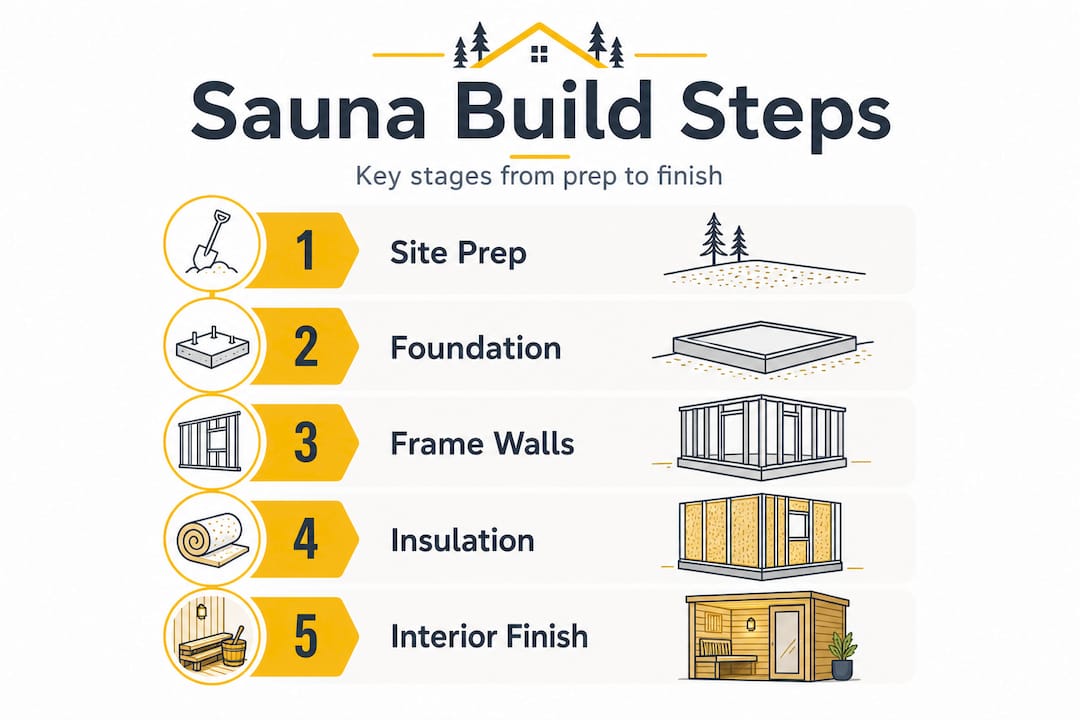
Installing an outdoor sauna sounds like a weekend project until you’re two months in, dealing with warped walls, mold creeping up from the floor, or a heater that can’t maintain temperature because the insulation was installed backwards. These aren’t rare horror stories. They’re predictable outcomes when installation steps get skipped or misunderstood. This guide takes you from bare ground to your first steaming session, covering every critical decision along the way — foundation, moisture control, insulation, ventilation, and final verification — so your sauna performs beautifully for decades, not just a few seasons.
Table of Contents
- What you need before starting: Tools, materials, and site prep
- Build the foundation and base: Protect against moisture and shifting
- Install insulation, vapor barrier, and wall assembly
- Plan and install ventilation, benches, and heater layout
- Final checks and common mistakes: How to ensure long-term success
- An expert perspective: What most guides miss about sauna installation
- Ready for the next level? Explore sauna builds and custom timber solutions
- Frequently asked questions
Key Takeaways
| Point | Details |
|---|---|
| Start with foundation | Proper base and moisture control are crucial for sauna stability and durability. |
| Vapor barrier details | Install the vapor barrier on the hot side; aluminum foil is best for moisture resistance. |
| Ventilation layout | Position low intake and high exhaust vents for optimal airflow and heat distribution. |
| Bench and heater safety | Follow spacing guidelines carefully to ensure both comfort and compliance with safety codes. |
| Think systemically | View foundation, insulation, and ventilation as a connected system to avoid long-term problems. |
What you need before starting: Tools, materials, and site prep
Before you break ground, knowing exactly what you need prevents the most frustrating project killer: stopping mid-build to source a missing tool or material. A disorganized start almost always leads to rushed decisions later, and in sauna construction, rushed decisions cost real money.
Core tools you’ll need:
- Tape measure, level, and laser level
- Shovel, tamper, and wheelbarrow for excavation
- Circular saw and drill with bits
- Chalk line and square for accurate framing
- Staple gun and utility knife for vapor barriers
- Safety glasses and work gloves
Material choices for your base:
| Material | Best use | Notes |
|---|---|---|
| Compacted gravel | Any outdoor sauna | Excellent drainage, low cost |
| Concrete slab | Permanent installations | Maximum stability, higher upfront cost |
| Pier blocks | Sloped or soft ground | Adjustable, good for frost-prone areas |
| Pressure-treated timber | Framing near ground contact | Essential for rot resistance |
Site preparation is where most DIYers underinvest. Foundation requirements go well beyond just having a flat spot in your yard. You need to assess drainage patterns, slope direction, and frost depth in your climate zone. A site that pools water after rain will eventually destroy any wooden structure placed on it, no matter how well the sauna itself is built.
Proper grading means the ground should slope away from your sauna’s footprint by at least a quarter inch per foot. Dig down a minimum of six inches to remove organic topsoil, which compresses unevenly over time. Fill with compacted gravel in two-inch layers, checking level at every stage.
Pro Tip: Lay a sheet of landscape fabric under your gravel base before filling. It blocks weed growth and reduces ground moisture migration toward your structure without interfering with drainage, which is a balance compacted gravel alone can’t always deliver.
Stability and moisture performance over the long term depend on your approach to these early site decisions. Skipping proper drainage prep is the single most common reason outdoor saunas develop structural problems within the first five years.
Build the foundation and base: Protect against moisture and shifting
Once you have your site prepped and materials at hand, it’s time to execute the most foundational step: building a base that protects your investment for the long run.
Warning: Moisture damage in saunas is insidious. It rarely announces itself immediately. You’ll enjoy your sauna for a year or two before noticing soft spots in the floor, a musty smell, or walls that no longer sit square. By then, repairs are expensive. Don’t skip vapor management at the foundation level.
Step-by-step for a concrete slab foundation:
- Excavate to frost depth in your region, typically 12 to 24 inches in colder climates.
- Add a four-inch layer of compacted gravel as a drainage base.
- Install a vapor barrier sheet (6-mil polyethylene minimum) over the gravel before pouring.
- Pour a four-inch concrete slab with rebar reinforcement for slabs larger than 8×10 feet.
- Float and level the surface carefully. Even a slight tilt will be noticeable in your finished build.
- Cure for a minimum of 28 days before placing any structure on it.
Step-by-step for a pier block foundation:
- Mark your corner and mid-span locations with stakes and string lines.
- Excavate each pier location below frost depth to prevent heaving.
- Pour concrete footings or use pre-cast pier blocks set in gravel.
- Use a transit level or laser level to get every pier to the same height. This step takes patience but is non-negotiable.
- Set pressure-treated beams on piers, checking level in all directions.
- Install blocking between beams to prevent lateral movement.
Foundation type comparison:
| Type | Pros | Cons | Relative cost | Best site conditions |
|---|---|---|---|---|
| Concrete slab | Most stable, easy to clean | Expensive, permanent | High | Flat, accessible sites |
| Pier blocks | Adjustable, frost-resistant | Requires precise leveling | Medium | Slopes, soft or frost-prone soils |
| Compacted gravel pad | Quick, good drainage | Lower stability | Low | Dry climates, lighter structures |
Proper site grading before any foundation work is what separates a sauna that lasts from one that starts shifting after the first winter. The gravel base and foundation type you choose depend heavily on your local frost depth and whether water naturally drains away from the site.

Pro Tip: After placing your foundation, set a sheet of rigid foam insulation under any ground-level floor framing. This blocks cold from conducting upward through your floor, which saves energy and keeps bare feet comfortable even in winter sessions.
Install insulation, vapor barrier, and wall assembly
With a stable, moisture-resistant base in place, it’s time to focus on the heart of sauna performance: insulation and vapor management. These two elements, more than anything else, determine how well your sauna holds heat and how long it stays free of mold.
Step-by-step insulation and vapor barrier installation:
- Frame your walls with 2×4 or 2×6 studs depending on the insulation thickness you’re targeting. Thicker walls mean better heat retention.
- Install mineral wool or fiberglass batts in all wall and ceiling cavities. Mineral wool handles moisture better than standard fiberglass and is worth the small price difference.
- Pay special attention to the ceiling. Heat rises, so ceiling insulation depth should be at least R-26, ideally R-30 or higher.
- Install your aluminum foil vapor barrier on the hot side of the insulation — meaning the interior side facing the sauna room. This is the most common mistake in DIY sauna builds.
- Overlap all seams by at least four inches and tape them thoroughly with foil tape. Every penetration for wires, pipes, or vents must also be sealed completely.
- Leave a small air gap between the vapor barrier and your interior paneling to allow any condensation to dry without being trapped.
Bullet tips for moisture-free assembly:
- Never use standard plastic polyethylene as your only vapor barrier. It degrades with heat and doesn’t reflect radiant heat back into the room the way aluminum foil does.
- Check every electrical penetration twice. Unsealed wire holes are among the most common points where moisture enters insulation cavities.
- If you’re building in a cold climate, add a layer of rigid foam to the exterior side of your wall framing as well. This raises the overall R-value and keeps the dew point outside your wall assembly.
The energy efficiency and comfort of your sauna depend almost entirely on these steps. According to sauna construction research, incorrectly placed or poorly sealed vapor barriers are among the top causes of insulation degradation and long-term mold risk in sauna builds.
Pro Tip: Before closing up your walls with interior paneling, do a smoke or incense stick test along all seams and penetrations. Any air movement means you have a gap that will cost you in heat retention and eventually in moisture damage.
Plan and install ventilation, benches, and heater layout
After conquering insulation and moisture control, the next step is ensuring your sauna delivers safe and comfortable sessions through proper airflow, bench design, and heater placement.
Ventilation is the part of sauna installation most people think is simple until they realize their room smells stale after every use or the temperature at bench height is wildly different from the floor. Incorrect vent placement leads to poor air circulation, uneven heat distribution, and accelerated moisture buildup in the room.
Ventilation and layout installation steps:
- Install your fresh air intake low on the same wall as the heater, roughly six inches above the floor. This draws cool, fresh air in at the bottom, where it gets heated quickly.
- Place your exhaust vent high on the opposite wall, near the ceiling, to allow hot, stale air to exit efficiently.
- Size vents correctly. A general rule is one square inch of vent area per cubic foot of sauna volume for both intake and exhaust.
- Install a damper on your exhaust vent so you can control airflow and retain heat as needed.
- Follow manufacturer heater clearance requirements precisely. Most electric sauna heaters require a minimum of 20 inches from the top of the stone guard to the ceiling.
- Position benches with the upper bench at 36 to 48 inches from the ceiling to allow full benefit of rising heat.
Key layout considerations:
- Bench and heater clearances are safety requirements, not suggestions. Leave at least 16 inches horizontally between the heater and any bench edge.
- Build benches from kiln-dried Nordic spruce or aspen. Both are low-resin, stay cool to the touch, and resist the expansion and contraction caused by heat cycling.
- Always consult building code requirements in your area before finalizing electrical work for your heater. Most regions require a licensed electrician for 240V sauna heater connections.
- Refer to a final setup guide to confirm that all layout elements meet both safety and performance standards before you close in the ceiling.
Pro Tip: Avoid placing your exhaust directly above your heater. This creates a short-circuit airflow where hot air exits immediately after rising, never reaching the benches. Position the exhaust on the opposite side of the room for full air circulation across the entire session space.
Final checks and common mistakes: How to ensure long-term success
Now that the physical build is done, a few final steps will help you catch any issues and set your sauna up for decades of reliable use.
Final inspection checklist:
- Door seals: Does the door close completely with no visible daylight gaps? Even a small gap wastes significant heat.
- Vapor pathways: Are all seams and penetrations in the vapor barrier fully taped? Walk the interior and look for any loose sections.
- Bench stability: Rock each bench firmly. Any movement needs to be addressed before regular use begins.
- Heater clearances: Measure heater-to-bench and heater-to-ceiling distances one final time against manufacturer specs.
- Ventilation flow: With the sauna at temperature, hold a tissue near both intake and exhaust vents to confirm air movement in both locations.
- Electrical connections: Have a licensed electrician verify the heater connection before first use.
Top 5 DIY sauna installation mistakes:
- Using standard household insulation without understanding vapor barrier placement
- Skipping proper drainage preparation at the site level
- Placing the exhaust vent near or above the heater instead of the opposite wall
- Underestimating frost depth requirements for foundations in cold climates
- Treating foundation, moisture management, and ventilation as separate tasks instead of an integrated system
That last point is critical. Treating these elements as a coupled system is the mindset shift that separates builders who get lasting results from those who face expensive repairs down the line. Moisture problems, for example, rarely appear at the source. Poor vapor sealing in the walls shows up as a soft floor a year later because condensation has been slowly migrating downward.
The overall sauna build workflow and the specifics of sauna project planning are both worth revisiting even after your build is complete. Knowing the full scope of what you’ve built helps you maintain it intelligently.
An expert perspective: What most guides miss about sauna installation
Checklists are valuable. Step-by-step instructions get most people to a functional result. But after more than 65 years of manufacturing timber structures and watching countless sauna builds succeed and fail, one pattern stands out clearly.
Most problems don’t come from people skipping steps. They come from people following steps without understanding why each one matters in relation to the others. When you understand why the vapor barrier goes on the hot side, you notice immediately if it ends up installed backwards. When you understand why the intake vent goes near the heater, you catch a ventilation layout mistake before it’s built in permanently.
The other failure pattern we see repeatedly involves multiple contractors or helpers who each handle one part of the project without communicating with each other. One crew preps the foundation. Another crew frames and insulates. A third installs the heater and benches. Nobody checked whether the vapor barrier sealing was complete before the paneling went up. Nobody confirmed that the exhaust vent position would actually create cross-ventilation given where the heater landed. The result is a sauna that functions, but underperforms, and then slowly degrades.
Watch for these subtle post-installation cues: a faint musty smell after the sauna cools down, bench boards that start to cup or warp within the first year, or heat-up times that increase noticeably over two or three seasons. None of these are normal. All of them are early signs that something in the foundation-moisture-ventilation system isn’t working as intended.
Treat your full process breakdown as an interconnected system from the very first shovel of dirt. That mindset is what separates a sauna that feels like a luxury retreat for 30 years from one that becomes a maintenance burden after five.
Ready for the next level? Explore sauna builds and custom timber solutions
Once you’ve seen firsthand how much precision and craftsmanship go into a proper sauna build, the appeal of premium materials and expert-sourced timber becomes obvious. The quality of your raw materials sets a ceiling on the quality of your final result, no matter how careful your installation technique.
At Huvila Seppälä, we’ve spent over 65 years crafting Finnish timber structures built to perform in demanding climates. Our Finnish woodworking approach brings authentic craftsmanship to every component, from the log walls to the interior paneling. If you’re ready to take your project further, explore our custom timber building resources or browse the complete log cabin building process for inspiration on larger structures. Whether you want a timber kit tailored to your own drawings or a fully custom design, we provide transparent quotes with no hidden costs and fast delivery from Finland.
Frequently asked questions
What is the best foundation for a backyard sauna?
A compacted gravel pad topped with a concrete slab or pier blocks offers the best combination of stability, frost resistance, and moisture management. Common approaches prioritize level pads and drainage before anything else.
How should a sauna vapor barrier be installed?
The vapor barrier must face the interior hot side of your insulation, with all seams overlapped and taped and every penetration sealed completely. Incorrect placement or sealing degrades insulation performance and accelerates mold risk significantly.
What are common ventilation mistakes in sauna installation?
Placing the intake and exhaust vents on the same wall or near the same height is the most frequent error, which causes poor air circulation and moisture buildup. Incorrect vent placement leads to stale air, uneven heat, and long-term moisture problems.
How long does it take to install an outdoor sauna?
Most DIY outdoor sauna projects take between two and four weekends from site prep through final electrical checks, with concrete curing time adding up to four additional weeks if you’re building a slab foundation.
What’s the biggest sauna installation mistake to avoid?
Treating foundation work, vapor management, and ventilation as separate unrelated tasks creates chronic problems that only become visible months or years later. Approaching these as a coupled system from the start is what separates a durable build from an expensive repair job.
Recommended
- Build your Finnish outdoor sauna step by step in 2026 – Hirsitalot, pihasaunat ja piharakennukset kotimaisesta hirrestä
- How to Design Custom Saunas for Your Dream Outdoor Retreat – Hirsitalot, pihasaunat ja piharakennukset kotimaisesta hirrestä
- Essential sauna prerequisites: build your outdoor retreat – Hirsitalot, pihasaunat ja piharakennukset kotimaisesta hirrestä
- How to Build Outdoor Sauna for Custom Finnish Style – Hirsitalot, pihasaunat ja piharakennukset kotimaisesta hirrestä