
Essential sauna prerequisites: build your outdoor retreat
Many homeowners assume building an outdoor sauna is as simple as ordering a kit, setting it on the lawn, and flipping a switch. That assumption leads to expensive mistakes. Skipping foundational steps like permits, proper electrical work, and moisture control can turn your dream retreat into a costly headache. This guide walks you through every critical prerequisite, from legal compliance to wood selection, so you can build a sauna that is safe, comfortable, and built to last for decades.
Table of Contents
- Legal prerequisites: Permits, codes, and zoning you can’t skip
- Foundation first: Site selection, base, and prep for stability
- Power and safety: Electrical requirements every homeowner must know
- Insulation and moisture control: Finnish-grade comfort and efficiency
- Choosing the right wood: Interior panels, benches, and that authentic Finnish feel
- Ventilation and air quality: Avoiding hidden health and comfort mistakes
- Heater and layout: Getting löyly right with proper equipment and positioning
- Ready to build your custom Finnish sauna?
- Frequently asked questions
Key Takeaways
| Point | Details |
|---|---|
| Check local codes first | Permits and setbacks are crucial and can stop your project before it starts. |
| Foundation is non-negotiable | A proper gravel or concrete base prevents settlement and water issues long-term. |
| Insulate for true comfort | Use R-13 or better in walls and R-19+ in ceilings with a proper vapor barrier. |
| Ventilation affects health | Good airflow keeps air fresh and prevents mold or CO2 buildup. |
| Size heater to your space | Follow the 1kW per 45 cubic feet rule for optimal Finnish-style heat. |
Legal prerequisites: Permits, codes, and zoning you can’t skip
Before you get too excited about design details, it’s crucial to cover what must happen first: legal compliance. Many people skip this step and pay for it later with fines, forced demolition, or problems when selling their home.
Structures over 100-120 sq ft almost always trigger a building permit requirement, and most local codes also enforce setback rules. Setbacks typically require your sauna to sit at least 5 to 10 feet from property lines, fences, and neighboring structures. Ignoring these rules can halt your project mid-build.
Here is a quick checklist to keep you on track:
- Check your municipality’s permitting requirements before purchasing materials
- Review building codes for saunas specific to your region
- Confirm zoning setbacks with your local planning office
- If you plan to use a 240V electric heater, expect an additional electrical permit
- Get HOA approval or neighbor sign-offs where required
The electrical permit step surprises many first-time builders. A 240V heater is not a plug-and-play appliance. It requires a dedicated circuit, licensed installation, and a separate inspection. Use the permit process guide to understand exactly what paperwork your project needs before breaking ground.
Foundation first: Site selection, base, and prep for stability
Now that you understand what’s legally required, let’s look at what must happen on your lot to turn plans into a solid reality. A poor foundation is the number one cause of long-term sauna problems, including warping walls, moisture intrusion, and uneven floors.
A stable, level foundation is non-negotiable. Here are your main options, in order of complexity:
- Compacted gravel base (4 to 6 inches deep): Best for mild climates with good drainage. Affordable and effective.
- Concrete piers: Ideal for uneven terrain or areas with moderate frost. Piers lift the structure off the ground and reduce moisture contact.
- Full concrete slab: The most durable option, especially for larger saunas. Requires more prep but offers maximum stability.
- Frost-protected foundation: In cold climates, footings must reach 1.2 to 1.5 meters below grade to prevent frost heave from shifting the structure.
Site selection matters just as much as the base type. Orient your sauna to catch morning sun, which helps dry out moisture after use. Position it away from prevailing winds to reduce heat loss. Make sure the ground slopes away from the structure for natural drainage.
“The foundation is not just about keeping the sauna level today. It’s about protecting your investment for the next 30 years.”
Pro Tip: Before pouring anything, have a builder familiar with custom Finnish outdoor sauna builds assess your specific ground conditions. Local soil type and frost depth vary significantly and can change which foundation type is right for you.
Power and safety: Electrical requirements every homeowner must know
With the site and base sorted, it’s time to power your sauna safely and up to code. Electrical mistakes in a sauna are not just expensive. They are dangerous.
A dedicated 240V, 30-50A circuit with GFCI protection is required for traditional electric heaters. GFCI (Ground Fault Circuit Interrupter) protection cuts power instantly if moisture contacts the wiring, which is critical in a high-humidity environment.
Key electrical considerations:
- Panel capacity: Your home’s main panel may not have room for a new 240V circuit. An upgrade could add $1,000 to $3,000 to your project budget.
- Wet location wiring: All wiring inside the sauna must be rated for wet or damp locations.
- Wood-burning heaters: These skip the electrical heater circuit but still require proper chimney installation and fire clearances.
- Inspection timing: Schedule your electrical inspection before insulation and interior walls go up. Inspectors need to see the wiring.
Pro Tip: Never attempt to wire a 240V sauna circuit yourself unless you are a licensed electrician. Beyond the safety risk, unpermitted electrical work can void your homeowner’s insurance and create serious liability if something goes wrong.
Insulation and moisture control: Finnish-grade comfort and efficiency
With electrics prepared, insulation is the next layer that determines both comfort and cost over the sauna’s life. Proper insulation keeps heat in, cuts energy bills, and protects the structure from moisture damage.
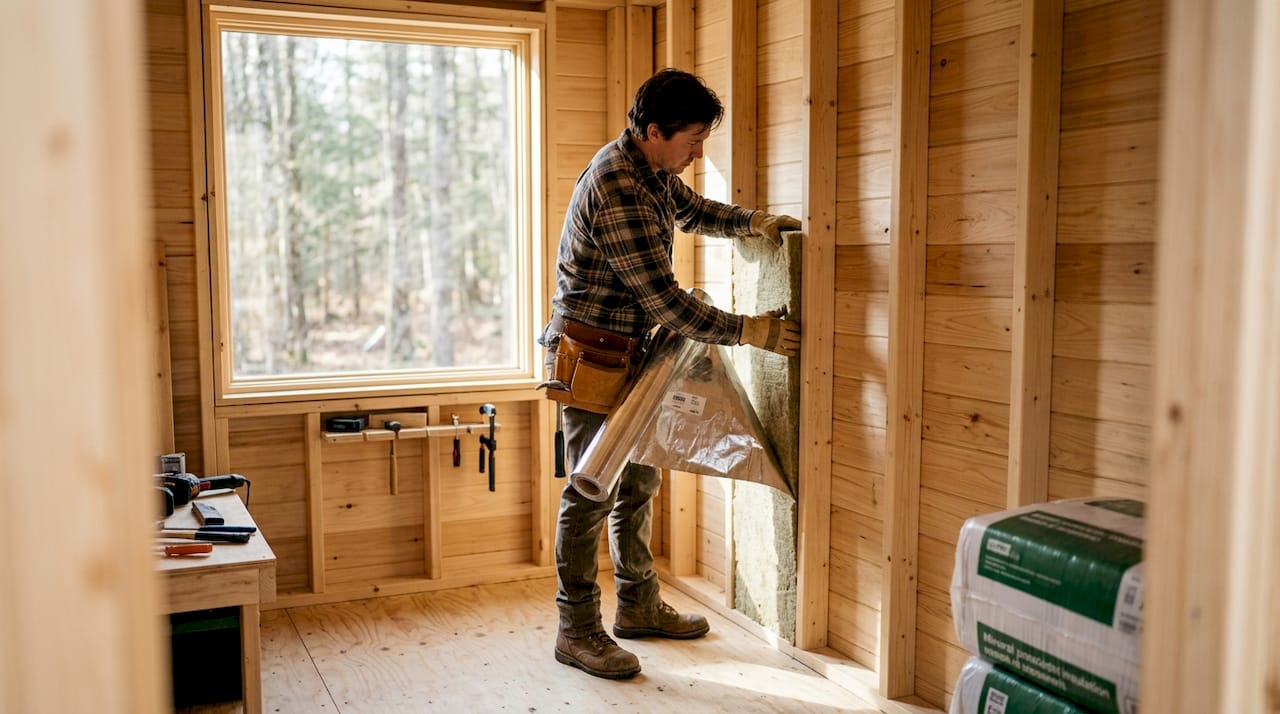
R-13 for walls and R-19 to R-30 for ceilings, combined with a foil vapor barrier, are the minimum standards for a well-performing sauna. The vapor barrier always goes on the warm, interior side of the insulation to stop moisture from migrating into the wall cavity.
| Material | Fire resistance | Moisture resistance | Cost |
|---|---|---|---|
| Mineral wool (Rockwool) | Excellent | Excellent | Moderate |
| Fiberglass batts | Good | Fair | Low |
| Rigid foam board | Fair | Good | Moderate |
Mineral wool is the preferred choice for insulation for saunas because it does not burn, does not absorb moisture, and holds its shape over time. Fiberglass is cheaper but can sag and lose effectiveness if it gets wet. Skipping or cutting corners on insulation leads to mold, rot, and a sauna that takes forever to heat up.
Choosing the right wood: Interior panels, benches, and that authentic Finnish feel
Once the basic walls are ready, the choice of wood will shape your sauna’s comfort and longevity. Not all wood performs the same at 180 to 200 degrees Fahrenheit.
Western Red Cedar costs $8 to $12 per square foot and is widely considered the gold standard for sauna interiors. It resists moisture, smells wonderful, and stays cool to the touch even at high temperatures. Nordic spruce and pine are traditional Finnish choices that cost less and carry authentic cultural weight.
| Wood species | Price range | Heat resistance | Appearance |
|---|---|---|---|
| Western Red Cedar | $8-12/sq ft | Excellent | Rich, reddish tone |
| Nordic Spruce | $4-7/sq ft | Very good | Light, clean grain |
| Hemlock | $5-9/sq ft | Good | Pale, smooth finish |
Whatever species you choose, look for boards that are 14 to 19mm thick, knot-free, and low in resin. Knots and resin pockets get extremely hot and can burn skin on contact. The role of wood in saunas goes beyond looks. It directly affects safety, comfort, and how authentic the experience feels. For a full breakdown of materials, explore common sauna materials used in quality Finnish builds.
Ventilation and air quality: Avoiding hidden health and comfort mistakes
The finishing touch to a healthy, authentic sauna experience is almost invisible but crucial: ventilation. Poor airflow is one of the most overlooked mistakes in DIY sauna builds.
Proper ventilation requires 6 or more air changes per hour, with the intake vent positioned low near the heater and the exhaust vent high on the opposite wall. This creates a natural convection loop that keeps air fresh and supports quality löyly (the steam experience central to Finnish sauna culture).
What happens when ventilation is skipped:
- CO2 levels can climb above 1,000 ppm, causing headaches and fatigue
- Moisture has nowhere to escape, leading to mold and wood rot
- Löyly quality drops because stale air disrupts heat distribution
- Bathers feel uncomfortable and leave sessions early
Size your vents to deliver at least 20 to 25 CFM (cubic feet per minute) per person. For a deeper look at airflow design, sauna ventilation best practices cover sizing and placement in detail.
Pro Tip: Install adjustable vent covers so you can fine-tune airflow during a session. More steam calls for slightly less exhaust. Cooler, drier sessions benefit from more airflow. That control is what separates a great sauna from a mediocre one.
Heater and layout: Getting löyly right with proper equipment and positioning
Now you’re ready for the choices that define the sauna’s daily experience: heater selection and interior layout. These two decisions work together.
The standard sizing rule is 1 kW of heater power per 45 cubic feet of sauna volume. Undersizing your heater means the room never reaches proper temperature. Oversizing wastes energy and can make the space uncomfortably intense.
Layout principles that matter:
- Bench height: Upper benches should sit 8 to 12 inches below the ceiling. Heat rises, so higher benches deliver a more intense experience.
- Ceiling height: Finnish tradition favors ceilings around 7 to 8.5 feet to allow heat to stratify naturally.
- Stone placement: Sauna stones sit on top of the heater and must be stacked loosely to allow water to penetrate and create steam.
- Clearance zones: Maintain at least 4 to 6 inches of clearance between the heater and any wood surface to prevent scorching.
For a full walkthrough of how these elements come together, the step-by-step sauna build guide covers layout planning in practical detail.
Ready to build your custom Finnish sauna?
Every prerequisite covered in this guide reflects decades of real-world sauna building experience. Getting these steps right from the start means fewer surprises, lower long-term costs, and a sauna that genuinely delivers the authentic Finnish experience you’re after.
At Huvila Seppälä, we have been manufacturing custom timber frame and log saunas from Finnish wood for over 65 years. We work directly from your drawings, provide transparent quotes with no hidden costs, and deliver fast. Whether you are starting from scratch or refining an existing plan, our team can help you get every prerequisite right before a single log is placed. Reach out through our contact form to request a personalized offer tailored to your site and vision.
Frequently asked questions
Do I need a permit for a small backyard sauna?
Most areas require a permit for any structure over 100-120 sq ft or with 240V electric service. Always verify with your local building department before starting.
What is the best type of foundation for an outdoor sauna?
A compacted gravel base (4 to 6 inches), concrete piers, or a full slab all work well. The key is that the foundation is level and, in cold climates, reaches below the local frost line.
How should I size my sauna heater?
Use the standard rule of 1 kW per 45 cubic feet of heated sauna volume. Measure your room carefully before purchasing a heater.
What are the essential ventilation requirements?
You need 6 to 8 air changes per hour, with the intake vent near the heater and the exhaust vent high on the opposite wall. This prevents CO2 buildup and mold growth.
Recommended
- Why build an outdoor sauna: benefits and guide – Hirsitalot, pihasaunat ja piharakennukset kotimaisesta hirrestä
- How to Design Custom Saunas for Your Dream Outdoor Retreat – Hirsitalot, pihasaunat ja piharakennukset kotimaisesta hirrestä
- Outdoor Saunas: Enhancing Home Wellness Naturally – Hirsitalot, pihasaunat ja piharakennukset kotimaisesta hirrestä
- How to Build Outdoor Sauna for Custom Finnish Style – Hirsitalot, pihasaunat ja piharakennukset kotimaisesta hirrestä