How to Build Outdoor Sauna for Custom Finnish Style
Most American homeowners are surprised to learn that over 65 percent of new outdoor sauna projects in Central Europe use timber framing inspired by Finnish craftsmanship. Choosing the right site and materials for your sauna matters not just for appearance but for lasting comfort and stability. This guide reveals the practical steps and insider tips to build a custom outdoor sauna with robust timber frames, efficient construction, and traditional Finnish standards tailored to Central European needs.
Table of Contents
- Step 1: Assess Location And Prepare Foundation
- Step 2: Select Timber Frame And Design Structure
- Step 3: Construct Sauna Walls And Roof
- Step 4: Install Sauna Interior And Heating System
- Step 5: Verify Structural Integrity And Seal Exterior
- Step 6: Finalize Setup And Test Sauna Operation
Quick Summary
| Key Point | Explanation |
|---|---|
| 1. Choose Location Carefully | Select a flat, well-drained area with stable subsoil for long-term sauna stability. |
| 2. Pick the Right Foundation | Use gravel for easier DIY drainage or concrete for superior long-term stability. |
| 3. Use Appropriate Timber Types | Select softwoods like spruce or pine for the timber frame to resist moisture and provide strength. |
| 4. Ensure Insulation and Ventilation | Construct walls with tongue-and-groove boards and proper ventilation for heat retention and air quality. |
| 5. Test and Record Sauna Operation | Conduct multiple heating cycles to check stability, humidity, and overall performance for adjustments. |
Step 1: Assess Location and Prepare Foundation
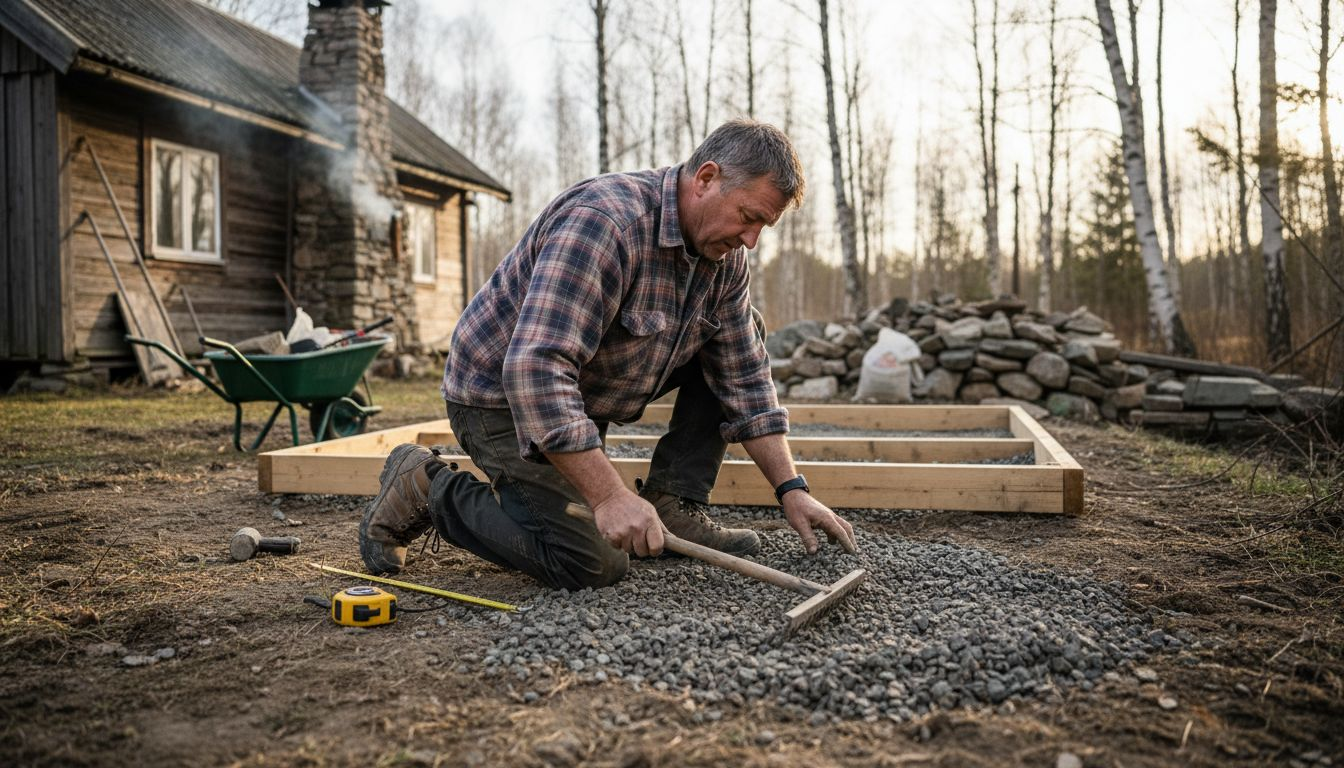
Building an outdoor sauna starts with selecting the perfect location and creating a rock solid foundation. Your goal here is to choose a site that provides stability, proper drainage, and strategic positioning for your Finnish style sauna experience.
First, survey your outdoor space carefully. You want an area that is relatively flat with good ground drainage and minimal slope. Soil conditions matter tremendously for long term stability. Ideally, select ground with stable subsoil that can support your sauna structure without excessive settling. Central European terrain often requires understanding local frost depths and ground composition. Experienced builders recommend clearing any vegetation or debris and creating a base that allows water to flow away from the sauna structure.
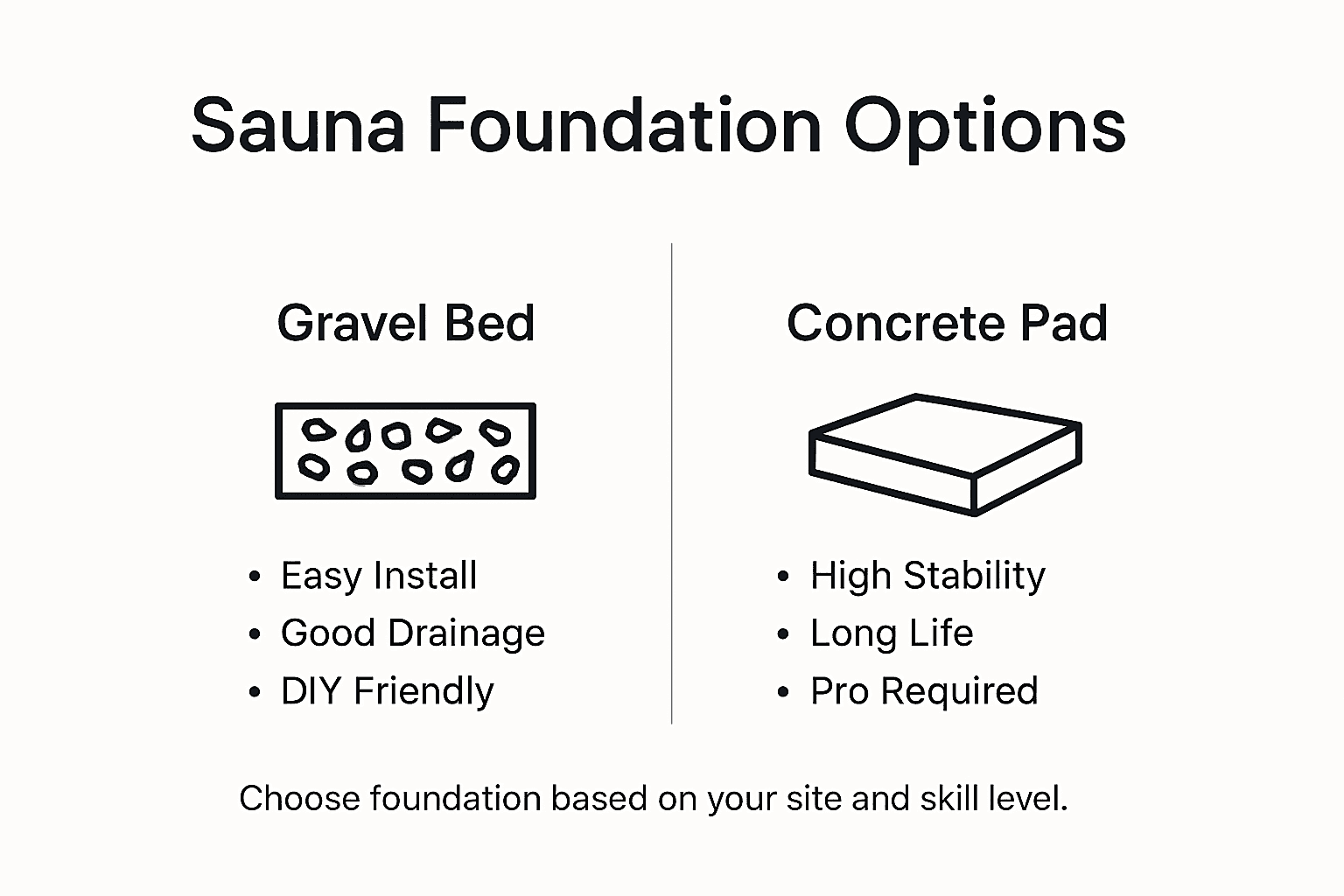
Typically, you have two primary foundation options gravel beds or concrete pads. Gravel provides excellent drainage and can be easier for DIY builders. A compact layer of crushed stone approximately 4 inches deep creates a stable platform. For more permanent installations, a reinforced concrete pad offers superior long term stability. Whichever method you choose, ensure the foundation is perfectly level using professional grade construction tools like laser levels or long spirit levels.
Here’s a quick overview comparing foundation options for outdoor saunas:
| Foundation Type | Drainage Quality | Installation Difficulty | Long-Term Stability |
|---|---|---|---|
| Gravel Bed | Excellent, drains quickly | Easier, ideal for DIY | Good, may settle over time |
| Concrete Pad | Moderate, less permeable | Requires expertise/tools | Superior, long-lasting |
Pro tip: Before finalizing your site, check local building codes and consider running a simple percolation test to confirm ground drainage capabilities.
Step 2: Select Timber Frame and Design Structure
Selecting the right timber frame for your outdoor sauna is critical to creating a durable and authentic Finnish style structure. Your goal is to design a robust skeleton that will withstand weather conditions while providing an elegant and functional space.
Central European timber construction traditionally relies on softwood species like spruce and pine for sauna frames. These woods offer excellent strength and natural resistance to moisture when properly treated. When designing your frame, focus on creating an independent structural skeleton with vertical posts and horizontal beams that can support the entire sauna structure. Pay close attention to wood member sizing and connection techniques. Finnish craftsmanship in timber emphasizes precision in these structural details to ensure long term stability and performance.
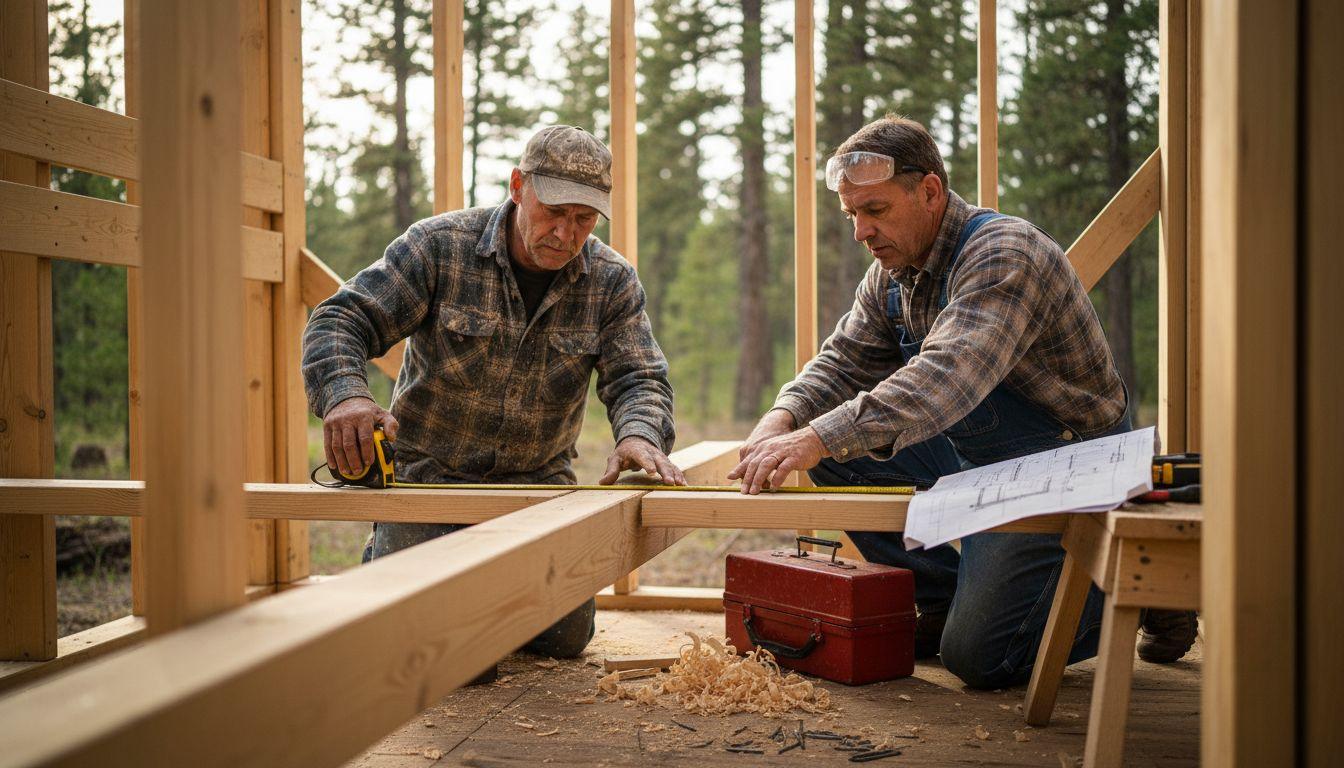
Your timber frame design must account for regional building codes and specific environmental loads. This means considering factors like snow weight, wind resistance, and thermal movement. Laminated or specially treated timber provides enhanced durability and protection against moisture ingress. Connections between frame members should be engineered to safely transfer structural loads while maintaining flexibility for natural wood movement.
Pro tip: Select timber with a moisture content below 20 percent and use galvanized metal connectors to prevent potential wood degradation and ensure maximum structural integrity.
Step 3: Construct Sauna Walls and Roof
Constructing your sauna walls and roof requires careful selection of materials and precise building techniques that honor traditional Finnish architectural principles. Your goal is to create a structure that provides exceptional insulation, weather resistance, and an authentic aesthetic.
For wall construction, follow the classic Nordic approach by using tongue-and-groove wooden boards. Essential sauna building materials play a crucial role in creating an airtight and well-insulated space. Choose softwood like Nordic spruce for interior walls that can withstand high temperatures and moisture. The exterior should feature weather-resistant cladding to protect against environmental elements. Start by installing vertical support beams, then carefully attach your wooden boards ensuring tight connections that prevent drafts and maintain thermal efficiency.
The roof requires special attention in Central European climates. Design a steeply pitched structure that effectively sheds snow and prevents water accumulation. Use waterproof membranes underneath your exterior roofing material to guarantee maximum protection. Extend roof eaves beyond the wall perimeter to provide additional weather shielding. Consider using multiple layers of insulation between roof rafters to enhance heat retention and create a comfortable interior environment.
Pro tip: When installing wooden boards, leave a small expansion gap to accommodate natural wood movement and prevent warping caused by temperature and humidity changes.
Step 4: Install Sauna Interior and Heating System
Installing the interior and heating system transforms your sauna structure into an authentic Finnish wellness space. Your objective is to create a functional environment that delivers traditional sauna experience with precise temperature control and comfortable design.
Building a sauna with custom timber solutions requires thoughtful interior planning. Traditional Finnish saunas feature wooden benches arranged at multiple levels to allow bathers to choose their preferred heat intensity. Select wood species carefully avoiding resinous materials that might produce unwanted odors. Construct benches using softwoods like hemlock or cedar that can withstand high temperatures and humidity. Position lower benches for moderate heat and upper benches for more intense warmth.
Choosing the right heating system is crucial for an authentic experience. Electric heaters are popular in modern Central European saunas due to their precision and ease of use. Ensure your heater is UL listed or complies with European safety standards. Select a power rating appropriate for your sauna volume typically ranging between 4.5 to 9 kilowatts. Include traditional sauna stones on top of the heater to create steam when water is ladled a fundamental element of the Finnish sauna ritual. Install proper ventilation with intake vents near the heater floor and exhaust vents near the ceiling to maintain optimal air circulation and heat distribution.
Pro tip: Purchase sauna stones specifically designed for heating systems and replace them every two to three years to maintain optimal heat retention and steam quality.
Step 5: Verify Structural Integrity and Seal Exterior
Ensuring the long-term durability of your outdoor sauna requires meticulous verification of structural integrity and comprehensive exterior sealing. Your goal is to create a resilient structure that can withstand Central European weather conditions while maintaining its aesthetic and functional qualities.
Building codes for safe sauna installation emphasize the importance of systematic structural assessment. Carefully inspect all timber frame connections, checking for tight joints and verifying load transfer between structural members. Look for any signs of potential weakness such as uneven settling, slight warping, or gaps that might compromise the overall stability. Pay special attention to areas around roof attachments, wall connections, and foundation interfaces where structural stress commonly accumulates.
Sealing the exterior requires a comprehensive approach to protect against moisture and temperature variations. Apply high quality weather resistant barriers that can accommodate freeze-thaw cycles typical in Central European climates. Use specialized exterior wood sealants designed for timber structures that provide UV protection and moisture resistance. Focus on creating seamless protection around roof penetrations, window openings, and joint connections. Apply multiple layers of protective coating allowing adequate drying time between applications. Ensure all exterior surfaces have consistent coverage to prevent potential water intrusion points that could lead to long term structural degradation.
Pro tip: Conduct a comprehensive moisture test using professional grade electronic moisture meters to identify potential hidden water penetration points before your final sealing process.
Step 6: Finalize Setup and Test Sauna Operation
Finalizing your outdoor sauna involves carefully installing the interior components and systematically testing its operational performance to ensure a safe and authentic Finnish sauna experience. Your goal is to create a functional wellness space that meets both technical requirements and traditional sauna standards.
Essential sauna planning tips recommend a comprehensive setup process that goes beyond simple installation. Install wooden benches securely at different levels to provide temperature variation. Carefully place sauna stones on the heater ensuring proper spacing for optimal heat distribution. Verify electrical connections and temperature control systems thoroughly. Calibrate the heater to reach consistent temperatures between 70 and 105°C characteristic of traditional Finnish saunas. Test ventilation systems by confirming fresh air intake and proper circulation to maintain comfortable humidity levels.
Before declaring your sauna fully operational conduct multiple heating cycles to condition the wood and assess overall performance. During these initial tests focus on several critical aspects such as temperature stability electrical safety and heater responsiveness. Use a professional grade thermometer to verify temperature accuracy. Apply water to the heated stones multiple times to check steam generation and humidity control. Pay attention to how evenly heat distributes throughout the interior space and make any necessary adjustments to ventilation or heater positioning. Verify that all safety features including emergency shut off mechanisms function correctly.
This table summarizes crucial steps for testing and finalizing sauna operation:
| Step | Reason/Impact | Tools Needed |
|---|---|---|
| Test Heating | Ensure consistent temps | Thermometer |
| Check Ventilation | Maintain air quality | Vent flow gauge |
| Condition Wood | Prevent warping/odors | Multiple heating cycles |
| Record Results | Fine-tune performance | Logbook/notes |
Pro tip: Keep a log of your initial sauna test cycles recording temperature variations heater performance and wood conditioning to help fine tune your setup and identify any potential long term maintenance requirements.
Bring Your Custom Finnish Style Outdoor Sauna to Life with Expert Timber Craftsmanship
Building a sturdy foundation and selecting the perfect timber frame for your outdoor sauna can be challenging. You want a structure that not only reflects authentic Finnish traditions but also endures Central European weather conditions with ease. If managing precise wood treatments, structural integrity, and traditional sauna heating systems feels overwhelming, you are not alone.
Huvila Seppälä offers over 65 years of experience in crafting custom timber frames and outdoor saunas from premium Finnish wood. Our expert team ensures your sauna project is perfectly designed, built for durability, and delivered quickly with transparent pricing. Discover how our custom solutions align with your goals of creating an authentic, long-lasting sauna retreat while avoiding common pitfalls such as moisture issues or insufficient structural support.
Don’t wait to transform your dream sauna into reality. Explore our custom sauna timber frames and learn more about building your perfect sauna with trusted Finnish craftsmanship. Contact us today to request a personalized offer and take the first step toward enjoying your personal wellness retreat.
Frequently Asked Questions
What is the best foundation option for building an outdoor sauna?
The best foundation options are gravel beds or concrete pads. Choose gravel if you prefer an easier DIY installation and need excellent drainage, while concrete pads offer superior long-term stability for more permanent installations. Consider using a compact layer of crushed stone about 4 inches deep for gravel or a reinforced pad if you want max support.
How do I select the right timber for the sauna frame?
Select softwood species like spruce or pine for an authentic Finnish sauna frame. These types of wood are strong and resistant to moisture when properly treated. Ensure the timber has a moisture content below 20 percent to enhance durability.
What materials do I need to construct the sauna walls and roof?
Use tongue-and-groove wooden boards for the walls and ensure the outer layer is weather-resistant for maximum protection. Design the roof with a steep pitch to shed snow and install waterproof membranes beneath the roofing material for added durability.
How do I set up the interior and heating system in my sauna?
Arrange wooden benches at multiple levels to allow for different heat intensities. Choose a suitable heating system, ideally an electric heater with a power rating between 4.5 to 9 kilowatts, and place sauna stones on top to enhance steam generation. Make sure ventilation is properly set up to maintain airflow and humidity.
What steps should I take to verify structural integrity after building the sauna?
Inspect all timber frame connections for tight joints and signs of weakness such as warping or gaps. Conduct a thorough assessment of roof attachments and foundation interfaces to ensure stability, making adjustments as necessary to maintain structural strength.
How can I test my sauna’s operation before using it?
Before using your sauna, conduct multiple heating cycles to condition the wood and assess temperature stability. Record temperature variations and check the performance of the heating system using a professional-grade thermometer to ensure everything is functioning correctly.
Recommended
- Building a Sauna Explained: Custom Timber Solutions – Huvila Seppälä
- What Is a Finnish Sauna and Why It Matters – Huvila Seppälä
- 7 Essential Sauna Planning Tips for Your Dream Retreat – Huvila Seppälä
- Why Build a Sauna Cottage: Health, Value, and Style – Huvila Seppälä