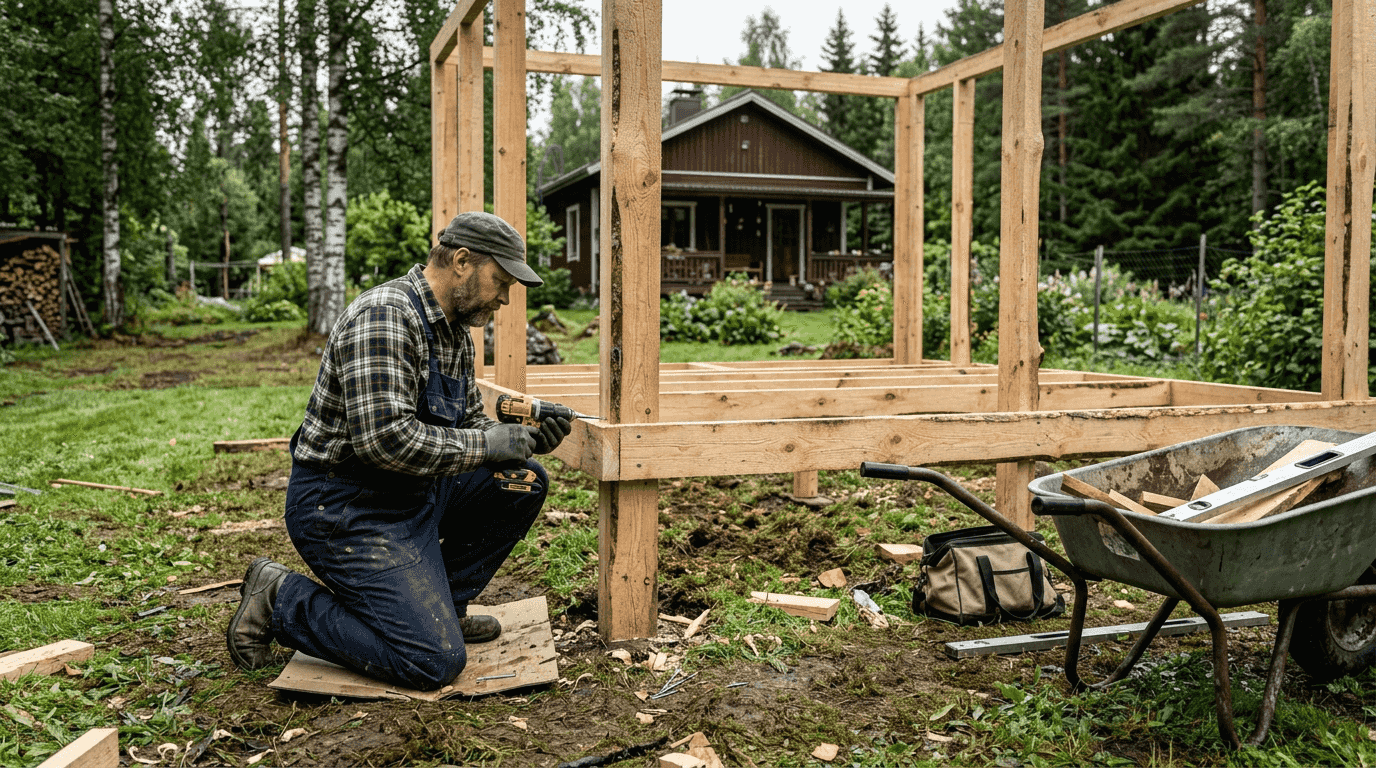
Build your Finnish outdoor sauna step by step in 2026
Building an outdoor sauna in Finland involves navigating complex permit regulations, selecting the right timber materials, and ensuring proper insulation and ventilation. Many homeowners feel overwhelmed by the technical requirements and worry about costly mistakes. This comprehensive guide breaks down each critical step from planning to final inspection, giving you the knowledge to create a durable, compliant Finnish sauna that will serve your family for decades.
Table of Contents
- Planning And Permits Under Finnish 2025 Building Act
- Timber Frame Design Specifications For Outdoor Saunas
- Proper Insulation And Moisture Control
- Sauna Ventilation And Airflow
- Sauna Heater Installation Requirements And Safety
- Step-By-Step Sauna Construction Process
- Common Pitfalls And Practical Fixes In Sauna Projects
- Project Timeline And Cost Expectations
- Why Choose Professional Timber Building Services For Your Sauna Project
- Frequently Asked Questions
Key takeaways
| Point | Details |
|---|---|
| Permits streamlined in 2025 | Outdoor saunas under 30 sqm no longer require building permits but must meet planning and safety standards. |
| Timber selection matters | Use treated Finnish pine or spruce for frames to withstand harsh climates and moisture exposure. |
| Insulation prevents damage | R11-R13 wall insulation with aluminum foil vapor barriers stops moisture from destroying wood structures. |
| Ventilation placement is critical | Fresh air intake near heater base and exhaust vent near ceiling opposite side ensure proper airflow. |
| Electrical safety is mandatory | Licensed electricians must install dedicated 240V circuits with GFCI protection for electric heaters. |
Planning and permits under Finnish 2025 Building Act
Understanding permit requirements saves time and prevents expensive delays before you break ground. The new Building Act of 2025 has streamlined approvals, making sauna construction more accessible.
Starting in 2025, saunas under 30 sqm no longer require building permits but must still comply with planning regulations and safety codes. This exemption applies to most backyard sauna projects, reducing paperwork significantly. The consolidated permit process replaced multiple separate applications with a single streamlined approval, cutting wait times.
Contact your local municipality early when planning a sauna project to confirm specific requirements for your property. Different municipalities interpret national guidelines differently, and some may have additional zoning restrictions. Most approvals take several weeks to two months, depending on your location and the complexity of your project.
Key permit considerations include:
- Distance from property boundaries and neighboring structures
- Compliance with local fire safety regulations
- Adherence to environmental protection standards
- Proper documentation of electrical and heating systems
Pro Tip: Request a pre-application consultation with your municipality to identify potential issues before submitting formal plans. This simple step catches problems early and speeds up the approval process.
Timber frame design specifications for outdoor saunas
The foundation of any durable sauna begins with proper timber frame construction using materials suited to Finland’s challenging climate. Your choice of wood species and structural design directly impacts longevity and performance.
Standard framing uses treated 2×4 inch softwood studs for structural integrity and moisture resistance. Finnish pine and spruce are preferred species because they handle temperature extremes and high humidity without warping. These native woods also provide the authentic character Finnish saunas are known for worldwide.
Frame your sauna with ceiling heights around 2100 mm to optimize heat distribution and create comfortable headroom. Lower ceilings trap heat more efficiently, while taller spaces waste energy heating unused volume. Wall stud spacing should follow standard 400 mm or 600 mm centers depending on insulation thickness and local building practices.
Moisture treatment is non-negotiable for outdoor sauna timber. Pressure-treated lumber or proper kiln-drying prevents rot and extends your sauna’s lifespan by decades. Untreated wood exposed to sauna conditions will deteriorate within just a few years, requiring expensive reconstruction.
Essential timber specifications:
- Use pressure-treated or properly dried lumber for all frame members
- Install diagonal bracing at corners for structural stability
- Leave expansion gaps to accommodate wood movement
- Apply additional weatherproofing to exterior-facing surfaces
Explore custom sauna timber design options that match your property’s aesthetic while meeting structural requirements.
Pro Tip: Order 10% extra lumber to account for cuts, mistakes, and future repairs. Running out of matched timber mid-project causes frustrating delays.
Proper insulation and moisture control
Insulation quality determines how efficiently your sauna heats and how long the structure survives harsh Finnish winters. Poor insulation wastes energy and allows moisture penetration that destroys wood from the inside.
Install insulation rated R11-R13 for walls and R22-R26 for ceilings to achieve optimal thermal performance. These values balance heat retention with practical installation requirements for standard stud depths. Higher ratings require thicker walls that reduce interior space without proportional benefits.
Aluminum foil vapor barriers installed on the warm side of insulation prevent moisture from migrating into wall cavities. This barrier must be continuous with all seams taped using specialized aluminum tape, not standard duct tape which fails in high heat. Even small gaps allow humid air to penetrate insulation, causing condensation and rot.
Follow this installation sequence for sauna insulation and vapor barriers:
- Install batt insulation between studs, fitting snugly without compression
- Overlap vapor barrier sheets by at least 100 mm at seams
- Tape all seams and penetrations with aluminum foil tape
- Staple barrier to studs every 150 mm for secure attachment
- Install furring strips over barrier to create ventilation gap
- Attach interior cladding to furring strips
| Insulation Zone | R-Value | Material Type |
|---|---|---|
| Walls | R11-R13 | Mineral wool or fiberglass batts |
| Ceiling | R22-R26 | Mineral wool or fiberglass batts |
| Floor | R10-R11 | Rigid foam boards |
Moisture damage from inadequate barriers leads to mold growth, wood rot, and structural failure within 3 to 5 years. The cost of proper vapor barrier installation is minimal compared to complete wall reconstruction later.
Pro Tip: Work in sections to keep vapor barriers clean and undamaged during installation. Dirty or punctured barriers lose effectiveness immediately.
Sauna ventilation and airflow
Proper ventilation maintains air quality and heat balance while preventing dangerous buildup of smoke or carbon monoxide. Poor airflow ruins the sauna experience and creates safety hazards.
Place fresh air intake vents near the base of your sauna heater to support combustion and provide oxygen for comfortable breathing. This low positioning allows cool air to enter, heat up as it passes the heater, and rise naturally through convection. The intake should be at least 50 mm in diameter for adequate airflow in typical residential saunas.
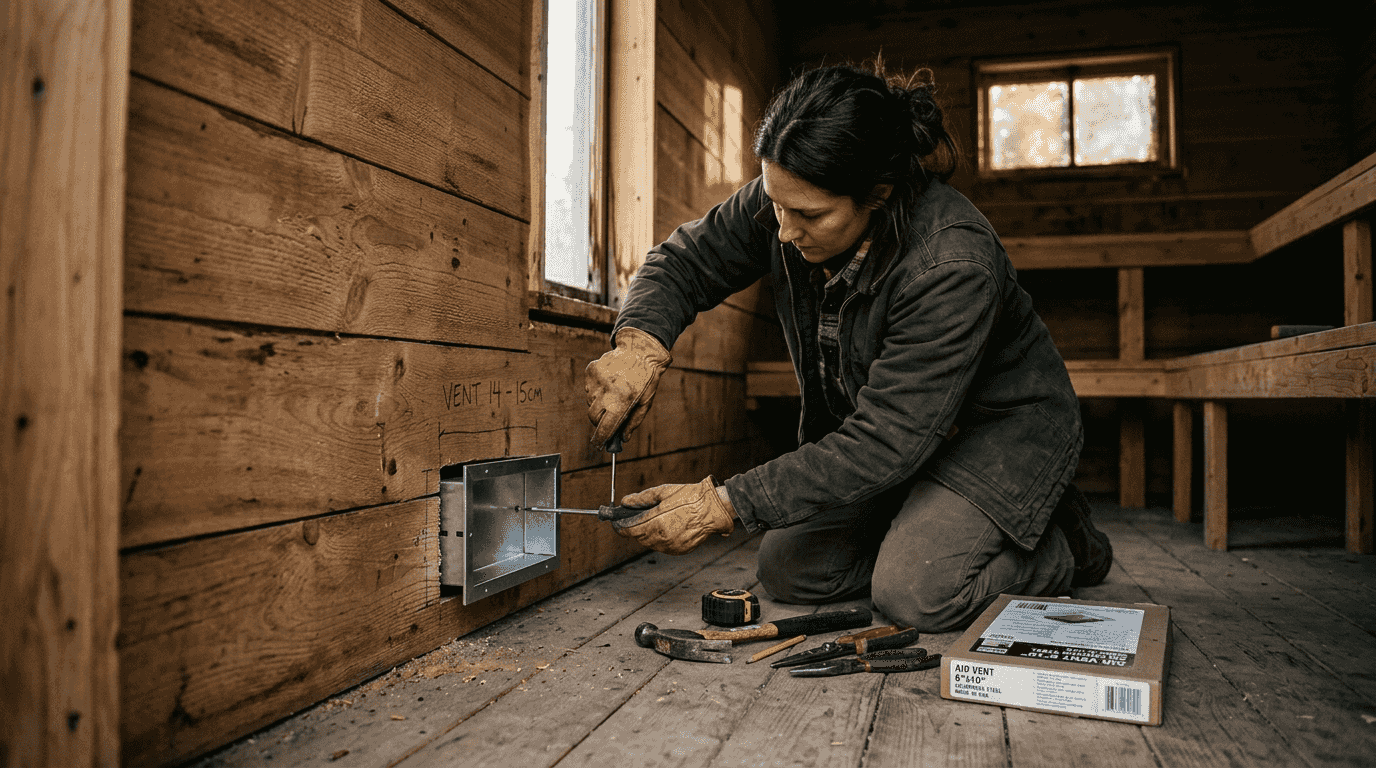
Install exhaust vents near the ceiling on the opposite side from the heater to remove stale air effectively. This diagonal placement creates a natural circulation pattern that distributes heat evenly throughout the space. Exhaust vents should be slightly larger than intake vents to encourage positive airflow.
Balanced vent placement prevents excessive heat loss while maintaining fresh air circulation. Too much ventilation cools the sauna unnecessarily, while insufficient airflow causes stuffiness and poor combustion. Adjustable vents let you fine-tune airflow based on weather conditions and personal preferences.
Ventilation design directly impacts safety by preventing smoke accumulation from wood-burning stoves and ensuring adequate oxygen levels. Carbon monoxide buildup from incomplete combustion can be fatal, making proper ventilation a life-saving requirement, not an optional feature.
Key ventilation principles:
- Position intake below bench level for optimal air circulation
- Size exhaust vents 20% larger than intake for positive pressure
- Install adjustable dampers on both intake and exhaust
- Keep ventilation paths clear of obstructions
Learn more about ventilation design for Finnish saunas to ensure your system meets both comfort and safety standards.
Sauna heater installation requirements and safety
Heater installation represents the highest-risk phase of sauna construction, requiring strict adherence to electrical codes and fire safety standards. Mistakes here can cause fatal fires or electrocution.
Electric sauna heaters need dedicated 240V circuits with GFCI protection to prevent electrical fires and shock hazards. These circuits must be sized appropriately for your heater’s power draw, typically ranging from 30 to 60 amps for residential installations. Undersized circuits overheat and trip breakers constantly, while oversized protection fails to prevent dangerous conditions.
Wood-burning stoves require proper chimney installation with adequate clearances from combustible materials. Finnish regulations specify minimum distances between stove surfaces and walls, typically 200 to 500 mm depending on heat shielding. Chimneys must extend above the roofline to create sufficient draft and prevent downdrafts from wind.
Hire licensed electricians for all electrical work to ensure compliance with national safety codes. DIY electrical installations void insurance coverage and create serious liability if accidents occur. Professional installation costs represent a small fraction of rebuilding expenses after a fire.
| Heater Type | Installation Cost | Running Cost | Maintenance |
|---|---|---|---|
| Electric | Lower initial cost | Higher per use | Minimal annual |
| Wood-burning | Higher initial cost | Lower per use | Regular cleaning required |
Electric heaters offer convenient, clean operation with simple temperature controls but consume significant electricity. Wood-burning stoves provide authentic heat and lower operating costs but require chimney maintenance and firewood storage. Your choice depends on personal preference, budget, and willingness to manage ongoing maintenance.
Essential safety requirements:
- Install heat shields on walls near wood stoves
- Use only approved heater models certified for sauna use
- Mount thermostats at proper heights per manufacturer specifications
- Test GFCI protection monthly to verify proper operation
Review detailed sauna heater installation codes before beginning electrical work.
Step-by-step sauna construction process
Following a logical sequence prevents rework and ensures you complete tasks in the correct order. Skipping steps or working out of sequence causes problems that are expensive to fix later.
-
Prepare the site by clearing vegetation and leveling the ground where your sauna will stand. Install a stable foundation using concrete piers, gravel beds, or treated timber skids rated for ground contact. The foundation must be level within 10 mm and provide adequate drainage.
-
Construct the timber frame using treated studs at standard spacing, ensuring all corners are square and walls are plumb. Install diagonal bracing before proceeding to prevent the frame from racking. Double-check dimensions against your plans before securing permanent fasteners.
-
Install insulation and vapor barriers following the sequence described earlier, taking extra care to seal all penetrations completely. Work methodically to avoid tears or gaps in the barrier system.
-
Place ventilation intake and exhaust vents according to your design specifications, ensuring proper sizing and positioning for optimal airflow. Test the natural convection pattern before closing walls.
-
Complete interior cladding using tongue-and-groove boards, typically aspen or alder for their heat tolerance and pleasant aroma. Install benches at comfortable heights, usually 450 mm for lower benches and 900 mm for upper benches. Hang the door with proper weatherstripping.
-
Have a licensed electrician install sauna heater wiring, lighting circuits, and all required safety devices. Never attempt electrical work yourself unless you hold proper qualifications.
-
Conduct a thorough final inspection, testing all systems before regular use. Check for air leaks, verify heater operation, and confirm ventilation works as designed.
Explore stepwise sauna construction resources for detailed guidance on each phase.
Common pitfalls and practical fixes in sauna projects
Common mistakes during construction lead to premature failure and expensive repairs. Learning from others’ errors saves you money and frustration.
Incorrect vapor barrier installation causes moisture damage and wood rot within just a few years of completion. Gaps, tears, or improper taping allow humid air to penetrate insulation where it condenses on cold surfaces. Fix this by using continuous aluminum foil sheets with all seams overlapped and taped with specialized aluminum tape, not standard products.
Improper ventilation placement creates heat loss, poor air quality, and uncomfortable temperature gradients. Intake vents positioned too high or exhaust vents too low disrupt natural convection patterns. Correct the issue by relocating vents to proper positions: intake low near the heater, exhaust high on the opposite wall.
Frame dimension errors reduce interior comfort and heating efficiency by creating spaces that are too large or awkwardly proportioned. Always verify measurements against established sauna design standards before cutting lumber. Fixing dimension problems after framing requires extensive demolition and reconstruction.
Electrical wiring without GFCI protection or improperly sized circuit breakers creates serious fire and shock hazards. These mistakes violate building codes and void insurance coverage. Only licensed electricians should perform sauna electrical work to ensure compliance and safety.
Common error fixes:
- Torn vapor barriers: patch immediately with aluminum tape and overlapping foil
- Inadequate ventilation: retrofit adjustable vents in correct positions
- Undersized circuits: upgrade wiring and breakers to match heater requirements
- Poor drainage: improve site grading and install French drains around foundation
Learn strategies for avoiding sauna build mistakes before they become costly problems.
Project timeline and cost expectations
Realistic planning prevents rushed work and budget overruns that compromise quality. Understanding typical costs and timelines helps you schedule resources effectively.
DIY outdoor sauna builds cost €5,000 to €12,000 depending on size, materials, and finish quality. Smaller 2×2 meter saunas with basic finishes fall at the lower end, while larger 3×4 meter structures with premium materials reach the upper range. These estimates include lumber, insulation, heater, electrical components, and finishing materials.
Construction requires 60 to 120 labor hours based on builder experience and project complexity. First-time builders should expect longer timelines, especially for unfamiliar tasks like vapor barrier installation and electrical work. Experienced builders complete straightforward projects in 60 to 80 hours.
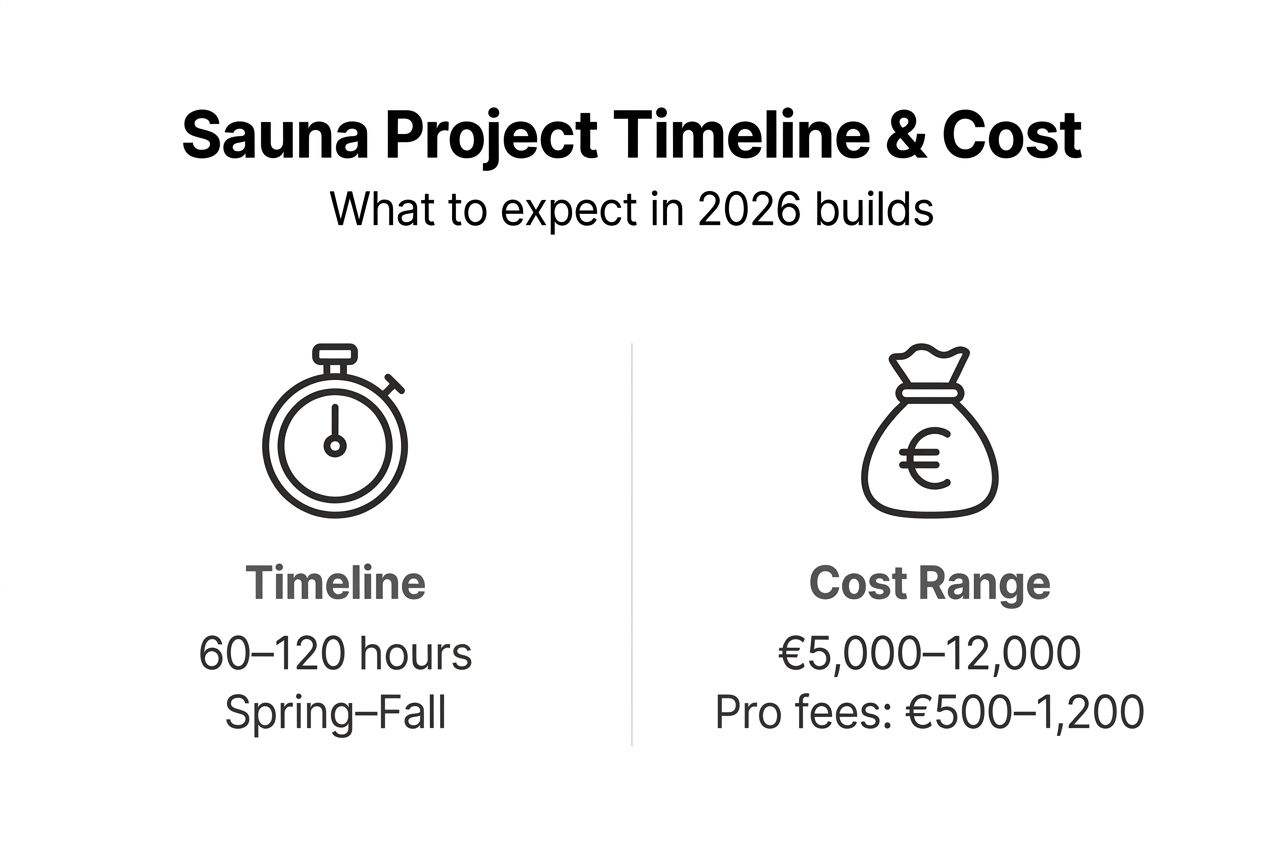
Budget for professional electrician fees ranging from €500 to €1,200 depending on heater complexity and wiring distance from your main panel. Permit costs vary by municipality but typically add €100 to €300 to total expenses. Material prices fluctuate seasonally, with lumber costs peaking in spring and summer.
| Cost Category | Low Estimate | High Estimate |
|---|---|---|
| Lumber and framing | €1,500 | €3,500 |
| Insulation and vapor barrier | €400 | €900 |
| Interior cladding and benches | €800 | €2,200 |
| Heater and stones | €600 | €2,500 |
| Electrical installation | €500 | €1,200 |
| Doors, windows, hardware | €400 | €1,000 |
| Foundation materials | €300 | €700 |
| Permits and fees | €100 | €300 |
| Total | €4,600 | €12,300 |
Weather impacts construction schedules significantly in Finland. Plan major outdoor work for late spring through early fall when conditions are favorable. Winter construction requires heated workspace and weather protection, adding time and cost.
Site conditions affect both timeline and budget. Level, well-drained lots with easy access simplify construction, while sloped or remote locations require extra foundation work and material transport. Design complexity influences costs too, with custom features and premium finishes increasing expenses proportionally.
Explore timelines and budgeting for timber builds to refine your project planning.
Why choose professional timber building services for your sauna project
Building a sauna yourself offers satisfaction and cost savings, but professional expertise delivers superior results with less stress. Experienced timber builders streamline every phase from planning through final inspection, preventing the costly mistakes that plague DIY projects.
Professional teams bring decades of knowledge about benefits of timber building in Finnish climates, ensuring your sauna withstands harsh winters and humid summers. They source premium Finnish timber and apply precise craftsmanship that creates authentic sauna experiences matching traditional standards.
The custom timber building process handles complex permit requirements, coordinates licensed trades, and manages timelines efficiently. You gain peace of mind knowing every detail meets code requirements without spending months researching regulations. Finnish timber craftsmanship delivers structures that serve families for generations, making professional services a wise long-term investment.
Frequently asked questions
Do outdoor saunas smaller than 30 sqm require building permits in Finland 2026?
No, saunas under 30 sqm do not require building permits under the 2025 Building Act but must comply with planning regulations and safety codes. You still need to verify local zoning requirements and obtain electrical permits for heater installation. Contact your municipality early to confirm specific requirements for your property.
What type of timber is best for outdoor sauna frames in Finland?
Finnish pine and spruce with moisture-resistant treatment provide the best durability for sauna frames in harsh climates. These native species handle temperature extremes and humidity without warping while offering authentic character. Always use pressure-treated or properly kiln-dried lumber for structural members.
How do I ensure proper ventilation in my outdoor sauna?
Install fresh air intake vents near the heater base and exhaust vents near the ceiling on the opposite wall to create natural convection. Size exhaust vents 20% larger than intake vents for positive airflow. Include adjustable dampers on both vents to fine-tune circulation based on conditions.
What are the electrical requirements for installing an electric sauna heater in Finland?
Electric sauna heaters require dedicated 240V circuits with GFCI protection sized to match heater power draw, typically 30 to 60 amps. Licensed electricians must perform all installations to meet Finnish safety codes and maintain insurance coverage. DIY electrical work creates serious fire and shock hazards.
What are common mistakes to avoid when building a custom outdoor sauna?
Avoid improper vapor barrier installation that allows moisture damage, incorrect ventilation placement causing heat loss, wrong frame dimensions reducing comfort, and unlicensed electrical work creating hazards. Always verify measurements against standards, use continuous vapor barriers with taped seams, and hire qualified electricians for all wiring.
Recommended
- How to Build Outdoor Sauna for Custom Finnish Style – Hirsitalot, pihasaunat ja piharakennukset kotimaisesta hirrestä
- Setting Up Finnish Sauna: Complete Step-by-Step Guide – Hirsitalot, pihasaunat ja piharakennukset kotimaisesta hirrestä
- Sauna building workflow: plan and build Finnish sauna – Hirsitalot, pihasaunat ja piharakennukset kotimaisesta hirrestä
- How to Design Custom Saunas for Your Dream Outdoor Retreat – Hirsitalot, pihasaunat ja piharakennukset kotimaisesta hirrestä