Role of Insulation in Saunas – Energy and Comfort Impact
Cold winters in Central Europe challenge every sauna owner who wants lasting warmth without soaring energy bills. For those building custom timber saunas, choosing effective insulation is more than a comfort upgrade—it’s the key to energy savings and protecting your wood structure from hidden moisture damage. With the right combination of insulation and vapor barriers, you gain better heat retention, consistent temperatures, and a dry, safe environment inside your sauna. Discover what makes proper insulation a smart investment for year-round sauna enjoyment.
Table of Contents
- What Insulation Means for Saunas
- Comparing Sauna Insulation Materials and Methods
- How Insulation Affects Sauna Energy Efficiency
- Moisture Barriers and Timber Frame Saunas
- Cost, Risks, and Mistakes to Avoid
Key Takeaways
| Point | Details |
|---|---|
| Effective Insulation is Essential | Proper insulation minimizes heat loss, reduces energy costs, and maintains consistent sauna temperatures. |
| Moisture Management is Crucial | High-quality insulation along with effective vapor barriers prevents water damage and protects the timber structure. |
| Material Selection Impacts Performance | Choosing the right insulation material balances thermal performance, moisture resistance, and environmental sustainability. |
| Installation Must be Done Correctly | Ensuring proper thickness, vapor barrier placement, and sealing gaps is vital for maximizing insulation effectiveness and preventing future damage. |
What Insulation Means for Saunas
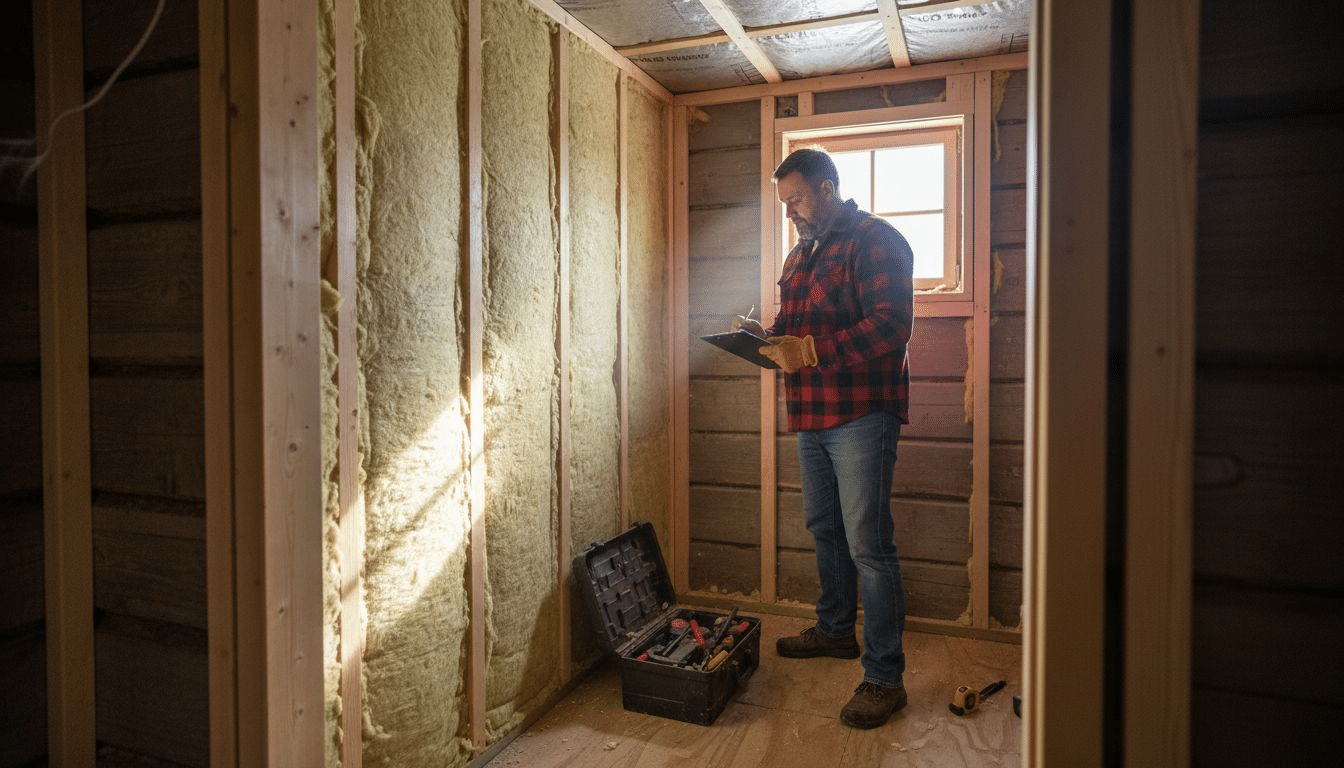
Insulation in a sauna is fundamentally about controlling heat and moisture. When you heat a sauna to 80°C or higher, the temperature difference between inside and outside becomes dramatic, especially in Central European winters. Without proper insulation, that expensive heat simply escapes through walls, ceilings, and floors, forcing your heating system to work overtime. Insulation acts as a barrier that slows this heat loss, keeping the thermal energy where it belongs: inside your sauna. Think of it like wearing a thick coat in winter. The coat doesn’t generate heat, but it traps the warmth your body produces, making you stay comfortable longer. Your sauna works the same way.
Beyond heat retention, insulation addresses a hidden threat that many sauna owners in timber structures overlook: moisture damage. When warm, humid air inside your wooden sauna encounters cold exterior surfaces, condensation forms. This moisture can penetrate wood fibers, leading to rot, mold, and structural deterioration that’s costly to repair. Proper insulation keeps interior surfaces warm, preventing that condensation from forming in the first place. Adding vapor barriers alongside insulation creates a complete moisture management system. Materials like mineral wool and closed-cell foam not only retain heat effectively but also resist moisture absorption, protecting your timber frame from the inside out. In regions with significant temperature swings between seasons, this protection becomes critical for the longevity of your structure.
The practical benefit translates directly to your wallet and comfort. With effective insulation, your sauna reaches operating temperature faster and maintains that temperature with less energy consumption. You’ll notice the difference immediately: lower heating costs, more consistent temperatures throughout sessions, and a wooden interior that stays protected from the dampness that causes expensive damage. For homeowners planning custom timber saunas, the insulation decision isn’t optional if you want reliable performance and durability. Understanding how energy efficiency works in saunas will help you make informed choices about your specific project needs and climate conditions.
Pro tip: When planning your sauna build, specify insulation thickness that matches your local winter temperatures. Central European saunas typically benefit from 100–150mm of insulation combined with a complete vapor barrier system to maximize both comfort and structural protection.
Comparing Sauna Insulation Materials and Methods
Choosing the right insulation material for your timber sauna comes down to balancing three factors: thermal performance, moisture handling, and long-term durability in your climate. Mineral wool stands out as a top choice for Central European saunas because it excels at heat retention while actively managing moisture without degrading over time. It’s fire-resistant, resists moisture absorption better than fibrous alternatives, and maintains its R-value for decades. Fiberglass offers similar thermal resistance at a lower cost, though it requires more careful installation with proper vapor barriers since it can retain moisture if not sealed correctly. For eco-conscious builders, hemp insulation provides solid thermal conductivity and excellent moisture regulation, absorbing and releasing humidity without losing effectiveness. Cork is another natural option that delivers sound insulation and moisture resistance, though it carries a distinctive smell that some find off-putting in enclosed spaces. Rigid foam boards deliver the highest thermal resistance per thickness, making them ideal when space is limited, but they demand careful installation to avoid trapping moisture behind them.
Installation methods vary significantly depending on your sauna structure and the material you choose. Most timber saunas use a layered approach: insulation material placed between the wooden frame, combined with a vapor barrier on the warm side to prevent moisture infiltration. For mineral wool and fiberglass, this typically means batts or blankets cut to fit between framing, sealed with kraft paper or plastic sheeting. Foam boards are often glued or mechanically fastened to interior walls, then sealed at joints. The critical detail that separates good installations from poor ones is the vapor barrier placement. It must face inward toward the heated sauna space, preventing warm, humid air from pushing moisture into the insulation where it causes rot. Many sauna owners make the mistake of applying vapor barriers on the wrong side, which traps moisture inside the insulation itself.
Your choice ultimately depends on your budget, available space, and environmental priorities. If you’re building a compact sauna where space matters, foam boards give maximum insulation in minimum thickness. If you prioritize natural materials and have the budget, hemp or cork excel in moisture management and sustainability. For most Central European homeowners, mineral wool strikes the best balance: reliable thermal performance, proven moisture handling, reasonable cost, and straightforward installation. When selecting materials, consider that cheaper insulation often requires more meticulous installation to perform well, while premium materials sometimes compensate for minor installation gaps. Understanding essential sauna building materials will help you evaluate how insulation fits into your overall construction strategy.
Here’s a concise comparison of popular sauna insulation materials:
| Insulation Type | Thermal Performance | Moisture Resistance | Sustainability |
|---|---|---|---|
| Mineral Wool | Excellent, stable | High, resists rot | Industrially produced |
| Fiberglass | Good, low cost | Moderate, needs sealing | Widely available |
| Hemp | Decent, natural | Regulates humidity | Renewable material |
| Cork | Moderate insulation | Good, but noticeable odor | Biodegradable |
| Foam Boards | Highest per thickness | Impermeable, may cause moisture traps | Synthetic, recyclable in some cases |
Pro tip: Match your insulation thickness to your coldest winter temperatures and install a complete vapor barrier system regardless of material choice. Most Central European outdoor saunas perform optimally with 100 to 150mm of quality insulation plus a properly sealed vapor barrier.
How Insulation Affects Sauna Energy Efficiency
Insulation directly controls how quickly your sauna loses the heat you pay to generate. Heat escapes through three mechanisms: conduction (through solid materials), convection (through air movement), and radiation (through electromagnetic waves). Without insulation, all three pathways drain heat constantly from your sauna interior to the cold exterior. With proper insulation, you create resistance to this heat flow. Think of it measurably: an uninsulated sauna might lose 30 to 40 percent of its heat within an hour of reaching temperature, forcing your heater to work continuously. Add mineral wool insulation with an R-value of 20 or higher, and that heat loss drops dramatically to just 10 to 15 percent over the same period. The difference translates directly to lower electricity or fuel costs because your heating system reaches target temperature faster and maintains it with far less energy input.
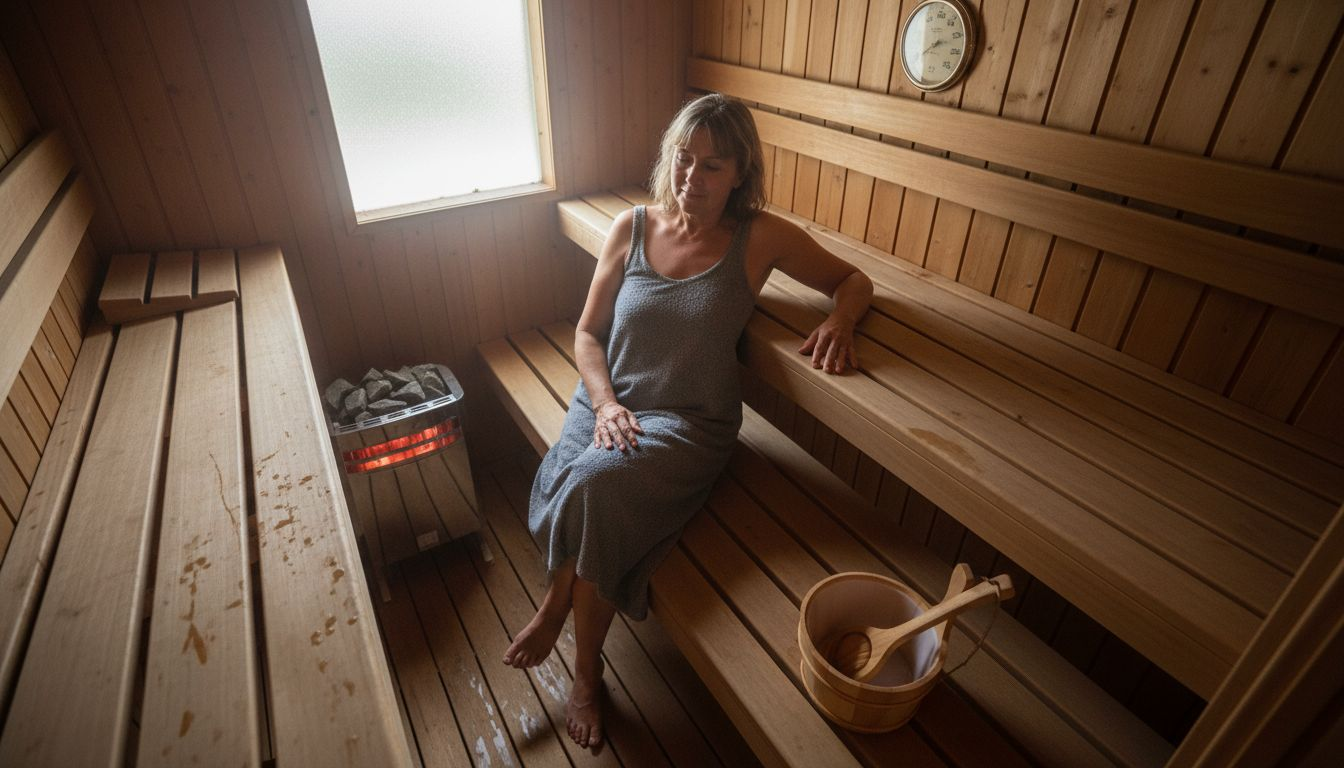
The R-value rating on insulation materials tells you exactly how well they resist heat flow. Higher R-values mean better thermal resistance per inch of thickness. Central European saunas exposed to harsh winters typically need R-values between 15 and 25 depending on local temperatures and sauna design. If you’re building a timber frame sauna that operates year-round, proper insulation with adequate R-value becomes non-negotiable for cost-effective operation. The compounding effect matters over time: a sauna with poor insulation might consume 40 percent more energy annually than one properly insulated. Over a decade, that difference equals hundreds or thousands of euros wasted heating the outdoors instead of your sauna space. When you’re building a sauna with custom timber solutions, insulation thickness and material selection deserve as much attention as the wooden frame itself.
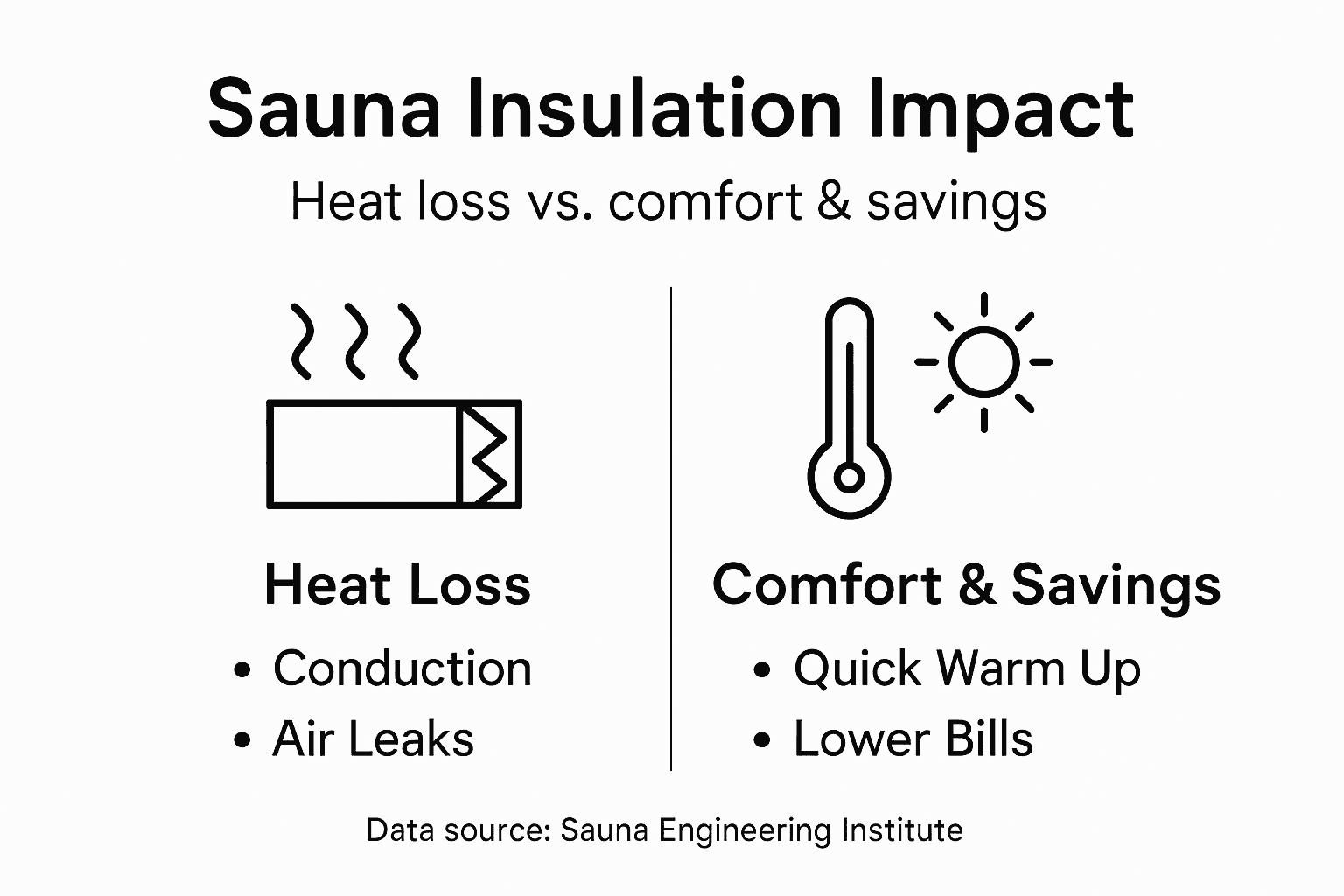
Moisture management plays a hidden but critical role in maintaining insulation efficiency. When moisture penetrates insulation materials, it dramatically reduces their R-value effectiveness because water conducts heat far better than air. A mineral wool insulation rated at R-20 can drop to R-12 or lower if it absorbs moisture, negating much of your investment. This is why vapor barriers are essential in sauna construction. They prevent warm, humid interior air from pushing into the insulation where it condenses and degrades thermal performance. Proper installation with barriers on the warm side of insulation maintains both energy efficiency and structural protection. Without this detail, your sauna will never reach its energy potential regardless of material quality.
Pro tip: Calculate your sauna’s annual energy costs before and after insulation installation to see the real financial impact. Many homeowners discover that proper insulation pays for itself in reduced heating costs within 3 to 5 years of regular use.
Moisture Barriers and Timber Frame Saunas
Timber is vulnerable to moisture. It’s that simple. When water penetrates wood fibers, it triggers rot, mold, and structural failure that can render your sauna unsafe and unsalvageable. In a timber frame sauna, the risk intensifies because you’re creating one of the most moisture-rich environments imaginable: you heat water to steam, creating warm, humid air that constantly seeks escape. Without protection, this moisture-laden air migrates into your wall cavities where it contacts cooler wood surfaces and condenses. That liquid water sits inside your walls, hidden from view, slowly destroying the timber structure that supports everything. Vapor barriers solve this problem by creating a moisture shield that prevents warm interior air from pushing water vapor into insulation and wall cavities. Proper barrier placement on the warm side of insulation stops the process before condensation forms.
The placement of your vapor barrier determines whether it protects or traps moisture. Install it on the wrong side, and you create a moisture trap that accelerates decay instead of preventing it. The barrier must face inward toward your heated sauna space, blocking outward moisture movement while allowing the wooden structure behind it to dry if any moisture somehow penetrates. In Central European climates with significant temperature swings between seasons, this becomes critical. Winter cold makes exterior surfaces frigid while interior sauna heat creates a steep temperature gradient. That gradient pushes moisture outward aggressively. A properly positioned barrier intercepts this moisture before it reaches wood. Many DIY sauna builders make the mistake of installing barriers on the exterior or in the middle of the insulation layer, which actually prevents wood from drying and accelerates rot. When you’re building a timber sauna, the vapor barrier strategy deserves as much planning as the frame itself.
Effective moisture control combines three elements: insulation, vapor barriers, and ventilation. Insulation keeps interior surfaces warm, reducing condensation opportunities. Vapor barriers block moisture migration into cavities. Ventilation removes excess humidity before it becomes problematic. Your timber frame sauna needs all three working together. A barrier alone without adequate ventilation can still trap moisture if humidity levels spike too high. Conversely, ventilation without a barrier allows moisture to migrate into walls. The sequence matters too: barriers must be continuous and sealed at all penetrations, joints, and transitions. A single gap defeats the entire system. Professional sauna builders know that a 95-percent barrier with a 5-percent gap performs like a 50-percent barrier because moisture finds those weak spots. This is why custom design and meticulous installation matter profoundly in timber sauna construction.
Pro tip: Specify closed-cell foam as your vapor barrier material rather than plastic sheeting alone. Foam boards provide both insulation and vapor protection in one layer, eliminating installation gaps that compromise moisture control and simplifying your build sequence.
Cost, Risks, and Mistakes to Avoid
Insulation is an investment, and like any investment, cutting corners creates expensive problems later. The cost of materials varies significantly: mineral wool batts run roughly 1 to 3 euros per square meter, fiberglass slightly less, while closed-cell foam boards cost 5 to 8 euros per square meter. Labor adds substantially depending on complexity. But here’s what matters: spending an extra 500 euros on quality insulation installation now prevents 5000 euros in structural repairs from moisture damage five years down the road. The most costly mistake is choosing cheap materials without proper installation. A discount mineral wool product installed with gaps, compression, or missing vapor barriers performs worse than mid-range materials installed correctly. Insufficient thickness is another budget trap that homeowners fall into. You can’t achieve R-value 20 with 50mm of insulation when your climate demands 100 to 150mm. The shortfall leaves your sauna energy hungry and your timber frame vulnerable. Buying too little insulation to save money upfront guarantees disappointment when heating bills arrive.
Moisture damage represents the largest risk in sauna insulation projects. Missing or incorrectly placed vapor barriers allow condensation to accumulate inside walls where you can’t see it forming. By the time rot becomes visible, structural timbers have already begun deteriorating. In Central European climates with intense seasonal temperature swings, this happens faster than in milder regions. Fire safety is another concern that sometimes gets overlooked. Not all insulation materials have equal fire ratings. If you choose materials without proper fire certification, you might violate building codes and void insurance coverage. Compression of batts or blankets during installation also degrades performance significantly. Mineral wool squeezed into cavities tighter than recommended loses its effectiveness because compressed air spaces can’t trap heat properly. Many DIY builders think they’re improving performance by compacting materials, but they’re actually reducing R-value by 10 to 20 percent.
Air sealing mistakes compound insulation failures. Your insulation only works when it’s part of a complete system. If you install perfect insulation but leave gaps around window frames, door trim, electrical outlets, or ductwork, heated air leaks directly outdoors, bypassing your insulation entirely. A single unsealed 12mm gap can equal the heat loss of several square meters of missing insulation. Professional sauna builders seal every penetration, every joint, and every transition before installing insulation. They also verify that local building codes are met before starting work, avoiding expensive rework or rejected inspections. Consulting with a sauna specialist during the planning phase costs far less than correcting mistakes after construction begins.
The risks and mistakes cluster around three categories: material selection, installation execution, and system integration. Choose appropriate materials for your climate and budget. Install them according to manufacturer specifications and local codes. Ensure barriers, ventilation, and air sealing work together as a complete system. When you’re uncertain about any step, ask professionals for guidance rather than gambling with your investment and comfort.
Below is a summary of common sauna insulation mistakes and their consequences:
| Mistake Type | Typical Consequence | Prevention Strategy |
|---|---|---|
| Inadequate Thickness | Higher heating costs | Match insulation to climate |
| Poor Vapor Barrier Placement | Moisture damage, rot risk | Install barrier on warm side |
| Compressed Insulation | Reduced R-value, low efficiency | Follow manufacturer guidelines |
| Air Leakage (unsealed gaps) | Rapid heat loss, discomfort | Seal all penetrations, joints |
Pro tip: Budget an extra 10 to 15 percent above material costs for professional installation verification or consultation. This small additional investment catches mistakes before they become expensive problems and ensures your sauna meets local codes.
Enhance Your Sauna Experience with Expert Timber Solutions
Proper insulation is the key to unlocking true energy efficiency and lasting comfort in your sauna. The article highlights critical challenges such as heat loss, moisture damage, and vapor barrier placement—all of which directly impact your sauna’s performance and durability. At Huvila Seppälä, we understand these pain points and provide expertly crafted timber frames and custom sauna structures built to optimize insulation and moisture control.
Don’t let poor insulation or moisture risks undermine your investment. Explore our reliable Finnish wood log houses, custom saunas, and timber frames designed for perfect synergy between natural materials and modern insulation techniques. With over 65 years of craftsmanship experience, fast delivery, and transparent quotes, we make your sauna project seamless and energy efficient. Discover the full range of possibilities and start your project today by visiting Huvila Seppälä. Learn why insulation matters as you plan by checking Essential Sauna Building Materials Explained and get expert advice on Building a Sauna with Custom Timber Solutions. Take the first step toward a sauna that delivers comfort, economy, and lasting quality now.
Frequently Asked Questions
What is the importance of insulation in a sauna?
Insulation is crucial in a sauna as it controls heat and moisture. It prevents heat loss through walls, ceilings, and floors, allowing the sauna to maintain its temperature efficiently and reducing energy costs.
How does insulation affect energy efficiency in saunas?
Effective insulation significantly reduces heat loss, allowing the sauna to reach and maintain temperature faster. This lowers energy consumption, leading to reduced heating costs over time.
What materials are best for insulating a sauna?
Mineral wool is often recommended for its heat retention and moisture resistance. Other options include fiberglass, hemp, cork, and foam boards, each with unique benefits regarding thermal performance, moisture handling, and sustainability.
Why are vapor barriers important in sauna insulation?
Vapor barriers are essential because they prevent warm, humid air from penetrating the insulation and causing condensation, which can lead to moisture damage, rot, and structural issues within the sauna.
Recommended
- Energy Efficiency in Saunas – Real Savings for Owners – Huvila Seppälä
- 7 Essential Sauna Planning Tips for Your Dream Retreat – Huvila Seppälä
- Why Invest in Outdoor Saunas for Wellness and Value – Huvila Seppälä
- What Is a Finnish Sauna and Why It Matters – Huvila Seppälä