Log House Project Checklist: Step-by-Step Guide for Success
Every homeowner dreams of a log house that blends beauty with practical comfort. Bringing this vision to life in Central Europe means navigating unique terrain challenges, local regulations, and budget expectations. An organized checklist can transform uncertainty into confidence by guiding you step by step from site assessment to final quality checks. Understanding regional construction costs and regulatory requirements will help you avoid unexpected obstacles and ensure your project starts on solid ground.
Table of Contents
- Step 1: Assess Site and Budget Requirements
- Step 2: Secure Permits and Design Documents
- Step 3: Finalize Log House Specifications
- Step 4: Choose Qualified Suppliers and Contractors
- Step 5: Monitor Construction Milestones
- Step 6: Verify Completion and Quality Standards
Quick Overview
| Key Insight | Explanation |
|---|---|
| 1. Conduct a Thorough Site Assessment | Evaluate terrain, soil, and accessibility to identify challenges and save on costs. |
| 2. Plan a Detailed Budget | Break down costs into categories and allocate a contingency fund to prevent overruns. |
| 3. Gather Necessary Permits | Compile required documentation to ensure compliance and avoid project delays. |
| 4. Choose Experienced Contractors | Select specialists with a proven track record in log house techniques to minimize issues. |
| 5. Monitor Construction Milestones | Systematically document progress to catch errors early and ensure accountability. |
Step 1: Assess Site and Budget Requirements
Before breaking ground on your log house project, you need a comprehensive site and budget assessment that sets the foundation for success. This critical first step involves evaluating your land, understanding local building regulations, and developing a realistic financial framework that prevents costly surprises down the line.
Starting with site evaluation means thoroughly examining your property’s characteristics and potential challenges. You’ll want to carefully assess factors like terrain topography, soil composition, drainage patterns, and accessibility for construction equipment. According to recent Statista construction cost research, these site-specific elements can significantly impact your overall project budget across European regions.
- Conduct a professional land survey to map exact property boundaries
- Review local zoning regulations and building codes specific to log house construction
- Assess potential environmental restrictions or required permits
- Identify potential site challenges like slope, rock formations, or water table issues
Strategic site assessment can save you up to 20% in unexpected construction expenses by identifying potential challenges early.
Budget planning requires a meticulous approach that goes beyond basic construction costs. Break down your financial requirements into clear categories: land preparation, materials, labor, permits, and contingency funds. European construction markets show significant regional variations, so research local pricing carefully. Most experts recommend setting aside 10-15% of your total budget for unexpected expenses.
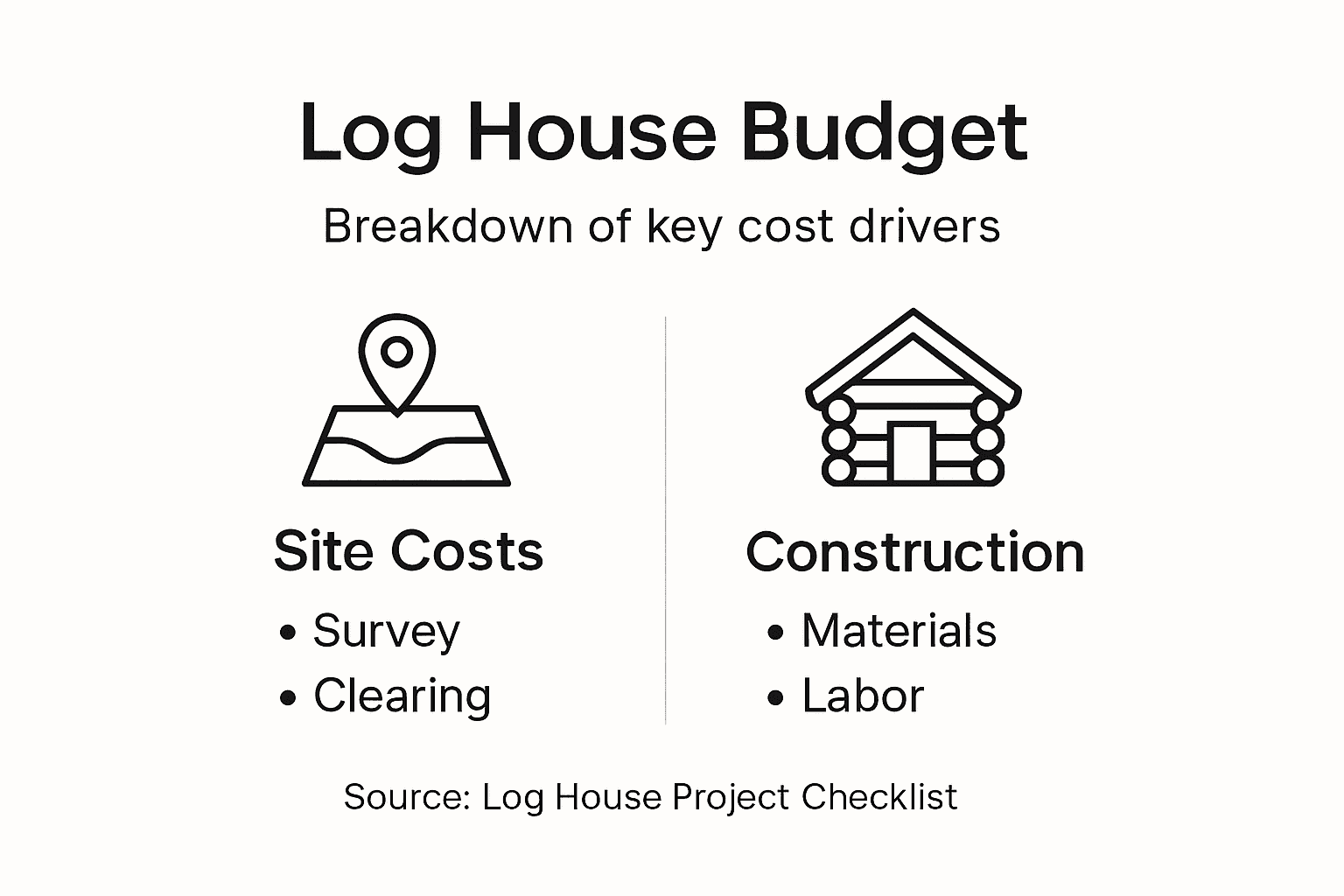
Here’s a quick reference for budget categories and their common cost drivers in log house projects:
| Budget Category | Key Cost Drivers | Impact on Project |
|---|---|---|
| Land Preparation | Terrain grading, soil testing | Can increase startup expenses |
| Materials | Wood quality, insulation type | Affects long-term durability |
| Labor | Specialized skills, sourcing | Impacts total construction time |
| Permits | Local regulations, documentation | May cause project delays |
| Contingency Fund | Unforeseen site issues | Protects against overruns |
Pro tip: Invest in a detailed geotechnical survey before finalizing your budget to uncover potential ground condition challenges that could dramatically impact construction costs.
Step 2: Secure Permits and Design Documents
Navigating the complex world of permits and design documentation is a critical phase in your log house project. This step transforms your vision from concept to legal reality, ensuring that every aspect of your build meets local regulatory requirements and professional standards.
The permit acquisition process demands meticulous attention to detail. According to European Parliamentary research, construction regulations across different regions can vary significantly, making it essential to understand local specifics. Your primary goal is to compile a comprehensive documentation package that demonstrates your project’s compliance with building codes, zoning regulations, and structural safety standards.
- Gather all necessary architectural drawings and site plans
- Confirm local municipality building requirements
- Prepare detailed construction specifications
- Schedule preliminary meetings with local building authorities
Efficient permit preparation can reduce potential approval delays by up to 40 percent.
Design documents serve as your project’s legal and technical blueprint. These must include precise architectural renderings, structural engineering plans, and detailed material specifications. For log house construction in Central Europe, you’ll need documents that specifically address wood construction standards, thermal efficiency regulations, and regional building codes.

Permitting for Log Homes – Navigating Custom Builds typically requires a comprehensive package demonstrating how your proposed structure meets all regulatory requirements.
Pro tip: Work with a local architect experienced in log house construction to streamline your permit documentation and increase first-submission approval chances.
Step 3: Finalize Log House Specifications
Finalizing your log house specifications transforms your architectural vision into a precise, actionable blueprint that guides the entire construction process. This critical step bridges the gap between conceptual design and practical implementation, ensuring every detail aligns with your functional needs and aesthetic preferences.
According to architectural research, log house specifications involve multiple nuanced considerations. Professional sources highlight the importance of detailed material selection, structural dimensions, and regional building standards. Your specifications must comprehensively address key elements like wood type, log profile, thermal performance, and construction methodology.
- Determine exact log dimensions and wood species
- Define interior and exterior finish requirements
- Specify thermal insulation and energy efficiency standards
- Outline window and door placement strategies
- Select appropriate foundation and roofing systems
Precision in specifications can reduce construction time by up to 30 percent and minimize unexpected project complications.
Regional preferences play a significant role in log house design. Central European log house traditions emphasize structural durability, energy efficiency, and aesthetic harmony with surrounding landscapes. Requirements for Log Houses demonstrate how local building codes and climate conditions directly influence design choices.
Pro tip: Consult with a log house specialist to validate your specifications and ensure they meet both your personal vision and local regulatory requirements.
Step 4: Choose Qualified Suppliers and Contractors
Selecting the right suppliers and contractors can make or break your log house project. This critical step involves carefully vetting professionals who understand the nuanced art of log house construction and can translate your vision into a structurally sound, beautiful reality.
According to log building association research, contractor selection goes far beyond basic construction skills. You need specialists with deep expertise in Scandinavian and Eastern European log building techniques, understanding the intricate details of wood selection, joinery, and regional construction standards. Your ideal team should demonstrate proven experience in traditional log construction methods and modern building technologies.
- Request detailed portfolios of previous log house projects
- Verify professional certifications and specialized training
- Check references from recent log house construction clients
- Confirm expertise in local building code compliance
- Evaluate technical skills specific to log house construction
Investing time in thorough contractor research can prevent up to 70 percent of potential construction complications.
Regional expertise matters significantly in log house construction. Central European builders must understand unique challenges like thermal performance, wood seasoning techniques, and climate-specific building requirements. Step-by-Step Guide to Finnish Log Cabins highlights the importance of choosing contractors with deep regional knowledge and technical precision.
Pro tip: Attend local log house construction workshops or trade shows to network with qualified professionals and gain insider insights into selecting top-tier suppliers and contractors.
Step 5: Monitor Construction Milestones
Tracking your log house construction progress requires a systematic and proactive approach. This critical phase transforms your project from architectural plans to a tangible structure, demanding careful oversight and strategic documentation of each development stage.
According to professional construction checklists, milestone tracking involves more than casual site visits. You’ll need a comprehensive approach that captures technical progress, quality control, and potential adjustment points. Your monitoring strategy should focus on key construction phases that determine the overall integrity and performance of your log house.
- Document each construction phase with dated photographs
- Schedule regular on-site inspections with your contractor
- Compare actual progress against the original project timeline
- Verify material quality during critical installation stages
- Maintain a detailed written log of observations and discussions
Consistent milestone monitoring can reduce potential construction errors by up to 60 percent and ensure precise project alignment.
Each construction stage requires specific attention. Foundation work, log framing, roof installation, and interior systems represent crucial checkpoints where your direct involvement can prevent potential complications. Precise documentation ensures transparency and helps maintain accountability between you and your construction team.
The following table summarizes critical construction milestones and what should be monitored at each stage:
| Construction Stage | Key Focus Area | Typical Issues to Watch |
|---|---|---|
| Foundation Work | Structural stability checks | Ground settling, cracks |
| Log Framing | Correct log placement | Warping, alignment errors |
| Roof Installation | Waterproofing, sealing | Leaks, poor insulation |
| Interior Systems | Utility installation review | Wiring or plumbing faults |
Pro tip: Create a digital project folder with timestamped documentation, allowing you to track progress systematically and provide clear visual evidence of each construction milestone.
Step 6: Verify Completion and Quality Standards
The final verification stage transforms your log house from a construction project into your dream living space. This crucial step ensures that every detail meets your expectations, local building codes, and professional craftsmanship standards, serving as the ultimate quality checkpoint before you take ownership.
Comprehensive completion verification requires a systematic and thorough approach. You’ll need to methodically inspect every aspect of your log house, evaluating both visible and hidden elements that contribute to the structure’s overall quality and performance. Your verification process should encompass structural integrity, finishing details, functionality of systems, and adherence to original design specifications.
- Conduct a comprehensive walkthrough with your primary contractor
- Test all electrical and plumbing systems
- Verify thermal insulation and structural joints
- Check exterior and interior log work for precision and finish
- Confirm compliance with original architectural plans
A meticulous final inspection can prevent up to 85 percent of potential post-construction issues and warranty claims.
Critical verification points include structural connections, wood moisture levels, thermal performance, and overall craftsmanship. Pay special attention to areas like log joints, window installations, roofing interfaces, and interior finishing details. Each element represents a potential point of future maintenance or performance concern.
Pro tip: Hire an independent building inspector to conduct a third-party verification, providing an unbiased professional assessment of your log house’s final condition.
Ensure Your Log House Project Succeeds with Expert Guidance and Quality Craftsmanship
Building a log house involves navigating complex steps such as precise site evaluation, permit acquisition, and detailed specification finalization. This process can be overwhelming, especially when managing technical details like wood selection, thermal standards, and local building requirements. The article “Log House Project Checklist: Step-by-Step Guide for Success” highlights these challenges while emphasizing how careful planning and expert support can dramatically reduce risks and unexpected costs.
At Huvila Seppälä, we bring over 65 years of Finnish craftsmanship experience to your log house journey. We specialize in custom timber frames and log structures tailored to your vision with fast delivery and transparent pricing. By trusting our skilled team, you gain access to high-quality Finnish wood products backed by deep knowledge of construction standards and regulations. Our expertise supports your project from the early design phase through to final completion, helping you avoid common pitfalls discussed in the checklist. Learn more about our custom log house options and the requirements for successful log house construction.
Ready to take the first step toward your perfect log home? Connect with us today to receive a personalized offer and expert advice that will keep your project on schedule and within budget. Visit Huvila Seppälä and see how our authentic Finnish craftsmanship brings your log house vision to life.
Frequently Asked Questions
What should I include in my site assessment for a log house project?
Before starting your log house project, be sure to assess the terrain topography, soil composition, drainage patterns, and accessibility for construction equipment. Conduct a professional land survey to map the property boundaries and evaluate any potential challenges, such as slope or rock formations.
How can I effectively set my budget for a log house construction?
Break your budget into clear categories, including land preparation, materials, labor, permits, and contingency funds. Experts recommend setting aside 10-15% of your total budget for unexpected expenses to ensure a smoother project experience.
What permits do I need for building a log house?
You’ll need to gather architectural drawings, site plans, and confirm compliance with local municipality building requirements. Start preparing your documentation package early to streamline the approval process and reduce potential delays by up to 40%.
How do I finalize the specifications for my log house?
Finalize your log house specifications by determining the exact log dimensions, wood species, thermal performance requirements, and foundation systems. Consult with a log house specialist to ensure your specifications align with local regulations and your design vision.
What should I check when monitoring construction milestones?
Monitor each construction phase by documenting progress with photographs, conducting regular on-site inspections, and verifying material quality. Make sure to compare actual progress against the project timeline to identify any potential issues early.
How can I ensure quality in the completed log house?
Conduct a comprehensive walkthrough with your contractor to check structural integrity, finishing details, and system functionality. Performing a meticulous final inspection can prevent up to 85% of potential post-construction issues.
Recommended
- Step-by-Step Guide to Finnish Log Cabins for Buyers – Huvila Seppälä
- Permitting for Log Houses Explained: Key Steps and Pitfalls – Huvila Seppälä
- Steg-för-steg guide till bygglov logghus i Europa – Huvila Seppälä
- Log Cabin Building Process: From Timber to Turnkey – Huvila Seppälä