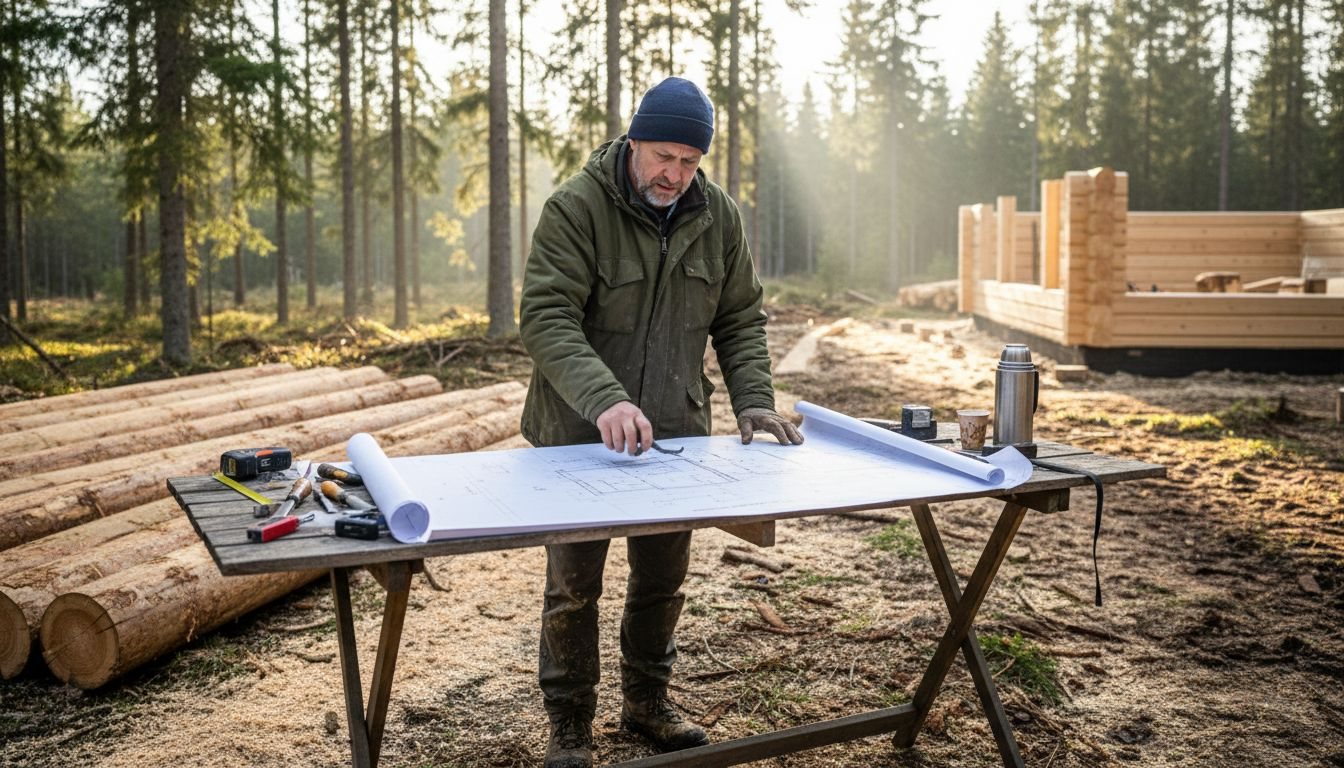
Log Home Construction Explained: Finnish Precision for Custom Living
Choosing the right method for building a log home in Central Europe can be overwhelming with so many design options and strict local regulations. It matters because your investment and long-term comfort depend on understanding the differences between construction techniques, project costs, and timeline realities. This guide highlights the distinctions between handcrafted, milled, and modular systems and covers the practical steps from securing permits to managing your budget, helping you make decisions with confidence. For anyone prioritizing efficient project initiation and transparent pricing, clarity from the start is key.
Table of Contents
- Defining Log Home Construction Methods
- Comparing Milled, Handcrafted, and Modular Log Homes
- Step-By-Step Process From Design to Assembly
- Permits, Drawings, and Legal Considerations
- Cost Factors, Timelines, and Avoiding Delays
Key Takeaways
| Point | Details |
|---|---|
| Log Home Construction Methods | Log home construction offers milled, handcrafted, and modular approaches, each with unique characteristics and advantages. The choice of method impacts design, budget, and construction time. |
| Planning and Permitting | Thorough planning, including understanding local regulations and acquiring necessary permits, is essential for a successful log home project. Engaging local experts can streamline the process. |
| Cost Management | Managing costs requires careful consideration of timber quality, labor rates, and site challenges. A financial contingency buffer of 15-20% can help mitigate unexpected expenses. |
| Design and Assembly Process | The construction process involves meticulous design and timber preparation stages that ensure quality and functionality. Collaboration between professionals is key to meet standards and client expectations. |
Defining Log Home Construction Methods
Log home construction represents a sophisticated wood building technique deeply rooted in European architectural traditions, particularly in Scandinavia, Russia, and the Alpine regions. This method transforms raw timber into precision-engineered living spaces using horizontal log assemblage techniques that have evolved over centuries.
Traditional log construction relies on several core principles that distinguish it from modern stick-frame building methods:
- Corner jointing techniques that provide exceptional structural integrity
- Precise wood selection focusing on durability and thermal performance
- Natural insulation properties inherent in solid timber construction
- Minimalist design approaches emphasizing structural authenticity
The fundamental approach involves carefully selected timber logs positioned horizontally and interlocked using specialized notching methods. These techniques, known as log scribing, ensure tight connections that prevent air infiltration and maintain structural stability. Finnish builders have particularly refined these methods, creating homes that can withstand extreme Nordic climate conditions.
Log construction is not just a building technique – it’s an architectural art form that connects modern living with centuries of woodworking tradition.
Modern log home construction integrates traditional craftsmanship with contemporary engineering standards. Builders now utilize computer-aided design, precision cutting machinery, and advanced wood treatment technologies to enhance the structural performance and longevity of log structures.
Pro tip: When planning a log home, prioritize timber sourced from sustainable forests and select wood species known for dimensional stability and natural resistance to decay.
Comparing Milled, Handcrafted, and Modular Log Homes
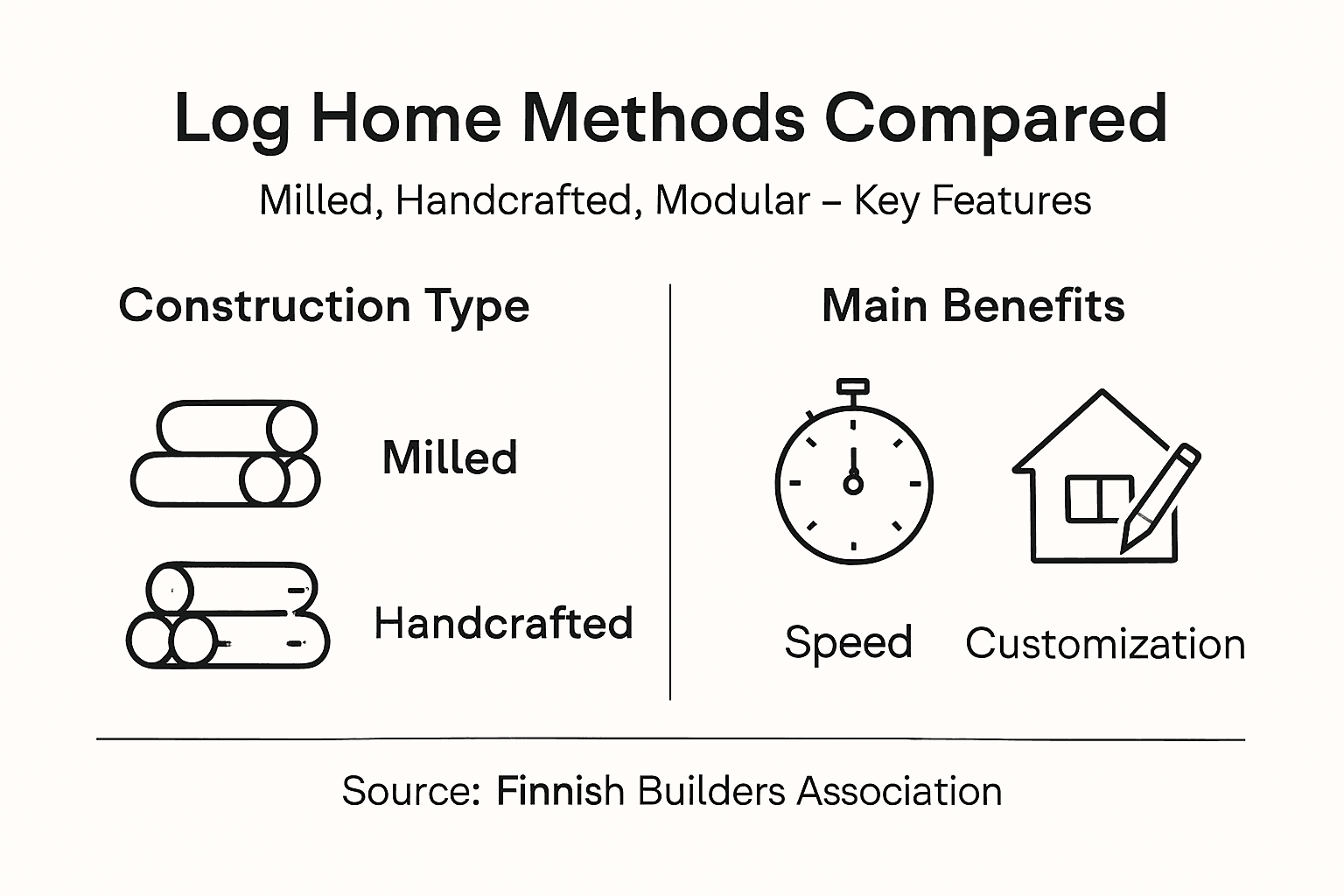
Log home construction offers three distinct approaches, each with unique characteristics that cater to different architectural preferences and building requirements. Milled log homes, handcrafted log homes, and modular log homes represent sophisticated methods of creating timber-based living spaces, each bringing its own set of advantages and design considerations.
Milled Log Homes represent the most standardized approach to log construction:
- Logs are precision-cut using industrial machinery
- Uniform log profiles ensure consistent wall thickness
- Faster construction times compared to traditional methods
- More predictable costs and manufacturing process
- Easier to achieve tight seal between log joints
Handcrafted log homes, by contrast, embody a more traditional and artisanal approach to timber construction. These structures are meticulously shaped by skilled craftsmen who individually fit and adjust each log, creating unique log cabin designs that showcase remarkable woodworking expertise. Each log is carefully selected, hand-peeled, and custom-fitted, resulting in homes with exceptional character and individualized architectural expression.
Modular log homes introduce a contemporary solution that blends prefabrication with customization. These homes are constructed in controlled factory environments, with sections manufactured off-site and then transported and assembled at the final location. The modular approach offers several significant advantages:
- Reduced on-site construction time
- Higher quality control
- More predictable budget
- Minimized weather-related construction challenges
- Greater design flexibility
Log home construction is an art form that balances architectural tradition with modern engineering precision.
Each method represents a different philosophy of log home construction, ranging from the machine-precise milled approach to the artisan-driven handcrafted technique, and the efficiency-focused modular strategy. The choice depends on individual preferences, budget constraints, desired aesthetic, and specific project requirements.
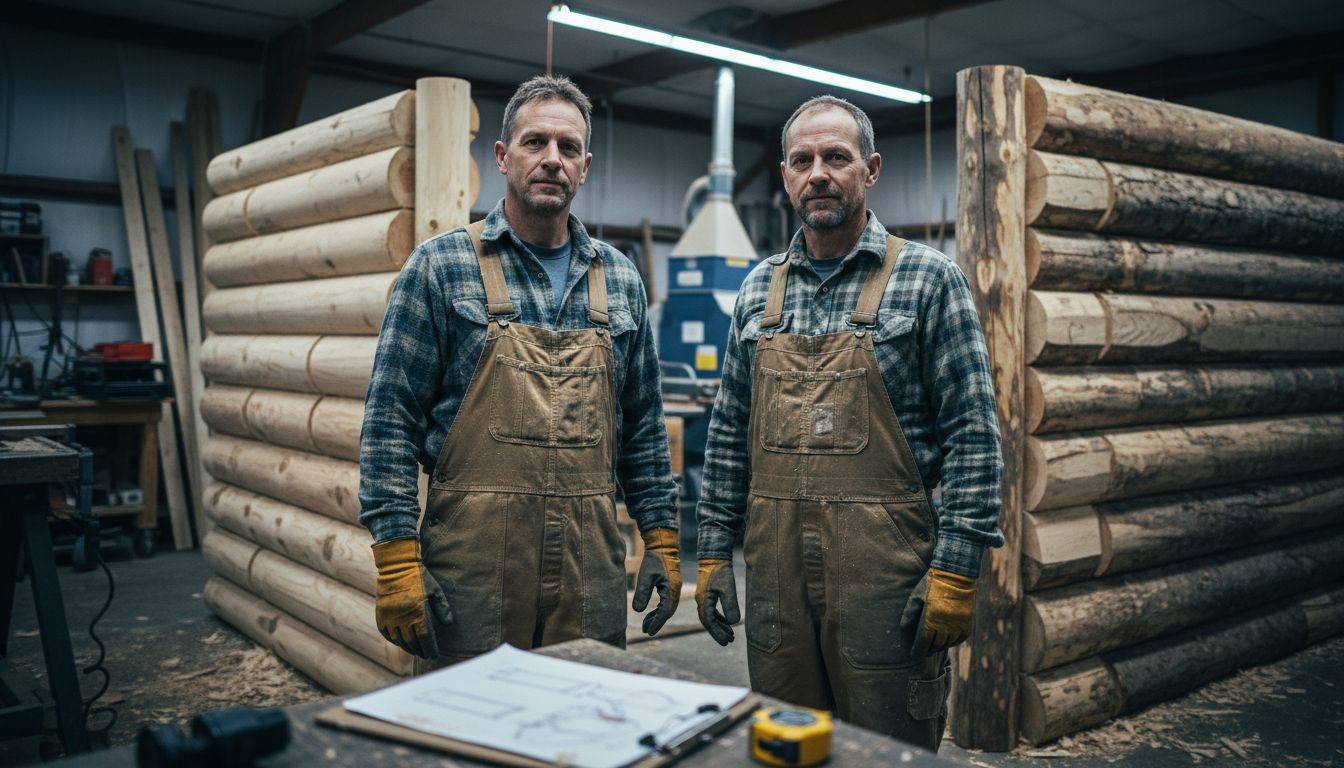
Here’s a side-by-side comparison of the main log home construction approaches:
| Construction Method | Architectural Style | Construction Speed | Customization Potential |
|---|---|---|---|
| Milled Log Homes | Modern, uniform | Fast and predictable | Limited, standardized |
| Handcrafted Log Homes | Rustic, unique | Slow, artisan-built | High, individualized |
| Modular Log Homes | Flexible, adaptive | Fast, factory-built | Moderate, modular |
This helps clarify the strengths of each approach for homeowners.
Pro tip: Consult with experienced log home builders who can provide detailed insights into which construction method best matches your specific design vision and practical needs.
Step-By-Step Process From Design to Assembly
Constructing a log home is a meticulously planned journey that transforms architectural vision into tangible living spaces. The process requires careful coordination between design professionals, timber specialists, and construction experts to ensure every detail meets the highest standards of craftsmanship and functionality.
The initial design phase involves several critical steps:
- Comprehensive site assessment and topographical analysis
- Preliminary architectural sketching
- Timber species selection
- Structural engineering considerations
- Climate and environmental adaptation planning
- Budget and cost projection
Architectural Design represents the foundational stage where client vision meets technical feasibility. Detailed log cabin design consultations help translate conceptual ideas into precise architectural drawings, incorporating specific client requirements, site constraints, and structural engineering principles. Experienced designers collaborate closely with clients to develop blueprints that balance aesthetic preferences with functional performance.
The timber preparation and manufacturing process involves multiple sophisticated stages:
- Carefully selected timber harvesting
- Log drying and seasoning
- Precision cutting and shaping
- Surface treatment and protective coating
- Quality control and dimensional verification
Successful log home construction is a delicate balance between artistic vision and engineering precision.
Final assembly requires expert coordination, combining prefabricated components with on-site construction techniques. Skilled craftsmen methodically integrate structural elements, ensuring each log is perfectly positioned and sealed, creating a seamless and structurally sound living environment.
Pro tip: Invest in comprehensive initial design consultations to minimize potential modifications during later construction stages, saving both time and financial resources.
Permits, Drawings, and Legal Considerations
Navigating the complex landscape of legal requirements is a critical aspect of log home construction that demands meticulous attention to detail and comprehensive understanding of local regulatory frameworks. Building permits represent the foundational legal gateway for transforming architectural dreams into tangible structures, requiring careful preparation and strategic documentation.
The permit acquisition process involves multiple critical components:
- Comprehensive architectural drawings
- Detailed site plans
- Structural engineering specifications
- Environmental impact assessments
- Zoning compliance documentation
- Proof of land ownership and usage rights
Architectural Drawings serve as the critical communication bridge between design vision and regulatory compliance. Precise log cabin planning documentation must comprehensively illustrate every structural element, ensuring that municipal authorities can thoroughly evaluate the proposed construction against established building codes and safety standards.
Legal considerations for log home construction extend far beyond simple permit acquisition:
- Verify local zoning regulations
- Confirm building height and setback restrictions
- Assess environmental protection requirements
- Understand timber sourcing and sustainability regulations
- Review structural engineering certification standards
Successful log home construction hinges on understanding and meticulously navigating complex regulatory landscapes.
Each jurisdiction maintains unique regulatory requirements, making it essential to engage local building authorities early in the planning process. Professional architects and legal consultants can provide invaluable guidance in interpreting and satisfying the intricate web of regulations governing log home construction.
Pro tip: Engage a local building consultant familiar with log home regulations to streamline your permit acquisition process and minimize potential bureaucratic complications.
Cost Factors, Timelines, and Avoiding Delays
Constructing a log home represents a significant financial investment that requires strategic planning and comprehensive understanding of the complex factors influencing project costs and timelines. Budget management demands careful consideration of multiple interconnected variables that can dramatically impact overall project expenses and completion schedules.
Key cost factors for log home construction include:
- Timber quality and species selection
- Complexity of architectural design
- Site accessibility and terrain challenges
- Regional labor market rates
- Customization level and material specifications
- Transportation and logistics expenses
- Seasonal weather impact on construction
Project Timelines are influenced by numerous critical variables. Detailed log home project planning can help anticipate potential bottlenecks and create realistic expectations for project completion. Typical log home construction timelines range from 6-12 months, depending on design complexity, site conditions, and regulatory requirements.
Delay prevention strategies involve proactive management across several domains:
- Secure comprehensive permits in advance
- Develop detailed project scheduling
- Build financial contingency buffers
- Select experienced contractors
- Maintain flexible communication channels
- Conduct regular project progress reviews
Successful log home projects balance meticulous planning with adaptive problem-solving strategies.
Financial considerations extend beyond direct construction costs, encompassing long-term value, energy efficiency, and maintenance requirements. Clients should evaluate total project economics, including potential long-term savings from high-quality timber construction and superior insulation properties.
This summary highlights typical cost and timeline variations for log home projects:
| Key Factor | Typical Range | Impact on Project |
|---|---|---|
| Project Timeline | 6–12 months | Influences planning |
| Material Costs | $70,000–$200,000 | Affects budget size |
| Labor Costs | 30–40% of total budget | Varies by location |
| Contingency Fund | 15–20% of total | Prevents overruns |
These figures enable better expectation-setting for prospective builders.
Pro tip: Allocate a 15-20% financial contingency buffer and maintain open communication channels with your construction team to mitigate unexpected challenges and control project costs effectively.
Discover Finnish Precision in Your Custom Log Home Project
Building a log home demands meticulous planning, expert timber selection, and mastery of advanced construction methods like handcrafted notching or modular assembly. As highlighted in the article, challenges such as choosing the right wood species, navigating permits, and ensuring structural integrity require trusted expertise paired with authentic craftsmanship. Huvila Seppälä leverages over 65 years of Finnish timber framing experience to deliver tailored log houses, cottages, and villas that combine traditional artistry with modern precision.
Transform your architectural vision into a durable, warm living space with confidence. Benefit from our fast delivery, transparent quotations without hidden costs, and custom designs based on your drawings. Visit https://huvilaseppala.fi to explore how we can support your project at every stage—from timber selection to final assembly. Contact us today for a personalized offer and start building your Finnish log home with trusted professionals who understand your goals and challenges.
Learn more about our custom log structures and request detailed log cabin design consultations to get your project underway.
Frequently Asked Questions
What are the different methods of log home construction?
Log home construction primarily includes three methods: milled log homes, handcrafted log homes, and modular log homes. Each offers distinct advantages in terms of architectural style, construction speed, and customization potential.
How does milled log construction differ from handcrafted log construction?
Milled log construction uses precision-cut logs produced by industrial machinery, ensuring uniformity and faster construction. In contrast, handcrafted log construction is artisanal, where skilled craftsmen shape each log individually, resulting in unique designs and higher customization.
What are the key steps in the log home construction process?
The key steps include initial design planning, timber preparation and selection, modular manufacturing or on-site assembly, and final inspections. Each stage requires careful coordination between design professionals and construction experts to ensure quality and compliance with regulations.
What factors affect the cost of building a log home?
Key factors influencing log home construction costs include the quality and species of timber, architectural complexity, site terrain, labor rates, and the level of customization. A financial contingency buffer of 15-20% of the total budget is advisable to account for unforeseen expenses.
Recommended
- Step-by-Step Guide to Finnish Log Cabins for Buyers – Huvila Seppälä
- Why Use Finnish Forestry for Log Homes – Hirsitalot, pihasaunat ja piharakennukset kotimaisesta hirrestä
- Why Build With Logs in Finland – Natural Benefits Explained – Huvila Seppälä
- Finnish Craftsmanship in Timber: Lasting Quality and Design – Huvila Seppälä