Boost energy efficiency in log homes: proven strategies
A log home in Finland can use nearly 40% less heating energy than a standard house, but only if you make the right building decisions from the start. Many homeowners assume that simply choosing thick log walls is enough to stay warm through a Finnish winter. That assumption costs real money. Research on a Finnish ecological wooden house shows it achieved 76 kWh/m²a for space heating, far below the national average of 120 kWh/m²a. In this guide, you will learn which design choices, construction techniques, and practical upgrades actually drive those results.
Table of Contents
- What makes log homes energy efficient?
- Real-world performance: Finnish energy consumption data
- The science behind logs: Thermal mass, airtightness, and moisture control
- Design and construction choices for maximizing efficiency
- Common pitfalls and how to avoid them
- Next steps: Building your own efficient log home
- Frequently asked questions
Key Takeaways
| Point | Details |
|---|---|
| Log homes outperform typical houses | Efficient log homes in Finland can use nearly half the heating energy of standard homes. |
| Airtightness is critical | Eliminating air leaks is more important than wall thickness for energy savings. |
| Thermal mass provides comfort | Logs’ thermal mass naturally regulates temperature and prevents large swings. |
| Avoid common building pitfalls | Proper design, sealing, and expert construction prevent most energy losses in log homes. |
| Design choices matter | Key upgrades like efficient windows, foundation insulation, and ventilation are essential for modern log home performance. |
What makes log homes energy efficient?
Energy efficiency in a log home is not just about how thick your walls are. It is about how well the entire building system works together to hold heat in winter and stay cool in summer. The energy efficiency factors that matter most include airtightness, thermal mass, moisture management, and smart design choices.
Logs have two properties that set them apart from concrete or steel-framed walls. First, they store heat during the day and release it slowly at night, a quality called thermal mass. Second, they breathe. Logs’ breathability and thermal mass prevent moisture buildup and help regulate indoor temperature naturally. This means your heating system does not have to work as hard to maintain comfort.
Here is what drives real efficiency in log home construction:
- Airtightness: Even small gaps around corners, windows, and log joints let warm air escape fast.
- Thermal mass: Logs absorb and release heat slowly, smoothing out temperature swings.
- Breathability: Natural moisture regulation reduces the risk of mold and structural damage.
- Foundation insulation: Heat loss through the floor slab is often underestimated.
- Mechanical ventilation: A heat recovery ventilation system recaptures warmth from exhaust air.
One common mistake is relying on R-value alone to judge a log wall’s performance. R-value measures resistance to heat flow, but it does not capture thermal mass or breathability. A log wall with a moderate R-value can outperform a higher-rated conventional wall in real-world conditions because of how it stores and releases energy over time.
Pro Tip: Combine airtight construction with high thermal mass logs for the best year-round comfort. Airtightness stops energy waste; thermal mass smooths out the temperature peaks and valleys that make heating systems work overtime.
Real-world performance: Finnish energy consumption data
Numbers tell the clearest story. A Finnish ecological wooden house consumed just 76 kWh/m²a for space heating, compared to the typical Finnish house at 120 kWh/m²a. That is a 37% reduction in heating energy, achieved with careful design and proper construction.
| Building type | Space heating (kWh/m²a) | Relative performance |
|---|---|---|
| Ecological wooden house (Finland) | 76 | Best |
| Low-energy log home | 90 to 100 | Good |
| Typical Finnish house | 120 | Baseline |
| Older unimproved log cabin | 140 to 160 | Below average |
The timber home sustainability case is strong when you look at these numbers over a 30-year ownership period. Lower annual energy use means lower bills every single year, not just a one-time saving.
“The Tapanila ecological house demonstrated that wooden construction, when properly detailed for airtightness and moisture control, can achieve heating energy consumption well below Finnish norms.” — VTT Technical Research Centre of Finland
The Finnish log house advantages go beyond comfort. Reduced energy demand also means a smaller carbon footprint, which matters more each year as energy prices and environmental standards tighten across Europe.
The science behind logs: Thermal mass, airtightness, and moisture control
Thermal mass is the ability of a material to absorb, store, and slowly release heat. Dense log walls absorb warmth during the day and radiate it back into the room at night. In a Finnish winter, this flattens the sharp temperature drops that happen between evening and early morning, reducing the load on your heating system.
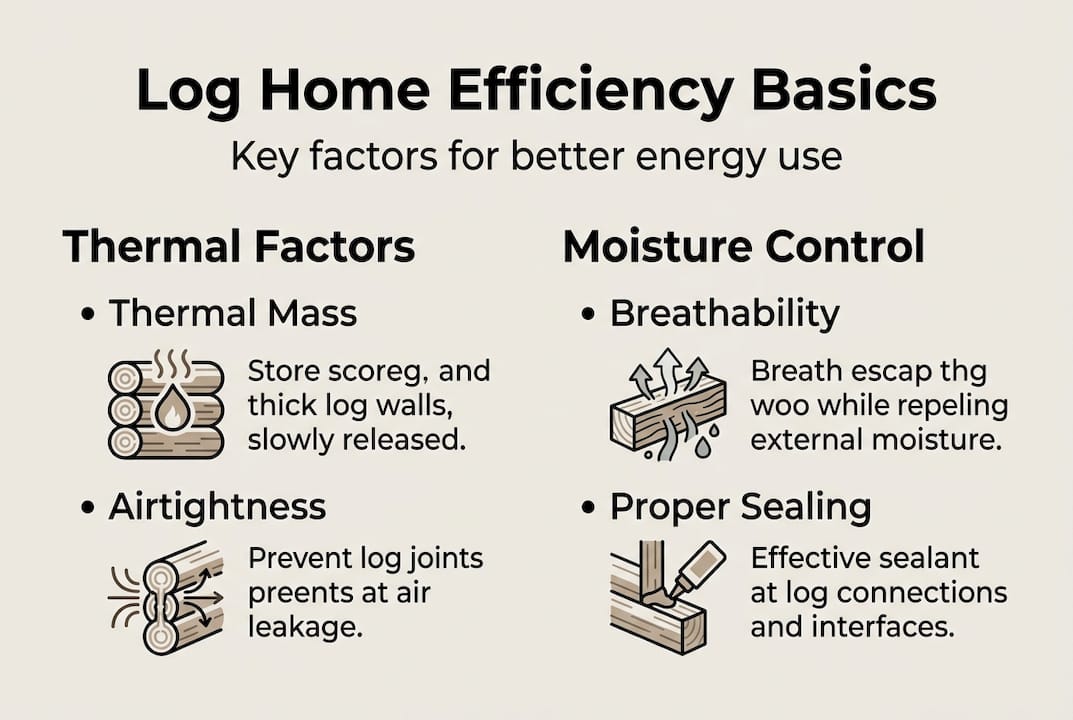
Airtightness is where many log homes fall short. Air leaks around corner joints, window frames, and log-to-foundation connections can account for 30 to 40% of total heat loss in a poorly sealed building. No amount of wall thickness compensates for warm air streaming out through gaps.
Here is how logs compare to vapor-closed wall systems:
| Property | Log walls | Vapor-closed walls |
|---|---|---|
| Breathability | High, natural moisture regulation | Low, relies on vapor barriers |
| Thermal mass | High | Low to moderate |
| Moisture risk | Low if properly built | Higher if barrier fails |
| Maintenance | Periodic sealing of joints | Barrier inspection needed |
| Indoor comfort | Stable, even temperature | Can feel dry or stuffy |
Logs’ breathability outperforms vapor-closed materials in preventing moisture issues and delivering long-term comfort. This is especially important in Finland, where freeze-thaw cycles put constant stress on building envelopes.
Common myths about log home insulation:
- “Thicker logs always mean better insulation.” Not true. Airtightness matters more than raw thickness.
- “Log homes are drafty by nature.” Only if they are poorly built. Modern joinery and sealing systems eliminate this.
- “You need extra insulation on every log wall.” Not always. Proper thermal insulation options depend on your climate zone and usage pattern.
For Finland’s climate, rely on thermal mass and proper airtight construction over just wall thickness or R-value. Understanding the key log house terms before you start planning helps you ask the right questions and avoid costly surprises.
Design and construction choices for maximizing efficiency
Good design decisions made early in the project have a bigger impact than expensive upgrades added later. Here are five essential choices that separate high-performing log homes from average ones:
- Site orientation: Position the home so the main glazing faces south. Passive solar gain through south-facing windows can reduce heating demand by 10 to 15% in Finnish conditions.
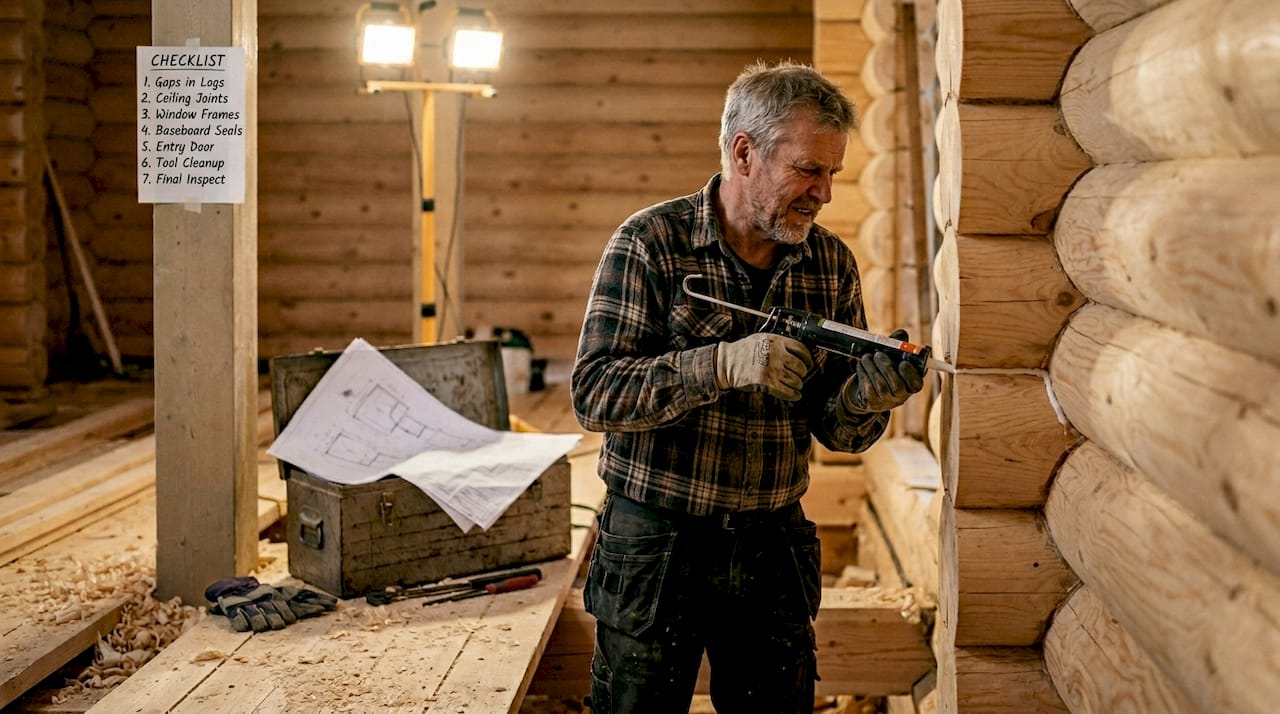
- Advanced sealing at every joint: Use modern compression sealing systems at corner joints, window frames, and the log-to-foundation connection. This is where most air leaks occur.
- Insulated foundation: A well-insulated slab or crawl space prevents significant heat loss through the floor, which is often the weakest point in older log builds.
- Efficient triple-glazed windows: Windows are the biggest weak point in any wall system. Triple glazing with low-emissivity coatings is standard for Finnish conditions.
- Mechanical ventilation with heat recovery: A heat recovery ventilation system captures 70 to 85% of the heat from exhaust air and transfers it to incoming fresh air.
Choosing the right log type also matters. Proper sealing and modern log wall systems like thermal logs outperform basic solid or laminated logs for airtightness and efficiency. Thermal logs combine a solid wood exterior with an insulating core, giving you the look of traditional logs with significantly better thermal performance.
For year-round use in Finland, a minimum wall thickness of 180 to 200 mm is a practical starting point, but always pair it with proper sealing. Thicker walls without sealing still underperform. Review your construction techniques options early, and match your log house insulation strategy to your actual usage pattern and location.
Pro Tip: Always conduct a blower door test before closing up interior surfaces. This pressurization test reveals every air leak in the building envelope while you can still fix them cheaply. Fixing leaks after finishing costs five to ten times more.
For older log buildings, the highest-impact retrofits are air sealing at joints and corners, window replacement, and adding insulation under the floor slab. These three upgrades together can cut heating energy use by 25 to 35%. Review log home design basics to understand which upgrades fit your specific structure.
Common pitfalls and how to avoid them
Even experienced builders make mistakes with log homes. Knowing the most common ones helps you catch problems before they become expensive.
Common pitfalls to watch for:
- Poor air sealing at corner joints: Log corners are the most complex joint in the building. Inadequate sealing here causes significant heat loss and moisture infiltration.
- Choosing wall profiles that are too thin: A 120 mm wall may look fine on paper but performs poorly in a Finnish winter without supplemental insulation.
- Improper corner joint design: Dovetail and saddle-notch joints require precise cutting. Gaps from poor craftsmanship are hard to fix after assembly.
- Neglecting moisture management: Logs need to breathe. Covering them with vapor-impermeable materials traps moisture and accelerates rot.
- Skipping the blower door test: Airtightness failures and reliance on R-value alone are leading causes of underperforming log homes.
The fix for most of these issues is the same: work with builders who specialize in log construction and insist on testing at every stage. Review log home efficiency myths before finalizing your plans, and understand why choose logs as a material so you can make informed decisions with your contractor.
Pro Tip: Insist on a blower door test for every new log build, not just as a final check but as a mid-construction quality control step. Catching leaks early saves money and prevents years of energy waste.
A quick planning checklist before you break ground: confirm your site orientation, specify your sealing system in writing, choose triple-glazed windows, plan your ventilation system, and schedule your blower door test. These five steps alone put you ahead of most log home projects.
Next steps: Building your own efficient log home
You now have a clear picture of what separates an efficient log home from an average one. The gap between 76 kWh/m²a and 120 kWh/m²a is not luck. It is the result of deliberate design, proper sealing, and working with people who understand Finnish log construction from the ground up.
At Huvila Seppälä, we have spent over 65 years manufacturing timber frames and log structures for Finnish homeowners, and we know exactly where efficiency is won or lost in the building process. Whether you are starting from scratch or upgrading an existing cabin, our team can guide you through every decision. Explore our step-by-step cottage building guide to understand the full process, review the log cabin building process in detail, or learn more about building with timber and why Finnish wood is the right material for your project. We offer transparent quotes with no hidden costs and custom designs based on your own drawings.
Frequently asked questions
What is the typical heating energy consumption for a log home in Finland?
A well-designed ecological log home can reach about 76 kWh/m²a for space heating, which is significantly lower than the typical Finnish house at 120 kWh/m²a.
Does wall thickness matter most for log home energy efficiency?
Wall thickness helps, but airtightness and thermal mass have a bigger impact on overall energy performance in cold climates like Finland’s.
How do log homes handle moisture compared to other house types?
Logs’ natural breathability prevents internal moisture buildup better than many vapor-closed wall systems, reducing the risk of mold and structural damage over time.
Can older log homes be upgraded for better energy efficiency?
Yes. Air sealing at joints, insulation upgrades under the floor, and replacing old windows with triple-glazed units are the three highest-impact improvements for older log homes.
Recommended
- Benefits of log homes: healthy, sustainable living guide – Hirsitalot, pihasaunat ja piharakennukset kotimaisesta hirrestä
- Energy Efficiency in Log Houses: Key Factors and Myths – Hirsitalot, pihasaunat ja piharakennukset kotimaisesta hirrestä
- Thermal Insulation in Log Houses: Comfort and Savings – Hirsitalot, pihasaunat ja piharakennukset kotimaisesta hirrestä
- Why Build With Logs: Lasting Comfort and Value – Hirsitalot, pihasaunat ja piharakennukset kotimaisesta hirrestä