Why Build With Logs: Lasting Comfort and Value
Choosing a log home in Central Europe often means weighing beautiful design against unclear costs and limited flexibility. For many prospective homeowners and vacation buyers, the appeal lies in blending rustic aesthetics with modern comfort, but finding clear options can seem complicated. Log construction stands apart thanks to its exceptional thermal mass, allowing wood walls to store and release heat gradually, which keeps indoor temperatures stable and energy costs in check. This guide unpacks how modern log homes deliver both style and performance while making project choices manageable.
Table of Contents
- What Log Building Means For Modern Homes
- Types Of Log Construction And Their Features
- Energy Efficiency And Indoor Climate Advantages
- Customization, Design Options, And Project Costs
- Ecological Impact And Sustainability Of Log Homes
- Comparing Logs With Conventional Building Methods
Key Takeaways
| Point | Details |
|---|---|
| Log Construction Benefits | Log homes provide superior thermal performance, natural insulation, and enhanced indoor air quality, making them energy-efficient and comfortable. |
| Customization Options | Homeowners can choose from various log profiles, wood species, and design approaches to create unique living spaces that reflect their personal style. |
| Ecological Awareness | Log homes utilize sustainable wood sourcing, lowering carbon emissions and promoting responsible forestry practices. |
| Comparative Advantages | Unlike conventional building methods, log construction integrates structural integrity with thermal performance in a single, efficient design. |
What Log Building Means for Modern Homes
Log construction represents more than just an architectural choice – it’s a holistic approach to creating living spaces that connect human habitat with natural environmental principles. Modern log homes transform traditional building techniques into sophisticated, energy-efficient dwellings that offer unprecedented thermal performance and aesthetic beauty.
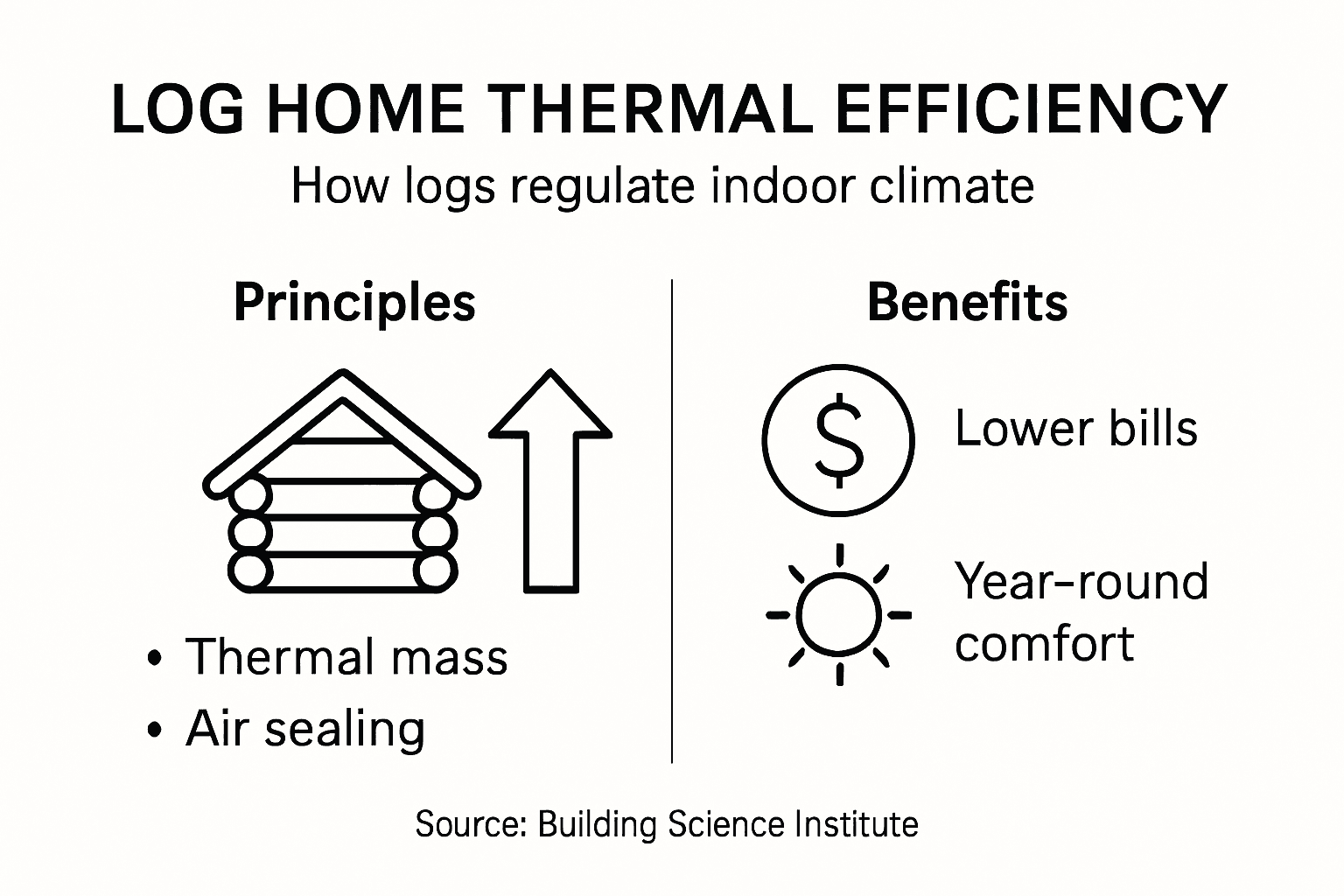
The fundamental advantage of log construction lies in its unique thermal properties. Thermal mass plays a critical role in these structures, with solid wood logs acting like natural energy batteries. Unlike conventional stud-frame buildings, log houses maintain remarkable temperature stability by storing heat during warm periods and gradually releasing it when temperatures drop.
Key benefits of modern log home design include:
- Superior natural insulation
- Enhanced acoustic performance
- Reduced environmental impact
- Exceptional durability
- Improved indoor air quality
The scientific principle behind log home thermal efficiency involves wood’s inherent capacity to absorb, store, and release heat gradually. This means log walls create a more consistent indoor climate compared to traditional construction methods, reducing energy consumption and providing lasting comfort.
Modern log building techniques have evolved far beyond rustic cabin designs. Contemporary architects and builders now integrate advanced technologies with traditional woodworking skills, creating homes that seamlessly blend sustainable design, energy efficiency, and aesthetic sophistication.
Pro tip: When planning a log home, consult thermal performance specialists who can help you optimize wood selection and design for maximum energy efficiency.
Types of Log Construction and Their Features
Log construction represents a sophisticated approach to building that goes far beyond traditional wooden structures. Contemporary log home building techniques encompass multiple construction methods, each offering unique characteristics and benefits for modern homeowners seeking durable, energy-efficient living spaces.
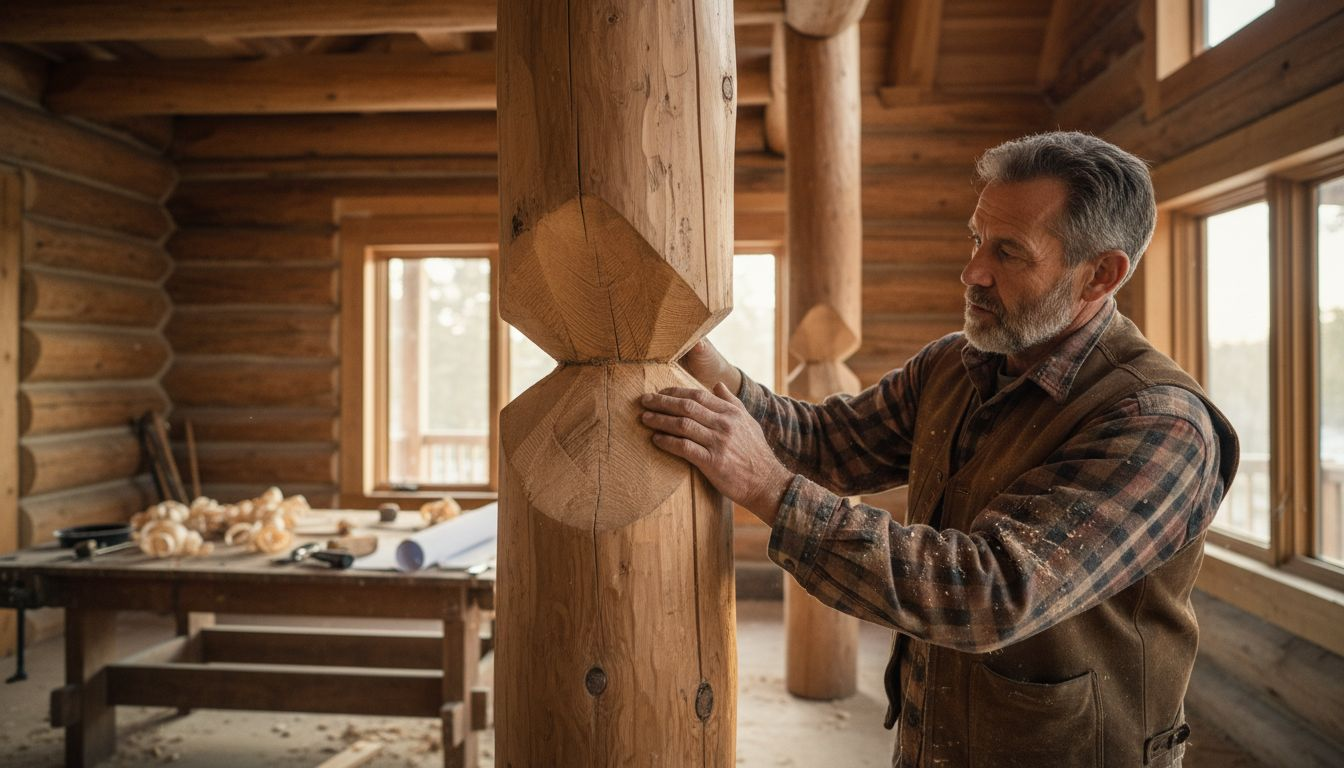
Two primary categories define log construction methods: site-built logs and pre-cut manufactured logs. Site-built log homes involve assembling logs directly at the construction location, allowing for maximum customization and on-site adaptation. Pre-cut logs, by contrast, are precisely manufactured in controlled factory environments, ensuring consistent quality and significantly reducing on-site construction time.
Key log construction types include:
- Round Log Construction: Traditional method using whole, unprocessed tree trunks
- Milled Log Construction: Logs cut to uniform dimensions for precise fitting
- Handcrafted Log Construction: Custom-hewn logs shaped manually for unique aesthetic
- Hybrid Log Construction: Combining log elements with conventional framing techniques
Wood species selection plays a crucial role in log construction performance. Different wood types offer varying thermal properties, durability, and aesthetic qualities. Common species like cedar, spruce, pine, and fir each bring distinctive characteristics to log home design, influencing everything from insulation capacity to long-term structural integrity.
Here’s a comparison of key log construction types and their ideal usage scenarios:
| Log Type | Best Application | Distinct Design Traits | Complexity Level |
|---|---|---|---|
| Round Log Construction | Rustic homes and lodges | Visible natural curves | Moderate |
| Milled Log Construction | Modern architecture, tight fits | Uniform dimensions | Low |
| Handcrafted Log Construction | Unique custom residences | Individual log shaping | High |
| Hybrid Log Construction | Urban or variable climate areas | Logs plus framing | Variable |
Log construction methods are not just about building techniques, but about creating living environments that harmonize human habitat with natural materials.
Building classification also matters significantly. Log homes typically fall under wood-framed (Type V) or heavy timber (Type IV) categories, which impacts fire resistance, insurance requirements, and overall structural classification. Thick log dimensions in heavy timber categories provide extended fire resistance and enhanced structural performance.
Pro tip: Consult regional building experts to understand specific log construction regulations and optimize your design for local climate conditions.
Energy Efficiency and Indoor Climate Advantages
Log homes represent a sophisticated approach to creating energy-efficient living spaces that go beyond traditional construction methods. Energy efficiency in log structures offers homeowners a unique combination of thermal performance, sustainability, and comfort that conventional buildings struggle to match.
The fundamental advantage of log construction lies in its exceptional thermal mass characteristics. Solid wood logs act as natural thermal batteries, absorbing heat during warm periods and releasing it gradually when temperatures drop. This inherent property creates a more stable indoor climate, reducing energy consumption and providing consistent comfort throughout seasonal changes.
Key energy efficiency benefits of log homes include:
- Reduced heating and cooling costs
- Natural temperature regulation
- Minimal air infiltration
- Superior insulation properties
- Lower carbon footprint
- Enhanced indoor air quality
Wood’s unique molecular structure allows logs to store and transfer thermal energy more effectively than conventional building materials. The thickness and density of log walls create a natural barrier against temperature fluctuations, effectively minimizing heat loss during winter and heat gain during summer.
Log homes transform energy efficiency from a technical concept into a living experience of comfort and sustainability.
Modern log home design integrates advanced building techniques to maximize energy performance. Proper air sealing, strategic window placement, and thoughtful orientation can further enhance the natural thermal properties of log construction, creating living spaces that are both environmentally responsible and supremely comfortable.
For quick reference, let’s summarize the business impact of log home energy features:
| Feature | Operational Benefit | Long-term Value |
|---|---|---|
| Thermal Mass | Lower heating costs | Consistent comfort |
| Air Sealing | Reduced drafts and leaks | Stable air quality |
| Window Placement | Enhanced natural light | Seasonal energy savings |
| Material Density | Minimizes temperature swings | Extended durability |
Pro tip: Invest in professional energy modeling during the design phase to optimize your log home’s thermal performance and maximize long-term energy savings.
Customization, Design Options, and Project Costs
Log home construction offers unprecedented flexibility for homeowners seeking personalized living spaces that reflect individual style and functional requirements. Log cabin building processes provide multiple design pathways, allowing clients to transform their architectural vision into reality while maintaining cost-effectiveness and structural integrity.
Two primary design approaches define log home customization: site-built construction and pre-manufactured designs. Site-built options provide maximum creative freedom, enabling architects and homeowners to craft unique structures tailored to specific landscapes and personal preferences. Pre-manufactured designs, by contrast, offer standardized solutions that dramatically reduce construction time and potential budget overruns.
Key customization options include:
- Exterior Log Profiles: Round, squared, or hand-hewn finishes
- Wood Species Selection: Pine, cedar, spruce with unique aesthetic qualities
- Corner Joinery Styles: Traditional dovetail, chink-style, or modern mechanical connections
- Interior Layout Configurations: Open concept or traditional room divisions
- Roof and Foundation Variations: Adapted to local climate and terrain
Project cost considerations involve multiple interconnected factors. Wood species selection, log dimensions, construction method, and additional architectural features significantly influence overall investment. Typically, log home projects range from 10-30% more expensive than conventional wood-frame construction, reflecting the specialized materials and craftsmanship required.
Customization in log homes is not just about design, but about creating a living environment that reflects personal identity and connection with natural materials.
Modern log home design integrates advanced technologies and sustainable practices, allowing clients to balance aesthetic preferences with energy efficiency and long-term performance. Careful planning and professional consultation can help manage costs while achieving desired architectural outcomes.
Pro tip: Develop a comprehensive budget that includes not just construction costs, but also long-term maintenance and potential energy efficiency upgrades.
Ecological Impact and Sustainability of Log Homes
Log homes represent a profound ecological approach to construction that goes far beyond traditional building methods. Sustainable Finnish forestry practices demonstrate how responsible wood sourcing can create environmentally conscious living spaces that minimize carbon footprint and support ecosystem health.
The ecological footprint of log homes differs significantly from conventional construction techniques. Sustainable wood sourcing, particularly from managed forests, ensures that each log represents a renewable resource carefully harvested to maintain forest regeneration. These practices not only support biodiversity but also actively contribute to carbon sequestration and climate change mitigation.
Key ecological advantages of log home construction include:
- Renewable material sourcing
- Lower carbon emissions compared to concrete and steel
- Natural biodegradability of wood materials
- Reduced transportation and manufacturing energy
- Support for sustainable forestry practices
- Minimal industrial processing requirements
Life cycle assessments reveal that log homes often demonstrate superior environmental performance through efficient material use and reduced waste generation. Modular construction techniques further enhance sustainability by minimizing on-site disruption and optimizing resource allocation.
Sustainable log home construction transforms environmental responsibility from a concept into a tangible living experience.
Modern log home design integrates advanced technologies and ecological principles, creating structures that harmonize human needs with environmental conservation. By prioritizing locally sourced materials, energy-efficient design, and responsible forest management, log homes represent a holistic approach to sustainable architecture.
Pro tip: Select wood sources certified by recognized sustainability organizations to ensure your log home supports genuine ecological conservation efforts.
Comparing Logs With Conventional Building Methods
Log construction represents a fundamentally different approach to building compared to conventional wood-frame or masonry methods. Navigating log home permitting requirements reveals the unique structural and regulatory considerations that set log homes apart from standard construction techniques.
The primary distinction lies in how structural integrity and thermal performance are achieved. Conventional wood-frame buildings rely on separate structural frames and insulation layers, whereas log homes integrate these functions within the solid wood walls themselves. This fundamental difference means log structures provide inherent thermal mass and load-bearing capabilities that traditional methods cannot replicate.
Key comparative characteristics include:
- Thermal Performance
- Logs: Natural thermal battery with high heat storage capacity
- Conventional: Relies on added insulation materials
- Structural Approach
- Logs: Integral load-bearing walls
- Conventional: Separate frame and infill construction
- Material Efficiency
- Logs: Minimal processing, direct use of natural material
- Conventional: Multiple material layers and complex assemblies
- Fire Classification
- Logs: Typically heavy timber or wood-framed construction
- Conventional: Varies by material (steel, concrete, wood frame)
Building classification standards differ significantly between log and conventional construction. Log homes typically fall under wood-framed or heavy timber categories, which impacts fire resistance ratings, insurance considerations, and overall structural performance.
Conventional building methods represent industrial efficiency, while log construction embodies a more organic, integrated approach to shelter.
Modern log home design bridges traditional craftsmanship with advanced engineering principles, offering a sophisticated alternative to standard construction methods. By understanding these fundamental differences, homeowners can make informed decisions about their building approach.
Pro tip: Consult local building authorities to understand specific regulatory requirements for log home construction in your region.
Discover Lasting Comfort and Timeless Value with Custom Log Homes
Building with logs offers unmatched thermal comfort and enduring quality, but turning this vision into reality requires expert craftsmanship and precise design. If you seek a home that naturally balances energy efficiency and sustainable beauty, understanding complex log construction methods and material choices is essential. At Huvila Seppälä, we leverage over 65 years of Finnish expertise to produce tailor-made log houses, villas, and saunas that perfectly align with your architectural dreams and performance goals.
Start your journey toward a cozy, durable, and environmentally conscious living space today. Explore how our custom timber frames and precision-manufactured log structures create energy-efficient homes with lasting value. Visit Huvila Seppälä’s website to learn more about our log cabin building process and secure a transparent, no-hidden-cost quote. Don’t wait to bring your dream log home to life—contact us now for personalized solutions crafted just for you.
Frequently Asked Questions
What are the benefits of building with logs?
Building with logs offers superior natural insulation, enhanced acoustic performance, reduced environmental impact, exceptional durability, and improved indoor air quality, leading to lasting comfort and value in your home.
How do log homes perform in terms of energy efficiency?
Log homes excel in energy efficiency due to their thermal mass, which allows solid wood logs to absorb, store, and gradually release heat. This results in reduced heating and cooling costs and a more stable indoor climate.
What types of log construction methods are available?
There are several log construction methods, including round log construction, milled log construction, handcrafted log construction, and hybrid log construction. Each method has unique characteristics and benefits, suitable for different architectural styles and preferences.
How do log homes compare to conventional building methods?
Log homes differ from conventional wood-frame buildings in that they use solid wood logs as both the structural and insulating material. This integration provides enhanced thermal performance and material efficiency, as opposed to conventional methods that rely on separate frames and insulation layers.
Recommended
- Why Build With Logs in Finland – Natural Benefits Explained – Huvila Seppälä
- Advantages of Finnish Log Houses for Central Europe – Huvila Seppälä
- Energy Efficiency in Log Houses: Key Factors and Myths – Huvila Seppälä
- Why Use Finnish Forestry for Log Homes – Hirsitalot, pihasaunat ja piharakennukset kotimaisesta hirrestä