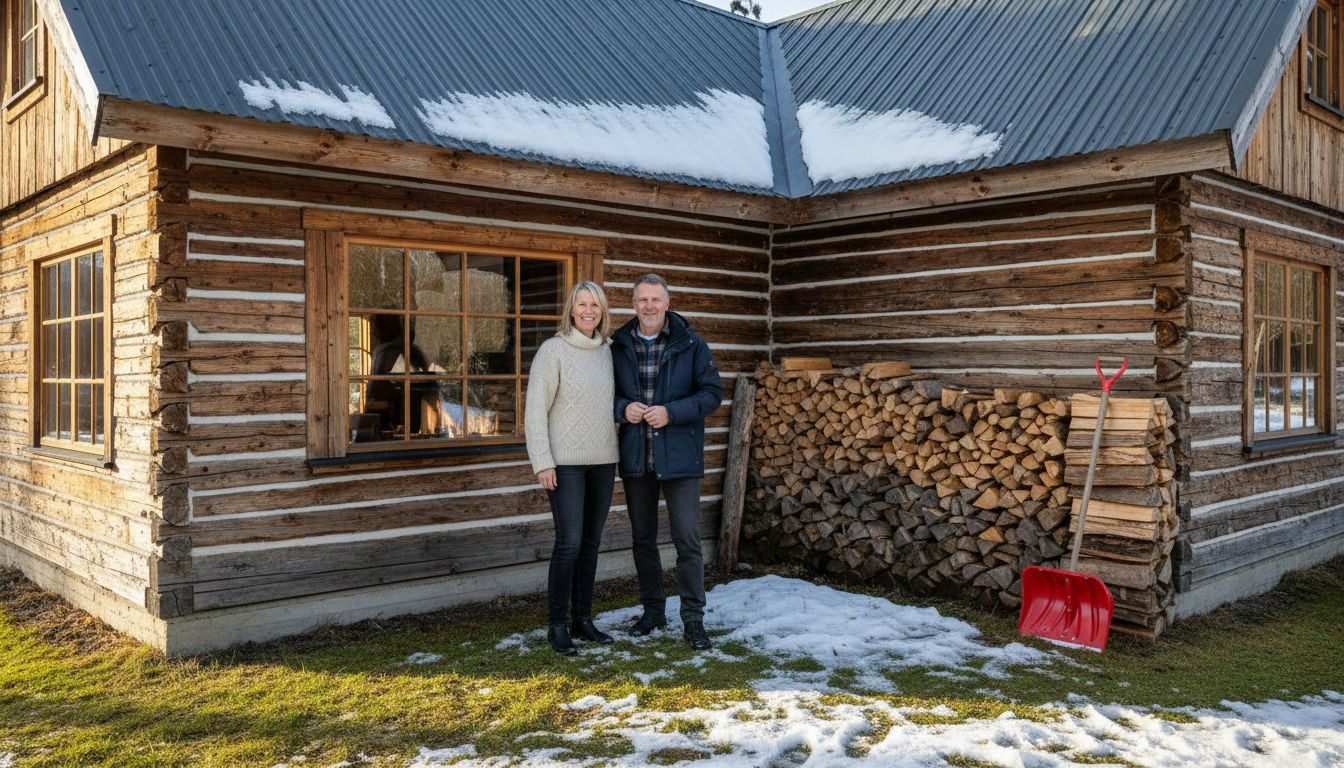
Thermal Insulation in Log Houses: Comfort and Savings
Planning a custom log house means more than picking wood species and window views—it means solving how to keep warmth in during Austrian winter nights and cool air flowing on summer days in Switzerland. With building codes across Central Europe growing stricter, understanding thermal insulation in log houses has never been more vital. This guide explains how the right materials and strategy combine to deliver year-round comfort, steady bills, and compliance with evolving regulations.
Table of Contents
- Thermal Insulation In Log Houses Defined
- Types Of Insulation For Log Homes
- Thermal Performance And Energy Savings
- Legal Standards In Central Europe
- Mistakes To Avoid And Cost Factors
Key Takeaways
| Point | Details |
|---|---|
| Effective Insulation Is Essential | Combining natural wood insulation with additional materials meets energy codes and enhances comfort year-round. |
| Proper Moisture Management Is Critical | Internal insulation without adequate vapor barriers can lead to mold and structural issues. |
| Energy Savings Are Significant | A well-insulated log house can reduce heating and cooling costs by 40-60%, providing long-term financial benefits. |
| Compliance With Building Codes Is Mandatory | Adhering to local thermal performance standards is required for approval and occupancy; non-compliance can lead to costly corrections. |
Thermal insulation in log houses defined
Thermal insulation in log houses is the ability to manage heat flow and maintain a stable indoor environment year-round. It’s not just about staying warm in winter—it’s about controlling temperature swings and keeping your home comfortable regardless of external conditions.
Wood itself is a natural insulator. Unlike concrete or metal, wood fibers trap air pockets that slow heat transfer through walls. However, modern building standards in Central Europe demand more than what solid logs alone can provide, especially in regions with harsh winters and variable seasonal conditions.
What thermal insulation actually does:
- Reduces heat loss from your home during cold months
- Prevents excessive heat gain during summer
- Eliminates cold spots and drafts near walls and corners
- Stabilizes indoor humidity and moisture levels
- Decreases reliance on heating and cooling systems
The science behind this involves two key measurements: heat transfer coefficient (how quickly heat moves through materials) and thermal resistance (how well materials block that movement). Better insulation means lower heat transfer and higher thermal resistance.
Modern log construction combines the natural insulating properties of wood with additional materials to meet current energy codes and comfort standards.
Wood’s moisture regulation is another defining characteristic. Unlike synthetic insulation, wood naturally absorbs excess humidity when air is damp and releases it when air is dry. This self-regulating property keeps your indoor climate comfortable without constant mechanical intervention.
Many Central European homeowners assume solid log walls are enough. They’re not. Building codes now require proper thermal insulation strategies that combine logs with complementary insulation materials to prevent thermal bridges—areas where heat escapes more quickly than through surrounding walls.
The difference between adequate and excellent insulation shows up immediately in your heating bills and long-term comfort. A well-insulated log house maintains consistent temperatures, reduces drafts, and creates livable spaces even in severe weather without constant thermostat adjustment.
Pro tip: When planning your log house project, specify both the log wall thickness and any additional insulation layers with your builder—thermal performance depends on the complete wall assembly, not just the logs themselves.
Types of insulation for log homes
Insulation materials for log houses fall into three main categories based on their origin and composition. Each type has distinct advantages, and your choice depends on climate conditions, building codes in your region, and long-term durability goals.
Plant-based insulation materials come from renewable sources like wood fiber, cellulose, and cork. These materials breathe naturally and pair well with log construction because they complement wood’s moisture-regulating properties. They’re popular in Central Europe where sustainable building practices are increasingly common.
Mineral-derived insulation includes stone wool, glass wool, and expanded clay. These materials offer excellent fire resistance and thermal stability. They’re non-combustible and perform reliably in extreme temperature swings, making them ideal for regions with harsh winters.
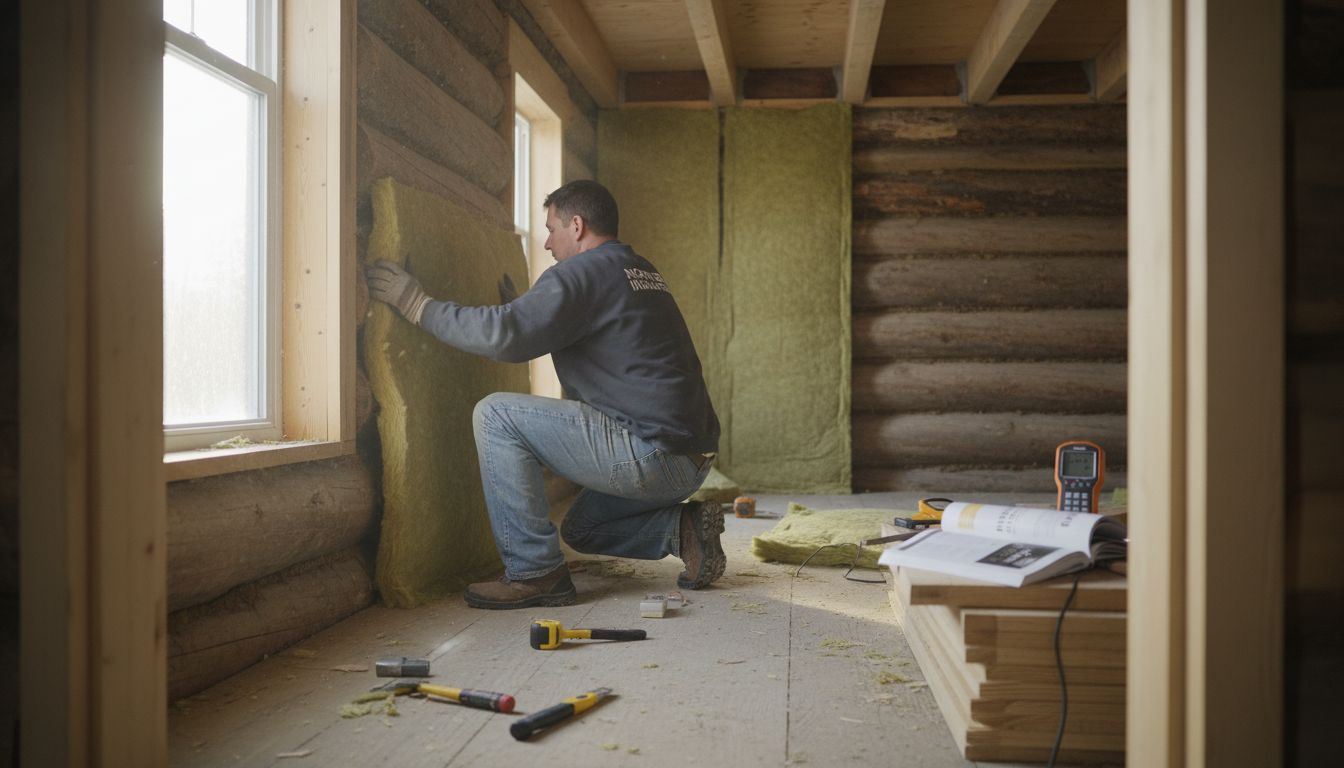
Fossil fuel-derived options like polystyrene and polyurethane foam provide high thermal resistance in thin layers. However, they’re less breathable and can trap moisture if not installed correctly with proper vapor barriers.
Here’s a quick comparison of popular insulation material types for log houses:
| Material Type | Breathability | Fire Resistance | Typical Applications |
|---|---|---|---|
| Plant-based (wood, cork) | Excellent | Moderate | Wall and roof insulation |
| Mineral-derived (stone wool) | Limited | High | Attics, external walls, harsh climates |
| Fossil fuel-derived (foam) | Poor | Low | Interior layers, thin wall spaces |
Material structure also matters significantly. Insulation comes in three structural forms:
- Fibrous materials (wool, cellulose) allow moisture movement and are gentler on log walls
- Cellular materials (foam boards, expanded clay) block moisture more effectively but require careful installation
- Porous materials (cork, wood fiber) balance thermal performance with breathability
The best insulation choice combines adequate thermal resistance with vapor management—poor installation causes condensation and mold regardless of material quality.
When considering log home construction methods, your insulation strategy must account for how logs naturally swell and shrink with seasonal moisture changes. Internal insulation with vapor barriers requires precision to avoid trapping moisture inside wall cavities.
Cold climates favor materials that handle condensation risks effectively. Research shows that combining insulation materials with vapor barriers and proper air sealing prevents mold growth and extends wall durability by decades.
Your region’s building codes may specify minimum R-values or material types. Central European standards increasingly favor combinations that maximize both thermal performance and moisture compatibility with solid wood construction.
Pro tip: Consult your builder about the specific insulation combination they recommend for your location—the best material isn’t always the most popular one, and regional climate differences significantly impact which type performs longest.
Thermal performance and energy savings
Thermal performance directly translates to money in your pocket. A well-insulated log house uses dramatically less energy for heating and cooling, which means lower utility bills year after year. The investment in quality insulation pays for itself through energy savings alone.
Heating costs dominate expenses in Central European homes during long winters. Poor insulation forces your heating system to work constantly, burning fuel to replace heat that escapes through walls. Better insulation means your system runs less frequently, using significantly less energy overall.
How insulation reduces energy consumption:
- Minimizes heat loss during winter months
- Reduces air conditioning demands in summer
- Stabilizes indoor temperature with fewer system cycles
- Decreases peak heating loads on your equipment
- Extends the lifespan of heating and cooling systems
The relationship between insulation and comfort isn’t always straightforward. Adding insulation alone can actually reduce summer comfort by trapping heat indoors. However, when combined with proper ventilation strategies—like night cooling that lets outside air circulate when temperatures drop—insulation dramatically reduces overheating while maintaining energy efficiency.
Insulation works best as part of a complete system that includes ventilation, air sealing, and moisture management, not as a standalone solution.
Your actual energy savings depend on several factors beyond just insulation thickness. Wall orientation, window quality, air sealing around doors and penetrations, and your ventilation approach all influence total energy use. A log house with excellent insulation but poor ventilation may perform worse than a moderately insulated home with smart airflow design.
Real-world data shows that homeowners typically reduce heating energy consumption by 40-60% through comprehensive insulation improvements. Cooling savings are equally significant in regions with warm summers. These aren’t theoretical numbers—they’re verified through utility bill comparisons and thermal imaging studies.
Your specific savings depend on your current thermal situation and local climate. Regions with extreme temperature swings benefit most from superior insulation. Areas with moderate climates see smaller percentage reductions but still enjoy meaningful cost decreases and improved comfort year-round.
Pro tip: Track your heating and cooling costs for one full year before upgrading insulation, then compare post-renovation—this baseline lets you quantify exactly how much you save and validate your investment.
Legal standards in Central Europe
Central European countries enforce strict building codes that mandate minimum thermal performance for new construction and renovations. These regulations exist to reduce energy consumption, lower greenhouse gas emissions, and ensure comfortable living conditions. Compliance is not optional—it’s a legal requirement before your log house project can proceed.
Thermal resistance standards specify how much heat insulation your walls, roofs, and floors must retain. Each country sets its own thresholds, but they’re generally similar across the region. Your log house must meet or exceed these minimum values, measured in R-values or U-values depending on local convention.
What Central European building codes typically require:
- Minimum thermal transmittance limits for external walls
- Specified insulation thresholds for roofs and attic spaces
- Air sealing standards to prevent uncontrolled heat loss
- Moisture management requirements to prevent condensation and mold
- Compliance verification through thermal calculations before construction begins
Different countries within Central Europe have varying strictness levels. Some regions demand higher thermal performance than others based on climate severity and environmental policies. What meets code in one country might fall short in another, so you must verify requirements for your specific location before planning your build.
Building codes aren’t suggestions—they’re legally binding requirements that inspectors verify before issuing occupancy permits and authorizing final payments.
Wood fiberboards and other insulation materials must also meet specific standards regarding thermal transmittance and moisture behavior. These material certifications ensure products perform as claimed and won’t deteriorate under regional climate conditions. Your builder must source materials that carry proper certifications for your jurisdiction.
Energy-saving directives push Central European standards upward continuously. Codes implemented five years ago often differ from current requirements, and expectations keep increasing. If you’re planning a log house now, design for standards that will be current when construction completes, not yesterday’s minimums.
Inspections happen at multiple stages—foundation, wall completion, insulation installation, and final occupancy. Inspectors verify that your thermal insulation meets specifications and that installation quality matches design plans. Cutting corners now means failing inspection later and facing expensive corrections.
Pro tip: Obtain a copy of your region’s current building code requirements and confirm your builder understands them before signing contracts—misaligned expectations about thermal standards can delay projects significantly and inflate costs.
Mistakes to avoid and cost factors
Insulation mistakes in log houses are expensive to fix after the fact. The most common errors involve improper moisture management, inadequate vapor barriers, and mismatched material selections. These aren’t minor oversights—they lead to mold, structural decay, and heating system failures that cost tens of thousands to repair.
Internal insulation without proper moisture control is the leading culprit. When you add insulation to the inside of log walls without a correctly positioned vapor barrier, moisture becomes trapped inside the wall cavity. This creates ideal conditions for mold growth and wood rot that silently damages your home for years before becoming visible.
Critical mistakes that destroy log houses:
- Installing insulation without vapor barriers or with incorrectly placed barriers
- Choosing materials incompatible with log wall moisture dynamics
- Sealing walls too aggressively without adequate ventilation paths
- Skipping professional thermal calculations and relying on guesses
- Using standard construction practices designed for frame houses instead of log-specific methods
- Neglecting air sealing around penetrations, windows, and doors
Cost factors extend beyond just material and labor expenses. Poor insulation choices create hidden expenses through increased energy consumption, health issues from mold exposure, and eventual structural repairs. A homeowner who saves $5,000 on insulation materials might spend $50,000 correcting moisture damage within ten years.
The cheapest insulation option upfront often becomes the most expensive choice over your home’s lifetime when factoring in energy costs, repairs, and potential health issues.
Material incompatibility wastes money immediately. Some insulation types absorb moisture that log walls release seasonally. Others restrict vapor movement in ways that trap condensation. Selecting materials without understanding your specific wall assembly leads to underperformance and potential failure.
Professional thermal design calculations aren’t luxuries—they’re necessities. They identify exactly how much insulation you need, where it should go, and what vapor barriers are required. Skipping this step means guessing, and guessing costs money when your design falls short of performance expectations or causes moisture problems.
Ventilation system integration affects costs significantly. A properly designed insulation strategy includes ventilation paths that allow controlled moisture escape. Oversights here multiply expenses through remediation later. Budget for professional design review to prevent costly oversights.
This table summarizes essential factors affecting log house insulation costs and performance:
| Factor | Impact on Cost | Impact on Performance | Long-term Consequences |
|---|---|---|---|
| Material selection | High | Critical | Mold or savings |
| Installation quality | Moderate | Essential | Energy bills, durability |
| Moisture management | Low upfront | High | Structural health |
| Compliance with codes | Variable | Mandatory | Legal approval |
Pro tip: Request references from your builder specifically about log house insulation projects they’ve completed—ask about any moisture or performance issues they encountered and how they were resolved, then verify those references independently.
Achieve Ultimate Comfort and Energy Savings with Expert Log House Insulation
Understanding the crucial role of thermal insulation in log houses can transform how you live through all seasons. If you are seeking to overcome challenges like heat loss, moisture management, and compliance with strict Central European building codes then expert craftsmanship and tailored solutions are your best path forward. Key goals include preventing costly moisture damage and optimizing energy efficiency for lasting comfort.
At Huvila Seppälä, with over 65 years of Finnish expertise, we specialize in manufacturing custom log houses and timber frames designed to meet your specific insulation and thermal performance needs. Our solutions incorporate smart material choices and precise construction methods that honor natural wood properties while exceeding legal standards. Explore our log home construction options and take advantage of fast delivery and transparent pricing. Act now to secure a consultation and begin your journey toward a cozy, energy-efficient home with authentic Finnish craftsmanship.
Frequently Asked Questions
What is thermal insulation in log houses?
Thermal insulation in log houses refers to the ability to manage heat flow and maintain a comfortable indoor environment, reducing heat loss in winter and preventing heat gain in summer.
How do insulation materials impact energy efficiency in log homes?
Different insulation materials affect energy efficiency by controlling heat transfer. Better insulation reduces energy consumption for heating and cooling, leading to lower utility bills over time.
What are the common types of insulation used in log houses?
Common types of insulation for log houses include plant-based materials like wood fiber and cellulose, mineral-derived options such as stone wool, and fossil fuel-based materials like polystyrene foam, each with distinct advantages related to breathability and fire resistance.
Why is moisture management important in log house insulation?
Moisture management is crucial in log house insulation to prevent condensation and mold growth. If insulation is not paired with proper vapor barriers, trapped moisture can lead to structural damage and indoor air quality issues.
Recommended
- Energy Efficiency in Log Houses: Key Factors and Myths – Hirsitalot, pihasaunat ja piharakennukset kotimaisesta hirrestä
- Why Build With Logs: Lasting Comfort and Value – Hirsitalot, pihasaunat ja piharakennukset kotimaisesta hirrestä
- Log House Design Basics: Building Timeless Comfort – Hirsitalot, pihasaunat ja piharakennukset kotimaisesta hirrestä
- Advantages of Finnish Log Houses for Central Europe – Hirsitalot, pihasaunat ja piharakennukset kotimaisesta hirrestä