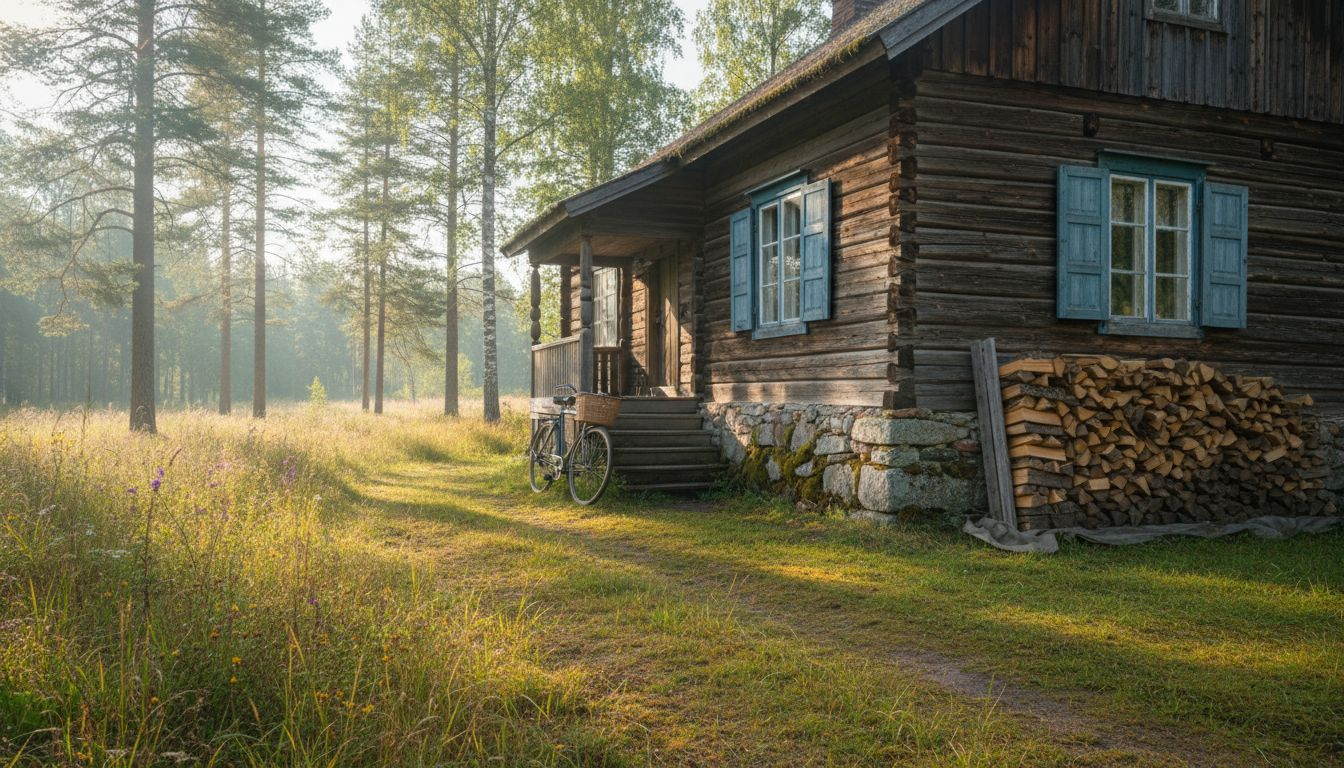
Advantages of Finnish Log Houses for Central Europe
Most American homes never match the unique comfort and longevity of Finnish log houses. For Central European homeowners who want a truly lasting investment, these heritage structures stand out for their century-old durability and proven energy efficiency. With so much talk about project costs and transparent materials, understanding how Finnish techniques blend tradition and modern living helps you make smarter choices that directly affect your wallet and long-term comfort.
Table of Contents
- Finnish Log Houses: Nature and Heritage
- Types of Log Structures and Materials
- Energy Efficiency and Durability Explained
- Health, Comfort, and Indoor Climate Benefits
- Cost Considerations and Common Pitfalls
Key Takeaways
| Point | Details |
|---|---|
| Cultural Significance | Finnish log houses represent a deep connection between architecture, landscape, and human history, embodying sustainable building practices. |
| Energy Efficiency | Log structures provide exceptional thermal insulation, drastically reducing heating needs and increasing overall sustainability. |
| Health Benefits | The natural properties of wood create a dynamic indoor climate, promoting better air quality and comfort for residents. |
| Financial Planning | Initial construction costs may be higher, but long-term savings through energy efficiency and low maintenance make log houses a wise investment. |
Finnish Log Houses: Nature and Heritage
The cultural legacy of Finnish log houses extends far beyond simple shelter, representing a profound connection between architecture, landscape, and human history. Rooted in centuries of woodworking expertise, these structures embody a deep understanding of natural materials and sustainable building practices that have been passed down through generations of Finnish craftspeople.
Historically, Finnish log construction emerged from practical necessity in a landscape dominated by dense forests. Timber was not just a building material but a survival tool, with each log carefully selected and positioned to create resilient dwellings that could withstand harsh Nordic winters. This architectural tradition, documented in medieval timber structure research, reveals how Finnish builders developed intricate techniques for creating buildings that were both functional and harmonious with their surrounding environment.
In the post-World War II era, Finnish log houses gained international recognition, transforming from crisis housing solutions to cultural exports that represented sophisticated design and environmental consciousness. Research indicates that many prefabricated wooden structures originally intended as temporary shelters have now become cherished heritage sites across Central Europe, demonstrating the enduring quality and aesthetic appeal of Finnish timber construction.
Pro Tip – Cultural Research: Before starting your log house project, explore local architectural museums or heritage centers to understand how traditional Finnish timber techniques can inspire your modern design choices and connect your home to a rich architectural tradition.
Types of Log Structures and Materials
Finnish log construction represents a sophisticated architectural tradition with multiple structural approaches and material selections refined through generations of woodworking expertise. The diversity of log structures reflects both regional variations and specific functional requirements, ranging from compact residential homes to expansive agricultural buildings.
Traditionally, Finnish builders utilized primarily pine and spruce logs, with careful selection based on specific characteristics like wood density, moisture resistance, and structural integrity. Forest Finns’ building techniques emphasized corner-timbering methods that created remarkably stable structures, utilizing interlocking log techniques that provided exceptional thermal insulation and weather resistance. These methods often involved precise hand-hewn logs with minimal gaps, ensuring tight construction that could withstand extreme Nordic climate conditions.
The log structures can be categorized into several primary types, each serving distinct purposes:
- Residential Log Houses: Permanent dwellings with sophisticated design and advanced thermal properties
- Summer Cottages: Seasonal structures with lighter construction techniques
- Agricultural Buildings: Robust structures designed for storage and livestock protection
- Utility Structures: Smaller buildings like saunas, workshops, and storage sheds
Each structure type requires nuanced material selection and construction approach, reflecting the deep understanding Finnish craftspeople have developed over centuries of timber architecture.
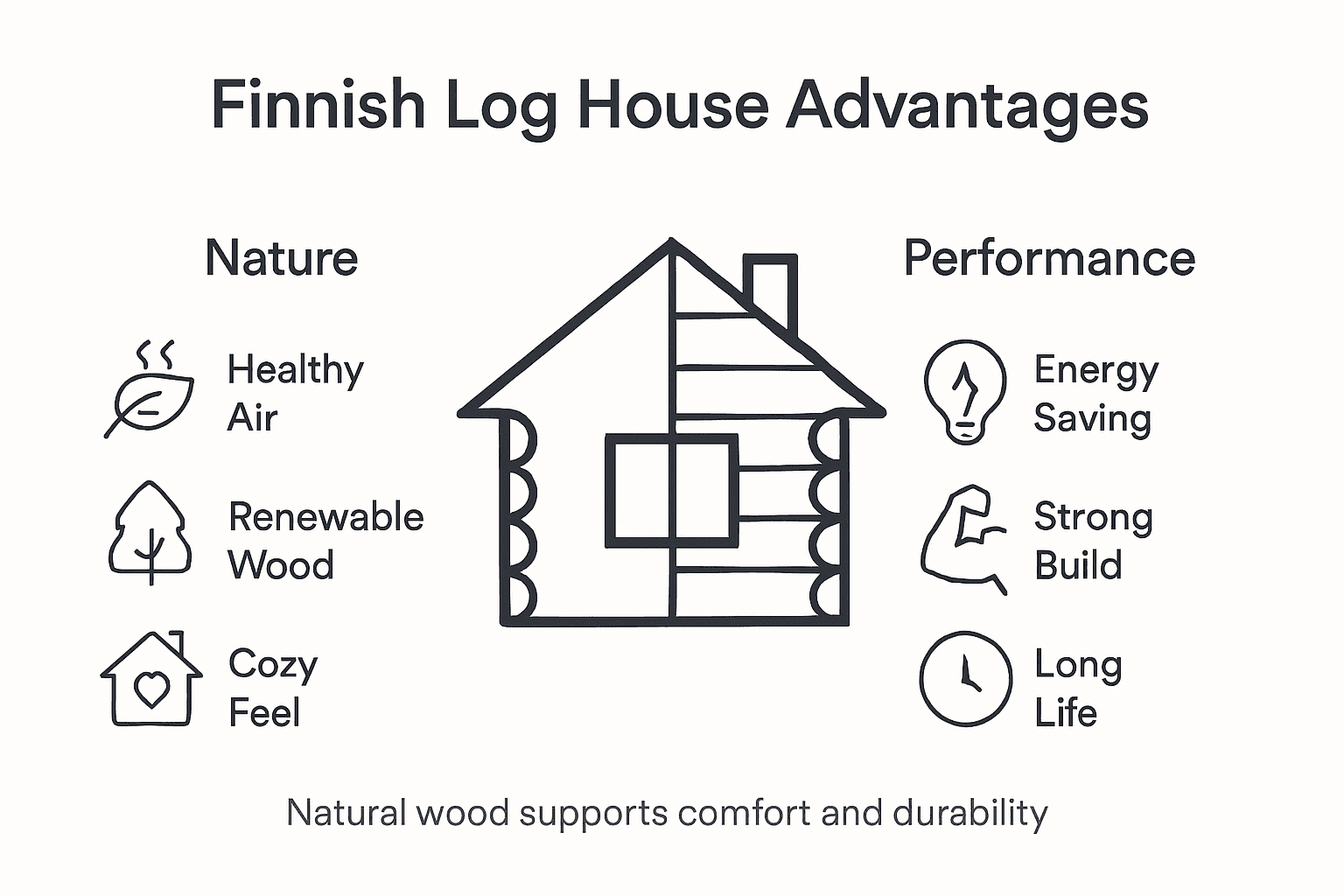
Here is a summary comparing the main types of Finnish log structures:
| Structure Type | Typical Use | Key Features |
|---|---|---|
| Residential Log House | Year-round dwelling | Advanced insulation, robust design |
| Summer Cottage | Seasonal stays | Lighter build, easy assembly |
| Agricultural Building | Farming/storage | Large volume, durable timber frames |
| Utility Structure | Sauna, workshop, shed | Compact, specialized functionality |
Pro Tip – Material Selection: Always consult local forestry experts when choosing log materials, as they can provide invaluable insights into wood quality, sustainability, and regional timber characteristics specific to your construction project.
Energy Efficiency and Durability Explained
Finnish log houses represent an exceptional paradigm of sustainable architecture, combining centuries-old building techniques with modern energy conservation principles. The inherent thermal properties of solid wood structures provide extraordinary insulation capabilities that dramatically reduce heating and cooling requirements compared to conventional construction methods.
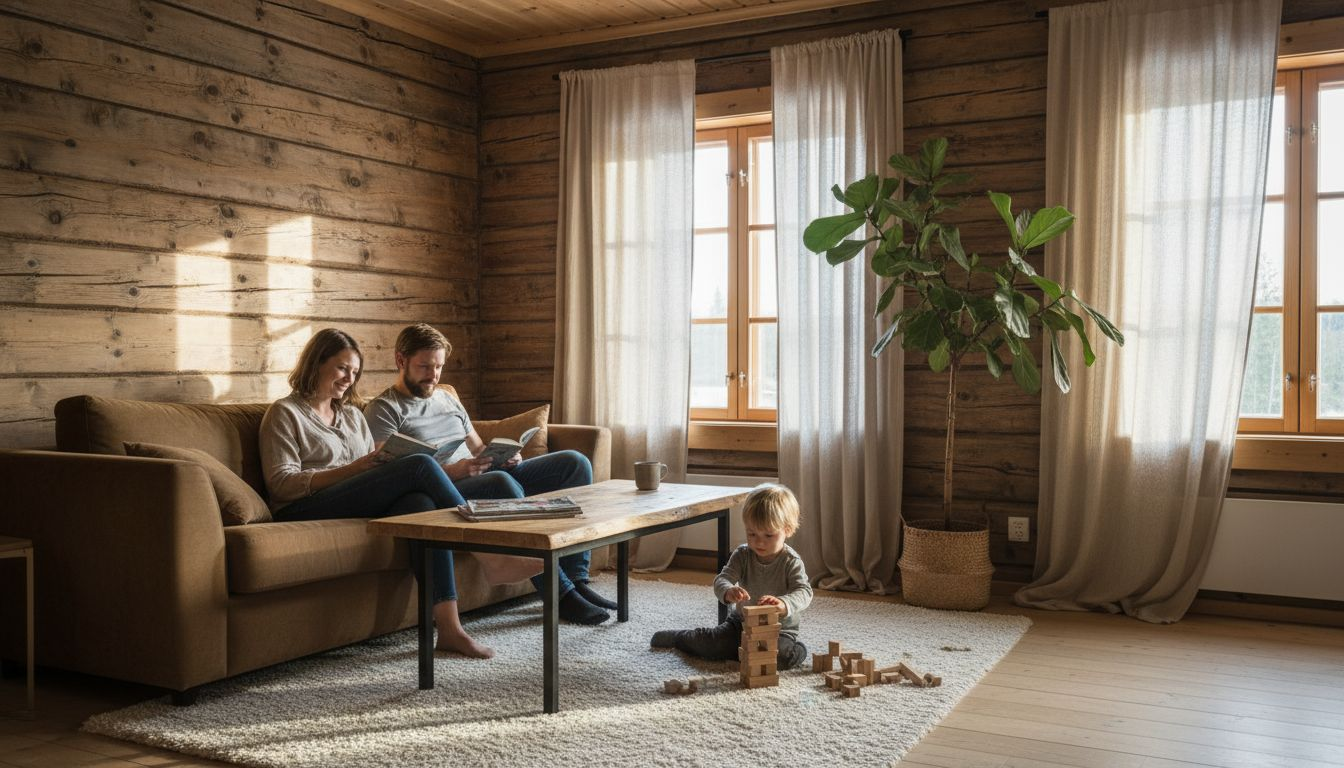
The science behind log house energy efficiency stems from wood’s unique cellular structure, which creates natural thermal mass and regulation. Modern wood construction techniques demonstrate that well-constructed log walls can maintain interior temperatures more consistently than brick or concrete, with some structures achieving carbon dioxide emissions up to 70% lower than comparable steel or concrete buildings. The Pilke House in Rovaniemi exemplifies this principle, showcasing how wooden structures can dramatically reduce environmental impact while maintaining exceptional structural integrity.
Durability in Finnish log houses is not merely a theoretical concept but a proven architectural reality. Historical examples like the Pihlajavesi Old Church, constructed between 1780 and 1783, demonstrate log structures’ remarkable longevity. These buildings feature massive log walls that remain structurally sound after centuries, revealing key characteristics of Finnish timber construction:
- Natural Moisture Resistance: Carefully selected and treated logs prevent decay
- Structural Flexibility: Wood’s natural expansion and contraction properties prevent structural fatigue
- Self-Regulating Thermal Performance: Log walls adapt to environmental temperature changes
- Minimal Maintenance Requirements: Properly constructed log structures require less frequent repairs
Pro Tip – Thermal Performance: Invest in professional thermal imaging during your log house construction to identify and address potential insulation gaps, ensuring maximum energy efficiency and long-term structural performance.
Health, Comfort, and Indoor Climate Benefits
Wood’s natural properties transform Finnish log houses into living environments that actively contribute to human health and wellbeing. Unlike synthetic building materials, wood creates a dynamic indoor ecosystem that regulates humidity, temperature, and air quality through its inherent biological characteristics, providing an environment that feels intuitively comfortable and supportive of human physiology.
The cellular structure of wood enables remarkable atmospheric regulation, creating spaces that maintain consistent indoor climates. Detailed log house design principles demonstrate how wooden structures naturally moderate humidity levels between 40-60%, which medical research indicates is the optimal range for respiratory health, reducing risks of mold growth and minimizing allergen accumulation. This self-regulating mechanism means log houses provide consistent comfort without requiring complex mechanical systems.
Key health and comfort benefits of Finnish log house construction include:
- Natural Air Purification: Wood absorbs and releases moisture, helping filter indoor air pollutants
- Acoustic Comfort: Dense log walls provide superior sound insulation, reducing external noise
- Thermal Stability: Consistent temperature maintenance reduces physiological stress
- Psychological Well-being: Natural materials create environments that reduce stress and promote relaxation
- Electromagnetic Neutrality: Wood does not conduct electromagnetic radiation like modern synthetic materials
Pro Tip – Indoor Climate Management: Implement periodic wood treatment and maintenance to preserve your log house’s natural health-supporting properties, ensuring long-term indoor environmental quality.
This reference table gives an overview of benefits associated with Finnish log house construction:
| Benefit Area | Main Advantage | Lasting Impact |
|---|---|---|
| Energy Efficiency | Natural temperature control | Lower energy costs over decades |
| Health & Comfort | Consistent humidity levels | Better air quality, respiratory health |
| Durability | Century-long lifespan | Reduced need for major repairs |
| Cost Effectiveness | Low maintenance requirements | Long-term savings for homeowners |
Cost Considerations and Common Pitfalls
Constructing a Finnish log house represents a sophisticated investment that requires careful financial planning and strategic decision-making. Initial construction costs can be higher compared to traditional building methods, but the long-term economic benefits often outweigh the upfront expenses through enhanced energy efficiency, reduced maintenance requirements, and superior durability.
Practical log house construction techniques reveal that budget management begins with understanding the nuanced factors influencing overall project expenses. The Pilke House demonstrates how sustainable wood construction can optimize cost-effectiveness while maintaining high environmental standards. Central European homeowners should anticipate expenses across several critical areas:
Common Financial Considerations and Potential Pitfalls:
- Wood Selection: Premium timber increases initial costs but reduces long-term maintenance expenses
- Design Complexity: Intricate architectural designs significantly impact overall construction budgets
- Foundation Requirements: Log houses demand specialized foundation work, potentially increasing preliminary expenses
- Thermal Treatment: Professional wood preparation and treatment represent substantial upfront investments
- Regulatory Compliance: Local building codes may require additional certifications or modifications
Most homeowners underestimate the importance of comprehensive planning, which can lead to unexpected financial challenges. Unexpected costs often emerge from inadequate initial site assessment, incomplete architectural drawings, or insufficient understanding of regional construction regulations.
Pro Tip – Budget Management: Create a detailed financial buffer of 15-20% above your initial project estimate to accommodate potential unforeseen expenses and ensure smooth project completion.
Experience Authentic Finnish Craftsmanship for Your Central European Home
The article highlights the unique challenges of building energy-efficient, durable, and healthy living spaces using traditional Finnish log construction. If you want to harness natural insulation, exceptional durability, and outstanding indoor comfort for your next project, Huvila Seppälä is your trusted partner. Their expertise spans over 65 years in manufacturing high-quality timber frames and custom log houses perfectly suited for Central Europe’s climate and building standards.
Discover how authentic Finnish wood and time-tested techniques can transform your design vision into a sustainable reality with fast delivery and transparent pricing. Start your journey today by exploring Huvila Seppälä’s solutions and learn everything you need about design, financing, and permits. Don’t wait to bring centuries of Finnish log building heritage into your home—connect now for a personalized offer and expert guidance.
Frequently Asked Questions
What are the main benefits of Finnish log houses?
Finnish log houses provide exceptional energy efficiency due to their natural thermal properties, resulting in lower heating and cooling costs. They also offer durability, with many structures lasting for centuries, reduced maintenance needs, and a healthier indoor climate that promotes well-being.
How do Finnish log houses compare to conventional construction methods in terms of energy efficiency?
Finnish log houses are significantly more energy-efficient than traditional construction methods. The solid wood structure has excellent insulation capabilities, often achieving carbon dioxide emissions up to 70% lower than steel or concrete buildings, thanks to wood’s natural thermal mass.
What types of structures can be built using Finnish log construction techniques?
Finnish log construction supports various structures, including residential log houses for permanent living, summer cottages for seasonal use, agricultural buildings for storage and livestock, as well as utility structures like saunas and workshops.
Are there health benefits associated with living in a Finnish log house?
Yes, living in a Finnish log house has numerous health benefits, including improved indoor air quality due to wood’s natural air purification properties, consistent humidity levels that reduce respiratory issues, and enhanced comfort that contributes to psychological well-being.
Recommended
- Mökkirakentaminen Explained: Hyödyt, Vaihtoehdot ja Vinkit – Huvila Seppälä
- Rakennustyypit mökkirakentamisessa: kattava opas – Huvila Seppälä
- Ympäristövaikutukset Hirsirakentamisessa: Täydellinen Opas – Huvila Seppälä
- Blogit – Huvila Seppälä