Benefits of log homes: healthy, sustainable living guide
Did you know log home residents report being four times more satisfied with their indoor air quality than those in regular wooden houses? This surprising advantage reveals just one of many compelling reasons to consider a custom log home in Finland. Log homes offer far more than rustic charm or traditional aesthetics. They provide notable health advantages, environmental benefits, and natural comfort that modern construction methods often struggle to match. This guide explores these benefits in detail, helping you make an informed choice about whether a log home fits your lifestyle and values.
Table of Contents
- Why Log Homes Offer Superior Indoor Air Quality
- Sustainability And Environmental Impact Of Log Homes
- Design, Durability, And Maintenance Essentials For Lasting Log Homes
- Comparing Log Homes With Other Housing Types: Comfort, Cost, And Lifestyle
- Explore Custom Log Homes Designed For Sustainable Living In Finland
- Frequently Asked Questions
Key takeaways
| Point | Details |
|---|---|
| Superior air quality | Log home residents experience significantly better indoor air quality and fewer respiratory symptoms than those in conventional homes. |
| Environmental sustainability | Wood construction stores carbon, requires less energy to produce than concrete or steel, and supports renewable forestry practices. |
| Natural comfort and efficiency | Logs provide thermal mass that stabilizes indoor temperatures while wood’s calming properties reduce stress naturally. |
| Durability with proper care | Modern log homes with quality foundations and regular maintenance can last for generations with minimal major repairs. |
Why log homes offer superior indoor air quality
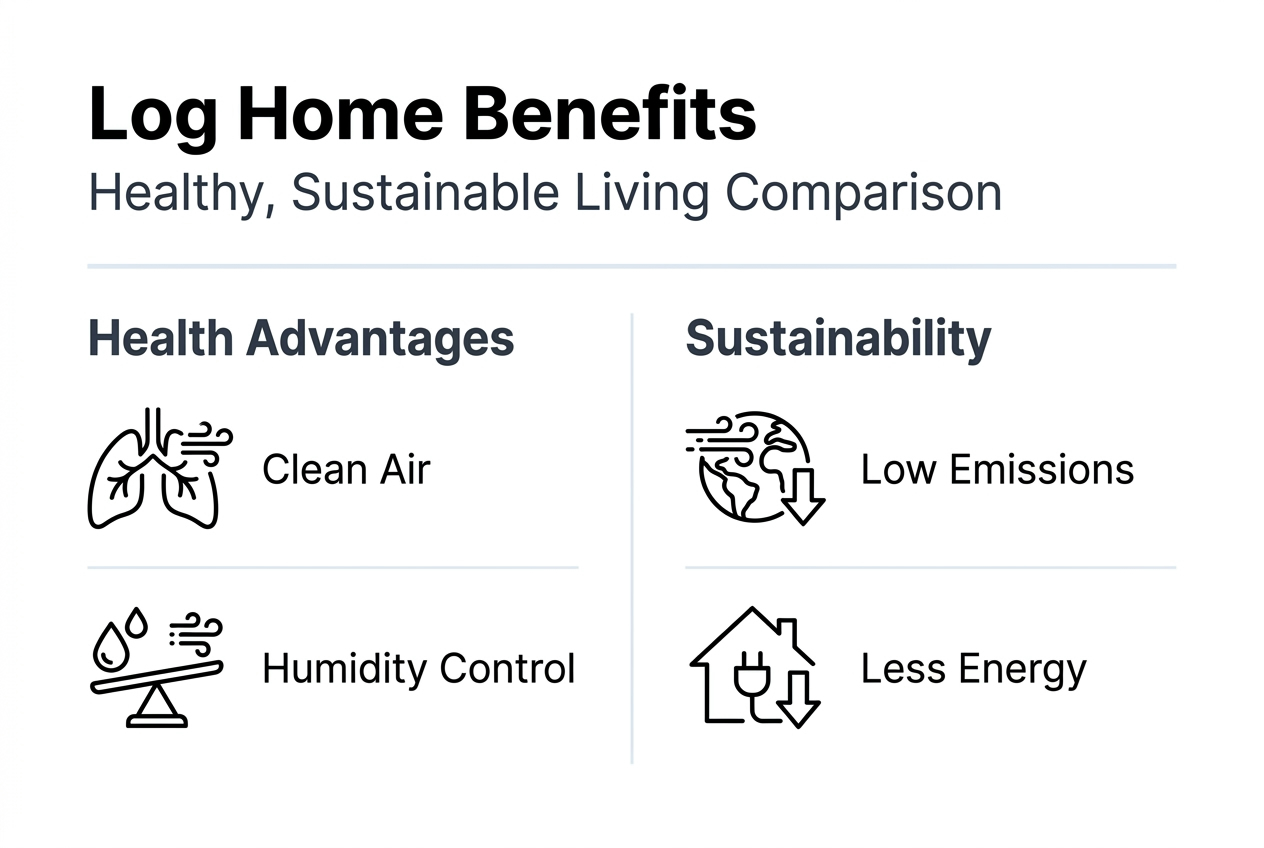
Scientific research provides compelling evidence that log house inhabitants were four times as satisfied with indoor air quality as those living in regular wooden houses. This dramatic difference stems from the unique properties of solid wood construction. Unlike composite materials or treated lumber that can off-gas chemicals, solid logs maintain their natural characteristics that actively support healthier indoor environments.
The fundamental advantage lies in wood’s inherent properties. Solid logs are antibacterial, damp-proof and airtight when properly constructed, creating a building envelope that naturally resists common indoor air quality problems. Wood’s cellular structure allows it to breathe, meaning it absorbs excess moisture when humidity rises and releases it when the air becomes too dry. This natural regulation reduces conditions that promote mold growth, dust mites, and other allergens that trigger respiratory issues.
Research confirms the health implications extend beyond subjective satisfaction. Log homes provide excellent indoor air quality due to natural wood breathability, which helps regulate humidity and reduce allergen presence. Studies document that log home residents report fewer respiratory symptoms, less general discomfort, and better overall health outcomes compared to those in stone or conventional wooden construction. The connection between thermal insulation in log houses and air quality creates a synergistic effect where proper insulation maintains the breathability that makes logs so effective.
Pro Tip: Maintain untreated or minimally treated interior log walls to preserve their natural breathability. Heavy lacquers or sealers can trap moisture inside wood, undermining the humidity regulation that makes log homes so healthy. If you must treat logs, choose products specifically designed for breathable wood finishes.
“The natural antibacterial properties of wood, combined with its ability to regulate humidity, create an indoor environment that actively supports respiratory health rather than merely avoiding harm.”
Sustainability and environmental impact of log homes
The environmental case for log homes begins with a simple biological fact: trees absorb carbon dioxide as they grow, and that carbon remains locked in the wood long after construction. Log homes contribute to sustainable construction by utilizing renewable resources and sequestering carbon dioxide, effectively removing CO2 from the atmosphere for the lifetime of the structure. When you build with logs, you’re creating a carbon storage facility that also happens to be your home.
Manufacturing wood building materials typically consumes far less energy than producing concrete or steel alternatives. The industrial processes required to create cement and smelt metal demand extreme temperatures and fossil fuel inputs. Wood requires primarily harvesting, transport, and milling operations that use a fraction of the energy. Recent research comparing housing types reveals important nuances: tiny homes and log homes show lower energy consumption and carbon footprints than detached houses and apartments when measured per capita or per building.
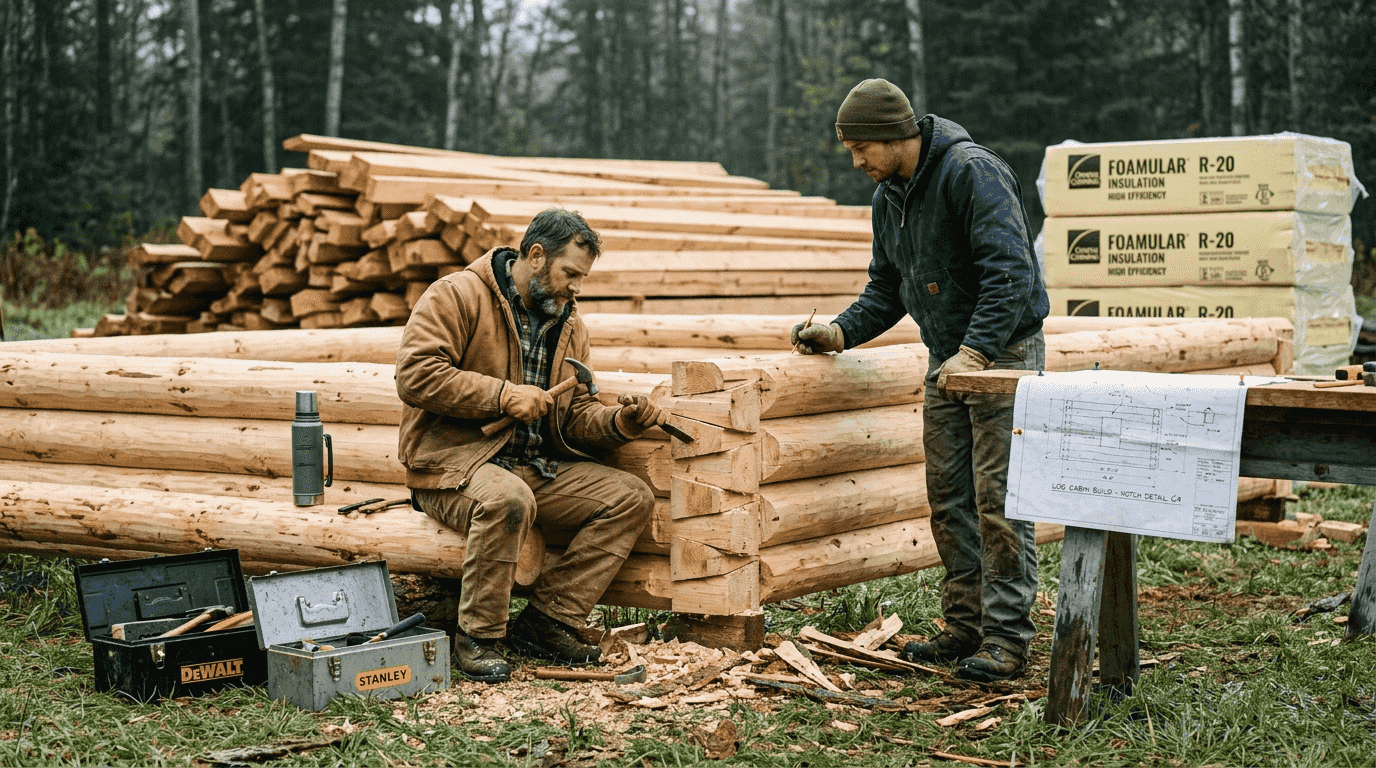
Land use efficiency deserves consideration alongside carbon metrics. Compact log home designs, particularly cottage styles, require less land disturbance than sprawling conventional construction. This efficiency matters increasingly in sustainable development planning where preserving natural landscapes and minimizing ecological disruption guide responsible building practices.
| Housing Type | Energy Consumption | Carbon Footprint | Land Use Efficiency |
|---|---|---|---|
| Log Home | Low to Moderate | Low (carbon negative) | High |
| Detached House | High | High | Low |
| Apartment | Moderate | Moderate | Very High |
| Stone House | Moderate to High | High | Moderate |
Key sustainability advantages of log homes include:
- Renewable material sourcing from managed forests that regenerate continuously
- Carbon sequestration that creates a net negative carbon footprint over the building’s lifetime
- Lower embodied energy compared to concrete, steel, and masonry construction
- Biodegradability at end of life, avoiding landfill burden unlike synthetic materials
- Local sourcing opportunities in Finland that reduce transportation emissions
Understanding benefits of building with logs requires looking beyond simple material comparisons to lifecycle analysis. Carbon storage benefits of wood accumulate over decades, making the initial construction choice increasingly valuable as years pass.
Pro Tip: Consider overall lifecycle and social sustainability, not just material carbon metrics, when assessing a home’s environmental impact. Factors like building longevity, community connections, and your family’s wellbeing contribute to true sustainability alongside measurable carbon numbers.
Design, durability, and maintenance essentials for lasting log homes
Durability begins with selecting appropriate wood species and ensuring proper storage before construction. High-quality pine stored for at least three years represents a good choice for structural elements, as the extended drying period stabilizes the wood and reduces future movement. The species you choose determines natural rot resistance, dimensional stability, and how the logs age over time. Finnish pine and spruce offer excellent performance characteristics suited to local climate conditions.
Foundation quality dramatically influences long term performance. Modern log structures have more durable foundations, reducing the need for log replacement compared to early 20th century homes where inadequate foundations allowed moisture intrusion. Contemporary construction techniques incorporate moisture barriers, proper drainage, and elevated base logs that protect the structure from ground contact and water damage. These engineering improvements mean today’s log homes avoid many problems that plagued earlier generations.
Regular maintenance preserves the breathability and moisture regulation that make log walls healthy. Unlike conventional construction where walls remain sealed behind drywall and siding, log walls require periodic inspection and care. Minor wood rot can often be repaired with appropriate materials and techniques when caught early. Knowing when immediate action becomes necessary for structural damage versus cosmetic issues helps you prioritize maintenance efforts and budget effectively.
Consulting local building authorities and experienced contractors during repairs or renovations ensures compliance with current codes and maintains quality standards. The log house building expert guide approach means working with professionals who understand wood behavior and proven construction methods. Additional resources on log wall maintenance tips provide detailed guidance for specific situations.
Essential maintenance practices for log home longevity:
- Monitor moisture levels regularly, especially around windows, doors, and roof interfaces where water intrusion risks run highest
- Avoid lacquer coatings on interior walls that prevent wood from breathing and regulating humidity naturally
- Inspect for early signs of rot or insect damage annually, focusing on areas near ground contact and where water collects
- Clean exterior surfaces periodically to remove dirt, pollen, and organic matter that can trap moisture against wood
- Schedule professional structural assessments every 5 to 10 years to catch developing issues before they require major repairs
Comparing log homes with other housing types: comfort, cost, and lifestyle
The comparison between housing types reveals important differences that affect daily living quality and long term satisfaction. Research shows log house inhabitants were six times as satisfied with indoor air quality as those living in stone houses, demonstrating the magnitude of advantage wood construction provides. This satisfaction translates into tangible health outcomes, with log home residents reporting fewer respiratory symptoms and general discomfort complaints.
| Feature | Log Homes | Stone Houses | Regular Wooden Houses |
|---|---|---|---|
| Indoor Air Quality | Excellent (natural regulation) | Fair (poor breathability) | Good (varies by materials) |
| Health Symptoms | Significantly fewer reported | More respiratory issues | Moderate symptoms |
| Initial Costs | Moderate to High | High | Moderate |
| Maintenance Needs | Regular inspection required | Lower frequency | Moderate |
| Energy Efficiency | Good (thermal mass) | Excellent (high mass) | Fair to Good |
Beyond measurable factors, log homes provide comfort advantages rooted in wood’s natural properties. Studies show solid softwood calms heart rate and helps relieve stress, creating psychological benefits alongside physical health improvements. The visual warmth of wood interiors, natural scent, and tactile qualities contribute to wellbeing in ways that synthetic or mineral materials cannot replicate.
Cost considerations extend beyond initial construction investment to include operating expenses, maintenance requirements, and potential health cost savings. While log homes may require higher upfront investment compared to conventional stick-built construction, gains in longevity, energy efficiency, and reduced health problems offset initial premiums over the building’s lifetime. The advantages of Finnish log houses include exceptional durability when properly maintained.
Lifestyle benefits that attract homeowners to log construction:
- Deep connection to nature through natural materials and organic aesthetics that bring forest qualities indoors
- Flexibility in design from compact cottages to expansive family homes, all built with traditional methods
- Authentic material experience where you see, touch, and smell real wood rather than synthetic finishes
- Sustainable living alignment with environmental values through renewable, low-impact construction
Trade-offs exist in any building decision. Log homes require more hands-on maintenance awareness than maintenance-free vinyl-sided construction. The natural settling and movement of logs demands flexible approaches to windows, doors, and interior finishing. However, homeowners who value natural materials, environmental responsibility, and proven health benefits find these requirements worthwhile. Long term value encompasses not just financial return but quality of life improvements that compounds over years of healthier, more comfortable living.
Explore custom log homes designed for sustainable living in Finland
If the health advantages, environmental benefits, and natural comfort of log homes align with your vision for ideal living, expert guidance can help transform that vision into reality. With over 65 years of experience in timber construction, professionals understand how to design and build custom log structures that maximize the benefits explored throughout this guide while addressing practical considerations like Finnish climate conditions, modern building codes, and your specific site requirements.
Comprehensive resources including the custom timber cottage building guide walk you through every phase from initial planning to completion. Understanding eco-friendly timber homes explained helps you make informed material choices, while exploring the timber building architecture role reveals how thoughtful design enhances both aesthetics and performance. Custom consultation ensures your specific needs, preferences, and budget guide the design process, resulting in a truly personalized home built with quality Finnish wood and expert craftsmanship.
Frequently asked questions
Are log homes energy efficient compared to modern houses?
Well-constructed log homes with proper insulation offer competitive energy efficiency due to wood’s natural thermal properties. Energy efficiency depends on design factors like log profile and insulation, and well-built log homes can be highly efficient. The thermal mass of logs helps stabilize indoor temperatures by absorbing heat during warm periods and releasing it when temperatures drop, reducing heating and cooling demands.
How does wood contribute to a healthier indoor environment?
Wood naturally breathes to balance indoor humidity levels, reducing conditions that support mold growth and dust mite populations. Its inherent antibacterial properties actively inhibit harmful microorganism growth on surfaces. These characteristics create living spaces where respiratory health receives active support rather than simply avoiding harm from synthetic materials.
What maintenance do log homes require to stay durable?
Regular inspection for moisture intrusion and early rot signs represents the most critical maintenance task. Avoid applying heavy lacquers or sealers that interfere with wood’s natural breathability and moisture regulation. Professional structural assessment every 5 to 10 years helps identify developing issues before they require expensive major repairs, ensuring your investment remains sound for generations.
Are log homes environmentally sustainable compared to stone or concrete?
Wood qualifies as a renewable resource that stores carbon absorbed during tree growth, unlike stone or concrete which release carbon during production. Manufacturing log building materials requires significantly less energy than producing cement or smelting steel. Managed forestry ensures continuous regeneration, making wood construction genuinely sustainable when sourced responsibly from certified forests.
Recommended
- Why Build With Logs: Lasting Comfort and Value – Hirsitalot, pihasaunat ja piharakennukset kotimaisesta hirrestä
- Energy Efficiency in Log Houses: Key Factors and Myths – Hirsitalot, pihasaunat ja piharakennukset kotimaisesta hirrestä
- Why Invest in Log Villas: Sustainable Value for Life – Hirsitalot, pihasaunat ja piharakennukset kotimaisesta hirrestä
- Log House Design Basics: Building Timeless Comfort – Hirsitalot, pihasaunat ja piharakennukset kotimaisesta hirrestä