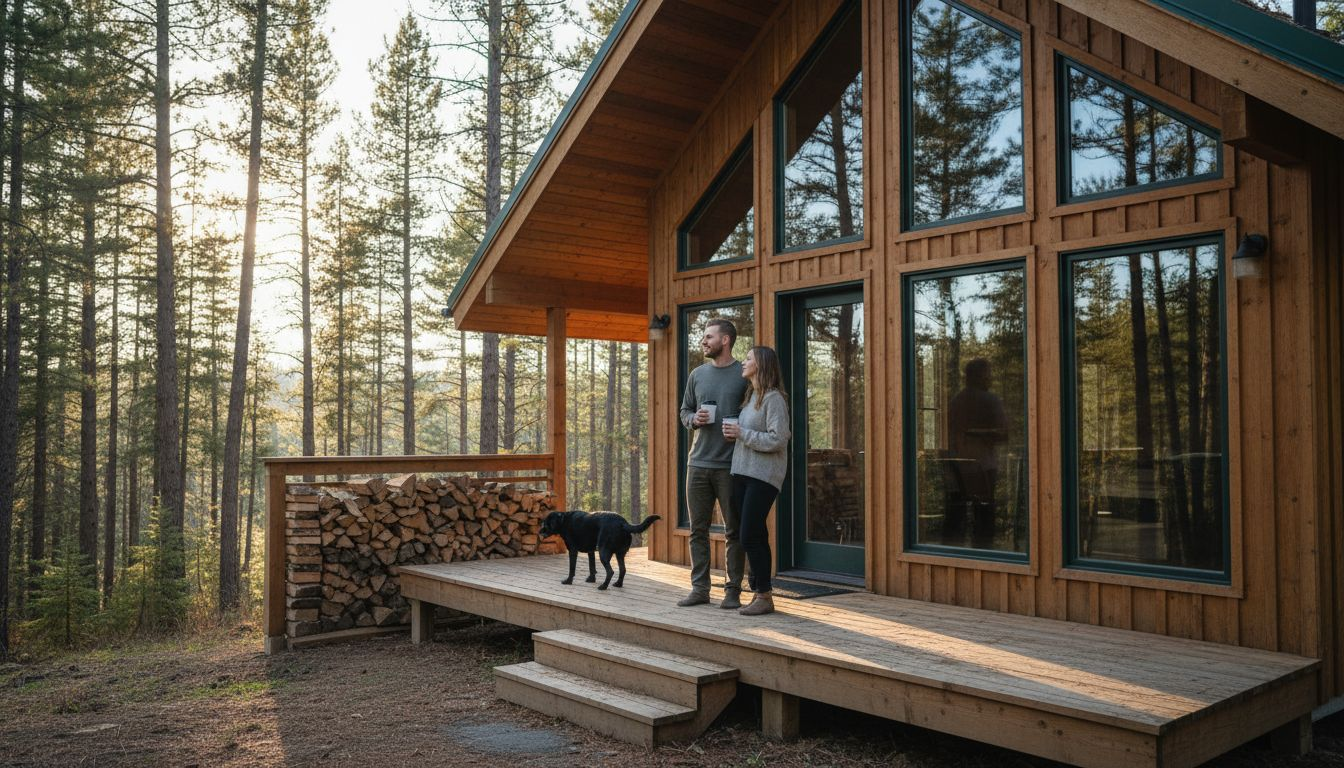
Why Build With Timber: Eco-Friendly Homes Explained
Choosing between concrete and timber construction can be a challenge for eco-conscious homeowners in Central Europe. For those prioritizing sustainability and rapid project timelines, modern mass timber methods offer more than just beautiful natural finishes. These advanced structures use engineered wood products like cross-laminated timber and glue laminated timber, delivering environmental benefits while meeting strict fire safety standards confirmed by the National Institute of Standards and Technology. Discover which timber building options provide dependable craftsmanship and fast delivery for your dream vacation home or sauna.
Table of Contents
- Timber Construction Defined And Common Myths
- Main Types Of Timber Structures Explained
- Sustainability And Energy Efficiency Benefits
- Custom Design Options And Project Requirements
- Risks, Costs, And Comparing Alternatives
Key Takeaways
| Point | Details |
|---|---|
| Sustainable Construction | Mass timber construction offers significant environmental benefits, including carbon sequestration and lower embodied energy compared to traditional materials. |
| Fire Resistance | When designed properly, modern mass timber buildings demonstrate fire resistance comparable to concrete and steel, ensuring safety standards are met. |
| Custom Design Flexibility | Timber allows for personalized architectural solutions, supported by advanced prefabrication technologies that enable complex design integration. |
| Economic Considerations | While initial material costs may be higher, evaluating lifecycle expenses can reveal competitive advantages in energy savings and reduced construction time. |
Timber Construction Defined and Common Myths
Mass timber construction represents an innovative building approach using engineered wood products like cross-laminated timber (CLT) and glue laminated timber (glulam) to create sustainable structures. Unlike traditional construction methods that rely heavily on concrete and steel, this technique transforms wooden materials into robust architectural solutions that minimize environmental impact.
At its core, mass timber construction involves strategically layering and bonding wood panels to create incredibly strong building components. These engineered wood products can replace conventional materials while providing exceptional structural integrity. Finnish craftsmanship techniques have been particularly instrumental in refining these advanced construction methods, demonstrating how traditional woodworking skills translate into modern architectural innovations.
Several persistent myths continue to circulate about timber construction that require careful examination. Contrary to popular misconceptions, modern mass timber structures offer remarkable fire resistance comparable to concrete and steel when properly designed. Extensive research from the National Institute of Standards and Technology (NIST) confirms that engineered timber products can meet stringent safety standards for multi-story and high-rise buildings. Additionally, sustainable timber sourcing ensures these construction methods do not contribute to deforestation when managed responsibly.
Pro tip: When considering timber construction, always request detailed fire resistance and engineering certifications to verify the specific performance characteristics of your chosen wood products.
Main Types of Timber Structures Explained
Mass timber encompasses several innovative engineered wood products that have revolutionized modern architectural design. These advanced materials overcome traditional timber limitations by creating sophisticated structural solutions that offer exceptional strength, durability, and environmental sustainability. Examples of Finnish wood structures demonstrate how different timber types can be masterfully integrated into architectural designs.
Key mass timber structure types include:
- Cross-laminated timber (CLT): Panels created by layering lumber boards perpendicularly and bonding them together, ideal for walls, floors, and roofs
- Glue laminated timber (Glulam): Timber beams and columns made by bonding parallel lumber layers, providing remarkable load-bearing capacity
- Laminated veneer lumber (LVL): Engineered wood made from thin veneer layers compressed and glued together, offering consistent strength and dimensional stability
- Nail-laminated timber (NLT): Lumber boards mechanically fastened together, commonly used in floor and roof assemblies
Each timber structure type offers unique advantages for different architectural applications. Structural engineers carefully select these materials based on specific project requirements, load-bearing needs, and design aesthetics. Cross-laminated timber, for instance, enables architects to create larger spans and more complex geometric structures compared to traditional solid timber, while maintaining exceptional structural performance.
Here is a concise comparison of main engineered timber products and their ideal uses:
| Timber Product | Structural Strength | Best Applications |
|---|---|---|
| CLT (Cross-laminated) | Very high, multi-directional | Large walls, floors, roofs |
| Glulam (Glue-laminated) | High, excellent in spans | Beams, columns, arches |
| LVL (Laminated veneer) | High, uniform stiffness | Headers, long-span beams |
| NLT (Nail-laminated) | Moderate, good in panels | Floor and roof assemblies |
Pro tip: When selecting a timber structure type, consult with a specialized structural engineer who can recommend the most appropriate material based on your specific building design, environmental conditions, and performance requirements.
Sustainability and Energy Efficiency Benefits
Timber construction represents a revolutionary approach to sustainable building, offering significant environmental advantages over traditional construction materials. Energy efficiency in log houses demonstrates how wooden structures can dramatically reduce carbon footprints while providing exceptional thermal performance. The natural properties of wood enable these structures to store carbon, effectively transforming buildings into long-term carbon sinks that actively contribute to climate change mitigation.
Key sustainability benefits of timber construction include:
- Carbon sequestration: Trees absorb carbon dioxide during growth, and this carbon remains locked within the timber throughout the building’s lifetime
- Low embodied energy: Timber requires significantly less energy to process compared to concrete or steel
- Renewable material: Wood can be sourced from sustainably managed forests, ensuring continuous resource regeneration
- Reduced construction waste: Prefabricated timber components minimize on-site waste and environmental disruption
Beyond environmental advantages, timber structures offer remarkable energy efficiency. Wood’s inherent insulating properties create natural thermal barriers that reduce heating and cooling requirements. Modern engineered timber products like cross-laminated timber (CLT) provide superior thermal performance, enabling architects to design buildings that maintain consistent interior temperatures while consuming minimal energy. This translates to lower utility costs and reduced greenhouse gas emissions throughout the building’s lifecycle.
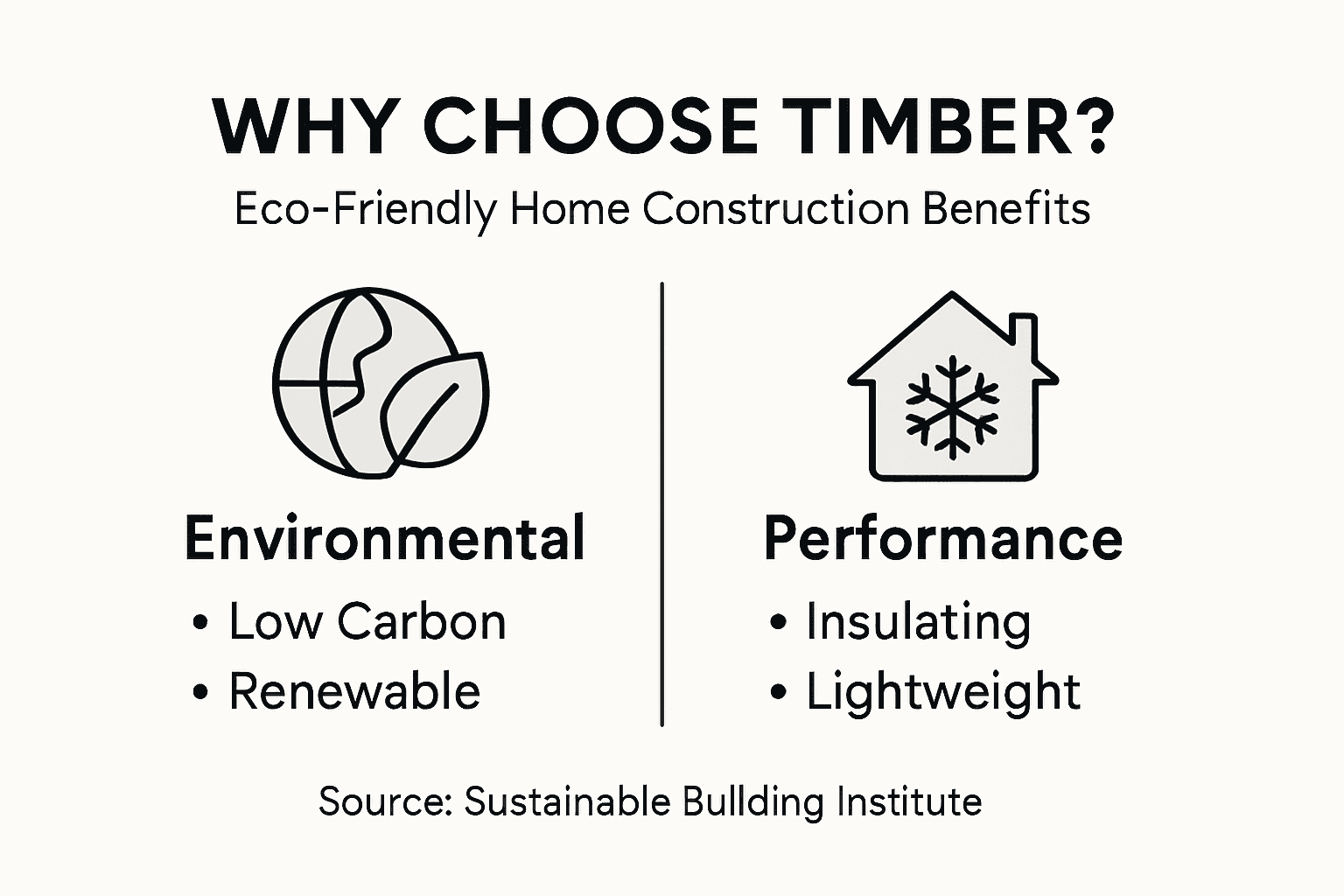
The following table outlines how timber construction impacts sustainability and building performance:
| Sustainability Benefit | Timber Construction Impact | Long-term Advantage |
|---|---|---|
| Carbon Storage | Locks carbon within building | Reduces atmospheric CO2 |
| Low Embodied Energy | Requires less processing energy | Smaller environmental footprint |
| Exceptional Insulation | Natural thermal barriers | Lower energy bills year-round |
| Renewable Resource | Harvested from managed forests | Ensures ongoing material supply |
Pro tip: When planning a timber construction project, prioritize materials from certified sustainable forestry programs to maximize both environmental benefits and long-term structural performance.
Custom Design Options and Project Requirements
Custom timber design represents an intricate process that blends architectural creativity with precise engineering requirements. Building a Finnish villa tutorial illustrates the comprehensive approach needed to transform unique design concepts into functional timber structures. Modern timber construction allows unprecedented flexibility in creating personalized architectural solutions that meet individual client specifications and regional building standards.
Key considerations for custom timber projects include:
- Structural engineering: Detailed analysis of load-bearing capabilities
- Material selection: Choosing appropriate engineered wood products
- Architectural constraints: Addressing local building codes and environmental conditions
- Performance specifications: Ensuring thermal efficiency, fire resistance, and durability
Prefabrication technologies have revolutionized custom timber construction, enabling architects and engineers to develop highly specialized building solutions. Advanced design software allows precise modeling of timber elements, including cross-laminated timber (CLT) panels and glulam beams. This technology supports complex geometric designs, optimizes structural performance, and enables rapid prototyping of custom architectural concepts. Designers can now incorporate intricate details and unique structural elements that were previously challenging or impossible with traditional construction methods.
Pro tip: Collaborate early with structural engineers who specialize in timber construction to translate your design vision into technically feasible and structurally sound architectural solutions.
Risks, Costs, and Comparing Alternatives
Timber construction represents a complex financial and technical decision that requires careful evaluation of multiple factors beyond initial material costs. Financing timber buildings provides critical insights into understanding the comprehensive economic considerations of wooden structures. While timber offers numerous advantages, potential investors must critically analyze both short-term expenses and long-term performance implications.
Key cost and risk considerations include:
- Upfront material expenses: Higher initial investment compared to traditional construction materials
- Moisture vulnerability: Potential structural degradation if improper moisture management occurs
- Fire safety requirements: Additional engineering and treatment costs for meeting safety standards
- Supply chain complexity: Regional variations in timber availability and pricing
- Specialized labor needs: Potential premium for skilled timber construction workers
Compared to conventional construction methods, timber structures demonstrate unique economic characteristics. Prefabrication techniques can significantly reduce overall construction time, offsetting higher material costs through faster project completion. The lighter weight of timber structures allows for reduced foundation expenses, and the material’s natural insulating properties can generate long-term energy savings. While concrete and steel remain traditional alternatives, timber construction increasingly proves competitive when holistic lifecycle cost assessments are conducted.
Pro tip: Request comprehensive lifecycle cost analyses from multiple contractors to accurately compare timber construction expenses against traditional building methods, considering factors beyond initial material pricing.
Discover the Lasting Benefits of Building Your Dream Timber Home Today
Choosing timber construction means embracing eco-friendly building methods that deliver strength, energy efficiency, and timeless beauty. If you are inspired by the sustainable advantages and custom design possibilities highlighted in this article, Huvila Seppälä offers expert solutions rooted in over 65 years of Finnish craftsmanship. From custom log houses to outdoor saunas crafted with premium Finnish wood, we help you create personalized timber structures tailored to your vision while ensuring fast delivery and transparent pricing.
Experience the unmatched quality and environmental benefits of timber by exploring our range of custom wooden buildings. Visit Huvila Seppälä to see how your plans can come to life with skilled engineering and authentic Finnish materials. Ready to start your timber project with confidence? Request a personalized offer today and take the first step toward a sustainable and beautiful home that lasts for generations.
Frequently Asked Questions
What are the main benefits of building with timber?
Building with timber offers several benefits, including carbon sequestration, low embodied energy, sustainability, reduced construction waste, and excellent thermal performance, leading to energy-efficient homes.
How does mass timber construction compare to traditional building materials like concrete and steel?
Mass timber construction is often more eco-friendly, providing comparable structural integrity and fire resistance. It also requires less energy during production, making it a sustainable alternative to concrete and steel.
What types of engineered wood products are commonly used in timber construction?
Common engineered wood products include Cross-Laminated Timber (CLT), Glue Laminated Timber (Glulam), Laminated Veneer Lumber (LVL), and Nail-Laminated Timber (NLT), each offering unique structural advantages for different applications.
How does timber construction contribute to energy efficiency in homes?
Timber’s natural insulating properties reduce heating and cooling needs, while engineered products like CLT enhance thermal performance, helping maintain consistent interior temperatures and lower energy bills.
Recommended
- Financing Timber Buildings – Key Steps and Strategies – Huvila Seppälä
- Why Use Finnish Forestry for Log Homes – Hirsitalot, pihasaunat ja piharakennukset kotimaisesta hirrestä
- Finnish Craftsmanship in Timber: Lasting Quality and Design – Huvila Seppälä
- Building Permit Requirements – What Timber Homeowners Need – Huvila Seppälä