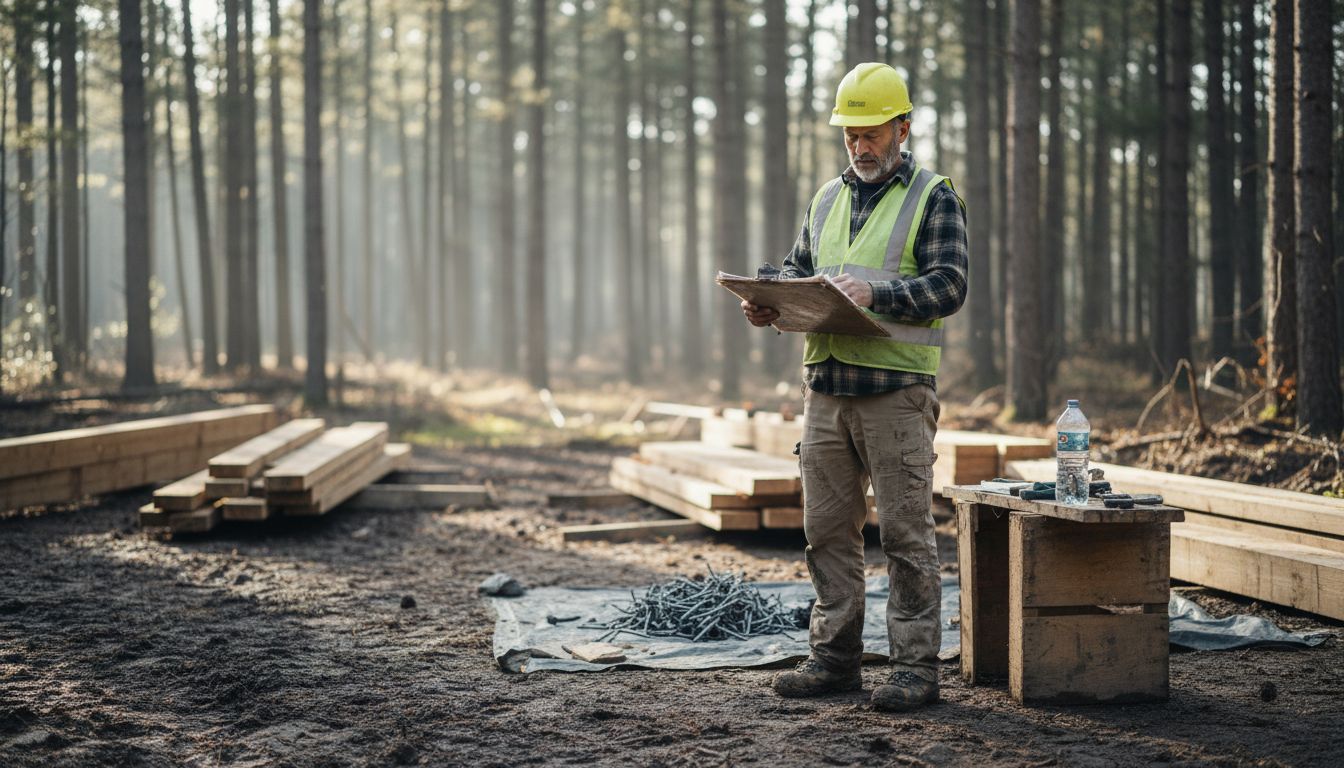
Sustainability of Wood Construction: Climate Impacts
Choosing sustainable wood for your next cottage or sauna project means embracing more than natural beauty. Eco-conscious homeowners across Central Europe are discovering that wood construction offers a way to minimize carbon emissions and design truly custom spaces. The European Union Green Deal has put responsible timber in the spotlight, encouraging creative designs that store carbon long-term and meet the highest standards of environmental responsibility. Learn how you can build with low-carbon, renewable materials while balancing comfort, style, and smart project management.
Table of Contents
- Defining Sustainability In Wood Construction
- Major Types Of Sustainable Timber Use
- Environmental Benefits Versus Conventional Methods
- EU Regulations On Sustainable Building Materials
- Certifications And Responsible Wood Sourcing
- Key Challenges And Misconceptions Addressed
Key Takeaways
| Point | Details |
|---|---|
| Sustainability Approach | Sustainability in wood construction integrates environmental, economic, and social considerations throughout a structure’s lifecycle. |
| Regulatory Framework | The European Union’s Green Deal establishes essential guidelines for sustainable timber practices, emphasizing carbon storage and renewable resource management. |
| Innovation in Materials | Engineered wood products like cross-laminated timber (CLT) enhance structural performance while minimizing environmental impact. |
| Importance of Certification | Forest certification systems, such as FSC and PEFC, ensure responsible wood sourcing and validate sustainable forestry practices. |
Defining Sustainability in Wood Construction
Sustainability in wood construction represents a holistic approach to building that balances environmental preservation, economic efficiency, and social responsibility. At its core, this concept goes beyond simply using renewable materials and encompasses comprehensive strategies for minimizing ecological impact throughout a structure’s entire lifecycle.
The European Union’s Green Deal has established critical frameworks defining sustainability in timber construction, focusing on key principles:
- Carbon Storage: Wood naturally captures and stores carbon dioxide, creating net negative carbon footprints
- Renewable Resource Management: Utilizing timber from responsibly managed forests that support ecosystem regeneration
- Energy Efficiency: Creating structures that require less energy for construction and ongoing maintenance
- Circular Design: Developing buildings that can be disassembled, reused, or biodegraded at end-of-life
Wood construction sustainability extends far beyond material selection. It requires comprehensive analysis of environmental performance metrics including greenhouse gas emissions, embodied energy, waste reduction, and long-term ecological impact. Timber construction strategies demonstrate remarkable potential for reducing construction’s environmental footprint by leveraging wood’s inherent regenerative properties.
Modern sustainable wood construction integrates advanced technologies and scientific understanding to maximize environmental benefits. Innovative approaches include engineered wood products, precision manufacturing techniques, and sophisticated life cycle assessment methodologies that quantify and optimize ecological performance.
Pro tip: When planning a sustainable wood construction project, prioritize locally sourced timber from certified sustainable forests to minimize transportation emissions and support regional ecosystem management.
Major Types of Sustainable Timber Use
Sustainable timber construction encompasses diverse approaches that transform traditional building practices through innovative materials and strategic resource management. Engineered wood products have revolutionized the industry by creating high-performance timber solutions that maximize structural integrity while minimizing environmental impact.
The primary categories of sustainable timber use include:
- Solid Wood Construction: Traditional log and timber frame structures utilizing minimally processed wood
- Engineered Wood Products (EWPs): Advanced materials like cross-laminated timber (CLT), glue-laminated timber, and laminated veneer lumber
- Prefabricated Wood Systems: Modular building components manufactured with precision to reduce waste
- Hybrid Wood-Concrete Structures: Combining wood’s lightweight properties with concrete’s strength
Cross-laminated timber (CLT) represents a significant advancement in sustainable construction technologies. Finnish wood engineering demonstrates remarkable potential in developing CLT panels that offer superior strength, fire resistance, and carbon sequestration capabilities compared to traditional building materials.
Modern sustainable timber use goes beyond material selection, integrating comprehensive life cycle assessments that evaluate environmental performance across manufacturing, transportation, installation, and eventual deconstruction. This holistic approach ensures that timber construction minimizes carbon emissions while maximizing structural efficiency and long-term ecological benefits.
Here is a comparison of wood construction methods for sustainability:
| Method | Typical Applications | Environmental Impact | Structural Benefits |
|---|---|---|---|
| Solid Wood | Log cabins, timber homes | Moderate, low processing | Natural insulation, simplicity |
| Engineered Wood Products | Multi-story, offices | Low, precision manufacturing | High strength, design flexibility |
| Prefabricated Wood Systems | Modular, rapid builds | Low waste, efficient transit | Quick assembly, consistent quality |
| Hybrid Wood-Concrete | Large complexes, bridges | Reduced concrete use | Enhanced load capacity, durability |
Sustainable timber construction is not just about using wood, but about creating intelligent building systems that work in harmony with environmental ecosystems.
Pro tip: Consult local forestry certification programs to ensure your timber sources adhere to sustainable harvesting practices and support responsible forest management.
Environmental Benefits Versus Conventional Methods
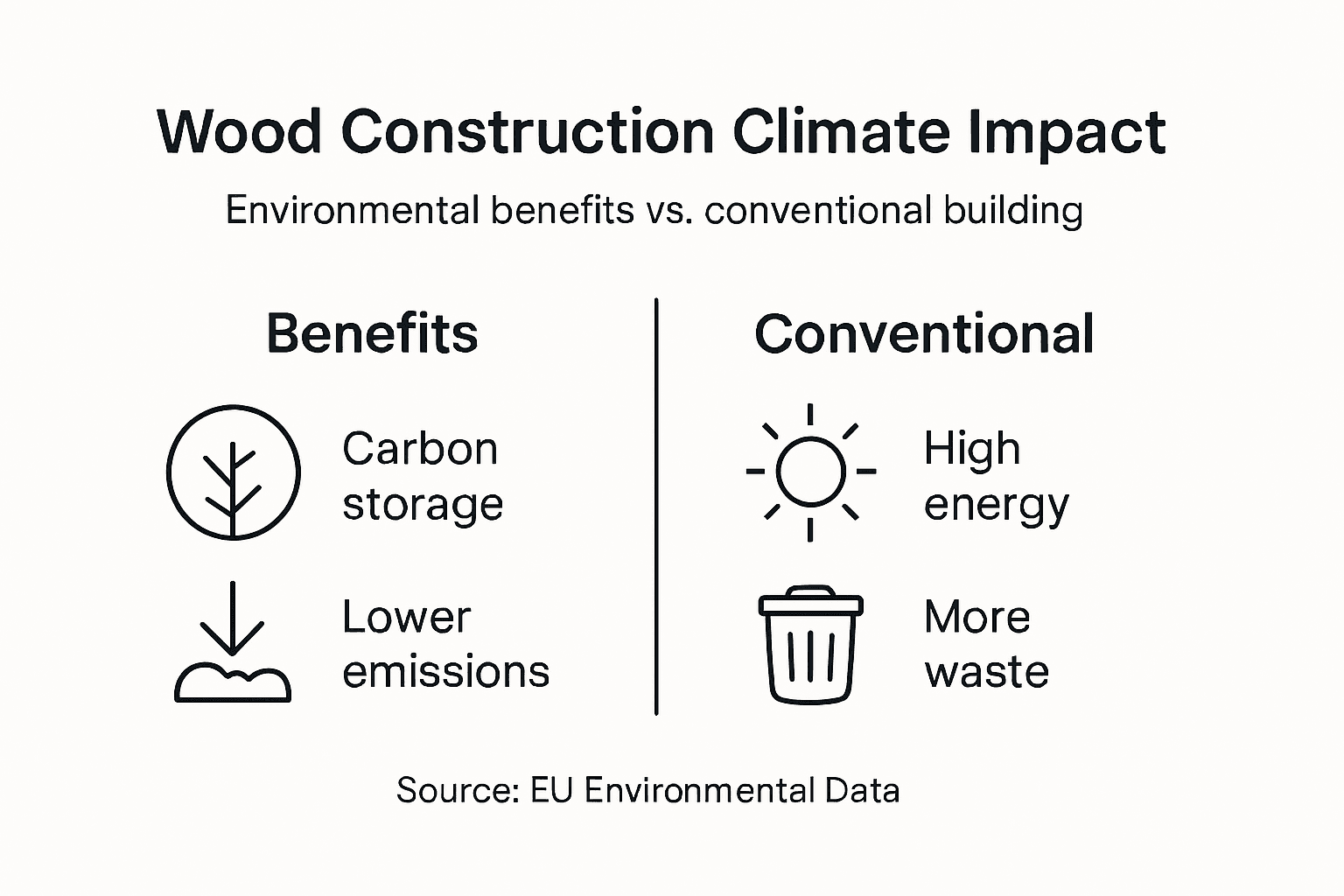
Wood construction offers significant environmental advantages over traditional building materials like concrete and steel, presenting a transformative approach to reducing carbon emissions and ecological impact. Carbon footprint reduction stands as the most compelling benefit, with timber structures demonstrating remarkable potential for mitigating climate change through innovative design and sustainable resource management.
Key environmental benefits of wood construction compared to conventional methods include:
- Carbon Sequestration: Wood naturally stores carbon during its growth and continues storing carbon throughout its lifecycle
- Lower Energy Consumption: Timber requires less energy-intensive manufacturing processes compared to steel or concrete
- Reduced Greenhouse Gas Emissions: Wood production generates substantially fewer carbon emissions than traditional building materials
- Renewable Resource Utilization: Responsibly managed forests provide sustainable material sources
Finnish forestry practices demonstrate how strategic timber management can create substantial environmental advantages. Comparative studies reveal that glue-laminated timber (GLT) framed buildings generate significantly lower emissions compared to precast reinforced concrete structures, highlighting wood’s potential for sustainable construction.
Beyond carbon metrics, wood construction supports broader ecological systems through reduced waste, improved energy efficiency, and enhanced human well-being. Innovative wood technologies enable buildings that not only minimize environmental impact but actively contribute to ecosystem restoration and climate change mitigation strategies.
Sustainable construction is not just about reducing harm, but about creating regenerative building systems that actively improve environmental conditions.
Pro tip: Prioritize locally sourced timber and seek third-party forest certification to ensure your construction materials support genuine sustainable forestry practices.
EU Regulations on Sustainable Building Materials
The European Union has developed a comprehensive regulatory framework designed to transform the construction industry’s approach to sustainability, with a particular emphasis on reducing carbon emissions and promoting environmentally responsible building practices. Green building regulations represent a strategic approach to reshaping how construction materials are sourced, manufactured, and utilized across member states.
Key EU regulations governing sustainable building materials include:
- Construction Products Regulation (CPR): Establishes standardized performance and sustainability criteria for construction materials
- Ecodesign for Sustainable Products Regulation (ESPR): Mandates environmental design requirements for product lifecycle
- Energy Performance of Buildings Directive (EPBD): Sets energy efficiency and carbon reduction standards for building construction
- Carbon Border Adjustment Mechanism (CBAM): Addresses carbon emissions in imported construction materials
Finnish wood engineering demonstrates exceptional alignment with these regulatory frameworks, showcasing how timber products can meet and exceed stringent EU sustainability requirements. The regulations create a comprehensive approach that goes beyond simple compliance, actively promoting circular economy principles and transformative environmental strategies.
The updated regulatory landscape requires manufacturers and builders to provide unprecedented transparency about material sourcing, carbon footprint, and lifecycle performance. This shift demands a holistic approach to construction that considers environmental impact at every stage of design, production, and implementation.
Sustainable building regulations are not just rules, but a blueprint for reimagining construction as a regenerative environmental practice.
Pro tip: Consult with certified sustainability experts who specialize in EU building regulations to ensure your construction project fully complies with the latest environmental standards.
Certifications and Responsible Wood Sourcing
Responsible wood sourcing represents a critical component of sustainable construction, ensuring that timber products meet rigorous environmental and ethical standards. Forest certification systems provide comprehensive frameworks that validate sustainable forestry practices, protecting ecosystems while supporting responsible industrial development.
The primary forest certification systems in Europe include:
- Forest Stewardship Council (FSC): Ensures environmental and social responsibility in forest management
- Programme for the Endorsement of Forest Certification (PEFC): Promotes sustainable forest management through third-party verification
- Sustainable Forestry Initiative (SFI): Supports responsible forest practices and biodiversity conservation
- Climate, Community & Biodiversity Standards (CCB): Validates forest management’s ecological and social impacts
Finnish forestry practices exemplify global leadership in sustainable wood sourcing, demonstrating how comprehensive certification systems can protect forest ecosystems while supporting economic development. These certifications go beyond simple compliance, creating holistic frameworks that balance environmental preservation, social responsibility, and economic sustainability.
Certification processes involve comprehensive assessments that examine forest management practices, biodiversity protection, worker rights, and long-term ecological sustainability. This multi-dimensional approach ensures that certified wood products represent more than just raw materials – they embody a commitment to environmental stewardship and responsible resource management.
The following table summarizes leading European wood certification standards and their focus areas:
| Certification | Focus Area | Geographic Scope | Recognized For |
|---|---|---|---|
| FSC | Environmental, social | Worldwide | Rigorous audit, global credibility |
| PEFC | Sustainable management | Global, strong in Europe | Wide adoption, regional flexibility |
| SFI | Biodiversity, practices | Primarily North America | Habitat protection, clear labeling |
| CCB | Climate & communities | International projects | Integrated social criteria |
Responsible wood sourcing is not just about preserving trees, but about creating regenerative systems that support entire ecological and social ecosystems.
Pro tip: Always request documentation verifying the forest certification of your timber, and prioritize suppliers who can provide transparent, comprehensive sustainability credentials.
Key Challenges and Misconceptions Addressed
Sustainable wood construction faces several persistent challenges and misconceptions that often prevent widespread adoption of this environmentally friendly building approach. Technical perceptions and historical biases continue to create barriers, despite significant advancements in wood engineering and construction technologies.
Common misconceptions about timber construction include:
- Fire Safety Concerns: Modern wood technologies provide superior fire-resistant capabilities
- Structural Durability: Engineered wood products offer comparable or superior strength to traditional materials
- Environmental Impact: Responsibly sourced timber represents a regenerative, low-carbon construction solution
- Long-term Performance: Advanced wood treatments ensure extended building lifecycles
Finnish wood engineering demonstrates remarkable innovation in addressing these traditional concerns, showcasing how technological advancements have transformed wood’s construction potential. Professional training and education play crucial roles in dispelling outdated perceptions and highlighting the sophisticated engineering behind modern timber construction.
Barriers to widespread timber construction adoption extend beyond technical misconceptions, encompassing knowledge gaps in professional training, limited industry experience, and conservative building practices. Comprehensive education programs and transparent demonstration projects are essential for shifting industry perspectives and building confidence in wood’s sustainable construction capabilities.
Overcoming misconceptions requires a combination of scientific evidence, practical demonstration, and continuous professional education.
Pro tip: Attend specialized workshops and request technical documentation that directly addresses performance concerns when considering wood construction projects.
Build a Sustainable Future with Custom Finnish Timber Structures
Understanding the climate impacts of wood construction means recognizing the importance of responsibly sourced timber and innovative building techniques. If you are seeking to reduce your carbon footprint while enjoying the durability and natural beauty of wooden homes, cottages, or saunas, Huvila Seppälä stands ready to help. With over 65 years of experience crafting custom timber frames and log structures from Finnish wood, we combine authentic craftsmanship with sustainable building solutions that align with rigorous environmental goals.
Choose smart, climate-conscious construction supported by expert guidance and fast delivery. Explore how our tailored wooden villas and outdoor cabins meet strict ecological standards and satisfy your unique design preferences. Take the next step toward a greener lifestyle today by visiting Huvila Seppälä to request a transparent quote and learn about the simple prerequisites for starting your sustainable wood construction journey. Discover why more clients trust custom wooden construction that honors both tradition and modern sustainability principles.
Frequently Asked Questions
What are the main environmental benefits of wood construction compared to traditional materials?
Wood construction offers significant advantages like carbon sequestration, lower energy consumption, reduced greenhouse gas emissions, and the utilization of renewable resources. These features help mitigate climate change and lessen ecological impacts.
How do engineered wood products contribute to sustainable construction practices?
Engineered wood products, such as cross-laminated timber and glued-laminated timber, enhance sustainability by maximizing structural integrity and minimizing waste through precision manufacturing techniques, making them ideal for modern building projects.
What role does responsible wood sourcing play in sustainable wood construction?
Responsible wood sourcing ensures that timber products adhere to environmental and ethical standards, preserving forests while supporting sustainable industrial practices through certifications like FSC and PEFC.
How can I ensure that my wood construction project aligns with sustainability regulations?
To align with sustainability regulations, familiarize yourself with comprehensive EU frameworks like the Construction Products Regulation and the Energy Performance of Buildings Directive. Consulting certified sustainability experts can also help meet compliance requirements.
Recommended
- Financing Timber Buildings – Key Steps and Strategies – Huvila Seppälä
- Why Use Finnish Forestry for Log Homes – Hirsitalot, pihasaunat ja piharakennukset kotimaisesta hirrestä
- Energy Efficiency in Log Houses: Key Factors and Myths – Huvila Seppälä
- Finnish Craftsmanship in Timber: Lasting Quality and Design – Huvila Seppälä