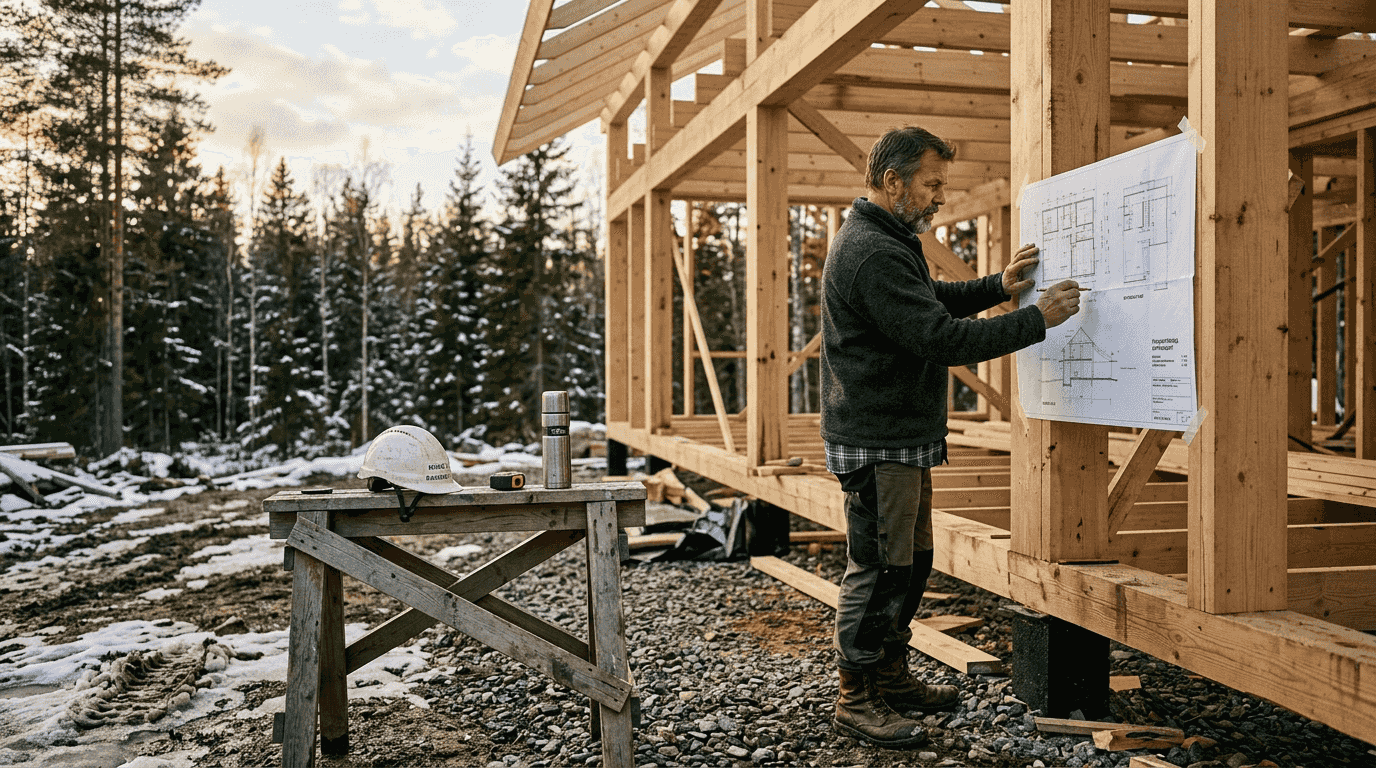
Planning permission for wooden houses in Finland: 2026
Planning permission for wooden houses in Finland changed dramatically in 2025, leaving many homeowners uncertain about current requirements. The new Building Act 751/2023 replaced decades of familiar regulations with streamlined digital processes and clear permit triggers. If you’re planning a timber home, cottage, or sauna, understanding these updates prevents costly delays and compliance issues. This guide clarifies exactly what you need to know about navigating planning permission in 2026, from the 8-point permit list to application strategies that keep your project on track.
Table of Contents
- Understanding The New Building Act And Its Effect On Wooden House Permits
- Navigating Permit Applications: Old Vs New Legislation And Practical Advice
- What Requires Planning Permission: The 8-Point Permit List For Wooden Houses In Finland
- Practical Tips And Strategies For A Smooth Permit Process In 2026
- Discover Expert Support For Your Custom Wooden Home Project
- What Is The New Building Act 751/2023 And How Does It Affect Wooden House Permits?
Key takeaways
| Point | Details |
|---|---|
| Single-form permit | The new Building Act introduces a unified permit replacing multiple application types from January 1, 2025. |
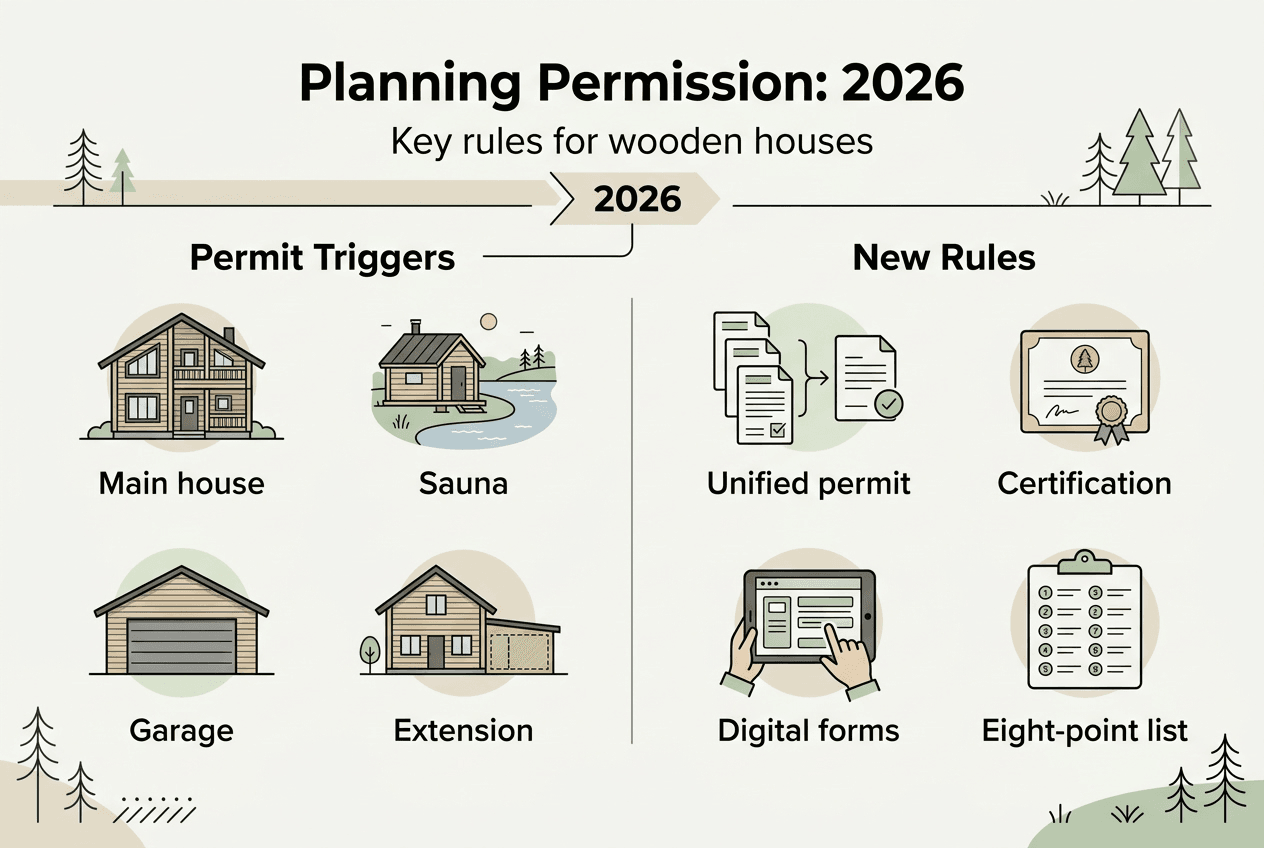
| Eight specific triggers | Building permits are required for exactly 8 measures with no local exceptions allowed. |
| Pending applications | Applications submitted before January 1, 2025 continue processing under the old Land Use and Building Act. |
| Consistent legislation | Applying under one law for all project components avoids confusion and processing delays. |
| Digital certifications | New qualification requirements and digital processes now govern permit submissions. |
Understanding the new Building Act and its effect on wooden house permits
The Building Act 751/2023 represents Finland’s most significant construction legislation update in over two decades. Effective January 1, 2025, this act replaces the Land Use and Building Act from 1999, fundamentally changing how homeowners secure planning permission for wooden houses, cottages, and saunas. The transition affects every aspect of the permit process, from application formats to approval timelines.
The most visible change is the introduction of a single-form building permit that consolidates what were previously multiple permit types. This streamlined approach simplifies submissions but requires understanding new digital land use and construction regulations. Applications now flow through updated online systems that demand specific formatting and documentation standards. Builders must familiarize themselves with these platforms to avoid technical rejections.
Qualification certification requirements now govern who can submit permit applications. The new framework establishes clear professional standards, ensuring that only qualified individuals handle complex regulatory documentation. For homeowners, this means working with certified professionals becomes more important than ever. Understanding the building permits process in Finland helps you identify which aspects require expert assistance versus what you can manage independently.
The act defines eight specific categories requiring permits, eliminating local discretion that previously allowed municipalities to create exceptions. This standardization brings consistency across Finland but removes flexibility that some homeowners previously enjoyed. Whether you’re building a traditional log home or a modern timber structure, the same rules apply nationwide. The building permit requirements for timber homes now follow uniform standards regardless of location.
Pro Tip: Before starting any wooden house project, verify whether your plans fall under the 8-point permit list to avoid discovering permit requirements mid-construction, which can trigger stop-work orders and substantial fines.
Navigating permit applications: old vs new legislation and practical advice
Transitional rules determine which legislation governs your application based on submission timing. Applications pending on January 1, 2025 continue processing under the old Land Use and Building Act, while new submissions fall under the Building Act 751/2023. This creates a critical decision point for projects planned around the transition date. Understanding which framework applies prevents confusion and ensures you prepare correct documentation.
Submitting all permits for a single project under one legislation avoids processing complications. Mixed applications create administrative headaches, often resulting in delays as authorities reconcile requirements from different legal frameworks. If you submitted initial permits in late 2024 under old rules, complete all related applications before the cutoff to maintain consistency. Starting fresh in 2026 means embracing the new digital systems entirely.
For homeowners planning builds in 2026, following a structured approach ensures smooth permit approval:
- Confirm your project type against the 8-point permit requirement list to establish whether permits are necessary.
- Gather all required documentation including architectural drawings, site plans, and qualification certifications before starting your application.
- Choose certified professionals familiar with the new digital submission platforms to prepare your application materials.
- Submit your complete application through the appropriate digital portal, ensuring all fields meet current formatting standards.
- Monitor application status regularly and respond promptly to any authority requests for additional information.
- Maintain copies of all submissions and correspondence to document your compliance timeline.
Common pitfalls include incomplete documentation packages, mixing permit applications across legislative frameworks, and failing to secure proper qualification certifications. The new digital systems reject applications that don’t meet technical specifications, unlike the old paper-based process where officials might request corrections. Getting it right the first time saves weeks of resubmission delays. Understanding permitting for log houses and the permitting process for cottages helps you anticipate documentation needs specific to wooden structures.
Digital platforms require updated file formats, specific naming conventions, and structured data entry that differs significantly from previous methods. Familiarize yourself with these technical requirements early or work with professionals who already navigate these systems regularly. The learning curve can delay first-time applicants who underestimate the digital transition’s complexity. Resources explaining building permits in Central Europe often provide useful context for understanding Finland’s modernized approach.

What requires planning permission: the 8-point permit list for wooden houses in Finland
The new Building Act introduces an exhaustive 8-point list defining exactly which measures require building permits. Local building ordinances cannot create exceptions or exemptions, establishing uniform standards across all Finnish municipalities. This eliminates previous regional variations that allowed some areas to waive permits for smaller structures or minor modifications.
The eight measures requiring permits include:
- Constructing new buildings, including wooden houses, cottages, and saunas regardless of size.
- Building extensions that increase a structure’s footprint or add significant square footage.
- Conducting major renovations affecting structural elements, load-bearing walls, or building systems.
- Changing a building’s designated use, such as converting a cottage into a permanent residence.
- Erecting structures that impact site drainage, foundation stability, or neighboring properties.
- Installing systems requiring integration with municipal infrastructure like water, sewage, or electrical connections.
- Modifying buildings in ways affecting fire safety, accessibility standards, or energy performance requirements.
- Demolishing existing structures that require documented disposal of materials and site restoration.
| Permit Trigger | Old Framework | New 8-Point List |
|---|---|---|
| Small sauna construction | Often exempt locally | Always requires permit |
| Minor cottage extensions | Sometimes waived | Requires permit if adding space |
| Structural renovations | Permit required | Explicitly listed as measure 3 |
| Building use changes | Case-by-case review | Mandatory permit trigger |
| New timber home builds | Always required | Standardized under measure 1 |
For wooden house projects specifically, understanding these triggers prevents assumptions based on outdated information. A small sauna that might have avoided permits under old local rules now requires full application processing. Cottage extensions that seemed minor enough to skip formal approval now fall squarely under the permit requirement. The building permit requirements for timber homes now leave no gray areas.
The standardization benefits homeowners by creating predictability. You no longer need to research local ordinances or hope for favorable interpretations. The trade-off is losing flexibility for genuinely minor projects that previously slipped through permit requirements. Understanding the importance of building permits for timber structures helps you appreciate why these requirements exist despite the added administrative burden.
Pro Tip: Review your planned modifications against all eight measures, not just the obvious ones, as changes affecting drainage, infrastructure connections, or building use often surprise homeowners who focus only on construction aspects.
Practical tips and strategies for a smooth permit process in 2026
Successful permit applications in 2026 require comprehensive preparation and attention to new digital requirements. Submitting incomplete applications guarantees rejection, wasting weeks before you can resubmit corrected versions. Gather all necessary documents before starting your digital submission, including detailed architectural plans, site surveys, qualification certifications, and any required environmental assessments.
Tracking digital certification and qualification requirements prevents last-minute scrambles. The new framework specifies exactly which professionals must certify different application components. Identify these requirements early and secure appropriate expert involvement. Attempting to bypass certification requirements or substitute unqualified professionals triggers automatic application rejection.
Communicating promptly with local building authorities throughout the process keeps your application moving. Unlike the old system where officials might overlook minor issues, digital processing flags problems immediately. Responding quickly to requests for clarification or additional documentation prevents your application from stalling in processing queues. Building a cooperative relationship with reviewing officials can smooth unexpected complications.
Common mistakes that delay or derail permit applications include:
- Submitting incomplete architectural drawings missing required details like structural specifications or material lists.
- Failing to secure proper qualification certifications before application submission.
- Mixing permit applications under different legislative frameworks for components of a single project.
- Using outdated digital file formats that newer systems cannot process correctly.
- Ignoring technical specifications for naming conventions, file sizes, or data field requirements.
- Underestimating processing timelines and starting applications too close to planned construction dates.
Pro Tip: Consult with timber home specialists or builders experienced with the 2026 legislation before finalizing your plans, as their familiarity with current requirements can identify potential permit issues during the design phase when modifications are still simple and inexpensive.
Early preparation prevents the cascading delays that occur when permit problems emerge after you’ve committed to construction timelines. The new act requires applying under consistent legislation, making thorough upfront planning more critical than ever. Understanding the building permits process in Finland and the sauna building permit process helps you anticipate steps specific to wooden structures.
Digital systems demand technical precision that paper applications never required. File corruption, incorrect formatting, or missing metadata can trigger automatic rejections before human reviewers even see your application. Testing your documents in the submission system early, or working with professionals who handle these platforms daily, eliminates technical barriers that frustrate first-time applicants.
Discover expert support for your custom wooden home project
Navigating Finland’s updated planning permission requirements becomes significantly easier with experienced guidance. Huvila Seppälä brings over 65 years of expertise in Finnish timber construction, helping homeowners successfully plan and execute custom wooden houses, cottages, and saunas. Our team understands exactly how the 2026 regulations affect your project and can streamline the entire process from initial design through permit approval.
We offer comprehensive support including financing guidance, architectural planning that meets current permit requirements, and direct assistance with permit applications. Our familiarity with the new digital systems and qualification certifications means your application gets submitted correctly the first time. Understanding why building with timber offers unique advantages helps you make informed decisions about your project scope. Our step-by-step cottage building guide walks you through the entire process, while our expertise in permitting for log homes ensures compliance with current standards. Professional support minimizes stress and maximizes your project’s success.
What is the new Building Act 751/2023 and how does it affect wooden house permits?
The Building Act 751/2023 modernizes Finland’s construction regulations by consolidating permit rules and introducing digital processing systems. Effective January 1, 2025, it replaces the Land Use and Building Act from 1999 for all new applications. The act establishes a single-form building permit that streamlines submissions while standardizing requirements nationwide. For wooden house projects, this means uniform rules apply regardless of location, eliminating previous local variations that created inconsistent permit requirements across municipalities.
Do I need a building permit to add a sauna or cottage on my property in Finland?
Saunas and cottages typically require building permits if they meet any of the eight criteria defined in section 42 of the new Building Act. New construction, extensions, and structures requiring infrastructure connections all trigger mandatory permit requirements. Always verify your specific project against the complete 8-point list, as the new framework eliminates local exemptions that previously allowed some smaller structures to avoid permits.
What should I do if my permit application was submitted before January 1, 2025?
Applications pending as of January 1, 2025 continue processing under the old Land Use and Building Act rather than the new Building Act 751/2023. Ensure all related documents were submitted by December 31, 2024 to qualify for old-law processing. If you have additional permits needed for the same project, submit them under the same legislative framework to avoid processing complications from mixed applications.
How can I best prepare to avoid permit delays for my wooden house project?
Submit complete, accurate applications with all required certifications and documentation from the start. Apply under consistent legislation for all components of your project rather than mixing frameworks. Communicate promptly with building authorities throughout the review process, responding quickly to any requests for additional information. Working with professionals experienced in the new digital systems and current qualification requirements significantly reduces the risk of technical rejections or processing delays.
Recommended
- Building Permits Process Finland: Step-by-Step Guide – Hirsitalot, pihasaunat ja piharakennukset kotimaisesta hirrestä
- Guide to choosing Finnish wood for sustainable homes 2026 – Hirsitalot, pihasaunat ja piharakennukset kotimaisesta hirrestä
- Build your Finnish outdoor sauna step by step in 2026 – Hirsitalot, pihasaunat ja piharakennukset kotimaisesta hirrestä
- How to build a log house in Finland: expert guide 2026 – Hirsitalot, pihasaunat ja piharakennukset kotimaisesta hirrestä