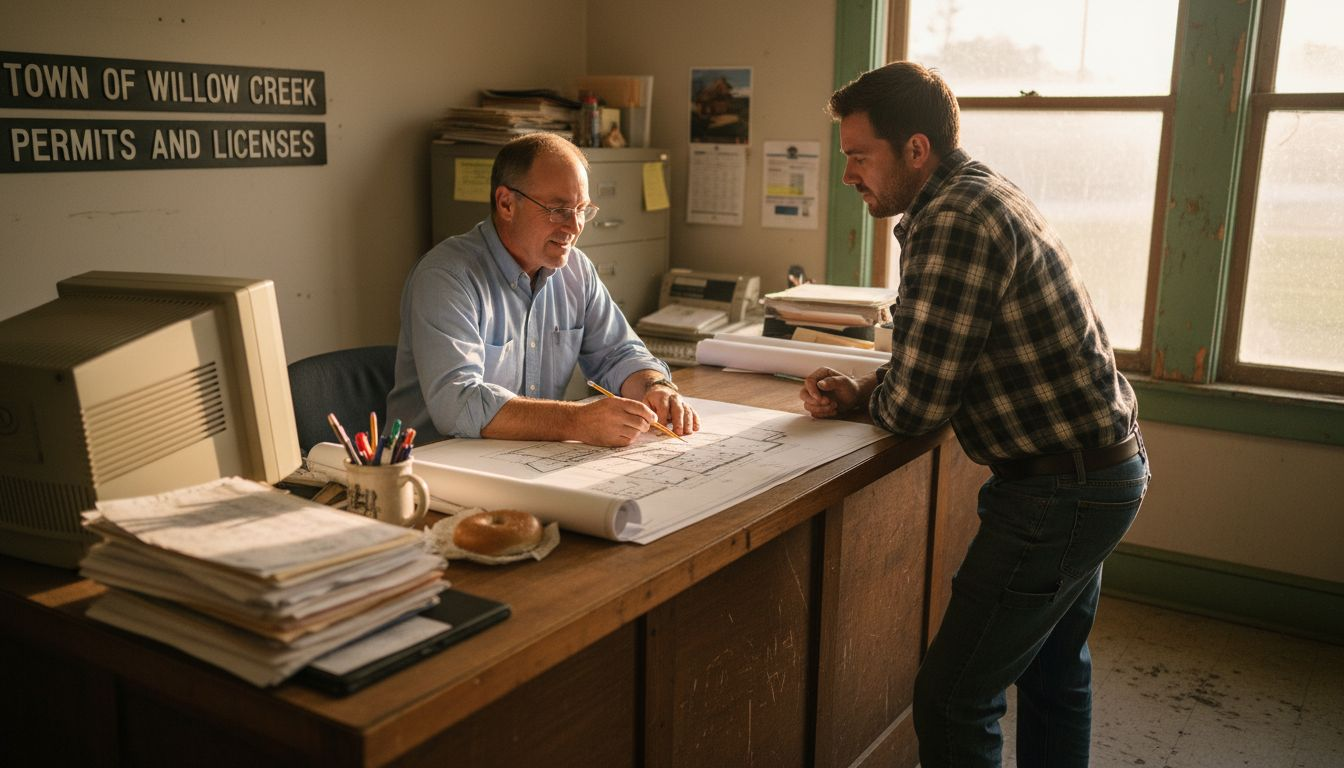
Permitting for Log Homes – Navigating Custom Builds
Most American-style log homes are subject to far stricter permitting in Central Europe, with regulations varying sharply from one municipality to another. For homeowners dreaming of a custom wood retreat or sauna, ignoring local requirements can mean costly setbacks. Understanding the complex layers of European building codes, documentation, and approval timelines helps you avoid common pitfalls and move your project forward with confidence.
Table of Contents
- Permitting For Log Homes Explained
- Types Of Log Structures And Permit Paths
- Essential Permit Requirements And Documentation
- Legal Standards For Log Home Construction
- Common Pitfalls And How To Avoid Delays
- Navigating Costs And Timelines Effectively
Key Takeaways
| Point | Details |
|---|---|
| Understand Local Regulations | Research local building permit requirements as they vary significantly across European regions. |
| Prepare Thorough Documentation | Compile detailed architectural plans and comply with national building codes to ensure successful permit applications. |
| Anticipate Costs and Timelines | Budget for various permitting-related expenses and allocate adequate time for each phase of the permit process. |
| Consult Early and Often | Engage with local building authorities early in the design process to clarify requirements and streamline approvals. |
Permitting for Log Homes Explained
Navigating the building permit process for log homes requires understanding complex local regulations and administrative procedures. In Europe, building permit requirements vary significantly across different regions, making comprehensive research essential before starting your custom log home project.
The permitting landscape involves multiple layers of compliance, including safety standards, environmental regulations, and zoning restrictions. European countries maintain rigorous frameworks that evaluate construction plans based on structural integrity, energy efficiency, and land use compatibility. Local municipalities typically demand detailed architectural drawings, technical specifications, and evidence of adherence to national building codes specific to wooden structures.
The typical permitting journey involves several critical stages. First, homeowners must prepare comprehensive documentation including site plans, architectural blueprints, and engineering assessments. These documents demonstrate the proposed log home’s compliance with regional building standards. Next, submitting applications to local building authorities requires patience, as review processes can range from several weeks to several months depending on municipal workload and complexity of the proposed structure.
Pro tip: Contact your local building department early in the design process to understand specific log home requirements and potential expediting strategies for your permit application.
Types of Log Structures and Permit Paths
Log structures in Europe encompass diverse categories, each with unique permitting requirements. Building permits for timber homes vary significantly based on the type and intended use of the log structure, creating a complex regulatory landscape for homeowners and builders.
The primary log structure categories typically include residential log homes, recreational cabins, saunas, garden structures, and commercial log buildings. Residential log homes generally require the most comprehensive permitting process, involving detailed architectural plans, environmental impact assessments, and compliance with local zoning regulations. Smaller structures like garden sheds or backyard saunas might qualify for simplified permit paths, often needing minimal documentation and faster approval timelines.
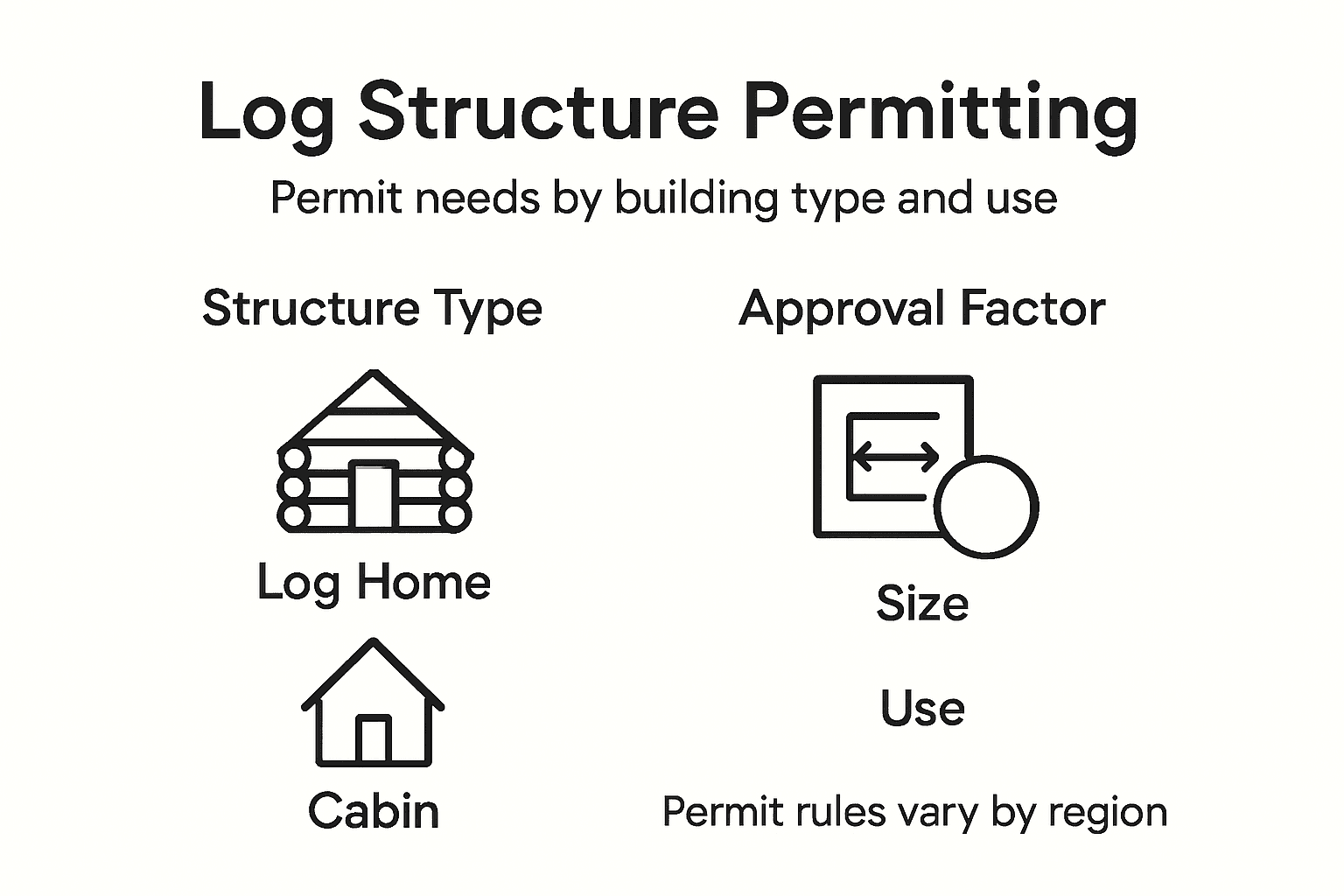
Permit requirements also depend on critical factors such as structure size, location, and intended use. A small log cabin on rural property might have different regulatory requirements compared to a log home in an urban or suburban setting. Commercial log structures face the most stringent review processes, often requiring multiple layers of approval from municipal building departments, environmental agencies, and local planning commissions.
Pro tip: Categorize your log structure precisely before application and gather all potential documentation to streamline the permit review process and reduce potential delays.
Here’s a comparison of log structure types and typical permitting complexity in Europe:
| Log Structure Type | Example Use | Permit Complexity | Approval Timeframe |
|---|---|---|---|
| Residential Log Home | Family dwelling | Very detailed | 3-6 months |
| Recreational Cabin | Vacation stays | Moderate detail | 2-4 months |
| Sauna or Garden Shed | Leisure, storage | Minimal detail | Few weeks |
| Commercial Log Building | Restaurant, office | Most complex | 6+ months |
Essential Permit Requirements and Documentation
Building permit documentation for log homes represents a comprehensive process that demands meticulous attention to detail and precise record-keeping. Permitting requirements for saunas provide insight into the broader documentation landscape for wooden structures, highlighting the intricate nature of regulatory compliance in European construction projects.
The core documentation typically includes several critical components. Homeowners must prepare detailed architectural blueprints demonstrating precise measurements, structural specifications, and compliance with local building codes. These plans should encompass comprehensive technical drawings, including foundation designs, structural load calculations, material specifications, and energy efficiency assessments. Additionally, property owners must submit proof of land ownership, zoning compliance certificates, and environmental impact evaluations that demonstrate the proposed log home’s alignment with regional regulatory standards.

Digital permitting processes are transforming documentation requirements, introducing streamlined submission protocols that prioritize efficiency and accuracy. Modern municipal authorities increasingly demand digital formats for architectural plans, allowing for faster review processes and more rigorous automated compliance checks. This shift requires log home builders to invest in high-quality digital documentation, ensuring that technical specifications meet increasingly sophisticated municipal review standards.
Pro tip: Digitize all documentation in high-resolution PDF formats and maintain multiple backup copies to expedite the permit application process and prevent potential delays.
Legal Standards for Log Home Construction
Legal standards for log home construction represent a complex framework of regulations designed to ensure safety, sustainability, and environmental compliance across European countries. Building codes for saunas offer insight into the broader regulatory landscape that governs wooden structures, highlighting the meticulous standards applied to log home construction.
The primary legal standards focus on several critical dimensions of construction. Structural integrity requirements mandate specific engineering specifications for log homes, including precise timber selection, connection methods, and load-bearing calculations. Fire resistance standards demand comprehensive protective treatments and design elements that minimize potential fire risks. Energy efficiency regulations require detailed insulation specifications, thermal performance metrics, and sustainable material sourcing that align with European Union environmental directives.
Regional variations significantly impact legal standards, with Nordic countries implementing particularly rigorous requirements reflecting their challenging climate conditions. These standards typically encompass comprehensive assessments of moisture resistance, thermal performance, and structural durability specific to wooden constructions. Compliance involves extensive documentation, including detailed engineering reports, material certifications, and third-party inspections that validate adherence to national and regional building codes.
Pro tip: Consult local building authorities early in your design process to understand specific regional legal standards and ensure your log home design meets all compliance requirements.
Common Pitfalls and How to Avoid Delays
Navigating the complex landscape of log home permitting requires strategic planning and proactive problem-solving. Log cabin building process insights reveal that many delays stem from preventable administrative and documentation challenges that can significantly extend project timelines.
The most frequent pitfalls in log home permitting typically involve incomplete documentation, insufficient technical specifications, and misalignment with local zoning regulations. Homeowners often underestimate the complexity of technical drawings, failing to provide comprehensive structural calculations, energy efficiency assessments, and detailed material specifications. These oversights trigger multiple review cycles, causing substantial delays that can extend project timelines by weeks or even months. Additional challenges include inadequate communication with local building authorities, misunderstanding specific regional building codes, and insufficient preparation of environmental impact assessments.
Successful navigation of the permitting process demands a methodical approach. This involves early consultation with local building departments, thorough preliminary research into regional regulations, and meticulous preparation of all required documentation. Developing a comprehensive checklist of permit requirements specific to your local jurisdiction, maintaining open communication channels with municipal authorities, and investing time in detailed technical documentation can dramatically reduce potential delays and streamline the approval process.
Pro tip: Create a dedicated project folder with digital and physical copies of all documentation, organized chronologically, to demonstrate professionalism and facilitate smoother interactions with permitting authorities.
Navigating Costs and Timelines Effectively
Effective cost management and timeline planning represent critical components of successful log home permitting processes in Europe. 7 Essential cottage construction tips provide valuable insights into strategic project planning that can help mitigate financial risks and temporal challenges associated with custom log home builds.
Permit-related expenses typically encompass multiple dimensions beyond simple application fees. Homeowners should anticipate costs including professional documentation preparation, architectural drawings, engineering assessments, environmental impact studies, and potential consulting fees for navigating complex regulatory landscapes. These expenses can range from 3% to 7% of total project budgets, with variations depending on regional complexity and project specifics. Digital permitting platforms are increasingly helping reduce indirect costs by streamlining application processes, minimizing repeated submissions, and providing transparent fee structures that help homeowners budget more accurately.
Key permit cost components and expected impact on overall budget:
| Cost Component | Typical Range | Budget Impact |
|---|---|---|
| Application Fees | €500 – €2,000 | Minor, fixed amount |
| Architectural Plans | €2,000 – €10,000 | Significant |
| Engineering Assessments | €1,000 – €5,000 | Moderate |
| Environmental Studies | €1,000 – €4,000 | Moderate |
| Consulting Fees | €500 – €3,000 | Varies by project |
Timeline management requires a proactive and strategic approach. Successful log home builders recommend allocating 3-6 months for the entire permitting process, with potential variations based on regional bureaucratic efficiency and project complexity. Breaking down the timeline into distinct phases helps maintain momentum: initial consultation, documentation preparation, initial submission, review cycles, potential revision periods, and final approval. Establishing clear communication channels with local building authorities, maintaining comprehensive and accurate documentation, and understanding regional regulatory nuances can significantly compress project timelines.
Pro tip: Create a detailed project timeline with built-in buffer periods and maintain frequent communication with municipal authorities to preemptively address potential review bottlenecks.
Simplify Your Log Home Permitting Journey with Expert Timber Solutions
Navigating the complex permitting process for custom log homes can be overwhelming, especially when dealing with detailed architectural requirements, local building codes, and variable timelines. If you want to avoid common pitfalls like incomplete documentation or delays, partnering with a trusted manufacturer who understands these challenges is key. At Huvila Seppälä, we bring over 65 years of expertise in crafting custom log homes, saunas, cottages, and villas tailored precisely to your design and permit needs.
Explore how our Finnish craftsmanship and professional service streamline your project from design compliance to fast delivery. Benefit from transparent quotations and personalized support that align with your local regulations and building standards. Take the first step toward your dream timber structure by visiting Huvila Seppälä, reviewing our diverse product range, and requesting a custom offer today. Your hassle-free permitting and quality log home start here.
Learn more about permits and project preparation at https://huvilaseppala.fi and see how our expertise addresses log home building challenges effectively. Start now to secure smoother approvals and timely construction with custom timber frames from Huvila Seppälä.
Frequently Asked Questions
What documentation is needed for a building permit for a log home?
Building permit documentation typically includes architectural blueprints, engineering assessments, proof of land ownership, zoning compliance certificates, and environmental impact evaluations.
How long does the permitting process for log homes usually take?
The permitting process for log homes typically takes between 3 to 6 months, depending on the complexity of the project and the efficiency of local authorities.
What are the common pitfalls in the log home permitting process?
Common pitfalls include incomplete documentation, insufficient technical specifications, and misalignment with local zoning regulations, which can lead to significant delays in approval.
How can I expedite the permit application process for my log home?
You can expedite the permit application process by contacting local building departments early, preparing comprehensive documentation, and maintaining open communication with municipal authorities.
Recommended
- Building Permit Requirements – What Timber Homeowners Need – Huvila Seppälä
- Why Build With Logs in Finland – Natural Benefits Explained – Huvila Seppälä
- Permitting Requirements for Saunas – Navigating Local Laws – Huvila Seppälä
- Log Cabin Building Process: From Timber to Turnkey – Huvila Seppälä