Building Permits Explained – Impact on Custom Projects
Starting a custom log home or sauna project in Central Europe often brings tough questions about permits and regulations. Many homeowners worry that permits are bureaucratic hurdles, but the reality is clear. The European Union sets standardized frameworks for building permits, making the process more consistent and focused on public safety, structural integrity, and energy efficiency. This article untangles common myths and provides straightforward guidance, helping you move confidently through each step of your construction journey.
Table of Contents
- What Are Building Permits and Common Myths
- Types of Building Permits in Central Europe
- Key Steps in Obtaining a Building Permit
- Legal Requirements and Local Regulations
- Costs, Delays, and Legal Risks for Homeowners
Key Takeaways
| Point | Details |
|---|---|
| Importance of Building Permits | Building permits are essential legal documents that ensure safety and compliance in construction projects. They protect homeowners, communities, and the environment. |
| Types of Building Permits | In Central Europe, various permit types exist, including Construction, Mechanical, Electrical, Plumbing, and Specialized Structural Permits, each addressing specific construction needs. |
| Obtaining a Permit | The permit application process requires detailed documentation and comprehensive municipal requirements. Engaging a local architect or consultant can facilitate this process. |
| Financial Considerations | Homeowners should anticipate multiple costs associated with building permits, including application fees and potential overruns, advising a budget buffer of 15-20% for unexpected expenses. |
What Are Building Permits and Common Myths
Building permits represent crucial legal authorizations that allow homeowners to legally commence construction or renovation projects in specific geographic regions. These official documents serve as critical checkpoints ensuring that proposed construction meets local safety, zoning, and structural standards before any physical work begins.
Contrary to popular misconceptions, building permits are not bureaucratic obstacles designed to complicate homeowners’ plans. Instead, they represent essential protective mechanisms that safeguard multiple stakeholders:
- Protect public safety by ensuring structural integrity
- Verify compliance with local building codes
- Confirm architectural plans meet regional environmental standards
- Prevent unauthorized or dangerous construction practices
Most homeowners encounter common myths about building permits that can create unnecessary anxiety. For instance, many believe the permitting process is impossibly complex or excessively time-consuming. In reality, permitting requirements for timber homes are typically straightforward when approached systematically.
The European Union has established standardized frameworks that make building permit processes relatively consistent across member states. Regulatory bodies focus on ensuring that construction projects meet critical safety, energy efficiency, and environmental protection standards. These regulations are not arbitrary restrictions but carefully developed guidelines protecting both individual property owners and broader community interests.
Building permits are not obstacles, but essential safeguards that protect homeowners, communities, and future generations.
Pro tip: Before starting any construction project, contact your local municipal building department to understand specific permit requirements for your exact location and project type.
Types of Building Permits in Central Europe
Building permits in Central Europe represent a sophisticated system of regulatory approvals designed to ensure construction safety, compliance, and strategic urban development. Unlike simplified permit systems, the region’s approach categorizes permits based on specific project characteristics, technical requirements, and potential community impact.
Central European countries typically recognize several distinct building permit types that address different construction scenarios:
- Construction Permits: Cover primary structural works and new building developments
- Mechanical Permits: Regulate HVAC system installations and mechanical infrastructure
- Electrical Permits: Govern electrification and power distribution systems
- Plumbing Permits: Control water and waste management installations
- Specialized Structural Permits: Address unique architectural or engineering modifications
In countries like Austria, permitting for log homes involves nuanced evaluations across nine federal states, each maintaining slightly different regulatory frameworks while adhering to overarching national guidelines. These permits ensure that every construction project, from traditional timber houses to modern architectural designs, meets rigorous safety and environmental standards.

Here’s a quick comparison of Central European building permit types and their primary focus:
| Permit Type | Main Purpose | Typical Projects |
|---|---|---|
| Construction Permit | Oversees structural safety | New homes, extensions |
| Mechanical Permit | Regulates heating/cooling | HVAC installation |
| Electrical Permit | Ensures electrical compliance | Wiring upgrades |
| Plumbing Permit | Monitors water systems | Bathroom and kitchen remodel |
| Specialized Structural Permit | Addresses unique modifications | Historic renovations |
The European Union has strategically harmonized building permit regulations to create consistent frameworks across member states. This approach allows for both prescriptive and performance-based permit evaluations, giving architects and builders flexibility while maintaining stringent safety protocols. Regulatory bodies focus not just on structural integrity, but also on energy efficiency, environmental impact, and long-term community sustainability.
Building permits are more than bureaucratic documents – they are comprehensive risk management tools protecting homeowners, communities, and future generations.
Pro tip: Always consult local municipal authorities and obtain comprehensive documentation specific to your region before initiating any construction project.
Key Steps in Obtaining a Building Permit
Obtaining a building permit represents a strategic process that requires meticulous preparation, comprehensive documentation, and careful navigation of local regulatory requirements. Homeowners and builders must approach this critical step with patience, attention to detail, and a systematic understanding of municipal expectations.
The typical building permit application involves several essential documentation requirements:
- Detailed architectural drawings and site plans
- Proof of property ownership
- Soil and geological survey reports
- Comprehensive project specifications
- Compliance statements with local zoning regulations
- Environmental impact assessments
- Structural engineering calculations
In Central European contexts, particularly for building permit processes in Finland, municipalities have increasingly adopted digital platforms to streamline permit applications. These one-stop digital systems allow applicants to submit documentation, track application status, and receive feedback through centralized online portals, significantly reducing processing times and administrative complexity.
The permit acquisition process typically involves multiple stages of review and potential modification. Building authorities conduct thorough evaluations of submitted plans, assessing structural integrity, safety standards, environmental considerations, and alignment with local urban development strategies. Applicants should anticipate potential requests for additional information or plan revisions, which are standard components of comprehensive regulatory review processes.
Building permits are not bureaucratic hurdles but collaborative mechanisms ensuring community safety, architectural quality, and sustainable development.
Pro tip: Engage a local architect or permit consultant familiar with regional regulations to help navigate the complex permitting landscape and increase your application’s likelihood of first-pass approval.
Legal Requirements and Local Regulations
Legal requirements for building permits in Central Europe represent a complex network of regulations designed to ensure public safety, environmental sustainability, and urban planning integrity. These regulations extend far beyond simple bureaucratic processes, serving as comprehensive frameworks that protect both individual property rights and broader community interests.
The key legal components of building permit regulations typically include:
- Compliance with EU harmonized construction standards
- Adherence to national and regional building codes
- Fire safety and structural integrity requirements
- Environmental and energy efficiency performance standards
- Zoning and land use restrictions
- Public health and accessibility guidelines
- Technical documentation and verification processes
In permitting for log homes, European Union directives play a crucial role in establishing uniform regulatory frameworks. The Construction Products Regulation and Public Procurement Directive provide standardized guidelines that enable consistent evaluation of building projects across different member states, while still allowing for localized adaptations to meet specific regional requirements.
Local municipalities maintain significant discretion in interpreting and implementing these broader regulatory standards. Building authorities conduct comprehensive assessments that evaluate not just technical specifications, but also potential environmental impacts, community development strategies, and long-term sustainability considerations. These evaluations ensure that every construction project aligns with broader urban planning objectives and meets stringent safety and performance benchmarks.
Legal requirements are not obstacles, but sophisticated mechanisms designed to protect community interests and ensure high-quality, sustainable construction.
Pro tip: Consult local building authorities early in your project planning to understand specific regulatory nuances that might affect your construction plans.
Costs, Delays, and Legal Risks for Homeowners
Navigating the financial and legal landscape of building permits requires strategic planning and a comprehensive understanding of potential challenges. Homeowners must recognize that permit-related expenses and timelines extend far beyond initial application fees, encompassing a complex network of potential direct and indirect costs.
Typical financial considerations in the building permit process include:
- Application and processing fees
- Architectural and engineering consultation costs
- Mandatory site survey and documentation expenses
- Potential legal consultation charges
- Inspection and compliance verification fees
- Potential modification and resubmission expenses
- Administrative overhead and time investment
In the context of building permits for log homes, administrative delays can significantly impact project budgets and timelines. European Union statistics indicate that permit acquisition processes can range from several weeks to multiple months, depending on project complexity, local municipality efficiency, and comprehensiveness of initial documentation.
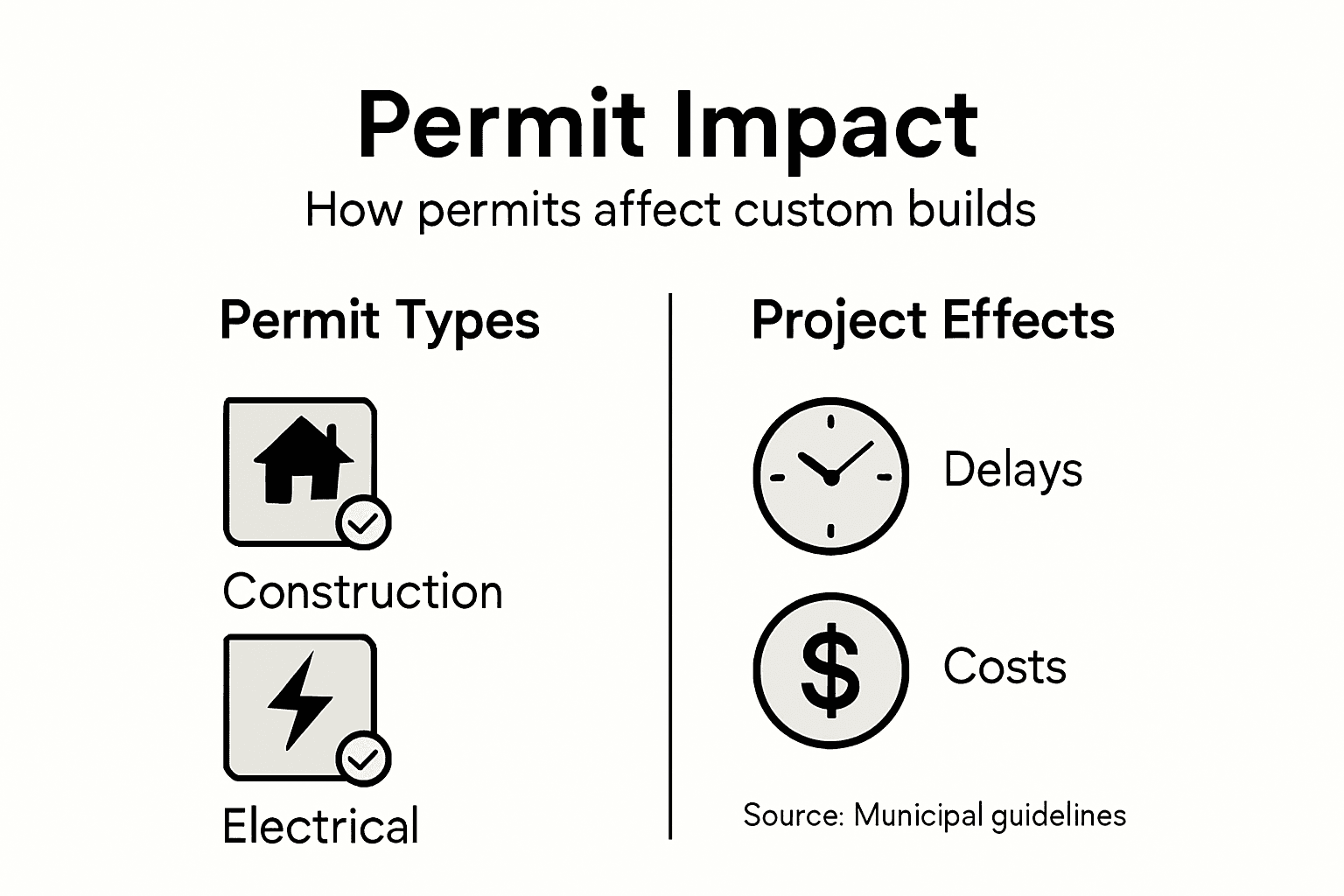
To help homeowners plan for building permit costs and delays, here’s an at-a-glance summary:
| Cost/Delay Factor | Typical Range | Risk if Unmanaged |
|---|---|---|
| Application Fees | $100–$2,000 | High penalties |
| Consultation Costs | $500–$5,000 | Design rejection |
| Processing Timeline | 2 weeks–3 months | Inspection failures |
| Legal Risks | Fines or project halts | Forced demolition |
Legal risks associated with improper permit acquisition can be substantial, potentially resulting in significant financial penalties, mandatory project modifications, or even complete construction halts. Municipalities maintain strict enforcement mechanisms that can impose fines, require retroactive modifications, or demand complete deconstruction of non-compliant structures. Homeowners must understand that cutting corners or attempting to circumvent regulatory requirements can result in exponentially higher costs compared to thorough, proactive permit management.
Permit-related expenses are investments in legal compliance, not mere bureaucratic obstacles.
Pro tip: Budget an additional 15-20% above estimated permit-related expenses to create a financial buffer for potential unexpected regulatory requirements or modifications.
Simplify Your Timber Home Project by Navigating Building Permits with Confidence
Understanding the complexities of building permits while planning your custom timber home is essential to avoid costly delays and legal risks. This article highlights common challenges like permit requirements, documentation, and local regulations that often overwhelm homeowners. With the right partner, you can transform these challenges into clear, manageable steps so your dream log house or villa becomes a reality without unnecessary stress.
At Huvila Seppälä, we bring over 65 years of expertise in crafting custom Finnish timber frames and log structures built to match your unique designs while keeping compliance in mind. Our team understands the importance of aligning your project with legal requirements and will guide you on prerequisites such as permits and architectural drawings to make the entire process smoother. Explore our custom timber homes and learn more about permitting for log homes in Central Europe to ensure your project meets local standards from the start.
Start your worry-free build today by requesting a personalized offer through our website. Get fast delivery, transparent pricing, and professional guidance tailored to your construction needs. Act now to secure your ideal timber structure backed by reliable expertise that respects your time and investment.
Frequently Asked Questions
What are building permits and why are they important?
Building permits are legal authorizations required to commence construction or renovation projects. They ensure compliance with local safety, zoning, and structural standards, protecting public safety and community interests.
What types of permits are necessary for custom construction projects?
Common permit types for custom construction projects include construction permits, mechanical permits, electrical permits, plumbing permits, and specialized structural permits, each addressing specific project requirements.
How can homeowners streamline the building permit application process?
Homeowners can streamline the application process by preparing comprehensive documentation—including architectural drawings, site plans, and compliance statements—and by engaging a local architect or permit consultant familiar with regional regulations.
What are the potential costs associated with obtaining a building permit?
Costs can include application and processing fees, consultation costs, site survey expenses, and inspection fees. It’s wise to budget for an additional 15-20% for unexpected regulatory requirements or modifications.
Recommended
- Permitting for Log Homes – Navigating Custom Builds – Huvila Seppälä
- Building Permit Requirements – What Timber Homeowners Need – Huvila Seppälä
- Permitting for Log Houses Explained: Key Steps and Pitfalls – Huvila Seppälä
- Building Permits Process Finland: Step-by-Step Guide – Huvila Seppälä