
Building Permits: Why They Matter for Timber Homes
Designing your dream log cabin or sauna is an exciting step, but the path from blueprint to reality runs straight through a maze of legal requirements. For homeowners in Central Europe, understanding the permit process is not only about following rules but also about protecting your investment and ensuring your timber structure meets strict safety and quality standards. This guide breaks down the key permit stages, highlights the unique permit process for timber structures, and reveals how local regulations can shape your building plans.
Table of Contents
- Building Permit Basics For Timber Structures
- Permit Types For Log Cabins And Saunas
- Key Legal Requirements And Regional Variations
- Application Process And Essential Documentation
- Risks And Costs Of Skipping Permits
- Common Missteps In Timber Project Permitting
Key Takeaways
| Point | Details |
|---|---|
| Building Permits are Crucial | They validate compliance with local codes and safety standards before construction begins. |
| Complex Documentation Required | Timber structures demand thorough technical documentation, including architectural plans and engineering assessments. |
| Consult Local Authorities Early | Engaging with local building authorities can help clarify specific permit requirements and avoid costly mistakes. |
| Risks of Skipping Permits | Unauthorized construction can lead to severe financial penalties and potential demolition of structures. |
Building Permit Basics for Timber Structures
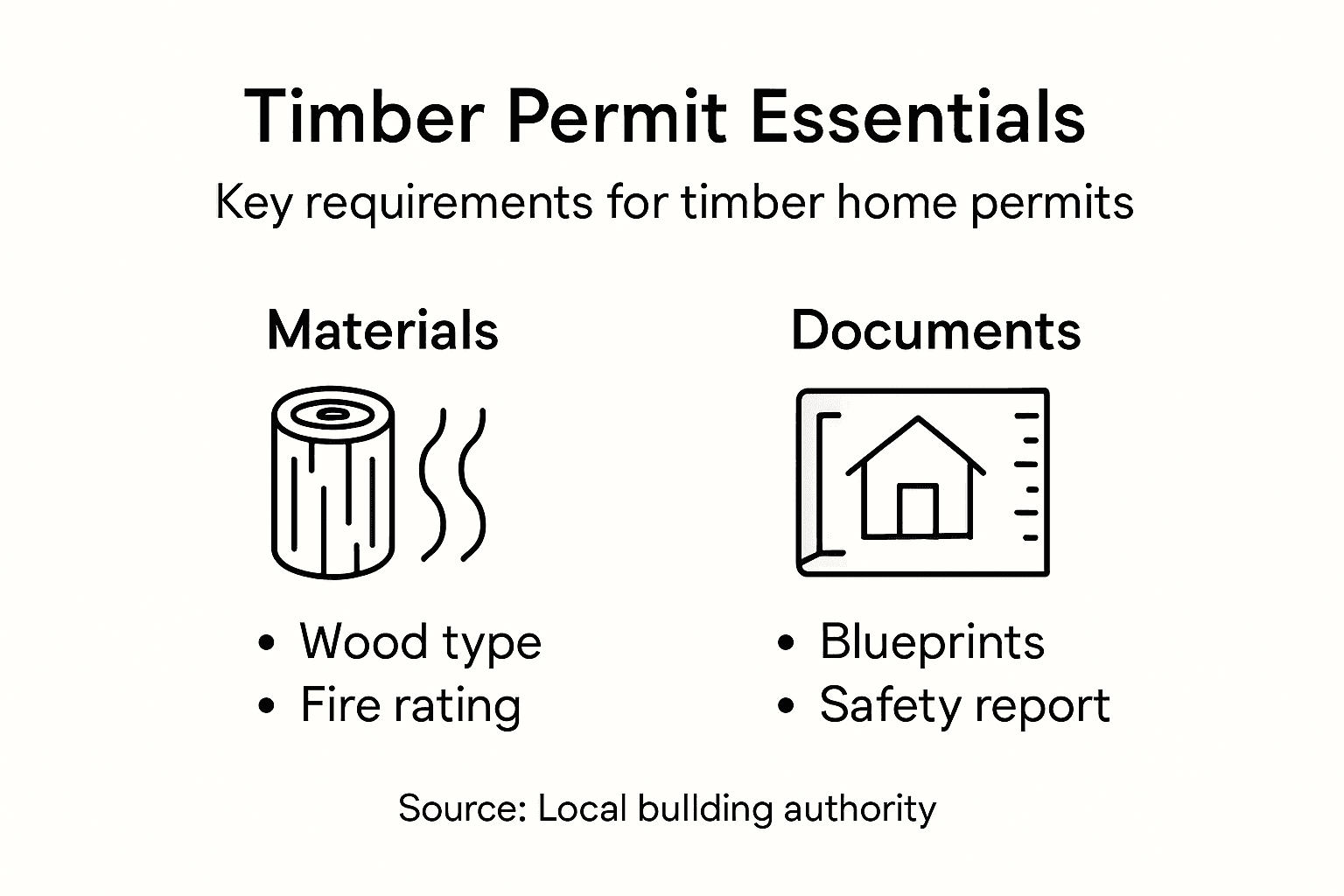
Building permits are more than bureaucratic paperwork for timber home construction – they represent critical legal safeguards ensuring structural integrity, safety standards, and regulatory compliance. These official documents validate that your timber home meets local building codes, zoning regulations, and technical requirements before construction begins.
Understanding permit requirements involves examining several key components specific to timber structures. The permit process typically encompasses multiple critical stages:
- Structural engineering review
- Compliance with local zoning regulations
- Technical assessment of timber frame specifications
- Verification of load-bearing capacities
- Safety standard evaluations
In Central European contexts, building permit requirements for timber homes involve comprehensive technical documentation. Architects and builders must submit detailed plans demonstrating how the proposed timber structure meets regional construction standards, including precise measurements, material specifications, and structural calculations.
The technical complexity of timber home permits stems from unique material characteristics. Wood requires specialized assessment for factors like thermal performance, moisture resistance, and long-term structural stability. European building codes, particularly Eurocode 5, mandate rigorous checks to ensure timber structures can withstand environmental stresses and maintain safety over decades.
Pro Tip: Always consult local building authorities early in your planning process to understand specific regional timber construction permit requirements and potential unique local regulations.
Permit Types for Log Cabins and Saunas
Navigating permit requirements for timber structures like log cabins and saunas involves understanding multiple specialized permit categories designed to address unique construction challenges. Each permit type serves a specific purpose in ensuring safety, regulatory compliance, and structural integrity for these distinctive wooden buildings.
The primary permit categories for timber structures typically include:
- Building Permits: Comprehensive authorization for overall construction
- Zoning Permits: Verifying compliance with local land use regulations
- Electrical Permits: Covering electrical system installations
- Plumbing Permits: Addressing water and waste system configurations
- Specialized Sauna Installation Permits: Specific to heat and moisture requirements
Specifically for log cabins and saunas, permitting requirements for log homes can vary significantly across different European regions. Municipalities often mandate detailed technical documentation demonstrating how these structures will meet local building codes, thermal efficiency standards, and safety regulations.
Central European jurisdictions frequently require additional documentation for timber structures due to their unique material properties. Wood-based buildings demand specialized assessments covering thermal performance, moisture resistance, fire safety, and long-term structural durability. These requirements reflect the complex engineering challenges inherent in constructing safe and sustainable timber structures.
Here’s a summary comparing permit challenges for log cabins versus saunas in Central Europe:
| Aspect | Log Cabins | Saunas |
|---|---|---|
| Technical Complexity | Structural engineering is crucial | Moisture and thermal performance |
| Key Documentation | Detailed architectural plans | Specialized heat resistance proofs |
| Common Local Issue | Site zoning restrictions | Strict moisture control standards |
| Municipal Scrutiny | Multiple review stages | Enhanced fire safety assessment |
Pro Tip: Research your specific municipal requirements early in the planning process, as permit regulations can differ dramatically between neighboring jurisdictions.
Key Legal Requirements and Regional Variations
Legal requirements for timber structures in Central Europe represent a complex landscape of nuanced regional regulations that demand careful navigation. Each jurisdiction maintains unique interpretations of building codes, environmental standards, and structural safety requirements that directly impact timber home construction permits.
The primary legal considerations for timber home permits typically involve:
- Structural integrity assessments
- Environmental impact evaluations
- Fire safety compliance standards
- Thermal efficiency requirements
- Historical preservation guidelines
- Local zoning restrictions
- Material sourcing regulations
Permitting requirements for saunas demonstrate significant variation across different European regions. Nordic countries, for instance, have more stringent moisture resistance and thermal performance standards compared to Mediterranean jurisdictions, reflecting their distinct climatic conditions and architectural traditions.
Central European legal frameworks emphasize comprehensive documentation and technical scrutiny. Municipalities typically require detailed submissions including precise architectural plans, material specifications, engineering calculations, and comprehensive risk assessments. These requirements aim to ensure not just immediate structural safety, but long-term durability and environmental sustainability of timber constructions.
Pro Tip: Consult local municipal authorities and professional architectural associations to obtain the most current and location-specific permit requirements for your timber structure.
Application Process and Essential Documentation
The permit application process for timber structures demands meticulous preparation and a comprehensive understanding of local regulatory requirements. Successfully navigating this complex landscape requires careful compilation of technical documentation and strategic engagement with municipal authorities.
The essential documentation for timber home permit applications typically includes:
- Detailed architectural blueprints
- Structural engineering calculations
- Material specification sheets
- Site survey and property boundary documents
- Energy efficiency performance assessments
- Professional engineering certifications
- Environmental impact statements
Permitting for log homes involves submitting precise technical documentation that demonstrates compliance with regional building standards. Municipalities often require multiple iterations of plans, demanding patience and precision from applicants seeking approval for their timber construction projects.
Most Central European jurisdictions mandate a multi-stage review process where initial submissions undergo rigorous technical scrutiny. Professional architects and engineers play a critical role in preparing comprehensive application packages that address structural integrity, thermal performance, moisture resistance, and environmental sustainability requirements specific to timber construction.
Pro Tip: Engage a local architectural professional experienced in timber home permitting to streamline your application and increase the likelihood of first-submission approval.
Risks and Costs of Skipping Permits
Skipping building permits for timber structures represents a potentially catastrophic financial and legal gamble that can expose homeowners to significant risks far exceeding the initial permit application costs. The consequences of unauthorized construction extend well beyond simple bureaucratic penalties, potentially threatening the entire investment and future usability of the property.
The primary risks of unpermitted timber construction include:
- Mandatory demolition of the entire structure
- Substantial legal fines and penalties
- Inability to sell or refinance the property
- Voided home insurance coverage
- Potential criminal prosecution for building code violations
- Loss of property value
- Complications with future property transfers
Building codes for saunas highlight the critical importance of regulatory compliance, especially for specialized timber structures with unique safety requirements. Municipalities can issue stop-work orders, mandate complete reconstruction, or levy significant financial penalties that often far exceed the original permit application expenses.
Most Central European jurisdictions impose strict enforcement mechanisms that make unauthorized construction exceptionally risky. Professional assessors can identify unpermitted work during property inspections, potentially triggering retroactive penalties, mandatory modifications, or complete structure removal at the owner’s expense. The financial exposure can escalate quickly, transforming what seemed like a cost-saving shortcut into a potentially ruinous legal and financial nightmare.
Below is a quick reference table highlighting potential legal and financial impacts from skipping permits:
| Consequence | Long-Term Effect | Example Scenario |
|---|---|---|
| Mandatory demolition | Total project loss | Unpermitted sauna torn down |
| Legal fines | Financial burden | Penalties for missing documents |
| Property transfer issues | Sale complications | Buyer rejects unpermitted cabin |
| Insurance voided | No coverage | Damage repair denied by insurer |
Pro Tip: Consult local building authorities proactively and budget for permit costs as an essential part of your timber home construction project, treating it as a critical investment in your property’s legal and structural integrity.
Common Missteps in Timber Project Permitting
Navigating the complex landscape of timber construction permits requires precision and strategic planning. Many homeowners inadvertently stumble into costly errors that can derail their entire project, transforming what should be an exciting building journey into a bureaucratic nightmare.
The most frequent permitting mistakes in timber construction include:
- Incomplete or inaccurate architectural drawings
- Failing to conduct comprehensive site surveys
- Overlooking local zoning restrictions
- Neglecting environmental impact assessments
- Underestimating required documentation complexity
- Ignoring specialized timber building regulations
- Inadequate structural engineering certifications
Permitting for log houses reveals that many applicants underestimate the technical depth required for timber structure approvals. Central European municipalities demand meticulously detailed submissions that comprehensively demonstrate structural integrity, thermal performance, and compliance with regional building standards.
Most permit application failures stem from a fundamental misunderstanding of regional regulatory nuances. Each jurisdiction maintains unique requirements for timber construction, with variations in environmental regulations, material specifications, and structural safety standards that can dramatically impact project approval timelines and overall feasibility.
Pro Tip: Invest in professional consultation from an architect experienced in local timber construction regulations to dramatically reduce the likelihood of permit application rejection.
Secure Your Timber Home Project with Expert Guidance and Quality Craftsmanship
Navigating the complex building permit process for timber homes can feel overwhelming. With requirements like structural engineering reviews, compliance with local zoning, and detailed technical documentation, it is easy to encounter costly delays or compliance issues. At Huvila Seppälä, we understand these challenges and offer tailored solutions to help you move smoothly from permit application to construction. Our expertise with custom log houses, saunas, and timber cabins ensures your project meets all regulatory standards while reflecting authentic Finnish craftsmanship.
Don’t risk delays or legal fines by overlooking critical permit steps. Partner with a trusted company with over 65 years of experience in manufacturing Finnish timber frames and log structures. Explore how our fast delivery and custom design options can help you turn your dream timber home into reality. Visit Huvila Seppälä to learn more about our products and how we support your building permit journey. Request a personalized quote today and start your project the right way.
Frequently Asked Questions
What is a building permit for timber homes?
A building permit is an official authorization that ensures a timber home construction complies with local building codes, safety standards, and zoning regulations. It validates that the structure meets required safety and regulatory requirements before construction begins.
Why are building permits important for timber structures?
Building permits are crucial as they ensure the structural integrity, safety, and compliance of timber homes with local building codes. Obtaining the necessary permits protects homeowners from legal issues and unintended construction consequences, such as mandatory demolition or fines.
What documentation is typically required for timber home permit applications?
Typical documentation for timber home permit applications includes detailed architectural blueprints, structural engineering calculations, material specification sheets, site survey documents, and energy efficiency assessments. Comprehensive submissions help demonstrate compliance with building standards.
What risks might homeowners face if they skip obtaining necessary permits for timber construction?
Homeowners who skip obtaining necessary permits face severe risks, including mandatory demolition, substantial fines, inability to sell or refinance the property, and voided insurance coverage. These risks can lead to financial losses and long-term complications with property ownership.
Recommended
- Building Permit Requirements – What Timber Homeowners Need – Huvila Seppälä
- Permitting for Log Homes – Navigating Custom Builds – Huvila Seppälä
- Permitting for Log Houses Explained: Key Steps and Pitfalls – Huvila Seppälä
- Financing Timber Buildings – Key Steps and Strategies – Huvila Seppälä