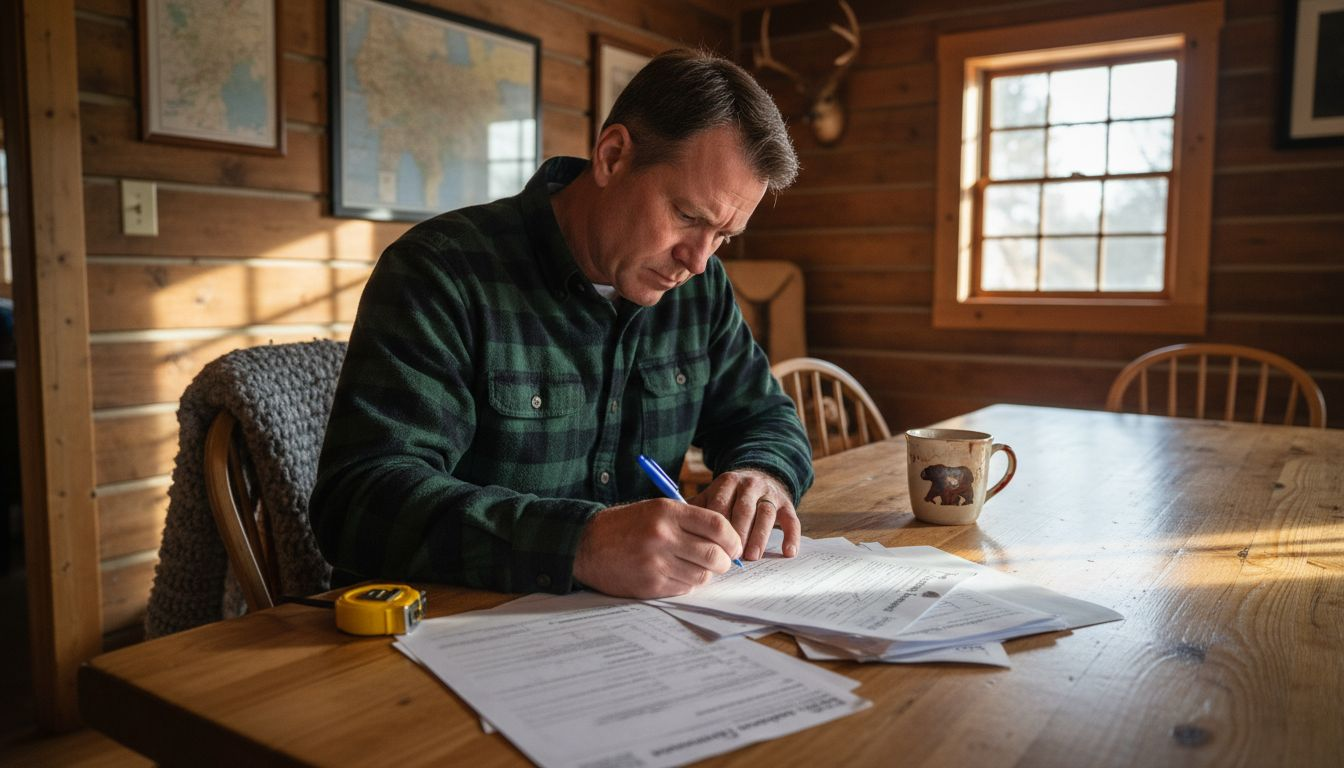
Permitting for Log Houses Explained: Key Steps and Pitfalls
Most homeowners are surprised to learn that American log house permitting is often less complicated than the systems found across Central Europe. Strict building codes, environmental standards, and varied municipal rules make local permitting a real hurdle for anyone dreaming of custom timber homes or saunas. With approval times reaching up to 12 months, understanding each step is essential to avoid costly surprises and delays in your unique project.
Table of Contents
- What Permitting for Log Houses Means
- Key Types of Permits Required
- Legal Requirements in Central Europe
- Step-by-Step Application Process
- Costs and Timeline Implications
- Common Pitfalls and How to Avoid Them
Key Takeaways
| Point | Details |
|---|---|
| Understanding Permitting Requirements | Log house construction requires navigating unique permitting processes, including multiple permits that address structural integrity, zoning, and environmental impact. |
| Documentation is Crucial | Comprehensive documentation is essential for permit approval, including architectural drawings, engineering plans, and compliance proofs with local building codes. |
| Anticipate Timeline and Costs | The permitting process can range from 3 to 12 months, and costs may vary significantly, so planning for delays and budget overruns is advisable. |
| Engage Local Experts | Collaborating with local authorities and specialized architects can help navigate the complex regulatory environment, minimizing potential pitfalls. |
What Permitting for Log Houses Means
Permitting for log houses represents a complex legal process that ensures your wooden structure meets local building standards, safety regulations, and zoning requirements. Unlike standard construction projects, log house permits involve unique considerations specific to timber frame buildings and their environmental impact.
At its core, log house permitting involves securing official authorization from municipal or regional authorities to legally construct your timber dwelling. This process typically requires detailed architectural plans, structural engineering assessments, and comprehensive documentation demonstrating how your proposed log house complies with regional building codes. Building permit requirements can vary significantly depending on your specific location and the characteristics of your proposed structure.
The permitting process for log houses usually encompasses multiple stages of review and approval. Authorities will examine aspects such as land use compatibility, structural integrity, environmental considerations, and adherence to local construction standards. This means potential log house owners must prepare extensive documentation including site plans, detailed architectural drawings, material specifications, and proof of compliance with thermal insulation and energy efficiency regulations.
Pro tip: Begin gathering your documentation and consulting local building authorities at least 6 months before you plan to start construction, as log house permits can often take longer to process than standard residential building permits.
Key Types of Permits Required
Log house construction involves multiple permit categories that homeowners must carefully navigate. Building permits represent the primary authorization required for any substantial construction project, serving as the foundational legal document that grants permission to begin your log house development.
Typically, log house projects require several interconnected permit types. These often include:
- Structural Permit: Confirms the log house meets engineering and safety standards
- Land Use Permit: Verifies zoning compatibility and land development regulations
- Environmental Permit: Ensures minimal ecological disruption during construction
- Foundation Permit: Specifically addresses ground preparation and base construction requirements
Local municipalities frequently have unique requirements for timber frame structures. Permitting requirements for saunas demonstrate how specialized wooden construction can involve complex regulatory frameworks, and log houses follow similar comprehensive review processes. The complexity means potential homeowners must prepare comprehensive documentation demonstrating compliance with regional building codes, thermal efficiency standards, and structural integrity guidelines.
Pro tip: Request a pre-application consultation with local building authorities to understand specific permit requirements for your log house project, as regulations can vary significantly between different municipal jurisdictions.
Legal Requirements in Central Europe
Central European countries have developed sophisticated and nuanced legal frameworks governing log house construction, with each nation presenting unique regulatory considerations. Building regulations in this region are particularly complex, reflecting a deep commitment to architectural quality, environmental sustainability, and precise engineering standards.
In countries like Germany, Austria, and Switzerland, log house permits involve rigorous multi-stage approval processes. These typically require comprehensive documentation demonstrating:
- Structural engineering calculations
- Thermal performance specifications
- Environmental impact assessments
- Detailed architectural plans showing compliance with local building codes
- Proof of sustainable timber sourcing
Building permits process across Central European jurisdictions often mandate strict energy efficiency standards that go beyond typical residential construction requirements. This means log house builders must provide extensive technical documentation proving their structure meets advanced thermal insulation, materials sustainability, and ecological performance criteria.
The legal landscape for log house construction varies significantly between countries. Finnish regulations, for instance, tend to be more streamlined compared to the more bureaucratic approaches in German-speaking countries, where municipal authorities conduct multiple detailed inspections throughout the construction process. Potential log house owners must thoroughly research local municipal requirements, as even neighboring jurisdictions can have markedly different permitting expectations.
Here’s a comparison of log house permitting approaches in select Central European countries:
| Country | Permitting Complexity | Energy Efficiency Standards | Common Inspection Stages |
|---|---|---|---|
| Germany | Highly bureaucratic | Extremely stringent | Multiple technical and final inspections |
| Austria | Detailed and rigorous | High requirements | Engineering and environmental reviews |
| Switzerland | Very structured | Advanced efficiency criteria | Site checks and documentation audits |
| Finland | Streamlined process | Standard for timber homes | Few required, mostly document based |
Pro tip: Engage a local architectural consultant specializing in timber construction to help navigate the complex legal requirements specific to your chosen Central European location.
Step-by-Step Application Process
The log house permitting application process requires meticulous preparation and strategic navigation through complex bureaucratic requirements. Permit applications demand comprehensive documentation and a systematic approach to ensure successful approval from municipal authorities.
The typical application process involves several critical stages:
-
Initial Consultation
- Schedule a preliminary meeting with local building department
- Discuss specific log house project requirements
- Understand unique municipal regulations
-
Documentation Preparation
- Develop detailed architectural drawings
- Create comprehensive structural engineering plans
- Prepare environmental impact assessments
- Compile energy efficiency calculations
-
Formal Application Submission
- Complete official permit application forms
- Submit all required documentation
- Pay applicable filing fees
- Request formal review and assessment
Building permits process across different jurisdictions can vary significantly, making it essential to understand the specific requirements of your local municipality. Some regions may require additional specialized documentation or conduct multiple rounds of review before granting final approval.
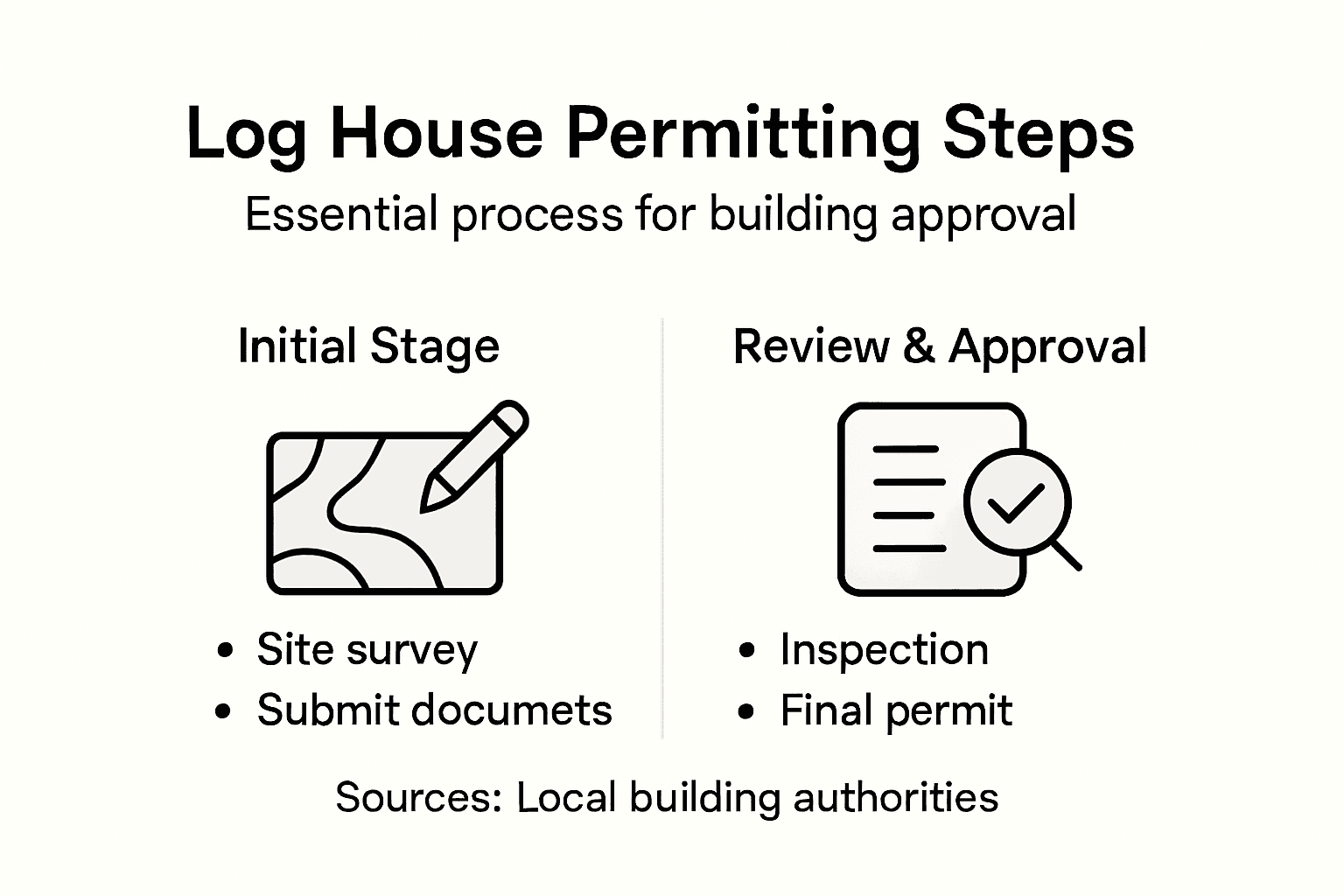
Municipal authorities typically evaluate permit applications through a structured review process that can take several weeks to months. This comprehensive assessment involves multiple departments examining structural integrity, zoning compliance, environmental considerations, and adherence to local building codes. Potential log house owners should anticipate potential requests for additional information or plan modifications during this review period.
Pro tip: Maintain open communication with municipal officials throughout the application process and be prepared to quickly respond to any clarification requests to prevent unnecessary delays in your permit approval.
Costs and Timeline Implications
The permitting process for log houses involves substantial financial and temporal investments that potential homeowners must carefully anticipate and budget. Permit processing costs can vary dramatically across different Central European jurisdictions, typically ranging from 500 to 5,000 euros depending on project complexity and local municipal requirements.
Key cost components for log house permitting include:
- Application Fees: Municipal processing charges
- Professional Consultation Expenses: Architectural and engineering review costs
- Documentation Preparation: Technical drawing and assessment expenses
- Potential Revision Costs: Fees associated with plan modifications
- Inspection Charges: On-site verification and compliance assessment expenses
Building permit requirements demonstrate that timeline implications are equally significant. The entire permitting process can extend from 3 to 12 months, depending on project complexity, municipal bureaucracy, and the comprehensiveness of initial documentation. Factors influencing timeline include local regulatory environment, seasonal administrative workloads, and the specific technical challenges associated with log house construction.
Municipal authorities in different regions approach permitting with varying levels of scrutiny. Finnish municipalities, for instance, tend to have more streamlined processes compared to more bureaucratic German or Austrian systems. This variability means homeowners must build substantial flexibility into their project planning, anticipating potential delays and additional documentation requests that could extend the overall timeline.
Below is a summary of key permit cost factors and typical timeline expectations:
| Cost Factor | Typical Range | Impact on Timeline |
|---|---|---|
| Application Fees | €500–€2,000 | Initial project delay |
| Professional Consultations | €1,000–€3,000 | Extends planning phase |
| Documentation Preparation | €500–€1,500 | Prolongs submission date |
| Inspections | €200–€500 | Adds weeks per round |
| Possible Revisions | €200–€1,000 per change | Can cause major delays |
Pro tip: Budget approximately 10% additional funds beyond your initial estimate and plan for a minimum six month buffer in your project timeline to accommodate unexpected permitting complications.
Common Pitfalls and How to Avoid Them
Log house permitting processes are fraught with potential complications that can derail even the most carefully planned construction projects. Regulatory challenges represent the most significant obstacles homeowners encounter, with seemingly minor documentation errors capable of causing months-long delays in project timelines.
Frequent permit application pitfalls include:
-
Incomplete Documentation
- Missing structural engineering calculations
- Inadequate environmental impact assessments
- Incomplete energy efficiency specifications
-
Zoning Compliance Issues
- Failure to verify local building restrictions
- Overlooking specific timber construction regulations
- Neglecting heritage or environmental protection zone requirements
Building permits process reveals that many homeowners underestimate the complexity of technical documentation required for log house construction. Central European municipalities often have intricate requirements that demand precise architectural drawings, comprehensive material specifications, and detailed thermal performance calculations.
Geographic variations in permitting regulations create additional complexity. German municipalities, for instance, typically require more extensive documentation compared to Finnish authorities, with multiple layers of technical review and stringent energy efficiency standards. This means log house owners must develop a nuanced understanding of local regulatory landscapes, anticipating potential challenges before submitting their initial application.
Pro tip: Consult with a local architectural specialist who specializes in log house construction and has proven experience navigating municipal permit requirements in your specific region.
Simplify Your Log House Permitting and Build with Confidence
Navigating the complex permitting process for log houses can feel overwhelming with all the structural, environmental, and zoning regulations involved. At Huvila Seppälä, we understand these challenges and offer expert timber frame manufacturing solutions that align perfectly with your permit requirements. Our custom designs are tailored to meet detailed architectural and engineering standards, helping you avoid costly delays and common pitfalls in your project.
Take control of your log house project today by choosing a trusted partner with over 65 years of Finnish craftsmanship expertise. Explore our range of custom wooden structures, including homes, cottages, and saunas, all designed to streamline the building permit process. Visit Huvila Seppälä now to learn how our tailored log house solutions can bring your vision to life while simplifying compliance with local regulations. Get started by requesting a personalized quote and turning your dream timber home into reality.
Frequently Asked Questions
What does the permitting process for log houses entail?
The permitting process for log houses involves obtaining official authorization from local authorities to ensure the construction meets building codes, safety regulations, and zoning requirements. This includes submitting detailed architectural plans and compliance documentation.
How long does it typically take to obtain a permit for a log house?
The permitting process for log houses can take anywhere from 3 to 12 months, depending on project complexity and local municipal requirements. Factors such as administrative workload and documentation accuracy can influence the timeline.
What types of permits are needed for constructing a log house?
Key permits needed for log house construction typically include a building permit, structural permit, land use permit, environmental permit, and foundation permit. Each plays a crucial role in ensuring compliance with local regulations.
What are common pitfalls to avoid during the log house permitting process?
Common pitfalls include submitting incomplete documentation, failing to verify zoning compliance, and underestimating the complexity of technical requirements. Ensuring thorough preparation of all documents can help avoid significant delays.
Recommended
- Building Permit Requirements – What Timber Homeowners Need – Huvila Seppälä
- Permitting Requirements for Saunas – Navigating Local Laws – Huvila Seppälä
- Log Cabin Building Process: From Timber to Turnkey – Huvila Seppälä
- Building Permits Process Finland: Step-by-Step Guide – Huvila Seppälä