How to prepare your site for log building: a complete guide
TL;DR:
- Proper site assessment, drainage, and foundation choices are essential to prevent costly Finnish climate damage.
- Building permits are mandatory in Finland; verify requirements before land preparation or construction.
- Thorough planning, including expert guidance and weather buffers, ensures long-lasting log structures suited to harsh conditions.
Poor site preparation is one of the most expensive mistakes you can make before building a log house or outdoor sauna in Finland. A weak foundation, poor drainage, or a missed permit can turn your dream project into a years-long headache that costs tens of thousands of euros to fix. This guide walks you through every critical step, from evaluating your land and navigating Finnish regulations to choosing the right foundation for your climate. Whether you’re planning a cozy lakeside sauna or a full log home, getting the groundwork right is what separates a structure that lasts generations from one that sags and rots within a decade.
Table of Contents
- Assessing and selecting your building site
- Understanding Finnish building regulations and permits
- Preparing the site: clearing, leveling, and drainage
- Foundation options and choosing the right base for log structures
- Our hard-won lessons from Finnish log building site prep
- Start your log building project the smart way
- Frequently asked questions
Key Takeaways
| Point | Details |
|---|---|
| Start with the right site | A well-chosen site saves money and prevents future problems with moisture or regulations. |
| Follow Finnish permit rules | Always research and secure permits before any ground preparation to avoid project delays. |
| Prepare for Finnish conditions | Address frost heave, slopes, and drainage—these are essential for long-lasting log structures in Finland. |
| Choose the right foundation | Pick a base suited to your land and structure size to maximize durability and minimize risk. |
| Invest in expert help | Consulting professionals for critical steps protects your investment and guarantees solid results. |
Assessing and selecting your building site
Understanding why site preparation matters, let’s start with evaluating your land and picking the best location. The choices you make at this stage directly affect your foundation type, construction cost, and the long-term health of your log structure.
Four factors matter most when assessing a site: soil quality, drainage, terrain slope, and accessibility. Finnish soil varies widely, from soft clay in coastal areas to rocky ground in Lapland. Clay soil retains water and shifts with freezing temperatures, which is a serious problem for log buildings. Sandy or gravelly soil drains well and offers more stable footing. Rocky terrain can be costly to excavate but provides excellent load-bearing capacity once cleared.
Finnish winters add a layer of complexity that builders in central Europe or North America often underestimate. Frost heave, which is the upward movement of soil caused by freezing groundwater, can crack foundations and shift entire structures. In northern Finland especially, frost heave requires deep foundations or elevated structures to avoid direct ground contact that accelerates wood rot. Groundwater levels also fluctuate dramatically between seasons, so what looks like dry ground in August may be waterlogged in April.
Use this checklist before committing to a site:
- Soil type confirmed (sandy, clay, rocky, peat)
- Groundwater depth measured in spring and fall
- Natural drainage direction mapped
- Slope gradient measured (over 10% adds cost)
- Access road width and load capacity confirmed
- Proximity to utilities (water, electricity, sewer) checked
- Neighboring structures and property lines verified
Topography plays a bigger role than most homeowners expect. A flat site is the cheapest and simplest to build on. A gentle slope can actually improve natural drainage if managed correctly. Steep slopes, however, require retaining walls, extra excavation, and sometimes engineered foundation solutions that add significant cost. You can learn more about how these decisions connect in the step-by-step building process for log homes.
Pro Tip: Order a soil test before you finalize your site. A geotechnical report costs a few hundred euros but can reveal hidden problems like high peat content or unstable subsoil that would cost far more to fix after construction begins.
| Site factor | Low risk | Medium risk | High risk |
|---|---|---|---|
| Soil type | Sandy/gravel | Mixed/loam | Clay/peat |
| Slope | Under 5% | 5 to 10% | Over 10% |
| Groundwater | Deep, stable | Seasonal variation | High, near surface |
| Accessibility | Paved road | Gravel track | No road access |
Understanding Finnish building regulations and permits
Once you’ve found your ideal site, your next step is understanding and navigating legal requirements. Skipping this step or assuming you don’t need a permit is one of the most common and costly mistakes Finnish homeowners make.
Finland’s building permit process requires you to submit site plans, surveys, and architectural blueprints to your local municipality. The Finnish regulations require permits for most log structures, including outdoor saunas, even when they seem small or temporary. The 2025 Construction Act introduced stricter requirements around energy efficiency and sustainability, which now apply to log buildings and sauna structures as well. If your project doesn’t meet these standards on paper, your permit application will be rejected.
Here’s what you typically need to submit:
- Completed permit application form
- Site plan showing the building’s location on the property
- Architectural drawings (floor plans, elevations, cross-sections)
- Energy efficiency calculation or statement
- Structural plans if required by the municipality
- Neighbor notification confirmation in some cases
The requirements for log houses differ slightly from standard construction, and it’s worth reviewing the Finland 2026 regulations before you start drafting your application. Many homeowners assume a small sauna on a private lakeside lot doesn’t need a permit. Sometimes that’s true, but the exemption rules depend on your municipality, the structure’s size, and its distance from the shoreline.
Important: Never assume your project is exempt from permits without written confirmation from your local building authority. Building without a required permit can result in fines, mandatory demolition, and serious complications when selling the property.
Common permit pitfalls include submitting incomplete drawings, missing the neighbor notification step, and underestimating processing times. Permit approval in Finland can take anywhere from a few weeks to several months depending on your municipality and the complexity of the project. Build this timeline into your project plan from day one.
Preparing the site: clearing, leveling, and drainage
With approvals in hand, now you can physically prepare your land for construction. This phase is where the real work begins, and doing it right protects everything that comes after.
Follow these steps in order:
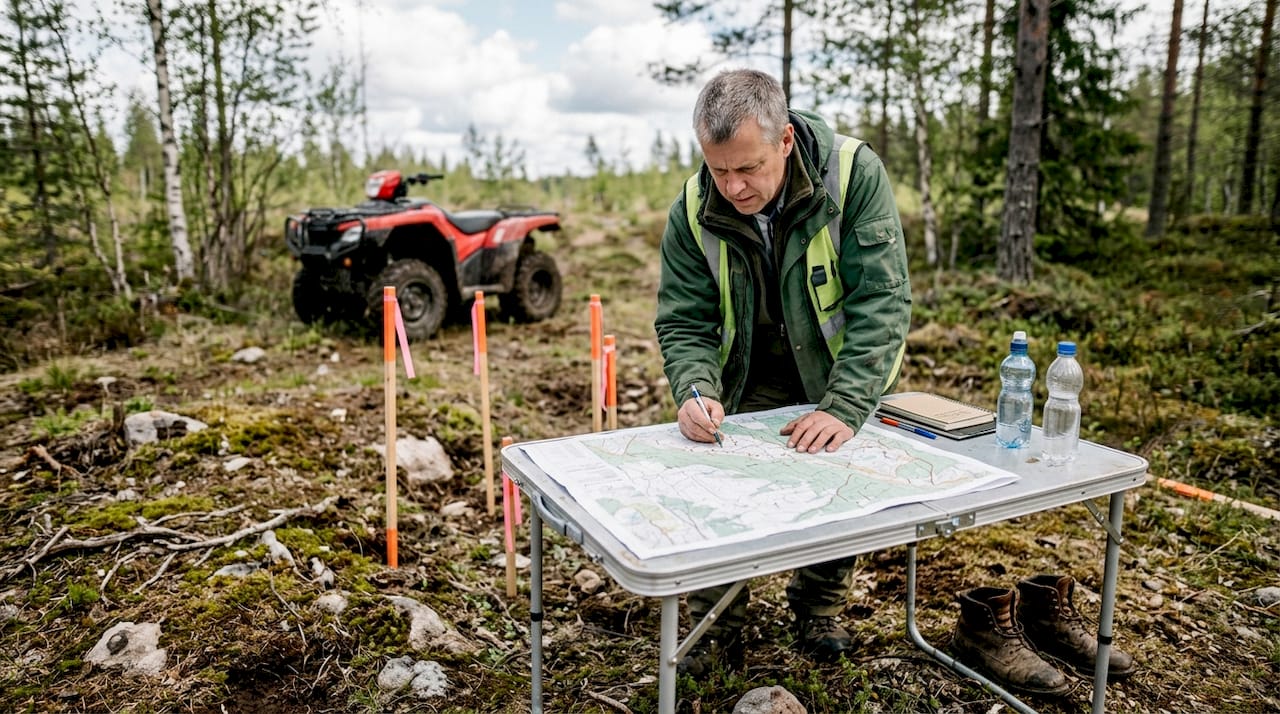
- Survey and mark boundaries. Confirm your property lines with official survey data and mark them physically on the ground. This prevents disputes and ensures your structure stays within legal setback distances.
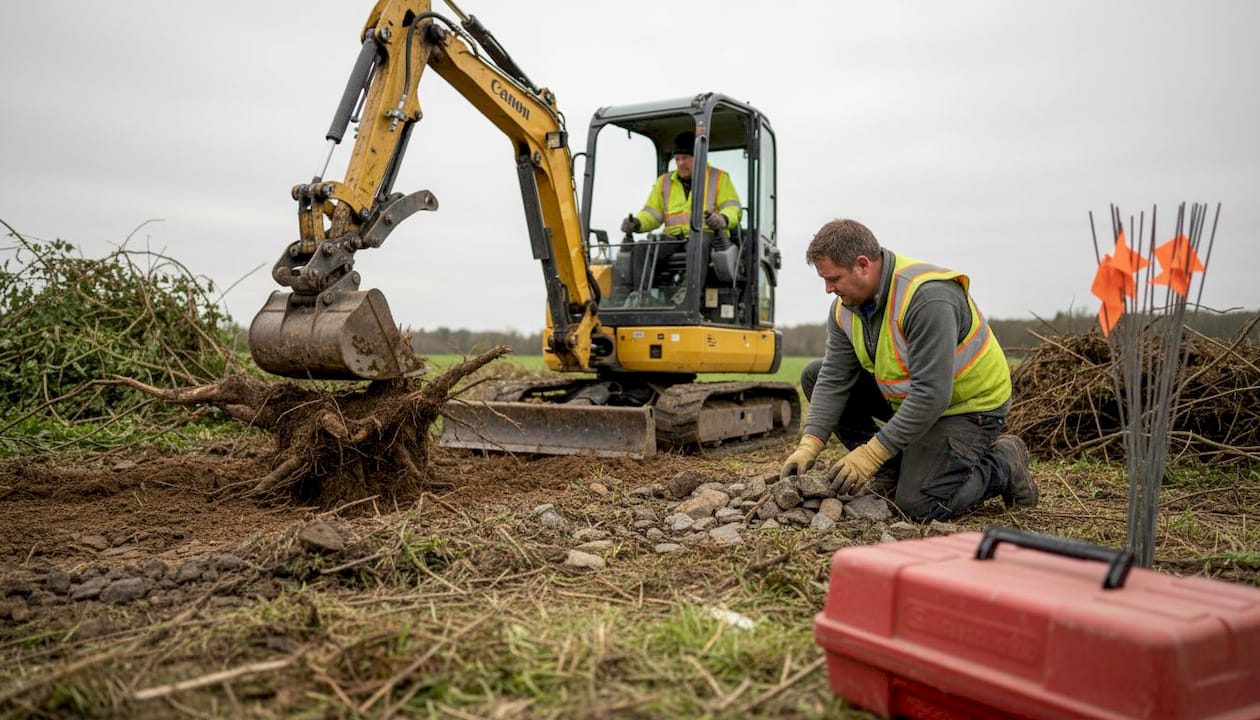
- Clear vegetation. Remove trees, shrubs, and ground cover within the building footprint and a buffer zone around it. Grind or remove stumps completely since decomposing roots create voids under foundations.
- Strip topsoil. Remove the top 20 to 30 centimeters of organic soil from the building area. Organic material compresses over time and holds moisture, both of which undermine foundation stability.
- Grade the land. Shape the ground so it slopes away from the building on all sides, directing water away from the foundation. A minimum slope of 5% for the first three meters is a good target.
- Compact the subsoil. Use a plate compactor or roller to firm up the exposed subsoil before adding any base material.
- Install drainage systems. For sites with high groundwater or clay soil, French drains manage groundwater effectively, routing water away from the building perimeter and preventing frost damage.
Safety note: Poor drainage under a log structure doesn’t just cause rot. Standing water near a foundation freezes and expands in winter, creating frost heave that can crack concrete and shift the entire building off level.
Dealing with tree roots, rocks, and uneven terrain takes patience. Large roots that can’t be ground down should be removed entirely. Rocky outcrops may need to be broken up with a jackhammer or small excavator. For expert advice on handling difficult terrain, the expert building tips section covers real-world solutions for Finnish conditions.
Pro Tip: Before any excavation, contact your utility provider to locate underground cables, pipes, and drainage lines. Hitting a buried cable or water pipe adds cost, delays, and safety risks that are entirely avoidable.
Foundation options and choosing the right base for log structures
With your site ready, it’s time to decide on a foundation that fits your needs and Finnish climate. The foundation you choose affects everything from moisture control to how long your log structure stands.
Four main foundation types are used for log buildings in Finland:
- Gravel base: Simple, low-cost, and well-draining. Works well for small saunas and outbuildings on stable, well-drained soil.
- Concrete blocks or pads: Elevated off the ground, allowing airflow under the structure. Good for medium-sized buildings and sites with seasonal moisture.
- Piers or posts: Ideal for sloped sites or rocky ground where a full perimeter foundation isn’t practical. Keeps wood off the ground and allows drainage.
- Full concrete slab: The most stable and durable option. A concrete raft is the sturdiest but also the most expensive choice, best suited for large log homes or permanent structures.
For saunas specifically, elevated foundations with slatted floors allow ventilation and drainage of water from steam bathing, which significantly extends the building’s lifespan.
Follow these rules regardless of which foundation type you choose:
- Never allow wood to rest directly on soil or concrete without a moisture barrier
- Maintain at least 300mm of clearance between the lowest log and the ground
- Use pressure-treated or naturally rot-resistant wood for any components near the ground
- Insulate the foundation perimeter to reduce frost penetration in northern regions
A well-chosen foundation can add decades to your structure’s life. Use the timber construction checklist to verify you’ve covered every requirement before pouring concrete or setting blocks.
| Foundation type | Best for | Approximate cost | Key advantage | Key drawback |
|---|---|---|---|---|
| Gravel base | Small saunas, flat sites | Low | Simple, fast | Limited to small structures |
| Concrete blocks/pads | Medium buildings | Medium | Good airflow | Needs level ground |
| Piers/posts | Slopes, rocky sites | Medium | Flexible placement | Requires precise leveling |
| Full concrete slab | Large log homes | High | Maximum stability | Expensive, less ventilation |
Our hard-won lessons from Finnish log building site prep
After the technical details, here’s what experience has taught us about getting site prep right the first time. We’ve seen projects built by capable, well-meaning homeowners that ran into serious problems simply because of assumptions borrowed from other climates or other building traditions.
The Finnish climate is unforgiving in ways that builders from central Europe or North America don’t always anticipate. A foundation depth that works perfectly in Germany will fail in Lapland. A drainage solution that handles summer rain in the American Midwest won’t handle spring snowmelt on a Finnish slope. The physics of frost heave here are more aggressive, and the seasonal moisture swings are more extreme.
One cautionary example we’ve seen more than once: a homeowner completes site prep that technically meets the minimum code requirements. Everything looks fine in summer. Then the first hard winter arrives, and the ground shifts just enough to rack the door frames and crack the corner joints. Fixing that kind of structural movement costs far more than doing the foundation right the first time.
What experienced builders never skip is a thorough drainage review after heavy rain, before any foundation work begins. Walk the site in a downpour. See where water pools, where it runs, and where it disappears. That 30-minute exercise reveals more than any desktop plan.
We’re proud of the Finnish log construction tradition we’ve been part of for over 65 years, and the lesson that tradition keeps teaching is simple: slow down at the start, and the rest goes fast.
Pro Tip: Add at least two weeks of weather buffer to your site prep schedule. Finnish spring and fall weather can shut down outdoor work without warning, and rushing foundation work in wet or freezing conditions creates problems that show up years later.
Start your log building project the smart way
Ready to begin? Take advantage of professional resources for a stress-free start.
Getting site prep right is easier when you have the right guidance from the start. At Huvila Seppälä, we’ve spent over 65 years helping Finnish homeowners build log structures that last, and we’ve put that experience into practical resources you can use today.
Explore our step-by-step cottage guide to see how a well-prepared site connects to every phase of construction. If you’re thinking about sustainability, our guide on eco-friendly timber homes explains why Finnish wood is the smart long-term choice. When you’re ready to talk specifics, visit our timber building solutions page and reach out for a transparent, no-obligation quote tailored to your plans.
Frequently asked questions
Do I need a permit to prepare my site for a log building or sauna in Finland?
Yes, you must check with your municipality since permits are usually required even for site prep. Small saunas may have exemptions, but always confirm locally before starting any work.
What’s the best foundation for log buildings on sloped or rocky Finnish land?
Deep foundations, piers, or elevated slabs work best on slopes or rocky sites. These options prevent moisture damage and frost heave on difficult sites that would compromise a simpler base.
How do I prevent moisture and frost damage under my log structure?
Use elevated foundations and proper drainage systems. French drains prevent sogginess and frost damage by routing groundwater and surface water away from the building perimeter.
Can I do site preparation for a log building myself, or should I hire professionals?
You can handle basic clearing and grading yourself, but foundation work and drainage solutions are best left to experienced professionals who understand Finnish soil and frost conditions.
Recommended
- Prepare your site for a custom log villa: expert guide 2026 – Hirsitalot, pihasaunat ja piharakennukset kotimaisesta hirrestä
- Log house building process: step-by-step guide 2026 – Hirsitalot, pihasaunat ja piharakennukset kotimaisesta hirrestä
- Log House Project Checklist: Step-by-Step Guide for Success – Hirsitalot, pihasaunat ja piharakennukset kotimaisesta hirrestä
- How to build a log house in Finland: expert guide 2026 – Hirsitalot, pihasaunat ja piharakennukset kotimaisesta hirrestä