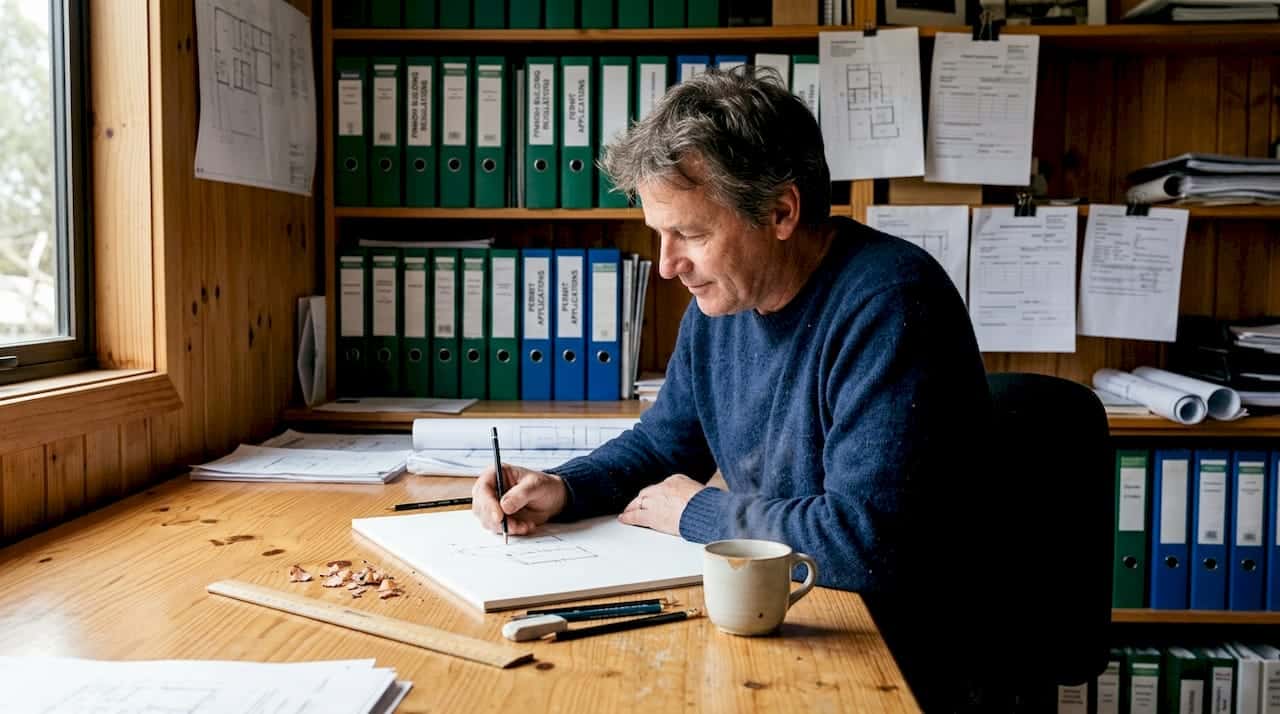
Log building permits in Finland: avoid costly pitfalls
TL;DR:
- Building permits are required for nearly all residential and holiday log structures in Finland as of 2025.
- Proper documentation and early permit preparation significantly speed up approval and prevent legal issues.
- Failing to obtain permits can lead to fines, demolition orders, and restrictions on using or selling the building.
Most people planning a log cabin or holiday home in Finland assume that small structures are permit-free. That assumption is wrong, and it costs builders real money every year. Permits are mandatory for all residential and most holiday log buildings in Finland as of 2025. Whether you are building a compact lakeside cabin or a full log villa, skipping the permit process can trigger fines, forced demolition, and months of legal headaches. This article walks you through exactly when you need a permit, what documents to prepare, the unique rules that apply to log structures, and how to stay compliant from start to finish.
Table of Contents
- When do you need a permit for log buildings?
- What documents and standards are required for a permit?
- Unique requirements for log building permits
- Permit validity, timelines, and compliance risks
- Our take: Why permit preparation is more critical than ever
- Ready to build? Expert help for permit success
- Frequently asked questions
Key Takeaways
| Point | Details |
|---|---|
| Most log cabins need permits | Finnish law requires permits for nearly all residential and holiday log buildings. |
| Apply digitally and prepare documents | Applications must include thorough plans and are submitted through municipal digital platforms. |
| Special standards for log structures | Log buildings face extra scrutiny for fire safety, energy use, and sustainability. |
| Permit deadlines matter | Permits require timely construction and can expire if not used as scheduled. |
| Local variations apply | Rules and enforcement can differ by municipality, so always check locally. |
When do you need a permit for log buildings?
The short answer is: almost always. Under Finland’s 2025 Rakentamislaki changes, all residential buildings and holiday homes require a building permit, regardless of their floor area. If you plan to sleep, cook, or live in a log structure, you need a permit. Full stop.
The exceptions are narrow. Non-residential log structures under 30 square meters or 120 cubic meters may qualify as permit-exempt, but only if they meet strict zoning rules and contain no sleeping or cooking facilities. A garden shed or a basic storage building might qualify. A sauna with a loft bed does not.
This is where many builders make a costly mistake. Adding a wood-burning stove, a sleeping loft, or a small kitchenette to what started as a “simple sauna” changes its legal classification entirely. Once the building is used for overnight stays, it becomes a holiday home under Finnish law, and a full permit is required. Inspectors do check, and the fines are not symbolic.
Urban and rural municipalities also apply these rules differently. Helsinki and other major cities tend to be stricter, with additional zoning overlays and design requirements. Rural municipalities are often more flexible on minor structures, but you should never assume. Always contact your local building authority before breaking ground.
Here is a quick comparison of common log building types and their typical permit status:
| Building type | Typical permit required? | Key condition |
|---|---|---|
| Log home (permanent) | Yes | Always |
| Holiday log cabin | Yes | Always |
| Log sauna (no sleeping) | No, if under 30 m² | Must meet zoning rules |
| Log storage shed | No, if under 30 m² | No residential use |
| Log garage | Sometimes | Depends on municipality |
Projects that are commonly permit-exempt include:
- Small log storage buildings under 30 m² with no utilities
- Temporary log structures used for less than one season
- Minor repairs or maintenance that do not change the building’s structure or use
Pro Tip: Even if your project is technically permit-exempt, you may still need to notify your municipality. Check the cottage requirements for your specific project type before assuming no action is needed.
“When in doubt, call your municipal building office before you start. A five-minute call can save you five months of delays.”
For a broader look at how Finnish rules apply to timber structures, the timber building regulations guide covers the full regulatory landscape in plain language.
What documents and standards are required for a permit?
Knowing you need a permit is only step one. Assembling the right documents is where many applications stall. Finland’s permit system is digital, and you must submit plans, certifications, and neighbor notifications via Lupapiste.fi, the national digital permit platform.
Missing or incomplete documents are the single biggest cause of permit delays. The average processing time for a complete application is 2 to 3 months. Incomplete applications can stretch that to 6 months or longer.
Here is what a standard log building permit application requires:
- Site plan showing the building’s location on the plot, distances from boundaries, and existing structures
- Architectural drawings including floor plans, elevations, and cross-sections drawn to scale
- Structural calculations confirming the log frame meets load-bearing standards
- Energy performance certificate demonstrating compliance with Finland’s thermal efficiency requirements
- Fire safety assessment covering escape routes, fire separation, and materials
- Environmental and carbon assessment (new under 2025 law for larger structures)
- Neighbor notifications confirming adjacent property owners have been informed
- Applicant identification and ownership documents for the plot
The 2025 law added new emphasis on energy efficiency and carbon impact. For log buildings, this means your architect or structural engineer must provide calculations showing how the log wall system performs thermally. Finnish log walls have excellent natural insulation properties, but the documentation must prove it numerically.
| Document | Who prepares it | Typical cost range |
|---|---|---|
| Architectural drawings | Licensed architect | €1,500 to €4,000 |
| Structural calculations | Structural engineer | €800 to €2,500 |
| Energy certificate | Energy assessor | €400 to €900 |
| Site plan | Surveyor or architect | €300 to €800 |
“A strong, complete application submitted on day one is worth more than a rushed submission followed by three rounds of corrections.”
For a full walkthrough of each phase, the building permits process guide explains each step in detail. If you want to see how permitting fits into the broader construction timeline, the log house process guide maps it all out from land purchase to final inspection.
Unique requirements for log building permits
Log buildings face extra scrutiny compared to concrete or steel-frame structures. This is not arbitrary. Wood behaves differently under heat, moisture, and load, and Finnish authorities require specific documentation to confirm your design accounts for these factors.
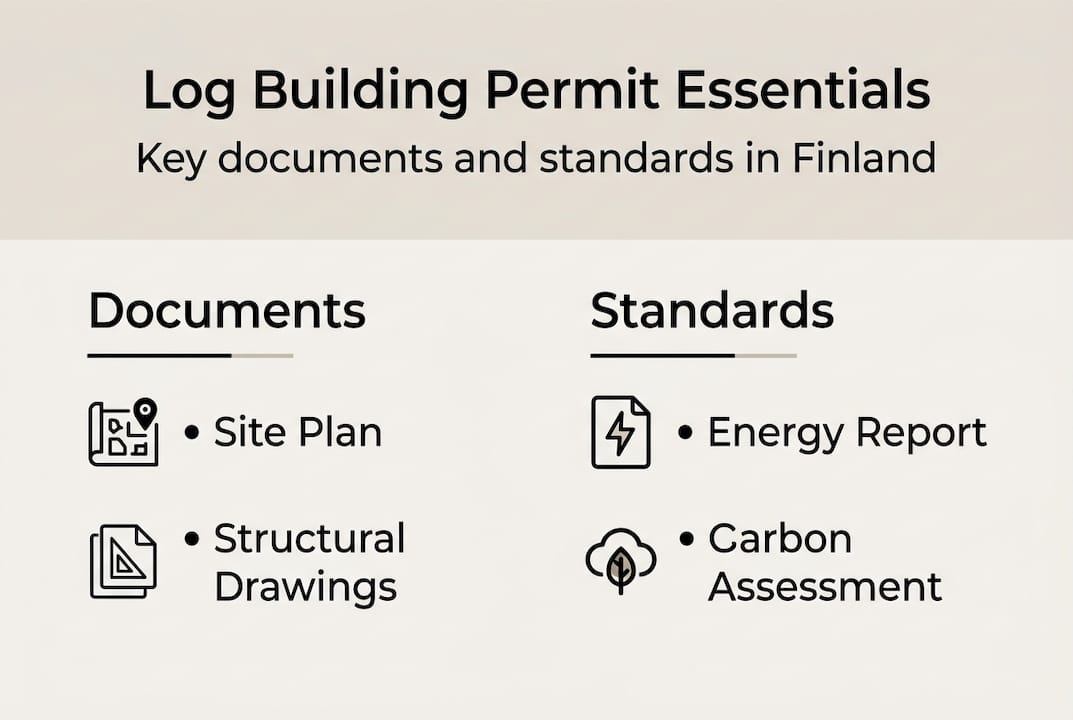
Under the 2025 construction regulations, log buildings must meet strict requirements for thermal performance, fire safety, and carbon assessment. These are not new concerns, but the 2025 law made the documentation requirements more formal and more demanding.
Key areas of scrutiny for log building permits include:
- Thermal performance: Log wall U-values must meet or exceed national minimums. Thicker logs perform better, but you need certified calculations, not assumptions.
- Fire resistance: Log structures must demonstrate fire separation between rooms, proper fire-rated materials around stoves and chimneys, and compliant escape routes.
- Settling allowance: Log buildings settle as the wood dries. Drawings must show how doors, windows, and utility penetrations are designed to accommodate this movement.
- Carbon assessment: For buildings over a certain size, a lifecycle carbon calculation is now required under 2025 law.
- Moisture management: Foundation design and wall detailing must show how moisture is controlled to prevent rot.
Municipal variation matters here too. Helsinki and Espoo apply stricter design standards and may require additional reviews. Rural municipalities in Lapland or North Karelia tend to be more familiar with log construction and process applications faster.
Statistic callout: Over 40% of log building permit applications in Finland face delays due to incomplete documentation or misunderstanding of material-specific requirements. Getting your paperwork right the first time is not just good practice. It is the difference between starting construction this summer or next.
Pro Tip: Hire a designer or architect who has specific experience with log buildings, not just general construction. The settling allowance calculations alone can trip up professionals who are new to timber structures. For a full breakdown of what the process involves, the building a log house guide is a practical starting point.
Permit validity, timelines, and compliance risks
Getting your permit approved is a milestone, but it is not the finish line. Finnish building permits come with strict timelines, and missing them has serious consequences.
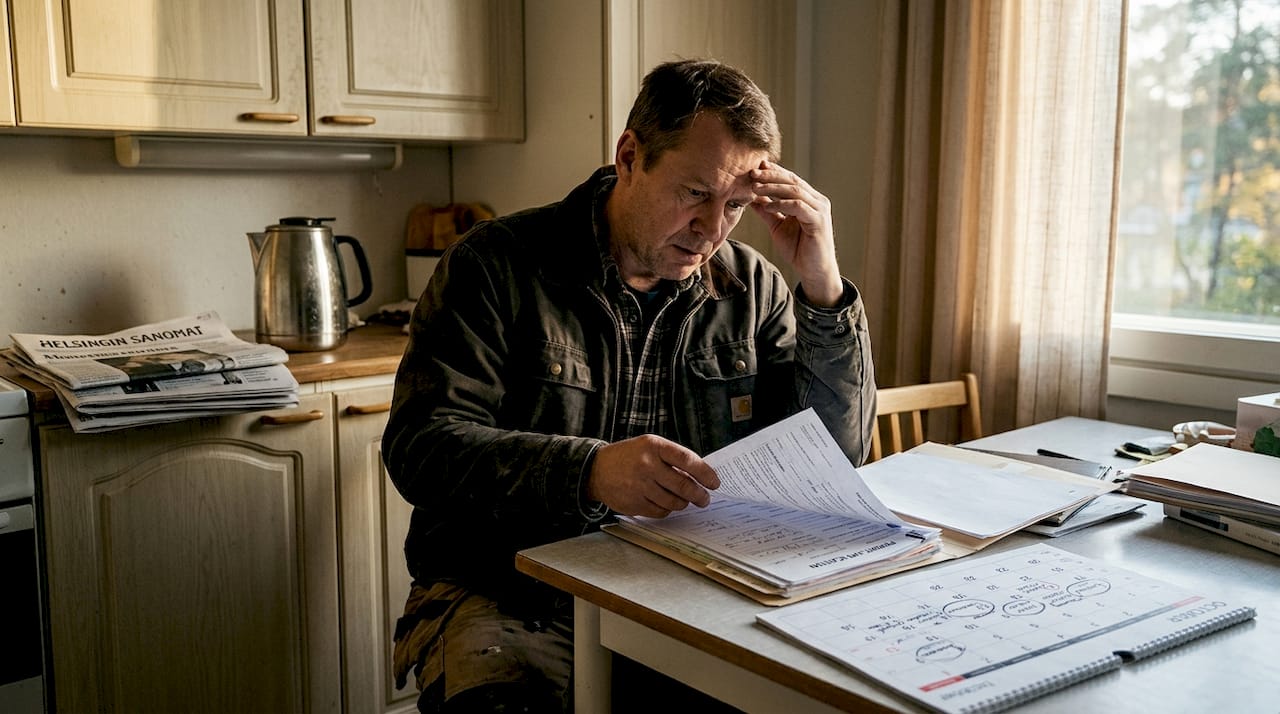
Permits expire if building does not start within 3 years or finish within 5 years of the approval date. These are hard deadlines. If you miss the start deadline, your permit lapses and you must reapply, paying fees and waiting again. If construction drags past the 5-year mark, you face the same problem mid-build.
Extensions are available, but you must apply before the permit expires. You cannot apply retroactively. Most municipalities grant one extension of 2 years if you can show a legitimate reason for the delay.
Here is a compliance checklist to keep your project on track:
- Record your permit approval date and mark the 3-year start deadline on your calendar immediately
- Begin visible construction within the 3-year window. Laying a foundation counts as starting.
- Track your completion deadline and apply for an extension at least 3 months before it expires if needed
- Request required inspections at each construction phase. Skipping inspections can void your permit.
- Notify your municipality when construction is complete and request the final occupancy approval
For permit-exempt projects, the rules are not entirely absent. You still must comply with zoning regulations, setback distances, and any local notification requirements. The permit guide in Sipoo is a useful reference for understanding how one municipality handles these edge cases.
“A permit without follow-through is just paperwork. The inspections and final approval are what make your building legal to occupy.”
Building without a required permit is treated seriously in Finland. Authorities can issue demolition orders for unpermitted structures, and fines can reach tens of thousands of euros depending on the scale of the violation. Even if the building is well-constructed, the absence of a permit makes it impossible to insure, sell, or legally use. The timber construction checklist covers the full compliance sequence in one place.
Pro Tip: Set a reminder 6 months before each deadline. Permit administration moves slowly, and you want time to act if something needs to be resolved.
Our take: Why permit preparation is more critical than ever
After working with homeowners and builders across Finland for over 65 years, we have seen the same mistake repeat itself: treating the permit process as something to handle later. It never works. The permit process shapes your design, your timeline, and your budget. Starting it early is not bureaucratic caution. It is smart project management.
The shift to digital tools like Lupapiste.fi has made submission easier, but it has raised the bar on documentation quality. The system flags missing items instantly, and reviewers expect complete, professional packages. A rushed application that would have scraped through a decade ago now gets returned with a list of corrections.
The most surprising lesson from real customer experience: a thorough, well-prepared application submitted on day one often gets approved faster than a rushed one submitted six months earlier. Reviewers have less to question. The process moves.
Sustainability requirements are also tightening. Carbon assessments and energy documentation are no longer formalities. They influence design decisions. Builders who engage with these requirements early, through the cottage building steps planning phase, end up with better buildings and smoother approvals.
Ready to build? Expert help for permit success
Navigating Finland’s log building permit process is manageable when you know what to expect and have the right support. With over 65 years of experience manufacturing custom log structures from Finnish wood, we at Huvila Seppälä understand both the craft and the compliance side of building.
Our team can help you think through your project from the ground up, from understanding timber home benefits to working through the details of permitting custom builds. Whether you are planning a sauna, a cabin, or a full log home, our step-by-step building guide gives you a clear picture of the entire process. Reach out for a personalized consultation and a transparent quote with no hidden costs.
Frequently asked questions
Do I always need a permit to build a small log sauna in Finland?
Non-residential buildings under 30 m² or 120 m³ may be permit-exempt, so a basic log sauna without sleeping or cooking facilities can qualify, provided it meets zoning and code rules. However, adding a sleeping loft or kitchenette changes its classification and triggers a full permit requirement.
Where do I submit permit applications for a log building?
Applications are filed via Lupapiste.fi to your local municipal building authority, and all supporting documents must be uploaded digitally through the same platform.
What happens if I build without a permit?
Non-compliance risks demolition and substantial fines from local authorities, and an unpermitted building cannot be legally insured, sold, or occupied.
How long is a building permit valid in Finland?
Permits expire after 3 years if construction has not started, and the building must be completed within 5 years; extensions are available but must be applied for before the original deadline passes.
Recommended
- Building Permits Process Finland: Step-by-Step Guide – Hirsitalot, pihasaunat ja piharakennukset kotimaisesta hirrestä
- Requirements for building a log house in Finland: 2026 guide – Hirsitalot, pihasaunat ja piharakennukset kotimaisesta hirrestä
- Building regulations in Finland 2026: timber guide – Hirsitalot, pihasaunat ja piharakennukset kotimaisesta hirrestä
- Finnish timber construction checklist: homeowner’s guide – Hirsitalot, pihasaunat ja piharakennukset kotimaisesta hirrestä