
How to get a building permit in Finland: 2026 guide
TL;DR:
- Finland’s 2025 building law shift bases permit requirements on project size and impact rather than structure type, with structures under 30 m² generally exempt. Homeowners must verify local rules, zoning, and shoreline restrictions that may impose additional conditions beyond national thresholds. Even permit-exempt structures must adhere to safety standards, and early communication with municipal officials can prevent costly delays.
You’ve finally decided to build that lakeside sauna or log cottage you’ve been dreaming about for years. Then reality hits: Finland’s building laws changed on January 1, 2025, and suddenly you’re not sure whether you need a permit, which office to call, or what happens if you just start building. This guide cuts through that confusion. Whether you’re planning a small backyard sauna, a full log home, or a summer cottage, you’ll find a clear, practical path from idea to approved project under Finland’s current rules.
Table of Contents
- How new building permit rules work after 2025
- Check national thresholds, then local rules
- How to apply for a building permit (step-by-step)
- Common pitfalls and how to avoid them
- What to expect after approval—or if you’re exempt
- A fresh perspective: Why permit reform is just the start for Finnish wooden builds
- Ready for your project? Discover more homeowner resources and services
- Frequently asked questions
Key Takeaways
| Point | Details |
|---|---|
| Check national thresholds | First, determine if your planned building exceeds the 30 m² or 50 m² size limits set in 2025. |
| Always verify local rules | Even permit-exempt projects must comply with stricter municipal zoning and ordinances. |
| Apply digitally with Lupapiste | All permit applications are submitted online with required site and technical documents. |
| Avoid common application delays | Double-check your application package and communicate early with your local building office. |
| Permit exemptions don’t remove responsibility | You must still follow all safety, technical, and neighbor notification requirements. |
How new building permit rules work after 2025
Finland’s building law got a major overhaul at the start of 2025. The new Rakentamislaki (Building Act) shifted how permits are determined. Instead of classifying permits by their formal “type,” the law now focuses on the project’s actual size and real-world impact. That’s a meaningful change for homeowners, because it means the material you build with, whether it’s log, timber frame, or concrete, is no longer the deciding factor.
What actually determines whether you need a permit is the footprint, purpose, and location of your building. A wooden sauna and a concrete storage shed of the same size are now treated the same way under the law.
Key size thresholds to know:
- Buildings under 30 m² of floor area are generally permit-exempt on your own plot
- Canopies and open shelters under 50 m² are usually exempt
- Larger structures, or those with significant impact on neighbors or the environment, require a full permit
- The 2025 thresholds apply nationally, but local rules can tighten them
Here’s a quick comparison of common wooden structures and what typically applies:
| Structure type | Typical size | Permit needed? |
|---|---|---|
| Log home (primary residence) | 100 m²+ | Yes, full permit |
| Log cottage (summer use) | 50 to 100 m² | Usually yes |
| Outdoor sauna | Under 30 m² | Often exempt |
| Carport or canopy | Under 50 m² | Often exempt |
| Storage shed | Under 30 m² | Often exempt |
| Larger barn or workshop | Over 30 m² | Yes, permit required |
One important point: the permit applications for small outbuildings have dropped noticeably since the 2025 thresholds took effect, which tells you the exemptions are real and widely used. But “exempt” does not mean “unregulated.” We’ll cover that more in a later section. For now, understanding planning permission after 2025 starts with knowing where your project fits in this size-based framework.
It’s also worth reading up on the full scope of the 2025 building regulations if you’re planning a more complex project, because the national law is just the starting point.
Check national thresholds, then local rules
Understanding general thresholds is only step one. It’s essential to also account for local requirements, which can be stricter than national law.
Every municipality in Finland has the authority to set its own building ordinance (rakennusjärjestys). That means a sauna that is technically permit-exempt under national law might still require local notification or approval in your specific town. Local rules on zoning and shoreline restrictions can add requirements that go well beyond what the national thresholds suggest.
Here’s a structured way to classify your project before you do anything else:
| Project type | National floor area threshold | Likely local add-ons |
|---|---|---|
| Sauna (detached, own plot) | 30 m² | Shoreline setback, neighbor notice |
| Summer cottage | 50 m² | Zoning approval, utility connections |
| Carport | 50 m² (open structure) | Neighbor consent in dense areas |
| Storage building | 30 m² | Fire safety distance rules |
| Primary log home | No exemption | Full permit always required |
The practical methodology for homeowners recommended by Finnish building guidance is straightforward: first classify your project, then check whether it crosses the national size thresholds, then verify local constraints before you assume you’re in the clear.
Follow these steps in order:
- Identify your project type (sauna, cottage, storage, home) and its intended use
- Calculate the floor area you’re planning to build
- Compare to national thresholds (30 m² for most buildings, 50 m² for canopies)
- Download your municipality’s building ordinance from the local website
- Check zoning maps for your plot, especially if you’re near a shoreline or protected area
- Look for special area restrictions, such as coastal zones or heritage landscapes
- Note any neighbor notification requirements in your local ordinance
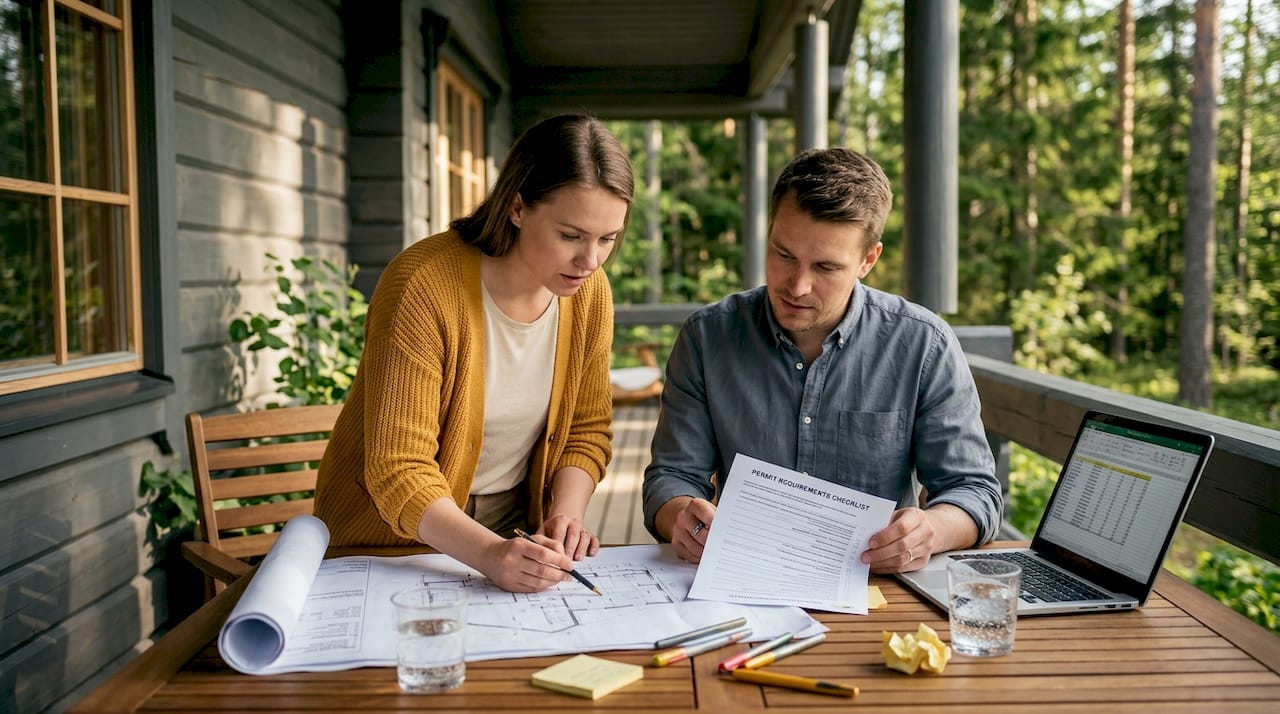
Pro Tip: Call or visit your local building supervision office before you finalize your plans. A 20-minute conversation can prevent weeks of back-and-forth later. Officers are generally helpful at the early stage and can tell you immediately whether your specific project raises any flags.
Knowing the permit rules for timber homes in detail helps you walk into that conversation prepared. And if you’re planning a log structure specifically, check the requirements for log houses early, because there are specific structural documentation expectations that differ from standard timber frame builds.
How to apply for a building permit (step-by-step)
Once you’ve confirmed that your project needs a permit, it’s time to navigate the application process. Here’s how to do it efficiently.
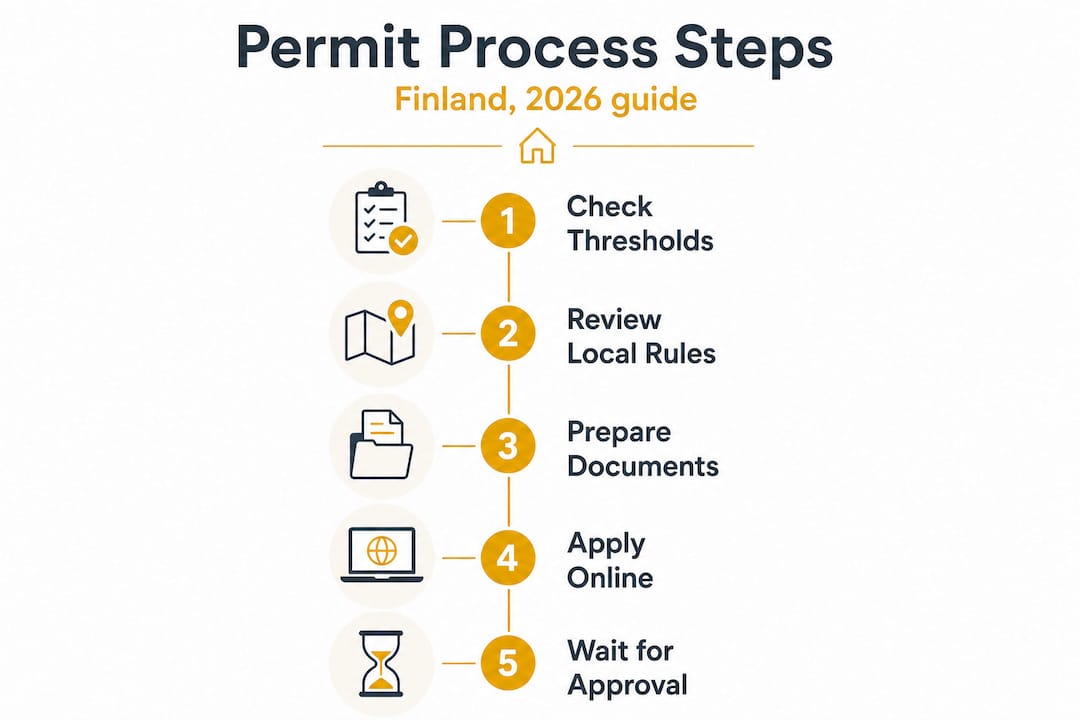
Finland has standardized the application process across most municipalities. The main tool is Lupapiste, an online permitting platform where you submit your application electronically. According to Finnish municipal guidance, construction permits are applied electronically via Lupapiste and processed by your local building supervision authority. Nearly all municipalities use it, which makes the process consistent once you understand it.
Here’s what the application process looks like in practice:
- Create an account on Lupapiste at lupapiste.fi and start a new project
- Enter your property information, including the plot identifier (kiinteistötunnus)
- Select the correct application type based on your project classification
- Upload site drawings, including a layout plan showing the building’s position on the plot
- Add floor plans and elevations drawn to scale (usually 1:100 or 1:50)
- Include the property deed or ownership documentation
- Attach any technical documentation required by your local authority (structural calculations, energy certificates for new homes)
- Submit the application and pay the processing fee, which varies by municipality
- Monitor your application status in Lupapiste and respond promptly to any requests for additional information
- Receive your permit decision and note any conditions attached to it
A complete electronic attachment package is non-negotiable. Missing even one document puts your application on hold until it’s corrected.
“When in doubt about edge cases or deviations from the standard process, contact your local permit handler directly through Lupapiste. Early clarification saves significant time and prevents surprises during review.” Based on guidance from Finnish permitting resources, checking assumptions early with the local authority is the single most effective way to avoid delays.
Pro Tip: Missing attachments are the number one cause of permit delays in Finland. Before you hit submit, go through the checklist your municipality publishes and confirm every item is attached. A rejected or incomplete application restarts the clock on review time.
If you want a fuller walkthrough, the detailed application process page covers each stage with examples. For timber-specific projects, the custom timber permits guide explains what additional documentation is typically requested.
Common pitfalls and how to avoid them
Even when you follow the basics, there are traps that trip up new builders. Let’s cover them so you’re ready.
The most frustrating part of the Finnish permit process isn’t the paperwork itself. It’s the small mistakes that send applications backward. Here are the most common issues homeowners run into:
- Incomplete drawings: Site plans that don’t show distances to property boundaries or neighboring buildings
- Wrong building classification: Labeling a structure as “storage” when it will realistically be used as a living space, which triggers different requirements
- Missing neighbor notices: In many municipalities, you must formally notify adjacent landowners, especially for larger buildings
- Ignoring local deviations: Assuming national exemptions apply without checking whether your municipality has added conditions
- Starting work too early: Beginning construction before the permit decision is legally final, including the 14-day appeal period
- Overlooking fire safety distances: Log and timber buildings have specific minimum distances from property lines and other structures
One nuance that catches many homeowners off guard: municipal requirements can affect even streamlined cases, adding conditions or requiring additional decisions even for projects that seemed straightforward on paper. Don’t assume a simple project will sail through automatically.
It’s also a common misconception that exempt buildings are invisible to building control. In reality, exemptions reduce paperwork but building control still intervenes where work would violate detailed plans or fire safety rules. A neighbor complaint about your “permit-free” sauna can still result in an inspection and a demand to make changes or even remove the structure.
Pro Tip: For any gray area, call your municipal building supervision office before work starts. Describe your project honestly and ask whether any conditions apply. This conversation is free, it’s confidential, and it could save you a costly correction order later. You can also review common pitfalls and how to avoid them in our dedicated guide.
What to expect after approval—or if you’re exempt
With your application behind you, or if you’re in the exempt category, it’s important to know what comes next and what standards still apply.
Getting your permit approved is a milestone, but it’s not the finish line. Finnish building supervision requires several follow-up steps once work begins:
- Notify your permit authority when construction starts (aloitusilmoitus)
- Schedule required inspections at specific stages: foundation, structural frame, and final inspection
- Keep the permit documents on site during construction for inspector access
- Report any modifications to the original plan before implementing them
- Arrange the final inspection before occupying the building
If your project is permit-exempt, you might think you can skip all of this. Not quite. Exempt builds still must comply with technical and regulatory requirements. That includes structural soundness, fire safety distances, energy efficiency basics, and zoning compliance. The only thing you’re skipping is the formal application process.
Here’s a practical comparison:
| Obligation | Permit required | Permit exempt |
|---|---|---|
| Formal application | Yes | No |
| Inspections | Mandatory (scheduled) | Only if complaint filed |
| Zoning compliance | Required | Required |
| Fire safety distances | Required | Required |
| Technical standards | Required | Required |
| Neighbor notification | Usually required | May still be required locally |
The exemptions reduce permitting overhead significantly, but they don’t create a compliance-free zone. For sauna-specific projects, check the local permitting for saunas page, which covers the inspections and technical rules that apply whether or not a formal permit is needed. And for cottage projects, the cottage compliance requirements guide explains what you’re still on the hook for even in the exempt category.
A fresh perspective: Why permit reform is just the start for Finnish wooden builds
The 2025 reforms genuinely made life easier for homeowners with smaller projects. Fewer permits, clearer thresholds, and a consistent online system are all real improvements. But after working with homeowners on timber and log builds for over 65 years, we’ve noticed something: the people who run into trouble aren’t usually the ones who ignored the big rules. They’re the ones who assumed the small details would sort themselves out.
A “permit-free” label on a project doesn’t make it inspection-proof. Local building supervisors respond to neighbor complaints. They visit sites. And when they find a structure that violates fire safety distances or sits too close to a shoreline, the paperwork exemption doesn’t protect you. The conversation shifts from “did you get a permit?” to “is this structure compliant?” Those are very different questions.
The practical wisdom here is simple: treat every project as if it might face review, because any project can. Keep your drawings organized. Measure your distances twice. Talk to your municipal officer early. The homeowners who have the smoothest builds aren’t the ones who know every clause of the Building Act. They’re the ones who ask good questions before they pour the foundation.
Most delays and disputes we’ve seen stem from small missed details, not major violations. A missing property document, an unanswered neighbor notice, a carport that’s two meters too close to the boundary. These are fixable problems at the planning stage. After construction, they become expensive ones.
For additional tips for timber projects, we’ve compiled lessons from real projects across Finland that illustrate exactly these kinds of situations and how to handle them proactively.
Ready for your project? Discover more homeowner resources and services
Planning a wooden home, cottage, or sauna in Finland is a significant undertaking, and navigating the permit landscape is just one piece of the puzzle.
At Huvila Seppälä, we’ve been crafting timber frames and log structures from Finnish wood for over 65 years, and we’ve seen every variation of this process. If you’re thinking about building with timber and want to understand why it’s one of the most sustainable and durable choices available, our eco-friendly timber homes guide is a great starting point. For those ready to move forward, the step-by-step cottage building page walks through the full custom build journey from your first sketch to delivery. And if you’re specifically working with a log home project, the permitting for log homes resource covers the structural and regulatory specifics that come with this type of construction. We offer transparent quotes, custom designs based on your own drawings, and fast delivery with no hidden costs.
Frequently asked questions
Do I need a building permit for a small sauna or cottage under 30 m²?
Usually, buildings under 30 m² are permit-exempt after the 2025 reforms, but you must still follow all local ordinances and technical safety standards that apply in your municipality.
Where do I submit my building permit application?
All building permit applications are submitted electronically through Lupapiste, the national online permitting platform used by virtually every Finnish municipality for building supervision processing.
What documents do I need for my permit application?
You need site drawings, floor plans, property ownership documents, and any technical details required locally. The complete attachment package must be assembled and uploaded before your application will be reviewed.
Do local rules override the national thresholds?
Yes, municipalities can set stricter requirements than the national law allows. Always check your local rakennusjärjestys and zoning rules before assuming the national exemption applies to your project.
Are inspections required for permit-exempt buildings?
Permit-exempt projects are not subject to scheduled inspections, but exempt builds must still comply with all technical and safety requirements and can be inspected if a neighbor or authority files a complaint.
Recommended
- Building Permits Process Finland: Step-by-Step Guide – Hirsitalot, pihasaunat ja piharakennukset kotimaisesta hirrestä
- Building Permits in Finland Explained: Your Custom Timber Guide – Hirsitalot, pihasaunat ja piharakennukset kotimaisesta hirrestä
- Timber Building Permits in Finland: A Homeowner’s Guide – Hirsitalot, pihasaunat ja piharakennukset kotimaisesta hirrestä
- Building Permits for Timber Homes in Finland: A Clear Guide – Hirsitalot, pihasaunat ja piharakennukset kotimaisesta hirrestä