
Requirements for building a cottage in Finland 2026
Building a custom cottage in Finland often feels overwhelming when you first encounter permit applications, zoning regulations, and financing requirements. Many aspiring cottage owners mistakenly believe the process is impossibly complex or that only architects can navigate the legal maze. The reality is far more straightforward. With proper preparation and understanding of key requirements, you can successfully plan and build your dream Finnish cottage. This guide walks you through financing options, permit procedures, construction standards, and expert strategies to make your cottage building journey smooth and compliant.
Table of Contents
- Understanding Legal Requirements: Building Permits And Zoning In Finland
- Financing Your Finnish Cottage: Options And Preparation
- Construction Process And Material Requirements For Custom Cottages
- Expert Tips For Smooth Cottage Building And Permit Approval
- Discover Expert Timber Cottage Solutions At Huvila Seppälä
Key takeaways
| Point | Details |
|---|---|
| Building permits are mandatory | You must obtain official approval before starting any construction work on your cottage site. |
| Multiple financing paths exist | Banks offer specialized timber cottage loans, and government grants support sustainable building projects. |
| Energy efficiency standards apply | Finnish regulations require specific insulation values and sustainable material choices for all new cottages. |
| Early expert consultation saves time | Involving architects and local authorities from the start prevents costly delays and design revisions. |
| Material choices impact approval | Using locally sourced, compliant materials speeds up permits and ensures long-term durability. |
Understanding legal requirements: building permits and zoning in Finland
Building permits are legally required before starting any cottage construction in Finland and involve submitting detailed plans. You cannot begin excavation, foundation work, or any structural building without this official approval. The permit ensures your cottage design meets national building codes, local zoning regulations, and safety standards.
Applying for a building permit follows a structured process. First, you submit architectural drawings, site plans, and technical specifications to your local municipality’s building control department. The municipality reviews your application against their comprehensive plan and detailed zoning requirements. They check whether your proposed cottage location, size, and design align with permitted land use in that specific area. Proper permitting ensures compliance with local municipal zoning and land-use plans.
Zoning regulations significantly impact where and what you can build. Some areas restrict cottage sizes, require minimum distances from shorelines or property boundaries, or limit building heights. Coastal zones often have stricter rules to protect natural landscapes and water quality. Before purchasing land, verify its zoning classification and building restrictions. Your municipality’s planning department provides this information and can clarify what designs they typically approve in your chosen location.
Your permit application package needs several key documents:
- Architectural plans showing floor layouts, elevations, and cross sections
- Site plan indicating cottage placement, access roads, and utility connections
- Energy efficiency calculations demonstrating compliance with thermal performance standards
- Structural engineering specifications for foundations and load bearing elements
- Proof of land ownership or building rights
- Environmental impact assessment if building near protected areas
Pro Tip: Contact your local building authority before finalizing architectural plans to discuss any site-specific requirements or restrictions that might affect your design choices.
Processing times vary by municipality but typically range from four to twelve weeks. Complex designs, environmentally sensitive locations, or incomplete applications extend this timeline. Municipalities may request clarifications or modifications during review. Responding promptly to these requests keeps your project on schedule. Once approved, your building permit remains valid for a specified period, usually two to five years, giving you time to complete construction.
Financing your Finnish cottage: options and preparation
Securing financing represents a crucial step that many cottage builders underestimate in terms of preparation time and documentation requirements. Timber cottages can have specialized financing options suited to their eco-friendly and durable nature. Banks recognize that well-built timber structures maintain value and often offer favorable loan terms for sustainable building projects.
Several financing sources serve cottage builders effectively. Traditional bank mortgages remain the most common option, with specialized construction loans that release funds in stages as building progresses. These staged payments align with construction milestones, protecting both you and the lender. Some Finnish banks offer green building loans with reduced interest rates for cottages meeting enhanced energy efficiency standards or using certified sustainable materials. Personal savings provide another financing component, typically covering 10 to 25 percent of total costs as a down payment. Government grants occasionally support sustainable rural development or energy-efficient construction, though eligibility criteria are specific and competitive.
Preparing financially requires methodical planning well before you apply for permits. Start by developing a detailed budget that includes land costs, architectural fees, permit expenses, construction materials, labor, utility connections, and a contingency fund of at least 15 percent for unexpected expenses. Proper financial planning improves project success and reduces unexpected costs. Request quotes from multiple contractors and suppliers to establish realistic cost estimates. Banks require this documentation during loan applications.
The loan pre-approval process helps you understand your borrowing capacity before committing to land purchase or design contracts. Pre-approval involves:
- Gathering financial documents including tax returns, employment verification, and existing debt statements
- Meeting with loan officers to discuss your cottage project scope and timeline
- Submitting preliminary building plans and cost estimates
- Receiving conditional approval with specific loan amount and interest rate
- Finalizing approval once you provide final architectural plans and building permits
Pro Tip: Work with financial advisors who understand timber cottage construction economics and can recommend lenders experienced with these specialized projects.
Lenders typically require comprehensive documentation for final approval. Prepare copies of your building permit, detailed construction contract with your builder, architectural plans, proof of builder’s insurance and credentials, land title documents, and your personal financial statements. Timber cottage projects may qualify for longer loan terms than conventional construction due to the durability and longevity of quality wood structures. This extended timeline can reduce monthly payments and improve project feasibility.
Contingency planning protects your project from financial disruption. Construction delays, material price fluctuations, or unexpected site conditions can increase costs. Maintaining accessible reserves or securing a line of credit provides flexibility to address these challenges without halting construction. Some builders arrange staged contractor payments that align with loan disbursements, ensuring cash flow remains manageable throughout the building process.
Construction process and material requirements for custom cottages
The physical construction of your Finnish cottage follows a logical sequence of stages, each with specific material standards and quality requirements. Custom timber cottages must meet strict insulation, structural, and sustainability standards in Finland. Understanding these requirements helps you make informed decisions about materials and construction methods that ensure both compliance and long-term performance.
Construction typically progresses through these sequential stages:
- Site preparation including clearing, grading, and establishing utility access points
- Foundation construction using frost-protected footings appropriate for Finnish soil conditions
- Timber frame or log wall assembly, often pre-manufactured for precision and weather protection
- Roof structure installation with proper ventilation and insulation planning
- Exterior cladding and weatherproofing to protect the building envelope
- Window and door installation with attention to thermal bridges and air sealing
- Interior insulation, vapor barriers, and mechanical system installation
- Interior finishing including walls, floors, fixtures, and final details
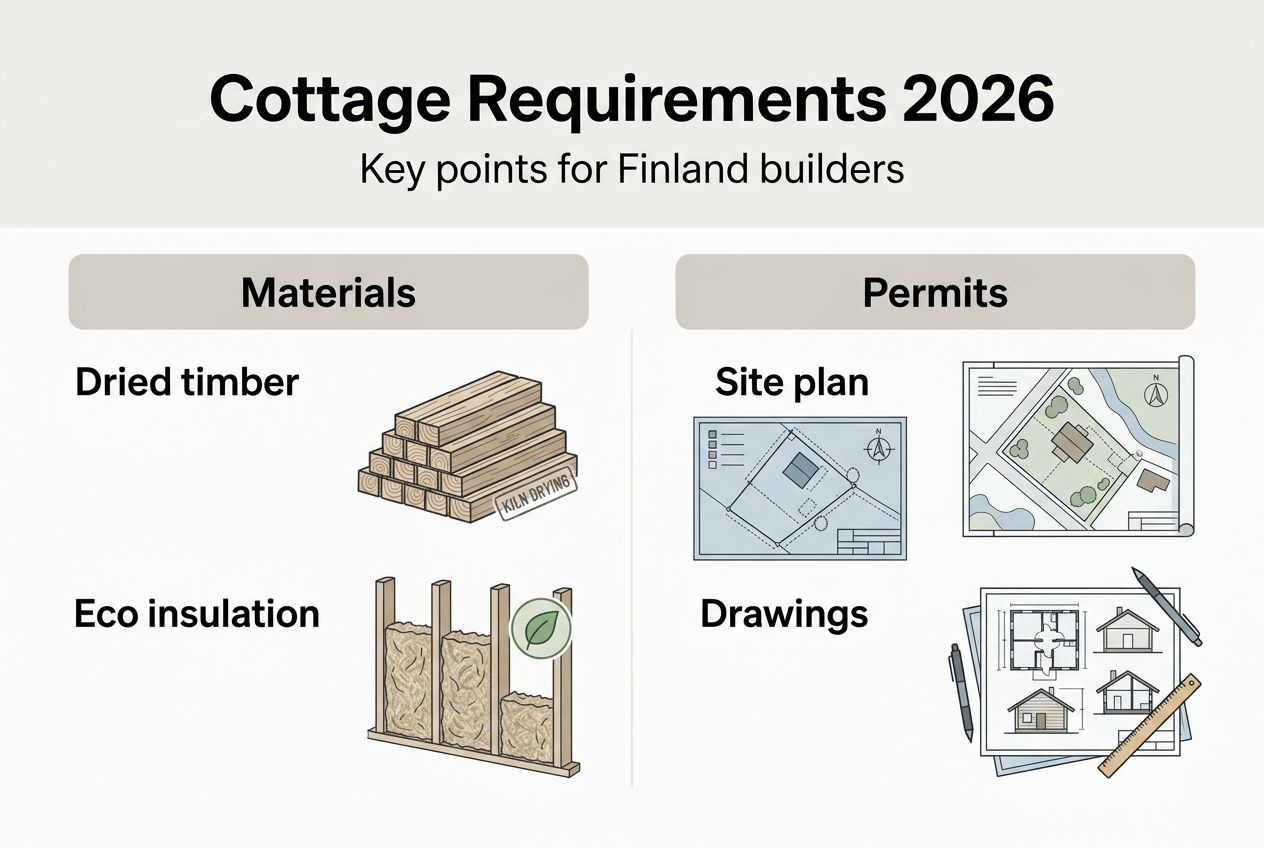
Material selection directly impacts both permit approval and long-term cottage performance. Finnish regulations specify minimum insulation values, typically requiring R-values of 6 to 8 for walls and 10 to 12 for roofs in cottage applications. These standards ensure energy efficiency and occupant comfort during cold winters. Your chosen materials must demonstrate compliance through technical specifications and test certifications.
| Material Type | Typical R-Value per inch | Durability Rating | Eco Credentials | Best Application |
|---|---|---|---|---|
| Finnish pine logs | 1.2 to 1.4 | Excellent (50+ years) | High (renewable, local) | Load-bearing walls |
| Spruce timber frame | 1.1 to 1.3 | Excellent (50+ years) | High (renewable, local) | Structural framework |
| Mineral wool insulation | 3.0 to 3.3 | Very good (30+ years) | Good (recyclable) | Wall and roof cavities |
| Cellulose insulation | 3.2 to 3.8 | Good (25+ years) | Excellent (recycled material) | Attic and wall fill |
| Triple-pane windows | R-5 to R-7 (full unit) | Very good (25+ years) | Moderate (energy savings) | All window openings |
Energy efficiency rules are critical for legal compliance and long-term cost savings in cottage builds. Beyond insulation values, regulations address air tightness, thermal bridging, and ventilation system efficiency. Modern Finnish cottages often incorporate heat recovery ventilation systems that maintain fresh air while minimizing heat loss. These systems are especially important in well-insulated, airtight structures where natural air exchange is limited.
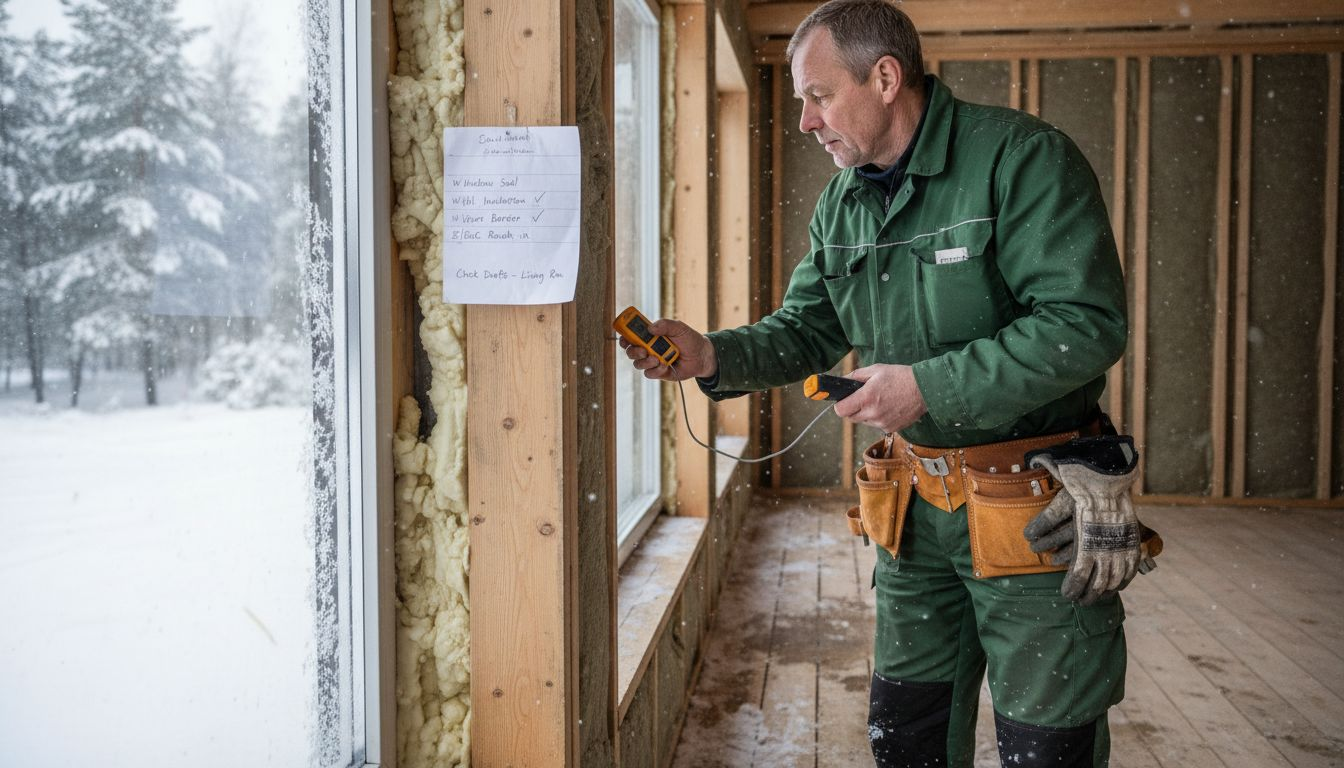
Pro Tip: Source materials from local Finnish suppliers whenever possible to ensure they meet national standards, reduce transportation environmental impact, and support regional craftsmanship traditions.
Timber quality standards in Finland are among the world’s strictest. Wood must be properly dried to specific moisture content levels, typically 15 to 18 percent for structural applications. This prevents warping, cracking, and dimensional changes after installation. Grading systems classify timber by strength, appearance, and defect levels. Your architect specifies appropriate grades for different applications, with higher grades required for visible structural elements and load-bearing components.
Sustainability considerations extend beyond material choices to construction practices. Minimizing waste through precise cutting and planning, recycling construction debris, and protecting surrounding ecosystems during building all contribute to responsible cottage development. Many Finnish municipalities now require waste management plans as part of building permit applications, documenting how you will handle construction materials and minimize environmental impact.
Weather protection during construction preserves material quality and prevents delays. Finnish weather can be unpredictable, with rain and temperature fluctuations affecting construction schedules. Covering materials, protecting partially completed structures, and scheduling weather-sensitive tasks during favorable periods maintains project momentum and quality standards.
Expert tips for smooth cottage building and permit approval
Experience reveals patterns in what makes cottage projects succeed or struggle. Expert craftsmanship and early design planning greatly increase the likelihood of smooth construction and permit approval. Learning from professionals who have navigated hundreds of cottage builds helps you avoid common pitfalls and make decisions that streamline your project.
Common mistakes derail cottage projects or create expensive corrections. Underestimating total costs ranks as the most frequent error, with builders failing to account for site preparation challenges, utility connection expenses, or finishing material costs. Starting design work without understanding local zoning restrictions leads to wasted architectural fees and redesign expenses. Choosing the lowest-cost contractor without verifying credentials, insurance, or references often results in quality problems or abandoned projects. Neglecting to establish clear communication channels with your builder creates misunderstandings about specifications, timelines, or change orders.
Essential expert strategies for project success include:
- Hire licensed architects familiar with Finnish cottage regulations and local municipality preferences for design approval
- Select builders with documented timber construction experience and verified references from similar projects
- Establish written contracts specifying all work scope, materials, timelines, payment schedules, and change order procedures
- Schedule regular site inspections during construction to verify quality and catch issues early
- Maintain detailed documentation of all decisions, changes, expenses, and communications throughout the project
- Build relationships with your local building inspector through proactive communication and responsiveness
- Plan for seasonal construction limitations and weather-related delays in your timeline
- Invest in quality materials and craftsmanship for critical building envelope components that affect long-term performance
Early involvement of architects and local authorities prevents costly changes and delays. Preliminary consultations before finalizing land purchase can reveal site-specific challenges or opportunities that influence your decision. Architects who regularly work with your chosen municipality understand unwritten preferences and can design solutions that gain faster approval. Building inspectors appreciate builders who proactively seek guidance rather than requesting forgiveness for violations.
Quality craftsmanship in timber cottage construction creates structures that serve families for generations, combining traditional Finnish building wisdom with modern performance standards. Investing in experienced professionals and proven materials pays dividends in comfort, durability, and pride of ownership.
Project management skills significantly impact cottage building success. Creating detailed schedules with task dependencies, milestone dates, and contingency buffers helps you coordinate multiple contractors and material deliveries. Tracking expenses against your budget in real time prevents cost overruns and identifies problems before they become critical. Maintaining organized files of permits, contracts, warranties, and specifications provides essential documentation for inspections, insurance, and future maintenance.
Quality control requires active involvement throughout construction. Even with excellent contractors, mistakes happen or miscommunications occur. Regular site visits allow you to verify work matches specifications and catch issues while corrections remain simple. Photograph construction progress for your records and to document proper installation of hidden components like insulation, vapor barriers, and structural connections. These records prove invaluable if questions arise during inspections or if you need to reference construction details years later.
Weather contingency planning acknowledges Finnish climate realities. Construction schedules should identify weather-sensitive tasks and plan them during favorable seasons. Foundation work proceeds best in dry conditions. Timber assembly benefits from moderate temperatures and low humidity. Exterior finishing requires several consecutive dry days. Building buffers into your timeline for weather delays prevents stress and allows flexible scheduling.
Discover expert timber cottage solutions at Huvila Seppälä
Navigating cottage building requirements becomes significantly easier when you work with specialists who understand every aspect of the process. Huvila Seppälä brings over 65 years of Finnish timber construction expertise to custom cottage projects, offering comprehensive guidance from initial planning through final construction. Their experience with custom timber cottage building ensures your project meets all regulatory requirements while achieving your vision for a perfect Finnish retreat.
The company provides detailed resources addressing financing timber buildings, permit procedures, and construction best practices specifically for Finnish cottage projects. Their transparent approach includes no hidden costs and clear quotations based on your custom designs. Whether you need a complete turnkey solution or manufacturing of precision timber frames for your contractor to assemble, Huvila Seppälä adapts their services to your project requirements. Discover why building with timber creates superior cottages that combine sustainability, durability, and authentic Finnish character.
FAQ
What documents do I need to apply for a cottage building permit in Finland?
Your building permit application requires architectural plans showing detailed floor layouts and elevations, a site plan indicating cottage placement and property boundaries, energy efficiency calculations proving thermal performance compliance, and proof of land ownership or building rights. Additional documents may include structural engineering specifications, environmental impact assessments for sensitive locations, and utility connection plans. Completeness of your initial application significantly affects processing speed.
How long does the building permit approval process usually take?
Permit approval typically takes four to twelve weeks depending on your municipality’s workload and your application’s completeness. Simple cottage designs on straightforward sites process faster than complex projects in environmentally sensitive areas. Municipalities may request clarifications or modifications during review, which extends timelines. Submitting thorough, professionally prepared applications with all required documentation minimizes delays and demonstrates your project’s compliance readiness.
What financing options are common for building timber cottages in Finland?
Banks offer specialized construction loans that release funds in stages as your cottage building progresses, protecting both borrower and lender interests. Green building loans provide reduced interest rates for cottages meeting enhanced energy efficiency standards or using certified sustainable materials. Government grants occasionally support sustainable rural development projects, though eligibility is competitive and specific. Personal savings typically cover 10 to 25 percent as down payment, with loans financing the remaining construction costs.
Are there special construction standards for energy efficiency in Finnish cottages?
Yes, Finnish regulations mandate specific insulation R-values, typically 6 to 8 for walls and 10 to 12 for roofs in cottage applications. Standards also address air tightness, thermal bridging prevention, and ventilation system efficiency to ensure comfortable, energy-efficient cottages. Modern requirements often include heat recovery ventilation systems in well-insulated structures. Material choices must demonstrate compliance through technical specifications and test certifications provided during permit applications.
Recommended
- Planning permission for wooden houses in Finland: 2026 – Hirsitalot, pihasaunat ja piharakennukset kotimaisesta hirrestä
- Build your Finnish outdoor sauna step by step in 2026 – Hirsitalot, pihasaunat ja piharakennukset kotimaisesta hirrestä
- 7 Essential Cottage Construction Tips for Custom Success – Hirsitalot, pihasaunat ja piharakennukset kotimaisesta hirrestä
- Building a Finnish Villa Tutorial: Step-by-Step Guide to Success – Hirsitalot, pihasaunat ja piharakennukset kotimaisesta hirrestä