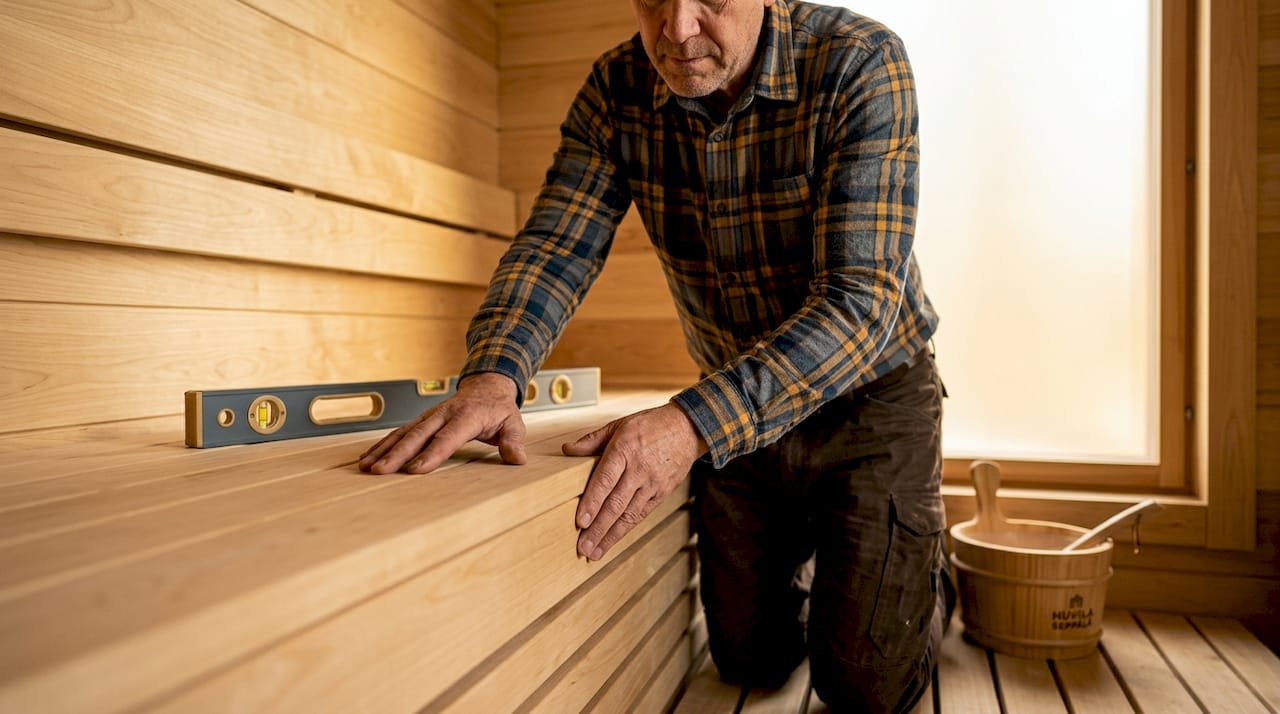
What defines premium sauna interiors: a guide
TL;DR:
- Premium sauna interiors are defined by high-quality, thermally modified wood, and precise engineering rather than gimmicks or extra features. Proper ventilation placement, correct heater sizing, and durable structural craftsmanship ensure long-lasting performance and authentic löyly experience. Building with genuine Finnish materials and sound design principles creates a sauna that remains functional and beautiful for decades.
Most homeowners shopping for a sauna focus on the wrong things. Chromotherapy lights, Bluetooth speakers, app controls — these extras get the attention, but they have nothing to do with what defines premium sauna interiors. True luxury in a sauna comes from the materials behind the panels, the engineering you never see, and the craftsmanship that holds everything together after a decade of heat and steam. This guide breaks down every foundational element that separates a genuinely premium sauna from one that just looks the part at first glance.
Table of Contents
- Why wood quality and treatment matter in premium sauna interiors
- Engineering airflow: the invisible heart of a premium sauna interior
- Heater positioning and stone volume: balancing heat for authentic löyly
- Structural design and craftsmanship: delivering longevity and elegance
- Comparing premium sauna components: what to prioritize for lasting quality
- Rethinking premium sauna interiors: it’s about ingredients, not gimmicks
- Explore custom Finnish timber sauna interiors with Huvila Seppälä
- Frequently asked questions
Key Takeaways
| Point | Details |
|---|---|
| Material quality matters most | Premium sauna interiors use heat-treated Finnish woods that resist moisture and provide lasting comfort. |
| Airflow drives sauna experience | Correct vent placement ensures fresh oxygen and soft, enveloping steam called löyly. |
| Heater and stone sizing balance heat | A properly sized heater with enough stones produces gentle, uniform warmth for true Finnish sauna. |
| Craftsmanship extends sauna life | Structural design and skilled joinery maintain sauna stability and beauty over decades. |
| Invest in ingredients, not gimmicks | True sauna luxury comes from quality materials and design, not superficial features. |
Why wood quality and treatment matter in premium sauna interiors
Wood is not a decorative choice in a sauna. It is the primary structural and sensory material, and every quality decision flows from it. The wrong species or finish will warp, crack, resin-bleed onto bare skin, or harbor mold within a few years. The right wood, properly treated, outlasts every gadget in the room.
Premium sauna interiors rely on dense, low-resin species like aspen and alder. Both stay cool to the touch even at high temperatures, which matters enormously when your skin is pressed against a bench. High-grade wood finishes that resist moisture and heat wear remain structurally stable under years of constant humidity and temperature swings. That stability is not accidental. It is engineered through thermal modification.
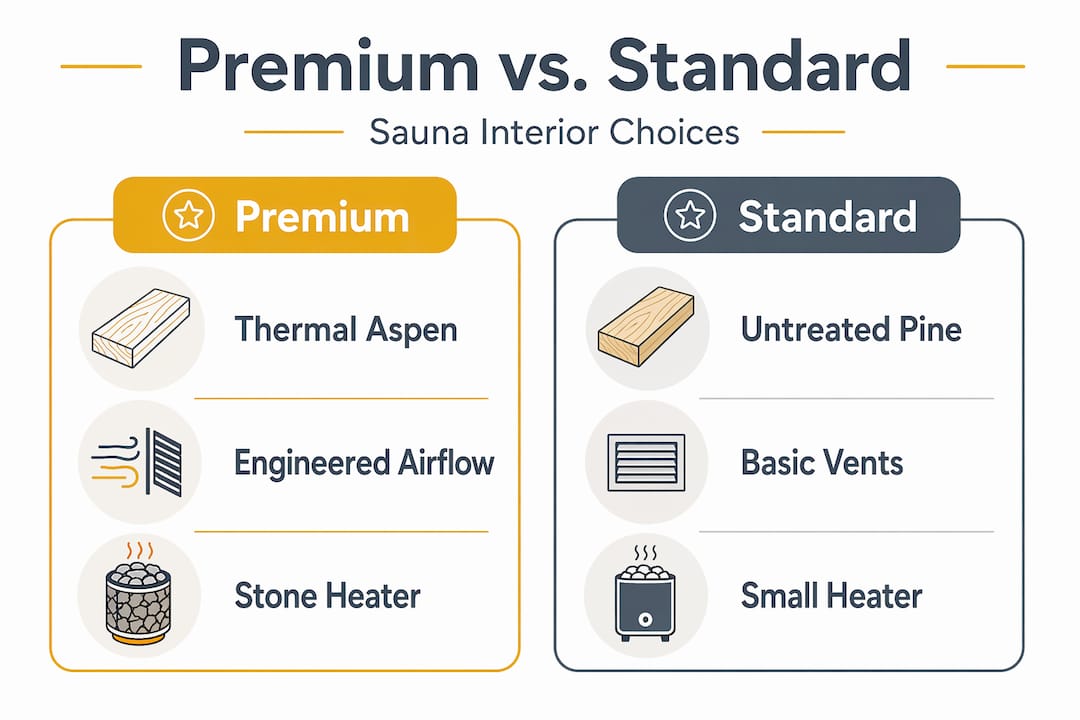
Thermal modification (also called heat treatment) is a process where wood is heated to temperatures between 160°C and 215°C in a low-oxygen environment. No chemicals are involved. The process permanently alters the wood’s cellular structure. Thermally modified wood gains significantly higher dimensional stability and moisture resistance compared to untreated alternatives, which is exactly what a humid, high-heat sauna environment demands.
The practical benefits are real and measurable. Heat-treated aspen and alder show reduced warping and cracking, lower microbial growth, and a longer usable lifespan on both benches and wall panels. You can also read more about the role of wood in sauna building to understand how species, grain, and treatment intersect in Finnish sauna construction.
Key qualities to look for in premium sauna wood:
- Species: Aspen, alder, or thermally modified versions of each
- Surface finish: Smooth planing with no exposed resin knots that can burn or blister
- Grain orientation: Vertical grain on bench planks reduces surface checking
- Treatment method: Thermal modification preferred over chemical preservatives
- Moisture content: Kiln-dried to 8–12% before installation
Pro Tip: Run your hand along a sample plank before ordering. Premium sauna wood should feel satiny and warm, not rough or sticky. Rough grain catches moisture and bacteria over time.
Engineering airflow: the invisible heart of a premium sauna interior
You cannot see proper ventilation, but you feel it within minutes. Walk into a sauna with poor airflow and the air feels stale, the steam hits harshly, and you start feeling oxygen-deprived before you have relaxed. Walk into a well-ventilated sauna and the heat feels soft, layered, and enveloping. That difference is engineering.

A premium sauna airflow system maintains consistent löyly (the Finnish concept of steam quality and sauna atmosphere) with at least six complete air exchanges per hour, which is the standard set by Finnish building codes. This is not a rough guideline. It is a minimum threshold for health, comfort, and heat performance.
The placement of intake and exhaust vents is precise, not approximate. Follow this order when evaluating or specifying a sauna ventilation layout:
- Intake vent placement: Position the intake low on the wall, directly near the heater base. This allows cool fresh air to feed the heater and rise naturally with the heat.
- Exhaust vent position: Place the exhaust on the opposite wall, below bench height. This creates a diagonal airflow path that washes the entire room.
- Vent sizing: Both vents should have adjustable covers so you can tune airflow to outside temperature conditions.
- Cross-ventilation check: Confirm there are no dead zones, especially in corners behind the bench structure.
- Post-session drying: After each session, open vents fully to speed drying and prevent mold buildup inside the wood.
“Proper vent placement — intake near the heater low, exhaust opposite wall below bench level — is the single most important factor for heat distribution and air freshness in a sauna interior.”
For homeowners navigating permit requirements and construction specs, understanding the requirements for sauna projects in Finland provides a useful framework, especially if you are building on a vacation property. If you want to see how ventilation integrates into full sauna design, the principles behind outdoor sauna design and authentic Finnish quality are directly applicable to interior planning as well.
Pro Tip: Never position an exhaust vent on the ceiling. Ceiling exhausts pull hot air out before it circulates through the bather zone, wasting energy and destroying löyly quality. Low placement is non-negotiable.
Heater positioning and stone volume: balancing heat for authentic löyly
The heater is the engine of the sauna. But engine size alone does not determine performance. Placement, stone volume, and how those elements interact with the room’s airflow determine whether you experience soft, rolling Finnish steam or dry, unpleasant heat that feels more like a forced-air oven.
Correct heater sizing and stone volume produce controlled, uniform heat without hot or cold zones. A heater that is too small for the room volume struggles to maintain consistent temperature. A heater with insufficient stones cannot absorb and release moisture slowly enough to generate the gentle steam that defines authentic löyly. Both mistakes are common in budget or feature-focused sauna builds.
| Room volume (m³) | Recommended heater output (kW) | Minimum stone weight (kg) | Target temperature range |
|---|---|---|---|
| Up to 6 m³ | 4–6 kW | 20–30 kg | 80–90°C |
| 6–10 m³ | 6–9 kW | 30–45 kg | 80–100°C |
| 10–15 m³ | 9–12 kW | 45–60 kg | 85–100°C |
| 15–20 m³ | 12–16 kW | 60–80 kg | 85–100°C |
What separates high-end sauna features in the heater category comes down to a few specific details:
- Stone type: Dense, volcanic stones like peridotite or olivine retain heat longer and release steam more evenly
- Heater position relative to benches: The heater should be positioned so radiant heat reaches all bench levels without direct line-of-sight intensity on bathers
- Electric vs. wood-fired: Wood-fired sauna stoves produce a softer infrared heat profile, but either type performs well when correctly sized
- Thermostat quality: In high-end sauna features, the thermostat should allow fine-tuning within a 5°C range rather than coarse on/off cycling
Understanding what the sauna project requirements in Finland specify for heater installation gives you a useful benchmark even outside Finland, since Finnish standards represent some of the most refined sauna construction guidelines in the world.
Structural design and craftsmanship: delivering longevity and elegance
Elements of premium saunas that people overlook most often are structural. The framework holding your bench, wall panels, and ceiling in place must withstand years of thermal cycling, meaning repeated expansion and contraction as temperatures swing from near-freezing to 100°C and back. Inferior structural choices fail quietly, showing up as creaking joints, warped panels, and benches that rock underfoot years before they should.
Beam-based construction directly impacts user experience, aesthetics, and service life under the sustained stress of sauna heat and humidity. A proper structural framework uses solid timber or engineered beams that allow the assembly to breathe and move as a unit rather than fighting against differential expansion.
What makes a sauna luxurious from a structural standpoint is not elaborate ornamentation. It is invisible precision. The joints are tight. The benches do not flex. The wall panels sit flush without gaps. These qualities come from a combination of mechanical joinery and material choices:
- Stainless steel fasteners throughout: Galvanized or carbon steel fasteners corrode in humid sauna conditions within years, staining the wood and loosening joints
- Tongue-and-groove panel installation: Allows lateral movement without cracking or buckling as wood expands
- Floating bench frames: Bench structures that are not rigidly fastened to the wall adapt to seasonal wood movement
- Solid timber corner joints: Dovetail or notched joinery holds without adhesives that break down under heat
- Sand-finished surfaces on sitting areas: Removes sharp grain edges and splinters while retaining the wood’s natural texture
The advantages of handcrafted timber structures and the deeper case for building with timber both speak to why precision in structural decisions translates directly into a sauna that ages gracefully and performs consistently decade after decade.
Comparing premium sauna components: what to prioritize for lasting quality
To help you make informed choices, here is a direct comparison of the key elements that define premium sauna interiors and how they stack up against standard alternatives.
| Component | Premium choice | Standard alternative | Long-term impact |
|---|---|---|---|
| Wall and bench wood | Heat-treated aspen or alder | Untreated spruce or pine | Premium lasts 2–3x longer with no resin bleed |
| Ventilation placement | Low intake, low opposite exhaust | Ceiling exhaust, random intake | Standard wastes heat, degrades löyly significantly |
| Heater stone volume | Correctly sized to room volume | Undersized stones | Small volume creates dry, harsh heat |
| Structural fasteners | Stainless steel throughout | Galvanized or carbon steel | Standard corrodes, stains, and loosens within 5 years |
| Panel installation | Tongue-and-groove, floating | Rigid nail-fixed panels | Rigid panels warp, gap, and crack under thermal cycling |
Material quality determines sauna performance at year one, five, ten, and twenty, which makes an upfront investment in premium materials more cost-effective over time than replacing components every few years. The math is not complicated. A sauna built with correct materials in 2026 that still performs flawlessly in 2046 is a better investment than one that needs bench replacement in year seven and panel work in year twelve.
Thermal modification enhances wood durability and moisture resistance in ways that untreated wood simply cannot match in a sauna environment. That is not opinion; it is measurable in moisture uptake rates and dimensional change over time.
Key priorities when specifying a premium sauna interior:
- Start with wood species and treatment before selecting any features or fixtures
- Confirm ventilation engineering from an experienced sauna builder, not a general contractor
- Size the heater and stone load to the actual room volume, not an estimate
- Specify stainless steel fasteners explicitly in your build contract
Pro Tip: Ask your builder for the thermal modification certification on any wood specified for benches and panels. Reputable suppliers will provide this documentation. If they cannot, the wood is likely untreated or misrepresented.
For a fuller picture of how wood selection and authentic outdoor sauna design connect to these priorities, exploring how Finnish builders approach wood selection and role in sauna construction fills in the practical details.
Rethinking premium sauna interiors: it’s about ingredients, not gimmicks
Here is something most sauna marketing will never tell you: the features that photograph well are rarely the ones that make a sauna worth owning for twenty years. The chromotherapy light will need a bulb replaced. The app integration will lose software support. The custom-tinted glass panels will look dated in a decade. Meanwhile, the alder bench you sat on in a properly built Finnish sauna in 2006 still feels exactly the same today.
When the ingredients are right, you do not need the gimmicks. Premium sauna quality comes from correct construction and material engineering, not from add-ons or marketing features designed to justify a price point. This is something we at Huvila Seppälä have observed over more than 65 years of manufacturing Finnish timber structures. Clients who prioritize wood quality, proper ventilation, and structural integrity are consistently satisfied long after the novelty features in their neighbors’ saunas have become liabilities.
There is also a deeper point about wellness. A sauna you genuinely want to use every day, one that feels right, smells of clean wood, produces soft steam, and holds its temperature without drama, that sauna changes how you live. It is not furniture. It is infrastructure for a healthier daily practice. The craftsmanship behind Finnish timber buildings reflects this philosophy: build it correctly once, and it rewards you for decades.
The uncomfortable truth for anyone designing a luxury sauna interior is that restraint is often the more expensive and more intelligent choice. Fewer moving parts. Better base materials. Sound engineering. That is what defines a premium sauna interior in practice, not in a product catalog.
Explore custom Finnish timber sauna interiors with Huvila Seppälä
Everything covered in this guide, from thermally modified wood and ventilation engineering to heater sizing and structural joinery, reflects how Huvila Seppälä approaches every custom sauna project. With over 65 years of experience crafting Finnish timber structures, we build saunas designed to perform at the level this guide describes, not just on delivery day, but twenty years later.
Our process starts with your drawings or design ideas and produces a fully custom sauna interior built from authentic Finnish wood, sized correctly for your space, and finished to standards that hold up under real daily use. Whether you are building a private home wellness space or a sauna retreat on a vacation property, we handle the details that matter most. Explore our approach to custom wooden structures, understand why Finnish wood outperforms alternatives in sauna environments, and see the full case for building with timber before you finalize your plans.
Frequently asked questions
What wood species are best for premium sauna interiors?
Heat-treated aspen and alder are the top choices because they stay cool to the touch, resist moisture absorption, and maintain dimensional stability under repeated heat and humidity exposure. Aspen and alder are specifically well-suited to thermal modification, which amplifies these natural advantages.
Why is ventilation placement critical in sauna design?
Intake and exhaust vent placement controls how fresh air feeds the heater and how steam circulates across the bather zone. Poor vent placement wastes heat energy and produces low-quality, uneven steam that degrades the entire sauna experience.
How does heat treatment improve sauna wood?
Heat treatment permanently reduces the wood’s ability to absorb moisture by altering its cellular structure without chemicals. Heat-treated wood resists warping, cracking, and mold far more effectively than untreated alternatives, making it ideal for bench and panel applications.
What role does heater size play in sauna quality?
A heater matched correctly to room volume, combined with the right stone weight, produces even, gentle heat throughout the bather zone rather than harsh hot spots. True löyly depends on this balance between heater output, stone mass, and air circulation working in concert.
Recommended
- Custom-Built Saunas Explained: Design, Benefits & Finnish Craft – Hirsitalot, pihasaunat ja piharakennukset kotimaisesta hirrestä
- Custom Sauna Design: 63% Better Wellness & Home Value – Hirsitalot, pihasaunat ja piharakennukset kotimaisesta hirrestä
- Sauna Types Compared: Choosing the Right Fit – Hirsitalot, pihasaunat ja piharakennukset kotimaisesta hirrestä