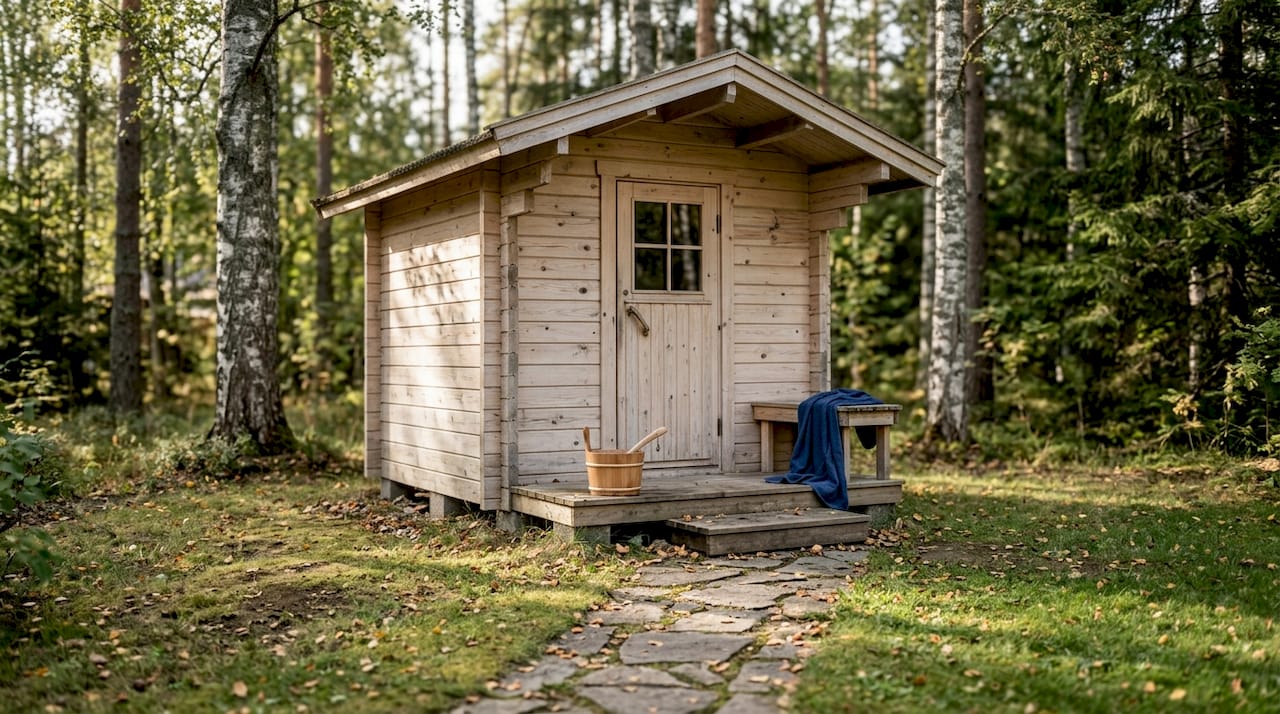
Outdoor sauna design: 5 keys to authentic Finnish quality
TL;DR:
- Authentic Finnish sauna design prioritizes heat quality, air movement, timber selection, and ritual.
- Proper stone mass, bench placement, timber choice, and ventilation create the genuine sauna experience.
- Focus on high-quality Finnish timber and precise structural details ensures long-lasting, authentic performance.
Most people assume that slapping some wood planks together, adding a heater, and calling it a sauna is enough. It isn’t. Authentic Finnish outdoor sauna design follows a precise logic built around heat quality, air movement, timber selection, and ritual. These aren’t just preferences — they’re the difference between a sweat box and a genuine Finnish sauna experience. Over our 65 years working with Finnish timber and log structures, we’ve seen every shortcut imaginable. This guide walks you through the real principles behind outdoor sauna design, so you can build something that lasts and actually feels the way it should.
Table of Contents
- What defines authentic outdoor sauna design?
- Materials: Why Finnish timber matters
- Foundational structure and layout: Bench, stove, and ventilation design
- Designing for experience: Lighting, views, and practical amenities
- The hidden truth: Why details matter more than trends
- Get started with expert Finnish timber sauna solutions
- Frequently asked questions
Key Takeaways
| Point | Details |
|---|---|
| Finnish foundation matters | Sauna design authenticity hinges on ventilation, bench height, and stone placement. |
| Material quality is crucial | Choose high-grade Finnish timber for durability, comfort, and a true sauna experience. |
| Ventilation and layout | Proper air flow and bench positioning are essential for optimal steam and safety. |
| Design for experience | Incorporate features like lighting, windows, and amenities for comfort and ritual. |
What defines authentic outdoor sauna design?
The word “sauna” is Finnish, and so is the philosophy behind it. Authentic outdoor sauna design isn’t about aesthetics first — it’s about function, specifically the quality of löyly (pronounced “loy-lu”), the steam produced when water is thrown onto hot stones. Without the right conditions, you don’t get löyly. You get humidity and disappointment.
Several core principles separate a genuine Finnish sauna from a generic steam room:
- Stone mass: A large, dense pile of stones holds heat longer and releases steam more evenly. Undersized stone loads produce weak, short-lived steam.
- Bench placement: Your feet must be above the level of the stones. This ensures you’re sitting in the hottest, most steam-rich air zone. Low benches are one of the most common design mistakes.
- Timber choice: The interior wood must handle repeated heat and moisture cycles without warping, releasing strong resins, or degrading quickly.
- Ventilation: Air must move in a controlled pattern to keep heat even and oxygen levels safe.
“The sauna is not just a room — it is a ritual environment where every element, from stone to ceiling height, shapes the quality of the experience.”
Ideal bench-level temperatures range from 70 to 100°C, and achieving that consistently requires all four elements working together. Miss one, and the whole experience suffers.
Ventilation follows a specific Finnish logic: intake low under heater (about 20 to 30 cm from the floor), exhaust high on the opposite wall (30 to 50 cm from the ceiling) to create natural convection. Adjustable vents let you fine-tune the löyly intensity. This isn’t decorative — it’s structural. A well-ventilated sauna stays comfortable at 90°C. A poorly ventilated one feels suffocating at 70°C.
For a detailed walkthrough of each step, the Finnish sauna setup guide covers the full process from layout to first heat.
Materials: Why Finnish timber matters
Now that you know what makes an authentic sauna, let’s examine the role of materials — starting with the essential qualities of Finnish timber.
Timber selection is not a cosmetic decision. The wood you use determines how the sauna performs for decades. Finnish pine and spruce grow slowly in cold northern climates, which produces tighter growth rings, higher density, and better resistance to the repeated moisture and heat cycles inside a sauna. This is a structural advantage, not a marketing claim.
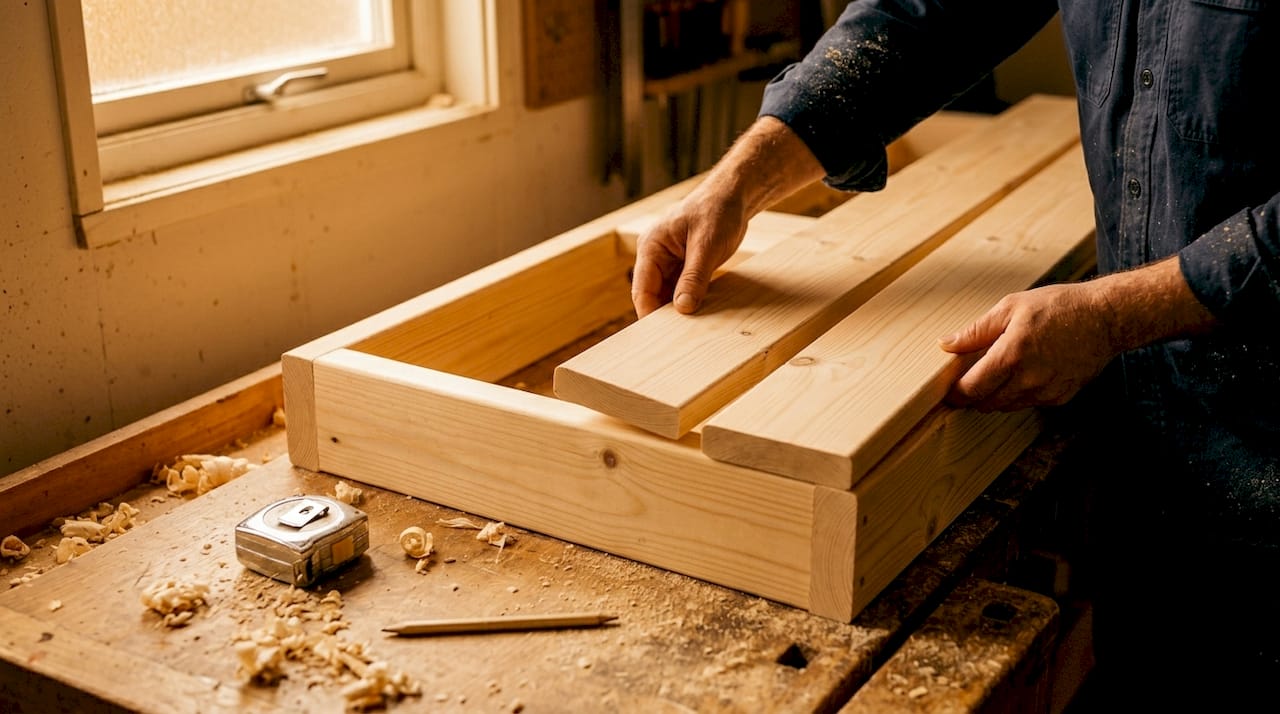
Here’s a quick comparison of common sauna timber options:
| Property | Finnish pine | Finnish spruce | Cedar |
|---|---|---|---|
| Density | High | Medium-high | Medium |
| Moisture resistance | Excellent | Very good | Good |
| Aroma intensity | Low | Very low | Strong |
| Resin release at heat | Minimal | Minimal | Moderate |
| Authenticity to Finnish tradition | High | High | Low |
The aroma point matters more than most people realize. Cedar is popular in North American sauna builds, but its strong scent can dominate the experience. As the Guild of the Saunamasters notes, authentic Finnish sauna design prioritizes löyly quality over wood aroma — the steam should be the sensory focus, not the lumber.
Finnish timber also carries an environmental advantage. Sustainably sourced Finnish forests are among the best managed in the world, with strict replanting and harvesting standards. When you build with Finnish wood, you’re choosing a material with a traceable, responsible supply chain.
Pro Tip: Always request full traceability documentation for your timber. Reputable suppliers can tell you exactly where the logs were harvested and how they were processed. This matters for both quality assurance and environmental accountability.
To learn more about what sets this material apart, explore the benefits of Finnish wood in detail before making your material selection.
Foundational structure and layout: Bench, stove, and ventilation design
Having chosen the right wood, it’s time to detail how the structure comes together — where benches, heater, and vents truly define the experience.
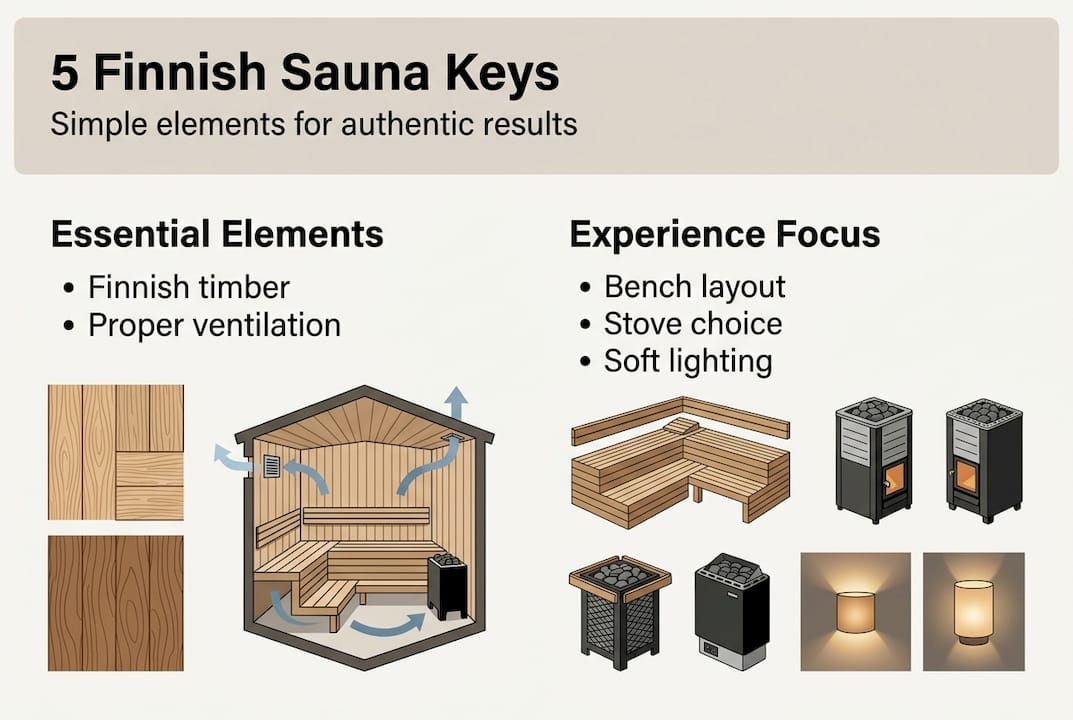
The kiuas (pronounced “kee-oo-as”) is the sauna stove, and its placement anchors everything else. The kiuas should sit in a corner or against a wall where it can radiate heat evenly across the room without creating dangerous hot spots near the door or benches.
Here are the key steps for building a sound sauna structure:
- Foundation: Use a concrete slab or pressure-treated timber frame that handles moisture and ground movement. Outdoor saunas need more robust foundations than interior rooms.
- Wall framing: Frame walls with enough depth for proper insulation. Finnish saunas use vapor barriers carefully — too little and you lose heat, too much and you trap moisture in the wrong places.
- Bench sizing: Upper benches should be 60 to 70 cm wide for comfortable lying down. Lower benches can be narrower at 40 to 50 cm.
- Stove placement: The kiuas goes in the corner farthest from the door, allowing heat to radiate across the full bench area.
- Ventilation: Intake low under heater, exhaust high on the opposite wall — this is non-negotiable for safe, even heat.
Here are typical dimensions and clearances for a standard outdoor sauna:
| Element | Recommended dimension |
|---|---|
| Room size | 6 to 12 square meters |
| Ceiling height | 210 to 230 cm |
| Upper bench height | 100 to 120 cm from floor |
| Kiuas clearance from bench | Minimum 50 cm |
| Vent intake height | 20 to 30 cm from floor |
| Vent exhaust height | 30 to 50 cm from ceiling |
Pro Tip: Install adjustable vent covers on both intake and exhaust. Being able to dial down the airflow mid-session lets you build and hold löyly precisely. Fixed vents are a missed opportunity for control.
For a full breakdown of the build sequence, the step-by-step sauna build resource walks through each phase with practical guidance.
Designing for experience: Lighting, views, and practical amenities
After nailing the core structure, let’s focus on those details that transform a good sauna into a beloved destination.
Once the fundamentals are in place, thoughtful design choices determine whether your sauna becomes a space you use daily or one you visit occasionally. The difference is almost always in the details.
Window placement is more important than most builders expect. A well-placed window toward a lake, forest, or garden creates a meditative quality that pure heat cannot. Position windows low enough to see the landscape while seated, not just while standing. Frosted glass on privacy-facing sides keeps the space intimate without blocking light.
Lighting should be indirect and warm. Harsh overhead lights destroy the atmosphere. Recessed fixtures behind the benches or low-mounted wall lights create the soft, cave-like glow that makes a sauna feel like a retreat rather than a utility room.
“Design for ritual, not just heat. The best saunas are spaces where time slows down — and every element, from the door handle to the view, should support that feeling.”
Here are the practical amenities that make daily use comfortable:
- Coat hooks and a changing area just outside the sauna door
- A shower or rinse station for cooling down between rounds
- A cooling deck or patio for outdoor air exposure
- A wooden water bucket and ladle for throwing water on the stones
- Safe, moisture-rated electrical outlets for lighting and accessories
- A thermometer and hygrometer mounted at bench level for monitoring conditions
Balancing privacy with landscape integration takes planning. Deciduous plantings around the sauna provide summer screening and open up winter views. A simple cedar or pine deck facing the best view costs little but adds enormous daily value.
For more ideas on personalizing your space, custom sauna design tips offer practical guidance on layout and amenity choices.
The hidden truth: Why details matter more than trends
Here’s something we’ve observed across decades of building with Finnish timber: the saunas people love most are rarely the ones with the most impressive features. They’re the ones where the fundamentals were done right.
Right now, glass-walled saunas with LED lighting and smart controls are everywhere on social media. They photograph beautifully. But glass walls lose heat faster than timber. LED strips don’t improve löyly. Smart controls can’t compensate for a bench that’s 20 cm too low or an exhaust vent on the wrong wall.
The clients who end up most satisfied are the ones who invested heavily in the invisible: dense Finnish timber, precise ventilation geometry, a kiuas with enough stone mass, and benches at exactly the right height. These things don’t show up in photos. They show up every single time you use the sauna.
Pro Tip: Spend your budget on timber quality and ventilation precision before you spend a single dollar on fixtures or decor. A sauna with perfect air flow and mediocre lighting beats a beautifully lit sauna with poor heat every time.
If you’re in the planning phase, custom log sauna planning is the right place to start thinking through these priorities before committing to a design.
Get started with expert Finnish timber sauna solutions
If you’re ready to bring true Finnish quality to your outdoor sauna, these expert resources are your next step.
Building an authentic outdoor sauna means making the right choices early — timber species, ventilation layout, bench geometry, and kiuas placement all need to align from the start. Getting those decisions right is much easier with the right guidance and materials behind you.
At Huvila Seppälä, we’ve been manufacturing Finnish timber frames and log structures for over 65 years. Every sauna we produce is built to customer drawings, using traceable Finnish wood and time-tested construction methods. Explore why Finnish wood makes such a difference in real-world performance, follow our step-by-step cottage guide for broader project context, or go straight to our custom Finnish sauna builds page to start planning your project with no hidden costs and fast delivery.
Frequently asked questions
What is the ideal size for an outdoor sauna?
A typical Finnish outdoor sauna is 6 to 12 square meters, giving enough room for proper heat circulation and comfortable use by 2 to 6 people.
Why does bench height matter in Finnish sauna design?
Proper bench height places users’ feet above the hot stones, which is essential for optimal löyly quality and even heat distribution across the body.
What is the difference between cedar and Finnish pine for sauna builds?
Finnish pine offers superior moisture resistance and a neutral aroma, while cedar’s strong scent can overpower the steam experience and is less authentic to traditional Finnish sauna culture.
How important is ventilation in an outdoor sauna?
Ventilation is critical — a correctly designed intake and exhaust system prevents overheating, maintains oxygen levels, and allows precise control of steam intensity during your session.
Can I build a modern-style sauna and keep it authentic?
Yes, as long as you preserve the core structure: correct bench height, proper ventilation geometry, adequate stone mass, and quality Finnish timber. Modern finishes and features can complement these fundamentals without replacing them.
Recommended
- How to Build Outdoor Sauna for Custom Finnish Style – Hirsitalot, pihasaunat ja piharakennukset kotimaisesta hirrestä
- Essential sauna prerequisites: build your outdoor retreat – Hirsitalot, pihasaunat ja piharakennukset kotimaisesta hirrestä
- How to Design Custom Saunas for Your Dream Outdoor Retreat – Hirsitalot, pihasaunat ja piharakennukset kotimaisesta hirrestä
- Build your Finnish outdoor sauna step by step in 2026 – Hirsitalot, pihasaunat ja piharakennukset kotimaisesta hirrestä