Sauna Types Compared: Choosing the Right Fit
Finding the right sauna for your Central European home can feel confusing when each type promises unique benefits and experiences. Choosing between Finnish, steam, or infrared options means thinking carefully about your wellness goals, heat preferences, and family needs. This guide breaks down the differences so you can confidently select materials, design, and features that match your vision for a true sauna retreat.
Table of Contents
- What Makes A Sauna A Sauna?
- Traditional Finnish, Infrared, And Steam Saunas
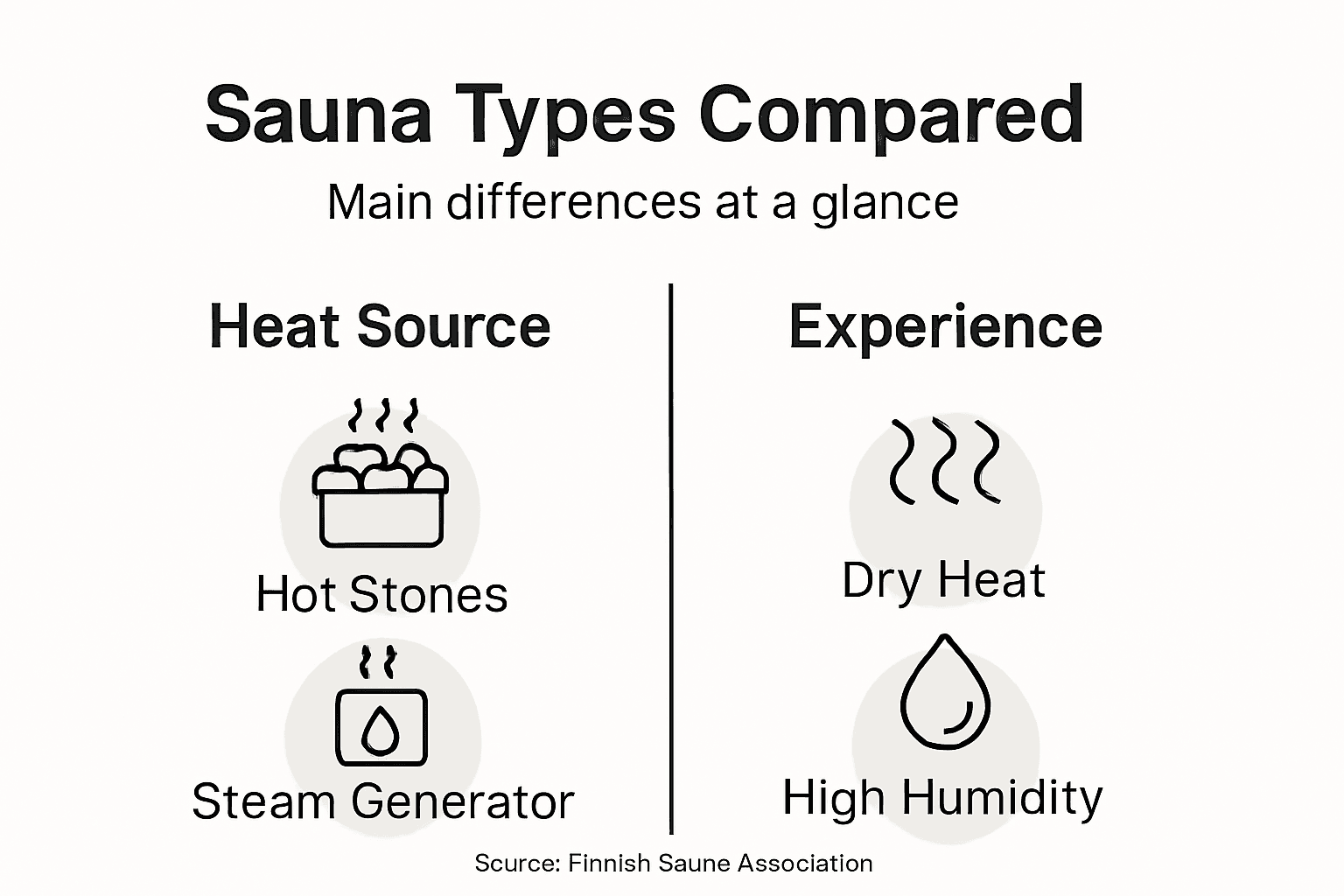
- Core Differences In Heat, Humidity, And Experience
- Design, Installation, And Regulatory Considerations
- Cost, Maintenance, And Common Mistakes To Avoid
Key Takeaways
| Point | Details |
|---|---|
| Sauna Essentials | A sauna combines heat and steam to induce sweating, offering both relaxation and cultural experience. Key elements include heat source, heated stones, and social rituals. |
| Types of Saunas | Traditional Finnish, steam, and infrared saunas provide different benefits. Choose based on your health goals and heat sensitivity. |
| Construction Considerations | Proper materials and adherence to local building codes are vital for safety and efficiency. Understand the implications of wood types and drainage systems. |
| Maintenance Importance | Regular maintenance is crucial for durability and safety. Schedule routine cleaning and inspections to prevent costly repairs in the long run. |
What Makes a Sauna a Sauna?
A sauna is fundamentally a heated room or building designed to produce dry or wet heat, encouraging perspiration for relaxation and wellness. But not every hot room qualifies—the sauna experience involves specific elements that define it as genuine sauna culture rather than just a hot space.
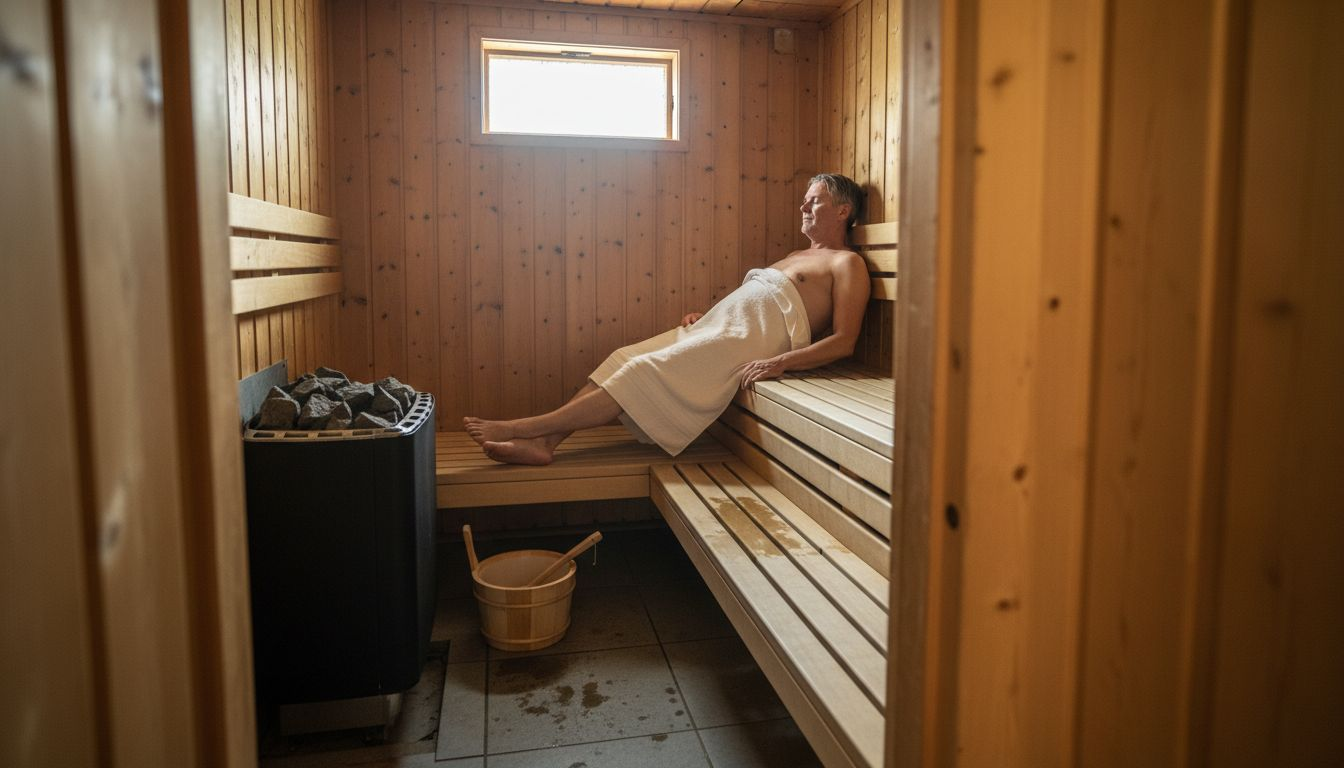
The core definition centers on heat and steam. Traditional saunas use heated stones as the heat source, and the magic happens when water hits those stones, creating steam bursts. This moment of steam release, called löyly in Finnish, forms the heart of the authentic sauna ritual. The temperature typically ranges from 70 to 100 degrees Celsius (158 to 212 degrees Fahrenheit), though personal preference varies widely.
What distinguishes saunas from other heated spaces comes down to three key factors:
- Dry or wet heat environment that induces sweating through natural body response
- Heated stone beds that serve as the thermal foundation, often with water-throwing capability
- Cultural ritual and social component emphasizing relaxation, cleansing, and personal wellness
The Finnish sauna tradition dates back over 2,000 years, establishing what most of Europe recognizes as the gold standard. In Central Europe, saunas evolved into something slightly different—they became integrated into spa culture within historic spa towns and resorts, combining wellness with social sophistication.
Here’s where Central European homeowners need clarity: saunas are not just about heat. The experience encompasses the entire sensory journey. You feel the warmth gradually building on your skin, experience the burst of steam when water meets hot stone, and emerge refreshed after cooling down. This cycle—heat, perspiration, cooling—defines the sauna practice.
The materials matter significantly too. A true sauna requires solid construction that retains heat efficiently. Wood plays a crucial role, particularly for interior surfaces, as it absorbs moisture and provides the authentic experience that metal or tile cannot replicate.
Here’s how sauna construction materials impact performance and comfort:
| Material Type | Key Properties | Best Fit For |
|---|---|---|
| Spruce/Pine | Retains heat, classic feel | Finnish saunas |
| Cedar/Hemlock | Resists moisture, aromatic | Infrared saunas |
| Tile | Handles high humidity well | Steam saunas |
| Insulation Foam | Prevents heat loss | All sauna types |
A sauna isn’t simply a hot room—it’s a complete thermal and cultural experience combining heat, steam, ritual, and genuine relaxation.
When you’re planning a custom wooden sauna for your Central European property, understanding these fundamentals helps you make decisions about size, temperature control, stone selection, and interior design. You’re not just building a structure; you’re creating a space for the sauna experience to unfold naturally.
Pro tip: Before finalizing your sauna design, test how different wood types feel on your skin in existing saunas—this firsthand experience reveals which materials will best suit your comfort preferences and climate conditions.
Traditional Finnish, Infrared, and Steam Saunas
Three main sauna types dominate the market today, each offering distinct experiences and benefits. Understanding the differences helps you choose what aligns with your health goals, climate, and space constraints.
Traditional Finnish Saunas
Finnish saunas deliver high-temperature dry heat with optional steam bursts when water hits hot stones. Temperatures typically reach 80 to 100 degrees Celsius (176 to 212 degrees Fahrenheit), creating intense cardiovascular benefits and deep perspiration.
The experience feels pure and straightforward. You enter the wooden room, sit on benches as the dry heat penetrates your body, and periodically throw water on heated stones to release steam bursts. This traditional method has remained largely unchanged for centuries because it works.
Key characteristics of Finnish saunas:
- High temperatures with low humidity initially
- Heat-tolerant bathers experience cardiovascular stress and relief
- Traditional wooden construction retains heat efficiently
- Cultural experience closely tied to relaxation rituals
- Requires proper ventilation and heat-resistant materials
Steam Saunas
Steam saunas operate at significantly lower temperatures but with very high humidity, typically between 40 and 60 degrees Celsius (104 to 140 degrees Fahrenheit). The moisture-rich environment soothes your skin and respiratory tract.
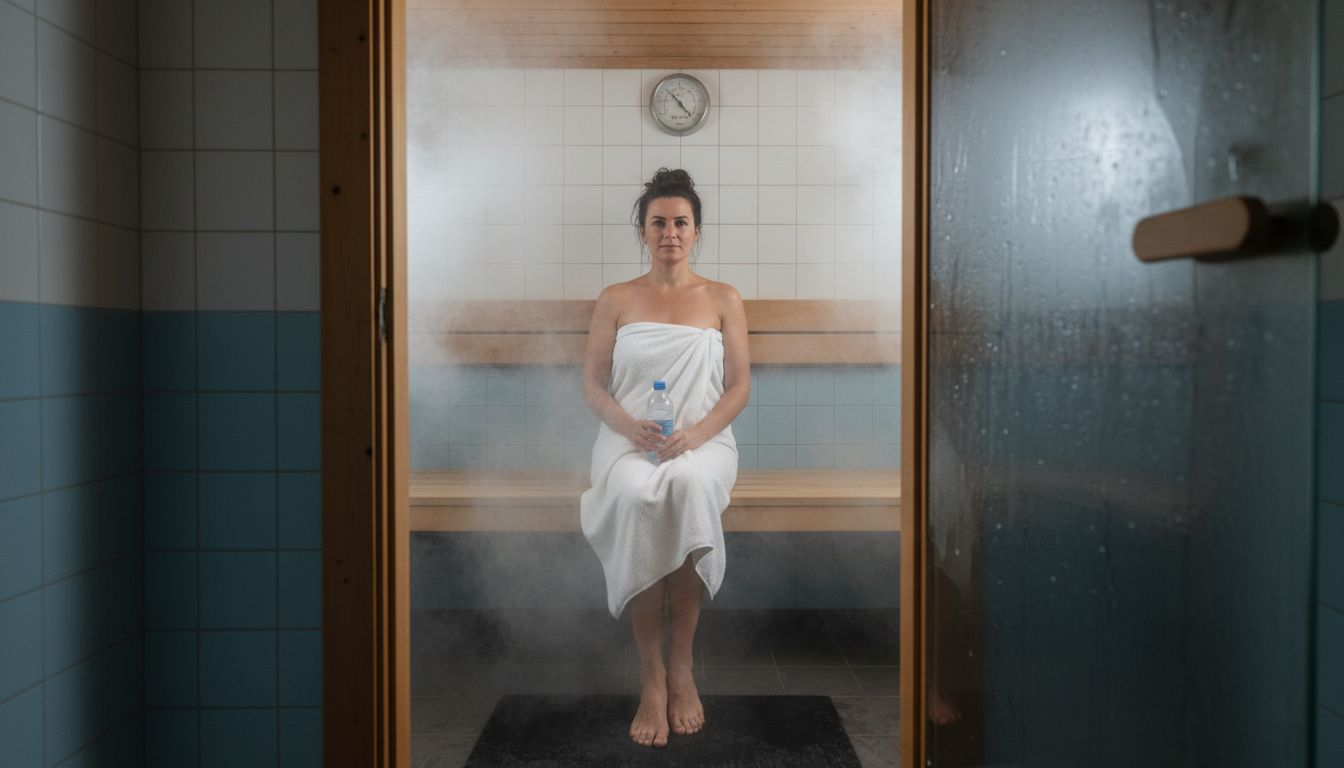
You’ll notice immediate differences from Finnish saunas. The air feels heavy and wet rather than dry and intense. Breathing becomes easier for some people, while others find the humidity overwhelming. Steam saunas are gentler on the cardiovascular system.
Steam sauna benefits:
- Lower temperature makes them accessible to heat-sensitive individuals
- High humidity benefits respiratory and skin health
- Shorter sessions feel equally refreshing
- Easier on the heart than extreme heat
- Requires different material choices (tile rather than wood)
Infrared Saunas
Infrared saunas use infrared radiation to warm your body directly rather than heating the surrounding air. Temperatures remain mild, typically 50 to 65 degrees Celsius (122 to 149 degrees Fahrenheit).
This technology represents modern efficiency. The infrared wavelengths penetrate your skin layers, warming you from the inside out. Sessions can last longer without the intensity of traditional saunas. Many people find infrared saunas ideal for muscle pain relief and circulatory improvement.
Infrared sauna characteristics:
- Gentle warming suitable for extended sessions
- Beneficial for muscle recovery and pain management
- Lower operational costs than traditional saunas
- Compact designs fit smaller spaces
- No steam production means minimal moisture control needs
Comparison at a Glance
| Factor | Finnish | Steam | Infrared |
|---|---|---|---|
| Temperature | 80-100°C | 40-60°C | 50-65°C |
| Humidity | Low | Very High | Low |
| Intensity | High | Medium | Low-Medium |
| Session Length | 15-20 min | 20-30 min | 30-45 min |
| Best For | Intensity seekers | Respiratory health | Muscle recovery |
Your choice depends on personal preference, health goals, and heat sensitivity—there’s no objectively “best” sauna type, only the best one for you.
Central European homeowners often gravitate toward traditional Finnish saunas because they align with regional spa culture heritage. However, the growing infrared market appeals to those seeking gentler, longer sessions without extreme heat.
Pro tip: Test all three sauna types at local spas or wellness centers before building your custom sauna—your body’s actual response matters far more than theoretical benefits or marketing claims.
Core Differences in Heat, Humidity, and Experience
The physical environment of each sauna type creates fundamentally different sensations on your body. These differences go beyond temperature numbers—they shape how your body responds and what you experience during each session.
Heat Intensity and How It Feels
Heat works differently depending on humidity levels. In a Finnish sauna, dry heat at 90 degrees Celsius feels less punishing than steam at 50 degrees Celsius. Your sweat evaporates immediately in dry heat, allowing your body to cool itself through perspiration.
Infrared saunas operate at mild temperatures because the radiation penetrates deeper. You feel warmth building gradually from inside your body rather than assault from the surrounding air. This gentleness allows longer sessions without exhaustion.
The sensation breakdown looks like this:
- Finnish dry heat feels intense and immediate upon entry
- Steam heat creates oppressive, heavy air that challenges breathing
- Infrared warmth builds slowly and feels internal rather than external
Humidity’s Role in Your Experience
Humidity levels determine how your body cools itself. In high-humidity environments, sweat cannot evaporate effectively. Your body struggles to regulate temperature, making sessions feel more taxing despite lower temperatures.
Dry heat allows efficient cooling. Water evaporates from your skin instantly, making even extreme temperatures manageable for experienced bathers. This is why Finnish saunas can reach 100 degrees Celsius while remaining tolerable.
Infrared saunas maintain low humidity because no steam is produced. Your skin stays relatively dry, and you can breathe normally throughout your session.
Physiological Response Differences
Your body reacts distinctly to each sauna type. Finnish high heat triggers intense cardiovascular activity—your heart rate increases dramatically, blood vessels dilate, and circulation intensifies. This creates significant health benefits but also demands physical conditioning.
Steam creates respiratory challenge. Humid air requires more effort to breathe, engaging your respiratory system directly. People with respiratory conditions find relief, while others experience difficulty.
Infrared triggers gentler circulation improvement:
- Sustained mild heat over longer periods
- Deeper tissue penetration without cardiovascular stress
- Gradual circulation enhancement rather than intense demand
- Accessibility for those avoiding extreme conditions
The Cooling Cycle
Cooling after heat creates the complete sauna ritual. In traditional practice, you plunge into cold water or step into cool air. This shock triggers major physiological response—blood vessels constrict, heart rate drops, and your entire system resets.
Infrared saunas cool more gently since you exit a mild temperature. Steam saunas allow comfortable cooling transitions. Finnish saunas demand dramatic temperature shifts for full benefit.
The cooling experience matters significantly:
- Finnish sauna: Dramatic plunge or cool immersion provides shock and recovery
- Steam sauna: Gradual cooling in cool air without extreme contrast
- Infrared sauna: Mild cooling transition suits sensitive individuals
Your comfort level with heat intensity and cooling shock determines which sauna type will feel most authentic and beneficial to your body.
Central European homeowners should consider their body’s actual heat tolerance rather than what they think they should tolerate. Family members with different heat sensitivities might prefer different sauna types for regular use.
Pro tip: Start your first session in whichever sauna type you choose at a lower temperature setting, then gradually increase heat on subsequent visits—this allows your body to acclimate and prevents overwhelming sensations that discourage future use.
Design, Installation, and Regulatory Considerations
Building a custom sauna involves more than choosing a sauna type. Your Central European property faces specific building codes, space limitations, and installation requirements that vary by location and sauna design.
Space and Layout Requirements
Finnish saunas require adequate room for benches at different heights. A functional sauna needs minimum dimensions of 1.5 by 2 meters (roughly 5 by 6.5 feet), though larger spaces accommodate more bathers comfortably. Higher ceilings improve heat distribution and reduce feeling cramped.
Infrared saunas demand less space. Pre-fabricated models fit into tight corners or basement areas. Steam saunas need ventilation pathways, adding complexity to confined spaces.
Key spatial considerations:
- Finnish sauna: Minimum 3 cubic meters; bench placement at two or three height levels
- Steam sauna: Requires drainage system and ventilation ducts
- Infrared sauna: Compact footprint, flexible placement options
- Cooling area: Space for cold plunge or shower nearby
- Entry vestibule: Buffer zone preventing heat loss when door opens
Building Code Compliance
Building permits vary significantly across Central European regions. Some countries require official approval for outdoor sauna structures, while others treat small garden saunas differently from indoor installations. Your local authority determines specific requirements.
Common regulatory elements include:
- Structural foundation requirements based on sauna type and size
- Electrical safety standards for infrared heating elements
- Ventilation specifications preventing moisture damage
- Fire safety measures for wood construction
- Distance from property lines or neighboring structures
Contact your municipality before design finalization. Permit approval timelines range from two weeks to several months depending on complexity. Building a sauna without proper permits creates liability and resale complications.
Material and Construction Standards
Wood selection significantly impacts durability and safety. Finnish saunas use heat-resistant woods like spruce or pine for interior surfaces. These materials withstand temperature fluctuations without warping or releasing harmful substances.
Infrared saunas typically use cedar or hemlock for interior paneling. Steam saunas require tile or moisture-resistant materials to prevent rot. Each type demands different construction approaches.
Construction standards address:
- Insulation thickness preventing heat loss
- Moisture barriers protecting underlying structures
- Ventilation pathways removing excess humidity
- Thermal mass of heating elements and stones
- Door and window specifications for heat retention
Professional Installation vs. DIY
Most homeowners benefit from professional installation for complex saunas. Finnish saunas require precise bench construction and stone bed preparation. Steam saunas need drainage system expertise. Infrared saunas demand electrical work meeting safety standards.
DIY installation works for simple infrared cabin kits but becomes risky for traditional designs. Professional builders understand local codes, material compatibility, and proper ventilation.
Building a sauna correctly means securing proper permits, using appropriate materials, and following local regulations—shortcuts create long-term problems and potential safety hazards.
Your custom wooden sauna should align with your property’s drainage, existing utilities, and climate conditions. Professional consultation during planning prevents costly mistakes.
Pro tip: Request written documentation of all permit approvals and building code compliance from your installer—this protects your investment, ensures future resale transparency, and demonstrates to insurance companies that your sauna meets safety standards.
Cost, Maintenance, and Common Mistakes to Avoid
Sauna investment extends beyond the initial build. Maintenance costs, operational expenses, and construction errors significantly impact your long-term satisfaction and wallet. Understanding these factors prevents expensive regrets.
Initial Investment Ranges
Finnish sauna costs vary dramatically based on size and customization. A basic outdoor wooden sauna for two to three people starts around 3,000 to 5,000 euros. Custom-built saunas with premium materials and professional installation reach 10,000 to 20,000 euros or higher.
Infrared saunas cost less upfront—typically 1,500 to 4,000 euros for quality pre-fabricated models. Steam saunas fall between these ranges but demand additional plumbing and drainage infrastructure adding 2,000 to 3,000 euros.
Compare common initial and ongoing sauna costs:
| Sauna Type | Entry Build Cost (EUR) | Annual Maintenance (EUR) | Lifespan (Years) |
|---|---|---|---|
| Finnish | 3,000–20,000+ | 200–400 | 20+ with care |
| Infrared | 1,500–4,000 | 50–150 | 15–20 |
| Steam | 4,000–10,000+ | 300–600 | 15+ (with proper upkeep) |
Cost breakdown factors:
- Materials: Wood quality, insulation, heating elements
- Labor: Professional installation expertise and time
- Site preparation: Foundation, utilities, drainage systems
- Permits: Municipal approval and inspection fees
- Customization: Size, finishes, additional features
Maintenance Requirements and Expenses
Regular maintenance prevents costly repairs and extends sauna lifespan significantly. Finnish saunas require quarterly cleaning, stone inspection, and wood treatment. Annual maintenance averages 200 to 400 euros for materials and labor.
Infrared saunas demand minimal upkeep—basic cleaning and occasional electrical inspections suffice. Steam saunas need monthly drainage checks and ventilation cleaning preventing mold accumulation.
Essential maintenance tasks:
- Clean interior surfaces monthly with soft brushes and mild water
- Inspect heating elements and stones quarterly
- Check ventilation pathways monthly for blockages
- Apply wood treatments annually protecting against moisture
- Verify electrical connections and safety features annually
Common Construction Mistakes
Poor ventilation ranks as the most damaging building error. Inadequate airflow causes uneven heat distribution, mold growth, and potential fire risk. Ventilation must move 6 to 8 air changes per hour for safe operation.
Other critical mistakes include excessive ceiling height reducing heating efficiency, improper heater or door placement disrupting air circulation, and insufficient insulation causing rapid heat loss. These errors cost hundreds in extra operating expenses annually.
Construction mistakes to avoid:
- Ceilings too high: Wastes heat; keep below 2.1 meters (7 feet)
- Inadequate insulation: Increases heating time and energy costs
- Wrong materials: Non-heat-resistant woods warp and release toxins
- Poor heater sizing: Undersized heaters struggle; oversized ones waste energy
- Neglected drainage: Water accumulation damages foundations
Maintenance Mistakes That Cost Money
Skipping regular cleaning invites mold, bacteria, and material degradation. Many homeowners neglect simple cleaning until problems require professional remediation costing thousands. Monthly basic cleaning prevents expensive issues.
Using harsh chemical cleaners damages wood finishes and disrupts the sauna’s protective coating. Ignoring humidity and temperature control equipment causes malfunction and safety hazards. Overlooking stone and heater inspections leads to dangerous failures.
Most sauna problems stem from simple neglect rather than design flaws—consistent basic maintenance prevents 90 percent of costly repairs.
Proper stone placement, appropriate material selection, and adequate insulation create saunas that operate efficiently for decades. These elements matter far more than aesthetic extras.
Pro tip: Create a simple maintenance calendar tracking cleaning dates, inspections, and seasonal checks—this discipline prevents forgotten tasks and catches problems early before they become expensive repairs requiring professional intervention.
Find Your Perfect Sauna with Authentic Finnish Craftsmanship
Choosing the right sauna type means balancing heat, humidity, and personal comfort with your lifestyle and space. Whether you are drawn to the intense dry heat of a traditional Finnish sauna or the gentle warmth of an infrared model, crafting an authentic wooden sauna tailored to your preferences is essential for enjoying the full sauna experience. Understanding terms like löyly and the importance of correct materials can make all the difference in creating a wellness retreat that truly fits you.
Experience the warmth and tradition of Finland with Huvila Seppälä’s custom wooden saunas. With over 65 years of expertise in log structures and timber frames, we provide personalized design options, transparent quotes, and fast delivery. Start your sauna journey now by exploring our trusted craftsmanship and let us help you build a space that combines cultural authenticity with modern comfort. Visit Huvila Seppälä to request your personalized offer and begin your sauna project today.
Frequently Asked Questions
What are the main differences between Finnish, steam, and infrared saunas?
Finnish saunas provide high-temperature dry heat, typically between 80-100°C, with low humidity. Steam saunas operate at lower temperatures (40-60°C) but have very high humidity, making the experience gentler on the cardiovascular system. Infrared saunas use mild temperatures (50-65°C) and direct radiation to warm the body, offering muscle recovery benefits without intense heat.
How does humidity affect the sauna experience?
Humidity levels significantly impact the sauna experience. In dry Finnish saunas, sweat evaporates quickly, allowing for effective cooling even at high temperatures. Conversely, steam saunas create a heavy, humid environment that can make breathing feel more challenging and requires the body to work harder to regulate temperature. Infrared saunas maintain low humidity, allowing users to experience warmth without overwhelming moisture.
What factors should I consider when choosing a sauna type?
When selecting a sauna, consider your heat sensitivity, health goals (such as muscle recovery or respiratory benefits), and the available space. Finnish saunas are ideal for those seeking intense heat and traditional rituals, steam saunas cater to individuals sensitive to heat or looking for skin benefits, and infrared saunas are perfect for longer, gentler sessions focused on muscle relief.
What maintenance is required for different sauna types?
Finnish saunas require quarterly cleaning, stone inspection, and wood treatment, costing about 200-400 euros annually. Infrared saunas demand minimal maintenance involving basic cleaning and occasional electrical inspections. Steam saunas need monthly drainage checks and ventilation cleaning to prevent mold accumulation and ensure proper functioning.
Recommended
- What Is a Finnish Sauna and Why It Matters – Huvila Seppälä
- Why Invest in Outdoor Saunas for Wellness and Value – Huvila Seppälä
- 7 Essential Sauna Planning Tips for Your Dream Retreat – Huvila Seppälä
- Outdoor Saunas: Enhancing Home Wellness Naturally – Hirsitalot, pihasaunat ja piharakennukset kotimaisesta hirrestä