Role of Craftsmanship in Cottages – Why It Matters
Choosing how your cottage will be built is not just about plans and price tags. Central European homeowners aiming for truly lasting beauty know that authentic Finnish craftsmanship makes a difference you can see and feel. This approach weaves together skilled hands, deep material understanding, and commitment to quality at every stage. Discover how genuine expertise in timber framing, transparent methods, and tradition-backed skill create a cottage as unique and resilient as your dreams. Traditional craftsmanship brings your vision to life in ways mass production never can.
Table of Contents
- Defining Craftsmanship In Cottage Building
- Traditional Versus Modern Building Techniques
- Key Materials And Construction Methods
- Ensuring Quality And Durability Standards
- Cost Factors And Value For Homeowners
Key Takeaways
| Point | Details |
|---|---|
| Craftsmanship Matters | Genuine craftsmanship in cottage building leads to structures that utilize quality materials and skilled techniques, ensuring durability and character. |
| Traditional vs. Modern Techniques | Opting for traditional building methods allows for site-specific adjustments that enhance the structure’s longevity, compared to the limitations of modern prefabrication. |
| Material Quality is Key | Investing in premium materials, like Finnish timber, yields long-term benefits, reducing maintenance costs and improving property value retention. |
| Transparency Promotes Trust | Builders who openly discuss their methods and materials demonstrate confidence in their craftsmanship, while evasiveness may signal potential issues in quality. |
Defining Craftsmanship in Cottage Building
Craftsmanship in cottage construction goes far beyond simply following blueprints and assembling materials. It represents a blend of skilled hands, deep material knowledge, and creative problem-solving that transforms raw timber into a structure with character and longevity. Unlike mass-produced homes built on assembly lines, a handcrafted cottage emerges from the builder’s intimate understanding of wood behavior, weather patterns, and the specific needs of your land. This isn’t theoretical knowledge learned in a classroom. It’s practical wisdom gained through years of hands-on work, where each project teaches lessons that carry forward to the next.
At its core, craftsmanship in cottage building means the builder understands timber at a fundamental level. They know how different wood species respond to moisture changes, how joints should be cut to withstand seasonal movement, and where reinforcement matters most. A skilled craftsperson recognizes that Finnish timber, for instance, brings specific qualities that demand particular handling techniques. They read the grain patterns, assess wood quality before construction begins, and make real-time decisions that mass-production simply cannot accommodate. This tactile knowledge comes from doing the work repeatedly, learning from mistakes, and refining techniques over decades. When you work with builders who apply Finnish craftsmanship in timber construction, you’re tapping into generations of accumulated expertise that shapes every cut, joint, and connection in your cottage.
Craftsmanship also means the builder takes personal responsibility for their work. They’re not operating within a factory system where accountability gets diffused across departments. A craftsperson’s reputation depends directly on the quality of what they build. This creates a powerful incentive to get details right the first time, to use quality materials, and to stand behind the finished structure. You’ll notice this difference immediately. The joints fit tightly. The finishes are smooth. The overall feel is solid in ways that factory-built homes simply don’t achieve. The builder has invested not just their labor, but their pride in the outcome.
Pro tip: When evaluating potential builders for your cottage project, ask them to describe their approach to timber selection and joint construction. Their answers will reveal whether they’re genuinely engaged in craftsmanship or simply executing assembly instructions.
Traditional Versus Modern Building Techniques
The split between traditional and modern building approaches represents one of the most consequential choices you’ll make for your cottage project. Traditional craftsmanship relies on manual skills passed down through generations, where builders learn through apprenticeship and hands-on experience. These methods embed what researchers call tacit knowledge, the kind of understanding that lives in a craftsperson’s hands and judgment rather than in instruction manuals. A traditional builder knows how timber will move in your specific climate because they’ve built dozens of cottages in similar conditions. They adjust techniques based on wood grain, moisture content, and seasonal factors. Modern industrial techniques, by contrast, optimize for speed and standardization. Factory-built components arrive on trucks, ready to assemble. Assembly sequences follow predetermined patterns. This approach works well for certain applications, but it often sacrifices the flexibility and adaptive decision-making that cottages actually require.
What gets lost in the shift toward mass production is significant. When construction becomes industrialized, the builder no longer needs to understand timber behavior at a deep level. Instead, they follow specifications written by engineers who may never see your specific property. Design decisions get locked in before construction begins, leaving no room for adjustments when real-world conditions demand them. Traditional methods, by contrast, allow the craftsperson to respond. The timber in your region has specific characteristics. Your property has unique drainage patterns and wind exposure. Your cottage needs to work within those actual conditions, not theoretical ones. A traditional approach means the builder makes dozens of small decisions during construction that collectively determine whether your cottage will settle properly, resist moisture, and age beautifully. Modern prefabrication assumes those decisions are already made. You get consistency across hundreds of similar projects, but you lose the customization that makes a cottage feel like it belongs on your land.
This doesn’t mean modern tools have no place in traditional building. Contemporary techniques like computer modeling can help craftspeople plan joints more precisely and source materials more efficiently. The distinction that matters is whether the builder maintains decision-making authority during construction or simply executes a predetermined assembly sequence. When evaluating potential builders, the difference becomes clear. Ask whether they’ll adjust approaches based on site conditions. Ask if they’ll explain their material choices or simply follow a specification sheet. Ask if they’ve built multiple cottages and learned from each one. These questions reveal whether you’re working with someone practicing true craftsmanship or managing an industrial process.
Pro tip: Request to visit a cottage the builder completed at least five years ago, and ask the owners about any settling, moisture issues, or unexpected maintenance needs. Long-term performance reveals whether construction decisions were made with genuine understanding or simply by following standard procedures.
Here’s how traditional and modern cottage building approaches compare at a glance:
| Aspect | Traditional Craftsmanship | Modern Prefabrication |
|---|---|---|
| Decision-Making | On-site, adaptive | Pre-set, factory-based |
| Material Selection | Selects timber by quality | Uses standardized lumber |
| Skill Transfer | Hands-on apprenticeship | Manual-based training |
| Flexibility | Adjusts to site needs | Limited customization |
| Long-term Performance | Designed for durability | Consistency, not longevity |
Key Materials and Construction Methods
Wood stands as the foundation of authentic cottage building, and the quality of that wood determines nearly everything about your finished structure. Finnish timber, in particular, brings specific advantages that have made it the choice for generations of cottage builders across Central Europe. The trees grow slowly in the Nordic climate, creating dense, stable wood with tight grain patterns. This density means the timber resists moisture movement, warping, and decay far better than faster-growing species. When a craftsperson selects timber for your cottage, they’re not simply choosing boards. They’re evaluating moisture content, grain direction, knot placement, and growth ring patterns. A builder practicing true craftsmanship will season timber properly before construction, sometimes waiting months to ensure moisture levels match your regional climate. This patience upfront prevents the settling, cracking, and shifting that plague hastily built cottages years after completion.
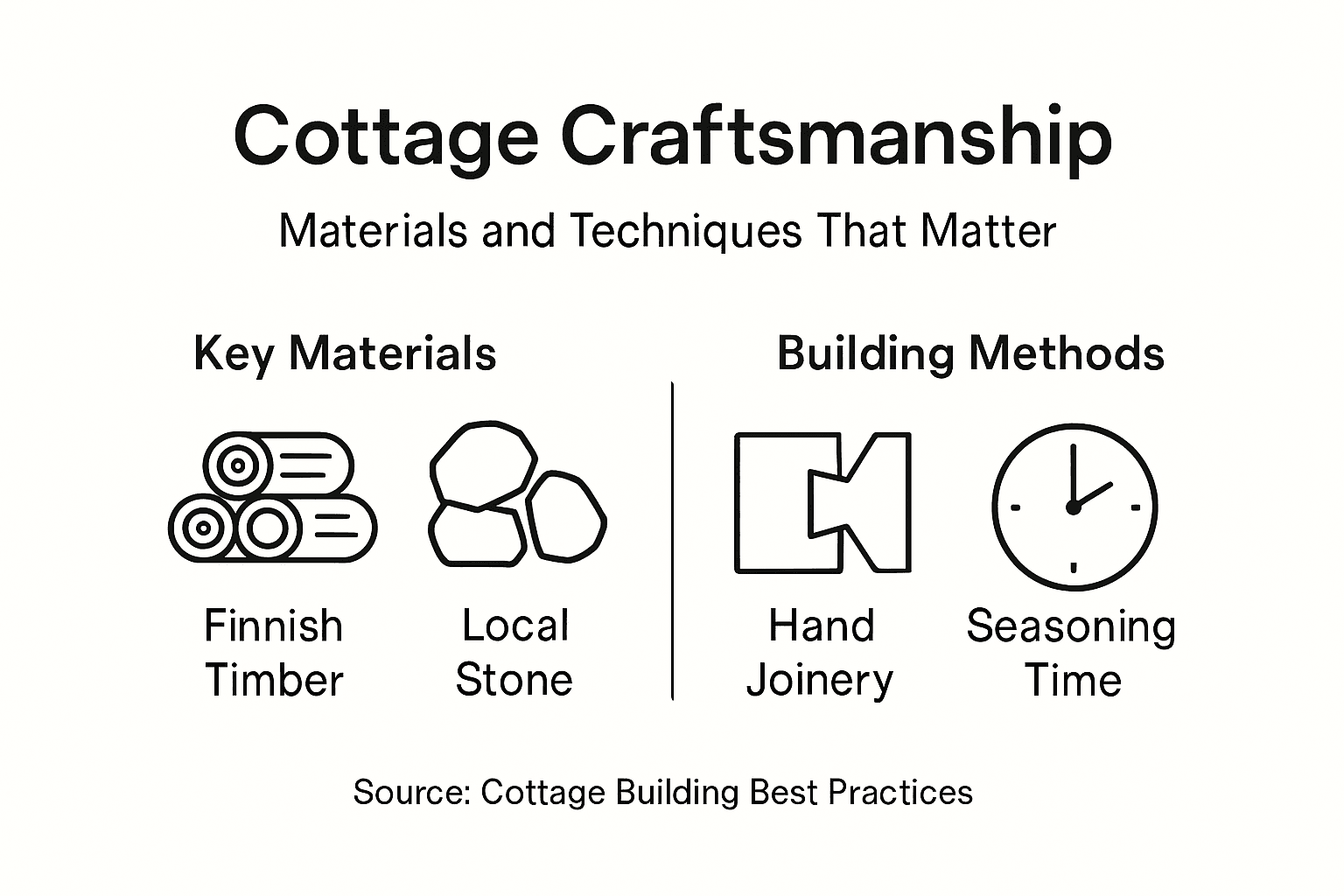
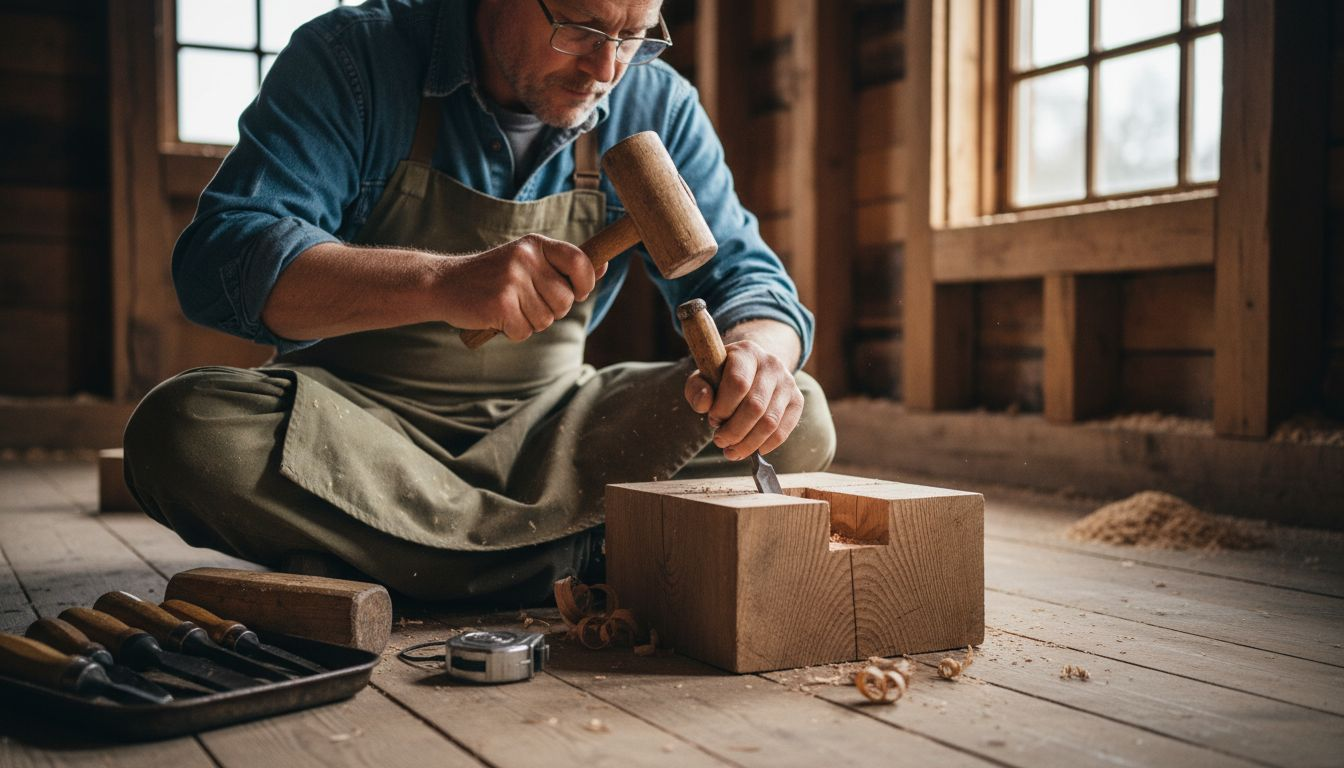
Beyond timber, artisanal joint-making represents the technical heart of quality cottage construction. Traditional methods like mortise and tenon joints, lap joints, and scarf joints create connections that strengthen over time rather than weaken. These joints don’t rely on fasteners or adhesives that can fail. Instead, the wood pieces interlock mechanically, with the grain structure itself providing the strength. A craftsperson cuts these joints by hand, making minute adjustments based on the specific wood they’re working with. Modern industrial construction often replaces these joints with bolts, brackets, and metal plates. Those components work, certainly, but they introduce potential failure points and don’t adapt to the wood’s natural movement. The relationship between architect and craftsperson becomes critical here. The design must account for how the wood will actually behave, how joints will settle, and how seasonal moisture changes will affect the structure. This close collaboration ensures that aesthetic design intent and material reality work together rather than fight each other.
Secondary materials matter too, though wood takes the spotlight. Stone foundations, when used, should come from local quarries and laid with lime mortar rather than cement, allowing moisture movement that protects the structure long-term. Roofing might use slate, wood shingles, or traditional tiles, each bringing different character and requiring specific carpentry knowledge. Windows and doors in traditional cottages feature multiple panes and substantial frames that provide both insulation and a particular aesthetic authenticity. Metal components, when present, typically include hand forged details in wrought iron or copper that patina beautifully over decades. These aren’t simply functional elements. They’re expressions of the craftsmanship embedded throughout your cottage.
Pro tip: Request detailed specifications about timber sourcing, seasoning time, and joint types from your builder before signing any agreement. Builders confident in their craftsmanship will explain these choices eagerly, while those cutting corners will offer vague answers or rush past technical details.
Summary of key materials and their roles in quality cottage construction:
| Material | Main Function | Impact on Longevity |
|---|---|---|
| Finnish Timber | Structure/Framework | Superior moisture resistance, less warping |
| Stone (local) | Foundation | Supports weight, enables moisture movement |
| Lime Mortar | Jointing Stone | Promotes breathability, reduces cracking |
| Wrought Iron/Copper | Hardware/Details | Long-lasting, develops attractive patina |
| Traditional Roofing (slate/wood) | Weather Protection | Endures climate, adds authenticity |
Ensuring Quality and Durability Standards
Quality in cottage building isn’t something you can inspect into a structure after it’s built. It emerges from the deliberate choices made during planning, material selection, and construction execution. A craftsperson committed to durability thinks decades ahead, not just to project completion. They ask themselves whether the joints they’re cutting will still function properly after 50 years of wood movement. Whether the moisture barriers will remain effective through endless freeze-thaw cycles. Whether the foundations will support the structure as timber settles and seasons. This long-term perspective separates genuine craftsmanship from rushed construction. European research on heritage building preservation shows that structures built with this mindset consistently outlast those built for short-term economics. The cottages that last centuries are those where the builder understood they were creating something meant to transcend their own involvement.
The transmission of skill becomes critical here. Quality standards don’t exist in documents alone. They live in the hands and judgment of experienced builders who learned from mentors, who learned from their mentors. When specialized knowledge gets lost because experienced craftspeople retire without passing on their expertise, quality standards decline across an entire industry. This isn’t theoretical. European studies document exactly this pattern, with aging workforces threatening the continuation of traditional building practices. When you choose a builder, you’re not just hiring labor. You’re accessing a lineage of accumulated knowledge about how to build cottages that genuinely last. Ask your builder about their training. Who taught them? How many cottages have they completed? Do they still learn from other craftspeople? These questions reveal whether you’re working with someone embedded in a tradition of quality or someone who learned from instructional videos.
Transparency about materials and methods serves as a quality control mechanism. A builder practicing true craftsmanship will explain why they’re choosing specific timber species, why joints are cut particular ways, why particular foundation approaches suit your property. They’ll provide written specifications. They’ll welcome site inspections during construction. They’ll stand behind their work with guarantees because they’re confident in what they’ve built. Builders cutting corners, by contrast, resist detailed questions and rush inspections. They offer vague explanations about materials or insist on sealed walls before work is complete. Watch for these signals. Quality demands transparency because durability depends on countless decisions made correctly, and those decisions require active oversight and knowledge-sharing. When a builder hides their process, they’re hiding the reasons their quality might suffer.
Pro tip: Ask your prospective builder for references from cottages they completed at least 10 years ago, and specifically inquire about structural integrity, moisture issues, and whether the builder remained accessible for questions after project completion. Long-term relationships reveal confidence in craftsmanship quality.
Cost Factors and Value for Homeowners
Yes, a handcrafted cottage costs more upfront than a prefabricated alternative. The skilled labor isn’t cheap. Premium timber that’s been properly seasoned commands higher prices than lower-grade materials. Custom design work requires time and expertise. But framing this as simply a cost issue misses the actual economics of cottage ownership. Think about it differently. You’re not comparing prices at a store where everything gets replaced in a few years. You’re investing in a structure meant to shelter your family for decades, possibly generations. A cottage built with genuine craftsmanship performs differently over that timespan. It doesn’t develop stress cracks from poor joint work. It doesn’t experience catastrophic settling because green timber was rushed into service. It doesn’t require constant maintenance and expensive repairs because corners were cut during construction. The higher upfront investment translates directly into lower long-term costs and significantly higher property value retention.
The materials themselves represent a meaningful portion of cost difference. Premium Finnish timber costs more than commodity lumber, but it brings durability that cheaper wood simply cannot match. Hand-cut joinery takes time. A single complex joint might require hours of skilled labor that machine-cutting could theoretically complete faster. But those joints, when properly executed, strengthen over time and adapt to wood movement in ways that fasteners and brackets cannot. When you’re comparing quotes, you’re often not seeing these material and labor differences detailed. One builder might quote a lower price by using inferior timber, reducing seasoning time, or substituting simple fastener connections for traditional joinery. Another builder quotes higher because they’re using premium materials and techniques that will still be sound 75 years from now. The quotes look different, but the cottages won’t age the same way.
Research on European craft sectors demonstrates that handcrafted homes retain value far better than mass-produced alternatives. Uniqueness matters to buyers. Authenticity matters. When you eventually sell, potential purchasers recognize quality craftsmanship. They understand that a cottage built with traditional methods and premium materials represents a genuine asset, not a commodity structure that depreciates like a car. That cultural significance and durability translate into market value. Beyond resale, there’s the intangible value of living in a space that was created with care and skill. The cottage doesn’t just shelter you. It expresses the maker’s commitment to quality. It ages beautifully rather than deteriorating visibly. It becomes the kind of place people want to spend time in, the kind of property that strengthens your connection to your land. These benefits don’t appear on construction invoices, but they compound throughout your ownership.
Pro tip: Request detailed cost breakdowns from builders that specify material grades, timber species, seasoning time, and labor hours for specific techniques like joint-making. Comparing these breakdowns reveals which builders are investing in genuine craftsmanship versus cutting costs on invisible details.
Experience True Craftsmanship in Your Cottage Project
The article highlights the critical role of genuine craftsmanship in building cottages that last for generations. It reveals common challenges such as poor timber selection, inadequate joint construction, and loss of skilled knowledge—problems that lead to costly maintenance and diminished home value over time. If you want to avoid settling issues, moisture damage, and fragile structures that come from rushed or industrialized building methods, choosing a builder who embraces true craftsmanship is essential.
At Huvila Seppälä, we bring over 65 years of experience crafting custom timber frames and log structures from premium Finnish wood. Our commitment matches the article’s emphasis on:
- Selecting and seasoning timber with expert precision
- Handing joint construction that strengthens with time
- Offering flexibility tailored to your site conditions and personal design
Discover how we can help you build a cottage that not only stands strong but ages beautifully with you. Visit Huvila Seppälä, explore our custom options for log houses and timber frames, and request your transparent, no-hidden-cost quote today. Act now to secure expert craftsmanship that turns your vision into a timeless home.
Frequently Asked Questions
What is craftsmanship in cottage building?
Craftsmanship in cottage building refers to the skilled techniques and personalized approach that builders apply to create durable and unique structures. It involves deep knowledge of materials, particularly timber, and adaptive decision-making throughout the construction process.
Why is traditional craftsmanship preferred over modern industrial techniques?
Traditional craftsmanship is preferred because it allows builders to adapt to site conditions, understand timber behavior, and make real-time adjustments. This results in a more tailored construction that considers local factors, enhancing the cottage’s long-term performance and durability.
How do material choices impact the quality of cottage construction?
Material choices significantly affect cottage quality. Using premium materials, such as properly seasoned Finnish timber, ensures better resistance to moisture and warping, contributing to the overall longevity and aesthetics of the structure. In contrast, inferior materials can lead to issues like settling and decay over time.
What should I ask my builder to assess their craftsmanship?
When evaluating a builder, inquire about their approach to timber selection, joint construction, and how they’ve adjusted techniques based on previous projects. Asking to visit older completed cottages can also reveal the long-term performance and quality of their work.
Recommended
- What Is a Cottage Villa and Why It Matters – Huvila Seppälä
- 7 Essential Cottage Construction Tips for Custom Success – Huvila Seppälä
- Why Build a Sauna Cottage: Health, Value, and Style – Huvila Seppälä
- 7 Types of Finnish Cottages Every Homeowner Should Know – Huvila Seppälä