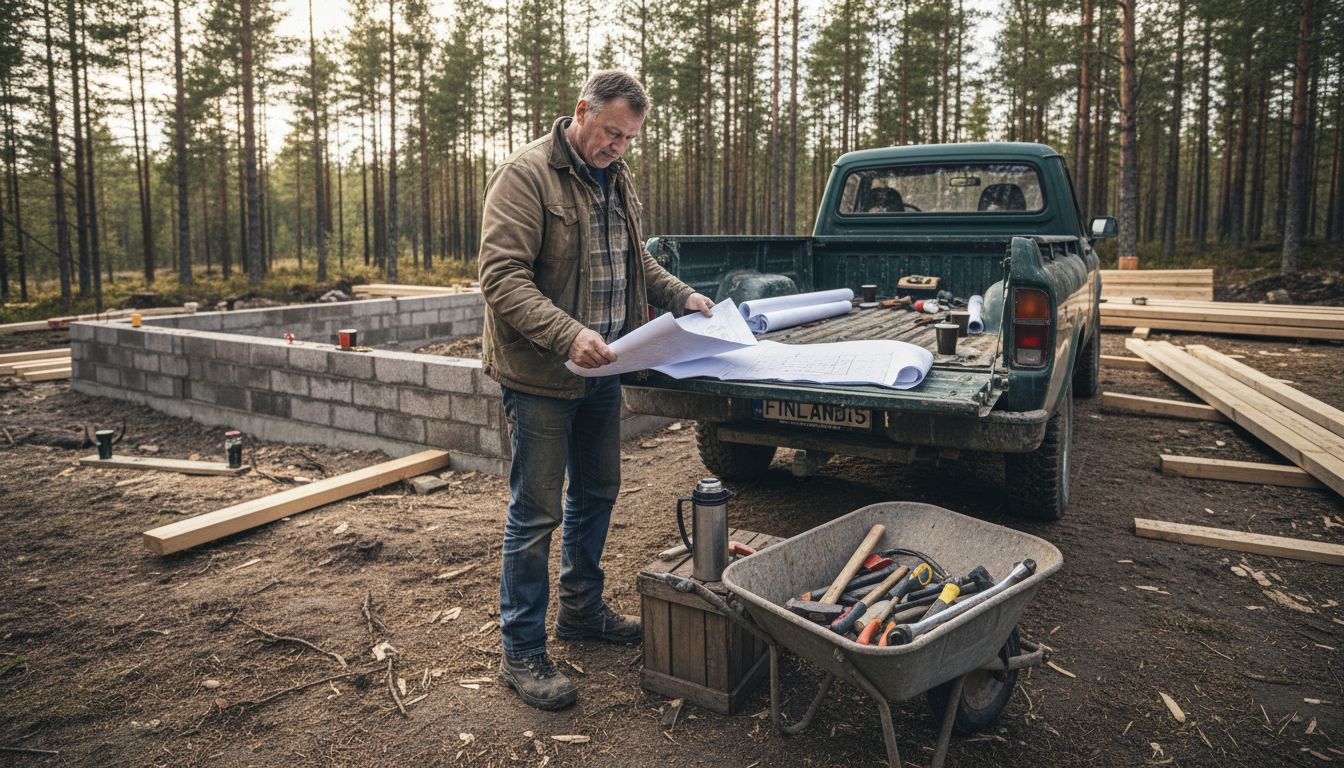
Building a Finnish Villa Tutorial: Step-by-Step Guide to Success
Transparent pricing and eco-friendly timber are priorities for more than 60 percent of Central European homeowners planning custom Finnish villas. While many dream of a timeless wooden retreat, navigating local permits and material choices feels far less straightforward than with the typical American prefab home process. This guide reveals the smart strategies these homeowners use to secure reliable timber frame solutions, meet environmental goals, and avoid expensive missteps right from the very first step.
Table of Contents
- Step 1: Assess Prerequisites And Secure Project Permits
- Step 2: Design Your Custom Finnish Villa Plan
- Step 3: Select Finnish Timber And Finalize Materials
- Step 4: Construct The Timber Frame And Log Structure
- Step 5: Verify Quality And Complete Final Checks
Quick Summary
| Major Insight | Detailed Explanation |
|---|---|
| 1. Understand Permit Requirements | Research local zoning laws and acquire necessary documentation to comply with Finnish building regulations. |
| 2. Collaborate with an Architect | Work with an experienced architect to create a detailed design that reflects your style and timber construction specs. |
| 3. Select Quality Finnish Timber | Choose high-quality timber that provides the durability and performance needed for your villa’s design. |
| 4. Ensure Accurate Timber Frame Construction | Use precise traditional joinery techniques to maintain structural integrity and manage moisture levels during assembly. |
| 5. Verify Quality with Inspections | Conduct thorough inspections to ensure compliance with building standards and address any issues before completion. |
Step 1: Assess prerequisites and secure project permits
Building a Finnish villa requires strategic navigation through Finland’s complex permitting landscape. Your initial focus will involve understanding local regulatory requirements and securing the necessary documentation for your timber home construction project.
The permit acquisition process begins with comprehensive research into municipal zoning regulations and building codes. You’ll need to prepare detailed architectural drawings that demonstrate compliance with local spatial planning guidelines. This typically involves submitting technical documentation to your local municipal planning office, which will review your proposed villa design against established building permit requirements for timber structures. Key documents include site plans, architectural blueprints, structural engineering specifications, and environmental impact assessments.
Most Finnish municipalities require multiple permit stages. You will first submit an initial application detailing your project scope, followed by a technical review where authorities assess structural safety, environmental considerations, and adherence to regional building standards. Expect this process to take approximately 4 to 8 weeks, depending on your specific municipality’s processing times and the complexity of your villa design.
Pro Tip: Schedule a preliminary consultation with your local municipal planning office before finalizing architectural designs to identify potential regulatory challenges and streamline your permit approval process.
Here’s a summary of permit and documentation requirements at each stage of building a Finnish villa:
| Construction Stage | Key Documents Required | Typical Review Focus |
|---|---|---|
| Initial Application | Site plan, architectural blueprints | Compliance with zoning, project scope |
| Technical Review | Structural specs, environmental assessments | Safety, environment, standards |
| Final Approval | Full documentation package, compliance evidence | Confirmation of all regulations met |
Step 2: Design your custom Finnish villa plan
Designing a custom Finnish villa requires thoughtful planning and strategic architectural considerations. Your goal in this step is to transform your vision into a precise, functional blueprint that reflects both your personal style and the unique characteristics of Finnish timber construction.
The design process begins with comprehensive research and collaboration with an experienced architect who understands Finnish wood structures and craftsmanship. You will want to develop a detailed plan that optimizes spatial layout, considers environmental factors, and maximizes the inherent strengths of timber construction. This typically involves creating multiple design iterations that balance aesthetic preferences with practical functionality. Consider factors such as natural light placement, thermal efficiency, interior flow, and how the structure will interact with the surrounding landscape.

Your architectural plans should include precise technical drawings that demonstrate structural integrity, energy performance, and compliance with local building regulations. Expect this design phase to take approximately four to six months, allowing sufficient time for iterative refinements and professional consultations. Work closely with your architect to develop a design that not only meets your immediate needs but also provides flexibility for potential future modifications.
Pro Tip: Invest in digital 3D modeling during the design phase to help you visualize the final villa and make informed decisions before committing to final construction plans.
Step 3: Select Finnish timber and finalize materials
Selecting the right Finnish timber represents a critical foundation for your villa construction project. Your goal is to choose high quality materials that not only meet structural requirements but also embody the exceptional characteristics of Finnish wood craftsmanship.
Finnish timber selection involves understanding the unique properties of indigenous softwood species like pine and spruce. Why build with logs in Finland becomes crucial when you recognize that timber sourced from Nordic forests offers superior density and strength due to slow growth in cold climates. When evaluating materials, focus on timber grades that demonstrate optimal moisture resistance, thermal performance, and natural durability. Pay close attention to wood grain, color consistency, and structural integrity. Pine typically offers excellent weathering characteristics while spruce provides remarkable dimensional stability ideal for precise architectural designs.
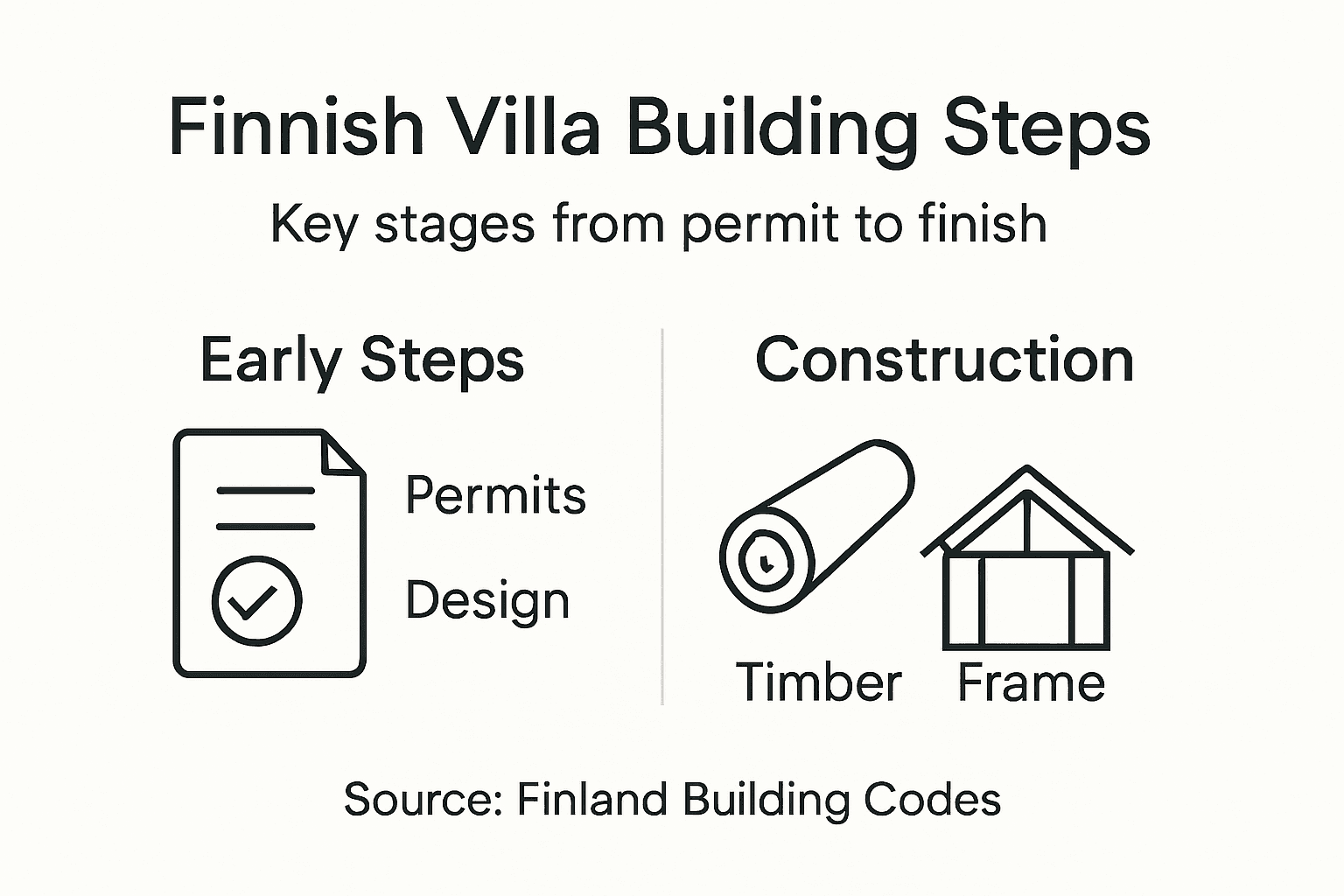
Your material selection process should include comprehensive quality assessments from reputable Finnish sawmills. Request detailed documentation about timber sourcing, moisture content, grade certifications, and sustainability credentials. Verify that your selected materials comply with Finnish building standards and have undergone rigorous quality control processes. Consider consulting with local timber specialists who can provide nuanced recommendations tailored to your specific villa design and regional environmental conditions.
Pro Tip: Request timber samples and conduct moisture content testing before final purchase to ensure optimal material performance and prevent potential structural issues during construction.
Below is a comparison of common Finnish timber species for villa construction:
| Timber Species | Key Properties | Best Suited For |
|---|---|---|
| Pine | Excellent weathering, rich color | Exterior walls, visible structures |
| Spruce | High dimensional stability, lighter hue | Structural framing, precision work |
Step 4: Construct the timber frame and log structure
Constructing the timber frame represents the pivotal moment when your Finnish villa design transforms from architectural plans into a tangible structure. Your goal is to create a precise log structure that combines traditional Finnish craftsmanship with modern engineering precision.
The timber frame construction process requires meticulous preparation and expert execution. Log cabin building process fundamentals involve carefully selecting and preparing each timber element for optimal structural integrity. Begin by preparing a level foundation that ensures perfect alignment for your log structure. Expert timber framers typically use traditional joinery techniques like mortise and tenon connections that provide exceptional strength without relying on metal fasteners. This method allows natural wood movement while maintaining structural stability. Pay special attention to log orientation and moisture content to prevent warping or settling during the construction phase.
Assembling the timber frame demands precision and coordinated teamwork. Specialized equipment like heavy duty cranes will be necessary to position and secure massive timber elements. Work with experienced Finnish timber frame specialists who understand the nuanced techniques required for creating seamless log connections. Your construction team should focus on maintaining tight log seals, ensuring proper thermal insulation, and creating a weatherproof envelope that can withstand harsh Nordic environmental conditions.
Pro Tip: Schedule timber frame construction during dry weather periods to minimize moisture exposure and ensure optimal wood joint performance.
Step 5: Verify quality and complete final checks
Comprehensive quality verification represents the critical final stage of your Finnish villa construction project. Your goal is to conduct a thorough assessment that ensures every aspect of the timber structure meets stringent Finnish building standards and your personal design expectations.
Quality verification requires a systematic and detailed inspection process. Essential cottage construction tips highlight the importance of meticulously examining structural integrity, thermal performance, and overall craftsmanship. Begin with a comprehensive visual inspection of the timber frame, checking for alignment, log connections, and potential signs of moisture or structural irregularities. Engage certified timber frame inspectors who can provide professional assessment using specialized measurement tools and techniques. Focus on key areas such as joint precision, wood moisture content, thermal insulation quality, and overall structural alignment.
Your final quality check should involve multiple layers of verification. This includes reviewing technical documentation, conducting performance tests, and ensuring compliance with local building codes. Invite your architect, structural engineer, and project manager to participate in the final walkthrough. They will help identify any subtle issues that might require adjustment or refinement. Pay special attention to weatherproofing, log seal integrity, and the overall thermal envelope of your Finnish villa. Document all inspection findings meticulously and address any identified concerns before proceeding to the next construction phase.
Pro Tip: Request infrared thermal imaging during your final quality check to detect any hidden insulation gaps or potential moisture infiltration points.
Build Your Dream Finnish Villa with Expert Timber Solutions
Navigating the complex steps of building a Finnish villa brings many challenges from securing permits to selecting the perfect timber for your custom design. If you want your project to succeed without hidden surprises, trust experienced partners who understand the unique demands of Finnish wood construction. Huvila Seppälä offers over 65 years of expertise to help you achieve a seamless transition from concept to reality with precise log structures and timber frames tailored to your architectural plans.
Take control of your villa project today by choosing a partner committed to quality craftsmanship, fast delivery, and transparent pricing. Explore our range of custom timber solutions and learn how we support your entire building journey starting with your own design at Huvila Seppälä. Discover why many clients rely on us for tailored log structures and how we simplify your permitting and construction process by matching expert advice with Finnish craftsmanship. Don’t delay transforming your vision into a durable, beautiful Finnish villa built to last.
Frequently Asked Questions
What are the first steps to begin building a Finnish villa?
To start building a Finnish villa, you should assess prerequisites and secure project permits. Conduct thorough research on local zoning regulations and submit your initial application detailing your project scope before beginning any construction.
How long does the permit acquisition process generally take?
The permit acquisition process typically takes around 4 to 8 weeks, depending on your municipality’s processing times and the complexity of your villa design. Ensure you submit all required documentation promptly to avoid delays.
What should I consider when designing my custom Finnish villa?
When designing a custom Finnish villa, focus on optimizing the spatial layout and integrating natural environmental factors. Work closely with an experienced architect to create multiple design iterations that balance aesthetic appeal with practical functionality.
How do I choose the right Finnish timber for my villa?
Selecting the right Finnish timber involves evaluating the properties of wood species like pine and spruce. Choose high-quality materials that meet structural requirements to ensure optimal performance, like moisture resistance and thermal efficiency, for your villa.
What are the key aspects of constructing a timber frame for my villa?
Constructing a timber frame requires meticulous preparation and precise execution, utilizing traditional joinery techniques for strength. Pay attention to log orientation and moisture content to prevent issues during construction, and ensure a level foundation for alignment.
How can I verify the quality of my finished Finnish villa?
To verify the quality of your finished Finnish villa, conduct a detailed inspection that includes checking structural integrity and compliance with building codes. Consider engaging certified inspectors and using infrared thermal imaging to identify any hidden issues with insulation or moisture.
Recommended
- 7 Essential Cottage Construction Tips for Custom Success – Huvila Seppälä
- Building Permits Process Finland: Step-by-Step Guide – Huvila Seppälä
- 7 Examples of Finnish Wood Structures for Vacation Homes – Huvila Seppälä
- 7 Types of Finnish Cottages Every Homeowner Should Know – Huvila Seppälä