Financing Timber Buildings – Key Steps and Strategies
Most American builders are discovering that timber construction offers more than visual appeal. With research showing timber buildings can cut carbon emissions by up to 40 percent, wooden structures have captured the attention of environmentally conscious investors and lenders. Financing a timber project requires unique strategies that factor in sustainability, cost-effectiveness, and long-term value. This guide unlocks the essential steps for American professionals looking to secure funding for efficient and eco-friendly timber buildings.
Table of Contents
- Defining Timber Building Financing Essentials
- Financing Options For Timber Structures
- Loan Requirements And Credit Considerations
- Estimating Costs And Budgeting Effectively
- Comparing Timber To Other Building Types
- Common Financing Challenges And Solutions
Key Takeaways
| Point | Details |
|---|---|
| Understanding Timber Financing | Timber building financing involves unique economic considerations, requiring a blend of sustainability and long-term performance benefits. |
| Emerging Financing Options | Financial institutions are increasingly offering specialized financing options such as green bonds and sustainability-linked loans for timber construction. |
| Robust Project Proposals | Detailed project proposals highlighting economic and environmental value are essential for securing financing for timber buildings. |
| Potential Financial Returns | Research shows timber structures can achieve higher market values and offer long-term financial advantages compared to traditional constructions. |
Defining Timber Building Financing Essentials
Timber building financing represents a specialized financial approach designed specifically for wooden construction projects. Unlike traditional building financing, this method requires understanding unique economic considerations related to sustainable wooden structures. Timber construction financing considers not just the immediate construction costs, but also long-term environmental and performance benefits that distinguish wood-based building projects.
The financial landscape for timber buildings involves several critical components that potential builders must carefully evaluate. Key financing considerations include project scope, material costs, construction complexity, and potential energy efficiency incentives. Timber structures often require specialized funding approaches because they represent a more sustainable and environmentally conscious building method compared to conventional construction techniques.
Financial institutions are increasingly recognizing timber construction as a strategic investment in sustainable infrastructure. Research indicates that timber buildings can reduce carbon emissions by up to 40% compared to traditional construction methods, making them attractive to environmentally conscious investors and lenders. These structures offer multiple financial advantages:
- Lower carbon footprint
- Potentially reduced long-term maintenance costs
- Enhanced energy efficiency
- Faster construction timelines
- Improved building performance metrics
Understanding the nuanced financial requirements of timber construction demands comprehensive research and strategic planning. Builders must prepare detailed project proposals demonstrating the economic and environmental value of their wooden building projects.
Pro Tip: Research Local Incentives: Contact regional economic development offices and sustainable construction agencies to uncover potential grants, tax credits, or special financing programs specifically designed for timber construction projects.
Financing Options for Timber Structures
Timber building projects require a nuanced approach to financial planning that goes beyond traditional construction financing models. Specialized financing options have emerged to support the unique requirements of wooden structure development, recognizing the environmental and economic advantages these projects offer. These financial pathways reflect a growing recognition of timber construction as a sustainable and innovative building strategy.
The primary financing channels for timber structures include traditional bank loans, green construction loans, specialized sustainable development funds, and institutional investment programs. Commercial lending typically evaluates timber projects through multiple lenses, including:
- Environmental impact assessment
- Carbon reduction potential
- Long-term energy efficiency projections
- Structural durability and performance metrics
- Regional building code compliance
Institutional investors are increasingly viewing timber construction as a strategic investment opportunity. Recent research demonstrates that timber buildings can provide attractive financial returns while simultaneously addressing critical environmental challenges. For instance, large-scale investors like Allianz Real Estate have committed significant capital to timber-based development projects, signaling growing confidence in this construction approach.
Unique financing mechanisms are emerging to support timber construction, including green bonds, sustainability-linked loans, and specialized carbon credit financing programs. These innovative financial tools provide builders with flexible funding options that recognize the inherent environmental benefits of wooden structures. Potential financing sources range from traditional bank loans to targeted sustainable development funds that prioritize low-carbon building technologies.
Here is a summary of major financing options for timber buildings and how they differ:
| Financing Option | Typical Use Case | Environmental Focus |
|---|---|---|
| Traditional Bank Loan | Standard projects, established firms | Limited to basic criteria |
| Green Construction Loan | Projects with proven sustainability | Strong sustainability tie |
| Sustainable Development Fund | Innovative or pilot timber projects | Comprehensive assessment |
| Institutional Investment | Large developments, long-term returns | High, includes carbon metrics |
Pro Tip: Financial Portfolio Strategy: Work with a financial advisor specializing in sustainable construction to develop a comprehensive funding strategy that combines multiple financing sources and maximizes potential green investment incentives.
Loan Requirements and Credit Considerations
Securing financing for timber building projects involves a complex evaluation process that extends far beyond traditional lending criteria. Credit assessment for wooden structures requires lenders to examine multiple unique factors that differentiate these projects from conventional construction. Financial institutions now recognize timber buildings as sophisticated investments with distinctive risk and performance profiles.
Lenders typically analyze several critical components when evaluating timber construction loan applications:
- Detailed architectural and engineering plans
- Comprehensive carbon footprint assessment
- Structural durability and long-term performance projections
- Developer’s experience with sustainable construction
- Proven material quality and sourcing documentation
- Energy efficiency calculations
- Estimated maintenance and lifecycle costs
Research from Finnish real estate markets demonstrates that timber structures can command up to 9% higher market values compared to traditional buildings, which positively influences lending considerations. This price premium reflects the growing market recognition of wooden construction’s environmental and performance advantages. Financial institutions are increasingly viewing timber projects as low-risk investments with substantial long-term value potential.

Modern lending practices incorporate sophisticated risk evaluation techniques specifically tailored to timber construction. Credit scoring models now integrate advanced environmental performance metrics, recognizing that sustainable buildings represent lower long-term financial risks. Insurance requirements and risk mitigation strategies play a crucial role in loan approval processes, with specialized assessments examining structural integrity, fire resistance, and potential maintenance challenges unique to wooden structures.
Pro Tip: Documentation Preparation: Compile a comprehensive project portfolio including detailed sustainability metrics, professional engineering assessments, and comparative performance data to strengthen your timber construction loan application.
Estimating Costs and Budgeting Effectively
Cost estimation for timber building projects requires a comprehensive and strategic approach that goes beyond traditional construction budgeting. While wooden structures might present higher initial investment requirements, they offer significant long-term financial advantages that savvy builders must carefully evaluate. Understanding the nuanced financial landscape of timber construction is crucial for developing an accurate and realistic project budget.
Key cost components to consider when budgeting for a timber building include:
- Material procurement expenses
- Specialized labor and construction expertise
- Design and architectural planning
- Structural engineering requirements
- Sustainability certification processes
- Advanced manufacturing and prefabrication techniques
- Transportation and site preparation costs
- Potential energy efficiency upgrades
Research indicates that timber buildings can command up to 9% higher market values compared to conventional structures, which helps offset initial investment costs. This price premium reflects the growing market recognition of wooden construction’s environmental performance and aesthetic appeal. Builders must view cost estimation as a holistic process that considers not just immediate expenses, but long-term value generation and potential returns on investment.
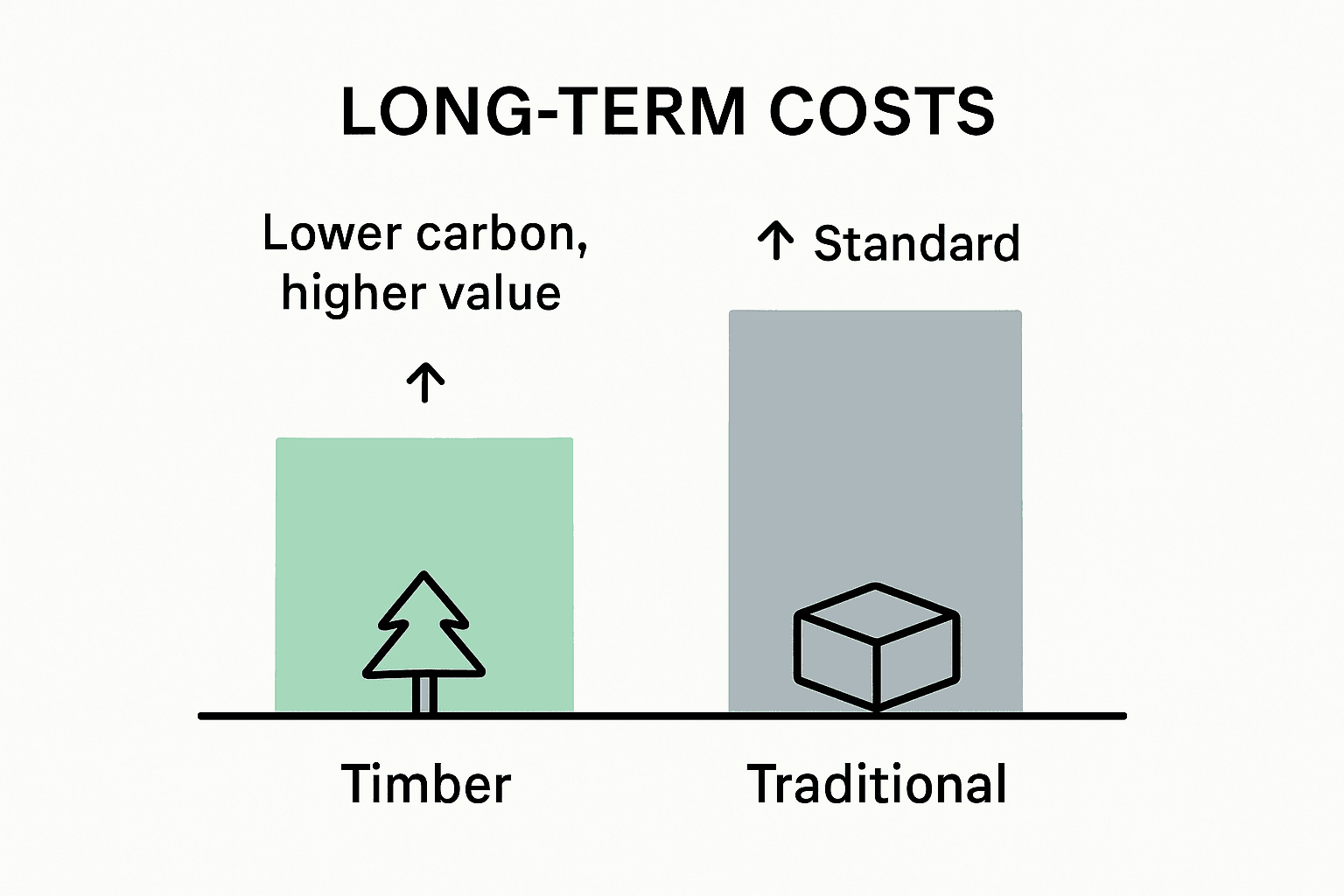
Modern timber construction budgeting incorporates sophisticated financial modeling techniques that account for multiple variables. Financial forecasting now integrates environmental performance metrics, potential carbon credit opportunities, and lifecycle cost analysis. Builders should develop detailed financial models that demonstrate the comprehensive economic value of timber structures, including reduced maintenance expenses, enhanced energy efficiency, and potential tax incentives for sustainable building practices.
Pro Tip: Comprehensive Cost Tracking: Develop a dynamic budget spreadsheet that tracks both direct construction expenses and potential long-term financial benefits, allowing for real-time adjustments and strategic financial planning throughout the project lifecycle.
Comparing Timber to Other Building Types
Comparative analysis of timber structures against traditional building methods reveals significant advantages that extend beyond environmental considerations. While concrete, steel, and brick constructions have long dominated the building landscape, timber construction is emerging as a sophisticated alternative with compelling economic and performance benefits. Understanding these nuanced differences helps builders and investors make more informed decisions about construction approaches.
Key comparative metrics between timber and alternative building types include:
- Carbon emissions impact
- Construction speed
- Material costs
- Long-term maintenance requirements
- Energy efficiency
- Structural flexibility
- Aesthetic versatility
- Environmental sustainability
Research demonstrates that timber buildings consistently outperform traditional construction methods in multiple critical areas. Unlike concrete or steel structures, wooden buildings offer superior thermal insulation, faster construction timelines, and significantly lower carbon footprints. Financial studies indicate timber structures can command up to 9% higher market values, reflecting growing market recognition of their inherent advantages.
This table compares key performance aspects of timber vs. traditional building types:
| Aspect | Timber Structures | Traditional Structures |
|---|---|---|
| Construction Speed | Significantly faster | Standard or slower |
| Carbon Emissions | Up to 40% lower | High, depending on material |
| Long-term Maintenance | Often reduced | Potentially higher |
| Energy Efficiency | Enhanced, superior insulation | Varies, often less efficient |
| Market Value | Up to 9% premium possible | Typically stable |
Modern timber construction leverages advanced engineering techniques that address historical concerns about durability and performance. Structural engineering innovations now enable wooden buildings to match or exceed the strength and resilience of conventional materials. Timber structures provide remarkable design flexibility, allowing architects to create innovative spaces that traditional building methods cannot easily replicate. Moreover, the renewable nature of wood presents a compelling alternative to resource-intensive construction materials that rely on extensive mining and industrial processing.
Pro Tip: Comprehensive Comparison Strategy: Develop a detailed comparative spreadsheet that quantifies performance metrics across different building types, enabling data-driven decision-making for your specific construction project requirements.
Common Financing Challenges and Solutions
Timber construction financing presents unique challenges that require innovative approaches and strategic problem-solving. While wooden structures offer significant environmental and economic advantages, financial institutions often approach these projects with cautious complexity. Understanding and anticipating potential financial obstacles is crucial for successfully navigating the timber building investment landscape.
Key financing challenges in timber construction typically include:
- Limited lender familiarity with wooden building technologies
- Complex risk assessment processes
- Higher perceived insurance requirements
- Limited historical performance data
- Specialized engineering and design verification needs
- Complex sustainability certification procedures
- Regional regulatory variations
- Advanced technical documentation requirements
Institutional investors and financial organizations are developing sophisticated strategies to address these challenges. The Mass Timber Insurance Playbook highlights emerging risk mitigation techniques that help bridge knowledge gaps between traditional lending practices and innovative timber construction approaches. These solutions increasingly focus on comprehensive documentation, advanced performance metrics, and detailed technical assessments that demonstrate the long-term value and reliability of wooden structures.
Modern financing solutions are evolving to support timber construction through specialized financial instruments and risk evaluation techniques. Financial innovation now incorporates advanced environmental performance metrics, carbon credit potential, and lifecycle cost analysis into lending considerations. Builders can leverage emerging funding mechanisms like green bonds, sustainability-linked loans, and targeted development funds that recognize the unique economic and environmental advantages of timber construction.
Pro Tip: Documentation Mastery: Prepare a comprehensive project portfolio that includes detailed technical specifications, performance projections, and sustainability metrics to proactively address potential lender concerns and streamline the financing process.
Unlock Sustainable Financing with Expert Timber Craftsmanship
Navigating the complexities of timber building financing requires more than understanding loans and credit considerations. Builders and investors face unique challenges such as specialized funding options, detailed sustainability metrics, and precise cost estimation. At Huvila Seppälä, we combine over 65 years of Finnish timber building expertise with tailored manufacturing solutions that perfectly align with your financing strategies. Our custom wooden structures—from log houses to villas—bring your sustainable construction vision to life while enhancing your project’s financial value.
Take control of your timber building project today by partnering with a trusted manufacturer who understands both the craftsmanship and financial landscape. Visit Huvila Seppälä to explore our range of custom timber frames and learn how transparent quotes, fast delivery, and expert design support simplify your path from financing to final build. Prepare thorough project documentation, reduce lender concerns, and maximize green investment incentives by working with an experienced team focused on your success. Start your journey now with Huvila Seppälä and turn your sustainable timber building plans into reality.
Frequently Asked Questions
What are the key financial considerations for timber building financing?
Key considerations include project scope, material costs, construction complexity, and potential energy efficiency incentives. These factors help lenders assess the overall viability and sustainability of timber construction projects.
How do timber constructions compare financially to traditional building methods?
Timber buildings often present long-term financial advantages, such as lower maintenance costs and reduced carbon footprints, which can lead to a market value premium of up to 9% compared to traditional structures.
What financing options are available for timber building projects?
Options include traditional bank loans, green construction loans, sustainable development funds, and institutional investment programs, with some tailored specifically for the environmental benefits of timber constructions.
What documentation is necessary for securing financing for timber projects?
Key documents include detailed architectural and engineering plans, sustainability metrics, carbon footprint assessments, and evidence of the developer’s experience with sustainable construction.
Recommended
- Blogit – Huvila Seppälä
- Mökki-rakennuslupien hankintaohje: Helppo vaiheittainen opas – Huvila Seppälä
- Hirsirakentaminen vaihe vaiheelta: onnistunut lopputulos – Huvila Seppälä
- 7 parasta käytäntöä hirsirakentamiseen kotona ja mökillä – Huvila Seppälä