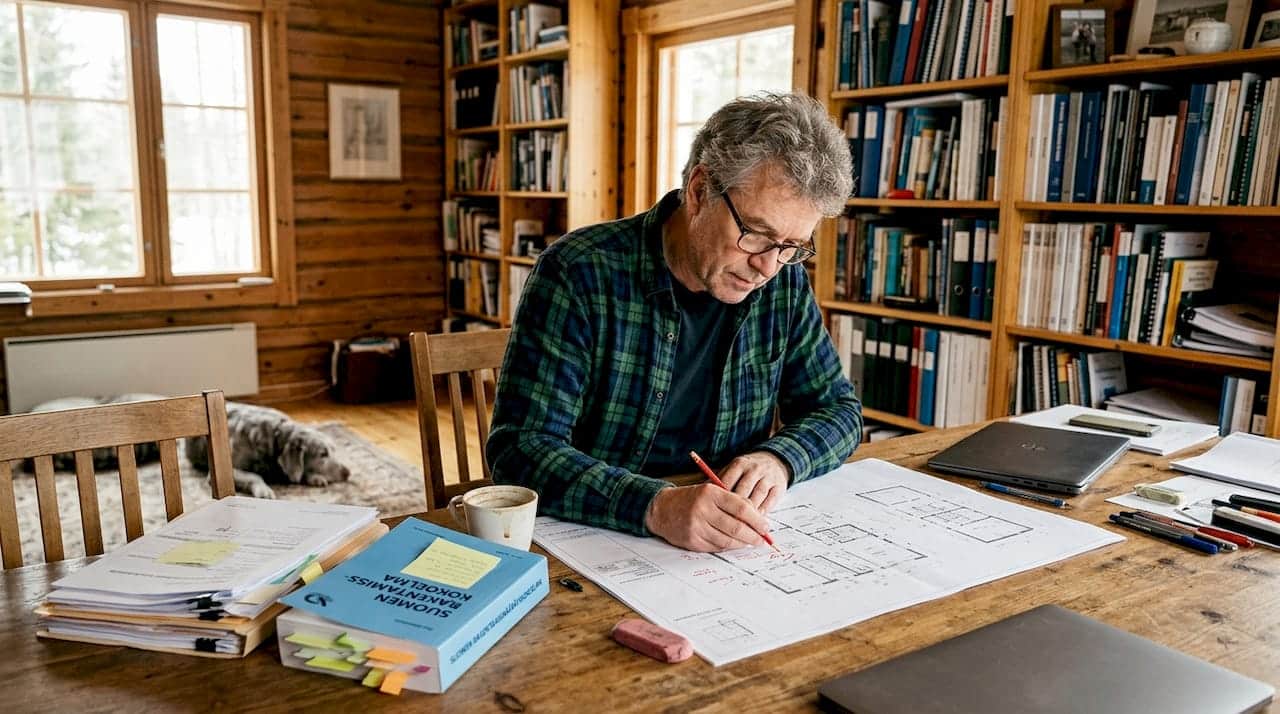
Master the log house planning workflow: a step-by-step guide
TL;DR:
- Finnish log house projects require careful planning of permits, zoning, and technical prerequisites.
- A structured workflow from design to builder selection helps avoid delays and budget overruns.
- Clear decision-making and early professional involvement ensure a smoother, stress-free building process.
Building your own log house or sauna in Finland is one of the most rewarding projects you can take on. The smell of fresh timber, the craftsmanship, the connection to Finnish tradition — it all sounds perfect until the planning reality sets in. Permit applications, zoning rules, architectural drawings, and budget surprises can turn a dream into a stressful marathon. The good news is that most of these headaches are avoidable. With a clear, step-by-step workflow and the right team around you, you can move from concept to construction with confidence and far fewer surprises along the way.
Table of Contents
- Key steps and requirements for log house planning
- Step-by-step log house planning workflow
- Managing costs and timing in the planning workflow
- Troubleshooting workflow pitfalls and ensuring compliance
- Expert insights on achieving a stress-free log house project
- Ready to plan your log house? Get expert support
- Frequently asked questions
Key Takeaways
| Point | Details |
|---|---|
| Start with permits | Secure all essential permits and site permissions before you begin formal planning. |
| Follow a clear workflow | Move step by step from initial design to pre-construction, avoiding skipped or out-of-order stages. |
| Budget and timing matter | Account for all possible costs, including hidden expenses and delays due to permit reviews. |
| Be proactive with compliance | Double-check requirements and coordinate with all professionals to avoid costly errors and missed documents. |
| Professional advice pays off | Engage experts to streamline your workflow and maximize your project’s long-term success. |
Key steps and requirements for log house planning
Before you sketch a single floor plan, you need to understand what Finnish law and your local municipality require. Finnish regulations require specific permits for log house construction, and skipping any step early on can freeze your entire project for months. Getting familiar with the permit requirements in Finland before you engage an architect saves everyone time.
The core prerequisites fall into three categories: legal, technical, and financial. On the legal side, you need confirmed plot ownership, a zoning check from your municipality, and a building permit application ready to submit. On the technical side, you need soil analysis results, utility connection plans, and preliminary architectural drawings. Financially, you need a realistic budget with a contingency buffer and confirmed financing before any professional work begins.
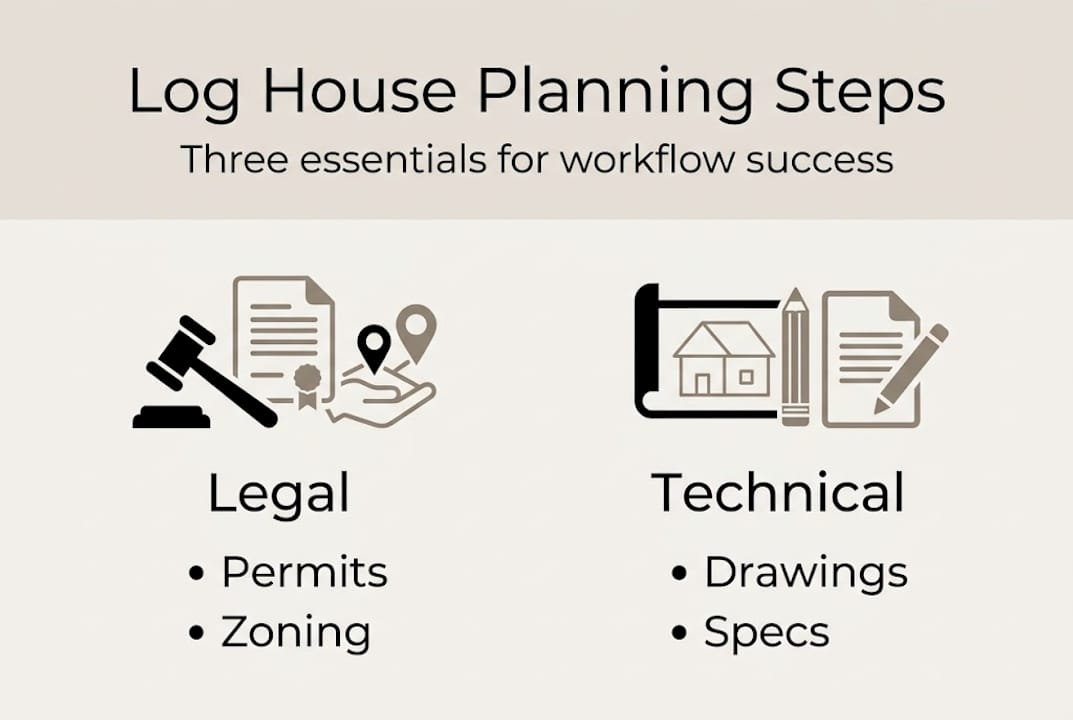
Here is a quick overview of the key stakeholders and documents involved:
| Document or approval | Responsible party | When needed |
|---|---|---|
| Zoning confirmation | Municipality | Before design starts |
| Soil analysis report | Geotechnical firm | Before foundation design |
| Architectural drawings | Licensed architect | For permit application |
| Building permit | Municipality | Before any ground work |
| Utility connection plan | Local utility provider | During detailed planning |
| Neighbor notification | Owner or architect | Part of permit process |
Before planning truly begins, work through this checklist:
- Confirm plot ownership and check for any easements or restrictions
- Verify zoning classification and allowable building footprint
- Commission a soil analysis to rule out foundation surprises
- Identify utility connection points for water, electricity, and sewage
- Set a realistic total budget including a 10 to 15 percent contingency
- Secure financing or confirm your funding source in writing
- Research local building authority requirements and processing timelines
The expert building guide covers many of these points in depth if you want more detail on any single step.
Pro Tip: Contact your local building authority before hiring anyone. A 30-minute conversation can reveal zoning restrictions, protected land issues, or local design requirements that could reshape your entire project plan.
Step-by-step log house planning workflow
With requirements in hand, you can move stepwise from vision to a build-ready plan. Detailed planning workflows help avoid permit delays and construction rework, which is why having a structured sequence matters so much.
Here are the eight main stages of a well-organized log house planning workflow:
- Initial planning: Define your goals, lifestyle needs, and must-have features. Decide on log type, house size, and rough budget range.
- Conceptual design: Work with an architect or designer to produce initial sketches. Confirm the design fits your plot and zoning rules.
- Architectural drawings: Commission full technical drawings, including floor plans, elevations, and structural details. These are required for your permit.
- Permit application: Submit your building permit package to the municipality. Include all required documents, neighbor notifications, and fees.
- Detailed budgeting: With drawings finalized, get itemized quotes from builders and suppliers. Lock in costs before proceeding.
- Final planning: Resolve any permit conditions or requested revisions. Finalize material selections and construction schedule.
- Builder selection: Compare bids, check references, and sign a contract with clear milestones, payment terms, and penalty clauses.
- Pre-construction checklist: Confirm site access, utility hookup dates, material delivery windows, and insurance coverage before breaking ground.
How does a streamlined workflow compare to a conventional one? The differences are significant:
| Workflow element | Conventional approach | Streamlined approach |
|---|---|---|
| Design revisions | Multiple late-stage changes | Locked early with decision deadlines |
| Permit submission | Incomplete, resubmitted | Complete package on first submission |
| Builder engagement | After permit approval | Early for cost input during design |
| Budget tracking | Periodic, informal | Weekly, with scope change alerts |
| Timeline management | Reactive | Proactive with buffer weeks built in |
The building process breakdown explains how each handoff point between you, your architect, and your builder works in practice. Reviewing the full project checklist before each stage helps you catch gaps before they become problems.

Pro Tip: Set firm decision deadlines with your architect at the start of each design phase. A missed decision on window placement or roof pitch can push your permit submission back by weeks, which then cascades into delayed builder availability and material lead times.
Managing costs and timing in the planning workflow
As each workflow step is mapped, financial and timing risks must also be addressed. Accurate cost planning reduces the risk of budget overruns, and the planning phase is exactly where that discipline needs to start.
One of the most important numbers to know: the average planning workflow in Finland takes 3 to 9 months from concept to permit approval. Simpler projects on straightforward plots with responsive municipalities can land closer to three months. Complex custom designs with multiple revision rounds or protected land considerations can push past nine months. Build this range into your expectations from day one.
Here are the hidden costs that most first-time builders forget to include:
- Soil analysis and geotechnical reports (often 500 to 2,000 euros)
- Utility connection fees for water, electricity, and sewage
- Architect fees for revisions requested by the municipality
- Building permit fees, which vary by municipality and project size
- Site preparation costs including clearing, grading, and access road work
- Temporary facilities like a site toilet or material storage container
- Insurance during construction, including liability and material coverage
Scope creep is a real threat. It happens when small additions, such as an extra window, a larger deck, or upgraded insulation, get added one at a time without updating the budget. Each change feels minor, but together they can add 10 to 20 percent to your total cost. Track every change in writing and update your budget immediately.
Timing also matters beyond just permit processing. Finnish municipalities often have slower review periods in July due to summer holidays. Winter ground freezes can delay foundation work if your permit approval lands in November. Municipal planning boards may only meet monthly, meaning a late submission misses the cycle entirely. Factor these realities into your schedule with buffer weeks, not just buffer money. The cost factors for Finnish log homes resource gives detailed guidance on forecasting these variables accurately.
Troubleshooting workflow pitfalls and ensuring compliance
With costs and timing controlled, prevent headaches by proactively troubleshooting workflow risks. Missing just one document or technical detail can lead to major permit delays, and these mistakes are almost always avoidable with the right habits.
Here are the most common workflow errors and how to address them:
- Incomplete permit applications: Always use the municipality’s official checklist and have your architect sign off on completeness before submitting.
- Late designer engagement: Bring your architect in during the initial planning stage, not after you have already made key decisions about layout or materials.
- Plans inconsistent with zoning: Cross-check every drawing against your zoning confirmation document before finalizing anything.
- Missing neighbor notifications: Finnish law requires neighbors to be notified in most cases. Missing this step triggers automatic delays.
- Unclear structural specifications: Vague material descriptions in drawings lead to permit questions. Be specific about log dimensions, wall thickness, and insulation values.
- No revision buffer in the schedule: Always assume at least one round of municipal feedback. Plan for it rather than hoping to avoid it.
“Failing to submit complete permit packages is the most common cause of project delays.”
The compliance guide for log houses outlines what Finnish authorities look for in each document. Use it as a cross-reference tool at every stage.
Beyond documents, communication is your strongest compliance tool. Hold brief check-ins with your architect and builder at every major milestone. Ask directly: is anything unclear, missing, or at risk? Professionals who feel empowered to raise concerns early will save you far more time and money than any checklist alone.
Expert insights on achieving a stress-free log house project
Here is something that surprises many owners: adding more planning steps does not automatically reduce mistakes. In fact, overly complex workflows can create their own problems. When there are too many approval layers or sign-off requirements, decisions slow down, communication gets fragmented, and the project loses momentum.
What actually works is decision clarity. Owners who make clear choices early, stick to them, and communicate changes promptly create far less chaos than those who keep options open too long. We have seen projects with lean, simple workflows run smoother than heavily documented ones simply because the owner was decisive and the team was aligned.
The construction process insights we have gathered over more than 65 years point to the same lesson: your team will perform better when they trust that you will make timely decisions and communicate openly. Empower your architect and builder to flag problems the moment they appear rather than waiting for a formal review meeting.
Pro Tip: At the start of your project, tell every professional on your team that you want to hear bad news early. This single instruction changes how people communicate and prevents small issues from becoming expensive surprises.
Ready to plan your log house? Get expert support
You now have a clear picture of what a well-run log house planning workflow looks like, from permits and prerequisites to cost tracking and compliance. The next step is putting it into practice with the right support behind you.
At Huvila Seppälä, we have spent over 65 years helping Finnish homeowners turn their log house and sauna dreams into reality. Our custom timber building guide walks you through every stage of the process with practical tools and clear explanations. If you want to understand why material choices matter so much, our resource on Finnish wood benefits explains what makes locally sourced timber the right foundation for any project. Reach out today to request a personalized quote with no hidden costs.
Frequently asked questions
What permits do I need before starting my log house planning in Finland?
You typically need a building permit from your local municipality and zoning confirmation before any design or ground work. Finnish regulations require specific permits for log house construction, so confirm requirements with your local authority early.
How long does the planning workflow for a log house usually take?
A typical workflow from concept to permit approval takes 3 to 9 months, depending on project complexity and local authority schedules. Typical planning durations vary most based on design complexity and municipal review timelines.
What are the most common pitfalls in log house planning?
Missing documents, unclear design details, and late engagement of professionals often lead to costly delays. Incomplete permit packages are consistently the top cause of project setbacks in Finland.
Can I manage all planning steps myself or do I need professional help?
While you can handle many tasks, involving an architect and builder is highly recommended for technical drawings, compliance, and workflow efficiency. Professional involvement ensures your permit package meets all legal requirements on the first submission.
What budgeting mistakes should I watch for in my planning workflow?
Forgetting site costs like soil testing and utility connections is a top cause of blown budgets, so always include these in your planning. Hidden costs such as soil analysis must be itemized from the very beginning of your financial planning.
Recommended
- Log house building process: step-by-step guide 2026 – Hirsitalot, pihasaunat ja piharakennukset kotimaisesta hirrestä
- Log House Project Checklist: Step-by-Step Guide for Success – Hirsitalot, pihasaunat ja piharakennukset kotimaisesta hirrestä
- Log Cabin Building Process: From Timber to Turnkey – Hirsitalot, pihasaunat ja piharakennukset kotimaisesta hirrestä
- How to build a log house in Finland: expert guide 2026 – Hirsitalot, pihasaunat ja piharakennukset kotimaisesta hirrestä