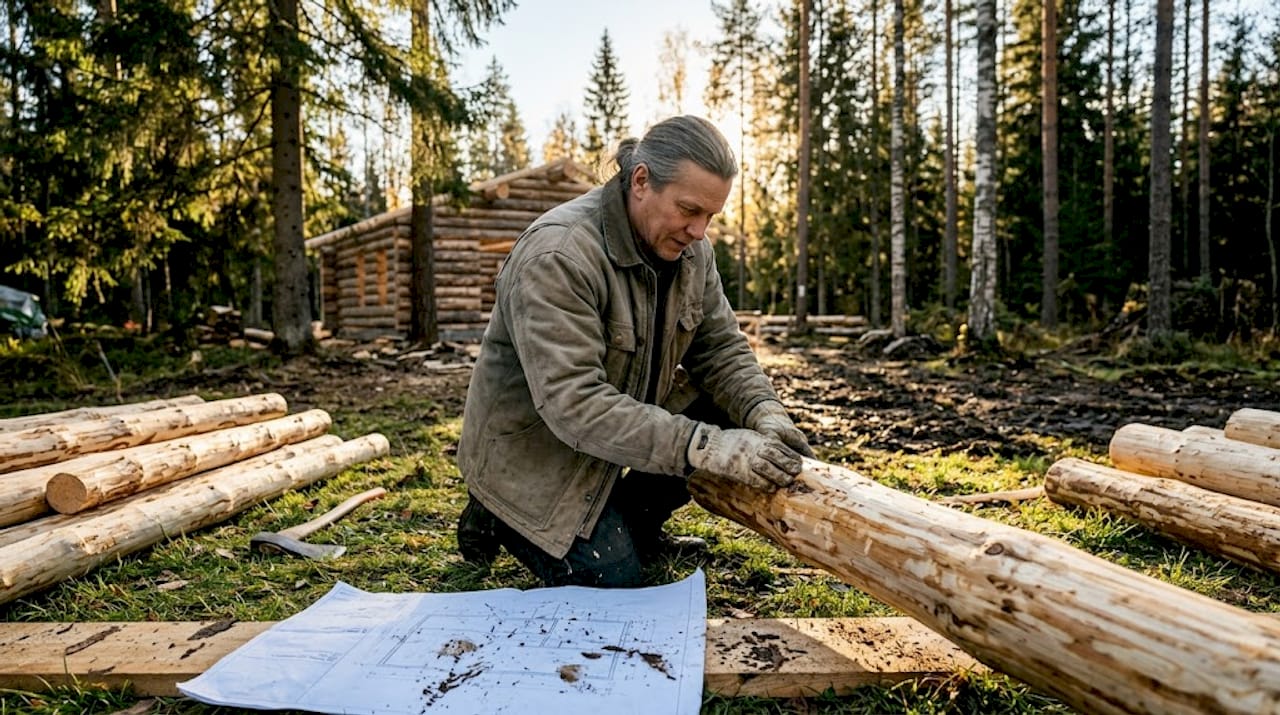
How craftsmanship shapes quality in Finnish log homes
TL;DR:
- Finnish craftsmanship in log homes emphasizes precise joinery, local timber, and climate adaptation.
- Construction methods range from handcrafted to modular, balancing character, cost, and speed.
- Skilled craftsmanship enhances durability, energy efficiency, and long-term value of the home.
Many homeowners assume that once you’ve seen one log home, you’ve seen them all. That assumption costs people dearly. The difference between a log home that weathers decades of Nordic winters in stride and one that demands constant repairs often comes down to a single factor: craftsmanship. This guide breaks down exactly what craftsmanship means in the Finnish context, compares the three main building methods, and gives you practical advice for choosing the right approach. Whether you’re planning a permanent residence or a lakeside vacation cottage, understanding these distinctions will help you make a smarter, longer-lasting investment.
Table of Contents
- What defines craftsmanship in Finnish log homes
- Comparing handcrafted, milled, and modular log home techniques
- How craftsmanship impacts log home durability and comfort
- Choosing the right craftsmanship for your custom log home
- Why craftsmanship truly matters — what most guides leave out
- Ready to bring true craftsmanship to your dream log home?
- Frequently asked questions
Key Takeaways
| Point | Details |
|---|---|
| Craftsmanship defines character | Finnish log home craftsmanship shapes the unique personality and value of every custom build. |
| Method impacts performance | Handcrafted, milled, and modular build techniques all affect durability, comfort, and cost in unique ways. |
| Expertise delivers value | Experienced builders and locally sourced materials ensure lasting quality and eco-efficiency. |
| Smart choices last | Prioritizing skilled craftsmanship and climate-appropriate methods results in comfortable, resilient log homes. |
What defines craftsmanship in Finnish log homes
Craftsmanship in Finland isn’t just a marketing word. It’s a measurable, observable quality that separates a log home that feels alive from one that simply functions. The tradition runs deep: Finnish builders have worked with timber for centuries, refining techniques for joinery, settling, and climate adaptation that most other countries simply don’t practice at the same level.
At its core, Finnish timber craftsmanship involves three things: how logs are selected, how they’re shaped, and how they fit together. Traditional Finnish craftsmanship focuses on reading each log individually, accounting for its natural curves and grain before deciding how it will be positioned. This is very different from feeding uniform lumber into a machine.
The wood species matter enormously. Finnish builders favor local pine and spruce because both grow slowly in northern latitudes. Slow growth means tighter annual rings, which translates directly into denser, more stable wood. Dense wood shrinks less, insulates better, and resists moisture more effectively than fast-grown timber from warmer climates.
Key qualities that define Finnish log home craftsmanship include:
- Custom-fitted logs shaped to match their neighbors precisely, reducing gaps
- Scribe joinery, where each log is individually carved to sit flush against the one below
- Climate-adaptive design, accounting for settling, thermal expansion, and moisture movement
- Locally sourced timber, supporting both quality and environmental responsibility
- Meticulous corner notching, which locks logs together without relying solely on fasteners
“Finnish timber craftsmanship emphasizes precise joinery, locally sourced pine and spruce, and climate-adaptive designs” — reflecting a legacy that shapes every custom build today.
The role of craftsmanship extends beyond beauty. A well-fitted log wall performs better thermally, requires fewer interventions over time, and ages gracefully rather than awkwardly. Knowledgeable Finnish builders understand that every gap, every joint, and every species choice has a downstream consequence for how a home lives over the next 50 or even 100 years.
Now that we’ve established the critical difference craftsmanship makes, let’s examine the main approaches to log home construction in Finland.
Comparing handcrafted, milled, and modular log home techniques
Not all log homes are built the same way, and the technique used shapes almost every outcome you care about: how the home looks, how it performs, how long it takes to build, and what it costs.
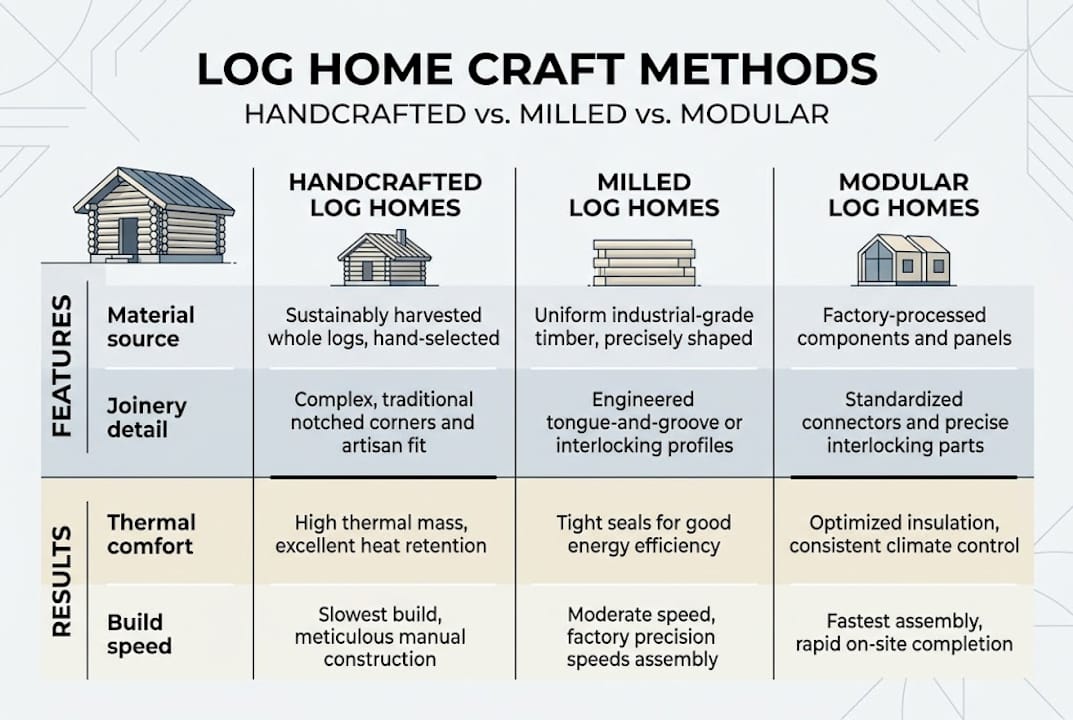
Handcrafted log construction is the most labor-intensive method. A skilled craftsman selects and fits each log individually, scribing it to the log below so that contact surfaces match almost perfectly. The result is a home with genuine character. No two handcrafted log homes look identical, because no two logs are.
Milled log construction uses machinery to plane logs into uniform shapes, usually with a consistent diameter and tongue-and-groove profiles. Assembly is faster because every log is predictable. The trade-off is a slightly more uniform visual appearance, though milled homes can still be beautiful and highly functional.
Modular log construction takes efficiency furthest. Wall sections are prefabricated in a controlled environment, then transported and assembled on site. This method suits vacation homes and cottages especially well, where speed and budget predictability are often priorities. As custom log techniques show, each method serves a different type of buyer and project goal.
| Technique | Aesthetics | Build time | Relative cost | Insulation quality |
|---|---|---|---|---|
| Handcrafted | Highly unique | Longest | Highest | Excellent with skilled work |
| Milled | Consistent, clean | Moderate | Mid-range | Very good |
| Modular | Uniform, efficient | Fastest | Budget-friendly | Good for vacation use |
Choosing between these methods isn’t about which is best in absolute terms. It’s about matching the technique to your goals. Finnish log construction has refined all three approaches, meaning you don’t sacrifice quality entirely by choosing efficiency. What you do trade away is the singular character of a hand-fitted log wall.
A quick breakdown of what each method delivers:
- Handcrafted: Unique character, maximum customization, premium longevity
- Milled: Reliable performance, moderate customization, good value
- Modular: Fast delivery, consistent quality, ideal for seasonal properties
As the construction methods overview confirms, handcrafted work denotes unique character and skilled labor, while milled and modular approaches prioritize predictability and efficiency. Neither is wrong. They serve different lives.
Having compared construction techniques, let’s see how craftsmanship distinctly influences both durability and living comfort in Finnish log homes.
How craftsmanship impacts log home durability and comfort
Precise craftsmanship doesn’t just make a log home look better. It makes it perform better in ways you’ll notice every single day, especially through a Finnish winter.
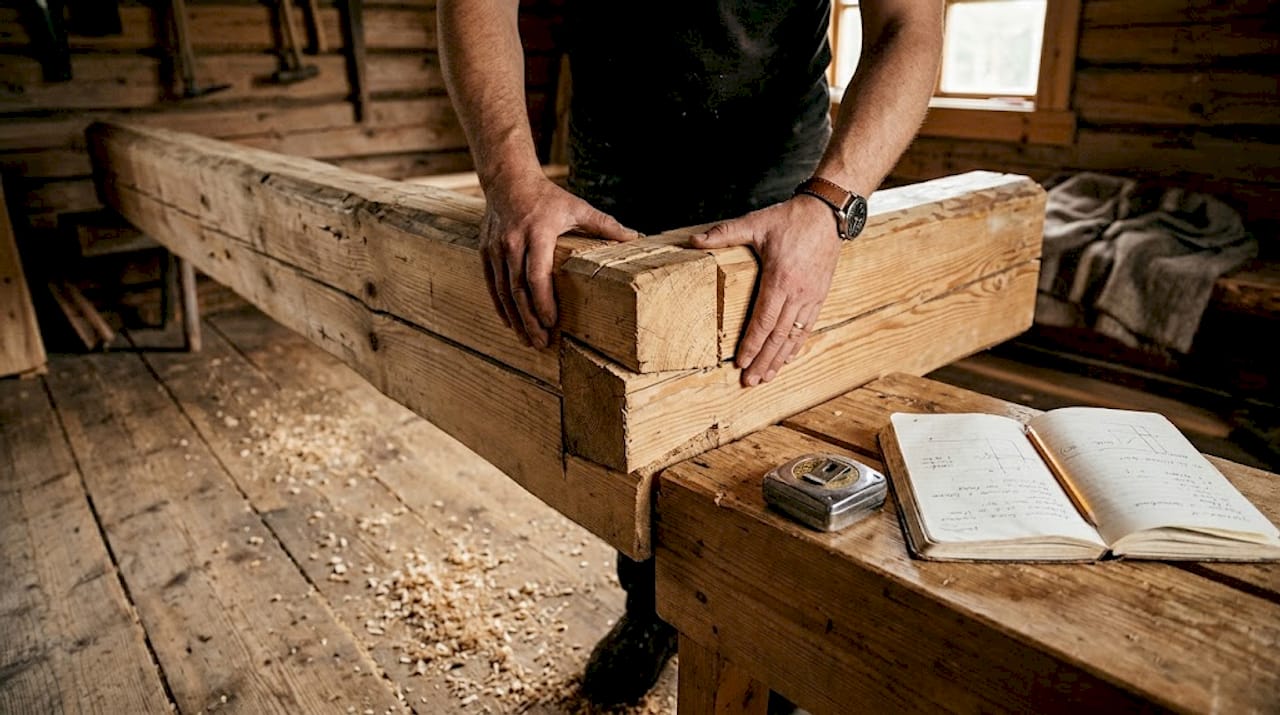
The most direct impact is thermal performance. When logs are fitted tightly through careful joinery, gaps between them are minimized. Gaps are where heat escapes and cold air enters. A handcrafted log home with excellent scribing effectively becomes a tighter thermal envelope than a rushed build using the same wood species. Sustainable log home design depends heavily on this principle, using architecture and joinery together to reduce energy demand.
| Performance factor | Poor craftsmanship | Skilled craftsmanship |
|---|---|---|
| Heat retention | High heat loss through gaps | Minimal loss, stable indoor temp |
| Maintenance needs | Frequent caulking, repairs | Rare intervention needed |
| Settlement behavior | Uneven, causes cracking | Controlled, gradual, predictable |
| Lifespan | May need major work in 20 years | Can last 80 to 100+ years |
Fire performance is another area where craftsmanship matters more than most people realize. Log walls provide natural insulation, and thick logs achieve strong fire ratings that often exceed standard building code requirements. This is because solid wood chars on the outside during a fire, creating an insulating layer that slows the spread of heat to the structural core.
A well-crafted, thick-walled log home can meet or exceed fire resistance standards that typical frame construction struggles to match, offering meaningful protection in remote locations where fire response times may be longer.
The health and sustainability benefits also compound over time. Wood naturally regulates humidity, absorbing moisture when indoor air is too dry and releasing it when conditions shift. A well-crafted log home works with this natural behavior rather than against it, because the logs have room to breathe without creating structural problems.
Pro Tip: If you’re building in Finland’s northern regions, prioritize denser wood grades and request detailed documentation of joinery methods from your builder. The difference in long-term energy costs between a carefully crafted home and a rushed one can be substantial over 10 to 20 years.
After exploring the lasting benefits of skilled work, it’s useful to consider which approach best fits the needs of different homeowners and property types.
Choosing the right craftsmanship for your custom log home
Deciding on the right level of craftsmanship starts with honest self-assessment about what you want, what you need, and what your project can realistically support.
Here are the key decision factors to work through:
- Project purpose: Is this a permanent primary residence, a vacation retreat, or an investment property? Handcrafted suits permanent homes best.
- Budget range: Handcrafted work costs more upfront but often less over a lifetime. Modular is budget-friendlier initially.
- Timeline: If you need to be in your home within a specific season, modular or milled construction delivers faster.
- Desired character: Do you want a home that looks like no other? Handcrafted is the only path to genuine uniqueness.
- Climate demands: The harsher and more remote your site, the more joinery precision matters for energy and comfort.
- Maintenance tolerance: Lower tolerance for ongoing upkeep pushes toward skilled craftsmanship from the start.
For permanent homes and statement builds, natural log home benefits align best with handcrafted construction. The character of individually fitted logs gives a home personality that holds its value and appeal across generations. Milled and modular approaches serve vacation homes, rental cottages, and budget-conscious projects without sacrificing reliability.
As expert log house advice makes clear, handcrafted offers unique aesthetics but demands skilled labor, while milled and modular construction offers speed and efficiency for projects where character is secondary to practicality.
Sustainability should also shape your choice. Locally sourced Finnish pine and spruce carry a significantly lower carbon footprint than imported timber. Ask any builder you consider where their wood comes from and how it was harvested. Climate-adaptive designs that use the right species in the right way reward you with a home that fits its environment rather than fighting it.
Pro Tip: Before signing any contract, ask your builder to walk you through their joinery process specifically. The quality of corner notching and log-to-log contact is one of the clearest indicators of whether you’re dealing with a skilled craftsman or a volume builder.
Why craftsmanship truly matters — what most guides leave out
Most guides compare log home methods by price per square meter and build time. Those numbers matter. But they miss the point that experienced builders know well: a log home isn’t just a structure. It’s a long-term relationship.
Cut-rate or rushed builds may look appealing in photos. Walk through one ten years later and you’ll often find caulked gaps, uneven settling, and walls that no longer insulate the way they should. The upfront savings evaporate into maintenance bills. We’ve seen it repeatedly over more than 65 years in this industry.
What makes craftsmanship so valuable isn’t just durability. It’s the peace of mind that comes from knowing your home was built to handle whatever a Nordic winter brings, without you having to worry. Real-world construction lessons consistently show that the homes people love most after 20 or 30 years are the ones where someone cared about every joint and every log choice from the beginning.
Unique craftsmanship also retains and often builds financial value. A home with genuine character, locally sourced materials, and proven structural integrity holds its appeal in ways that mass-produced builds simply can’t match. That’s not sentiment. It’s the market reality in Finnish vacation property and custom home sales today.
Ready to bring true craftsmanship to your dream log home?
If this guide has helped clarify the difference craftsmanship makes, the most useful next step is connecting with builders who take it seriously.
At Huvila Seppälä, we’ve been building custom timber structures for over 65 years, always using Finnish wood and always to the client’s own plans. Whether you’re imagining a handcrafted primary residence or a beautiful lakeside cottage, we offer transparent quotes with no hidden costs and fast delivery timelines. Explore our custom wooden villas or learn more about Finnish timber craftsmanship to see what genuine skill looks like in practice. For those ready to start, our team is available to discuss your plans and outline exactly what handcrafted structures can offer your specific project.
Frequently asked questions
What makes Finnish log home craftsmanship unique?
It’s the combination of precise joinery, dense local pine or spruce, and designs specifically adapted to Finland’s demanding climate conditions that set Finnish craftsmanship apart from typical log building.
Is handcrafted log construction more durable than milled or modular?
Handcrafted homes often last longer due to meticulous individual log fit, but milled and modular builds provide reliable performance and are completed faster, making them practical for vacation properties.
How does craftsmanship influence energy efficiency in log homes?
Expert craftsmanship reduces gaps between logs for better natural insulation, meaning the home retains heat more effectively, which is critical in Nordic climates where log home insulation directly impacts winter energy costs.
Can custom log homes be both sustainable and affordable?
Yes. Using locally sourced Finnish timber and selecting the right construction technique for your project keeps costs realistic while maintaining environmental responsibility and long-term quality.
Recommended
- Role of Finnish craftsmanship in custom timber homes – Hirsitalot, pihasaunat ja piharakennukset kotimaisesta hirrestä
- Finnish log construction: tradition, precision, and custom homes – Hirsitalot, pihasaunat ja piharakennukset kotimaisesta hirrestä
- How architecture shapes sustainable log homes in Finland – Hirsitalot, pihasaunat ja piharakennukset kotimaisesta hirrestä
- Log Home Construction Explained: Finnish Precision for Custom Living – Hirsitalot, pihasaunat ja piharakennukset kotimaisesta hirrestä