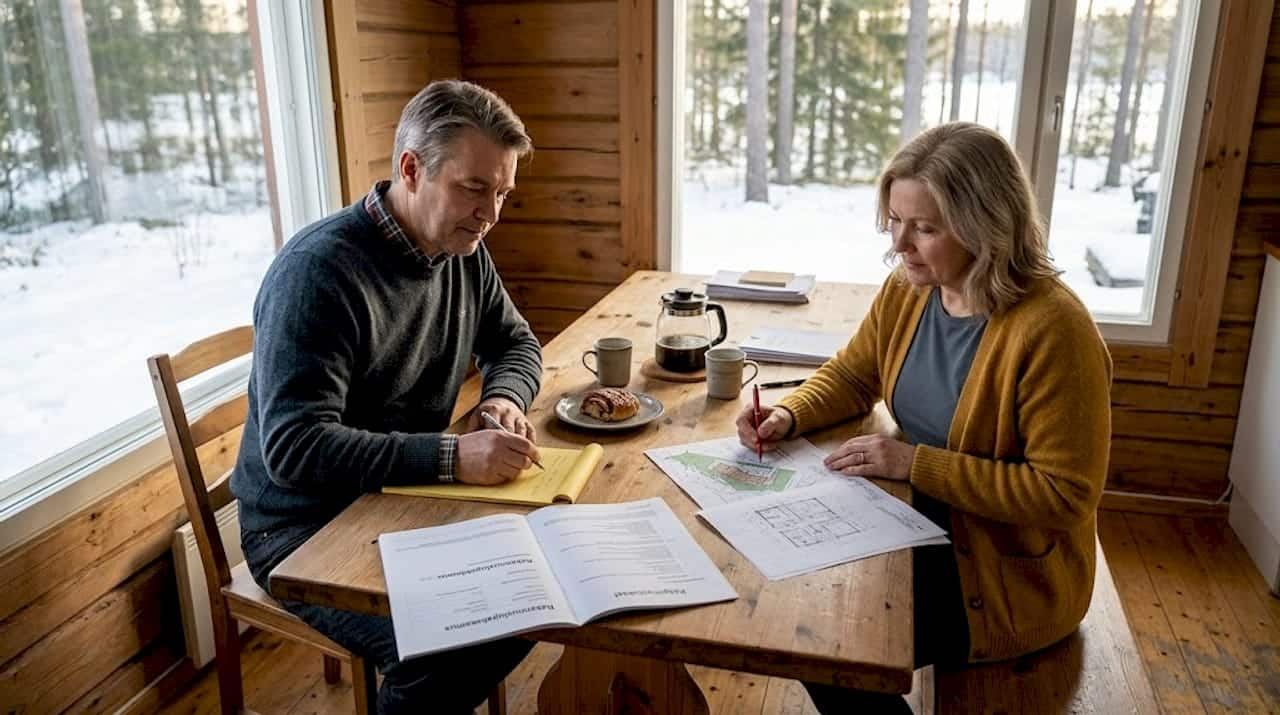
Building Permits for Timber Homes in Finland: A Clear Guide
TL;DR:
- Finnish permits are required for timber structures over 30m² or 120m³, including renovations and conversions.
- Permit-exempt projects must still comply with zoning, building codes, fire safety, and boundary rules.
- Early consultation with local authorities and professional designers helps prevent costly delays and violations.
Planning a timber home, cottage, or sauna in Finland feels exciting until you hit the permit wall. Many homeowners assume that small or simple timber builds skip the permit process entirely, but that belief leads to costly surprises. Even structures that technically qualify as “exempt” must follow strict local zoning rules, fire safety codes, and boundary distance requirements. Skip any one of these, and your build can face enforcement action, fines, or forced demolition. This guide walks you through exactly what triggers a permit, what rules still apply without one, how to apply, and what to watch for after approval.
Table of Contents
- When do you need a building permit for timber structures?
- Permit-exempt builds: regulations and limitations
- How to apply: building permit process, requirements, and timelines
- Special rules and local differences homeowners must know
- What happens after approval? Validity, inspections, and reporting
- Our take: What most guides miss about building permits for timber homes
- Next steps: Find expert help for your Finnish timber project
- Frequently asked questions
Key Takeaways
| Point | Details |
|---|---|
| Permits cover more than major builds | Many small timber projects and most changes of use also require permits or strict compliance. |
| Exempt does not mean unregulated | Permit-exempt structures still face zoning, boundary, and fire safety restrictions that carry legal consequences. |
| Early expert consultation prevents setbacks | Engaging local authorities and certified professionals early saves time, money, and headaches. |
| Digital applications speed up approvals | Submissions via Lupapiste.fi with proper documents help keep permit processing within the 3-6 month range. |
When do you need a building permit for timber structures?
The Finnish term for a building permit is rakentamislupa. Understanding when it applies is the first step to protecting your project and your investment.
The clearest rule is this: a permit is required for any new timber structure with a floor area of 30m² or more, or a volume of 120m³ or more for non-residential buildings. Canopies and sheds at or above 50m² also require a permit. All residential buildings and holiday homes, regardless of size, always require one. Significant renovations that are comparable in scope to a new build, changes of use such as converting a sauna into a living space, and any modifications to load-bearing structures also trigger the permit requirement.
Here is a quick comparison to help you see where your project lands:
| Structure type | Permit required? | Key threshold |
|---|---|---|
| Residential home | Always | No size exemption |
| Holiday cottage | Always | No size exemption |
| Non-residential timber building | Yes | 30m² floor area or 120m³ volume |
| Canopy or shed | Yes | 50m² or more |
| Sauna converted to residence | Yes | Change of use |
| Load-bearing structural change | Yes | Any scale |
| Small storage shed (no kitchen) | Generally no | Under 30m² |
Common examples where homeowners get caught off guard include adding a kitchen to an existing sauna cabin (this counts as a change of use), converting a guest cabin into a year-round home, or expanding a deck that becomes structurally integrated with the main building. Each of these scenarios triggers a permit requirement even if the original structure was small and exempt.
The myth that small timber projects are always permit-free is genuinely dangerous. Enforcement authorities in Finland can act against non-compliant builds even when a formal permit was never required. The absence of a permit does not mean the absence of rules.
Pro Tip: Before you assume your project is exempt, write down the intended use, exact floor area, and planned structural changes. Bring that list to your local building control office for a quick pre-consultation. It takes an hour and can save months of headaches. You can also explore our custom timber permit guide for a deeper look at how permit criteria apply to different structure types.
Understanding the importance of building permits goes beyond legal compliance. Permitted builds are easier to sell, insure, and finance.
Permit-exempt builds: regulations and limitations
Getting a “permit-exempt” label on your project does not mean you can build freely. This is where many homeowners make their most expensive mistakes.
Even small timber builds under 30m² for non-residential use, and canopies under 50m², must comply with local zoning (kaava), the local building order (rakennusjärjestys), national building codes, fire safety regulations, and minimum distances to property boundaries. For timber structures, those boundary distances typically range from 4 to 12 meters depending on the municipality and the structure type.
Here is what “permit-exempt” still requires you to follow:
- Local zoning plan (kaava): Your build must be permitted within the land use category of your plot. A residential zone may prohibit certain outbuildings entirely.
- Building order (rakennusjärjestys): Each municipality publishes its own building order, which sets local rules for appearance, materials, and placement.
- National building codes: Structural integrity, insulation, and ventilation standards apply even to small builds.
- Fire safety: Timber structures have specific requirements around fire-rated materials and distances from neighboring buildings.
- Boundary distances: A small timber sauna placed 2 meters from your neighbor’s fence may be technically “exempt” from a permit but still illegal under local rules.
| Rule category | Permit-required build | Permit-exempt build |
|---|---|---|
| Zoning compliance | Mandatory | Mandatory |
| Building order | Mandatory | Mandatory |
| National codes | Mandatory | Mandatory |
| Fire safety | Mandatory | Mandatory |
| Boundary distances | Mandatory | Mandatory |
| Formal permit application | Yes | No |
| Professional designer required | Often yes | Not always |
The practical takeaway is that “exempt” only means you skip the formal application. It does not mean you skip compliance. Authorities can and do inspect exempt builds, especially when neighbors file complaints.
Pro Tip: Always contact your local rakennusvalvonta (building control office) before breaking ground on any timber project, even a small one. A short phone call or email can confirm exactly which local rules apply to your specific plot and structure type. Check our overview of 2026 timber regulations to understand how national rules have recently shifted.
How to apply: building permit process, requirements, and timelines
Finland has modernized its permit system significantly. The primary platform for applications is Lupapiste.fi, a national digital service where you submit all documents and track your application status in real time.
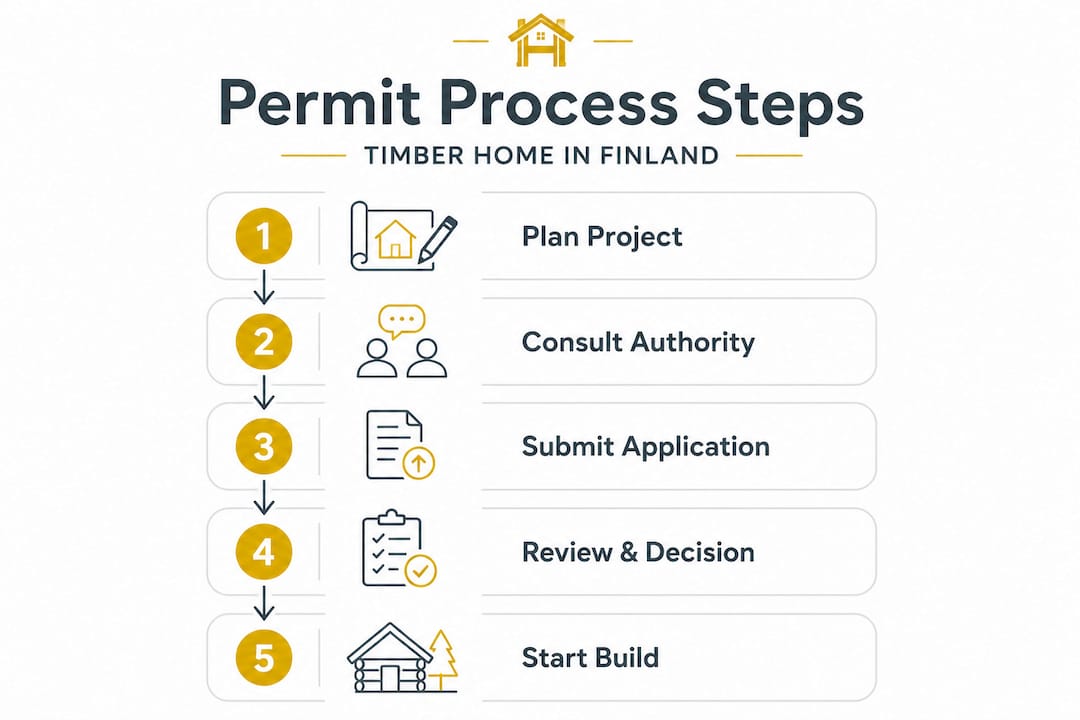
Here is the step-by-step process:
- Register on Lupapiste.fi and create a project for your build.
- Hire a qualified principal designer (pääsuunnittelija) whose credentials match your project’s complexity class.
- Prepare your documentation package, including all required drawings and reports.
- Submit the application with all attachments in the correct format.
- Respond to any requests for additional information from the building authority.
- Receive the decision and note the start and completion deadlines written into your permit.
The documents you need to submit via Lupapiste.fi include:
- A machine-readable building model (BIM format preferred, or PDF with a data table)
- Principal architectural drawings (floor plans, elevations, sections)
- Energy performance report
- Climate impact assessment (required under 2025 reforms)
- Site plan showing boundary distances and neighboring structures
- Proof of land ownership or right to build
- Neighbor notification documentation
Processing time for a building permit in Finland runs 3 to 6 months, with legally enforced deadlines. If authorities miss their processing deadline, you may be entitled to a partial fee refund. Permit fees typically fall between 2 and 6 percent of the estimated project cost, depending on the municipality and project type.
Statistic callout: Permit fees in Finland range from 2 to 6 percent of total project cost, making early budgeting essential for any timber home project.
Pro Tip: Submit your building model in BIM format rather than scanned PDFs. Machine-readable files speed up review, reduce back-and-forth requests, and demonstrate professionalism to the reviewing authority. See our detailed permit process step-by-step for a document checklist you can use directly.
Special rules and local differences homeowners must know
Finland is not a one-size-fits-all country when it comes to building regulations. Where your plot is located can change everything.
Municipal rules vary significantly. Helsinki has specific requirements for timber facades in certain neighborhoods to preserve architectural character. Tuusula allows saunas up to 50m² under certain conditions without a full permit, while other municipalities set that threshold much lower. Always verify local rules before assuming national guidelines apply uniformly.
Key edge cases to watch for:
- Shoreline and protected areas: Projects near water or in nature protection zones face significantly stricter requirements. You may need a separate shoreline permit (ranta-asemakaava or poikkeamislupa) in addition to the standard building permit.
- Saunas and holiday cottages: Adding a kitchen to a sauna cabin or converting a summer cottage to year-round use triggers a permit, regardless of size.
- Heritage and protected zones: Timber buildings in historically significant areas may require special approvals from the regional environment center.
- Fire safety for timber: Puuinfo (the Finnish Wood Information organization) provides detailed guidance on fire-rated timber construction, and certified fire safety expertise is often required for larger timber projects.
“Municipalities vary significantly in how they interpret national building codes for timber structures. What passes in one town may require a full permit review in the next. Always verify locally before you commit to a design.”
The 2025 and 2026 reforms have added climate impact assessments and stricter BIM requirements to the permit process, while also streamlining some permit categories. Timber construction has grown in popularity under these reforms, but certified materials and engineered structural plans are now more important than ever.
Pro Tip: Book a pre-application meeting with your local rakennusvalvonta early in the design phase, before you finalize drawings. This single step catches most compliance issues before they become expensive design revisions. Our guide on 2026 log house requirements covers the latest thresholds in detail.
What happens after approval? Validity, inspections, and reporting
Getting your permit approved is a milestone, but it is not the finish line. There are firm rules about what happens next.
Your permit is valid for 5 years, and you must begin construction within 3 years of the approval date. Extensions are possible but require a formal application to the local building authority before the deadline passes. Missing the start deadline means your permit lapses and you must reapply from scratch.
Post-approval responsibilities include:
- Appointing a qualified site manager (vastaava työnjohtaja) whose credentials match the project’s complexity class.
- Notifying the building authority when key construction phases begin (foundation, framing, weatherproofing).
- Passing mandatory inspections at specified stages of construction.
- Being available for random inspections by the building control authority at any point during the build.
- Reporting major renovations to the tax authority for property tax assessment purposes.
The inspection process for timber homes typically includes:
- Foundation inspection before concrete is poured or sill plates are set.
- Framing inspection once the structural timber frame is complete.
- Insulation and vapor barrier inspection before interior cladding goes up.
- Final inspection before the building is occupied.
Tax reporting is an often-overlooked step. Significant renovations that increase the value of your property must be reported to the Finnish Tax Administration (Verohallinto) for property tax recalculation. Failing to report can result in back taxes and penalties.
Pro Tip: Keep a detailed project log with photos, inspection reports, and all correspondence with authorities. This documentation is invaluable if you sell the property, apply for insurance, or face an audit years down the line. Our timber construction checklist covers every post-approval step in practical detail.
Our take: What most guides miss about building permits for timber homes
After working with hundreds of Finnish homeowners on timber projects over more than 65 years, we have seen the same pattern repeat itself. The clients who struggle most are not the ones with complex projects. They are the ones who waited too long to ask for help.
Most permit guides focus on the paperwork. What they miss is the relationship between you and your local building authority. Finnish building officials are not adversaries. They are professionals who want projects to succeed. Homeowners who contact them early, share their plans honestly, and ask questions get faster approvals, fewer revision requests, and far less stress.
The second thing most guides miss is the real cost of late engagement. When a homeowner hires a designer after finalizing a layout, then discovers the layout violates local zoning, the redesign costs more than a proper pre-application consultation would have. We have seen this happen on projects of every size, from small saunas to full log villas.
Certified professionals are not just a regulatory checkbox. A qualified principal designer who knows timber construction can spot compliance issues in the design phase, suggest material choices that satisfy fire safety requirements, and prepare documentation that moves through the review process smoothly. That expertise pays for itself.
The homeowners who avoid permit mistakes are the ones who treat the permit process as part of the design process, not something that comes after.
Next steps: Find expert help for your Finnish timber project
Navigating Finnish building permits is genuinely manageable when you have the right support from the start. Whether you are planning a log home, a lakeside cottage, or a custom timber sauna, understanding the rules early puts you in control of your timeline and your budget.
At Huvila Seppälä, we have been manufacturing Finnish timber structures for over 65 years, and we understand exactly what it takes to move from a plan to a permitted, built, and inspected home. If you are still weighing your options, our guide on why build with timber lays out the practical and financial case clearly. For those ready to plan, our timber cottage planning guide walks you through every stage from design to delivery. And if you are looking at log home permitting specifically, our resource on permitting for log homes gives you a detailed look at the process. Reach out for a no-obligation quote tailored to your drawings.
Frequently asked questions
Do I need a permit to build a small timber shed in Finland?
A building permit is generally not required for non-residential timber sheds under 30m², but all small builds must still follow local zoning, building order rules, boundary distances, and fire safety requirements. “Permit-exempt” does not mean “rule-free.”
How long does it take to get a building permit for a timber home?
Permit processing in Finland takes 3 to 6 months under legally enforced deadlines, and authorities may owe you a partial fee refund if they exceed their processing deadline.
What documents do I need to apply for a building permit?
You need a machine-readable building model (BIM preferred), principal drawings, energy and climate reports, a site plan, proof of ownership, and neighbor notification documentation submitted through Lupapiste.fi.
Are there special rules for timber structures near water or in protected areas?
Yes, shoreline and protected zone projects face stricter permit and design requirements, and may need additional approvals beyond the standard building permit from regional environmental authorities.
Can I start building immediately after getting my permit?
No. You must begin construction within 3 years of permit approval and complete the build within 5 years. Extensions require a formal application before the deadline expires.
Recommended
- Building Permits in Finland Explained: Your Custom Timber Guide – Hirsitalot, pihasaunat ja piharakennukset kotimaisesta hirrestä
- Timber Building Permits in Finland: A Homeowner’s Guide – Hirsitalot, pihasaunat ja piharakennukset kotimaisesta hirrestä
- Building Permits Process Finland: Step-by-Step Guide – Hirsitalot, pihasaunat ja piharakennukset kotimaisesta hirrestä
- Building Permits: Why They Matter for Timber Homes – Hirsitalot, pihasaunat ja piharakennukset kotimaisesta hirrestä