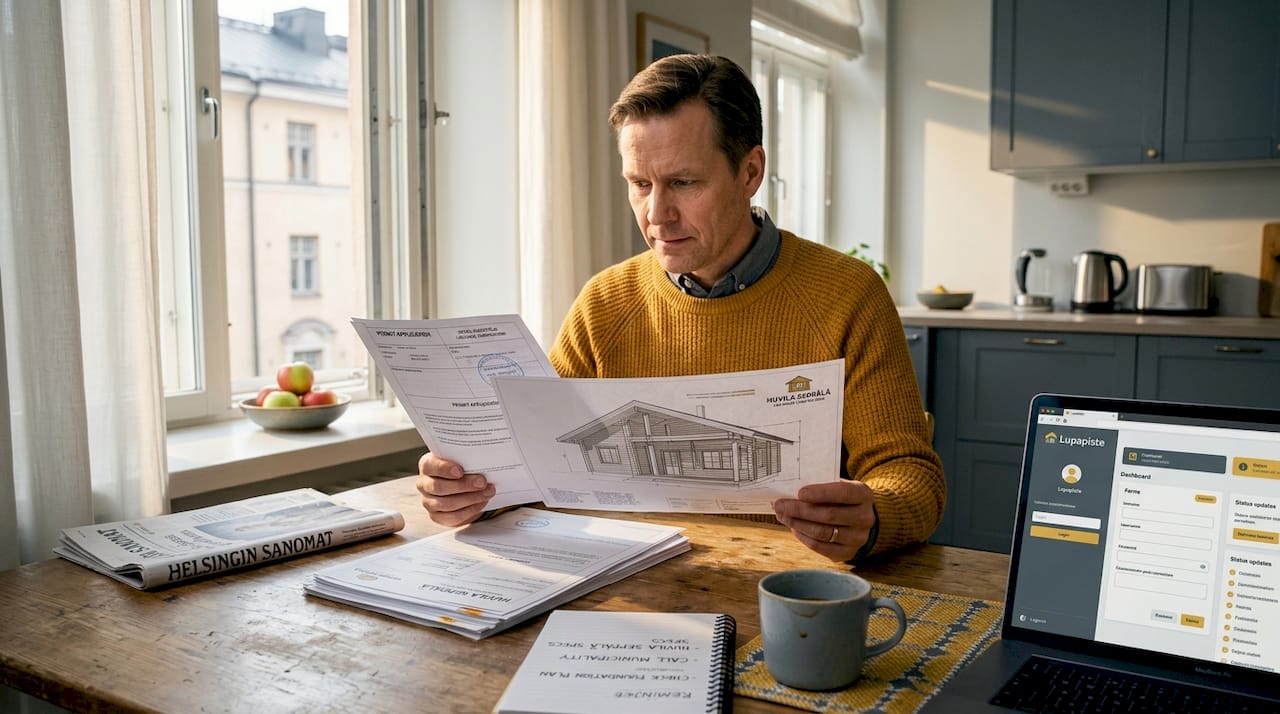
How to get building permits in Finland: step-by-step guide
TL;DR:
- Many Finnish homeowners underestimate permit requirements, leading to delays in building small structures. Proper preparation, including early plot registration and clear communication with authorities, is essential for a smooth permit process. Most delays are avoidable with accurate documentation, proactive engagement, and understanding updated regulations.
Many Finnish homeowners assume that building a sauna or small wooden cottage is a straightforward weekend decision. Then reality sets in. Permit requirements, zoning rules, mandatory consultations, and document checklists appear out of nowhere, turning a dream project into a months-long paperwork challenge. The good news is that most of those delays are entirely preventable with the right preparation. This guide walks you through every critical stage of the Finnish building permit process, from understanding whether your project even needs a permit to submitting a complete application that gets approved without unnecessary back-and-forth.
Table of Contents
- Do you need a building permit? Understanding exceptions and rules
- Preparing your plot and plans for permit readiness
- Step-by-step permit application process in Finland
- Essential attachments and compliance for 2026: new requirements
- Troubleshooting, edge cases, and expert tips for a fast approval
- Our take: Why most permit delays are avoidable (contrarian advice for homeowners)
- Ready to build? Expert resources for Finnish timber permits and custom structures
- Frequently asked questions
Key Takeaways
| Point | Details |
|---|---|
| Permit exemptions for small builds | Structures under 30 m² are often exempt from permits but must still follow regulations. |
| Pre-application consultation | Early negotiation with permit processors clarifies requirements and speeds approval. |
| 2026 document requirements | All permit applications must include main drawings, plan model, and a site-control statement. |
| Use digital services | Submitting and tracking your permit via Lupapiste streamlines the process. |
| Avoid delays with preparation | Complete and correct submissions prevent slowdowns and missed deadlines. |
Do you need a building permit? Understanding exceptions and rules
The first question every homeowner should answer is simple: does your project actually require a permit? In Finland, the answer depends heavily on the size and type of structure you plan to build.
The most important threshold to know is 30 square meters. Small buildings under 30 m² are an exception to the standard permit requirement, but they must still comply with building regulations. This distinction trips up a lot of homeowners. Exempt does not mean unregulated. You still need to respect zoning rules, setback distances from property lines, and any restrictions listed in your local detailed plan.
Saunas and outbuildings under 30 m² may be exempt from a full building permit, though other approvals may still apply depending on your municipality and plot type. A sauna built on a shoreline plot, for example, is treated very differently from one built inland. Shore zones often trigger additional environmental assessments. You can find timber permit basics and sauna permit guidance if you want to dig into specific scenarios before approaching your municipality.
Key scenarios and what they typically require:
- New residential wooden house (over 30 m²): Full building permit always required
- Detached sauna under 30 m²: Usually exempt, but verify local zoning restrictions
- Shed or storage building under 30 m²: Often exempt, but setback rules still apply
- Extension to an existing building: Almost always requires a permit regardless of size
- Demolition of a structure: Separate demolition permit often required
| Structure type | Size | Permit typically required? |
|---|---|---|
| Log house or wooden villa | Any | Yes |
| Detached outdoor sauna | Under 30 m² | Often no (verify locally) |
| Detached outdoor sauna | Over 30 m² | Yes |
| Garden shed | Under 30 m² | Often no (verify locally) |
| Addition to existing home | Any | Yes |
When in doubt, contact your local municipality’s building supervision office before breaking ground. A quick phone call or email can save you months of headaches later.
Preparing your plot and plans for permit readiness
Once you know a permit is required, preparation becomes your most important job. Submitting an application before your property and plans are in order is one of the most common mistakes homeowners make.
Before applying, ensure the plot is properly registered, that you have confirmed zoning and local plan compliance, and that your design respects the plan’s limits for height, floor area ratio, and footprint. In practical terms, this means pulling your plot’s cadastral information from the National Land Survey of Finland and reviewing your municipality’s zoning map. Many homeowners are surprised to find that their dream plot carries restrictions they never knew about.
Checklist before you apply:
- Plot is registered in the real estate register (kiinteistörekisteri)
- You have reviewed the local detailed plan (asemakaava) or general plan
- Floor area and building height comply with plan limits
- Setback distances from property lines, roads, and water bodies are respected
- A principal designer (pääsuunnittelija) is appointed for the project
The principal designer role is not optional for permit-required projects. This is a licensed professional responsible for ensuring your entire design meets Finnish building regulations. They coordinate the work of all other designers involved and sign off on the application package. For a wooden house planning permission application, the principal designer must have qualifications appropriate to the project’s complexity. You can find detailed log house requirements if you are specifically planning a log structure.
| Preparation task | Who handles it | Typical timeline |
|---|---|---|
| Plot registration check | Homeowner / surveyor | 1 to 2 days |
| Zoning review | Principal designer | 1 to 2 weeks |
| Architectural drawings | Designer / architect | 2 to 6 weeks |
| Principal designer appointment | Homeowner | Before application |
Pro Tip: Request a plot information extract (kiinteistötietoote) from your municipality early in the process. It confirms ownership, area, and any restrictions on the land. This single document prevents a lot of last-minute surprises.
Step-by-step permit application process in Finland
With your property confirmed and plans drawn up, the application process itself becomes manageable if you follow the right sequence.
Step 1: Register and access Lupapiste
Most Finnish municipalities use the Lupapiste digital platform for building permit applications and guidance. Create an account at lupapiste.fi and search for your municipality. Lupapiste lets you submit documents, track application status, and communicate directly with permit processors, all in one place.
Step 2: Book your preliminary negotiation
A preliminary negotiation must always be held for projects that require a building permit. This is a mandatory meeting with the local building supervision authority. Do not treat it as a formality. Use it to confirm exactly which documents are required for your specific project, ask about any local exceptions or restrictions, and clarify how the 2026 attachment requirements apply to your situation.
Step 3: Prepare your application package
Gather all required documents based on what was discussed in the preliminary negotiation. Avoid guessing. Every project has slightly different requirements depending on size, location, and structure type.
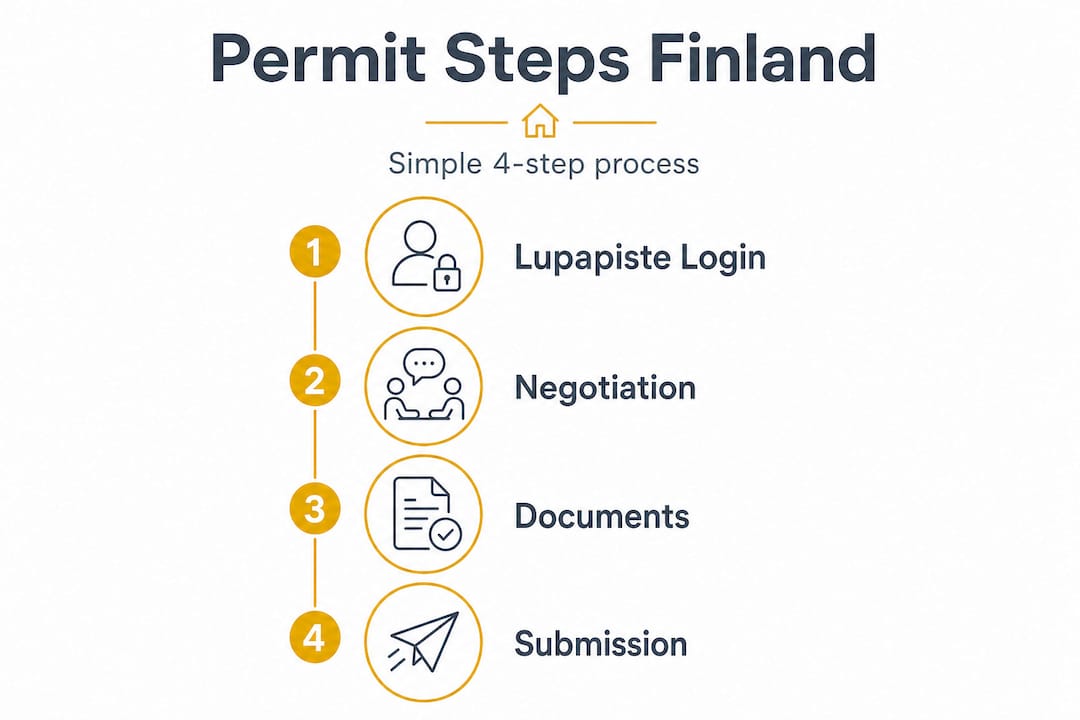
Step 4: Submit digitally through Lupapiste
Upload your complete application package. Double-check every attachment before submitting. An incomplete submission does not pause the clock and wait for you. It simply means processing has not started.
Step 5: Respond to any requests for additional information
Permit processors may request clarifications. Respond quickly and completely. Delays in responding extend your total processing time.
“The most effective thing you can do during the application process is communicate proactively. Applicants who engage with permit processors early and respond to requests within days consistently see faster approvals than those who take weeks to respond.” Experienced Finnish building supervisors emphasize this point repeatedly.
You can review the full permit process steps and a dedicated timber permit homeowner guide to see how this sequence applies to wooden structure projects specifically.
Pro Tip: Save every message, document submission receipt, and response you receive through Lupapiste. If a dispute arises about processing timelines or document requirements, your digital record is your strongest tool.
Essential attachments and compliance for 2026: new requirements
The 2026 updates to Finnish building permit requirements represent the most significant changes in years. Submitting under old assumptions is a reliable way to delay your project by weeks or months.
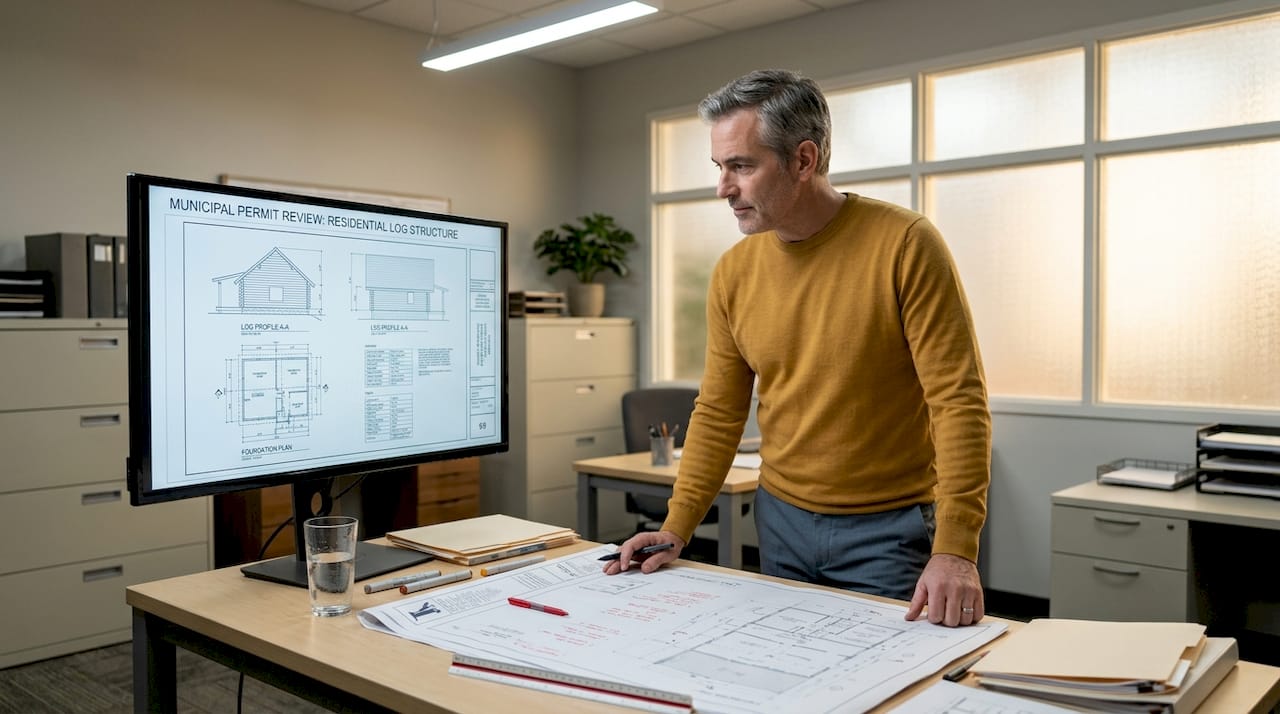
From 2026, mandatory attachments include main drawings, a plan model or machine-readable information, and a statement confirming control over the construction site. Each of these has specific format and content requirements.
Required main drawings:
- Site plan (asemapiirustus): Shows the building’s position on the plot, distances from property lines, and access routes
- Floor plan (pohjapiirustus): Interior layout to scale
- Cross-section drawing (leikkauspiirustus): Vertical cut through the building showing height and structure
- Facade drawings (julkisivupiirustukset): All four exterior elevations
The plan model or machine-readable format requirement is new and catches many applicants off guard. This means submitting either a physical or digital building model, or providing your drawings in a standardized machine-readable format that municipal systems can process automatically. Your principal designer should handle this, but confirm it explicitly.
The statement of site control confirms that you have legal authority to build on the plot. This can be proven through ownership documentation, a lease agreement, or other legally recognized right to use the land.
Processing time starts only once the application includes all necessary attachments. Submit an incomplete package and the clock never starts. You can wait weeks wondering why there is no progress, only to find out a single missing document held everything up.
2026 attachment compliance checklist:
- All four main drawing types included and signed by principal designer
- Plan model or machine-readable format included
- Site control statement attached
- Preliminary negotiation completed before submission
- All documents match the specifications confirmed in preliminary negotiation
You can find a detailed timber permit attachment guide and specific 2026 sauna permit steps for project-specific attachment guidance.
Pro Tip: Ask your principal designer to do a final checklist review against the 2026 requirements before submission. One missed attachment can delay your entire project start date.
Troubleshooting, edge cases, and expert tips for a fast approval
Not every project fits neatly into standard categories. Deviations, exceptions, and special planning decisions add significant complexity to the permit process.
If a deviation or extra planning decision is required, reserve at least six months for permit processing. This applies when your project does not fully comply with the local detailed plan and you are requesting an exception. Common deviation scenarios include building closer to a property line than the plan allows, exceeding permitted floor area ratios, or building on a plot where construction is not by right.
Steps to handle complex edge cases:
- Identify the deviation early, before your architect finalizes drawings
- Discuss it in your preliminary negotiation to understand the approval path
- Submit the deviation application separately, before or alongside the main permit
- Communicate regularly with the permit processor to track progress
- Build the six-month buffer into your construction timeline from day one
Regulatory updates in 2025 and 2026 may affect attachment requirements, so confirm specifics in your pre-consultation meeting rather than relying on last year’s checklist. Finnish building regulations now increasingly account for lifecycle climate impacts of buildings, which can affect material and energy requirements even for small wooden structures.
Pro Tip: Keep a dedicated digital folder for your permit project. Include every email, every document version, every submission receipt, and every piece of correspondence with your municipality. When questions arise, having this organized record saves hours of back-tracking.
“Homeowners who treat the permit application as a project in itself, with its own planning, tracking, and communication discipline, consistently have smoother experiences than those who treat it as an administrative formality.” This observation comes up again and again from builders and permit professionals across Finland.
For more detailed guidance, explore the complete sauna permit process and a practical guide to build outdoor sauna in 2026 as reference points for your specific build type.
Our take: Why most permit delays are avoidable (contrarian advice for homeowners)
After working on timber and log structure projects across Finland for over 65 years, we have seen the same permit delay patterns repeat themselves. Here is the honest truth: the vast majority of delays are self-inflicted.
The most common cause is skipping or rushing the preliminary negotiation. Many applicants treat it as a box-checking exercise. They show up, say as little as possible, and leave thinking they have fulfilled the requirement. Permit processors in Finland are genuinely trying to help you succeed. The preliminary meeting is your best opportunity to get specific, project-level guidance before you invest weeks in document preparation. Use it aggressively.
The second pattern we see constantly is relying on outdated information. A neighbor built their sauna three years ago and used a specific document list. You copy that list. But regulations changed in 2026, and now you are missing a machine-readable plan model that did not exist as a requirement back then. Old checklists feel reliable, but they are not. Confirm requirements for your specific project and your current year, every single time.
The third pattern is underestimating plot issues. A plot that is not properly registered, a boundary dispute, or an unresolved zoning restriction can stop your application cold before it even starts processing. Get your plot documentation sorted as a first step, not as an afterthought.
Treating your permit application like a project, with its own timeline, document management, and communication schedule, is the approach that consistently leads to fast approvals. Review the full permit process guide as a structured starting point and build your personal plan from there.
Ready to build? Expert resources for Finnish timber permits and custom structures
Getting your permits sorted is the gateway to the part everyone actually enjoys: building something beautiful from Finnish wood. At Huvila Seppälä, we have spent over 65 years helping homeowners turn their plans into reality with custom timber frames, log houses, saunas, and cottages.
Whether you are still in the planning stage or ready to order, our detailed guides walk you through every phase of the process. Start with planning your custom timber cottage for a structured overview of how a custom build comes together from first sketch to final delivery. Explore what makes Finnish woodworking for custom builds distinct, from material quality to construction techniques. And if you are planning a log house, the log house planning workflow gives you a step-by-step blueprint for managing the entire process. We build from your drawings with transparent pricing and no hidden costs.
Frequently asked questions
Do I need a building permit for a sauna or shed under 30 m²?
In most cases, you do not need a permit for structures under 30 m², but buildings under 30 m² must still comply with all applicable zoning and building regulations. Always verify with your municipality, especially for shoreline or restricted-zone properties.
How do I find out what documents are needed for my permit application?
Use Lupapiste for guidance and request a preliminary negotiation, which is required for permit-eligible projects, to get a specific document list for your build. Requirements vary by project type, location, and municipality.
What happens if I submit an incomplete application?
Your application will not be processed. Processing time starts only when the application includes all necessary attachments, so an incomplete submission effectively means your project is on hold until everything is in order.
How long does it take to get a building permit in Finland?
Standard applications typically take several weeks to a few months, but planning deviations can require reserving at least six months for the full permit processing cycle, so factor that into your project timeline from the start.
Recommended
- Building Permits in Finland Explained: Your Custom Timber Guide – Hirsitalot, pihasaunat ja piharakennukset kotimaisesta hirrestä
- Timber Building Permits in Finland: A Homeowner’s Guide – Hirsitalot, pihasaunat ja piharakennukset kotimaisesta hirrestä
- Building Permits for Timber Homes in Finland: A Clear Guide – Hirsitalot, pihasaunat ja piharakennukset kotimaisesta hirrestä
- Log building permits in Finland: avoid costly pitfalls – Hirsitalot, pihasaunat ja piharakennukset kotimaisesta hirrestä