Role of Architecture in Timber Building Design
Building a custom timber home or vacation property in Central Europe brings unique decisions that shape not just how your building looks, but also how it ages and performs for generations. Architecture transforms timber from a raw material into a versatile, eco-friendly solution, letting you create living spaces that blend durability with natural beauty. With mass timber offering improved safety, fire resistance, and sustainability benefits over traditional materials, you have the opportunity to achieve bold design goals while minimizing your environmental footprint.
Table of Contents
- Defining Architecture’s Impact on Timber Construction
- Types of Timber Structures and Architectural Variations
- Key Architectural Principles in Timber Building Design
- Sustainability, Regulations, and Local Requirements
- Common Challenges and Solutions in Timber Architecture
Key Takeaways
| Point | Details |
|---|---|
| Impact of Design on Performance | Architectural decisions significantly influence the structural integrity, aesthetics, and longevity of timber buildings. |
| Sustainability Considerations | Timber’s natural properties align with modern sustainability standards, making it a favorable choice for eco-friendly construction. |
| Local Compliance Needs | Understanding local building codes and regulations is essential to ensure design compliance and avoid costly delays. |
| Fire and Moisture Management | Effective architectural detailing is crucial for fire safety and moisture control, addressing common challenges in timber construction. |
Defining Architecture’s Impact on Timber Construction
Architecture fundamentally shapes how timber buildings perform, look, and endure over decades. Your design decisions determine whether a timber home becomes a lasting family retreat or falls short of expectations.
At its core, architecture controls how timber is used structurally, aesthetically, and functionally. An architect doesn’t simply arrange walls and roofs—they solve real problems that timber-specific construction presents. This is where timber differs from steel or concrete.
How Architecture Solves Timber’s Core Challenges
Timber requires thoughtful architectural planning to unlock its potential. Here’s what architecture actually accomplishes:
- Structural efficiency: Architects design layouts that maximize timber’s strength-to-weight ratio, reducing material waste and costs.
- Environmental impact: Sourcing decisions and mill locations (influenced by architectural specifications) significantly affect a building’s carbon footprint.
- Prefabrication readiness: Modern timber construction, especially engineered products like cross-laminated timber (CLT), allows architects to design buildings for factory assembly—cutting on-site labor and timelines.
- Fire safety: Architectural detailing around timber elements, including proper sizing and protective measures, dramatically improves safety ratings.
- Durability planning: Design determines how moisture is managed, how the structure handles seasonal movement, and how long the building performs.
Architecture transforms timber from a basic material into a sophisticated structural solution that balances cost, sustainability, and performance.
When you work with Finnish craftsmanship in timber building design, you’re benefiting from architectural knowledge built over decades. Finnish timber construction emphasizes simplicity paired with precision—exactly how good architecture should work.
Real Impact: Your Design Choices Matter
Consider how an architect approaches a Central European vacation property. The climate demands specific design responses: roof overhangs protect timber from rain exposure, ventilation layers prevent moisture buildup, and foundation designs accommodate timber’s natural movement.
Engineered mass timber products enable architects to design multistory timber buildings that were impossible just years ago. This opens possibilities for custom timber villas and homes that weren’t previously feasible in your region.
Your architectural vision directly influences:
- How quickly your project can be manufactured (prefabrication-friendly designs speed delivery)
- Long-term maintenance requirements (proper detailing reduces future costs)
- Environmental performance (smart sourcing and design lower embodied carbon)
- Resale value and functionality (thoughtful spatial design creates lasting appeal)
The research shows that architectural decisions—including timber species selection and construction methodology—significantly affect both the environmental footprint and structural success of timber buildings.
Pro tip: Start your timber project with an architect experienced in log and timber frame construction, not someone treating your custom timber home like a concrete design. The structural and aesthetic requirements are fundamentally different.
Types of Timber Structures and Architectural Variations
Timber construction isn’t one-size-fits-all. Different structural systems offer distinct advantages, and architects choose based on your project’s specific needs, budget, and aesthetic vision.
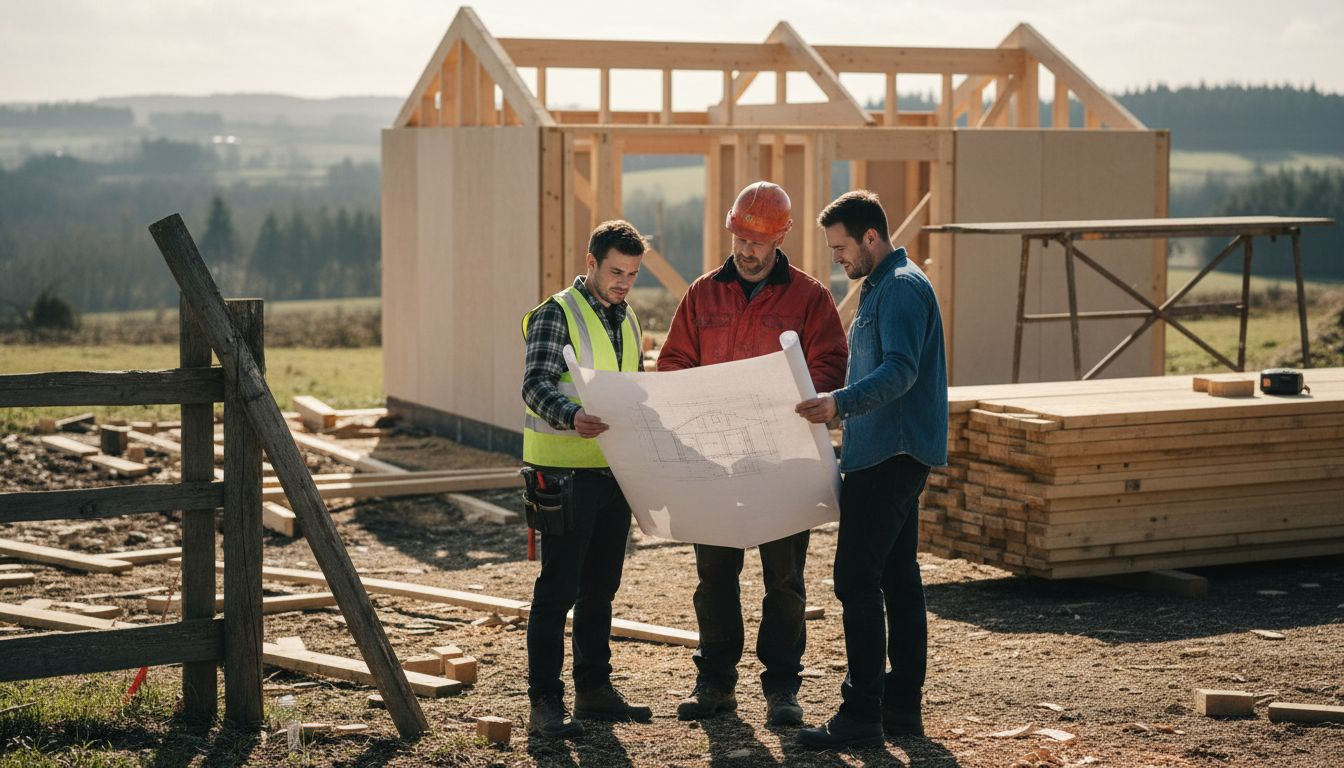
The timber industry has evolved dramatically. Modern engineered timber products now compete with concrete and steel in strength while offering unique design possibilities unavailable with traditional materials.
The Main Timber Structure Types
You’ll encounter several core timber systems when planning your custom home or vacation property:
- Light-frame wood construction: The most common residential approach, using standard dimensional lumber studs and joists. Cost-effective and fast to build.
- Heavy timber: Solid, substantial beams and posts create dramatic interior spaces with exposed timber. Popular for cottages and rustic villas.
- Glulam beams: Engineered beams made from laminated wood strips, allowing longer spans and creative architectural forms without intermediate supports.
- Cross-laminated timber (CLT): Panels made of perpendicular wood layers, enabling multistory timber buildings and dramatic open floor plans.
- Nail-laminated timber (NLT): Planks nailed together to create solid panels, offering visual warmth with structural performance.
- Dowel-laminated timber (DLT): Similar to CLT but using wooden dowels instead of nails, creating seamless aesthetic appearance.
Each timber system unlocks different architectural possibilities—the structure you choose fundamentally shapes what your building can become.
Architects design around these systems differently. Examples of Finnish wood structures for vacation homes demonstrate how diverse timber types produce dramatically different visual and spatial outcomes.
Here’s a quick comparison of common timber structural systems and their best architectural applications:
| Timber System | Typical Uses | Architectural Flexibility | Notable Advantages |
|---|---|---|---|
| Light-frame Wood | Residential homes | Moderate | Quick build, cost-effective |
| Heavy Timber | Cottages, villas | High | Striking interiors, durable |
| Glulam Beams | Open layouts, spans | Very High | Long spans, unique forms |
| CLT Panels | Multistory buildings | High | Open plans, good fire rating |
| NLT/DLT | Specialty projects | Moderate to High | Warm aesthetics, solid panels |
How Architecture Adapts to Timber Type
Your architect doesn’t simply pick a system and design around it. Instead, architectural decisions drive which system makes sense for your vision.
Consider fire resistance requirements. Building codes demand specific fire ratings, and timber systems respond differently. Thicker CLT panels, for example, can achieve fire ratings comparable to concrete through proper architectural detailing—not material substitution.
Connection design creates another architectural variable. How timber elements join determines both structural capacity and visible appearance. Exposed connections become design features; concealed connections create seamless interiors.
The load capacity and span capability of each system influences room layout. Glulam beams permit long, open spaces impossible with standard framing. CLT panels enable dramatic cantilevers and open concepts.
Panel configuration and timber element exposure allow customization in appearance, load capacity, and fire-resistance, broadening the applicability of timber structures across different architectural visions.
Pro tip: Request your architect provide examples of completed projects using your intended timber system—visual precedent prevents misaligned expectations and ensures your custom design matches the structural reality of that timber type.
Key Architectural Principles in Timber Building Design
Good timber architecture isn’t about following trends. It’s about understanding foundational principles that keep your custom home safe, durable, and beautiful for decades.
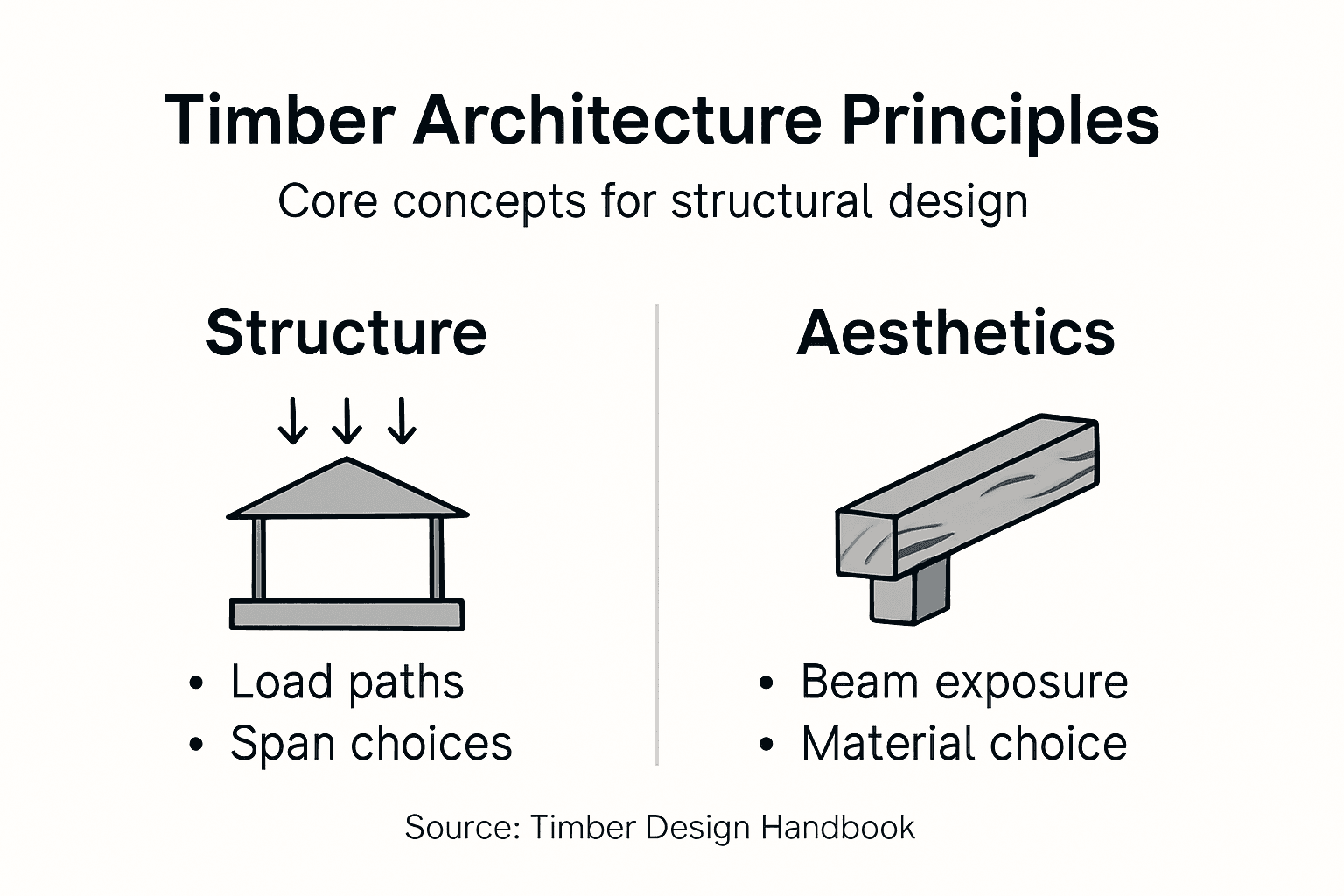
These principles separate thoughtful design from amateur mistakes. When architects apply them correctly, timber buildings outperform expectations in every way that matters.
The Core Design Principles
Successful timber architecture rests on several interconnected ideas:
- Structural integrity: Load paths must be clear and direct. Every beam, column, and connection transfers weight safely to the foundation without ambiguity.
- Load resistance: Member sizing accounts for snow loads, wind forces, and occupancy demands specific to your Central European climate and location.
- Serviceability: The structure functions as intended without excessive deflection, vibration, or movement that occupants would notice or find uncomfortable.
- Connection detailing: How timber elements join determines both safety and appearance. Poor connection design fails both structurally and aesthetically.
- Fire resistance: Building codes require specific fire ratings. Timber thickness, protective layers, and architectural detailing work together to achieve these ratings.
- Sustainable optimization: Material selection and member sizing balance timber’s environmental benefits with functional and cost requirements.
Timber architecture succeeds when structural efficiency, safety, aesthetics, and sustainability work as one integrated system.
Making These Principles Work in Practice
Architects must weigh multiple competing factors simultaneously. Building a Finnish villa requires understanding how each design decision cascades through the entire project, influencing cost, timeline, and long-term performance.
Grid and span optimization creates efficiency without waste. Instead of random member placement, architects design on logical grids that minimize material while maximizing structural capability. This approach reduces cost and improves manufacturing precision.
Exposed versus concealed timber changes the architectural character entirely. Exposed beams create visual warmth and drama. Concealed framing enables clean interiors but requires more careful detailing to manage moisture and movement.
Penetration placement matters more than it seems. Windows, doors, and mechanical systems must align with the structural logic. Poor penetration placement weakens the structure and complicates construction.
Acoustic considerations influence design in ways many overlook. Timber and engineered panels naturally absorb sound differently than concrete. Smart architects design accordingly.
Material selection drives everything forward. Timber species, grade, and processing methods affect structural capacity, aesthetic appearance, durability, and environmental footprint.
Pro tip: Early in design, ask your architect to create a simple structural diagram showing major load paths, key connections, and how loads reach the foundation—this single document prevents costly design surprises during construction.
Sustainability, Regulations, and Local Requirements
Building with timber in Central Europe means navigating evolving sustainability standards and regulatory frameworks that shape architectural decisions. Your project doesn’t exist in a vacuum—it must comply with local codes while meeting modern environmental expectations.
The good news: timber naturally aligns with these requirements. The challenge is understanding how regulations influence your design before construction begins.
Understanding European Sustainability Standards
European Union regulations now mandate specific sustainability criteria for building materials and products. These requirements affect your timber selection, structural design, and overall project planning.
Key regulatory considerations include:
- Energy efficiency: Buildings must minimize heating and cooling demands through insulation, window placement, and thermal mass strategies.
- Durability standards: Materials must perform reliably for decades, reducing replacement frequency and waste.
- Reparability requirements: Design should allow components to be repaired without replacing the entire system.
- Circular economy principles: Material sourcing, manufacturing, and end-of-life disposal must minimize environmental impact.
- Embodied carbon limits: The carbon footprint of materials and construction processes increasingly faces regulatory scrutiny.
- Health and safety compliance: Indoor air quality, moisture management, and toxic substance restrictions apply.
Timber’s natural properties—carbon sequestration, renewable sourcing, and recyclability—position it perfectly for meeting modern European sustainability requirements.
Local Building Codes and Permits
Every country in Central Europe maintains specific building codes governing timber construction. These vary significantly by location, affecting architectural choices around fire resistance, structural sizing, and material specifications.
Common regulatory requirements include:
- Fire resistance ratings (typically 30-60 minutes for residential timber buildings)
- Seismic design considerations (depending on geographic location)
- Snow load calculations (critical for Alpine and Central European regions)
- Moisture and ventilation standards (preventing rot and mold)
- Foundation and structural depth requirements
Architectural design must respond to these codes from the project’s beginning. You cannot design freely and retrofit compliance later—it costs time and money.
Permitting timelines vary by jurisdiction. Some regions require detailed architectural drawings, structural calculations, and environmental assessments before approval. Others streamline the process for prefabricated timber systems.
Finnish timber construction often complies with stricter European standards than many local codes require, giving you a head start on regulatory compliance.
The following table summarizes key building code and sustainability considerations for timber architecture in Central Europe:
| Regulatory Area | Architectural Impact | Typical Requirement |
|---|---|---|
| Fire Safety | Affects timber thickness/details | 30-60 min fire rating |
| Energy Efficiency | Shapes insulation/window design | Low heating/cooling demand |
| Durability | Drives material selection | Decades of reliable performance |
| Seismic Standards | Influences connection design | Regional seismic calculations |
| Moisture Control | Requires ventilation/detailing | Mold/rot prevention measures |
How Architects Balance Regulation with Vision
Regulations create constraints, but skilled architects use them creatively. Fire ratings drive timber thickness decisions that create dramatic visual effects. Energy standards influence window placement, which shapes interior spatial quality.
Your architect must understand local codes intimately. They translate regulatory requirements into design opportunities rather than obstacles.
Pro tip: Before finalizing your architectural vision, have your architect confirm that your design concept aligns with local fire ratings, structural codes, and sustainability standards for your specific location—catching regulatory misalignment early saves thousands in redesign costs.
Common Challenges and Solutions in Timber Architecture
Timber architecture solves many problems, but it introduces its own set of challenges. Understanding these obstacles and their solutions helps you avoid costly mistakes and design buildings that perform flawlessly.
The good news: modern engineering and thoughtful architecture have addressed every major timber challenge. You simply need to know what to expect.
The Primary Challenges
Timber construction faces several well-documented obstacles:
- Fire safety perception: Timber is combustible, triggering regulatory scrutiny and market hesitation despite modern solutions proving timber can meet strict fire codes.
- Moisture management: Water infiltration causes rot, mold, and structural degradation if design doesn’t prevent it through proper detailing and ventilation.
- Seismic performance: Timber’s flexibility can challenge structural stability in earthquake-prone regions without proper connection design and bracing.
- Connection durability: Joints between timber elements experience stress concentrations, movement, and potential failure if not engineered carefully.
- Market acceptance: Some regions still view timber skeptically compared to concrete or steel, creating perception barriers even when timber outperforms alternatives.
- Building code navigation: Local regulations vary dramatically, and timber-specific code compliance requires specialized architectural knowledge.
Modern engineering solutions transform timber’s traditional vulnerabilities into advantages—fire resistance technologies, advanced moisture management, and innovative connections now enable timber buildings to outperform conventional construction.
Practical Solutions That Work
Every challenge has been solved through architectural innovation and engineering advancement. Here’s how architects address them:
Fire resistance relies on multiple strategies working together. Timber thickness provides inherent fire rating because exterior layers char protectively while interior wood maintains strength. Combined with sprinkler systems, encapsulation, and proper detailing, timber achieves 60-minute or greater fire ratings exceeding many building codes.
Moisture control starts with architecture. Roof overhangs shield walls from rain. Ventilation layers prevent condensation. Foundation details isolate timber from ground moisture. These design decisions matter more than material selection.
Seismic resilience comes from thoughtful connection design and understanding timber’s ductility. Properly detailed timber connections absorb seismic energy better than brittle materials. Architectural layouts that minimize torsion and irregular shapes improve seismic response.
Connection innovation has advanced dramatically. Modern timber connection detailing uses advanced fasteners, engineered solutions, and performance-based design approaches ensuring durability for decades.
Navigating building permit requirements for timber homes becomes manageable when architects understand local codes and design accordingly from project inception.
Why These Solutions Matter
Architectural solutions integrate naturally with design. Fire safety drives timber thickness that creates dramatic visual expression. Moisture management shapes roof form. Connection innovation enables clean, beautiful joinery.
The integration happens early. Good architects don’t retrofit solutions; they embed them into initial design thinking.
Pro tip: Request detailed specifications from your architect covering fire protection measures, moisture management strategy, and seismic connection design before construction begins—these documents prevent costly field changes and ensure compliance.
Discover Expert Architectural Solutions for Your Timber Building
The article highlights critical challenges in timber construction like fire safety, moisture management, and structural integrity—all key factors an experienced architect must address to turn your vision into a durable, beautiful home. At Huvila Seppälä, we understand how vital thoughtful architectural design is to maximizing timber’s unique advantages while complying with strict European standards and local regulations. Our Finnish craftsmanship combines over 65 years of expertise to deliver custom log frames, timber villas, and saunas that are prefabricated for precision and fast delivery.
Explore how our tailored timber constructions align with cutting-edge architectural principles by visiting Huvila Seppälä’s website. Learn more about building permit requirements for timber homes to ensure your project meets local codes from the start. When you choose our custom solutions designed in partnership with experienced architects, you get transparent pricing, expert guidance on timber structural systems, and reliable delivery times that keep your project moving forward. Take the first step towards your dream timber home with us today.
Frequently Asked Questions
What is the role of architecture in timber building design?
Architecture plays a critical role in timber building design by controlling structural efficiency, aesthetics, and functionality. It allows architects to unlock timber’s potential while addressing specific construction challenges presented by this material.
How does architecture contribute to the sustainability of timber buildings?
Architectural decisions, such as material sourcing and prefabrication strategies, significantly impact a building’s carbon footprint. Good architectural practices can lead to reduced environmental impact by optimizing material usage and promoting sustainable sourcing of timber.
What are common challenges in timber architecture and how are they addressed?
Common challenges include fire safety, moisture management, and seismic performance. These can be effectively managed through thoughtful architectural design, such as including proper detailing for moisture control and utilizing engineered solutions to enhance fire resistance and structural stability.
Why is it important to choose an architect experienced in timber construction?
Selecting an architect with experience in timber construction is crucial because the structural and aesthetic requirements differ significantly from other materials like concrete or steel. An experienced architect can ensure that the design and materials are properly optimized for timber’s properties, enhancing performance and longevity.
Recommended
- Finnish Craftsmanship in Timber: Lasting Quality and Design – Huvila Seppälä
- Financing Timber Buildings – Key Steps and Strategies – Huvila Seppälä
- Building Permit Requirements – What Timber Homeowners Need – Huvila Seppälä
- Why Build With Timber: Eco-Friendly Homes Explained – Hirsitalot, pihasaunat ja piharakennukset kotimaisesta hirrestä