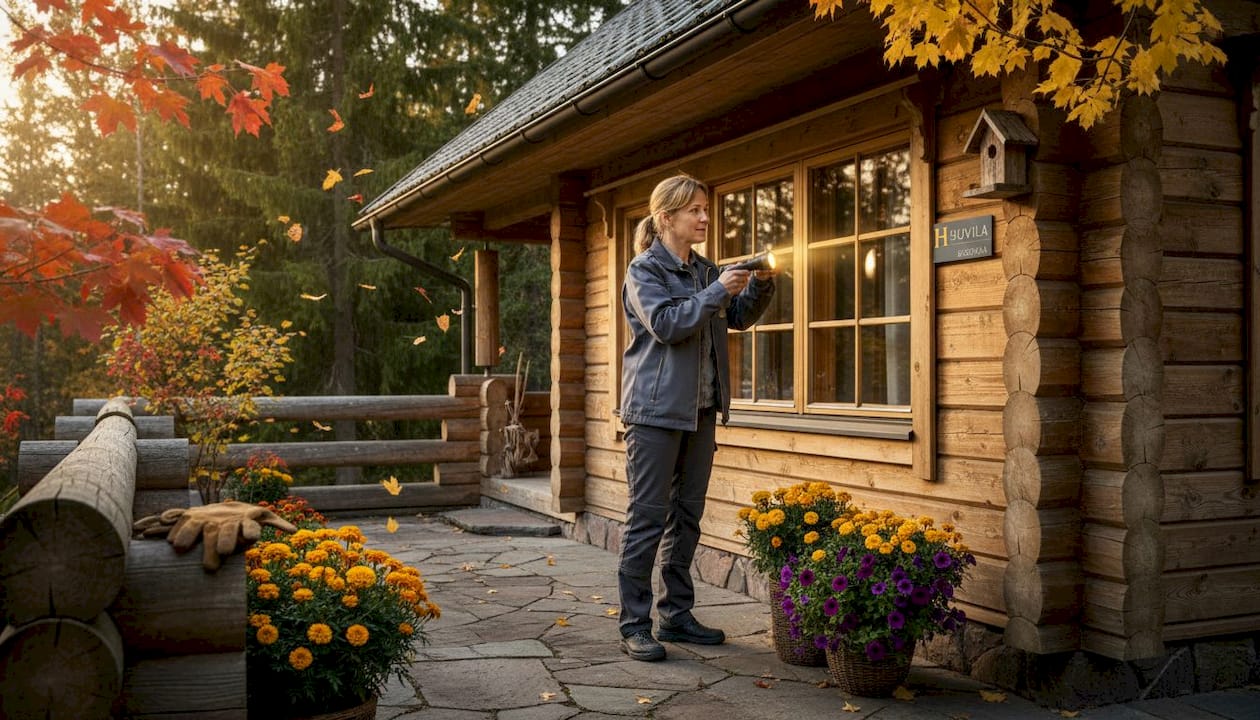
Why timber villa durability protects your investment for decades
TL;DR:
- Moisture exposure, not wood species, is the primary factor influencing the durability of timber villas. Proper moisture management, detailed construction, and regular inspections are essential to ensure long-term structural integrity. Focusing on interfaces, sealing, and maintenance practices outweighs material choice for sustainable, lasting timber structures.
Most people assume that picking the right wood species is the biggest decision they’ll make when building a timber villa. It’s a reasonable guess, but it’s wrong. Durability in timber villas is dominated by moisture exposure and the resulting biological decay risk, not the species stamped on your delivery slip. This article breaks down what actually determines how long your villa will last, what design and construction decisions matter most, and how to keep your structure sound long after the builders have packed up and left.
Table of Contents
- What does durability really mean in timber villas?
- The science behind timber villa durability: Moisture control
- Design and construction choices that impact service life
- Common pitfalls and maintenance essentials for lasting villas
- The uncomfortable truth most people miss about timber villa durability
- Ready to build a timber villa that stands the test of time?
- Frequently asked questions
Key Takeaways
| Point | Details |
|---|---|
| Moisture drives decay | Managing moisture is the most important factor in extending timber villa lifespan. |
| Design details matter | Durability depends on thoughtful detailing at joints, interfaces, and the building envelope. |
| Maintenance is ongoing | Regular checks and quick repairs protect your villa from hidden moisture damage. |
| Species is not enough | Choosing strong timber helps, but only when combined with smart moisture management. |
| Protects your investment | Focusing on durability now saves money and maintains value for decades. |
What does durability really mean in timber villas?
With myths out of the way, let’s define what durability actually means in practice. For most people, “durable” means a house that doesn’t fall apart. But for timber villa owners and developers, it means something far more specific and financially consequential.
A durable timber villa delivers two things simultaneously: structural soundness over time, and a low, predictable maintenance burden. Lose either one and you pay the price, either through expensive repairs or through a sharp drop in resale value. Durability directly protects value via structural integrity and maintenance burden. That’s not a minor footnote; it’s the central argument for why every design decision matters from day one.
Here’s what durability actually depends on in practice:
- Moisture control at every interface, from foundation details to roof overhangs
- Timber species suitability for the exposure class it will face, indoors versus outdoors versus partially sheltered
- Joinery and connection detailing that prevents water from pooling or wicking into end grain
- Envelope continuity, meaning no gaps in the vapor barrier, insulation, or cladding system
- Ongoing inspection and maintenance after the villa is occupied
Local climate matters enormously here. Finland’s freeze-thaw cycles, persistent winter humidity, and heavy summer rain put timber envelopes under real stress. The reasons timber is the top choice for modern villas in Finland include natural resilience and thermal performance, but those benefits only materialize when moisture is actively managed throughout the building’s life.
“The most expensive repairs in timber villas consistently trace back to moisture entering through overlooked interfaces, not to wood species selection.” Treating durability as a design and maintenance discipline, not a material property, is what separates villas that last generations from those that don’t.
Pro Tip: During any inspection, prioritize joints, penetrations, and envelope continuity rather than scanning broad wall surfaces. Decay almost always starts at a detail, not in the middle of a clear span of cladding. The benefits of wooden villas are fully realized only when the structure beneath the surface stays dry.
The science behind timber villa durability: Moisture control
Now that durability’s meaning is clear, it’s time to look at what drives it. The answer, consistently, is moisture. Wood is a hygroscopic material, meaning it absorbs and releases water vapor in response to its surrounding environment. When it absorbs too much, biological processes kick in.
Ambient moisture condition is the single most important factor affecting wood durability. Fungi that cause rot cannot survive when wood moisture content stays below a critical threshold. Above that threshold, the conditions for decay become favorable, and the process is gradual enough that you may not notice damage until it’s structurally significant.
The threshold matters enormously in practice. [Construction timber for indoor use](https://www.dti.dk/_/media/94554_Moisture Management for Timber Construction.pdf) should maintain moisture content no more than 16% during construction. Go above that level for extended periods and the decay risk increases substantially. In real construction conditions, timber delivered to a Finnish site in autumn can absorb ambient moisture quickly if left exposed or if the building envelope is not closed before winter.
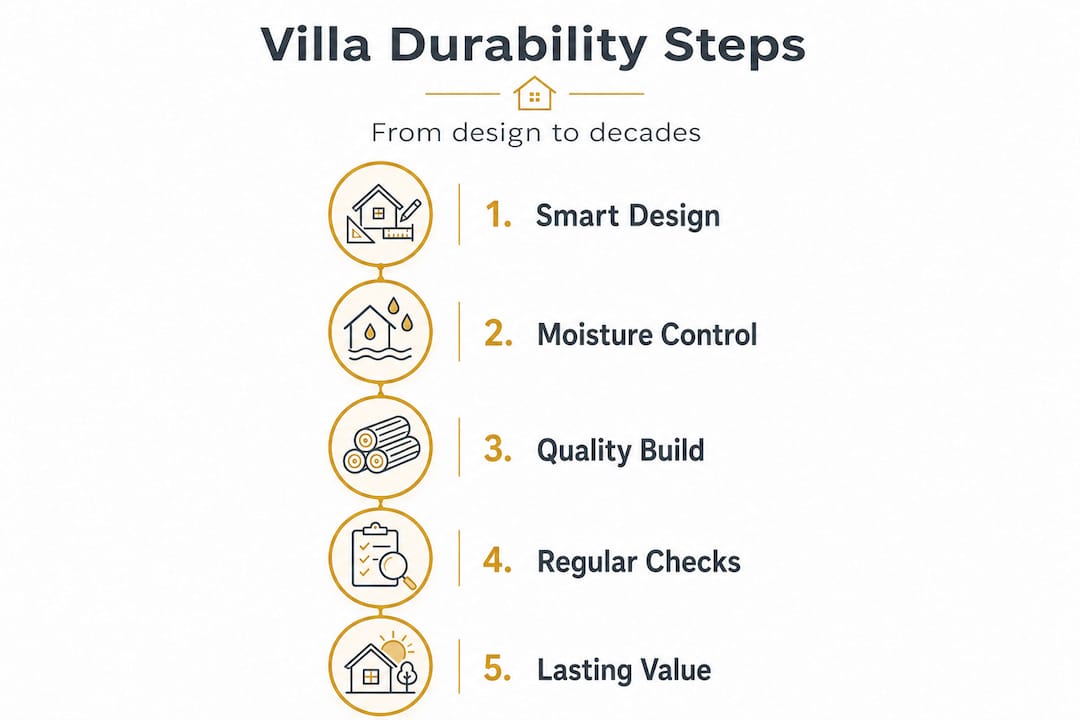
Here’s a stepwise framework for managing moisture across the full project lifecycle:
- Procurement and delivery — Specify timber with documented moisture content and store it covered on site. Avoid direct ground contact during storage.
- Frame erection — Sequence work to minimize exposure time between frame completion and envelope closure. Prioritize roofing before wall detailing.
- Envelope sealing — Install vapor barriers, membranes, and flashing in the correct order. Pay close attention to wall-to-floor and wall-to-roof transitions.
- Pre-occupancy drying — Allow the building to dry to equilibrium before installing sensitive interior finishes. Heating and ventilation during this phase is critical.
- Occupancy and beyond — Maintain active ventilation, inspect regularly, and treat any damaged coatings or sealants quickly.
| Construction phase | Target moisture content | Risk if exceeded |
|---|---|---|
| Timber delivery | Below 19% | Mold during storage |
| Frame erection | Below 18% | Dimensional movement, gaps |
| Envelope closed | Below 16% | Decay risk activated |
| Interior finishing | Below 14% | Finish cracking, adhesion failure |
| Long-term occupancy | 8 to 12% typical | Acceptable equilibrium range |
Good timber framing strategies incorporate moisture management at the design stage, not as an afterthought. The decisions made on paper before a single log is cut determine how easy or difficult it will be to keep the structure dry for the next 50 years. Working with experienced structural engineering for wood homes ensures those paper decisions translate into real-world performance.
Pro Tip: Moisture management does not end at handover. New occupants often unknowingly compromise dryness by blocking ventilation openings, using the wrong heating schedule during the first winter, or ignoring small coating failures. Budget time and money for a six-month post-occupancy check as part of your project plan.
Design and construction choices that impact service life
Understanding the role of moisture, let’s move into what construction and design decisions can make a real difference. The gap between a villa that performs for 80 years and one that needs major remediation at 20 years often comes down to a handful of specific choices at the detail level.
Here’s a side-by-side look at how different design approaches affect service life:
| Design element | Higher durability approach | Lower durability approach |
|---|---|---|
| Roof overhangs | Deep overhangs, 600 mm or more | Minimal overhangs to save cost |
| Window sill detailing | Sloped sill with drip edge, properly flashed | Flat sill with exposed end grain |
| Timber species for exterior | Thermally modified or naturally durable species | Untreated construction softwood |
| Vapor barrier continuity | Tested, taped, and inspected at all joints | Installed without tape at joints |
| Penetrations (pipes, cables) | Sealed with rated collars and flashings | Stuffed with insulation without sealing |
| Foundation transition | Capillary break, ventilated crawlspace | Direct timber-to-concrete contact |
One of the most counterintuitive facts in timber villa construction: service life and durability depend on interface-level detailing and verification, even in fully code-compliant buildings. Passing inspection does not mean your villa is optimally protected. Finnish building codes set minimum floors, not performance targets. The gap between code minimum and long-term optimal is exactly where experienced builders add value.
Common failure points that are easy to overlook include:
- Window and door sills where rainwater can stand before draining, allowing end grain absorption
- Deck-to-wall connections where horizontal surfaces trap water against vertical cladding
- Balcony thresholds where interior floor levels are too close to exterior deck levels
- Service penetrations through the exterior wall for electrical, plumbing, or HVAC that are sealed inadequately
- Fascia and soffit junctions at the roof where driven rain can penetrate behind cladding
When designing a wooden villa, every junction between different materials or planes is an opportunity for moisture to find a path into the structure. A good architect and builder will treat each one as a small, separate engineering problem. The role of architecture in timber building goes far beyond aesthetics; it is fundamentally about controlling how water moves across and through your building envelope.
Common pitfalls and maintenance essentials for lasting villas
You’ve seen how to design and build for durability. Now let’s cover how to keep it that way, year after year. Many timber villa owners invest heavily in construction quality and then shift their attention entirely once they move in. That’s where durability starts to erode.
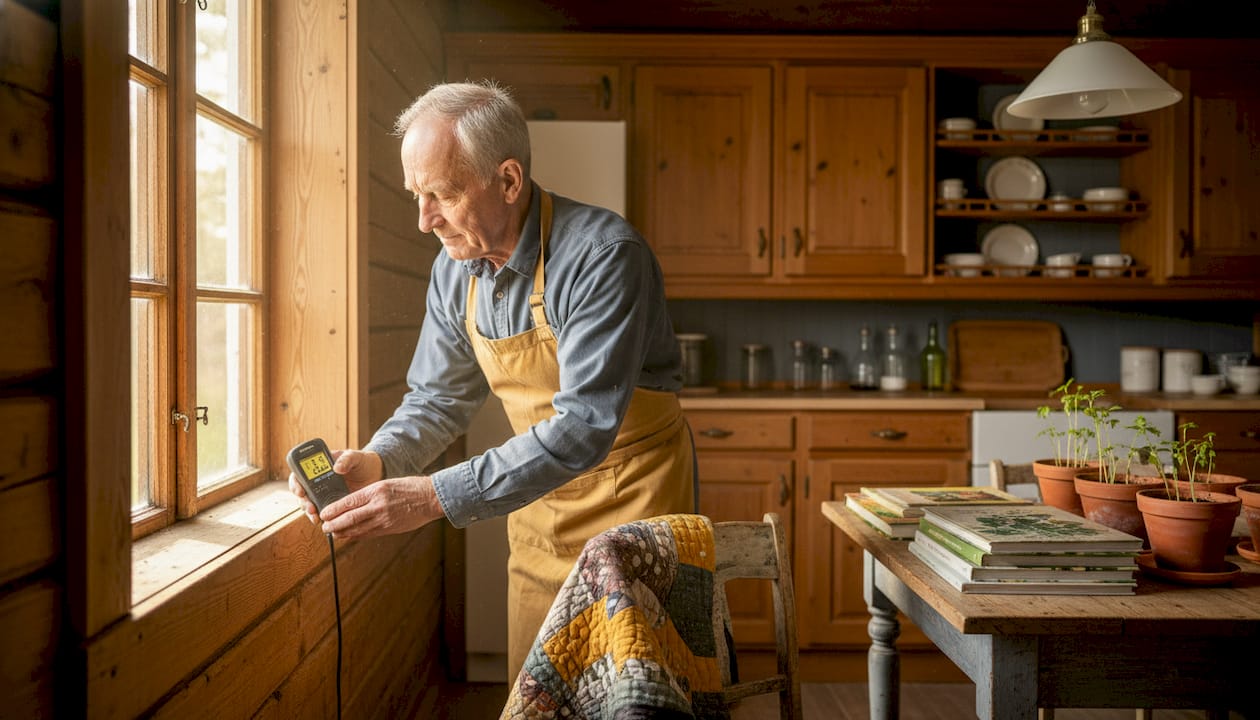
Inspections should focus on joints, penetrations, and envelope continuity. These are the locations where small, localized failures can progress silently into major structural problems. A missed crack in a window sill sealant can let in enough moisture over two or three Finnish winters to cause significant decay in the framing behind it, all while the exterior looks perfectly fine.
Here’s a practical annual maintenance checklist:
- Exterior coatings — Check all painted or stained surfaces for peeling, cracking, or chalking. Damaged coatings expose wood to direct rain and UV exposure.
- Window and door sills — Inspect sealant joints for gaps. Probe sills gently for softness, which signals moisture uptake.
- Roof-to-wall junctions — Look for lifted or cracked flashing at valleys, ridges, and dormers.
- Foundation ventilation — Ensure crawlspace vents are unobstructed and that the crawlspace stays dry through winter and spring thaw.
- Deck and balcony connections — Check that decking boards are not cupping water toward the wall junction, and that horizontal surfaces drain freely.
- Service penetrations — Look for signs of condensation, staining, or swelling around pipes and cables that pass through the exterior wall.
“Durability can fail locally even when the broader structure remains sound. A single wet spot, sustained over time, is enough to initiate decay that spreads silently through concealed framing.”
[Moisture management extends into occupancy](https://www.dti.dk/_/media/94554_Moisture Management for Timber Construction.pdf) and maintenance because durability relies on continued attention past completion. This is especially relevant in Finland, where seasonal temperature swings create recurring moisture stress on every building element.
A useful mental model: treat your villa like a high-performance machine that needs scheduled servicing, not an inert object that takes care of itself. A comprehensive guide on building a Finnish villa covers many of these maintenance principles in detail, and it’s worth bookmarking even after construction is complete.
The uncomfortable truth most people miss about timber villa durability
Our experience over more than 65 years of building with Finnish timber has taught us one thing clearly: the conversation in the market is often focused on the wrong things.
There is genuine pride in Finnish timber tradition, and it is well-deserved. Selecting a Nordic pine or spruce grown in slow-growth forests, processed domestically, and crafted by skilled builders does matter. Species choice, grain density, and processing quality all contribute to durability. We would never dismiss that.
But durability claims in the timber-villa market that focus primarily on timber species or tradition without addressing moisture-path management and service-life verification are incomplete at best. They give buyers confidence in the wrong variable. We have seen beautiful, high-quality timber fail in 15 years because the detailing at a window sill or a balcony threshold was treated as a minor finishing task rather than a critical durability decision.
The engineering literature is consistent: moisture exposure and service-life modeling are the dominant determinants of how long a timber building will last. Tradition and species choice are inputs to that system, not substitutes for it. A villa built from Finnish timber for custom homes with excellent species selection but poor moisture detailing will underperform a villa built with standard structural timber and rigorous moisture control.
Our position is straightforward: celebrate the heritage and material quality, but design, build, and verify for moisture performance at every interface. That is how you protect a customer’s investment for 50 or 80 years, not by pointing to what species is on the delivery note.
The industry needs to shift toward demanding documented moisture management plans, post-construction verification, and honest service-life modeling as standard practice. Buyers deserve that level of transparency.
Ready to build a timber villa that stands the test of time?
If this article has made one thing clear, it’s that a durable timber villa is a result of deliberate choices, not just quality materials. Every detail, from the depth of your roof overhang to the continuity of your vapor barrier, either adds years to your villa’s life or quietly subtracts them.
At Huvila Seppälä, we’ve spent over 65 years building timber structures that are designed to last. Our approach starts with your drawings and ends with a structure built from Finnish wood with honest craftsmanship and no hidden costs. Whether you’re exploring custom wooden villas for the first time or looking to understand exactly why build with timber for your next project, we can help you make decisions grounded in real performance. For a clear, step-by-step view of the entire process, our step-by-step timber villa guide walks you through everything from the first drawings to final delivery.
Frequently asked questions
What is the main threat to timber villa durability?
Moisture exposure is the single most significant threat, leading to biological decay and strength loss that can progress undetected for years before becoming visible.
How do you prevent decay in timber villas?
Control moisture at every stage, from timber storage and construction sequencing to regular maintenance inspections. [Moisture control](https://www.dti.dk/_/media/94554_Moisture Management for Timber Construction.pdf) is both a design and construction-phase methodology, with active monitoring remaining crucial after handover.
Is choosing the right wood species enough to ensure durability?
No. Even the best species need proper moisture management and rigorous detailing to achieve long-term durability. Species choice alone is necessary but not sufficient without moisture-path management across every interface.
What should be checked during villa maintenance?
Focus on joints, penetrations, exterior coatings, and any areas prone to moisture collection. Inspections targeting joints and envelope continuity catch problems before they become structural failures.
Does the harsh Finnish climate reduce timber villa lifespan?
Not if moisture is properly controlled. [Smart design and regular care](https://www.dti.dk/_/media/94554_Moisture Management for Timber Construction.pdf) keep timber villas durable even through Finland’s demanding freeze-thaw cycles and seasonal humidity swings.
Recommended
- Why timber is the top choice for modern villas in Finland – Hirsitalot, pihasaunat ja piharakennukset kotimaisesta hirrestä
- Villa structures explained: Timber framing for Finnish homes – Hirsitalot, pihasaunat ja piharakennukset kotimaisesta hirrestä
- Why Invest in Log Villas: Sustainable Value for Life – Hirsitalot, pihasaunat ja piharakennukset kotimaisesta hirrestä
- Why Build With Timber: Eco-Friendly Homes Explained – Hirsitalot, pihasaunat ja piharakennukset kotimaisesta hirrestä