Role of craftsmanship in saunas: Finnish timber guide
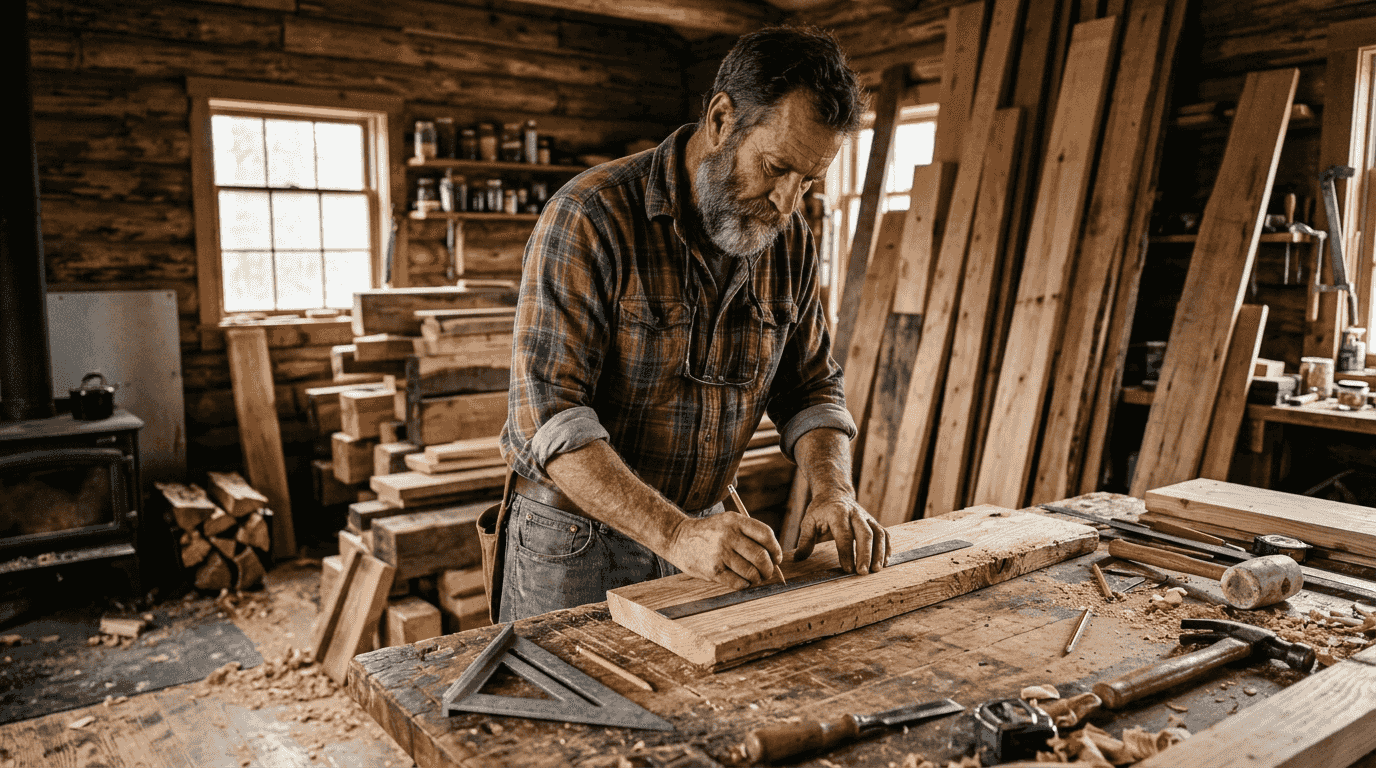
Most people believe a powerful heater defines sauna quality, but that’s only part of the story. The true soul of an authentic Finnish sauna lies in the craftsmanship behind every timber joint, ventilation channel, and bench curve. Without skilled artisans who understand wood behavior, moisture dynamics, and thermal gradients, even the finest heater cannot deliver the transformative experience that makes Finnish saunas legendary. This guide reveals how master craftsmanship shapes every element of your sauna, from selecting stable woods to engineering precise airflow systems. You’ll discover why traditional techniques matter more than modern shortcuts and how to recognize genuine quality in timber sauna construction.
Table of Contents
- Understanding Craftsmanship: The Foundation Of Authentic Finnish Saunas
- Selecting The Right Wood: Material Choice For Comfort And Durability
- Ventilation And Insulation: Crafting The Perfect Sauna Climate
- Bench Design And Spatial Layout: Craftsmanship For Comfort And Usability
- Explore Handcrafted Timber Sauna Solutions At Huvila Seppälä
Key takeaways
| Point | Details |
|---|---|
| Craftsmanship defines sauna authenticity | Expert timber joinery, ventilation design, and material selection create lasting comfort and durability beyond what any heater alone can achieve. |
| Wood selection impacts comfort | Low-resin softwoods like alder and thermo-aspen maintain stability under heat, while smooth hardwoods like abachi prevent bench overheating. |
| Ventilation preserves air quality | Properly designed natural ventilation maintains temperature gradients and ensures fresh air exchange every 10-15 minutes for optimal sauna zones. |
| Insulation prevents moisture damage | Vapor barriers and air gaps behind cladding block condensation, extending sauna lifespan and preventing rot or mold growth. |
| Bench design enhances usability | Two-tiered layouts with knot-free wood provide temperature choices and simplify maintenance through removable components and corrosion-resistant supports. |
Understanding craftsmanship: the foundation of authentic Finnish saunas
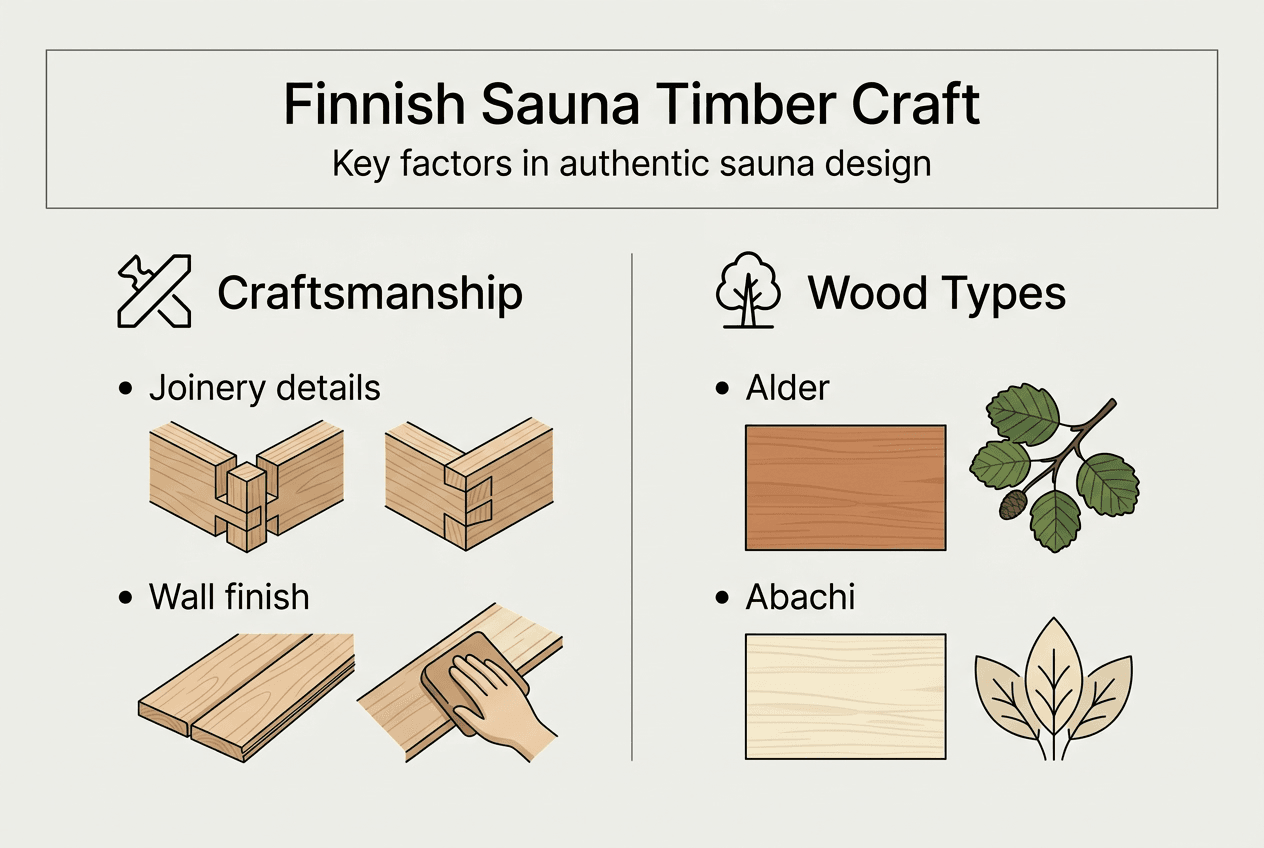
Authentic Finnish sauna construction draws from centuries of timber building traditions, where artisans developed specialized skills passed down through generations. The Compagnons du Devoir guild has a history of building iconic timber structures now applied to luxury saunas, demonstrating how ancient techniques elevate modern wellness spaces. This mastery involves understanding wood grain patterns, hand-drawn joinery designs, and precise thermal engineering that machines cannot replicate.
True craftsmanship in Finnish saunas extends far beyond assembling prefabricated panels. It requires intimate knowledge of how different wood species respond to extreme temperature fluctuations, how moisture moves through timber assemblies, and how to create seamless joints that remain tight through decades of expansion and contraction cycles. Artisans must balance aesthetic beauty with functional precision, ensuring every board serves both visual and performance purposes.
The fusion of traditional joinery methods with modern longevity science creates saunas that outperform mass-produced alternatives by decades. Master builders like Jonathan Carle exemplify this approach, combining guild-trained skills with contemporary material science to craft structures that honor Finnish heritage while meeting today’s durability standards. Their work demonstrates that shortcuts in construction always manifest as compromises in user experience.
Craftsmanship impacts every sauna element:
- Timber selection based on grain stability and resin content
- Joinery techniques that accommodate wood movement without fastener failure
- Ventilation system design that maintains proper air exchange rates
- Insulation installation that prevents thermal bridging and moisture accumulation
- Bench construction that balances comfort with maintenance accessibility
Consider this perspective from a master sauna builder:
A sauna built with genuine craftsmanship becomes a living structure that breathes with the seasons, maintaining its integrity through temperature extremes that would destroy lesser constructions. The difference between adequate and exceptional lies in understanding wood as a dynamic material, not a static component.
This philosophy separates authentic Finnish saunas from commercial imitations. When artisans approach each project as a unique creation rather than a repeatable product, they invest attention in details that mass production ignores. The result is a sauna that improves with age rather than deteriorating, developing character while maintaining structural soundness.
Selecting the right wood: material choice for comfort and durability
Wood selection forms the foundation of sauna quality, with low-resin softwoods like alder and thermo-aspen maintaining stability under heat and humidity in sauna interiors. These species resist warping and cracking through countless heating cycles, providing the dimensional stability essential for tight joints and smooth surfaces. Nordic spruce offers another excellent option for wall cladding, combining pleasant aroma with reliable performance in high-temperature environments.
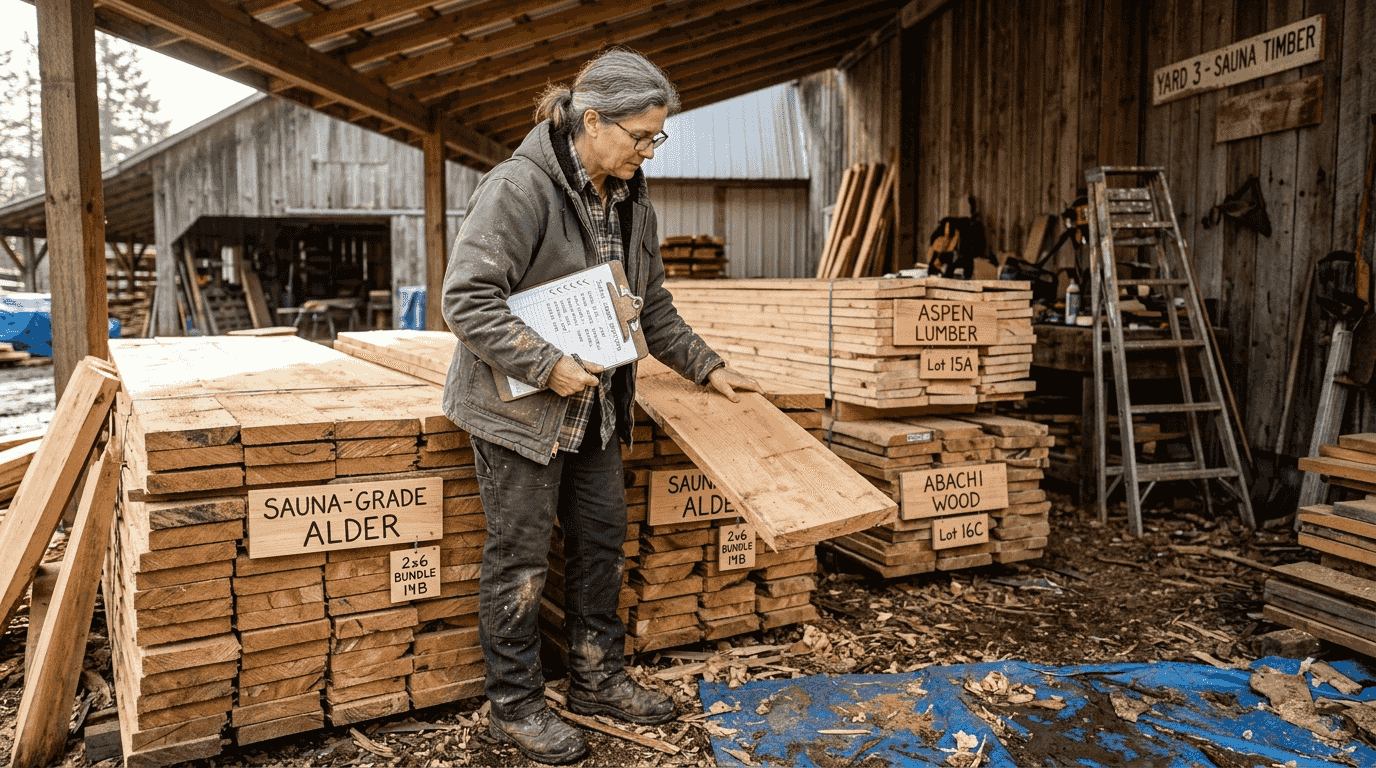
Interior wood must meet specific criteria beyond basic structural strength. Low resin content prevents sticky surfaces and excessive odor when heated, while fine grain patterns ensure comfortable tactile contact even at elevated temperatures. Proper seasoning is absolutely critical, as insufficiently dried timber will shrink and crack once exposed to sauna conditions, creating gaps that compromise both aesthetics and thermal efficiency.
Bench materials require different properties than wall cladding. Hardwoods like abachi excel in this application because their low thermal conductivity prevents uncomfortable surface heating, even when ambient temperatures exceed 80°C. These woods feel pleasantly warm rather than scorching, allowing users to sit comfortably without towels. The role of wood in sauna building extends to creating sensory experiences that define authentic Finnish bathing.
| Wood Type | Resin Content | Heat Stability | Tactile Quality | Best Application |
|---|---|---|---|---|
| Alder | Very Low | Excellent | Smooth, neutral | Wall cladding, ceiling |
| Thermo-Aspen | Minimal | Superior | Silky, warm | Premium interiors |
| Nordic Spruce | Low | Very Good | Pleasant grain | Structural framing |
| Abachi | None | Excellent | Cool to touch | Benches, backrests |
| Pine | Moderate | Good | Can be resinous | Exterior, framing |
Sustainable sourcing matters as much as species selection. Woods harvested from responsibly managed forests ensure environmental stewardship while providing superior material quality. Trees grown in northern climates develop tighter grain patterns and greater density, translating to better dimensional stability and longer service life in demanding sauna environments.
Pro Tip: Match your wood selection to local climate conditions. In humid regions, prioritize species with exceptional moisture resistance like thermo-treated woods. Drier climates allow more flexibility, but always verify moisture content before installation to prevent future movement issues.
Understanding common sauna building materials helps you evaluate quality during construction. Knot-free grades command premium prices but deliver superior performance where appearance and tactile comfort matter most. Save money by using knotty grades for hidden structural elements while investing in clear wood for visible surfaces and user contact areas.
Ventilation and insulation: crafting the perfect sauna climate
Ventilation design separates mediocre saunas from exceptional ones. Natural ventilation preserves temperature gradients by fresh air entering low and exhaust exiting high, important for authentic sauna heat zones that allow users to choose their preferred intensity. This passive system requires no mechanical components, relying instead on careful placement of intake and exhaust vents to create convective airflow driven by temperature differences.
Mechanical ventilation offers precise control but can disrupt traditional temperature stratification. Forced air systems mix the sauna atmosphere more thoroughly, reducing the distinct temperature zones that characterize Finnish sauna bathing. While mechanical systems excel in commercial settings requiring rapid air changes, residential saunas benefit from the gentle, continuous exchange that natural ventilation provides.
Achieving effective natural ventilation requires methodical planning:
- Position intake vents near floor level, preferably behind or beside the heater to pre-warm incoming air
- Size intake openings to provide adequate fresh air without creating uncomfortable drafts
- Place exhaust vents on the opposite wall near ceiling height to capture rising hot, humid air
- Calculate vent dimensions to achieve complete air exchange every 10 to 15 minutes
- Install adjustable dampers allowing users to fine-tune airflow based on conditions
- Test airflow patterns before final finishing to verify proper circulation
The 20 mm air gap behind wall cladding serves a crucial moisture management function. This space allows water vapor to escape from the sauna interior without condensing against cold exterior walls, preventing the rot and mold that plague poorly constructed saunas. Vertical furring strips create this essential gap while providing attachment points for interior boards.
Proper insulation with vapor barrier prevents moisture damage and extends sauna lifespan by creating an impermeable membrane between the hot, humid interior and cooler exterior spaces. This barrier must be continuous and thoroughly sealed at all joints, penetrations, and transitions to function effectively. Even small gaps allow moisture migration that degrades insulation and structural components over time.
| Approach | Advantages | Disadvantages | Best For |
|---|---|---|---|
| Vapor Barrier | Complete moisture protection, maximum insulation efficiency, proven longevity | Requires meticulous installation, no forgiveness for errors | Indoor saunas, attached structures |
| Breathable Walls | Simpler construction, some moisture tolerance, traditional aesthetic | Lower thermal efficiency, moisture risk in cold climates | Outdoor saunas, mild climates |
| Hybrid System | Balances protection with flexibility, allows selective breathability | More complex design, requires expertise | Challenging installations |
Understanding the role of insulation in saunas helps you appreciate why cutting corners here creates long-term problems. Insulation thickness should match climate conditions, with colder regions requiring more substantial barriers to prevent heat loss and condensation. Mineral wool outperforms fiberglass in sauna applications due to superior temperature resistance and moisture tolerance.
Pro Tip: Always thoroughly seal vapor barrier joints and ventilation penetrations using specialized foil tape rated for high temperatures. Standard construction tape fails in sauna conditions, creating gaps that allow moisture infiltration. Invest in quality sealing materials to protect your investment.
Successful planning a sauna project requires coordinating ventilation and insulation systems from the design phase. Retrofit solutions rarely match the performance of integrated systems planned before construction begins. Work with experienced builders who understand these interdependencies and can optimize both systems for your specific situation.
Bench design and spatial layout: craftsmanship for comfort and usability
Bench construction demands the same attention to detail as structural elements. Smooth, knot-free hardwoods like abachi prevent overheating and ease cleaning; two-tiered benches offer user temperature choice by creating distinct zones within the sauna volume. Upper benches experience temperatures 15 to 20°C higher than lower levels, allowing family members or friends with different heat preferences to bathe comfortably together.
Knot-free wood serves both functional and hygienic purposes in bench construction. Knots create hard spots that heat faster than surrounding wood, causing uncomfortable hot points against bare skin. They also trap moisture and debris in their irregular surfaces, making thorough cleaning difficult and creating potential bacterial harbors. Premium bench wood eliminates these issues through careful material selection and milling.
Bench supports must resist the corrosive effects of heat, humidity, and occasional cleaning chemicals. Stainless steel fasteners and brackets provide the necessary durability, though some traditionalists prefer wooden supports that match the overall aesthetic. Regardless of material choice, the support system should allow easy bench removal for deep cleaning and periodic refinishing.
Essential bench design elements include:
- Material selection prioritizing low thermal conductivity and smooth surfaces
- Structural support capable of handling dynamic loads without flexing
- Tiered layout providing temperature zones from moderate to intense
- Rounded edges and corners preventing pressure points and splinters
- Adequate spacing between boards allowing drainage and air circulation
- Removable construction or accessible fasteners enabling maintenance
Spatial layout extends beyond bench placement to encompass the entire user experience. Adequate headroom on upper benches allows comfortable sitting without hunching, while sufficient floor space accommodates safe movement when entering or exiting. The relationship between heater position, bench arrangement, and door location creates flow patterns that either enhance or diminish the bathing experience.
Pro Tip: Opt for removable benches or corrosion-resistant fasteners for longevity. Benches that lift out completely allow thorough cleaning underneath and simplified refinishing when wood eventually shows wear. This design choice adds minimal cost during construction but saves significant effort over the sauna’s lifetime.
Thoughtful sauna planning tips address these functional details during the design phase, before construction begins. Changes become exponentially more difficult and expensive once framing is complete. Experienced designers can visualize how different layouts affect user comfort and suggest modifications that optimize your specific space.
Bench depth and width follow ergonomic principles refined over centuries of Finnish sauna culture. Upper benches typically measure 60 cm deep, allowing users to recline comfortably, while lower benches can be narrower at 40 cm since they primarily serve as seating or stepping platforms. These dimensions accommodate a wide range of body sizes while maximizing usable space in compact sauna rooms.
Integrating planning a sauna project considerations early ensures your finished sauna delivers the authentic experience you envision. Professional builders understand how bench layout, wood selection, and spatial proportions combine to create the ineffable quality that distinguishes memorable saunas from merely adequate ones. Their expertise transforms technical specifications into lived experiences.
Explore handcrafted timber sauna solutions at Huvila Seppälä
Now that you understand how craftsmanship elevates sauna quality, consider partnering with experts who embody these principles. Huvila Seppälä specializes in custom handcrafted timber structures that honor Finnish building traditions while incorporating modern performance standards. With over 65 years of experience, their artisans understand the nuanced decisions that separate ordinary saunas from extraordinary ones.
Every project begins with your vision, translated into detailed plans that optimize wood selection, ventilation design, and spatial layout for your specific needs. Their commitment to eco-friendly timber building ensures sustainable sourcing without compromising quality, while transparent pricing eliminates hidden costs. Whether you envision a compact backyard retreat or an elaborate multi-room bathing complex, their team provides expert guidance throughout the planning a sauna project guide process. Discover how bespoke timber craftsmanship creates wellness spaces that improve with age, delivering authentic Finnish sauna experiences for generations.
FAQ
What wood is best for sauna interiors?
Low-resin softwoods like alder, thermo-aspen, and Nordic spruce are ideal for wall and ceiling applications due to their dimensional stability and comfortable heat characteristics. For benches, hardwoods like abachi provide superior performance through low thermal conductivity that prevents uncomfortable surface heating. Proper seasoning to 8-12% moisture content is essential regardless of species, preventing warping and cracking once the sauna enters service. Explore detailed sauna building materials guidance for your specific project requirements.
How does proper ventilation enhance sauna experience?
Well-designed ventilation systems ensure continuous fresh air supply while maintaining the temperature gradients essential for authentic Finnish sauna bathing. Natural convection systems achieve complete air exchange every 10 to 15 minutes without mechanical components, preserving distinct heat zones from floor to ceiling. This airflow controls humidity levels, prevents oxygen depletion, and removes metabolic byproducts, directly impacting comfort and safety during extended bathing sessions. Learn more about insulation and ventilation in saunas integration strategies.
What maintenance considerations arise from sauna craftsmanship?
Quality craftsmanship simplifies long-term maintenance through thoughtful design choices. Removable benches or corrosion-resistant support systems enable thorough cleaning and periodic refinishing without disassembly. Regular inspection of vapor barrier integrity and seal conditions prevents moisture damage before it compromises structural elements. Smooth, knot-free wood surfaces resist dirt accumulation and eliminate hot spots, reducing both cleaning effort and user discomfort. Follow these sauna maintenance tips to preserve your investment.
How long does a well-crafted sauna last?
Authentic Finnish saunas built with proper craftsmanship routinely provide 30 to 50 years of service, with some historic examples functioning for over a century. Longevity depends on material quality, construction precision, and maintenance consistency. Saunas featuring continuous vapor barriers, adequate ventilation, and premium wood species outlast budget alternatives by decades. The initial investment in quality craftsmanship pays dividends through reduced repair costs and sustained performance that cheaper constructions cannot match.
Can I retrofit poor craftsmanship in an existing sauna?
Retrofitting addresses some deficiencies but rarely achieves the performance of properly constructed saunas. Ventilation improvements and bench replacements offer meaningful upgrades, while vapor barrier installation requires extensive demolition that often exceeds new construction costs. Assess your existing sauna’s structural integrity and insulation quality before investing in modifications. In many cases, building a new sauna with correct techniques proves more cost-effective than attempting to salvage fundamentally flawed construction.
Recommended
- Role of Craftsmanship in Sauna – Why Details Matter – Hirsitalot, pihasaunat ja piharakennukset kotimaisesta hirrestä
- Role of Wood in Sauna Building: Comfort, Safety, and Longevity – Hirsitalot, pihasaunat ja piharakennukset kotimaisesta hirrestä
- Master craftsmanship’s role in Finnish timber building – Hirsitalot, pihasaunat ja piharakennukset kotimaisesta hirrestä
- Building a Sauna Explained: Custom Timber Solutions – Hirsitalot, pihasaunat ja piharakennukset kotimaisesta hirrestä