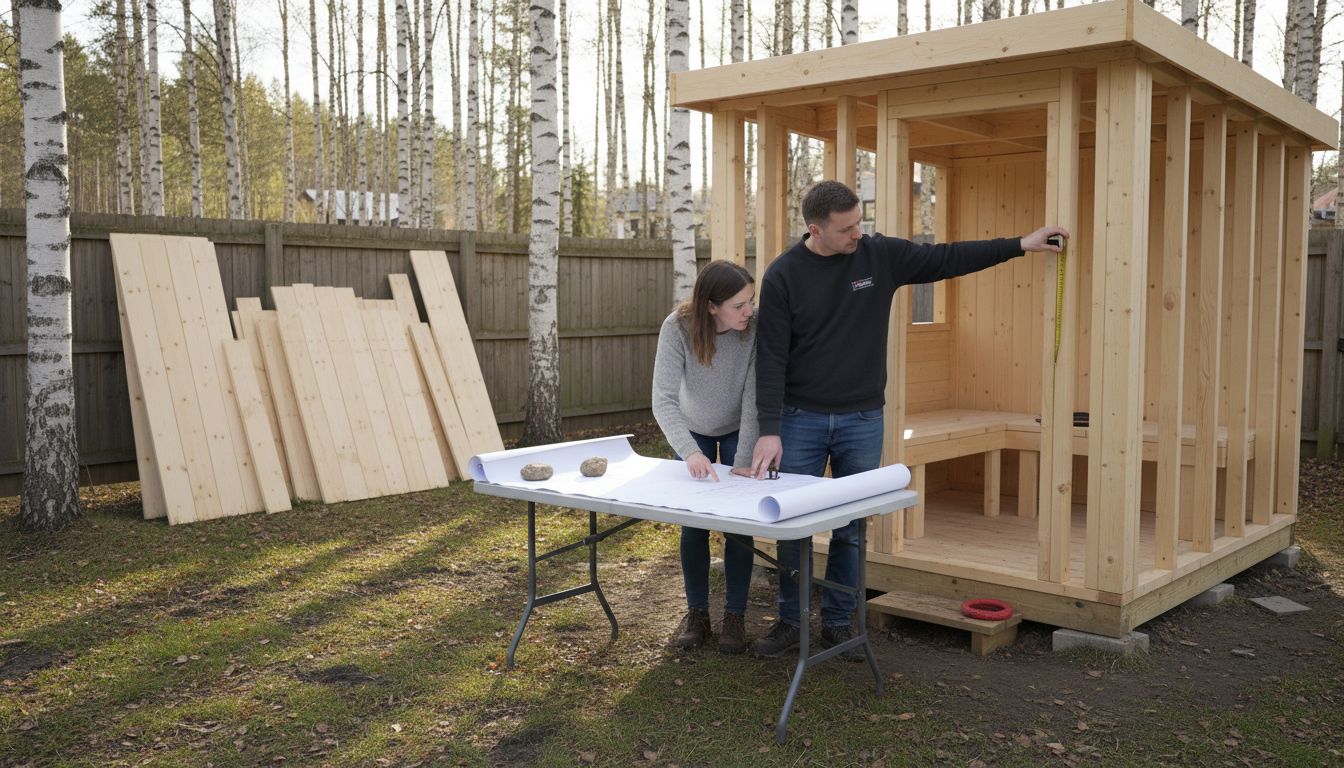
7 Essential Sauna Planning Tips for Your Dream Retreat
Most American homeowners are surprised to learn that nearly 60 percent of sauna installations fail to deliver the expected comfort and longevity. Where and how you set up your sauna makes all the difference, from overall relaxation to the durability of your investment. This guide reveals the top essentials every American should know for creating a safe, enjoyable, and effortlessly maintained sauna haven.
Table of Contents
- 1. Choose The Best Site For Your Sauna
- 2. Consider Size And Layout For Comfort
- 3. Select The Right Finnish Wood Materials
- 4. Plan Proper Insulation And Ventilation
- 5. Decide On A Traditional Or Modern Heater
- 6. Include Smart Safety Features
- 7. Design For Easy Maintenance And Longevity
Quick Summary
| Takeaway | Explanation |
|---|---|
| 1. Choose an ideal sauna location | Consider space, ventilation, and accessibility to enhance relaxation and usability. |
| 2. Prioritize comfort in size and layout | Allocate 1 square meter per person and ensure adequate vertical space and bench design. |
| 3. Select suitable Finnish wood materials | Use woods like aspen or poplar for durability and comfort, focusing on low thermal conductivity. |
| 4. Plan effective insulation and ventilation | Proper insulation prevents heat loss, while ventilation maintains air quality and temperature balance. |
| 5. Implement safety features | Ensure structural integrity, safe door designs, and temperature controls for user safety and comfort. |
1. Choose the Best Site for Your Sauna
Selecting the perfect location for your sauna is more than just finding an empty spot. Your sauna site will dramatically impact your entire relaxation experience and the functionality of your retreat. Strategic site selection determines everything from comfort to long term usability.
When choosing a sauna location, think about three critical factors: space requirements, ventilation, and accessibility. The ideal site needs a clear height of at least 2.15 meters and sufficient room for comfortable movement. You want a space that feels inviting yet provides enough vertical clearance for users to stand and move comfortably.
Consider your heater type carefully. Wood fired sauna stoves require more spatial planning than electric heaters due to safety clearance requirements. A wood burning stove might need additional space around it to prevent fire risks, while an electric heater can be more compact and flexible in placement.
Ventilation is another crucial aspect of site selection. Your sauna needs proper air circulation to prevent moisture buildup and maintain a healthy environment. If your chosen space lacks windows, install a ceramic ventilation grill in the wall to allow used air to escape. Proper ventilation keeps the sauna fresh and prevents potential mold growth.
For optimal comfort, allocate approximately 1 square meter of floor space per person. This ensures everyone has enough room to sit, stretch, and enjoy the sauna experience without feeling cramped. A well planned site means a more enjoyable and relaxing retreat for you and your guests.
2. Consider Size and Layout for Comfort
Designing a sauna is about creating a perfect balance between spatial efficiency and user comfort. Your sauna’s size and layout are critical factors that determine how enjoyable and relaxing your retreat will be.
Optimal Sauna Dimensions start with understanding spatial requirements. Each person needs approximately 1 square meter of floor space to feel comfortable and move freely. For a standard home sauna, aim for a width of 6 feet or greater to allow users the option of lying down and stretching out.
Bench design plays a crucial role in comfort. Sauna bench configurations should provide at least 600 mm of length per person, with bench depths ranging from 450 to 900 mm. The primary upper bench should run along the longest wall to maximize available space and seating options.
Vertical space matters just as much as horizontal space. The recommended distance between the top bench and ceiling is 1000 to 1200 mm. This range ensures users can sit comfortably without feeling cramped or constrained. When planning your layout, prioritize creating a sense of openness and relaxation.
Shape is another critical consideration. A nearly square design or a layout with a 6:4 wall length ratio provides the most efficient and comfortable sauna experience. This balanced approach helps distribute heat evenly and creates a more inviting atmosphere for users.
Finally, remember that good sauna design is about more than measurements. It is about creating a space that feels welcoming, comfortable, and perfectly suited to your relaxation needs. Take time to plan your layout thoughtfully, and your sauna will become a personal sanctuary of warmth and tranquility.
3. Select the Right Finnish Wood Materials
Choosing the perfect wood for your sauna is more than an aesthetic decision. It is a critical choice that impacts comfort, durability, and your overall sauna experience. Finnish wood traditions offer exceptional guidance for creating an outstanding thermal retreat.
Wood selection requires careful consideration of thermal properties and resilience. Some woods perform significantly better in high heat environments than others. Recommended woods like aspen, obeche, and poplar have unique characteristics that make them ideal for sauna construction.
For benches, prioritize woods with minimal knot formations. Knots can create unexpected hot spots and disrupt the even heat distribution crucial for a comfortable sauna experience. Traditional Finnish wood techniques emphasize selecting smooth, uniform wood surfaces that can withstand repeated heat exposure.
Hard woods with low thermal conductivity provide the best user experience. These materials resist splitting and prevent direct heat transfer that could cause uncomfortable or potentially dangerous surface temperatures. Aspen, for instance, remains relatively cool to the touch even under intense heat, making it a superior choice for sauna benches and interior surfaces.
Consider the full range of wood applications within your sauna. While benches require specialized selection, walls and flooring have different requirements. Some woods perform better in specific zones, so understanding each material’s thermal and moisture resistance characteristics is key to creating a high quality sauna environment.
Ultimately, your wood selection will define your sauna’s character, comfort, and longevity. Take time to research and select materials that not only look beautiful but also perform exceptionally under demanding thermal conditions.
4. Plan Proper Insulation and Ventilation
Insulation and ventilation are the unsung heroes of an exceptional sauna experience. These critical elements determine not just your comfort, but the overall efficiency and performance of your entire thermal retreat.
Thermal Protection begins with strategic insulation. The ceiling represents the most critical area for heat retention, so focus your initial efforts there. Sauna construction techniques recommend using standard fiberglass insulation coupled with an aluminum foil vapor barrier to create a robust thermal shield.
Ventilation is equally important and often misunderstood. Your sauna needs a carefully designed air circulation system that promotes fresh air exchange without compromising heat retention. The ideal configuration involves positioning the air inlet near the floor on the heater wall and the outlet on the opposite wall, positioned just below the upper bench.
This specific air movement strategy serves multiple purposes. It helps maintain a balanced temperature throughout the sauna, prevents humidity buildup, and ensures users experience consistent warmth. Without proper ventilation, your sauna can become stuffy, uncomfortable, and potentially develop moisture related issues.
Practically speaking, your insulation and ventilation plan should create a sealed environment that efficiently traps heat while simultaneously allowing controlled air movement. Think of it as creating a perfectly balanced microclimate where temperature and air quality work in harmonious collaboration.
Remember, a well insulated and ventilated sauna is more than a luxury. It is an investment in your comfort, health, and the long term durability of your personal wellness sanctuary.
5. Decide on a Traditional or Modern Heater
Choosing the right sauna heater is like selecting the heart of your thermal sanctuary. Your decision between a traditional wood burning stove and a modern electric heater will fundamentally shape your entire sauna experience.
Electric heaters offer precision and convenience. These modern units heat up quickly and provide consistent temperature control. Sauna heater configurations typically range from 1.5 kW to 15 kW, with specific models designed for different sauna sizes. They are perfect for smaller spaces and require minimal maintenance.
Wood burning stoves represent the quintessential traditional sauna experience. These heaters demand more space and safety considerations but deliver an authentic thermal journey. They can reach higher temperatures and provide a more primal heating sensation that many sauna enthusiasts consider irreplaceable. The radiant heat from a wood stove creates a more nuanced warmth compared to electric alternatives.
Practical considerations matter significantly. Electric heaters need a licensed electrician for proper installation and must be UL listed for safety. They work best in compact spaces where quick heating and precise temperature control are priorities. Wood burning stoves require larger clearances, dedicated ventilation, and more complex installation procedures.
Your choice ultimately depends on your specific needs. Consider your available space, budget, maintenance preferences, and the kind of sauna experience you want to create. Some enthusiasts even opt for hybrid approaches, combining elements of both heating styles to create a unique thermal environment.
Whether you choose the modern efficiency of an electric heater or the rustic charm of a wood burning stove, your decision will transform a simple room into a personal wellness retreat.
6. Include Smart Safety Features
Safety transforms a good sauna into a great one. Your thermal retreat should be a sanctuary of relaxation, not a source of potential risk or concern.
Structural integrity begins with thoughtful design choices. Sauna construction guidelines recommend specific safety parameters that go far beyond basic expectations. For instance, your benches must support a minimum of 200 kg per linear meter to ensure maximum durability and user safety.
Door design plays a critical role in sauna safety. Opt for tempered safety glass doors that swing outward, providing a quick and unobstructed exit in case of emergency. This seemingly simple feature can be a lifesaving design element, especially in high heat environments where rapid evacuation might become necessary.
Heat distribution and ceiling height are often overlooked safety considerations. The ceiling should not extend more than 226 mm above the highest bench. This precise measurement ensures optimal heat circulation while preventing potential overheating or uncomfortable thermal stratification.
Additional smart safety features include installing reliable temperature controls, using heat resistant materials, and ensuring proper electrical connections. Consider adding emergency shut off switches, non slip floor surfaces, and clear signage indicating maximum recommended exposure times.
Remember, a well designed sauna prioritizes user safety without compromising the immersive, relaxing experience. Thoughtful safety features are not limitations they are enhancements that allow you to fully enjoy your personal wellness retreat.
7. Design for Easy Maintenance and Longevity
A truly exceptional sauna is not just about initial design. It is about creating a space that remains beautiful, functional, and hygienic for years to come.
Material Selection represents the foundation of long term sauna maintenance. Traditional Finnish wood techniques emphasize choosing materials that naturally resist moisture, heat, and potential degradation. Hard woods with low thermal conductivity not only provide comfort but also ensure your sauna can withstand repeated thermal cycles.
Practical maintenance begins with strategic design choices. Installing a floor drain becomes crucial, especially in larger saunas, as it simplifies cleaning and prevents water accumulation. Opt for non porous flooring materials like tile or concrete that can be easily wiped down and resist moisture buildup.
Ventilation plays a critical role in sauna longevity. Proper air circulation prevents mold growth, reduces moisture related wear, and helps maintain the structural integrity of your wooden surfaces. A well ventilated sauna experiences less stress from humidity and temperature fluctuations.
Consider the accessibility of your sauna surfaces. Smooth wood finishes, rounded edges, and carefully sealed joints make cleaning more straightforward. Choose materials that can be easily wiped or lightly sanded to refresh their appearance without significant renovation.
Remember, maintenance is not a chore but an investment in your personal wellness retreat. A thoughtfully designed sauna becomes a lasting sanctuary that continues to provide relaxation and rejuvenation for many years.
Below is a comprehensive table summarizing key considerations for designing and maintaining a sauna as discussed throughout the article.
| Aspect | Key Considerations | Benefits/Outcomes |
|---|---|---|
| Site Selection | Consider space, ventilation, and accessibility. Use appropriate heater types. | Improved comfort and usability. |
| Size and Layout | Allocate 1 square meter per person. Use optimal bench and ceiling distances. | Enhanced relaxation and efficient use of space. |
| Wood Materials | Choose woods like aspen for low thermal conductivity and fewer knots. | More comfortable and durable heat experience. |
| Insulation & Ventilation | Use fiberglass insulation with vapor barrier; position air inlets/outlets wisely. | Maintained temperature balance and moisture management. |
| Heater Selection | Decide between electric and wood burning stoves based on space and experience. | Tailored heating experience and efficiency. |
| Safety Features | Ensure safe bench load, door design, and heat management. | Reduced risk and increased safety during use. |
| Maintenance Design | Use moisture-resistant materials and efficient cleaning designs. | Longevity and reduced upkeep effort. |
Bring Your Dream Sauna to Life with Authentic Finnish Craftsmanship
Planning your perfect sauna retreat involves more than ideas and measurements. From selecting the right site and Finnish wood materials to deciding between a traditional or modern heater, the journey requires expert guidance and quality craftsmanship. If you want to ensure your sauna combines comfort, safety, and lasting beauty, partnering with seasoned professionals is essential.
At Huvila Seppälä, we have over 65 years of experience creating custom wooden structures built to your vision. Whether you prefer a classic wood burning stove or an electric heater, we tailor each sauna from Finnish wood with precision and care. Discover how our fast delivery, transparent pricing, and flexible designs can turn your sauna planning goals into reality. Learn more about our custom log structures and explore the options that bring together tradition and modern functionality.
Ready to transform your sauna plans into a relaxing haven? Visit Huvila Seppälä today to request a personalized offer and start building your timeless Finnish sauna retreat.
Frequently Asked Questions
What should I consider when choosing a site for my sauna?
Choosing a site for your sauna involves assessing space requirements, ventilation needs, and accessibility. Ensure you have at least 2.15 meters of clear height and enough room for comfortable movement, and consider adding a ventilation grill if the area lacks windows.
How do I design a sauna layout for maximum comfort?
To maximize comfort in your sauna, allocate approximately 1 square meter of floor space per person, and consider bench designs with 600 mm of length per person. Aim for a width of 6 feet or more to allow users to lie down comfortably and enhance their relaxation experience.
What types of wood are best for sauna construction?
The best woods for sauna construction are aspen, obeche, and poplar, known for their low thermal conductivity. Prioritize using wood with minimal knots for benches to ensure an even heat distribution and enhance comfort during use.
How can I ensure my sauna is properly insulated and ventilated?
Focus on insulating the ceiling with fiberglass insulation and an aluminum foil vapor barrier for maximum heat retention. Additionally, design your ventilation system with an air inlet near the floor and an outlet on the opposite wall to promote fresh air circulation while maintaining heat.
What factors should I consider when selecting a sauna heater?
When selecting a sauna heater, decide between a traditional wood burning stove and a modern electric heater based on your space and user experience preferences. Consider installation requirements and maintenance, as electric heaters typically offer easier upkeep while wood stoves provide a traditional sauna experience.
How can I incorporate safety features into my sauna design?
Incorporate safety features such as tempered glass doors that swing outward and ensure benches support at least 200 kg per linear meter to prioritize user safety. Install reliable temperature controls and non-slip flooring to enhance safety within your sauna environment.
Recommended
- Hirsisaunan Suunnitteluperusteet: Kaikki oleellinen tieto – Huvila Seppälä
- Hirsisaunan rakentaminen itse – vaihe vaiheelta onnistuneesti – Huvila Seppälä
- Hirsisaunan rakentaminen vaihe vaiheelta – onnistunut lopputulos – Huvila Seppälä
- 7 parasta käytäntöä hirsirakentamiseen kotona ja mökillä – Huvila Seppälä