Why Choose Custom Saunas for Central European Homes
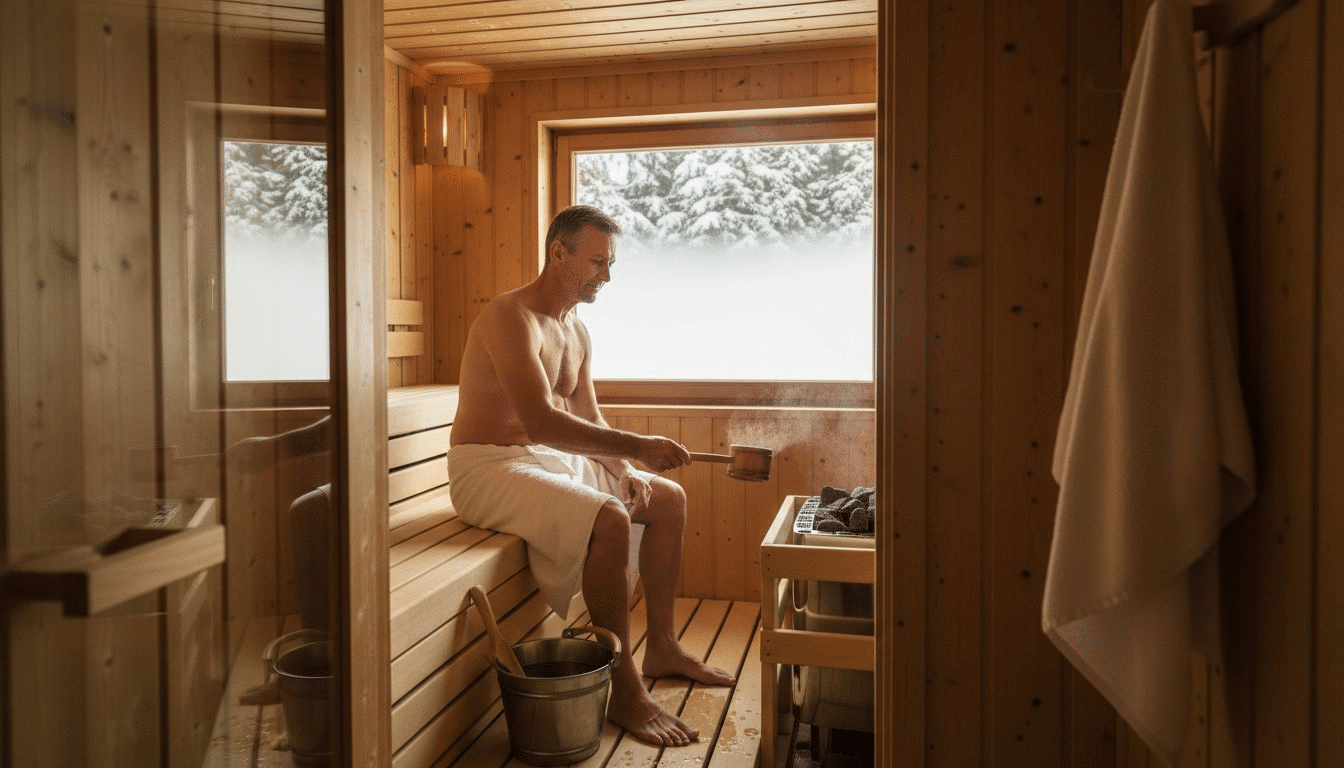
Wood, steam, and tradition often spark heated debates in Central European homes where wellness spaces are planned. The idea of building a custom outdoor sauna reveals both exciting possibilities and persistent myths. Creating a truly personal sanctuary means thinking beyond prefab boxes and embracing quality Finnish craftsmanship that transforms how your family experiences relaxation and health. This guide uncovers what custom saunas really are, busts common misconceptions, and explains how tailored design solutions support both comfort and lasting value in your property.
Table of Contents
- Custom Saunas Defined And Common Myths
- Types Of Custom Sauna Builds Available
- Key Features Of Tailored Sauna Design
- Health And Wellness Advantages Of Custom Saunas
- Cost Considerations And Financial Impact
- Custom Vs Prefab Saunas: Critical Differences
Key Takeaways
| Point | Details |
|---|---|
| Customized Design Benefits | Custom saunas are tailored to your property and preferences, enhancing comfort and efficiency compared to prefab models. |
| Myth-Busting | Common misconceptions about saunas, such as maintenance costs and design limitations, often mislead homeowners and can deter investment in quality constructions. |
| Heating Options Variety | Different heating methods like wood-burning, electric, and infrared accommodate various needs and preferences, ensuring a customized experience. |
| Long-term Value | Quality custom saunas offer durability and low operating costs, making them a valuable investment compared to other home wellness features. |
Custom saunas defined and common myths
When you think of a sauna, your mind probably jumps to a small wooden room with benches and intense heat. But the reality is far more nuanced. A custom sauna is a personalized bathing space designed specifically for your property, lifestyle, and preferences, rather than a one-size-fits-all structure. Unlike mass-produced models, custom saunas adapt to your existing architecture, climate conditions, and wellness goals. They can be built with different heating methods, materials, and dimensions tailored to your family’s needs. What makes them truly custom is that understanding the fundamentals of Finnish sauna design helps you make informed decisions about whether traditional wood-heated construction, modern electric options, or hybrid approaches suit your Central European home best. For Central European homeowners, this customization matters because your climate, building regulations, and available space differ significantly from what works in Finland or Scandinavia.
Here’s where myths start causing problems. Many people believe that saunas are exclusively a Finnish invention and that “authentic” saunas only work in Nordic climates. The truth is more interesting. Sweat bathing and heat bathing cultures exist across dozens of cultures globally, from Turkish hammams to Japanese onsen to Native American sweat lodges. Finland didn’t invent the sauna concept, though Finns certainly perfected and integrated it into daily life in remarkable ways. Another persistent myth claims that saunas must be bone-dry with zero humidity. In reality, traditional Finnish saunas actually include moisture when water is poured over hot stones (a practice called “löyly”). Some custom designs even incorporate steam elements. The third myth suggests that building a sauna requires massive expense and extensive construction. Modern custom timber solutions have made this far more accessible than most homeowners realize. You don’t need deep foundations, extensive plumbing, or months of construction. A properly designed custom timber sauna solution can be installed on relatively simple foundations and connected to your existing utilities with minimal disruption.
Another common misconception centers on legality and permits. People often assume saunas exist in some gray area where building codes don’t apply. Wrong. Building codes for saunas definitely apply in your region, and understanding these requirements before design starts prevents costly complications later. Central European jurisdictions have specific regulations about ventilation, electrical systems, structural safety, and fire protection. Custom saunas that ignore these requirements may fail inspections or create liability issues. The final myth worth addressing is that custom saunas require ongoing, expensive maintenance. Quality timber-built saunas with proper ventilation and materials actually maintain themselves reasonably well. The real investment is in the initial construction with premium materials and expert craftsmanship, not constant repairs.
Pro tip: Before sketching your custom sauna design, contact your local building authority about specific permits and requirements for your Central European location, then work backward from those constraints rather than designing first and hoping it meets codes.
Types of custom sauna builds available
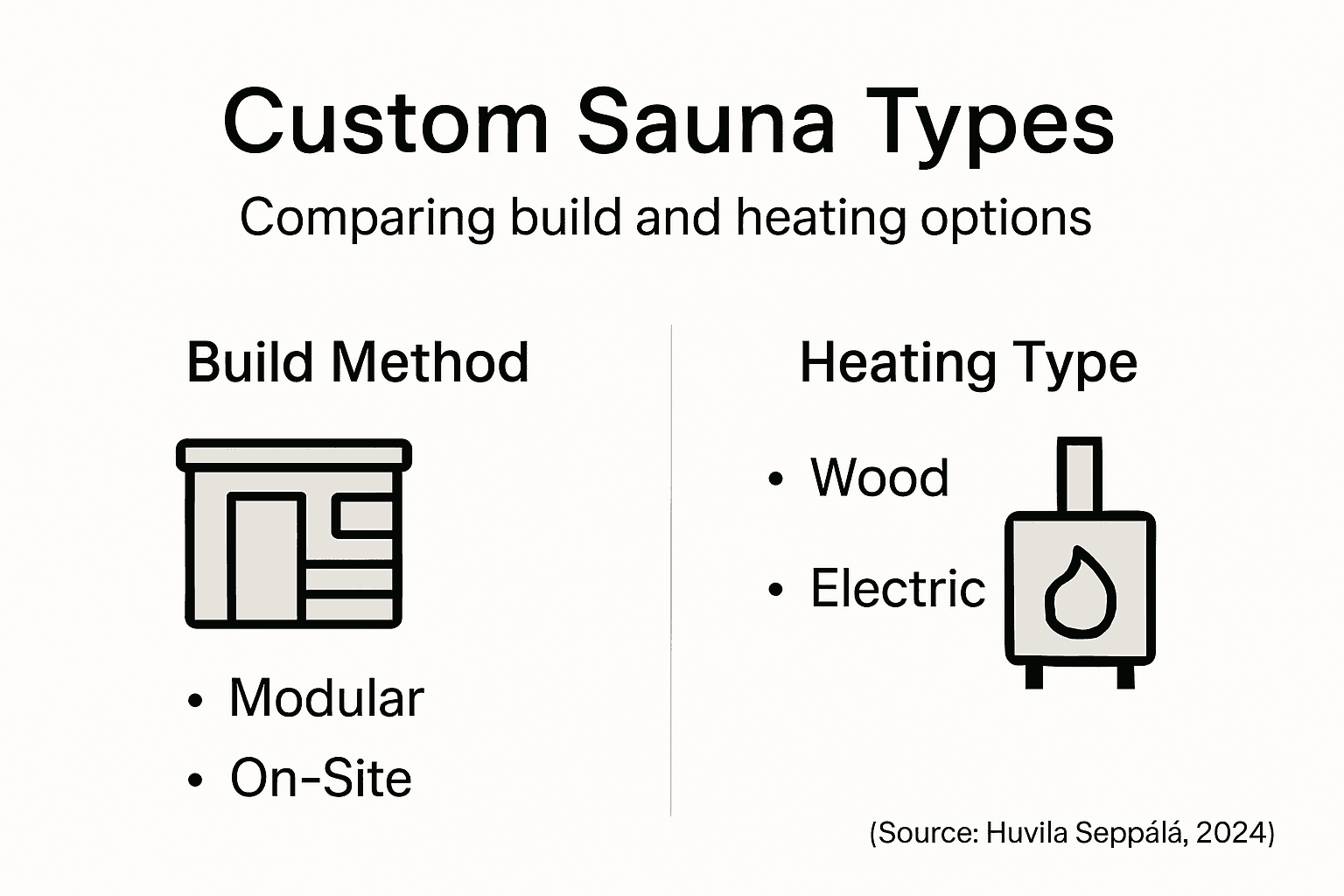
The beauty of choosing a custom sauna lies in the variety of builds available to match your property, budget, and wellness preferences. You’re not locked into a single design or heating method. Wood-burning saunas represent the traditional approach, using a stove with a chimney to generate heat through direct combustion. These create that authentic Finnish experience with natural convective heat and the ability to produce steam by pouring water over heated stones. The downside is they require proper ventilation, chimney installation, and ongoing wood supply. Electric saunas offer the opposite end of the spectrum, using resistance heating elements controlled by a thermostat. They’re faster to heat, require no chimney, and work well in basements or enclosed spaces, though they demand reliable electrical infrastructure. Infrared saunas use light wavelengths to warm your body directly rather than heating the air around you. These operate at lower temperatures (typically 120 to 150 degrees Fahrenheit) compared to traditional saunas (160 to 200 degrees Fahrenheit), making them appealing for people sensitive to extreme heat. Finally, hybrid builds combine multiple heating methods, giving you flexibility to switch between wood burning and electric depending on season, mood, or weather conditions. When planning your custom build, understanding the specific approach to outdoor sauna construction helps you evaluate which heating method aligns with your property’s infrastructure and your family’s heating preferences.
Location flexibility represents another major advantage of custom builds. Your sauna doesn’t need to be a standalone structure in the yard. You can build into existing spaces: a corner of your basement works beautifully for an electric or infrared sauna, a detached garage can be converted, or you can construct a purpose-built outdoor building that complements your home’s architecture. Poolside locations have become increasingly popular in Central Europe, creating a spa-like experience where you can transition between hot and cold water. The building footprint adapts to what you have available. A compact family sauna might occupy just 6 by 8 feet, while a larger entertaining space could stretch to 8 by 12 feet. Key planning considerations before committing to any build include:
- Size requirements based on how many family members use it simultaneously
- Heating method that matches your property’s utilities and climate
- Insulation quality for energy efficiency in Central European winters
- Ventilation system to manage moisture and air quality
- Foundation type appropriate for your soil conditions
- Door orientation for privacy and winter wind protection
- Interior materials that withstand heat and humidity without degradation
The construction method itself varies significantly. Modular pre-built saunas arrive partially assembled and accelerate installation, though they offer limited customization. Full frame-built custom saunas start from your architectural drawings and are constructed piece by piece on your property, offering maximum flexibility. Timber frame construction, popular in Finland and increasingly common in Central Europe, combines structural beauty with exceptional thermal performance. The logs or timber members become both the building system and the interior finish, creating spaces that age beautifully over decades. Building your sauna following a comprehensive step-by-step approach ensures you address every critical element from foundation preparation through final ventilation tuning.
One often overlooked aspect is how your build type affects long-term ownership. Wood-burning saunas develop character over time as the timber weathers and the stones accumulate heat history, but they demand more active maintenance. Electric and infrared saunas require less hands-on work but eventually need heater element replacement. Custom timber-frame buildings constructed with premium materials and proper ventilation typically outlast cheaper modular options by 20 to 30 years. The initial investment in quality craftsmanship pays dividends through reliability and enjoyment. Your choice between build types fundamentally shapes not just the initial construction experience, but the day-to-day reality of sauna ownership for the next two decades.
Here is how popular custom sauna heating methods compare at a glance:
| Heating Method | Upfront Cost | Maintenance Needs | Typical Use Location |
|---|---|---|---|
| Wood-burning | Moderate-High | Annual chimney cleaning | Outdoor or detached spaces |
| Electric | Moderate | Heater element replacement | Indoor/basement conversions |
| Infrared | Low-Moderate | Minimal, heater checks | Small indoor spaces |
| Hybrid | High | Varies by system | Large, flexible installations |
Pro tip: Create a detailed building checklist covering foundation requirements, utility access points, ventilation paths, and material specifications before meeting with builders, so you can compare how different build approaches address each element on your site.
Key features of tailored sauna design
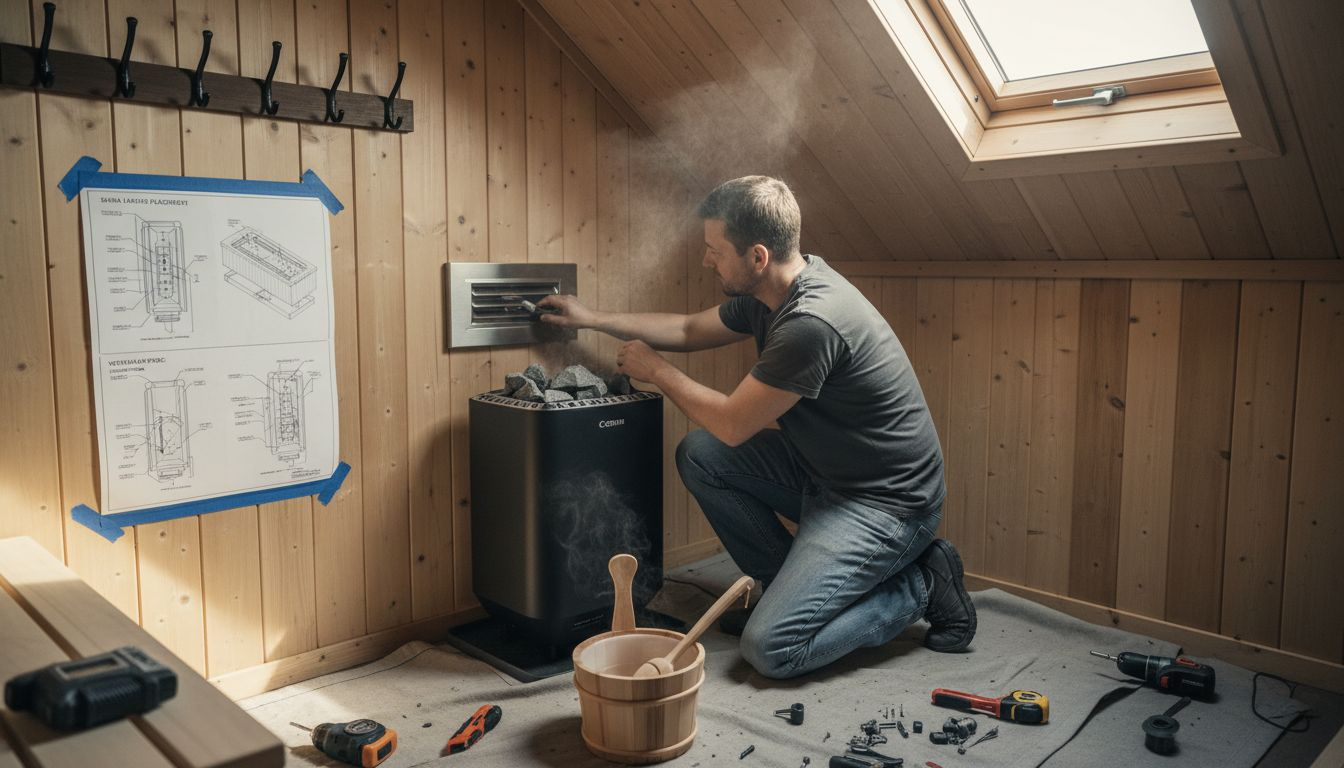
When you invest in a custom sauna, you’re not just buying a heated box. You’re commissioning a space engineered around how your body experiences heat, how air moves through the room, and how every dimension contributes to comfort and safety. Insulation quality forms the foundation of effective design. Central European winters demand walls that maintain temperature without constant energy waste. Proper insulation also manages condensation, preventing wood degradation and mold growth that plague poorly designed saunas. Ceiling height matters more than most homeowners realize. Too low and you create uncomfortable heat stratification where your head roasts while your feet stay cool. Too high and you waste energy heating empty space above where people actually sit. Most effective saunas maintain ceilings between 6 feet 6 inches and 7 feet, allowing heat to settle evenly across benches. Heater sizing requires matching the stove or heating element to your actual room volume. Oversized heaters waste energy and create harsh, uneven heat. Undersized heaters struggle to reach comfortable temperatures. Custom designs calculate the exact wattage or stove capacity needed for your specific dimensions and insulation level. Beyond these mechanical considerations, understanding essential sauna planning principles ensures your tailored design addresses ventilation patterns, steam management, and how the space flows with your home’s existing layout.
Air circulation and temperature balance
Here’s where tailored design separates exceptional saunas from mediocre ones. Continuous fresh air circulation prevents the stale, stagnant feeling that ruins longer sessions. Most well-designed saunas include an intake vent near floor level drawing cool air in, and an exhaust vent near ceiling height pulling warm air out. This creates gentle convection that cycles fresh oxygen while maintaining heat. The placement of these vents matters tremendously. Poorly positioned intakes create cold drafts against skin. Poorly positioned exhausts allow heat to escape before it reaches the benches. Temperature stability from head to toe requires thoughtful bench design and heater positioning. Benches tiered at different heights allow users to choose their heat intensity without leaving the sauna entirely. A lower bench experiences 140 degrees Fahrenheit while an upper bench might reach 185 degrees Fahrenheit, giving families flexibility in how they use the space. The heater location, whether against the back wall or positioned more centrally, determines how evenly heat distributes. Gentle, even convective heat flows naturally when stove placement and ventilation work together. You want warmth that feels like it’s caressing your entire body rather than blasting specific areas with harsh intensity.
Functional layout and hygiene management
Tailored sauna designs consider traffic flow and proximity to water sources. Your sauna shouldn’t sit isolated in the far corner of your property. Ideally, it’s positioned within reasonable walking distance of a shower area where you rinse before entering and cool down afterward. Some Central European homes integrate saunas into pool houses or outdoor bathing pavilions, creating complete wellness zones. Door orientation deserves explicit attention during design. Windows facing prevailing winter winds create uncomfortable drafts when the door opens. Doors positioned with privacy in mind prevent awkward sightlines from neighbors or passing family members. The threshold itself should slightly elevate interior flooring to prevent water from draining back into living spaces. Interior materials in a tailored design resist heat and humidity deterioration. Not all wood performs equally in sauna conditions. Softwoods like aspen and spruce withstand temperature swings without checking or splitting. Hardwoods often crack. The benches, walls, and ceilings must all use species rated for sauna use. Flooring typically uses non-slip surfaces that drain properly, preventing standing water and bacterial growth. Proper drainage prevents hygiene issues that plague poorly designed saunas where water accumulates and creates unpleasant conditions.
Safety and regulatory compliance
Custom sauna designs incorporate safety features from the ground up rather than adding them afterward. Heater guards prevent accidental contact with hot surfaces. Electrical systems use GFCI protection and proper grounding to prevent shock hazards in humid environments. Thermostat placement matters because saunas need temperature monitoring from where people actually sit, not from near the stove where readings are artificially inflated. Ventilation sizing follows building codes specific to your Central European jurisdiction, typically requiring air exchanges based on room volume. A well-tailored design balances all these elements seamlessly, creating a space that feels luxurious rather than utilitarian. The difference between a space that feels like a cramped box and one that feels like a wellness sanctuary often comes down to these details that most people never consciously notice, yet feel with every visit.
Pro tip: During the design phase, request a detailed heat distribution diagram from your builder showing how air circulates and where temperature zones exist at different bench levels, then verify that your preferred seating position aligns with your ideal temperature comfort range.
Health and wellness advantages of custom saunas
Owning a custom sauna transforms your home into a personal wellness retreat, and the health benefits extend far beyond the moment you step inside. Regular sauna use triggers physiological responses that genuinely improve your body’s functioning. Cardiovascular health represents one of the most compelling advantages backed by emerging research. When you enter a sauna, your body responds to heat stress similarly to moderate aerobic exercise. Your heart rate increases, blood vessels dilate, and circulation improves throughout your body. This mimics the cardiovascular stimulus of a workout session without the joint stress. Over time, regular sauna use may reduce the risk of vascular diseases and support better heart function. Studies suggest people who use saunas regularly experience improved blood pressure regulation and enhanced overall cardiovascular resilience. For Central European homeowners managing stress from work and climate challenges, this cardiovascular benefit alone justifies the investment.
Stress reduction and mental wellness address the psychological toll of modern life. The heat exposure in a sauna triggers endorphin release, your body’s natural feel-good chemicals. The quiet, enclosed space creates a sanctuary separate from daily demands where your nervous system can genuinely relax. Your muscles release tension, your mind shifts away from worries, and cortisol levels decrease. This isn’t placebo or wishful thinking. The sauna environment naturally promotes parasympathetic activation, the biological state opposite to stress and anxiety. Many people find that regular sauna sessions reduce anxiety symptoms more effectively than other wellness approaches because the practice addresses both body and mind simultaneously. When combined with the cultural tradition of sauna as a sacred space for cleansing and reflection, the mental benefits compound. Understanding how outdoor saunas enhance overall wellness helps you recognize how custom sauna design specifically supports these stress reduction outcomes through proper layout and peaceful integration with your property.
Physical recovery and pain management
Muscle soreness relief makes saunas particularly valuable for active people or those managing chronic tension. Heat penetrates muscle tissue, increasing blood flow and relaxing muscle fibers. People recovering from workouts, arthritis sufferers, and those with chronic pain conditions often experience meaningful relief from regular sauna use. The heat dilates blood vessels, improving oxygen and nutrient delivery to damaged or fatigued muscles. This accelerates recovery and reduces the inflammatory response that causes soreness. Athletes in Finland and across Scandinavia have long integrated sauna use into training routines for this reason. Immune function enhancement represents another documented benefit. Regular sauna use increases white blood cell production and improves your body’s ability to fight infections. The heat stress triggers immune system activation that strengthens your body’s defenses over time. Some research suggests regular sauna users experience fewer upper respiratory infections, though this varies by individual factors like frequency and duration of use.
Practical wellness integration
The key to maximizing health benefits involves consistency and proper sauna use. Benefits accumulate over weeks and months of regular practice, not from occasional visits. Most research on sauna wellness comes from people using saunas 2 to 4 times weekly for 15 to 20 minutes per session. A custom sauna in your home removes practical barriers to consistency since you can use it without scheduling around gym hours or travel time. The ability to step outside, use your sauna, then immediately shower and return to your day means you’re far more likely to maintain regular practice. The wellness advantages multiply when you establish sauna use as part of your regular routine rather than treating it as an occasional luxury. For families, this also creates opportunities for shared wellness time, where family members relax together and disconnect from screens and stress simultaneously. The custom design aspect matters here too. A sauna positioned conveniently near your home, designed at comfortable dimensions, and integrated with shower facilities removes friction that discourages regular use.
Pro tip: Start with 15 minute sessions at moderate temperatures around 160 to 170 degrees Fahrenheit, then gradually increase duration and temperature as your body adapts, allowing you to maximize wellness benefits while building safe sauna habits that sustain long term.
Cost considerations and financial impact
Let’s address the financial reality directly. A quality custom sauna requires significant upfront investment, but understanding the full cost picture reveals why it compares favorably to other home wellness projects. Initial construction costs for high-quality custom saunas start around $3,000 and climb based on your choices. A basic outdoor timber-frame sauna in the $3,000 to $5,000 range covers materials, labor, and simple features. Adding luxuries like premium wood species, advanced ventilation systems, integrated changing rooms, or special heating methods pushes costs toward $8,000 to $15,000 or higher. For comparison, this aligns with building a quality hot tub, installing a permanent gazebo, or upgrading your outdoor entertainment space. The key difference is durability. A well-built custom sauna lasts 30 to 50 years with minimal maintenance, while hot tubs typically require replacement within 15 years. Central European climate conditions actually favor long-term sauna investment since proper insulation and construction methods create structures that withstand harsh winters without degradation.
Operating costs remain remarkably low, which surprises many homeowners accustomed to expensive home wellness equipment. Wood-burning saunas cost nearly nothing to operate beyond your existing wood supply or the minimal expense of purchasing firewood. Electric saunas typically add $5 to $15 monthly to your electricity bill depending on usage frequency, local electricity rates, and your heating system’s efficiency. If you use an electric sauna twice weekly for 20 minute sessions, you’re looking at roughly $10 to $12 monthly in additional electricity costs. Infrared saunas operate similarly, consuming about $10 to $15 monthly for typical residential use. These numbers pale against ongoing gym memberships (typically $40 to $100 monthly), spa treatments (frequently $100 to $200 per session), or even heated pool maintenance. The financial comparison becomes even more favorable when you factor in family use. Four family members using the sauna together spreads the cost across multiple people, making it exceptionally economical on a per-person basis. Over a decade, the operating costs remain trivial compared to the upfront investment.
Long-term value and property considerations
Property value impact represents an often underestimated financial advantage. A well-designed, professionally constructed custom sauna enhances your property’s appeal to potential buyers. Central European homebuyers increasingly value wellness amenities, and a custom outdoor sauna signals a property owner who has invested in quality construction and lifestyle enhancement. While sauna installations rarely add dollar-for-dollar value to your home price, they generally recover 50 to 70 percent of their construction cost when you eventually sell. More importantly, they make your home more attractive in a competitive market and can justify premium pricing compared to comparable properties. A $10,000 sauna investment that helps you sell your home for $15,000 more provides direct financial recovery beyond the wellness benefits you enjoy.
Maintenance costs deserve attention but shouldn’t alarm you. Unlike hot tubs requiring regular chemical balancing and equipment replacement, saunas need minimal upkeep. Wood-burning saunas require chimney cleaning annually, typically costing $100 to $200. Electric saunas might need heater element replacement after 10 to 15 years of heavy use, a $500 to $1,500 expense depending on the unit. Timber treatments or wood sealing occur every few years, adding $200 to $500 depending on sauna size. These maintenance costs remain modest compared to comparable home wellness features. The financial reality is that a $5,000 sauna construction investment generating $60 to $90 in annual operating costs and minimal maintenance expenses represents exceptional value across a 30-year ownership period. You’re looking at total cost of ownership around $2,000 to $3,000 annually when amortized, delivering daily wellness benefits.
This table highlights the long-term financial impact of a custom sauna installation:
| Cost Factor | Custom Sauna (30 yrs) | Hot Tub (15 yrs) |
|---|---|---|
| Initial Investment | $5,000–$15,000 | $5,000–$12,000 |
| Annual Upkeep | $60–$90 | $400–$700 |
| Typical Lifespan | 30–50 years | 10–15 years |
| Estimated Resale Value | 50–70% of install cost | Often negligible |
Cost optimization strategies
Smarter choices reduce financial burden without sacrificing quality. Phased construction allows you to start with basic infrastructure and add features later. Build the core structure now, then add insulation upgrades, advanced ventilation, or premium finishes in subsequent years. DIY installation labor for some components, if you possess appropriate skills, substantially reduces costs. Hiring professionals for structural work and electrical systems while handling finishing touches yourself cuts expenses while maintaining quality standards. Material selection significantly impacts costs. Choosing locally available timber or accepting standard wood species rather than premium imports saves thousands. A sauna built with durable, locally appropriate materials often outperforms one built from exotic imported woods while costing substantially less.
Pro tip: Get detailed cost breakdowns from builders separating construction labor, materials, and finishing work so you can identify where strategic choices reduce expenses without compromising the core sauna experience or structural integrity.
Custom vs prefab saunas: Critical differences
The choice between custom and prefab saunas fundamentally shapes your long-term satisfaction with the investment. Prefab saunas arrive as factory-constructed units that simplify installation. You order a kit, it ships to your property, and trained installers assemble it in days rather than weeks. The appeal is obvious: speed, predictability, and minimal disruption. The tradeoff is severe. Most prefab designs prioritize compact footprints that fit standard shipping dimensions rather than maximizing usability. This means low bench heights that force awkward positioning, limited interior space, cramped changing areas, and poor ventilation design. Prefab units often sacrifice thermal performance to reduce material costs, meaning they struggle to reach comfortable temperatures or maintain heat efficiently. Many Central European homeowners discover too late that their prefab sauna feels like sitting in a wooden phone booth rather than a wellness retreat. The initial convenience evaporates when you dread using a space that creates discomfort rather than relaxation.
Custom saunas built on-site start from your specific requirements rather than someone else’s production constraints. A builder works with your actual property dimensions, your family’s preferences, and your climate conditions. The benches reach exactly the height you need. The ceiling height accommodates comfortable head clearance. The ventilation system follows proven principles rather than cost-cutting shortcuts. The floor layout positions the heater optimally rather than wedged wherever space permits. This flexibility transforms the experience. Where a prefab sauna might feel cramped and poorly ventilated, a custom build feels spacious and genuinely comfortable. The superior design means better heat distribution, more consistent temperatures from head to toe, and superior steam quality when you pour water over heated stones. Construction takes longer (typically 4 to 8 weeks depending on complexity), but you’re building something designed to deliver daily satisfaction for decades rather than something destined for the yard corner where it sits unused.
Comparing key performance characteristics
The performance differences extend beyond comfort into measurable outcomes. Heat distribution in prefab units often proves uneven because small dimensions and poor ventilation design create dead zones and temperature swings. Custom saunas engineered with proper air circulation deliver gentle, even convective heat throughout the space. Ventilation quality separates exceptional saunas from mediocre ones. Prefab units frequently compromise on intake and exhaust sizing to reduce costs, trapping stale air and moisture. Custom designs calculate ventilation based on room volume and occupancy, ensuring fresh oxygen and preventing that suffocating feeling. Bench comfort matters more than you’d think. Prefab benches rarely accommodate people taller than six feet comfortably. Custom benches adjust to your family’s actual heights and positions, eliminating the need to contort yourself into uncomfortable angles. Durability and longevity favor custom builds substantially. Prefab units constructed from budget materials and simplified joinery typically survive 8 to 12 years before structural issues emerge. Custom timber-frame saunas built with quality materials and traditional joinery methods last 30 to 50 years. When you calculate cost per year of use, the custom option often proves cheaper despite higher initial investment.
Integration and lifestyle impact
Property integration represents an underrated advantage of custom construction. Prefab units arrive as obvious boxes that look like structures imported from elsewhere. Custom saunas can integrate architecturally with your home, matching siding colors, roof styles, and overall aesthetic. They can sit adjacent to existing buildings, share utility infrastructure, or position themselves perfectly relative to shower facilities and outdoor living areas. Understanding how to build saunas with cottage-quality craftsmanship highlights how custom approaches create structures that feel like intentional home extensions rather than afterthought additions. Personalization options in custom builds include wood species selection, interior finishes, door styles, and special features like changing rooms or integrated benches for relaxation outside the heat. Prefab designs offer minimal customization because they’re manufactured to standard specifications. Your prefab sauna looks virtually identical to hundreds of others, while your custom sauna becomes uniquely yours. Utility integration proves easier with custom construction. Running electrical lines, water connections, or drainage systems follows your property’s existing infrastructure rather than forcing awkward workarounds around a prefab unit.
Honest assessment of the tradeoff
Prefab saunas serve specific situations. If you want to test sauna bathing before committing to permanent construction, a prefab unit provides low-risk experimentation. If you have severe space constraints where literally nothing else fits, a prefab might be your only option. If you need installation completed in days rather than weeks, prefab offers speed. For Central European homeowners planning a permanent wellness addition they’ll enjoy for decades, custom construction typically delivers superior long-term value. The initial cost premium (often 30 to 50 percent higher than prefab) gets recovered through longevity, comfort, and property integration. You’re not just buying a sauna; you’re commissioning a space that becomes part of daily life. That distinction justifies the investment.
Pro tip: Request references from builders showing custom saunas they’ve constructed 5 to 10 years ago, then visit or contact owners about actual usage satisfaction and maintenance experience to validate build quality before committing your investment.
Unlock the Full Potential of Your Custom Sauna Experience
Choosing a custom sauna for your Central European home means overcoming challenges like climate-specific insulation, perfect ventilation, and tailored heating methods discussed in this article. You want a sauna that fits your lifestyle, property layout, and wellness goals without the drawbacks of cramped prefab units or costly mistakes in design. At Huvila Seppälä, we specialize in crafting timber frame and log-built custom saunas made from authentic Finnish wood designed explicitly for your unique space and preferences. Our approach ensures your sauna delivers smooth air circulation, consistent heat, and durability that lasts for decades.
Experience craftsmanship rooted in over 65 years of expertise by starting your journey at Huvila Seppälä. Whether you want to explore building your custom sauna with expert guidance or learn how professional timber construction can transform your wellness retreat, our team provides transparent quotes without hidden costs and fast delivery tailored to your design. Don’t wait to elevate your home’s comfort and value. Contact us now to request a personalized offer and take the first step toward a sauna built specifically for your Central European lifestyle.
Frequently Asked Questions
What are the benefits of choosing a custom sauna?
Custom saunas are tailored to fit your property, preferences, and lifestyle, providing a unique wellness space. They can be designed to match your home’s architecture and climate, ensuring optimal heating and comfort.
How do I select the right heating method for my custom sauna?
Consider your existing utilities and personal preferences. Options include wood-burning, electric, infrared, or hybrid methods. Each has its advantages regarding heat distribution, cost-effectiveness, and convenience, so choose what aligns with your needs.
What are some common myths about saunas?
Many believe saunas are only effective in Nordic climates or that they must be completely dry. In reality, saunas exist globally with varying traditions, and traditional Finnish saunas include some humidity when water is poured over hot stones.
How do custom saunas affect property value?
A well-designed custom sauna can enhance your property’s appeal to potential buyers. While it may not add dollar-for-dollar value, it often recoups 50 to 70 percent of its construction cost and can justify a higher selling price in competitive markets.
Recommended
- Why Invest in Outdoor Saunas for Wellness and Value – Huvila Seppälä
- How to Build Outdoor Sauna for Custom Finnish Style – Huvila Seppälä
- Outdoor Saunas: Enhancing Home Wellness Naturally – Hirsitalot, pihasaunat ja piharakennukset kotimaisesta hirrestä
- What Is a Finnish Sauna and Why It Matters – Huvila Seppälä