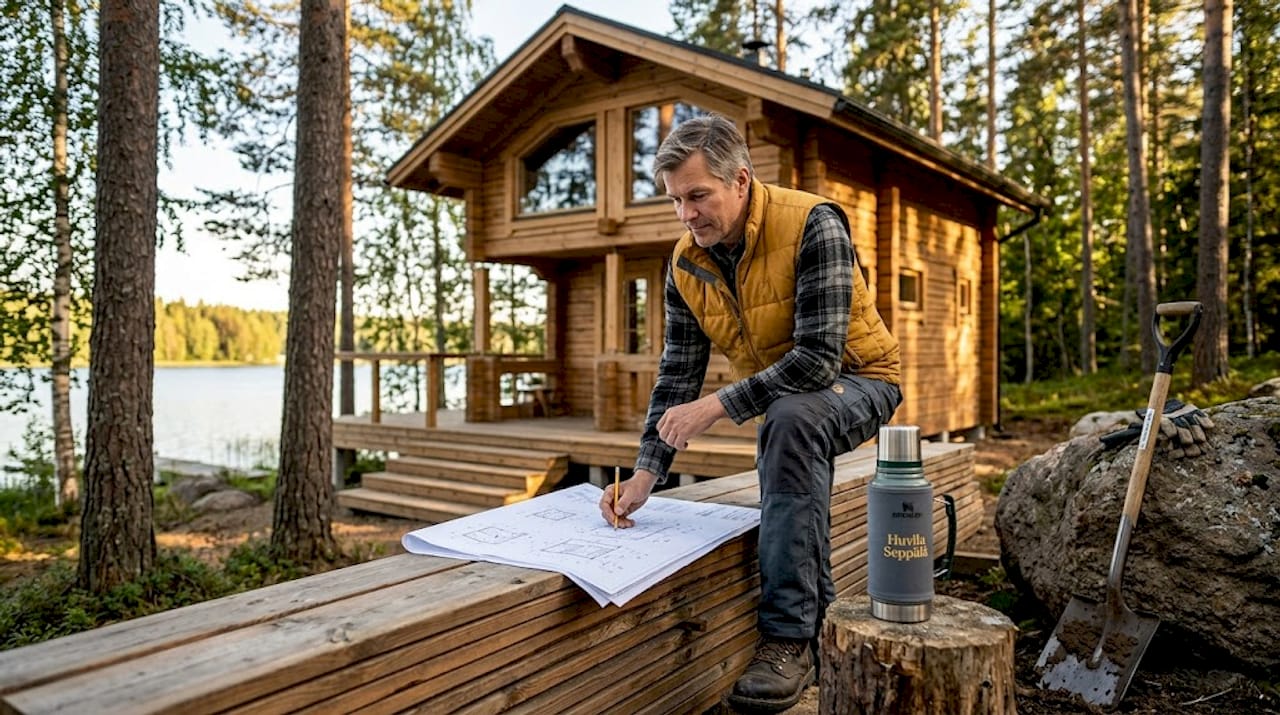
Why two-story saunas maximize space and relaxation
TL;DR:
- Vertical sauna designs, like two-story loft saunas, maximize heat experience and save space on small or irregular lots. These structures leverage heat stratification for enhanced comfort, multi-level seating for diverse user needs, and often increase property value by offering distinctive wellness amenities. Proper planning ensures safety, code compliance, and structural integrity, making loft saunas a superior choice for modern outdoor spa spaces.
Most homeowners assume that building a serious sauna means dedicating a large chunk of their outdoor property to it. That assumption is wrong, and Finnish sauna designers figured this out decades ago. The two-story loft sauna takes everything you expect from a traditional Finnish sauna experience and stacks it vertically, freeing up your yard while actually improving the heat experience inside. Whether you’re upgrading a vacation property or optimizing a compact residential lot, this guide breaks down exactly why the vertical approach deserves serious consideration.
Table of Contents
- What is a two-story (loft) sauna?
- Solving space constraints with vertical sauna design
- Multi-level seating: Enhanced relaxation and user flexibility
- Technical and safety considerations for two-story saunas
- Why vertical thinking matters for modern sauna projects
- Ready to plan your own vertical sauna project?
- Frequently asked questions
Key Takeaways
| Point | Details |
|---|---|
| Maximize small lots | Two-story saunas efficiently use vertical space, letting you fit wellness features even on limited outdoor areas. |
| Multiple heat zones | Loft/tiered benches give users a choice of hot or mild experiences in one compact sauna. |
| Structural planning required | Proper load, access, and compliance checks are critical for upper-level sauna safety and longevity. |
| User flexibility | Families and groups benefit from accessible, adaptable sauna layouts, enhancing comfort for all ages. |
| Design heritage advantage | Two-story saunas pair Finnish tradition with modern space needs, adding both value and relaxation luxury. |
What is a two-story (loft) sauna?
A two-story sauna, often called a loft sauna, is a vertically oriented sauna structure where the heater sits on the ground floor and the main bathing benches are positioned on an upper level. The bather climbs a staircase or ladder to reach the upper platform, where the heat naturally concentrates for an intense, traditional sauna experience.
This isn’t a modern gimmick. Loft saunas are a known Finnish design pattern with the heater placed downstairs and the bathing area upstairs, rooted in generations of Nordic sauna culture. The Finnish relationship with saunas is deeply practical. When space, timber, and heating resources were limited historically, vertical building made economic sense. That same logic applies perfectly to modern homeowners working with tight lot lines or vacation properties where every square meter matters.
The typical layout includes a lower level with the sauna heater (kiuas), a changing area, and often a small lounge or cooling zone. Upstairs, the main benches run along the wall at ceiling height, where heat accumulates naturally. This design takes full advantage of heat’s natural tendency to rise. By placing bathers at the highest point of the room, the structure delivers the hottest, most enveloping heat experience possible without using more fuel.
“The loft sauna’s genius is in using the physics of heat stratification as a design feature, not an afterthought. The upper chamber becomes its own thermal world.” — Saunologia, Kömmeli Loft Sauna Case Study
For anyone exploring authentic Finnish sauna design, the loft format represents one of the most elegant expressions of “form follows function” in Nordic building tradition.
| Feature | Traditional single-story sauna | Two-story loft sauna |
|---|---|---|
| Floor footprint | Larger | Smaller |
| Heat concentration | Even throughout room | Intensified at upper level |
| Bench placement | Ground-level tiers | Upper-level main platform |
| Heater location | Main room | Lower level or ground floor |
| Visual character | Low-profile | Vertical, cabin-like aesthetic |
| Ideal lot type | Spacious rural or suburban | Compact urban or vacation property |
Solving space constraints with vertical sauna design
Here’s the core problem for most homeowners and vacation property investors: the outdoor footprint for an additional structure is limited. Zoning restrictions, setback requirements, and existing landscaping all eat into available land. A traditional rectangular sauna might need 10 to 16 square meters of floor space to accommodate benches, a heater, and a changing room comfortably. That’s a real constraint on many lots.
Sauna success depends on spatial requirements, the number of users, and vertical clearances. Vertical approaches directly address limited outdoor footprints by trading horizontal square footage for height. A two-story loft sauna can achieve the same user capacity with a ground-floor footprint roughly 30 to 40 percent smaller than a comparable single-story unit.
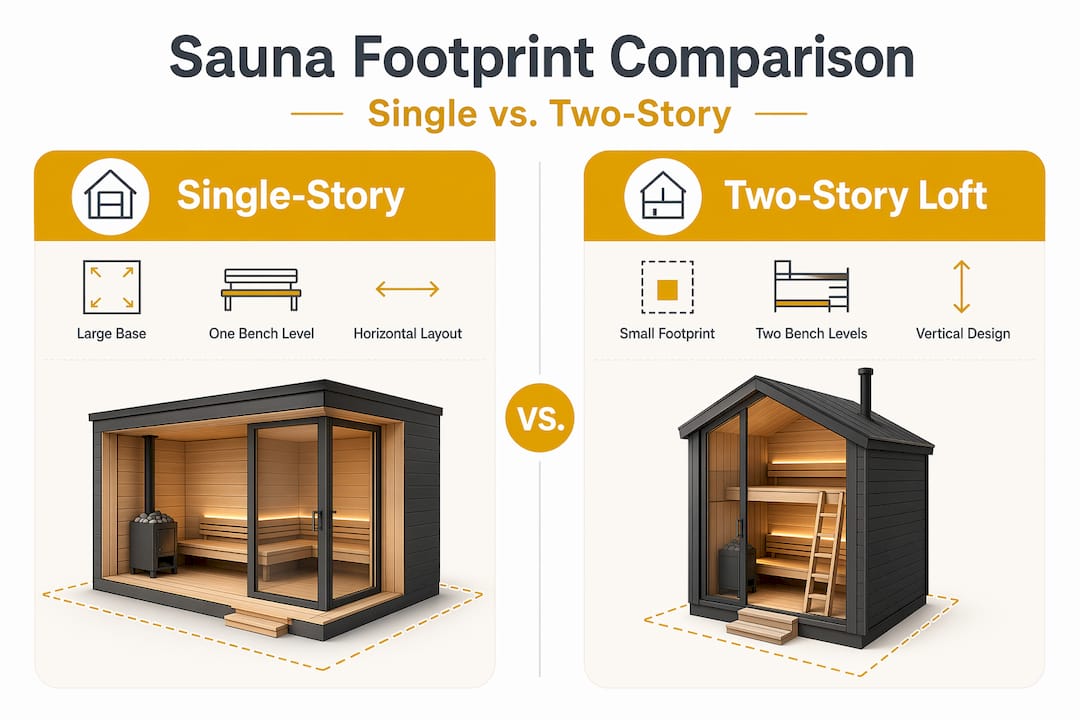
Consider this practical scenario. You own a lakeside vacation cabin with a narrow strip of usable yard between the main building and the waterfront. A traditional sauna would block the view or crowd the pathway. A loft sauna, standing upright on a 4 by 4 meter base, preserves sightlines, keeps the path clear, and still comfortably seats four to six bathers on the upper platform. Vertical design reduces the need for horizontal footprint while increasing planning complexity, which is a fair tradeoff when the alternative is simply not building at all.
For investment properties, the math gets even more compelling. Vacation rental guests consistently rank sauna access as a premium amenity. Adding a well-designed loft sauna to a property where a standard sauna wouldn’t physically fit can meaningfully increase nightly rates and occupancy. That’s a measurable return on a structural decision.
Understanding the outdoor sauna prerequisites before you commit to any design is essential. Permit requirements, site drainage, and utility access all affect which sauna type works best for your property. If you’re still exploring your options, reviewing the full range of varieties of outdoor saunas gives you a clearer picture of where loft saunas fit in the broader landscape.
Key space advantages of vertical sauna design:
- Reduced ground-level footprint by 30 to 40 percent compared to equivalent single-story designs
- Ability to build on narrow or irregularly shaped lots
- Preservation of yard views, pathways, and landscaping
- Potential to build taller structures under certain zoning codes that limit building coverage but allow height
- Multi-use lower level that can serve as a changing room, equipment storage, or cooling lounge
Pro Tip: Before finalizing your sauna placement, check your local zoning code for both lot coverage limits (horizontal footprint) and height limits. Many suburban and rural zones allow structures up to 4 or 5 meters tall while capping total ground coverage. A loft sauna often threads this needle perfectly, using minimal ground coverage while maximizing habitable volume.
Multi-level seating: Enhanced relaxation and user flexibility
Beyond the space savings, the vertical format fundamentally changes what happens inside the sauna. Multi-level seating isn’t just a practical workaround for a compact structure. It’s actually a more sophisticated approach to the sauna experience itself.
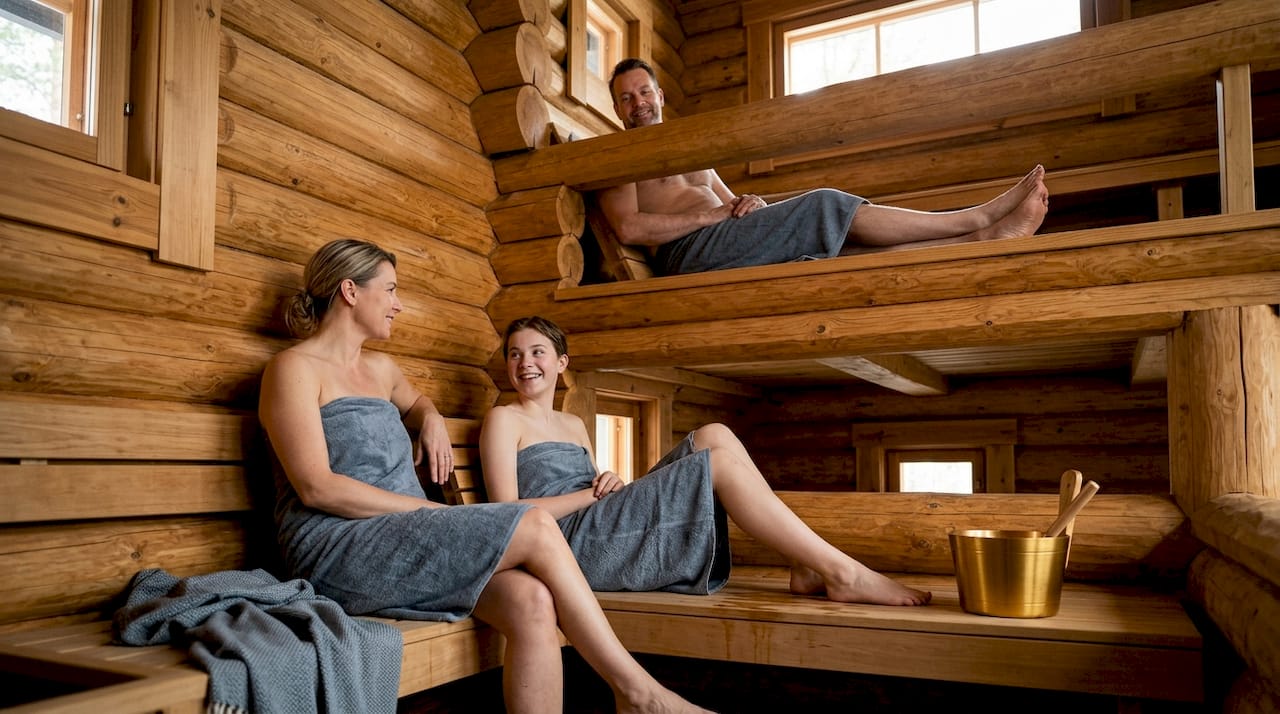
Tiered seating creates different heat zones, so users can select their temperature exposure and increase accessibility for people with varying heat tolerances. In a loft sauna, this principle operates on a larger scale than a simple two-bench arrangement. The difference between the lower level and the upper platform can be 15 to 25 degrees Celsius, creating what researchers call a “microclimate” within the structure.
Here’s why that matters practically. A group of four people might include someone recovering from muscle soreness who wants intense heat, a grandparent who prefers gentle warmth, a teenager experiencing sauna for the first time, and someone who simply wants to relax rather than sweat intensely. A loft sauna’s vertical geometry creates microclimates that serve all four users simultaneously, without compromise.
- Upper platform (hottest zone): Ideal for experienced bathers seeking maximum heat. Temperatures near the ceiling of the upper level reach traditional Finnish sauna intensity, typically 80 to 100 degrees Celsius.
- Lower bench or mid-level platform: A transition zone, cooler by 10 to 20 degrees, suited for warming up, cooling down between rounds, or users who prefer moderate heat.
- Ground-level changing and cooling area: The entry zone where bathers acclimate, hydrate, and rest between sessions. This level stays significantly cooler than either bench level.
“When you design the sauna around the physics of heat rather than fighting it, every user gets exactly what they came for. That’s the real Finnish insight.” — Saunologia
For families, the accessible lower level offers a gentler entry point for children or elderly users who want to participate in the sauna ritual without the intensity of the upper platform. A wellness-enhancing sauna design accounts for these different needs from the start, rather than treating them as afterthoughts.
The social dimension is worth noting too. Saunas in Finland are culturally significant spaces for conversation and connection. A loft sauna’s multi-level layout naturally creates conversation groupings. People on the upper platform share one experience while those on the lower level have another, and both groups can still interact across levels. It mirrors the way a split-level living room creates distinct but connected social zones. If you’re researching the full scope of custom sauna structure benefits, the social architecture of multi-level designs is often underrated.
Pro Tip: Use the upper level for short, intense sessions of 8 to 12 minutes, then descend to the lower bench for a longer cool-down period before exiting. This cycling between heat zones mimics the traditional Finnish sauna rhythm and maximizes cardiovascular and muscular recovery benefits.
Technical and safety considerations for two-story saunas
A loft sauna is not a project to improvise. The vertical format introduces structural and safety requirements that a standard single-story sauna doesn’t face, and getting these details right is non-negotiable.
Upper-story saunas require floor load checks, and lighter infrared options may be best for certain upper-floor configurations. Building rules must be followed in all cases. The upper platform must support the combined weight of bathers, benches, and thermal materials. A standard engineering reference point is 40 pounds per square foot (approximately 195 kilograms per square meter) for occupied floors, but your local building code may set different minimums. Always verify with a structural engineer before finalizing your design.
The heater placement question is equally important. Traditional wood-burning or electric kiuas units work well on the ground level of a loft sauna, where their weight is supported directly by the foundation. If you’re placing any supplemental heating on the upper platform, infrared units are significantly lighter and don’t require the same clearance distances as wood-burning alternatives. This makes them practical choices for upper levels where weight and ventilation constraints are tighter.
Safety checklist for two-story sauna construction:
- Stairs or ladder: Fixed stairs with a handrail are always safer than a ladder for family use. Minimum tread width of 80 centimeters is recommended for comfortable use while navigating in high heat.
- Non-slip surfaces: All stair treads and platform edges should use textured wood or natural materials that maintain grip when wet.
- Ceiling height on upper level: A minimum clear height of 110 centimeters is required for comfortable bench seating, with 130 to 150 centimeters preferred.
- Ventilation: Both levels need independent ventilation paths. Upper-level heat must have an exhaust route that doesn’t pull cold air across the bathers.
- Egress: In an emergency, bathers on the upper level must be able to descend quickly. Stairs must be unobstructed and well-lit.
- Local permits: Always check your municipality’s requirements before breaking ground.
Reviewing sauna building codes early in the process saves significant time and cost. It’s far easier to design around code requirements than to retrofit a non-compliant structure. A thorough sauna project planning process addresses all of these factors before a single timber is cut.
Why vertical thinking matters for modern sauna projects
After working with timber structures for over 65 years, the pattern we see repeatedly is this: the homeowners and investors who get the most value from sauna projects are the ones who think about space three-dimensionally from the very beginning. Most people start by drawing a footprint on a site plan. They calculate square meters horizontally and then wonder why their options feel limited.
The loft sauna flips that instinct. Vertical designs allow investment in microclimate versatility and real estate value-add without requiring extra land. That’s not just a space-saving trick. It’s a fundamentally different way of thinking about outdoor wellness infrastructure.
Here’s the perspective that rarely gets discussed: a two-story sauna is not a compromise solution for small lots. It’s often the superior solution, even for properties where space isn’t the primary constraint. The multi-level heat zones, the distinct social areas, the striking vertical silhouette against a treeline or lakefront, these are genuine advantages that flat single-story structures can’t replicate regardless of how large they are.
For vacation property investors specifically, the loft sauna offers something even more valuable: differentiation. Rental markets are crowded with listings that feature standard amenities. A well-crafted loft sauna, built from Finnish timber with visible craftsmanship, is a story. It’s a feature that photos well, that guests mention in reviews, and that justifies premium pricing in a competitive market. Exploring multi-room sauna design options alongside the loft concept can help you build a complete wellness offering rather than a single amenity.
The conventional wisdom says bigger is better for wellness amenities. A loft sauna argues otherwise, and it wins that argument convincingly.
Ready to plan your own vertical sauna project?
If the loft sauna concept resonates with your property goals, the next step is connecting those ideas to a real structural plan. At Huvila Seppälä, we’ve been manufacturing custom Finnish timber structures for over 65 years, and our outdoor saunas are built entirely from Finnish wood, tailored to your specific site and design vision.
Understanding Finnish woodworking features that distinguish authentic log construction from generic alternatives helps you make smarter decisions when comparing bids. Our team works from your drawings or helps you develop a plan from scratch, with transparent quotations and no hidden costs. Whether you’re interested in a standalone loft sauna or a larger project combining a sauna with a log cabin structure, we’re ready to give you a detailed, personalized offer based on exactly what your property needs.
Frequently asked questions
Are two-story saunas harder to build than single-story models?
Two-story saunas require more careful planning for structure, code compliance, and heater placement, but upper-story installations are achievable with the right preparation and a qualified builder. The added planning effort is worth the functional payoff.
How does a vertical sauna affect heating efficiency?
Vertical saunas are very efficient because heat rises naturally to the upper bench level. Loft saunas place heat and benches optimally for temperature stratification, meaning less energy is wasted heating unoccupied space.
Is a two-story sauna safe for families with children?
Yes, when designed correctly. With fixed stairs, handrails, and non-slip materials, a loft sauna is safe for families. Tiered seating supports accessibility when designed with safety in mind, and children can enjoy the cooler lower level while adults use the upper platform.
What kind of heater works best in a loft sauna?
Traditional electric kiuas units work well on the ground floor. For upper-level supplemental heating, infrared heaters are favored for second-floor setups due to lower weight and simpler installation requirements.
Do local building codes allow two-story or loft saunas?
Yes, but you must verify local load and egress rules before starting. Upper-story installations are subject to building codes and regulations that vary by municipality, so checking early in your planning process is essential.
Recommended
- Multi-room sauna: benefits, design, and key considerations – Hirsitalot, pihasaunat ja piharakennukset kotimaisesta hirrestä
- Custom Sauna Design: 63% Better Wellness & Home Value – Hirsitalot, pihasaunat ja piharakennukset kotimaisesta hirrestä
- Outdoor Saunas Explained: Types, Benefits & Building Tips – Hirsitalot, pihasaunat ja piharakennukset kotimaisesta hirrestä
- Detached sauna benefits, costs, and wellness explained – Hirsitalot, pihasaunat ja piharakennukset kotimaisesta hirrestä