Planning a Custom Log Sauna for Your Outdoor Retreat
Turning your dream of a custom outdoor sauna into reality starts with more than inspiration. Homeowners across Central Europe face unique site challenges, strict local regulations, and a dizzying range of Finnish wood choices promising comfort and durability. This simple guide demystifies every step, from navigating local requirements to selecting premium sauna wood materials and choosing trusted builders, so you can create a luxurious retreat at home with lasting value.
Table of Contents
- Step 1: Assess Site Requirements And Permitting
- Step 2: Design Your Custom Log Sauna Layout
- Step 3: Select Premium Finnish Log Materials
- Step 4: Collaborate With Expert Sauna Builders
- Step 5: Verify Construction Quality And Delivery
Quick Summary
| Key Point | Explanation |
|---|---|
| 1. Assess site conditions and permits | Check ground stability, utility access, and local regulations before starting your sauna project. Proper planning avoids delays and unexpected costs. |
| 2. Design a functional sauna layout | Determine the sauna’s primary use and create an efficient layout. Consider bench arrangement, ventilation, and aesthetic elements for optimal comfort. |
| 3. Choose high-quality sauna materials | Select appropriate wood types for different sauna components to ensure durability and performance. Quality wood contributes to the sauna’s longevity. |
| 4. Collaborate with experienced builders | Work with builders who specialize in log saunas, ensuring they understand local regulations and quality standards that will facilitate a smooth construction process. |
| 5. Verify construction quality throughout | Inspect the sauna during different stages of construction to ensure all specifications and quality standards are met, avoiding costly mistakes later on. |
Step 1: Assess site requirements and permitting
Before breaking ground on your custom log sauna, you need to understand two critical things: whether your property works physically for a sauna, and whether local regulations allow you to build one. This step separates dreamy plans from buildable reality.
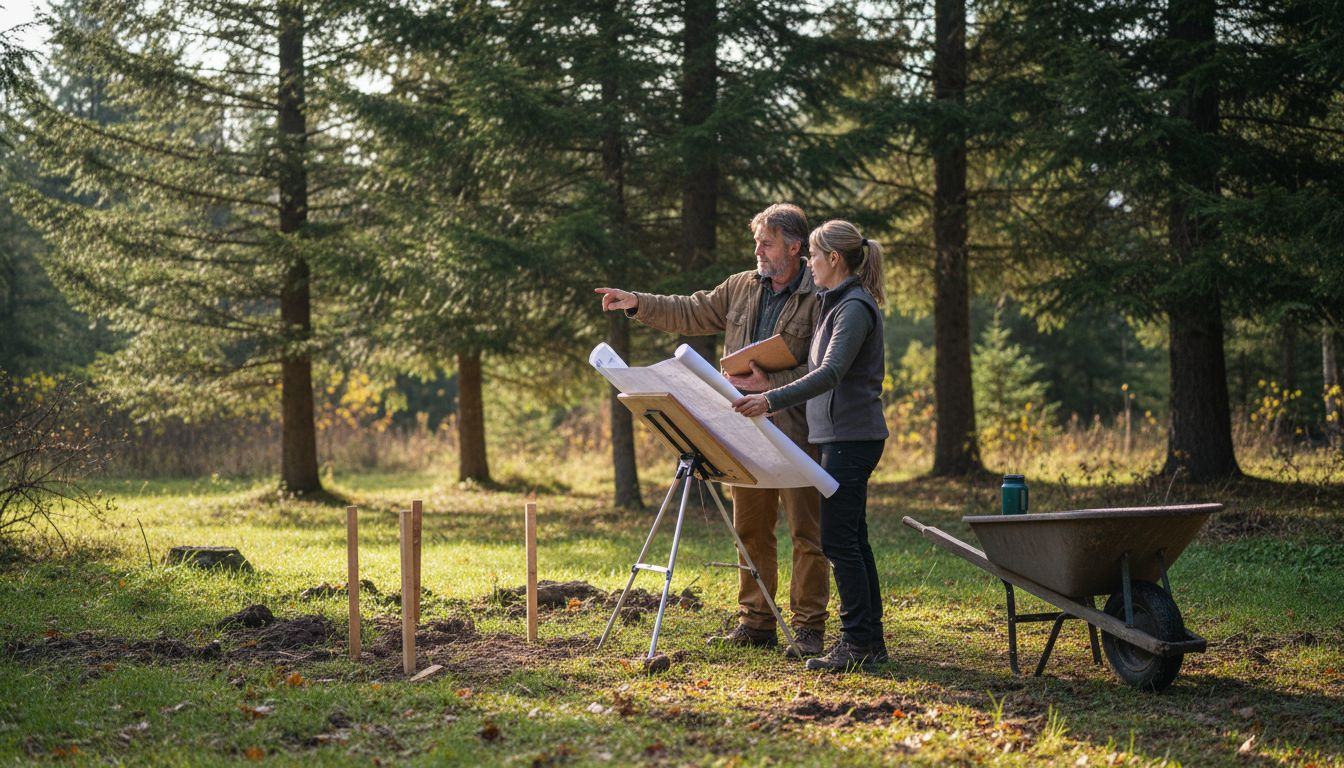
Start by examining your site itself. Walk your property and identify where the sauna makes the most sense. Consider access to utilities like water and electricity. Check the ground condition—is it stable, or does it slope dramatically? Note the distance from neighboring properties, as setback requirements often exist. Look at sunlight patterns throughout the day. Understanding soil drainage matters too, especially in Central Europe where winter moisture can be significant.
Next, investigate what your local authorities require. Building codes vary significantly across regions and even between municipalities within the same country. Contact your local building or planning department to ask specific questions about outdoor sauna structures. Ask whether permits are required, what size threshold triggers permitting, and what documentation you’ll need. Some jurisdictions treat saunas as accessory buildings with lighter requirements, while others apply full residential building standards.
Research zoning regulations in your area. Certain zones may restrict residential structures in backyards, or they might require minimum distances from property lines. Understanding building permit requirements specific to timber homes can give you insight into how your region treats wooden structures.
Document everything you discover. Take photos of your site, note measurements, record conversations with officials. Create a simple site plan sketch showing your proposed sauna location relative to your home, property lines, and utilities. This documentation becomes invaluable when working with designers and builders.
Local regulations and site conditions often determine whether a project moves forward smoothly or faces unexpected delays and costs.
Bullet points to assess:
- Ground stability and drainage conditions
- Utility access (water, electricity, potential gas lines)
- Setback distances from property boundaries
- Neighbor proximity and privacy considerations
- Sun exposure and wind patterns
- Local zoning classifications and restrictions
- Permit requirements and required documentation
- Timeline for permit approval in your jurisdiction
Pro tip: Contact your local building department early and ask if they have a checklist for outdoor structures or saunas—many municipalities provide these free resources, saving you time guessing what’s required.
Step 2: Design your custom log sauna layout
This is where your vision becomes concrete. You’ll translate your site assessment into an actual floor plan that balances comfort, functionality, and Finnish sauna tradition. Good design accounts for how people move through the space and how heat flows.
Start by deciding on your sauna’s primary function. Will it be a compact personal retreat for two or three people, or a gathering space for family and friends? Space needs drive everything else. A small sauna might be 4 by 6 feet, while a social sauna could reach 8 by 12 feet or larger. Remember that larger spaces require more heat and take longer to warm up.
Think about the interior layout next. Traditional Finnish saunas have a simple structure: a changing room, a sauna chamber with benches at different heights, and ideally a shower area or cooling-off space. The changing area protects your sauna from temperature loss and gives people a place to undress comfortably. Benches typically sit at two or three levels so users can choose their heat intensity.
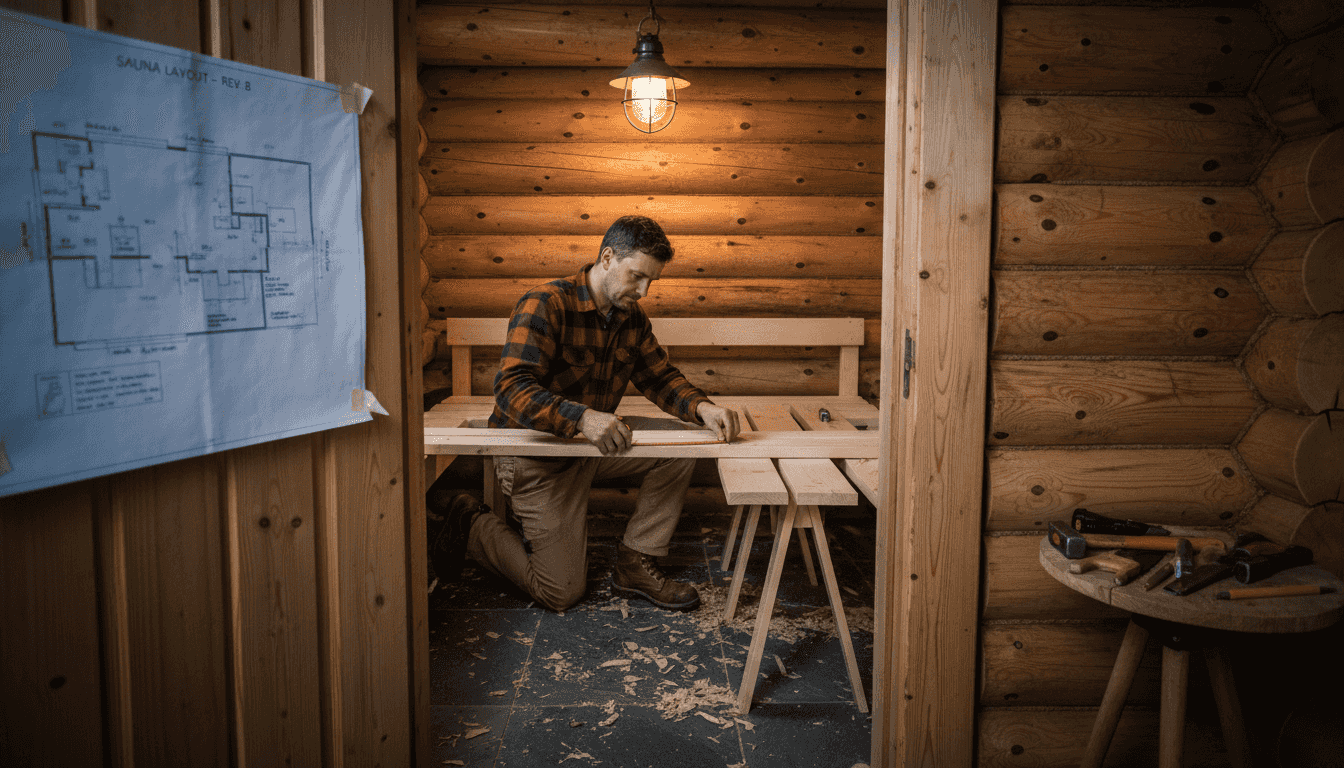
Consider where utilities will run. Water lines for showers need accessible placement without compromising the sauna’s insulation. Electrical lines for heating equipment should follow safety codes. Proper ventilation prevents moisture buildup that could damage your log structure over time.
When designing custom saunas for your outdoor space, think about access and aesthetics too. Does your sauna face a pleasant view? Is the entrance protected from wind? Will it complement your home’s appearance?
Create a basic sketch or work with a designer to visualize dimensions and placement. Note ceiling height, entry door location, bench positions, and utility locations. This sketch becomes your blueprint for moving forward.
A well-designed layout maximizes comfort and safety while minimizing energy waste and maintenance headaches.
Key design considerations:
- Interior square footage and capacity
- Bench heights and seating arrangement
- Changing room or dressing area size
- Shower or cooling area placement
- Door swing direction and entry design
- Ventilation and moisture control needs
- Utility access points and routing
- Ceiling height for safe bench access
Pro tip: Sketch multiple layout options on paper before committing to one—sauna design is surprisingly flexible, and discovering that you prefer a different bench arrangement before construction beats regret after.
Step 3: Select premium Finnish log materials
Material selection determines how your sauna will perform and last. You are essentially choosing between different wood species, each with distinct heat properties, durability, and price points. Finnish tradition offers proven choices that have worked across centuries.
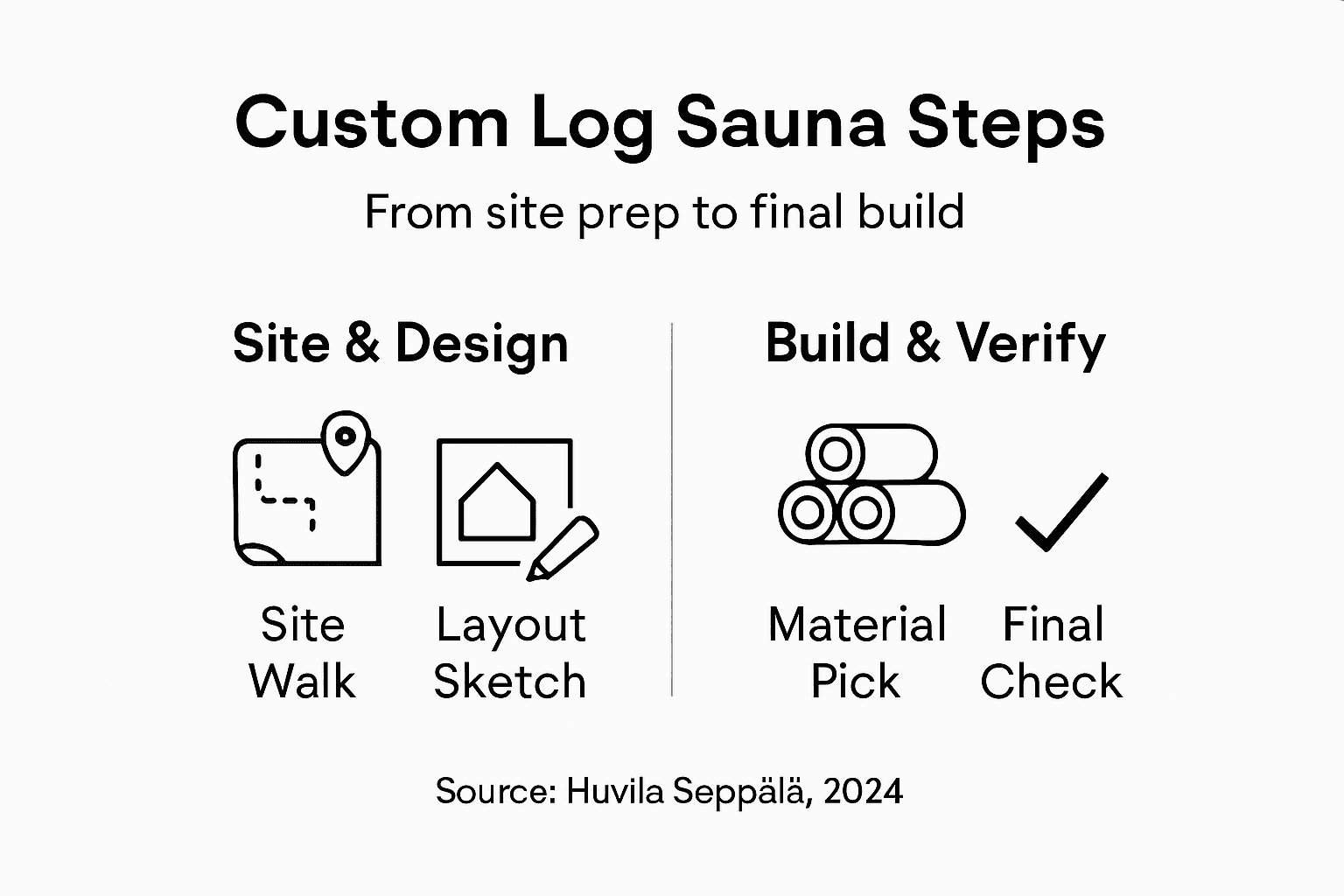
Understand the main wood options available for sauna construction. Aspen excels for interior benches because it resists heat absorption, keeping the surface cool enough to touch safely even at high temperatures. Spruce provides excellent structural strength and works well for walls and framing. Pine offers durability and aesthetic appeal with its grain patterns. Alder and cedar bring unique advantages too, with cedar offering natural resistance to decay and insects.
Each wood type has trade-offs. Softwoods like aspen heat up slowly, protecting your skin. Denser woods provide structural integrity but conduct heat more readily. Consider where each wood will go in your sauna rather than choosing one species for everything.
Think about wood treatment as well. Thermally modified woods undergo a heat treatment process that increases durability and moisture resistance without chemical additives. This enhancement extends your sauna’s lifespan significantly, particularly valuable in Central Europe where seasonal moisture changes stress wooden structures. Finnish wood construction delivers durability and reliability that justifies its premium cost over lower-grade alternatives.
Quality matters enormously. Inspect wood for defects, knots, and moisture content before purchase. Properly dried and graded logs ensure your sauna performs as designed. Request certifications showing wood origin and treatment history.
Work with your builder or supplier to specify exactly which woods go where. A well-sourced material list prevents surprises during construction and guarantees performance.
Choosing the right wood species for each sauna component prevents costly mistakes and ensures decades of reliable performance.
Wood selection by sauna location:
- Benches: Aspen (heat resistant, skin-safe)
- Structural walls: Spruce or pine (strong, traditional)
- Interior walls: Pine or cedar (aesthetic, durable)
- Exterior cladding: Thermally modified softwoods (weather resistant)
- Flooring: Aspen or treated softwood (slip resistant when wet)
Pro tip: Ask your supplier about thermally modified wood options for walls and exterior elements—the modest price premium pays for itself through reduced maintenance and extended lifespan in harsh European weather.
Here is a comparison of sauna wood types and their properties:
| Wood Type | Primary Application | Key Benefit | Notable Drawback |
|---|---|---|---|
| Aspen | Benches, flooring | Stays cool to touch | Less durable outdoors |
| Spruce | Walls, structure | High structural strength | Visible knots possible |
| Pine | Walls, structure | Attractive grain pattern | Can release resin |
| Alder | Interior features | Stable in moist air | Higher price point |
| Cedar | Interior/exterior | Resists rot and insects | Distinct smell may linger |
| Thermally Modified Wood | Exterior cladding | Superior moisture resistance | Higher upfront cost |
Step 4: Collaborate with expert sauna builders
Finding the right builder transforms your plans from paper into a finished retreat. Expert sauna builders bring knowledge about construction codes, material sourcing, and problem-solving that amateur approaches simply cannot match. This partnership determines whether your sauna becomes a cherished retreat or a costly mistake.
Start by researching builders with proven sauna experience. Look for companies that specialize in log structures and saunas rather than general contractors. Check their portfolios for completed projects similar to what you want. Ask for references from previous clients and actually contact them to ask about their experience.
Evaluate builders on more than just price. Experience with Finnish log construction matters tremendously because it requires different techniques than standard building. Ask about their timber sourcing connections and whether they work with premium Finnish materials. A builder familiar with planning a sauna project from start to finish understands timelines, permits, and realistic budgets.
Request detailed quotes that break down costs by component. Materials, labor, permitting, and finishing should be itemized separately so you understand where money goes. Transparent pricing prevents surprises mid-project. Avoid builders who give rough estimates without seeing your site and plans.
Discuss project management approach. How often will they communicate progress? What happens if problems arise? A good builder maintains regular contact and explains decisions clearly. They should provide a realistic timeline and stick to it.
Make sure they handle permitting coordination or at least understand local requirements thoroughly. Building without proper permits creates liability issues and headaches later.
The right builder partnership accelerates your project while ensuring quality craftsmanship and compliance with all regulations.
What to ask potential builders:
- How many sauna projects have you completed?
- Can you provide references from recent sauna builds?
- Do you source Finnish materials directly?
- What is your timeline for a project like mine?
- How do you handle permit coordination?
- What warranty do you offer on construction?
- How often do you communicate project updates?
- What happens if costs exceed the estimate?
Pro tip: Interview at least three builders before deciding, and prioritize those with verifiable experience building log saunas in your region—local knowledge about permits, weather, and soil conditions is invaluable.
Consider these common builder evaluation criteria for a successful sauna project:
| Criteria | Why It Matters | What to Look For |
|---|---|---|
| Sauna Experience | Specialized methods required | Portfolio of similar projects |
| Material Sourcing | Impacts quality and longevity | Access to premium materials |
| Regulatory Knowledge | Ensures legal, safe construction | Local permit handling skills |
| Communication Style | Keeps project on track | Regular updates, transparency |
| Warranty Offered | Protects your investment | Written coverage details |
Step 5: Verify construction quality and delivery
As your sauna nears completion, careful inspection ensures you receive exactly what you paid for. Quality verification happens at multiple stages, not just at the end. Catching issues early prevents problems from becoming expensive fixes later.
Schedule regular site visits during construction. Watch how the builder handles materials and follows your design specifications. Check that wood species match what you specified for different components. Verify that bench heights, door placement, and ventilation openings align with your approved plans.
Inspect the log joinery and sealing carefully. In Finnish log construction, how logs fit together determines whether your sauna remains weathertight and insulated properly. Look for gaps between logs that suggest improper fitting. Check that chinking or sealing materials are applied evenly and completely.
Test all systems before final delivery. Have the builder demonstrate heating equipment operation, ventilation function, and water drainage. Ask them to show you how to maintain each system properly. Confirm that electrical work meets local safety codes.
Before signing off on delivery, conduct a thorough walkthrough. Bring your original design plans and a checklist. Photograph everything. Document any incomplete work, cosmetic damage, or deviations from specifications. Have the builder agree to address issues in writing.
Verify that all promised materials and finishes were actually delivered. Did they use the premium Finnish wood you specified? Are interior and exterior finishes complete and properly applied?
Quality verification at delivery protects your investment and ensures your sauna functions safely and reliably for decades.
Key inspection points:
- Log fitting and joinery quality
- Wood species match original specifications
- Bench construction and finish
- Door alignment and sealing
- Ventilation system functionality
- Heating equipment operation
- Water drainage and plumbing work
- Electrical safety and code compliance
- Interior and exterior finish quality
- Weatherproofing and sealing completeness
Pro tip: Take detailed photos and video during final inspection, create a written list of any issues, and have the builder sign off confirming they’ll address items before your final payment clears.
Make Your Custom Log Sauna Dream a Reality with Authentic Finnish Craftsmanship
Planning a custom log sauna involves navigating complex site requirements, design decisions, and premium material choices. The challenges of securing permits, selecting the right wood species for benches and walls, and collaborating with expert builders can feel overwhelming without trusted support. At Huvila Seppälä, we understand these pain points from over 65 years of experience crafting bespoke Finnish timber structures. We specialize in transforming your personalized sauna visions into durable, beautiful retreats tailored to your unique outdoor space.
Discover how our expert team at Huvila Seppälä simplifies every step, from handling permitting prerequisites to sourcing premium Finnish wood and providing fast, transparent quotations with no hidden costs. Explore our flexible options for custom outdoor saunas and learn why so many clients trust us to deliver quality, reliability, and authentic craftsmanship that lasts decades. Don’t let uncertainty delay your project—take the first step now by visiting our website to request a personalized offer and bring your perfect sauna to life.
Frequently Asked Questions
How do I assess if my property is suitable for a custom log sauna?
To determine if your property is fit for a custom log sauna, examine key factors such as ground stability, access to utilities, and sunlight patterns. Walk your property to take notes and measure distances from property lines to ensure you comply with setback regulations.
What permits do I need to build a custom log sauna in my backyard?
The required permits for building a custom log sauna vary by location and local regulations. Contact your local planning department to inquire about specific permits, zoning classifications, and any required documentation to streamline the approval process.
How can I design an effective layout for my custom log sauna?
To design an effective layout for your sauna, consider its primary function and necessary spaces, like a changing room and sauna chamber. Create a basic sketch that includes dimensions for each area; adjust the layout as needed until it optimally balances comfort and functionality.
What types of wood should I choose for my sauna construction?
Select wood types based on their specific applications and properties; for instance, use Aspen for benches due to its heat resistance and Spruce for structural walls for strength. Aim to use high-quality, properly treated timber to ensure durability and moisture resistance in your sauna.
How do I find a qualified builder for my custom log sauna?
To find a qualified builder for your custom log sauna, research contractors who specialize in log construction and check for relevant experience. Request detailed quotes and references from previous clients to evaluate their expertise and ensure transparency throughout the project.
What should I check before approving the final delivery of my sauna?
Before approving final delivery, inspect key elements like log fitting, wood species, and construction quality to ensure they match your original specifications. Document any issues by taking photos and create a written list of concerns to discuss with your builder before final payment.
Recommended
- How to Design Custom Saunas for Your Dream Outdoor Retreat – Hirsitalot, pihasaunat ja piharakennukset kotimaisesta hirrestä
- How to Build Outdoor Sauna for Custom Finnish Style – Hirsitalot, pihasaunat ja piharakennukset kotimaisesta hirrestä
- 7 Essential Sauna Planning Tips for Your Dream Retreat – Hirsitalot, pihasaunat ja piharakennukset kotimaisesta hirrestä
- 7 Essentials for Your Log Sauna Building Checklist – Hirsitalot, pihasaunat ja piharakennukset kotimaisesta hirrestä