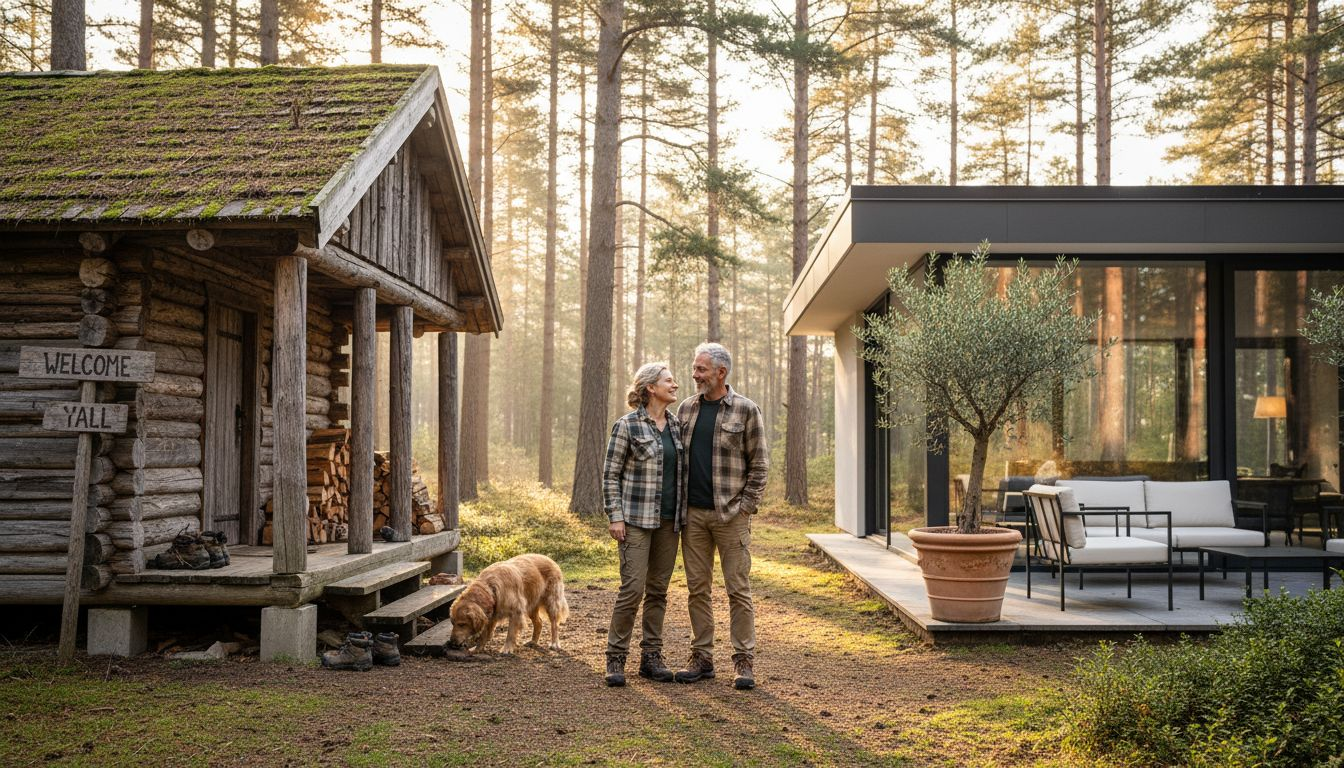
Log Cabins vs. Villas: Which Suits Your Project?
Choosing between a log cabin and a villa can redefine how you experience your property in Central Europe. Each option brings a unique blend of design, comfort, and construction features that match different lifestyles. A Finnish timber expert can explain why natural materials and architectural refinement matter for both aesthetics and energy efficiency. This guide highlights the key differences so you can confidently match your vision to a structure that best fits your goals.
Table of Contents
- What Defines Log Cabins And Villas
- Structural And Design Differences Explained
- Lifestyle, Comfort, And Energy Efficiency Compared
- Costs, Customization, And Project Timelines
- Regional Permits And Building Regulations
Key Takeaways
| Point | Details |
|---|---|
| Log Cabins vs. Villas | Log cabins highlight natural materials and rustic charm, while villas focus on architectural refinement and customization. |
| Construction Methods | Log cabins feature stacked logs providing structural support, whereas villas utilize engineered systems separating structure from aesthetics. |
| Lifestyle Differences | Log cabins offer a closer connection to nature and changing seasons, while villas provide precise climate control and modern amenities. |
| Cost and Timeline | Log cabins typically have lower costs and quicker construction times compared to the more complex and expensive villa projects. |
What Defines Log Cabins and Villas
Log cabins and villas serve different purposes, even though both can be beautiful homes. Understanding their distinct characteristics helps you choose the right structure for your Central European property.
The Log Cabin: Rustic Roots and Natural Construction
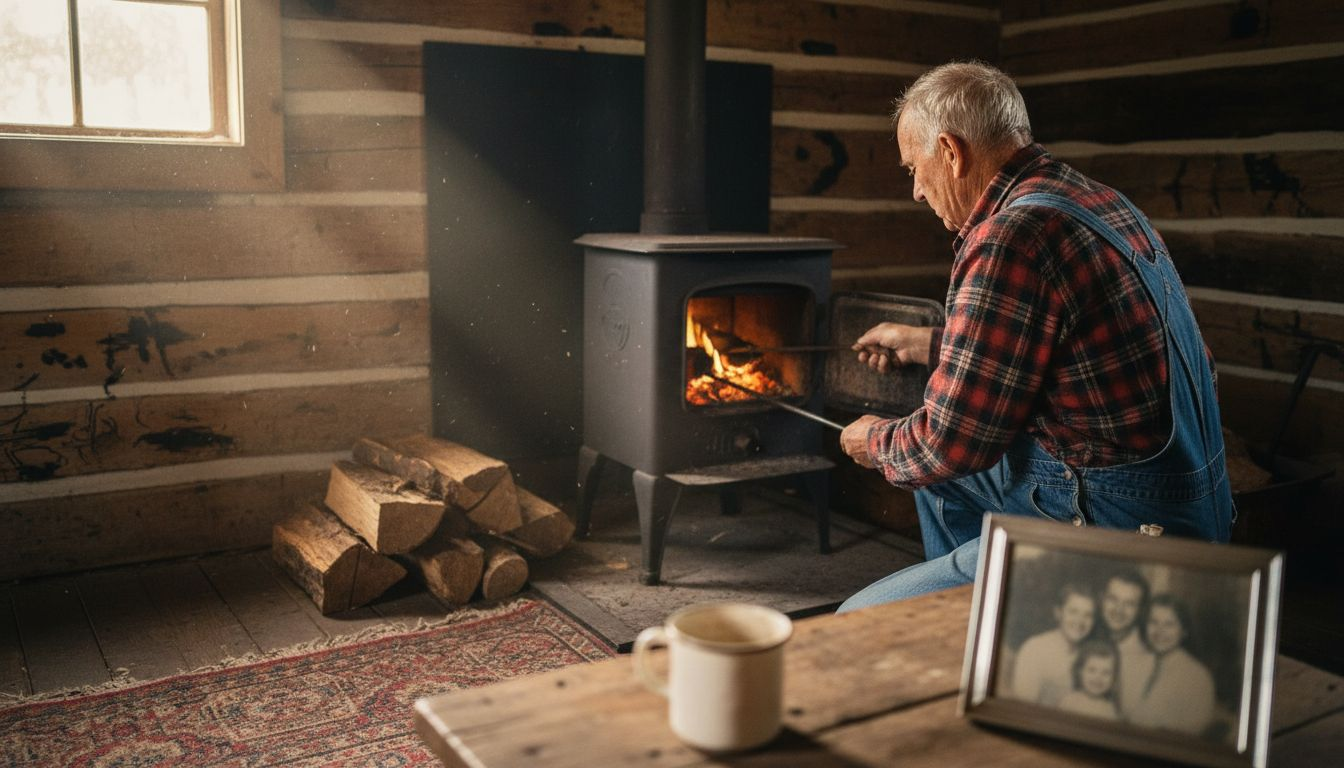
Log cabins are built from whole or milled logs, which function as both the structural framework and insulation system. This construction method dates back centuries, originating from practical, accessible building techniques that worked well in rural, forested regions.
The defining features of log cabins include:
- Natural materials that remain visible as part of the interior and exterior design
- Rustic aesthetic with a warm, tactile quality from exposed wood
- Smaller to medium footprint compared to modern residential homes
- Direct connection to landscape through minimal processing of materials
- Energy efficiency from the thermal mass and insulation properties of solid wood
Log cabins traditionally served as primary residences or seasonal retreats, though today they function in both roles. The construction emphasizes simplicity and the beauty of natural wood rather than architectural complexity.
The Villa: Refined Living and Custom Design
Villas represent a different category entirely. These are larger, formally designed homes that typically emphasize architectural refinement and customization. Villas often feature varied materials, multiple stories, and detailed finishes reflecting personal taste or resort-quality standards.
Key characteristics of villas include:
- Larger scale with more square footage and room flexibility
- Architectural variety in design styles and material combinations
- Custom layouts tailored to specific lifestyle needs
- Enhanced amenities such as multiple living areas, spa facilities, or guest quarters
- Design sophistication with attention to proportions, sightlines, and formal aesthetics
Villas can be constructed from various materials—timber frames, stone, concrete, or combinations thereof. They often serve as primary residences or high-end vacation properties in both rural and semi-urban settings.
Key Differences at a Glance
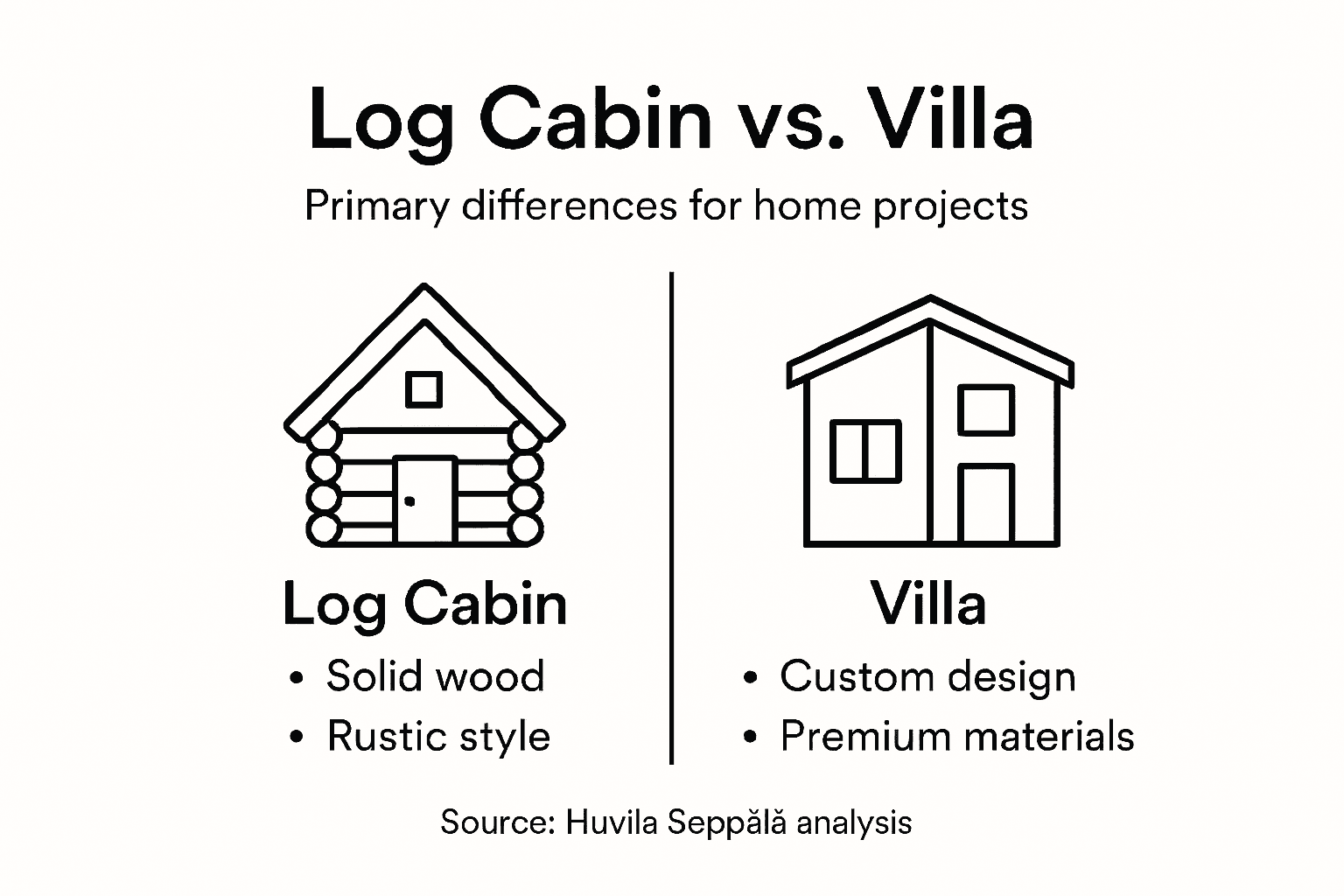
These structures differ fundamentally in purpose, scale, and construction approach. A log cabin prioritizes natural materials and rustic character. A villa prioritizes customization and refined living spaces.
Log cabins celebrate the beauty of raw wood; villas showcase architectural design and lifestyle flexibility.
Your choice depends on whether you value the authentic, natural appeal of solid wood construction or the flexibility and refinement that modern villa design offers. Many Central European homeowners appreciate log cabins for weekend retreats, while choosing villas for year-round primary residences. However, modern options blur these lines—you can now commission custom log villa designs that combine log construction with villa-scale amenities and sophisticated layouts.
Pro tip: Clarify your primary use before deciding—seasonal retreat, primary residence, or investment property. This single distinction often determines whether a cabin’s simplicity or a villa’s flexibility better serves your needs.
Structural and Design Differences Explained
The way log cabins and villas are built reflects fundamentally different philosophies about construction, environmental adaptation, and living space. These structural differences have real consequences for your project timeline, budget, and long-term satisfaction.
How Log Cabins Are Structured
Log cabin construction relies on stacked horizontal logs as the primary structural system. Each log locks into the next, creating walls that provide both load-bearing support and thermal insulation simultaneously. This integration of structure and insulation is a defining feature.
The structural approach includes:
- Solid wood walls bearing the weight of roof and upper floors
- Minimal internal support walls since exterior logs carry the load
- Natural settling over time as wood adjusts to moisture and temperature changes
- Environmental adaptation where design responds to local climate, topography, and available materials
- Simplified foundations since the structural load distributes evenly across the base
This method has been refined over centuries in forested regions. The structure itself becomes the aesthetic feature—no drywall, no hidden framing, no separation between building systems and visual design.
Villa Structural Design
Villas employ engineered structural systems where the frame (steel, concrete, or timber) separates from insulation, finishes, and aesthetic details. This separation allows greater design flexibility but adds complexity.
Villa construction typically features:
- Discrete structural columns and beams supporting the weight independently
- Flexible interior wall placement since walls don’t bear structural load
- Multiple material combinations for different functional purposes
- Formal architectural expression with proportions and details following design principles
- Complex mechanical systems for heating, cooling, and utilities integrated into walls and ceilings
The Design Philosophy Difference
Log cabins embrace form following function—the structure itself dictates layout and appearance. Villas separate form and function, allowing architects to design spaces first, then engineer the structure to support them.
This creates practical differences:
| Aspect | Log Cabin | Villa |
|---|---|---|
| Wall placement | Structural necessity | Flexible choice |
| Interior finishes | Visible wood | Multiple options |
| Design changes | Challenging mid-build | Easier to adapt |
| Construction timeline | Often faster | Potentially longer |
Log cabins let natural structure dictate design; villas let design dictate the structure required.
Log cabins respond directly to environmental context—room sizes, openings, and proportions adapt to climate needs and available materials. Villas impose formal architectural vision regardless of environmental constraints, then engineer solutions to meet those design goals.
Pro tip: Request detailed structural drawings before committing to either option, and ask whether the design approach matches your preference—do you want the structure to guide the design, or the design to guide the structure?
Lifestyle, Comfort, and Energy Efficiency Compared
How you live day to day in a log cabin versus a villa differs significantly. These differences affect comfort levels, heating and cooling costs, and how your home feels year-round across Central European seasons.
Living in a Log Cabin
Log cabins create a distinctly different living experience centered on visible natural materials and slower interior temperature changes. The exposed wood walls provide continuous sensory connection to the building material.
Key lifestyle aspects include:
- Thermal mass effect where solid logs absorb and gradually release heat throughout the day
- Humidity regulation as wood naturally adjusts moisture levels in the air
- Visible maintenance since wood finishes require periodic refreshing rather than being hidden
- Acoustic qualities where wood naturally dampens sound in a pleasing way
- Connection to seasons as wood color and scent change subtly with weather patterns
Comfort in log cabins depends heavily on construction quality and sealing practices. Natural wood shrinkage can create air leaks if not properly managed, affecting energy performance during harsh winters or hot summers. Energy efficiency in log houses depends on maintaining proper sealing to prevent unwanted air infiltration that compromises the thermal mass benefits.
Villa Comfort and Climate Control
Villas offer precise climate control through engineered systems rather than material properties. Modern mechanical systems manage temperature, humidity, and air quality independent of outdoor conditions.
Villa lifestyle features include:
- Consistent interior temperatures through programmable heating and cooling
- Customizable comfort zones with separate climate control for different areas
- Hidden mechanical systems that operate invisibly, maintaining clean aesthetic interiors
- Flexible humidity control through dedicated systems rather than material absorption
- Independent seasonal living where interior comfort doesn’t fluctuate with external weather
Villas typically achieve more predictable energy performance through cavity wall insulation and mechanical ventilation. Comfort remains stable regardless of weather, though this requires ongoing mechanical system maintenance.
To help you evaluate which type of home may better suit your needs, here’s a summary of everyday living differences between log cabins and villas:
| Lifestyle Focus | Log Cabin Experience | Villa Experience |
|---|---|---|
| Sense of Nature | Strong wood presence, natural ambiance | Engineered interiors, less natural |
| Climate Interaction | Rooms adapt to seasonal changes | Stable, artificial climate |
| Maintenance Style | Frequent, hands-on surface care | Periodic system maintenance |
| Interior Flexibility | Typically fixed by structure | Easily altered by design |
Energy Efficiency Reality Check
Both approaches can achieve good energy efficiency, but through different mechanisms.
Log cabin efficiency relies on:
- Thermal mass from thick solid logs absorbing daily temperature swings
- Material insulation where wood itself provides R-value protection
- Natural air sealing when logs are properly notched and finished
Villa efficiency depends on:
- Modern insulation standards with higher R-values than wood alone
- Mechanical systems designed for efficiency and control
- Adjustable performance through thermostat programming
Log cabins excel in stable climates; villas perform consistently anywhere through engineering.
For Central European winters with significant temperature swings, both approaches work. Log cabins benefit from thermal mass moderating daily changes. Villas rely on engineered systems to maintain comfort despite external extremes. Energy costs depend more on building envelope quality and system maintenance than on structure type.
Pro tip: If choosing a log cabin, budget 15-20% of construction costs for professional sealing and weatherproofing to maximize thermal mass benefits and prevent energy waste from air leakage.
Costs, Customization, and Project Timelines
Budget and timeline matter just as much as aesthetics when choosing between log cabins and villas. Your decision here directly impacts when you can move in and how much you’ll actually spend.
Log Cabin Costs and Value
Log cabins generally cost less than similarly sized villas, primarily because of simpler construction methods and standardized materials. The straightforward stacked-log approach reduces labor complexity and material variety.
Cost factors for log cabins include:
- Lower material costs since logs are the primary structural and aesthetic element
- Reduced labor expenses from uncomplicated assembly sequences
- Fewer specialized trades needed compared to villa construction
- Pre-cut availability that speeds production and reduces site work
- Minimal finish work since exposed wood serves as both structure and decoration
Typical log cabin projects cost 20-40% less per square meter than villas with equivalent square footage. However, costs vary based on log diameter, wood quality, and customization complexity.
Villa Pricing and Complexity
Villas carry higher costs due to multiple material types, specialized systems, and design customization. Each element—from structural framing to mechanical systems to interior finishes—involves separate budgeting and coordination.
Villa cost drivers include:
- Engineered structural design requiring architectural and engineering expertise
- Multiple building materials (timber frames, insulation, finishes, exterior cladding)
- Complex mechanical systems for heating, cooling, plumbing, and electrical
- Customizable interior layouts with flexible wall placement and room configurations
- Finish options ranging from basic to luxury grade
Villa costs scale more dramatically with customization. Adding features—extra bathrooms, premium materials, spa amenities—increases expenses significantly. Customized designs for log structures offer flexibility, but villas provide greater diversity in material selection and lifestyle features.
Timeline Comparison
Construction speed differs substantially between these two approaches.
Log cabin timelines typically span:
- Design phase: 4-8 weeks for drawings and permits
- Manufacturing: 8-12 weeks for log cutting and preparation
- Assembly: 4-8 weeks for on-site stacking and finishing
- Total: 4-6 months from permit to move-in
Villa timelines generally require:
- Design and engineering: 8-16 weeks for complex drawings
- Foundation and framing: 8-12 weeks
- Systems and finishing: 12-20 weeks for mechanical, electrical, plumbing
- Total: 6-12 months or longer
Log cabins move fast; villas move deliberately through multiple specialized phases.
Precut log components from manufacturers accelerate cabin construction dramatically. Villas cannot compress timelines as much since engineered systems must install sequentially—foundations complete before framing, framing before mechanical systems.
Pro tip: Request transparent cost breakdowns and realistic timelines before committing; ask manufacturers specifically about material sourcing delays and permit approval timeframes in your region, as these often extend both schedules and budgets.
Regional Permits and Building Regulations
Permitting requirements in Central Europe apply to both log cabins and villas, but the process differs based on structure type, materials, and local jurisdiction. Understanding these regulations early prevents costly delays and design revisions.
EU-Wide Standards and Local Variations
Central European countries follow harmonized EU construction directives while maintaining distinct local building codes. These standards cover fire safety, structural performance, energy efficiency, and material classification for all residential buildings.
Key regulatory areas include:
- Fire safety ratings requiring materials and construction methods meeting EU classifications
- Structural performance standards ensuring buildings withstand wind, snow, and seismic loads
- Energy efficiency requirements mandating insulation values and heating system efficiency
- Material declarations documenting composition and performance characteristics
- Accessibility standards for residential design and construction
Both log cabins and villas must comply with these harmonized directives. However, building permit requirements for timber homes often involve additional scrutiny since wood materials require specific documentation and testing compared to conventional construction.
Log Cabin Permitting Specifics
Log cabins face unique permitting considerations because solid wood serves as both structure and finish. Authorities must verify fire ratings, moisture management, and structural adequacy of the log system.
Common log cabin permit requirements:
- Material certifications proving log species, treatment, and performance ratings
- Structural calculations demonstrating load-bearing capacity of the log system
- Fire safety documentation showing compliance with EU fire classifications
- Detailed construction drawings showing log dimensions, notching details, and assembly sequences
- Moisture and durability plans addressing wood preservation and long-term maintenance
Log cabins manufactured off-site often move through permitting faster since manufacturers provide certified documentation. Authorities recognize standardized manufacturing processes and proven designs.
Villa Permitting Complexity
Villas typically require more extensive permitting documentation due to design customization and multiple building systems. Each engineered element needs separate approval and certification.
Villa permitting typically involves:
- Architectural drawings showing floor plans, elevations, and material specifications
- Structural engineering reports certifying the design meets local codes
- MEP documentation (mechanical, electrical, plumbing) with system specifications
- Energy performance assessments calculating compliance with efficiency standards
- Material safety data sheets for all significant building components
Custom villa designs require more back-and-forth with authorities during review. Modifications during construction often necessitate permit amendments, extending timelines.
Timeline and Documentation Strategy
Permit approval timelines vary significantly by region and building type.
Typical permit processing spans:
- Application submission: 2-4 weeks to compile complete documentation
- Initial review: 2-6 weeks for completeness check
- Technical review: 4-12 weeks for compliance assessment
- Approval or revision: Additional weeks if revisions required
Incomplete permits restart the clock; thorough documentation first time prevents months of delays.
Log cabins with manufacturer certifications often clear review phases faster. Villas may require multiple revision cycles as authorities request clarifications or modifications.
Here’s a quick comparison of permit and regulatory challenges for both building types in Central Europe:
| Permitting Hurdles | Log Cabin | Villa |
|---|---|---|
| Documentation Volume | Moderate, focused on wood certification | Extensive, covers many systems |
| Approval Speed | Usually faster if standardized | Slower due to custom features |
| Likelihood of Revisions | Low if factory-designed | High, especially with changes |
| Inspection Emphasis | Fire safety and wood durability | Structural, mechanical, and energy |
Pro tip: Engage local permitting consultants or architects before finalizing designs; they know regional preferences and can structure documentation to reduce review cycles, saving months and preventing expensive late-stage redesigns.
Discover the Perfect Balance Between Rustic Charm and Modern Comfort for Your Dream Home
Choosing between a traditional log cabin and a sophisticated villa can feel overwhelming. You want a home that reflects your lifestyle whether you seek the natural warmth and energy efficiency of solid wood construction or the customized layouts and refined finishes that villas provide. With challenges like securing building permits, managing project timelines, and ensuring energy-efficient living in Central European climates, making the right choice is crucial.
At Huvila Seppälä, we bring over 65 years of expertise in crafting custom timber frames and log structures tailored to meet your exact needs. Whether you desire a cozy log cabin retreat or a grand log villa blending rustic beauty with modern amenities, we offer fast delivery, transparent pricing, and full support throughout your project journey including design, permits, and financing. Start building your dream home now by exploring our custom design services and learn how you can combine the best of both worlds with expertly engineered log villas. Don’t wait—turn your vision into reality today.
Frequently Asked Questions
What are the main differences between log cabins and villas?
Log cabins are typically smaller, made from natural wood, and focus on a rustic aesthetic, while villas are larger, constructed with various materials, and emphasize refined design and customization.
Are log cabins more energy efficient than villas?
Log cabins offer energy efficiency through their thermal mass and insulation properties of solid wood, while villas rely on engineered mechanical systems for climate control, providing stable comfort regardless of external conditions.
How long does it usually take to build a log cabin compared to a villa?
Log cabins generally have a faster construction timeline, averaging 4-6 months from permit to move-in, while villas can take 6-12 months or longer due to more complex design and building processes.
What should I consider when choosing between a log cabin and a villa for my project?
Consider your primary use for the property (seasonal vs. year-round), your desired maintenance level, budget, and whether you prefer the rustic charm of a log cabin or the architectural flexibility of a villa.
Recommended
- Types of Log Cabins: Choosing the Right Fit – Hirsitalot, pihasaunat ja piharakennukset kotimaisesta hirrestä
- Custom Wooden Villas – How Customization Transforms Living – Hirsitalot, pihasaunat ja piharakennukset kotimaisesta hirrestä
- What Is a Cottage Villa and Why It Matters – Hirsitalot, pihasaunat ja piharakennukset kotimaisesta hirrestä
- Benefits of Wooden Villas: Sustainable Living Choices – Hirsitalot, pihasaunat ja piharakennukset kotimaisesta hirrestä