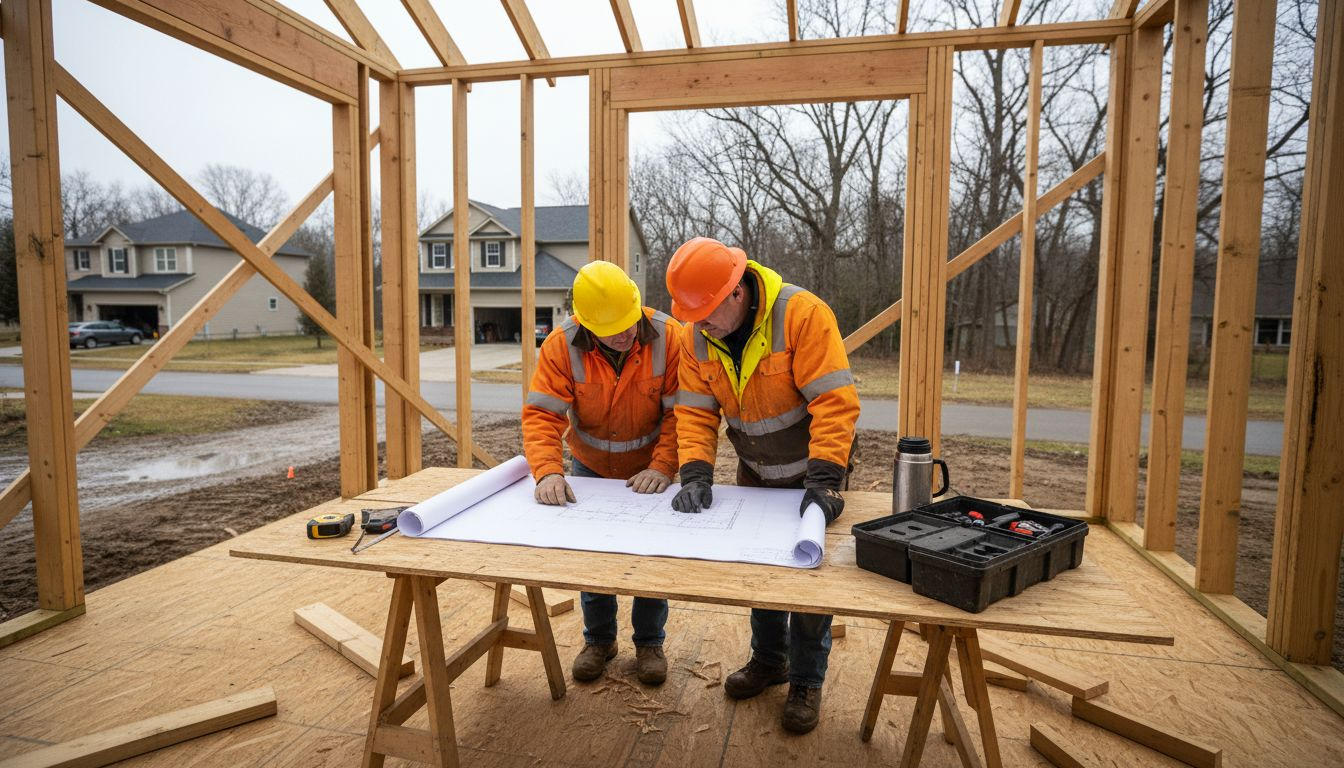
Why Use Wood in Construction: Lasting Benefits for Homes
Choosing the right material for your custom log home or sauna can raise some real questions, especially with so many myths surrounding wood construction in Central Europe. Many homeowners worry about durability, fire safety, and cost, but the truth is that wood’s strength and longevity rely on precise design and skilled assembly. Finnish timber methods combine traditional craftsmanship with modern engineering, offering trustworthy results, fast delivery, and full price transparency. Knowing these basics empowers you to make the best decision for a beautiful, lasting structure.
Table of Contents
- Wood Construction Basics And Common Myths
- Types Of Timber And Log Building Methods
- Sustainability And Health Benefits Of Wood
- Energy Efficiency And Cost Considerations
- Comparing Wood To Alternative Materials
Key Takeaways
| Point | Details |
|---|---|
| Understanding Wood’s Strength | Wood is a structural system that efficiently handles loads when correctly assembled with proper components. |
| Debunking Myths | Common misconceptions about wood, such as its strength and durability, often stem from poor construction practices rather than material shortcomings. |
| Choosing Building Methods | The selection of timber construction methods affects insulation, maintenance, and overall aesthetics, making it crucial to consider project-specific needs. |
| Sustainability and Health Benefits | Using sustainably harvested wood supports carbon capture and contributes to better indoor air quality and occupant well-being. |
Wood Construction Basics and Common Myths
Wood has been a trusted building material for centuries, yet misunderstandings about its performance persist. Understanding the fundamentals helps you make confident decisions about your construction project.
How Wood Works as a Building Material
Wood functions as a structural system rather than individual planks stacked together. The US Forest Service’s Wood Handbook explains that wood resists structural loads through a carefully designed assembly of components working in concert.
Key structural elements include:
- Dimension lumber for framing and support beams
- Wood panels that brace walls and distribute forces
- Fasteners and connections that tie components together
- Proper spacing and orientation that maximize load capacity
When assembled correctly, wood frames handle compression, tension, and shear forces with remarkable efficiency. This system-design approach is what makes timber structures reliable for residential construction across diverse climates.
Wood’s strength comes from how components work together as a system, not from individual pieces alone.
Common Myths About Wood Construction
Myth one: Wood is weak compared to other materials. The reality? Wood has an exceptional strength-to-weight ratio. It carries heavy loads while remaining lighter than concrete or steel, making it ideal for residential framing.
Myth two: Wood deteriorates quickly. Truth: Properly constructed timber structures with adequate ventilation and moisture management last for generations. Finnish craftsmanship in timber building design emphasizes protective details that prevent the conditions wood needs to decay.
Myth three: Wood cannot handle snow or wind loads. Incorrect. When properly engineered and installed, wooden frames resist hurricanes, heavy snow, and seismic activity. HUD publications on wood framing confirm that conventional wood frame construction meets all building code requirements for structural performance.
Myth four: Wooden structures are a fire risk. Actually, solid wood members burn slower than thin steel members, which lose strength rapidly when heated. Proper construction details enhance fire safety significantly.
Why These Misconceptions Exist
Many myths stem from outdated practices or poor-quality construction rather than wood’s inherent properties. Inadequate design, incorrect installation, or moisture problems can indeed cause failures—but these reflect execution, not material limitations.
When you work with experienced builders who understand wood’s properties and apply proven construction methods, you eliminate the issues that fuel these myths.
Pro tip: Ask your builder or architect about specific design details they’ll use to protect your wooden structure from moisture and weathering—this single conversation often reveals their level of expertise and commitment to lasting quality.
Types of Timber and Log Building Methods
Not all timber construction looks the same. Different methods serve different purposes, climates, and design preferences. Understanding your options helps you choose the right approach for your Central European home or sauna project.
Traditional Timber Framing vs. Log Construction
Timber framing and log construction represent two distinct building philosophies. Timber framing uses large dimension lumber joined with precise carpentry, leaving the frame visible or exposed within walls. This method dates back centuries in European architecture and emphasizes skilled joinery.
Log construction stacks whole or milled logs horizontally, with the logs themselves forming both structure and exterior walls. This approach offers different thermal properties, aesthetic character, and construction speed than timber framing.
Both methods work beautifully in Central European climates. Your choice depends on your design vision, budget, and performance priorities.
The building method you select determines not just appearance but thermal performance, construction timeline, and long-term maintenance requirements.
Common Timber Building Methods
Several proven approaches dominate residential construction today:
- Solid log walls use milled or handcrafted logs stacked horizontally with notched corners
- Half-timbered frames combine heavy timber posts with infill panels, creating exposed wooden patterns
- Post-and-beam construction uses large vertical posts connected by beams, offering open interior spaces
- Dimensional lumber framing employs standard-sized boards spaced closely together for distributed load-bearing
Each method has distinct advantages. Solid logs provide exceptional thermal mass and rustic appeal. Timber frames allow larger open spaces and soaring ceilings. Dimensional lumber offers flexibility and cost efficiency.
Here’s a quick comparison of common timber building methods and their unique advantages:
| Method | Thermal Performance | Construction Speed | Maintenance Level |
|---|---|---|---|
| Solid Log Walls | High thermal mass | Slower (requires settling) | Moderate (needs chinking) |
| Half-Timbered Frames | Moderate insulation | Moderate speed | Moderate to high |
| Post-and-Beam | Good with added panels | Fast (prefab possible) | Low to moderate |
| Dimensional Lumber | Flexible with insulation | Fastest to assemble | Low |
Why Method Choice Matters
Your timber method affects construction speed, insulation value, maintenance needs, and visual character. The log cabin building process reveals how different approaches require different assembly techniques and timing.
Solid log construction, for example, requires time for settling and moisture stabilization. Timber frames can be weather-sealed quickly. Dimensional lumber allows immediate wall closure and interior work.
Finnish builders have perfected log methods specifically suited to Northern European conditions. These techniques maximize weather resistance while preserving the natural wood character homeowners desire.
Selecting the Right Method for Your Project
Consider these factors when choosing your timber method:
- Climate exposure and weather protection needs
- Design aesthetic and interior space preferences
- Budget and construction timeline requirements
- Maintenance commitment and long-term durability goals
Working with experienced builders who understand multiple methods ensures you get honest recommendations matched to your specific situation, not just their preferred technique.
Pro tip: Request detailed drawings showing exactly how your chosen timber method will handle moisture, thermal bridging, and seasonal wood movement—this clarity separates competent builders from expert craftsmen.
Sustainability and Health Benefits of Wood
Wood stands out as one of the few building materials that actually improves the environment. Unlike concrete or steel, wood captures carbon while growing and stores it for the life of your home.

Why Wood is Sustainable
Trees absorb carbon dioxide as they grow. When you build with that wood, the carbon stays locked inside your walls and beams for decades or centuries. This carbon storage means wooden structures actively reduce atmospheric carbon rather than add to it.
Finnish forestry practices ensure sustainable harvesting. Trees are replanted as they’re harvested, creating a renewable cycle. Compared to materials requiring intensive manufacturing, wood has remarkably low embodied carbon—the energy required to produce and transport it.
Wood production requires no toxic chemicals or extreme heat processing. The forest itself does most of the work, powered by sunlight. This natural process means minimal environmental impact during manufacturing.
Building with wood from sustainably managed forests is one of the most climate-positive construction choices you can make.
Health Benefits Inside Your Home
Wood affects more than just the environment—it influences how you feel indoors. Biophilic design, which incorporates natural materials, reduces stress and improves well-being for occupants.
Wood naturally regulates humidity and temperature within rooms:
- Absorbs excess moisture when humidity rises
- Releases moisture during dry periods
- Maintains stable interior temperatures with minimal effort
- Reduces need for artificial climate control
These natural properties mean less reliance on mechanical systems and better comfort year-round. Studies show wooden interiors contribute to lower stress levels, improved sleep quality, and better respiratory health.
Indoor Air Quality Advantages
Unlike synthetic materials, wood doesn’t off-gas harmful chemicals. It doesn’t emit volatile organic compounds (VOCs) that damage indoor air quality. Your home remains fresher and healthier naturally.
The advantages of Finnish log houses for Central Europe include these natural air-regulating properties, which prove especially valuable in continental climates where seasonal humidity swings are extreme.
Wood’s thermal properties mean less drafting, better insulation performance, and fewer temperature swings that stress your respiratory system.
Environmental Impact Over Decades
A wooden home built today stores carbon for 50, 100, or even 200 years. Even when your structure eventually ages, the wood can be recycled or burned for clean energy. No toxic waste, no environmental contamination.
Compare this to concrete structures that remain as inert waste or require energy-intensive demolition. Wood completes a natural cycle.
Here’s how wood compares to concrete and steel for sustainability and energy efficiency:
| Material | Carbon Footprint Over 50 Years | Insulation Value | Typical Lifespan | End-of-Life Impact |
|---|---|---|---|---|
| Wood | Carbon negative (stores CO2) | Excellent | 100-200 years | Recyclable/renewable |
| Concrete | High emissions (8% of global) | Poor unless insulated | 50-100 years | Demolition waste |
| Steel | High emissions, energy intensive | Good but costly | 75-100 years | Recyclable, high energy |
Pro tip: Ask your builder about the specific origin of their timber and verify sustainable forest certifications—this transparency ensures your health and environmental benefits align with genuine forestry practices.
Energy Efficiency and Cost Considerations
Wood offers genuine energy savings that compound over decades. Unlike materials that require constant mechanical help, wood naturally regulates temperature and humidity, lowering your utility bills significantly.
How Wood Reduces Energy Costs
Wood has excellent natural insulating properties. It resists heat transfer far better than concrete or masonry, meaning your heating and cooling systems work less hard. This translates directly to lower monthly energy bills.
The thermal mass of wood also moderates temperature swings. On cold nights, stored warmth releases gradually. During hot days, wood absorbs heat and keeps interiors cooler. This natural buffering reduces reliance on mechanical systems.
Wood’s moisture-regulating ability matters too. It absorbs excess humidity without compromising structural integrity, reducing the load on dehumidification systems. Less mechanical work means less electricity consumed.
Wood naturally does what mechanical systems struggle to do efficiently—regulate temperature and humidity with minimal energy input.
Real-World Energy Savings
Homes built with proper log construction or timber framing consistently show lower heating and cooling costs. The energy efficiency in log houses demonstrates how different timber methods achieve different efficiency levels based on design and construction quality.
A well-built wooden home in Central Europe typically consumes 20-40% less energy for climate control compared to standard construction. Over a 30-year lifespan, this represents substantial financial savings.
These savings accelerate when you add modern insulation strategies to wooden structures. The combination creates exceptional performance without exotic materials.
Construction Costs vs. Long-Term Savings
Wooden construction often has lower upfront costs than concrete or steel alternatives. Wood is easier to work with, requires less specialized equipment, and allows faster assembly. This speeds project timelines and reduces labor expenses.
Consider these financial benefits:
- Lower initial material costs compared to concrete
- Faster construction reduces labor overhead
- Reduced mechanical system requirements lower installation costs
- Lower utility bills provide ongoing savings
- Longer structural lifespan extends your investment value
The real financial advantage emerges over time. Initial cost savings, combined with decades of lower energy bills, create compelling economic sense.
Material Performance and Durability Value
Wood’s cost-effectiveness extends beyond energy savings. Properly maintained wooden structures outlast many modern materials. Repair costs remain reasonable because skilled carpenters understand wood throughout Europe.
Finnish timber construction emphasizes quality that justifies investment. Transparent pricing from reputable builders means no surprise costs. You know exactly what you’re paying and why.
Pro tip: Request a detailed energy model showing projected annual heating and cooling costs for your specific wooden structure design—this concrete forecast helps you understand actual long-term savings and justify your initial investment.
Comparing Wood to Alternative Materials
Wood competes favorably against concrete, steel, and brick in nearly every category that matters to homeowners. Understanding the specific differences helps you make an informed decision for your Central European project.
Environmental Impact Comparison
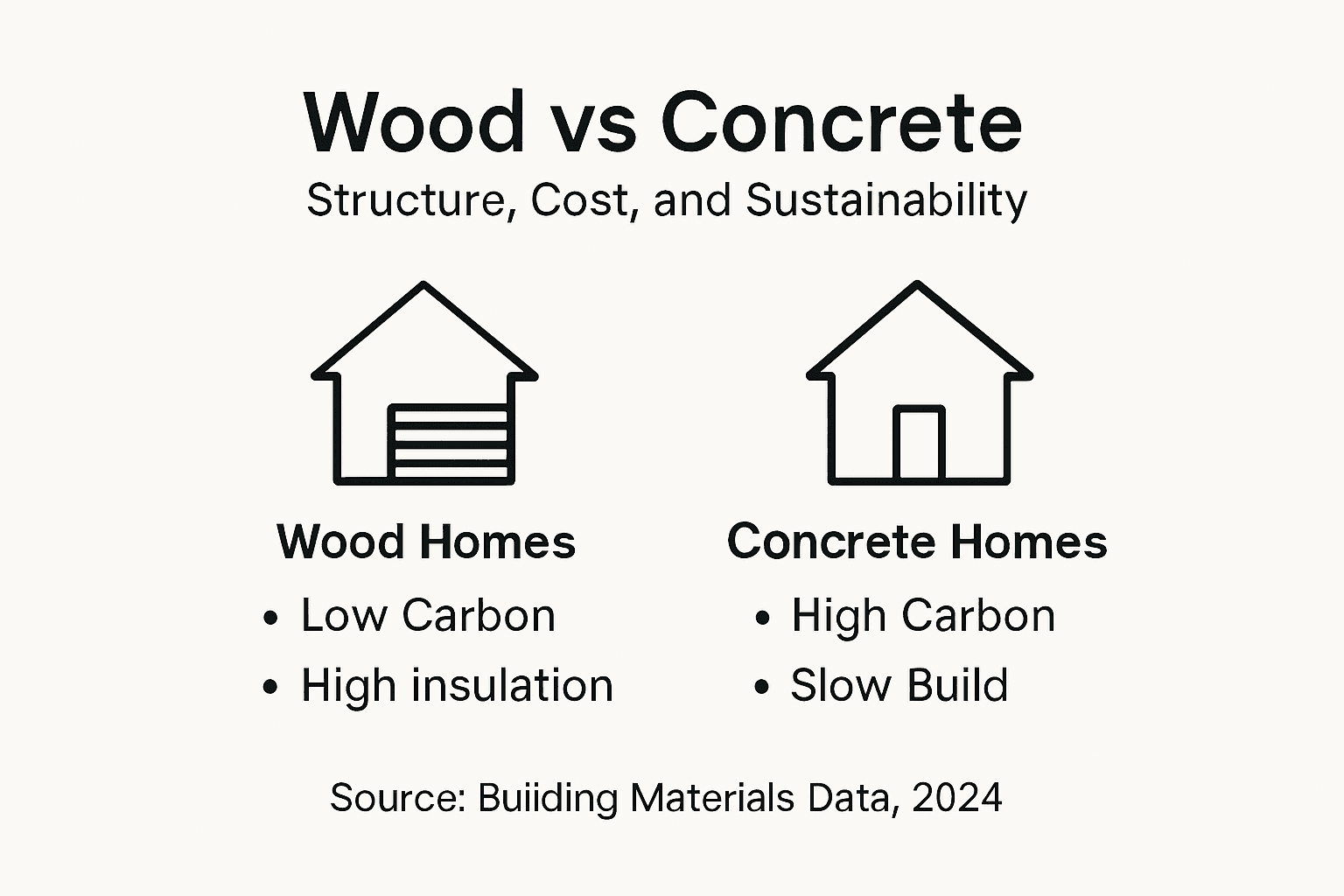
Concrete and steel dominate construction globally, yet both carry substantial environmental costs. Cement production alone generates roughly 8% of global carbon dioxide emissions. Steel requires extreme heat and energy-intensive processing.
Wood, by contrast, actually stores carbon. Trees absorb CO2 while growing, and that carbon remains locked in your structure indefinitely. Sustainably harvested wood represents a genuinely renewable resource.
The lifecycle comparison is stark: concrete and steel require ongoing energy for maintenance and repair, while wood requires only basic protection from excessive moisture. Over 50 years, wood’s total environmental footprint shrinks substantially compared to alternatives.
Timber’s renewable nature and carbon storage capability make it the only mainstream building material that actively reduces atmospheric carbon.
Structural Performance Comparison
Wood provides exceptional strength-to-weight ratio compared to concrete or masonry. It handles tension and compression forces efficiently while remaining significantly lighter. This matters for foundation requirements and overall project complexity.
Key performance differences:
- Wood resists seismic forces better than rigid materials like concrete
- Steel requires fireproofing; wood provides inherent fire resistance through char layers
- Concrete cracks under stress; wood flexes and absorbs impact energy
- Masonry is brittle; wood provides ductility and shock absorption
For Central European climates with freeze-thaw cycles, wood’s flexibility prevents the cracking problems concrete and masonry frequently experience.
Cost and Construction Timeline
Wooden construction typically costs less upfront than steel or concrete alternatives. Materials are less expensive, and skilled workers can assemble structures faster. Faster construction reduces labor costs and project financing expenses.
Concrete requires curing time—often weeks before proceeding to next phases. Steel demands specialized welding and heavy equipment. Wood allows immediate envelope closure and interior work once framing completes.
This speed advantage translates to real financial savings and faster occupancy dates.
Maintenance and Longevity
Concrete deteriorates from freeze-thaw cycles, salt exposure, and water infiltration. Steel corrodes without constant protection. Masonry requires mortar repointing every 25-50 years.
Wood, when properly detailed and maintained, lasts centuries. Repair costs remain reasonable because skilled carpenters exist throughout Europe. Replacement wood pieces integrate seamlessly without structural compromise.
Finnish timber construction emphasizes protective details that prevent problems before they start, ensuring minimal maintenance demands.
Pro tip: Request a detailed comparison showing lifecycle costs—initial construction, energy consumption, maintenance, and eventual replacement—across wood versus your preferred alternative material over 50 years.
Discover Lasting Benefits with Expert Finnish Timber Construction
The article highlights the undeniable advantages of wood in building homes that are strong, sustainable, and energy-efficient. If you’re seeking a home or sauna with proven durability, excellent thermal performance, and built using authentic Finnish craftsmanship, Huvila Seppälä is your trusted partner. With over 65 years of experience manufacturing custom timber frames, log houses, and villas, we specialize in bringing your vision to life using high-quality Finnish wood designed to withstand Central European climates.
Take the next step to secure a home that naturally regulates humidity, stores carbon, and promises long-term savings on energy costs. Visit Huvila Seppälä for fast delivery, transparent pricing, and tailored solutions based on your unique plans. Learn more about our log cabin building process to understand how our methods protect your investment. Ready to start your timber project? Explore the advantages of Finnish log houses for Central Europe and request your personalized offer today.
Frequently Asked Questions
What are the main advantages of using wood as a building material?
Wood offers a strong strength-to-weight ratio, excellent insulation properties, natural aesthetics, and sustainability due to its ability to capture carbon. Properly constructed wooden homes can last for generations, making wood a reliable choice for construction.
How does wood compare to concrete and steel in terms of environmental impact?
Unlike concrete and steel, which have high carbon footprints during production, wood is a renewable resource that stores carbon throughout its lifespan. This makes wood a more environmentally friendly option as it actively reduces atmospheric carbon.
Can wooden structures withstand extreme weather conditions?
Yes, when properly engineered and built, wooden frames can resist heavy loads from snow and wind, as well as endure seismic activity. Wood construction can meet or exceed building code requirements for structural performance in severe weather.
What maintenance is required for wooden structures?
Wooden structures typically require minimal maintenance when built with quality materials and proper detailing. Routine inspections for moisture management and occasional treatments to protect against pests can help ensure longevity and reduce maintenance needs.
Recommended
- Why Use Finnish Forestry for Log Homes – Hirsitalot, pihasaunat ja piharakennukset kotimaisesta hirrestä
- Advantages of Finnish Log Houses for Central Europe – Huvila Seppälä
- Role of Architecture in Timber Building Design – Hirsitalot, pihasaunat ja piharakennukset kotimaisesta hirrestä
- Why Use Finnish Wood for Lasting Timber Homes – Hirsitalot, pihasaunat ja piharakennukset kotimaisesta hirrestä