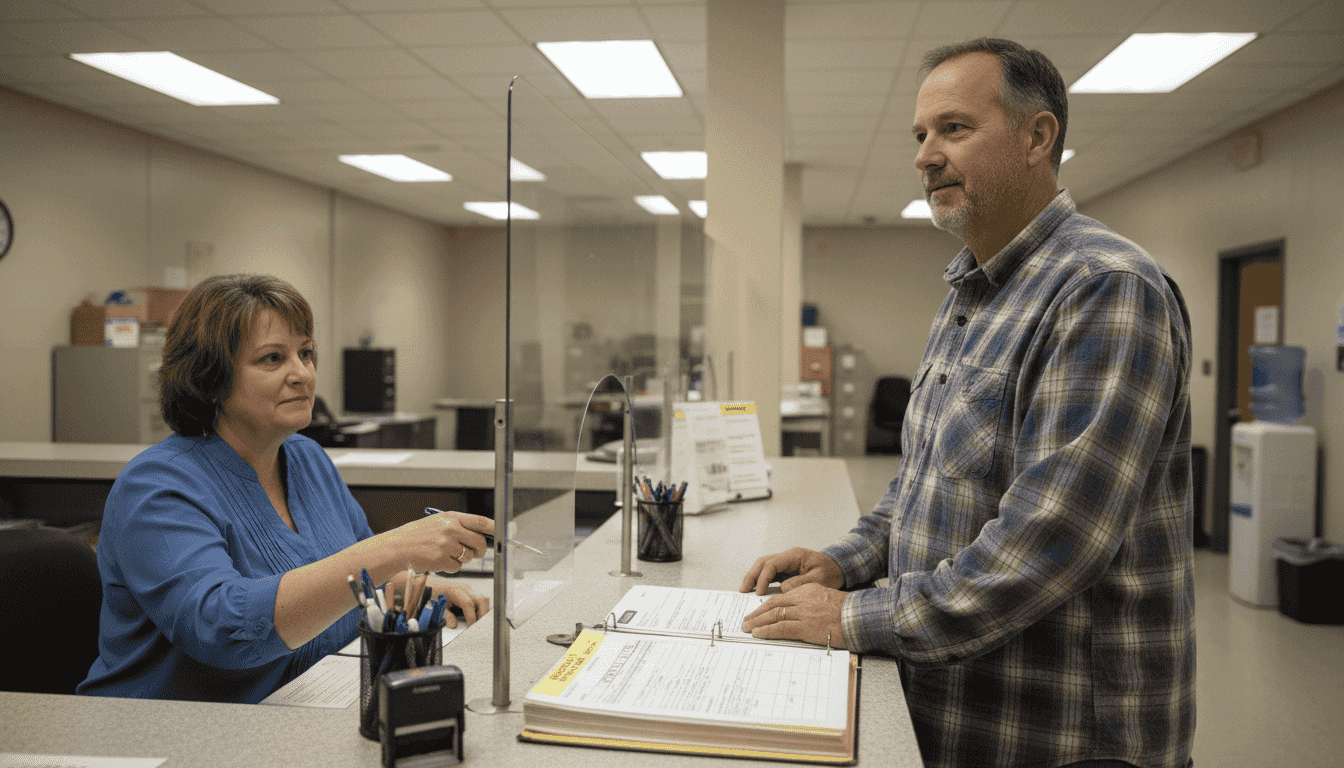
What Is a Building Permit and Why It Matters
Planning your dream timber cottage or sauna in Central Europe brings plenty of excitement—but when it comes to getting started, confusion about permits can stop any project cold. The truth is, a building permit is far more than paperwork. It is your legal authorization and your protection before a single log is placed. This guide clears up common misconceptions, outlines the types of permits you need, and helps you move forward with confidence and compliance.
Table of Contents
- Building Permits Defined And Common Misconceptions
- Main Permit Types And Their Distinctions
- Application Process And Legal Requirements
- Costs, Timelines, And Key Responsibilities
- Risks, Liabilities, And Mistakes To Avoid
Key Takeaways
| Point | Details |
|---|---|
| Building Permits Are Essential | They ensure compliance with safety codes and protect your investment in construction projects. |
| Common Misconceptions Exist | Many believe permits are optional or just bureaucratic hurdles, but they play a critical role in ensuring safety and legality. |
| Multiple Permit Types Are Required | Understanding and obtaining the right permits for your specific construction project helps avoid delays and compliance issues. |
| Timely Application Is Crucial | Start the permit application process well in advance to account for preparation, submission, and potential revisions. |
Building Permits Defined and Common Misconceptions
A building permit is a legal authorization issued by local authorities that allows you to begin construction or major renovation work. It’s not just a piece of paper—it’s proof that your project meets safety codes, zoning laws, and structural standards before a single timber frame is raised.
Think of it as a protective checkpoint. Before you invest in custom timber frames or log cabin construction, officials verify your plans align with local building codes. This protects your investment, ensures your structure is safe, and maintains your property’s value.
What a Permit Actually Does
Permits serve several critical functions:
- Verify code compliance so your timber cottage meets safety and structural standards
- Protect your property investment by ensuring the work meets legal requirements
- Enable official inspections at key construction stages
- Create a legal record documenting your project’s authorization
- Provide liability protection if anything goes wrong during construction
A building permit is your legal authorization and your protection—without it, you risk fines, difficulty selling your property, and potential safety liabilities.
Common Misconceptions About Permits
Many Central European homeowners believe permits are purely bureaucratic obstacles. That’s not accurate.
Misconception 1: Permits are optional for smaller projects. While minor repairs may not require permits, most major construction—including custom timber cottages, saunas, and additions—absolutely does. Your local building authority determines what qualifies as “major.”
Misconception 2: Permits delay your project unnecessarily. Yes, permits take time. But skipping them creates much larger delays later: fines, forced demolition, difficulty obtaining insurance or selling your home, and legal disputes with neighbors.
Misconception 3: Permits only benefit the government. They benefit you. Permits ensure your timber structure meets safety codes, withstands local climate conditions, and maintains structural integrity for decades.
Misconception 4: You can proceed while your permit application is pending. Absolutely not. Construction before permit approval violates local regulations and can result in costly penalties.
Why This Matters for Timber Construction
Timber cottages, log cabins, and saunas have specific requirements. Building officials need to verify your design accounts for local snow loads, wind conditions, frost depths, and moisture management—especially critical in Central Europe’s variable climate.
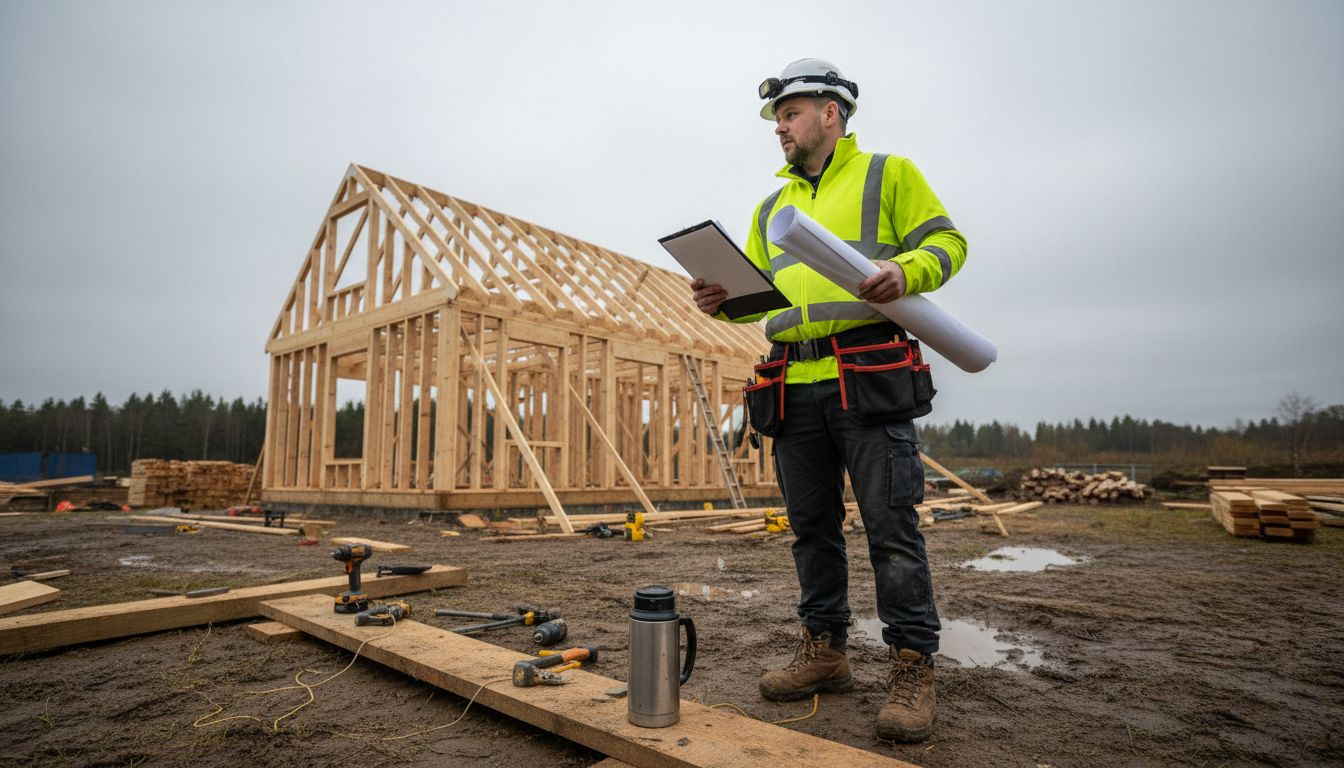
When planning custom timber structures, understanding permit requirements early prevents costly design changes later. Many projects benefit from consulting building permit requirements for timber homeowners to understand local specifications before finalizing your design.
The permit process isn’t punishment. It’s verification that your investment—whether it’s a Finnish timber cottage or a custom sauna—will stand safely for generations.
Pro tip: Contact your local building authority before finalizing your timber cottage design to confirm permit requirements, timeline, and any regional regulations that might affect your project’s layout or construction method.
Main Permit Types and Their Distinctions
Not all permits are identical. Different construction activities require different permits, and understanding which ones apply to your project prevents delays and compliance issues.
When you’re planning a timber cottage or custom sauna build, you’ll likely encounter multiple permit types. Each serves a specific purpose and covers different aspects of your construction.
The Major Permit Categories
Building permits fall into several distinct categories:
- Building permits authorize structural work, new construction, additions, and major renovations
- Electrical permits cover all electrical system installation and modifications
- Plumbing permits regulate water supply lines, drainage systems, and fixture installations
- Mechanical permits govern HVAC systems, ventilation, and heating equipment
- Combination permits bundle multiple trades into a single approval for coordinated projects
Different permit types address different safety concerns—treating them separately ensures each system meets its specific code requirements.
Building Permits for Structural Work
This is the primary permit for timber cottage construction. A structural building permit authorizes new construction, additions, renovations, and major alterations to your property.
For custom timber frames and log cabins, this permit confirms your design meets local building codes, accounts for regional climate conditions, and complies with zoning regulations. Officials review your architectural drawings, engineering plans, and site layout before issuing approval.
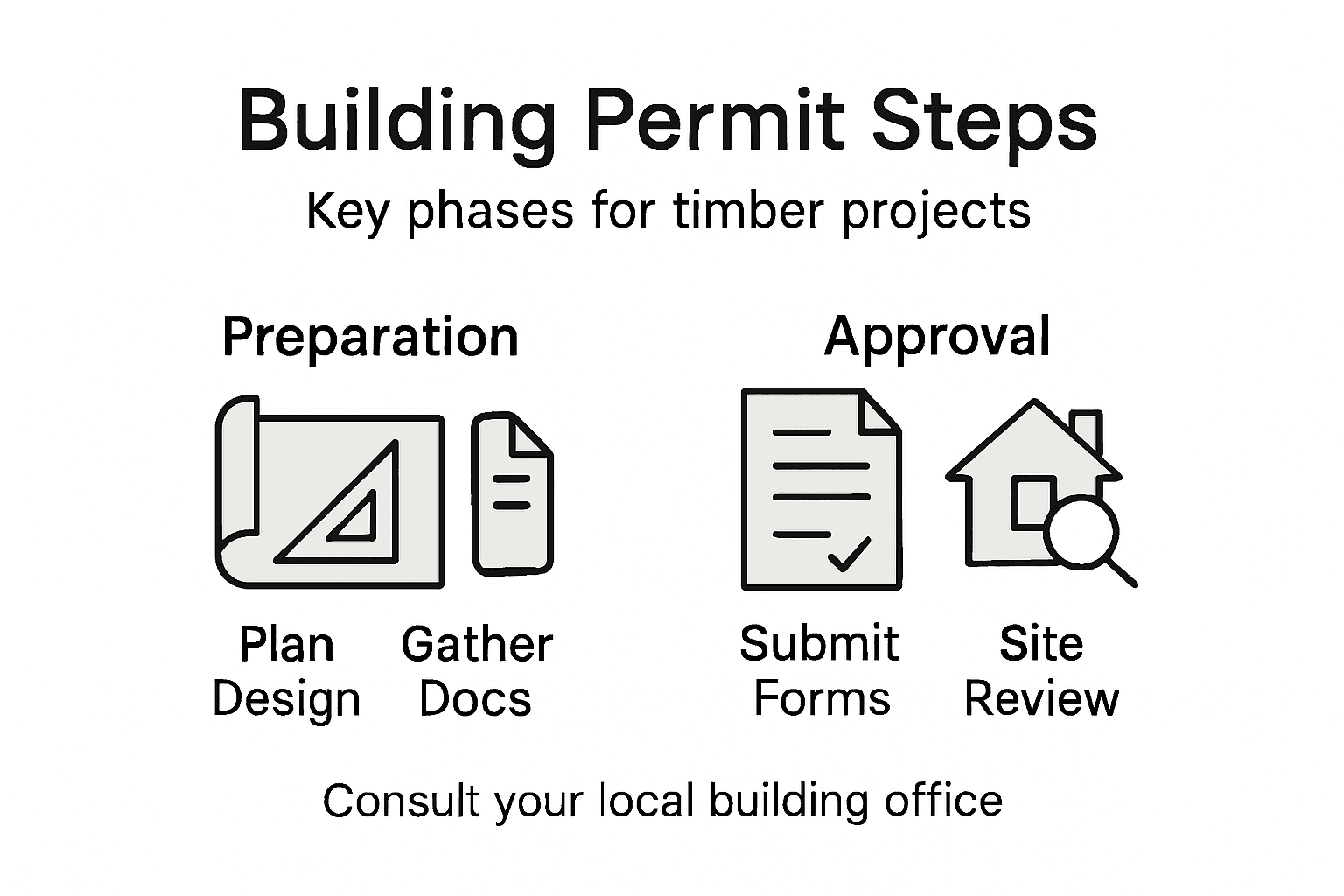
This permit typically requires the most documentation and review time because inspectors verify structural integrity, foundation requirements, and overall safety systems.
Trade-Specific Permits
Your timber cottage project will almost certainly need multiple trade permits alongside your main building permit.
Electrical permits are required when installing wiring, panels, outlets, and lighting systems. Even though your timber frame comes from the manufacturer, site electrical work requires separate authorization.
Plumbing permits apply when connecting water lines, installing fixtures, and creating drainage systems. If your custom sauna includes water features or your cottage has indoor plumbing, this permit is mandatory.
Mechanical permits cover heating systems, ventilation, and air conditioning equipment. In Central Europe’s climate, proper heating system approval is critical.
Here is a quick reference table comparing the main building permit types for timber construction projects:
| Permit Type | Primary Purpose | Common Projects | Key Review Focus |
|---|---|---|---|
| Building Permit | Authorizes structural work | New cottages, additions, major renovations | Structural safety, zoning |
| Electrical Permit | Regulates electrical systems | Wiring, outlets, lighting installations | Safety, code compliance |
| Plumbing Permit | Governs water and drainage systems | Indoor plumbing, saunas with water | Leak prevention, sanitation |
| Mechanical Permit | Covers HVAC and ventilation systems | Heating, air conditioning installations | System efficiency, safety |
| Combination Permit | Bundles multiple trades | Projects needing several permits | Streamlined, all-in-one |
Combination and Renovation Permits
Some jurisdictions offer combination permits that streamline approval when multiple trades work on a single project. This reduces paperwork and speeds the process.
Renovation permits specifically govern major alterations to existing structures. If you’re adding a timber cottage extension or upgrading an existing building, this permit type typically applies instead of new construction permits.
Understanding permit requirements for log home construction helps clarify which specific permits your project needs based on your local regulations and project scope.
Why These Distinctions Matter
Different permit types have different timelines, inspection requirements, and fees. Bundling them incorrectly delays your project. Omitting required permits creates liability and code violations.
Timber construction has unique characteristics—moisture management, thermal performance, and structural systems differ from conventional builds. Building officials reviewing your project need clarity on which systems are being installed and by whom.
Pro tip: Contact your local building department with your project plans and ask them to specify every permit type your timber cottage requires—this prevents costly omissions and clarifies the total timeline and fees upfront.
Application Process and Legal Requirements
The permit application process isn’t mysterious—it’s a structured workflow designed to ensure your timber cottage meets safety and legal standards before construction begins.
Understanding each step prevents surprises, delays, and costly mistakes down the road.
Step-by-Step Application Process
Here’s what happens when you apply for a building permit:
- Prepare detailed construction plans showing your timber structure design, materials, dimensions, and site layout
- Consult local building officials to confirm permit requirements and document specifications for your project
- Gather required documentation such as architectural drawings, engineering plans, land surveys, and proof of ownership
- Submit your application with all required forms, plans, and fees to your local building department
- Undergo plan review where officials verify your design meets building codes and zoning regulations
- Receive approval or corrections and address any requested changes to your plans
- Obtain your permit and schedule initial inspections before breaking ground
A complete application with accurate, detailed plans speeds approval significantly—incomplete submissions face delays and rejections.
What Documentation You’ll Need
Different projects require different documentation. Your local building department provides a checklist, but typically expect:
- Architectural drawings showing floor plans, elevations, and construction details
- Site plans depicting property boundaries, building location, and utility connections
- Engineering plans for structural systems, especially critical for timber frame designs
- Electrical and plumbing schematics if utilities are being installed
- Proof of property ownership or authorization from the owner
- Completed application forms specific to your jurisdiction
For complex timber cottage builds, you may need a licensed architect or engineer to prepare and certify your plans. This ensures your custom design meets all structural requirements for your region’s climate and soil conditions.
Professional Help and Expertise
Complex construction projects often require professional involvement. A general contractor familiar with timber frame construction coordinates the entire building process and manages permit compliance.
Architects and engineers verify that your timber cottage design meets structural codes, accounts for snow loads, wind resistance, and moisture management—all critical in Central Europe. Their stamped drawings carry legal weight with building officials.
While you can submit applications yourself, hiring experienced professionals accelerates approval and prevents costly design revisions.
Inspections and Compliance
Once your permit is approved, construction doesn’t proceed unsupervised. Scheduled inspections occur at critical stages: foundation, framing, electrical rough-in, plumbing rough-in, and final completion.
Building inspectors verify that work matches your approved plans and meets all code requirements. Failing an inspection means correcting the issue before proceeding—another reason proper planning upfront matters.
Pro tip: Schedule your inspections in advance and be present when inspectors arrive so you can ask questions and understand what they’re verifying at each stage.
Costs, Timelines, and Key Responsibilities
Building permits aren’t free, and they take time. Understanding the financial and temporal investment prevents budget shocks and unrealistic project schedules.
Central Europe’s permitting process involves multiple authorities and extensive documentation, which directly impacts both cost and timeline.
Permit Costs and Fees
Permit costs vary significantly based on your project size, complexity, and location. Expect multiple fee components:
- Application fees for submitting your permit request
- Plan review fees charged for officials examining your architectural and engineering drawings
- Inspection fees for each scheduled inspection during construction
- Consultancy fees if you hire architects, engineers, or permit specialists
- Amendment fees if you modify your approved plans during construction
Smaller timber cottage projects might cost €300–€800 in permit fees alone. Larger custom builds with extensive engineering requirements can exceed €2,000 or more. Professional consultants add significant cost but accelerate approval and prevent expensive revisions.
Budgeting for permits and professional services upfront saves money compared to dealing with rejections, delays, and rework later.
Timeline Expectations
Permit timelines in Central Europe can be lengthy. Plan for these realistic durations:
- Preparation phase: 2–4 weeks gathering documents and finalizing plans
- Application submission: 1 week processing and acknowledgment
- Plan review: 4–12 weeks depending on complexity and authority responsiveness
- Revisions and resubmission: 2–6 weeks if changes are required
- Final approval: 1–2 weeks after passing review
Total timeline often exceeds 12 months for complex projects. Administrative coordination among multiple authorities and environmental review requirements extend timelines significantly. Building permit delays commonly stem from incomplete documentation or coordination gaps between agencies.
Starting your permit process early prevents construction delays. Many timber cottage builders begin permitting 6–9 months before planned groundbreaking.
Your Key Responsibilities
As the property owner and project initiator, specific obligations fall on you:
- Obtain all required permits before construction begins
- Ensure accurate and complete applications with detailed, professional plans
- Pay all applicable fees in full and on time
- Schedule inspections at required construction stages
- Maintain compliance with approved plans throughout the build
- Keep documentation of permits, inspections, and approvals
- Communicate with contractors to ensure they understand permit requirements
Contractors share responsibility for adhering to permit conditions and passing inspections. You remain ultimately accountable for ensuring work meets approved specifications.
Managing Delays and Changes
Plans sometimes require modification during construction. Any change to your approved design typically requires permit amendments, which cost time and money.
Minor clarifications might be addressed quickly. Major changes restart the review process. This is why detailed planning upfront—before permitting—prevents expensive revisions.
Understanding financing strategies for timber buildings helps you budget not just for construction but also for permitting costs and potential timeline extensions.
Pro tip: Build a 3–4 month buffer into your timeline beyond the permit approval date to account for administrative delays and unforeseen coordination issues with local authorities.
Risks, Liabilities, and Mistakes to Avoid
Skipping permits or ignoring building codes creates serious consequences. Construction without authorization exposes you to legal liability, financial penalties, safety hazards, and structural failures that can devastate your timber cottage investment.
Understanding common mistakes helps you avoid costly errors before they happen.
The Biggest Permit Mistakes
These missteps trap homeowners in expensive, sometimes irreversible situations:
- Proceeding without permits is the most common mistake and exposes you to fines, forced demolition, and legal action
- Submitting incomplete applications causes rejection and restarts the entire review process
- Ignoring inspection requirements means work that violates codes must be torn out and redone
- Making unapproved design changes during construction violates permit conditions and creates liability
- Hiring unqualified contractors who don’t understand or follow code requirements
- Failing to maintain documentation of permits and inspections when disputes arise
- Assuming minor work doesn’t need permits when local codes actually require authorization
A single permit violation can cost thousands to correct and potentially render your property unsellable or uninsurable.
Legal and Financial Liabilities
Building without permits creates multiple liability exposures. You face:
Financial penalties ranging from hundreds to thousands of euros depending on violation severity and duration. Some jurisdictions impose daily fines until violations are corrected.
Forced remediation requiring you to demolish unauthorized work and rebuild to code standards at significant expense. This can mean tearing down your entire timber cottage if structural violations exist.
Insurance complications where homeowners insurance may deny claims if work wasn’t permitted. Resale becomes nearly impossible when buyers discover unpermitted structures.
Legal action from neighbors challenging construction or from municipalities pursuing code violations. Defense costs alone exceed most permit expenses.
The table below summarizes common risks if permits are skipped or done incorrectly:
| Risk Type | What Can Happen | Long-Term Impact |
|---|---|---|
| Legal Penalties | Fines, forced demolition | Possible loss of property value |
| Insurance Issues | Claims denied for unpermitted work | Uninsurable property |
| Resale Problems | Sale complications, legal challenges | Difficult or impossible to sell |
| Safety Hazards | Unchecked structural failures | Injury, costly repairs |
Safety Risks and Structural Failures
Permits exist because unpermitted work causes accidents and failures. Timber construction has specific safety requirements that officials verify:
Electrical systems without permits create fire and electrocution hazards. Plumbing work without inspection risks contamination and water damage. Structural timber frames without engineering review may fail under snow loads or wind stress—especially critical in Central Europe’s climate.
Building codes require specific details for your region. Officials verify your design accounts for local frost depths, wind speeds, and moisture conditions. Skipping this verification risks structural failure years later when conditions exceed your underdesigned structure’s capacity.
Professional Oversight Matters
Engineers and architects aren’t bureaucratic obstacles. They identify design flaws before construction begins, preventing catastrophic failures and liability.
They stamp and certify your plans, demonstrating to officials that your timber cottage meets structural requirements. This professional accountability accelerates approvals and protects you legally.
Contractor qualifications matter equally. Experienced builders understand timber-specific requirements and ensure code compliance throughout construction.
Avoiding These Mistakes
Protect yourself with straightforward practices:
- Obtain all permits before breaking ground
- Hire licensed professionals for design and construction
- Submit complete applications with detailed, professional plans
- Schedule and pass all inspections at required stages
- Maintain organization of all documentation
- Communicate clearly with contractors about permit requirements
- Address inspection failures immediately rather than continuing work
Pro tip: Photograph and document all inspection sign-offs and approvals, then store copies both physically and digitally—these protect you legally if disputes arise years later.
Ensure Your Timber Project Stays On Track with Proper Permits and Expert Craftsmanship
Navigating the complexities of building permits is a critical step before starting your custom timber cottage or sauna. Understanding the detailed requirements and avoiding costly delays protects your investment and peace of mind. At Huvila Seppälä, we combine over 65 years of Finnish craftsmanship with a deep respect for local building codes and permit processes to deliver log structures tailored to your exact needs.
Start your journey confidently by exploring our custom timber frame and log cabin solutions. We provide transparent pricing, fast delivery, and professional support that complements your building permit efforts. Act now to secure a trusted partner who values safety, quality, and your project timeline. Visit Huvila Seppälä and request your personalized offer today.
Frequently Asked Questions
What is a building permit?
A building permit is a legal authorization from local authorities, allowing you to start construction or major renovations. It ensures your project complies with safety codes, zoning laws, and structural standards.
Why do I need a building permit for my construction project?
You need a building permit to verify that your construction meets legal requirements and safety standards. It protects your investment, ensures your structure’s safety, and helps maintain your property’s value.
What happens if I start construction without a permit?
Starting construction without a permit can lead to serious consequences, including fines, forced demolition of unapproved work, and legal issues. It may also complicate future insurance claims and property resale.
How long does it take to get a building permit?
The time to obtain a building permit can vary, but expect a timeline that includes several weeks for application processing and plan reviews. Complex projects may take several months due to the required documentation and inspections.
Recommended
- Building Permits: Why They Matter for Timber Homes – Hirsitalot, pihasaunat ja piharakennukset kotimaisesta hirrestä
- Building Permits Explained – Impact on Custom Projects – Hirsitalot, pihasaunat ja piharakennukset kotimaisesta hirrestä
- Building Permit Requirements – What Timber Homeowners Need – Hirsitalot, pihasaunat ja piharakennukset kotimaisesta hirrestä
- Building Permits Process Finland: Step-by-Step Guide – Hirsitalot, pihasaunat ja piharakennukset kotimaisesta hirrestä