Log Sauna Defined: Finnish Quality and Custom Options
Building a log sauna is about much more than just creating a warm wooden retreat. For many Central European homeowners, a true Finnish log sauna represents a blend of tradition, wellness, and craftsmanship that prefab alternatives simply cannot match. From selecting timber to navigating local rules, the path to a lasting, custom sauna involves decisions that directly impact comfort, value, and long-term satisfaction. This guide highlights the most common misconceptions about log saunas—and what smart planning really looks like for your home.
Table of Contents
- What Is a Log Sauna and Common Misconceptions
- Types of Log Saunas and Key Distinctions
- Essential Construction Features and Finnish Timber
- Legal Permits and Zoning Rules for Saunas
- Cost Factors, Common Mistakes, and Alternatives
Key Takeaways
| Point | Details |
|---|---|
| Log Saunas Offer Unique Benefits | Log saunas maintain consistent temperature and humidity, providing a gentle and comfortable experience that industrial saunas cannot replicate. |
| Finnish Sauna Tradition | The Finnish approach combines wellness, social gathering, and architectural design, emphasizing proper temperature and humidity control. |
| Common Misconceptions | Many believe that all logs perform equally or that log saunas are difficult to maintain; in reality, timber quality and construction are critical to durability and ease of use. |
| Legal Considerations Are Crucial | Understanding local building codes and permitting requirements is essential to avoid costly mistakes when constructing a sauna. |
What Is a Log Sauna and Common Misconceptions
A log sauna is far more than a simple wooden box with heat. It’s a carefully engineered structure built from solid logs, designed to maintain consistent temperature and humidity while providing an authentic sauna experience rooted in Finnish tradition. Unlike prefabricated metal or tile saunas, a log sauna uses the thermal mass of wood itself to regulate heat distribution, creating a gentler, more natural warming process that many people find more comfortable than industrial alternatives.
The magic of log construction lies in how the wood interacts with heat and moisture. Logs absorb and release heat gradually, preventing the sudden temperature spikes you get from metal interiors. This creates a more balanced sauna environment where the air feels less harsh on your lungs and skin. The wood also adds a subtle aromatic quality to your sauna sessions, a quality that extends beyond mere aesthetics into the realm of wellness and sensory experience.
Understanding the Finnish Approach
Finnish sauna culture isn’t just about sweating in a hot room. The Finnish tradition encompasses a complete philosophy of wellness that combines architectural design, heat therapy, and social gathering. When you understand a true Finnish sauna’s cultural significance, you realize that the log construction method is deliberately chosen to support this holistic approach.
Finnish saunas follow specific principles:
- Temperature control: Maintained between 70–100°C (158–212°F) with authentic wood-fired or electric heaters
- Humidity variation: Users control moisture by pouring water on hot stones, creating the characteristic steam (löyly)
- Wood quality: Premium Finnish pine, spruce, or aspen selected for durability and heat resistance
- Bench design: Multiple levels allowing different temperature preferences
- Ventilation: Proper air circulation to prevent moisture damage while maintaining heat
The Finnish log sauna tradition transcends simple heat exposure—it combines architecture, heat therapy, and social rituals into a holistic wellness practice.
Common Misconceptions About Log Saunas
Misunderstanding log saunas often leads to poor purchasing decisions or unrealistic expectations. Here’s what people frequently get wrong:
Misconception 1: All logs are the same. Not true. The type of wood, its moisture content at construction, and how it’s seasoned dramatically affect performance and longevity. Finnish logs undergo specific treatment processes that inferior alternatives skip entirely.
Misconception 2: Log saunas are difficult to maintain. While they require care, proper construction and regular maintenance keep them in excellent condition for decades. The wood doesn’t rot or deteriorate if ventilation and drainage are properly designed during installation.
Misconception 3: You can’t control temperature precisely. Modern log saunas integrate electric heating systems or wood-fired stoves with thermostats, giving you complete control. The wood construction simply enhances the experience rather than limiting it.
Misconception 4: Log saunas are only for extreme heat lovers. The gradual heat release from logs makes them more accessible to people who find traditional saunas uncomfortable. You can enjoy lower temperatures (50–70°C) and still receive wellness benefits.
Misconception 5: Custom log saunas are impossibly expensive. While quality costs more than budget alternatives, transparent pricing and efficient manufacturing mean custom solutions are more affordable than many people assume. The investment pays dividends through durability and health benefits over 30+ years of use.
Here is a summary of the most common log sauna misconceptions and the reality behind each belief:
| Misconception | What People Assume | Actual Fact |
|---|---|---|
| All logs are the same | Any wood will perform well | Timber type, drying, and treatment are crucial for durability |
| Maintenance is difficult | Log saunas require heavy upkeep | Proper build and care make them long-lasting and easy to maintain |
| Temperature can’t be controlled | Heating is imprecise or basic | Modern systems offer precise control, even with traditional materials |
| Only for extreme heat lovers | Saunas are always hot and harsh | Log saunas provide gentler heat, suitable for wider comfort ranges |
| Custom saunas are unaffordable | Fully custom means high expense | Efficient manufacturing and durability make them cost-effective |
Why Log Construction Matters for Central European Homeowners
Central European climate conditions—with significant temperature variations and moisture from seasonal changes—actually favor log sauna construction over alternatives. The wood’s natural ability to manage humidity swings keeps the structure stable and prevents the warping you see in metal frames. Additionally, a log sauna integrates beautifully into traditional European architecture, enhancing property aesthetics while serving as a functional wellness space.
When you’re planning a custom sauna build, understanding these fundamentals prevents costly mistakes. You’ll know what questions to ask manufacturers, what specifications matter, and why certain design choices make sense for your climate and usage patterns.
Pro tip: Before committing to any sauna design, spend time in an actual Finnish log sauna if possible—even visiting one at a spa or wellness center—to understand how the wooden interior affects temperature perception and comfort compared to metal alternatives.
Types of Log Saunas and Key Distinctions
Not all log saunas work the same way. The type you choose dramatically affects your sauna experience, maintenance requirements, and long-term satisfaction. Understanding the differences between heating methods, ventilation systems, and construction approaches helps you select the right solution for your Central European home and lifestyle.
Each sauna type—wood-burning, electric, and smoke—represents a distinct philosophy about how heat, moisture, and tradition should combine. The choice isn’t just about preference; it’s about matching your climate, available resources, and how you plan to use your sauna.
Wood-Burning Log Saunas
Wood-burning saunas represent the most traditional approach to log sauna heating. These models use a firebox with a chimney, allowing smoke to escape while heat fills the sauna room. The wood stove heats a pile of rocks (the sauna stove), which users splash with water to create steam and the characteristic löyly—that distinctive steam burst that feels noticeably different from other heating methods.
Wood-burning saunas offer several distinct advantages:
- Authentic heat experience: The intense, dry heat followed by controllable steam bursts creates a deeply satisfying sauna session
- Self-sufficient operation: No electricity required, making them reliable during power outages
- Lower operating costs: Assuming you have access to firewood, fuel costs remain minimal year-round
- Superior thermal mass: The continuous heat from burning wood maintains stable temperatures with less temperature fluctuation
- Traditional aesthetic: The visible stove and fireplace create authentic atmosphere that electric models can’t replicate
The trade-off? Wood-burning saunas require more active management. You’ll need to tend the fire, manage ash disposal, and ensure proper ventilation. Starting a fire takes 30-45 minutes before the sauna reaches optimal temperature. For Central European homeowners with consistent access to quality firewood and appreciation for ritual, this model delivers unmatched satisfaction.
Electric Log Saunas
Electric log saunas offer maximum convenience while maintaining traditional wooden construction. An electric heater element warms the sauna rocks, giving you precise temperature control through a thermostat and timer. You simply turn on the unit and wait 20-30 minutes for the sauna to reach your preferred temperature.
Electric models appeal to modern homeowners because they:
- Start quickly: Ready to use in 20-30 minutes without fire management
- Provide temperature precision: Digital controls let you set exact temperatures (50–100°C)
- Require minimal maintenance: No ash, no chimney cleaning, no fire hazards
- Work year-round: Reliable operation in any weather condition
- Integrate with automation: Smart thermostats and app-based controls suit modern homes
The electric approach works exceptionally well for busy homeowners who want wellness benefits without the commitment of fire-tending. The heat quality differs slightly from wood-burning models—many people describe it as gentler and more forgiving for those sensitive to intense dry heat.
Smoke Saunas (Savusauna)
The smoke sauna is the most unconventional option and distinctly Finnish in origin. Unlike other models, smoke saunas lack a chimney. Instead, smoke fills the sauna room until the fire burns down and ventilation clears it. Only after smoke clears does the actual sauna session begin.
Smoke saunas create a unique experience because:
- Smoke is integral, not accidental: Participants experience the full sensory profile of wood smoke as part of the tradition
- Exceptional heat retention: Without a chimney losing heat, the rocks retain maximum thermal energy
- Cultural authenticity: This represents the most historically accurate sauna method
- Minimal equipment needs: Simple construction with basic fireplace and rocks
Smoke saunas demand significant commitment. You need excellent ventilation, fire safety awareness, and tolerance for smoke exposure. Many Central European building codes restrict smoke saunas due to emissions and fire concerns, making them increasingly uncommon in new residential builds.
Comparison of Key Distinctions
| Feature | Wood-Burning | Electric | Smoke |
|---|---|---|---|
| Startup time | 30-45 minutes | 20-30 minutes | 30-45 minutes |
| Temperature control | Manual/intuitive | Precise/digital | Manual/intuitive |
| Maintenance | Moderate (ash, chimney) | Minimal | Moderate (smoke residue) |
| Operating costs | Low (firewood) | Low-moderate (electricity) | Low (firewood) |
| Space efficiency | High | Highest | Highest |
| Heating method | Wood stove | Electric element | Open fire |
Each sauna type creates distinctly different experiences—your choice depends on balancing authenticity, convenience, maintenance commitment, and local building regulations.
Selecting the Right Type for Your Situation
Your ideal choice depends on several factors specific to your Central European property. If you value tradition and have reliable firewood access plus enjoy fire management, wood-burning delivers maximum satisfaction. If you prioritize convenience and precise control for a busy household, electric offers worry-free operation. Smoke saunas suit only dedicated enthusiasts who’ve experienced them firsthand and understand the commitment.
One consideration many homeowners overlook: local regulations. Some Central European municipalities restrict wood-burning saunas due to emissions regulations or chimney requirements. Before deciding, verify building requirements and necessary permits for your specific location.
Pro tip: If you’re undecided between wood-burning and electric, rent or visit a facility with both types before building—spending time in each heating style reveals your genuine preference far better than any description.
Essential Construction Features and Finnish Timber
A log sauna’s durability and performance depend almost entirely on construction fundamentals and timber quality. This isn’t where you compromise. The difference between a sauna that lasts 30 years and one that deteriorates in a decade comes down to specific design choices and material selection that most homeowners never think about until problems emerge.
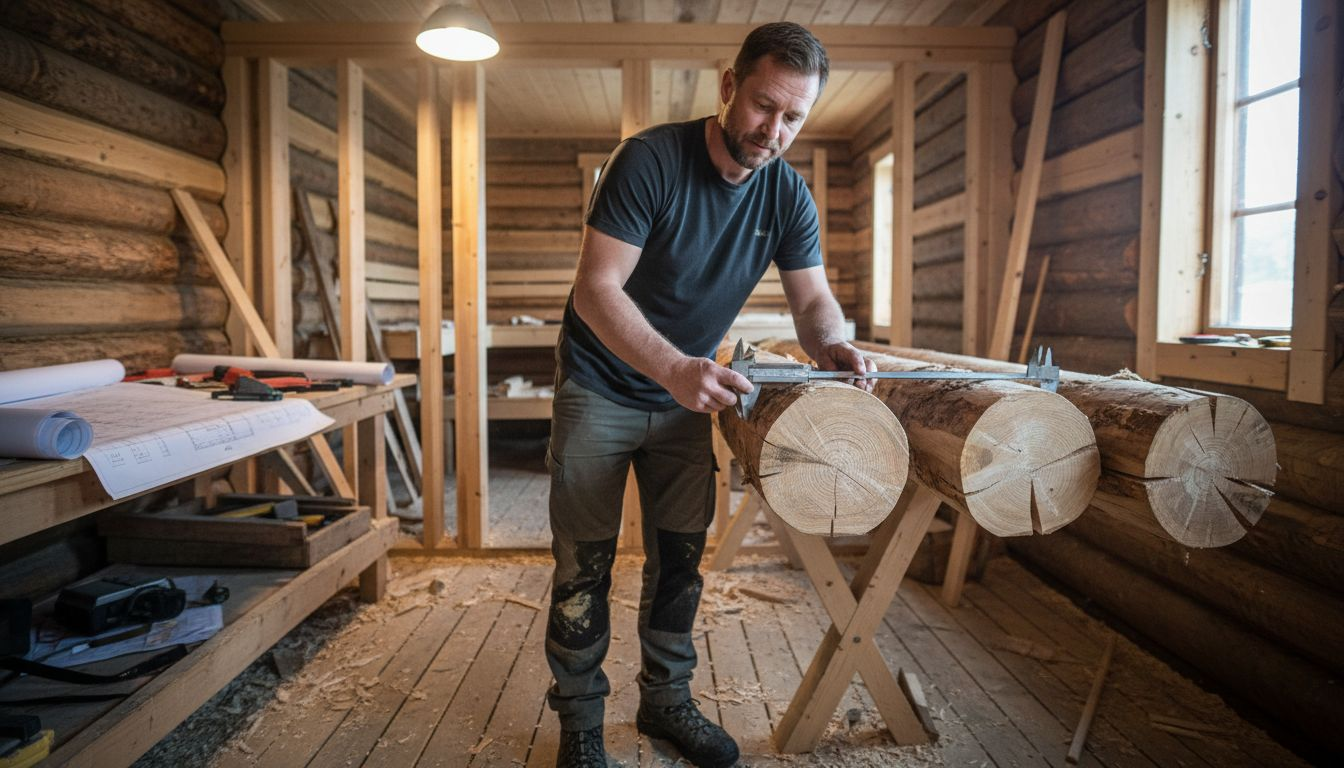
Finnish timber represents the gold standard for log sauna construction. The combination of Finland’s climate, forestry practices, and manufacturing expertise creates wood that performs differently than alternatives from other regions. Understanding what makes Finnish timber superior helps you appreciate why it commands higher prices and delivers superior value.
Critical Construction Features
Proper ventilation is the single most important construction feature determining sauna longevity. Without it, moisture accumulates inside the wooden structure, leading to rot, mold growth, and structural failure. Effective ventilation systems must remove humid air from the sauna room while preventing warm air loss during operation.
Key ventilation requirements include:
- Intake vents: Located low on the sauna interior, drawing fresh air from outside
- Exhaust vents: Positioned high on opposite walls or roof, releasing humid air
- Air circulation: Fans or natural convection ensuring continuous moisture removal
- Sealed seams: Gaps between logs sealed with specialized caulking to direct moisture through vents only
- Drainage design: Ground beneath the sauna sloped to prevent water pooling
Log selection and preparation significantly impacts long-term performance. Not all logs are equal. Finnish manufacturers select timber based on density, grain structure, and moisture content. The logs are kiln-dried to specific moisture levels (typically 12-15%), then precision-machined to create tight joints that minimize gaps where moisture could penetrate.
The log-joining method matters considerably too. Traditional tongue-and-groove joinery creates interlocking connections that allow slight wood movement without compromising the seal. This prevents the cracking and separation you see in poorly constructed log buildings.
Thermal insulation affects both comfort and energy efficiency. Quality log saunas include insulation between the inner log wall and outer shell, reducing heat loss and maintaining stable interior temperatures. This becomes crucial in Central European winters when you want the sauna reaching temperature quickly without excessive energy consumption.
Proper construction fundamentals—ventilation, log selection, and insulation—determine whether your sauna lasts three decades or deteriorates within years.
Why Finnish Timber Outperforms Alternatives
Finland’s unique combination of geography and forestry expertise creates superior timber. The Nordic climate produces slower tree growth, resulting in denser wood with tighter grain structure. Denser wood resists moisture absorption better, resists decay more effectively, and maintains its structural integrity through temperature and humidity fluctuations.
Finnish forestry practices emphasize selective harvesting and sustainable management. Trees grow in conditions with significant temperature variation—cold winters, temperate summers—which produces wood naturally adapted to thermal stress. This same wood performs exceptionally well in sauna environments where temperatures swing from ambient to 80-100°C (176-212°F) repeatedly.
When you specify Finnish timber for your log sauna project, you’re getting wood that:
- Resists rot naturally: Finnish pine and spruce contain compounds that inhibit fungal growth
- Handles moisture cycles: Dense grain structure prevents excessive swelling and shrinking
- Maintains structural integrity: Wood doesn’t warp, cup, or crack like softer species
- Develops character beautifully: The wood ages gracefully, developing rich color while maintaining strength
- Comes with traceability: Finnish manufacturers document wood origin and treatment, ensuring quality consistency
Alternative timber sources often use younger, faster-growing trees harvested from warmer climates. This wood is softer, absorbs moisture more readily, and deteriorates faster in sauna conditions. The price difference might seem attractive initially, but you’re essentially replacing structural wood every 10-15 years instead of 30-40 years.
Construction Standards and Durability
Finnish manufacturers maintain rigorous construction standards that exceed many European building codes. This reflects centuries of sauna-building tradition combined with modern engineering. Quality construction includes precise log machining, properly sealed joints, integrated vapor barriers, and drainage systems designed specifically for sauna moisture loads.
A properly constructed Finnish log sauna handles the most demanding moisture conditions—daily use with high humidity—without developing problems. The wood doesn’t rot because ventilation removes moisture. It doesn’t crack because logs are properly seasoned and joinery allows controlled movement. It maintains its beauty because protective treatments shield the wood from UV damage without creating toxic interior environments.
When comparing custom sauna quotes, examine the specific construction details. Ask about log moisture content, kiln-drying processes, insulation thickness, ventilation specifications, and timber species. Generic descriptions like “quality construction” mean nothing. Specific details reveal whether you’re investing in a 30-year asset or a temporary structure.
Pro tip: Request detailed construction specifications and material certifications from any manufacturer before committing—reputable builders provide transparent documentation proving they use properly treated Finnish timber and meet ventilation standards.
Legal Permits and Zoning Rules for Saunas
Before you break ground on a custom log sauna, you need to understand the legal landscape. Many Central European homeowners discover too late that their dream sauna project violates local zoning regulations or requires permits they didn’t anticipate. This isn’t bureaucratic theater—these rules exist to protect your investment, ensure fire safety, and maintain neighborhood harmony.
The legal requirements for saunas vary dramatically depending on location, size, and construction type. A small wooden sauna in your backyard might require nothing more than a notification to local authorities, while a larger structure with electrical heating could demand formal building permits, zoning approval, and inspections. Getting this right before construction prevents costly delays, removal orders, or legal disputes with neighbors.
Understanding Permit Requirements
Central European jurisdictions typically differentiate between small garden structures and permanent buildings. Many regions allow small saunas under specific size thresholds—often around 15-20 square meters—with minimal regulatory burden. These might require only a notification to local authorities rather than a full building permit.
However, the rules shift when your sauna crosses certain thresholds:
- Size limits: Saunas exceeding regional size thresholds (commonly 15-25 square meters) typically require full building permits
- Electrical installations: Any sauna with permanent electrical heating usually demands formal approval
- Plumbing connections: Saunas with water supply or drainage systems require plumbing permits
- Permanent foundations: Structures on concrete foundations or pilings often trigger building code compliance
- Fire safety features: Regions with strict fire codes may require specific ventilation, fire suppression, or material specifications
The distinction matters because notification-only structures have dramatically faster approval timelines—sometimes weeks instead of months. But misclassifying your project as notification-only when it actually requires a permit creates serious problems later.
Zoning compliance adds another layer. Even if your sauna qualifies for minimal permitting, zoning regulations might restrict where you can build. Common zoning restrictions include:
- Setback requirements: Minimum distances from property lines (typically 3-5 meters)
- Height limitations: Maximum sauna height relative to neighboring structures
- Density rules: Restrictions on building coverage percentage on your lot
- Neighborhood character: Some areas restrict structures that conflict with established architectural patterns
Getting legal clearance before design confirms your project is actually buildable on your property—saving months of planning for a structure that zoning won’t permit.
Fire Safety and Neighbor Considerations
Fire safety underlies many sauna regulations. Wood-burning saunas with chimneys raise legitimate fire concerns that authorities take seriously. Regulations typically address:
- Chimney clearances: Safe distances from roof surfaces, nearby trees, and structures
- Smoke emissions: Restrictions on smoke output to prevent neighbor complaints
- Fire-resistant materials: Specific requirements for roofing and exterior materials
- Electrical safety: Proper grounding, circuit protection, and clearances for electric saunas
Neighbor relationships matter too. Regulations about proximity reflect legitimate concerns about privacy, noise, and smoke. A sauna located too close to a neighbor’s property line creates friction even if technically legal. Before finalizing your location, consider sightlines from neighboring properties and prevailing wind patterns for smoke dispersal.
Some jurisdictions require neighbor notification even for small structures. This isn’t optional—failing to notify neighbors can trigger complaints that require permit modifications or construction delays. Being proactive prevents conflict before it starts.
Steps to Confirm Your Project’s Legal Status
Don’t guess about permit requirements. Contact your local building authority directly with specific project details. Come prepared with information they’ll request:
- Property location: Address and property dimensions
- Proposed structure size: Sauna dimensions (length × width × height)
- Heating method: Wood-burning, electric, or smoke sauna
- Utilities: Will you connect to electrical or plumbing systems?
- Foundation type: Concrete pad, gravel, or posts
- Placement location: Specific setback distances from property lines
Bringing detailed information speeds the approval process. Vague inquiries get vague responses; specific details prompt clear guidance. Once you understand requirements, understanding the specific permitting process for your jurisdiction helps you navigate documentation, timelines, and approval steps.
Don’t rely on informal advice from neighbors or friends. Local regulations change, and what worked for their project five years ago might not apply to yours today. Written confirmation from local authorities provides the documentation you need to move forward confidently.
Getting Permits Wrong Costs Money
Building without required permits creates catastrophic consequences. You face removal orders forcing demolition of finished structures, fines ranging from thousands to tens of thousands of euros, and potential legal action from neighbors or municipality. Some homeowners have demolished nearly-completed saunas because they didn’t secure proper approval first.
Conversely, understanding requirements early costs almost nothing. A few hours of research and phone calls prevents these disasters entirely. Many manufacturers—especially those with extensive Central European experience—understand local requirements and can advise on permit implications during the design phase.
Pro tip: Contact your local building authority before finalizing sauna designs or purchasing materials—a simple conversation confirming permit requirements takes 30 minutes but prevents thousands in avoidable costs and demolition orders.
Cost Factors, Common Mistakes, and Alternatives
Sauna costs vary wildly depending on what you prioritize and what mistakes you avoid. A basic prefabricated kit might cost 5,000 euros while a custom Finnish log sauna runs 25,000 euros or more. The difference isn’t just price—it’s durability, customization, thermal performance, and whether you’re building an asset that lasts decades or a temporary structure you’ll regret within years.
Understanding cost drivers helps you allocate your budget strategically. The most expensive aspects aren’t always the most important ones. Sometimes investing more in timber quality and ventilation saves money later by preventing costly repairs. Other times, skipping fancy features preserves your budget for what actually matters for performance and longevity.
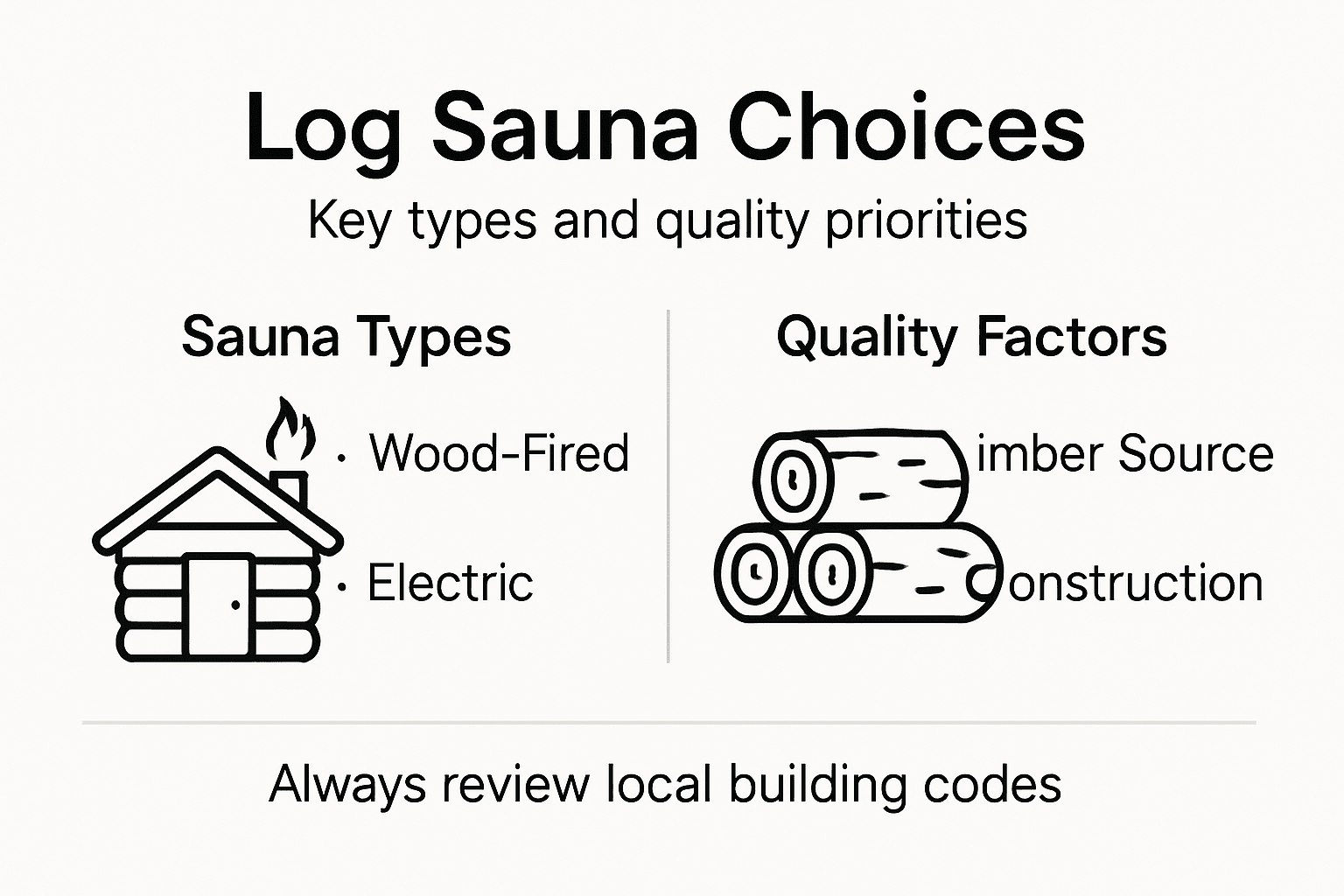
Primary Cost Drivers
Timber quality represents your single largest cost variable. Finnish premium timber costs significantly more than lower-grade alternatives, but the difference in lifespan is enormous. Quality Finnish pine or spruce resists moisture damage and rot naturally, maintaining structural integrity for 30-40 years. Inferior timber deteriorates within 10-15 years, requiring expensive restoration or replacement.
The cost of materials breaks down approximately as:
- Logs and timber: 30-40% of total cost
- Heating system: 15-25% (wood stove costs more than electric)
- Insulation and vapor barriers: 10-15%
- Labor and installation: 20-30%
- Permits, engineering, and contingency: 5-10%
Customization and size dramatically affect pricing. A standard 2-meter by 3-meter sauna costs considerably less than a 3-meter by 4-meter version with custom benching and integrated changing areas. Each modification—interior finishing details, premium bench materials, ventilation upgrades—adds expense. The key is distinguishing between upgrades that enhance experience and those that simply increase cost without practical benefit.
Electrical and plumbing integration adds unexpected expenses. If your sauna requires electrical connections to your main house, trenching, conduit, and professional installation costs mount quickly. Similarly, plumbing for shower facilities, changing rooms, or hot water circulation increases project scope significantly.
Heating system selection influences both upfront and operating costs. Wood-burning stoves cost more initially but minimize long-term energy expenses if you have firewood access. Electric systems cost less upfront but accumulate higher operating costs depending on local electricity rates. Smoke saunas minimize equipment costs but demand exceptional construction quality.
Strategic spending on Finnish timber quality and proper ventilation prevents costly repairs later—the best money you’ll spend on any sauna project.
Common Mistakes That Cost Money Later
Inadequate insulation is the mistake that haunts homeowners most. Skimping on insulation between the log walls and exterior shell means your sauna takes forever to reach temperature and burns energy constantly to maintain it. Central European winters make this particularly painful—you’re heating the neighborhood, not your sauna. Proper insulation typically costs 1,000-2,000 euros more during construction but saves that amount within 3-5 years in reduced heating costs.
Poor ventilation design creates moisture problems that develop slowly then demand expensive fixes. Inadequate ventilation allows humidity to accumulate, causing wood rot, mold, and structural deterioration. By the time you notice the problem, repairs require opening walls and replacing compromised timber. Investing in proper ventilation design upfront—usually 2,000-3,000 euros—prevents 10,000-euro repair bills later.
Undersized heating systems force you to operate saunas inefficiently or upgrade within years. A heating system barely adequate for your sauna size runs at maximum capacity constantly, shortening lifespan. Oversizing slightly costs an extra 500-1,000 euros but provides better reliability and longevity.
Skipping building permits seems budget-conscious until removal orders arrive. You’ll demolish a nearly-completed structure or face fines and legal costs exceeding 5,000 euros. Permits cost 200-800 euros typically—insurance against catastrophic mistakes.
Choosing wrong contractor or manufacturer creates quality problems that reveal themselves during operation. Inexperienced builders cut corners on ventilation, use inferior timber, or skip critical construction details. Quality manufacturers command premium prices but deliver structures that perform as intended.
Budget-Friendly Alternatives
Prefabricated sauna kits offer significant savings—typically 40-50% less than custom builds. These modular structures arrive partially assembled, reducing labor costs and installation complexity. The trade-off is limited customization and fixed sizing. Kits work well if your needs match available options, but you’re compromised if you want specific dimensions or features.
Kit advantages include:
- Fast delivery: Ready within 4-8 weeks vs. 12-16 weeks for custom projects
- Lower labor requirements: Less skilled installation reduces labor costs
- Transparent pricing: No surprises; quoted price is the final cost
- Simplified logistics: Complete packages with all necessary components
Kit disadvantages become apparent with custom requirements:
- Limited size options: Fixed to manufacturer dimensions
- Restricted customization: Interior layouts and features predetermined
- Material compromises: Not all kits use premium Finnish timber
- Reduced heating efficiency: Standard insulation may underperform in cold climates
Phased construction spreads costs across multiple years. Build the basic sauna structure first, then add finishing touches, electrical upgrades, or changing facilities later. This approach reduces upfront financing needs while allowing budget adjustments based on actual usage patterns.
Hybrid approaches combine custom elements with prefabricated components. You might purchase a quality kit then upgrade heating systems, add custom ventilation, or enhance insulation—gaining some customization benefits while maintaining budget discipline.
To help with smart planning, here is a quick comparison of budget-friendly alternatives for sauna building:
| Approach | Upfront Cost | Flexibility | Potential Drawback |
|---|---|---|---|
| Prefabricated kit | Lowest investment | Limited customization | Possible lower timber quality, fixed sizes |
| Phased construction | Moderate, spread over time | Add features gradually | Project takes longer to complete |
| Hybrid (kit + upgrades) | Moderate | Customizable components | Coordination with suppliers needed |
Making Smart Budget Decisions
The most important decision is prioritizing where money matters. Invest heavily in Finnish timber quality, ventilation systems, and insulation. These determine whether your sauna lasts 15 years or 40 years. Spend less on decorative finishes, fancy bench materials, or interior trim that don’t affect performance.
Get multiple quotations from different manufacturers. Price variations often reflect material quality and construction standards rather than simple markup differences. The cheapest option frequently represents cut corners rather than efficiency.
Consider total cost of ownership, not just purchase price. A 3,000-euro investment in superior insulation costs less over 30 years than a 500-euro savings that requires sauna replacement in 15 years.
Pro tip: Request detailed cost breakdowns from manufacturers showing labor, materials, and system components separately—this transparency reveals where price differences originate and helps identify genuine value from hidden compromises.
Experience Authentic Finnish Log Saunas Built to Last
The challenges of choosing the right log sauna include ensuring superior timber quality, expert construction, proper ventilation, and compliance with local regulations. If you want a sauna that offers gentle, natural heat from premium Finnish wood with custom options tailored to your lifestyle, Huvila Seppälä understands your needs deeply. Our 65 years of experience in crafting timber frames and log structures guarantee your investment becomes a lasting wellness sanctuary rather than a short-term frustration.
Discover how our custom-built log saunas embody Finnish craftsmanship and solve common concerns about maintenance, temperature control, and cost-effectiveness. Explore your options and get transparent, no-hidden-cost quotations at Huvila Seppälä. Learn more about the essentials for a successful sauna project and prepare with confidence by visiting Permitting Requirements for Saunas. Ready to start your personalized sauna journey with Finnish quality? Contact us today through our site and turn your sauna dreams into reality.
Frequently Asked Questions
What is a log sauna and how is it different from traditional saunas?
A log sauna is a structure built from solid logs designed to provide a unique sauna experience by utilizing the thermal properties of wood. Unlike traditional metal or tile saunas, log saunas maintain consistent temperatures and humidity while offering a more natural and gentle heating process.
How does the Finnish approach to saunas enhance the overall experience?
The Finnish approach emphasizes wellness through architectural design, heat therapy, and social gatherings. Key elements include controlled temperature, humidity variation, and quality wood selection, creating a holistic sauna experience that goes beyond just sweating.
What are the main types of log saunas and their benefits?
The main types of log saunas are wood-burning, electric, and smoke saunas. Wood-burning saunas offer an authentic experience with intense heat, electric saunas provide convenience with precise temperature control, and smoke saunas deliver a unique, traditional experience without chimneys, capturing the essence of wood smoke.
Why is quality Finnish timber important for log sauna construction?
Quality Finnish timber is essential because it is denser and better suited for sauna conditions, naturally resisting moisture and decay. The slow growth of trees in the Nordic climate leads to wood that better withstands the thermal stresses experienced in saunas, ensuring longevity and durability.