Master Site Preparation for Timber Buildings Easily
Choosing where to build your timber vacation home or sauna can feel like the first big test of your project. The right site shapes everything from foundation stability to long-term comfort and value. Homeowners across Central Europe benefit from a step-by-step approach that addresses geological conditions, sustainability, and local building standards right from the start. With expert guidance on site selection and preparation, you gain peace of mind knowing your timber structure stands on solid, compliant ground.
Table of Contents
- Step 1: Assess and Select the Optimal Building Site
- Step 2: Clear and Level the Land Effectively
- Step 3: Install Proper Drainage and Soil Compaction
- Step 4: Lay Out Utilities and Prepare Foundation Area
- Step 5: Verify Site Readiness for Timber Frame Delivery
Quick Summary
| Main Point | Description |
|---|---|
| 1. Prioritize Site Selection | Assess geological and environmental factors for timber construction to ensure long-term stability and sustainability. |
| 2. Implement Effective Land Clearing | Clear vegetation strategically while preserving soil integrity to prepare a stable ground for construction. |
| 3. Ensure Proper Drainage and Compaction | Install drainage systems and achieve optimal soil compaction to protect timber structures from moisture damage. |
| 4. Lay Out Utilities Properly | Coordinate water, electricity, and sewage lines to minimize future disruptions while complying with local building standards. |
| 5. Verify Site Readiness Thoroughly | Conduct detailed site assessments to confirm all preparations are complete before timber frame delivery and installation. |
Step 1: Assess and Select the Optimal Building Site
Selecting the perfect building site is crucial for constructing a successful timber structure that meets your design and performance requirements. Your site selection will determine the long-term stability, sustainability, and functionality of your timber building project.
Your site assessment should focus on several key parameters that directly impact timber construction feasibility. These include geological conditions, terrain characteristics, and environmental regulations. Research from European architectural studies suggests prioritizing locations that support sustainable urbanization and offer structural compatibility with timber construction techniques.
- Evaluate soil stability and foundation potential
- Check local zoning and building regulations
- Assess topographical features like slope and drainage
- Review environmental impact considerations
- Analyze solar orientation and wind exposure
Careful site selection involves understanding both physical terrain and regulatory landscapes. European policy frameworks like the European Green Deal emphasize selecting sites that balance architectural innovation with environmental sustainability. This means looking beyond mere physical characteristics and considering how your timber structure integrates with broader urban and ecological contexts.
Strategic site selection is the foundation of successful timber building projects – literally and figuratively.
Understanding regional climate patterns and local building codes will help you make an informed decision. Some areas might have specific requirements for timber construction related to fire safety, structural engineering, and energy efficiency standards.
Pro tip: Consult local building authorities and timber construction experts to gain site-specific insights before finalizing your location choice.
Step 2: Clear and Level the Land Effectively
Clearing and leveling your land is a critical first step in preparing your site for a timber building project. This process ensures a stable foundation and sets the groundwork for a successful construction that meets both structural and environmental standards.
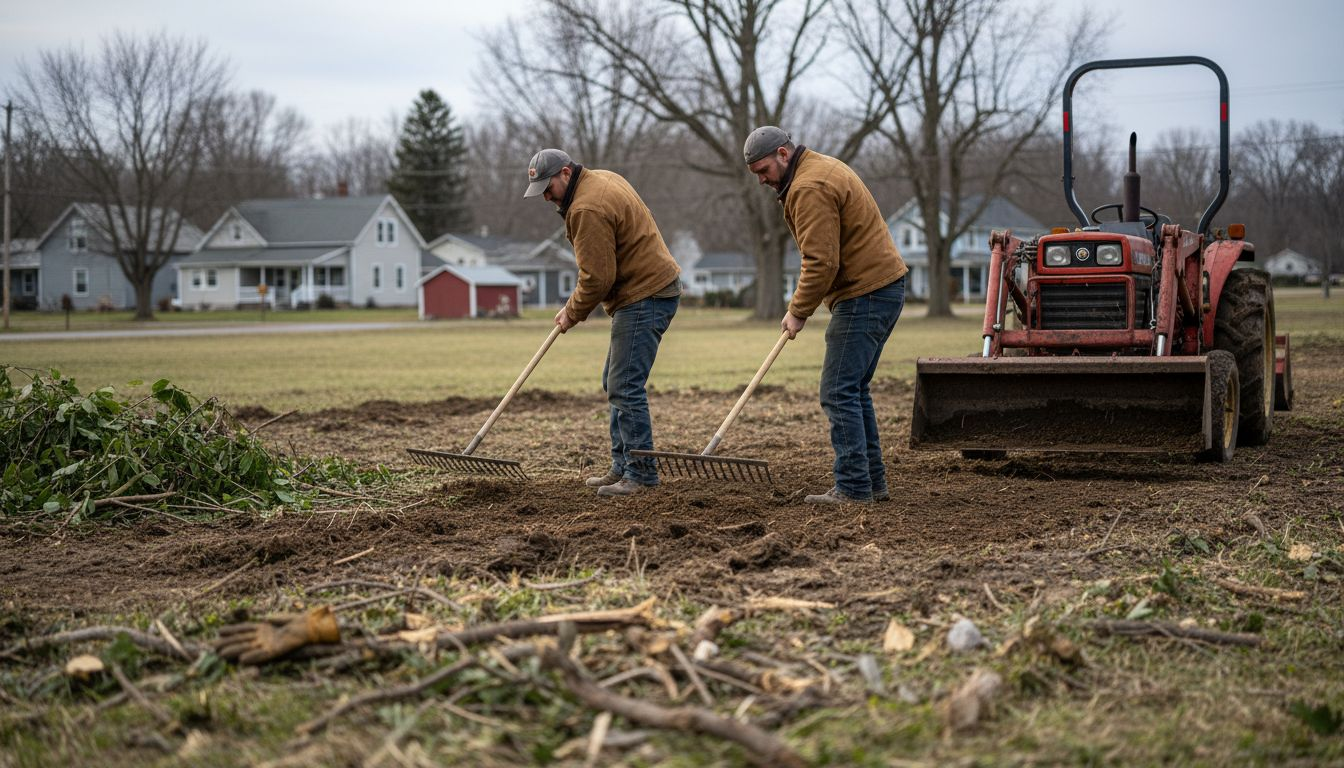
Effective land preparation involves strategic removal of vegetation and debris while preserving the natural soil structure. According to European circular economy research, careful land clearing is essential to maintain soil integrity and prevent potential erosion issues. Your goal is to create a clean surface without compromising the underlying ecological balance.
Key considerations for land clearing include:
- Identify and mark protected vegetation or ecological zones
- Remove trees and large vegetation strategically
- Clear surface debris and organic materials
- Assess soil composition and drainage patterns
- Use minimal invasive techniques to preserve ground stability
Leveling the land requires precision and understanding of your specific terrain. Different soil types in Central European regions demand tailored approaches to ensure uniform ground preparation. Mechanical grading and careful ground compaction will help create a stable base for your timber structure.
Here’s a summary of how different soil types affect timber building preparation:
| Soil Type | Foundation Stability Impact | Drainage Challenges | Compaction Needs |
|---|---|---|---|
| Clay | High movement risk | Poor water runoff | Requires strong compaction |
| Sandy | Good drainage | Low moisture retention | Moderate compaction |
| Loamy | Balanced support | Average drainage | Minimal compaction needed |
| Rocky | Excellent stability | Difficult to grade | Specialized machines required |
Sustainable land preparation balances construction needs with environmental preservation.
Professional land clearing often involves specialized equipment like excavators, graders, and compact machinery designed to minimize ground disturbance. For smaller projects, manual techniques might offer more controlled and environmentally sensitive approaches.
Pro tip: Consider hiring a local land surveyor to assess ground conditions and provide precise leveling recommendations before starting your clearing process.
Step 3: Install Proper Drainage and Soil Compaction
Installing effective drainage and achieving proper soil compaction are critical steps in preparing your timber building site. These processes protect your future structure from moisture damage and ensure a stable foundation that can support your timber construction for decades.
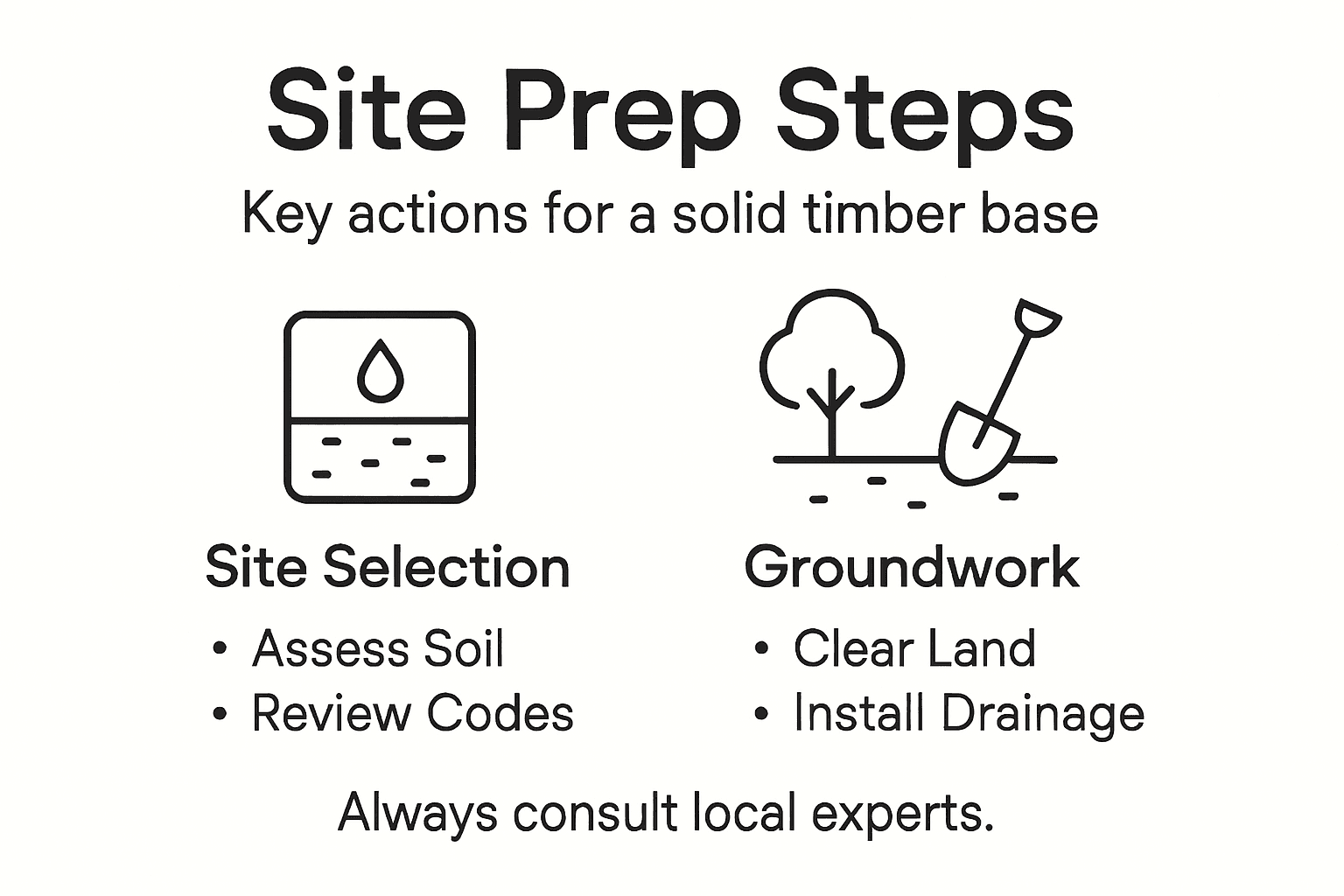
Research from European timber construction studies emphasizes the importance of regionally adapted drainage techniques. In Central European climates, where moisture levels can fluctuate significantly, creating a comprehensive water management system is essential. Your drainage strategy should prevent water accumulation that could potentially compromise the timber structure’s long-term integrity.
Key drainage and compaction considerations include:
- Evaluate ground slope and natural water flow patterns
- Install perimeter drainage systems
- Use gravel or crushed stone for improved water channeling
- Implement French drain or similar subsurface drainage solutions
- Conduct professional soil compaction tests
Soil compaction requires precision and specialized equipment. Different soil types demand unique approaches to achieve optimal ground density. Mechanical compactors help create a uniform base that distributes structural loads evenly and prevents future settlement issues.
Proper drainage and soil preparation are the silent guardians of your timber building’s longevity.
Professional geotechnical engineers recommend layer-by-layer compaction techniques that gradually build a solid foundation. For timber structures, achieving 95% to 98% soil density is typically recommended to ensure maximum stability and minimal future ground movement.
Pro tip: Invest in a professional soil compaction test to confirm ground stability before proceeding with foundation work.
Step 4: Lay Out Utilities and Prepare Foundation Area
Layingout utilities and preparing the foundation area represents a critical phase in your timber building project. This step ensures your structure will have proper infrastructure support and a solid groundwork that meets European construction standards.
According to European Union construction guidelines, utility coordination is fundamental to successful timber building preparation. Your utility layout must strategically account for water, electricity, sewage, and communication lines while minimizing potential future disruptions to your timber structure.
Key utility and foundation preparation steps include:
- Map existing underground utility lines
- Obtain necessary local permitting approvals
- Mark precise utility connection points
- Create protective conduits for utility infrastructure
- Ensure compliance with local building codes
- Plan for potential future expansion requirements
Timber structures demand unique foundation considerations compared to traditional construction methods. Load distribution techniques must accommodate timber’s lighter weight while ensuring long-term structural integrity. Central European architectural practices recommend designing foundations that provide flexibility and adaptability for timber frame integration.
Foundation preparation is where architectural vision transforms into structural reality.
Professional geotechnical assessments help determine the most appropriate foundation type for your specific site conditions. Approaches might include concrete slabs, pier foundations, or specialized timber-friendly base designs that account for regional soil characteristics and climate variations.
For quick reference, here are common foundation options for timber structures and their key benefits:
| Foundation Type | Benefits for Timber Buildings | Typical Use Cases |
|---|---|---|
| Concrete Slab | Even weight distribution, durability | Standard residential builds |
| Pier Foundation | Flexibility, less material needed | Uneven terrain, light frames |
| Timber-Friendly Base | Reduces moisture contact, quick install | Eco-focused projects |
Pro tip: Consult a local utility mapping service to guarantee accurate underground infrastructure identification before breaking ground.
Step 5: Verify Site Readiness for Timber Frame Delivery
Verifying site readiness represents the critical final checkpoint before your timber frame arrives, ensuring every preparation detail meets professional construction standards. This comprehensive assessment protects your investment and prevents potential delivery or installation complications.
Public procurement policies in European timber construction emphasize meticulous site readiness checks. Systematic site verification involves a thorough evaluation of multiple interconnected factors that guarantee optimal conditions for timber frame installation. Your preparation must address structural, environmental, and logistical considerations with precision.
Key site readiness verification steps include:
- Confirm foundation structural integrity
- Validate utility connection readiness
- Ensure clear and accessible delivery pathway
- Check ground level and compaction standards
- Verify drainage system functionality
- Prepare designated staging and unloading areas
Professional site inspections should assess not just physical readiness but also environmental conditions that might impact timber frame delivery and installation. Building permit requirements play a crucial role in determining comprehensive site preparedness.
Site readiness is where careful planning transforms into successful timber construction.
Understanding regional regulations and technical specifications helps prevent last-minute surprises. Some European jurisdictions require formal documentation confirming site preparation before permitting timber frame delivery, making your verification process even more critical.
Pro tip: Schedule a professional site assessment at least two weeks before scheduled timber frame delivery to identify and resolve any potential preparedness issues.
Prepare Your Timber Building Site with Confidence and Expert Support
The journey to a durable timber building begins with thorough site preparation that considers soil stability, drainage, and foundation readiness. This article highlights common challenges such as managing soil compaction and coordinating utilities while following local regulations. These steps are crucial to prevent costly delays or structural issues after the timber frame arrives.
Take the stress out of your timber construction project with Huvila Seppälä’s trusted expertise. With over 65 years of experience crafting custom timber frames and log structures, we understand how important a well-prepared site is for a successful build. Explore how we can help you streamline your project from design through timely delivery at Huvila Seppälä’s website. Start planning your ideal timber home or villa today and get professional guidance tailored to your unique site conditions. Visit our homepage to request a personalized quote and transform your site preparation into a smooth first step towards your dream wooden building.
Frequently Asked Questions
How do I choose the best site for my timber building?
Selecting the right site involves evaluating geological conditions, terrain characteristics, and environmental regulations. Assess soil stability, check zoning requirements, and consider drainage and topographical features to ensure the location suits your timber construction needs.
What steps should I take to clear and level my land for timber building?
To clear and level your land, identify protected vegetation, remove debris, and strategically clear larger vegetation. Follow up by checking soil composition and drainage patterns to prepare an even surface for proper foundation support.
How can I install effective drainage for my timber building site?
Install perimeter drainage systems and consider using gravel or a French drain to manage water flow around your timber structure. Taking these steps will help prevent water accumulation and protect your building from moisture damage.
What are the key considerations for preparing the foundation area for my timber building?
Prepare your foundation by mapping existing underground utility lines, obtaining necessary permits, and marking connection points for utilities. Ensure the foundation’s design accommodates the unique load distribution needs of timber structures to enhance stability.
How can I verify that my site is ready for timber frame delivery?
To verify site readiness, check the foundation’s structural integrity, ensure utilities are connected, and confirm that there is a clear delivery pathway. Conduct these checks at least two weeks before the scheduled delivery to address any potential issues proactively.
Recommended
- Så förbereder du mark för timmerstuga steg-för-steg – Huvila Seppälä
- Building Permit Requirements – What Timber Homeowners Need – Huvila Seppälä
- Financing Timber Buildings – Key Steps and Strategies – Huvila Seppälä
- 7 Essential Cottage Construction Tips for Custom Success – Huvila Seppälä